Tag: food insecurity

  • Heavy snow leads to food shortage in Chitral

    Heavy snow leads to food shortage in Chitral

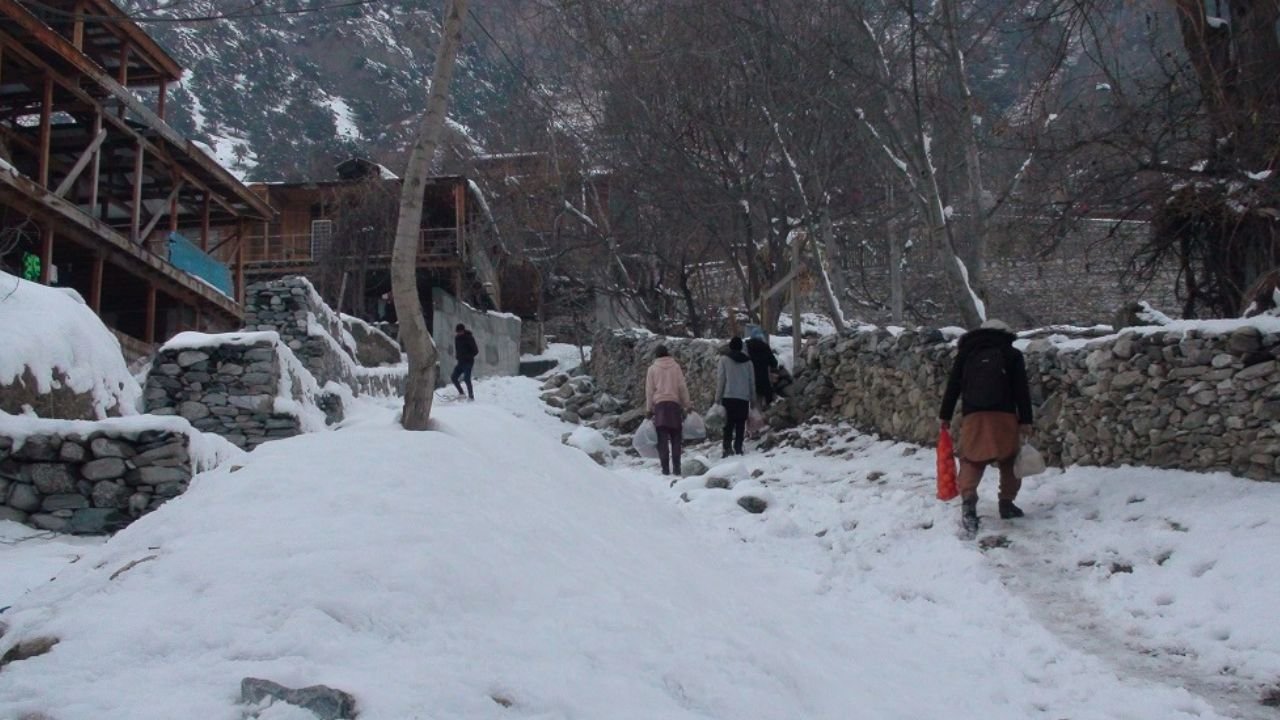
    Climate change is hitting home with heavy snow halting normal life, creating food insecurity in districts of upper and lower Chitral. The situation is dire, as MNA Abdul Akbar Chitrali has asserted that “It may result in a human tragedy”.

    The closure of roads to more than a dozen valleys in Chitral for the last three weeks has been creating countless issues for people.

    The most affected areas are the sub-valleys of Madaklasht, Susoom, Karimabad, and Gobor in Lower Chitral and Broghil, Yarkhoon, Upper Terich, Khot, Rech, Melp and Rech in Upper Chitral, says the report by Dawn. One has to wade through the snow for more than eight hours to reach there.

    The residents of the affected areas have said that food items and lifesaving drugs are running out while patients are taken on shoulder by villagers towards the road.

    Some minor work has been done by the government in the city but the roads leading to the sub-valleys are still unclear, leaving it up to the local people to do it on self-help basis.

    The former village nazim of Broghil, Amin Jan Tajik, said that there was a famine-like situation for people and their cattle after the valley received more than four feet snow while one had to walk for two days to reach Brep village to get a vehicle.

    He recalled that the last time the valley received such a heavy snowfall was in 1974, prompting the then government of Zulfiqar Ali Bhutto to airdrop ration for people as well as forage for their cattle, which formed their only source of sustenance.

    Mr Tajik said that to reopen the road by clearing snow and removing boulders and debris was beyond the capacity of locals as heavy machinery was required for the purpose.

    Former MNA Maulana Abdul Akbar Chitrali while talking to Dawn said that closure of roads gave birth to all kinds of issues and it was a pity that both federal and provincial governments neglected the ordeals of people.

    Talking to journalists here on Wednesday, he said that restoration of power supply to the affected villages would not be possible without reopening of roads. “More than three-fourth villages of Chitral have been without electricity after the heavy snowfall,” he added.

    He said that during the month of Ramazan, shortage of food was deplorable.
  • 40% children in Pakistan suffer from malnutrition

    40% children in Pakistan suffer from malnutrition

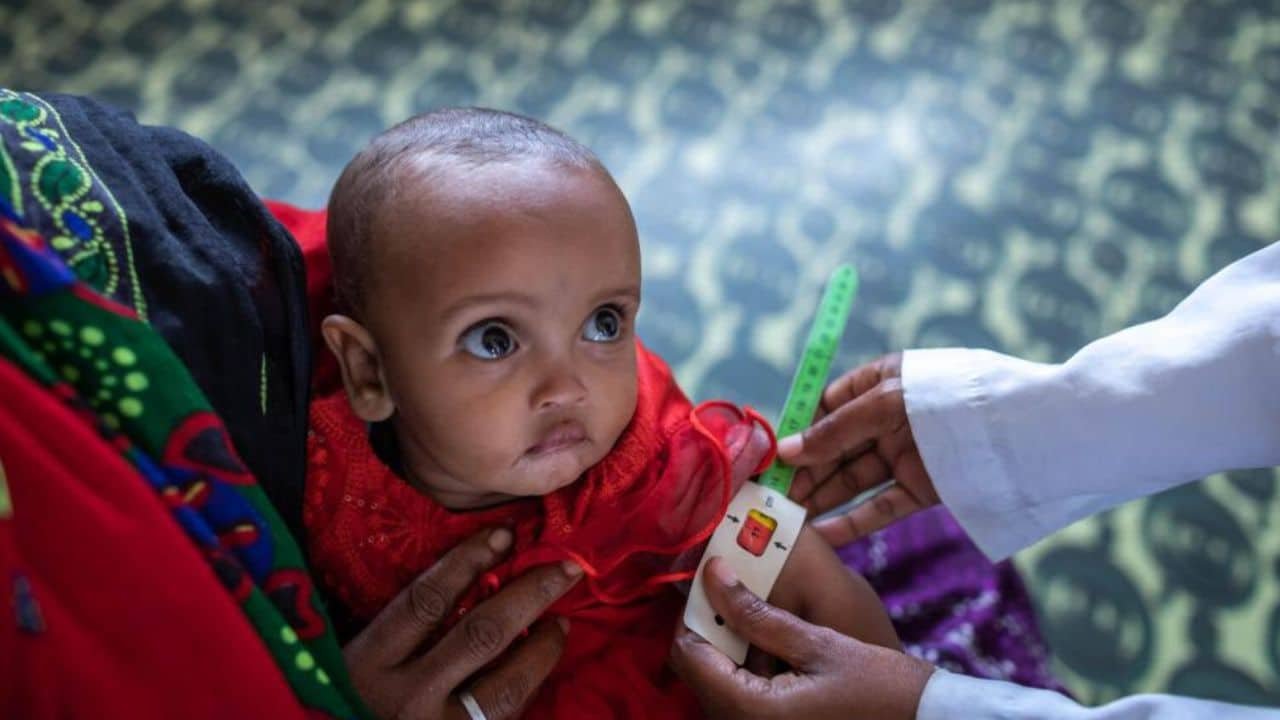
    A recent report by the World Bank has revealed that 40 per cent of children in Pakistan are suffering from food insecurity, adding that most children under the age of five do not have access to clean water and do not have toilet facilities.

    The report also highlights the significance of the first 1000 days after birth that are very important for the mental health of the child because 80 per cent of the child’s mind is formed during this period.

    45 per cent of the Pakistani children who die under five years of age are due to lack of food.

    Additionally, while many children are raised with livestock animals, those who are malnutritioned consume dirt containing livestock waste.

    The World Bank report also reveals that about 50 per cent of the drinking water of Sindh contains bacteria while mothers working with livestock feed their children without washing their hands due to lack of hygiene.

    The World Bank said that comprehensive data on child malnutrition in Pakistan needs to be collected, and programs on child nutrition need to start on an urgent basis.

  • World Bank lowers Pakistan’s growth forecast tighter financial conditions

    World Bank lowers Pakistan’s growth forecast tighter financial conditions

    Pakistan’s current-year growth forecast has been significantly reduced by the World Bank due to tighter financial conditions and limited fiscal space. The country’s economy is now expected to grow only 0.4 per cent in the current year, compared to the October 2022 forecast of 2 per cent growth.

    This bleaker forecast assumes that an agreement is reached with the International Monetary Fund for bailout funds. Pakistan’s fiscal year runs from July to June, and the country expects its economy to grow 2 per cent in FY23, although the country’s central bank chief has warned that this forecast could face downward pressure.

    Pakistan has been in economic turmoil for months, with an acute balance of payments crisis. Talks with the IMF to secure $1.1 billion in funding as part of a $6.5 billion bailout agreed upon in 2019 have not yet yielded fruit. Lower economic output and high prices in Pakistan have led to stampedes and looting at flour distribution centres set up across the country. The World Bank attributed the greater food insecurity for South Asia’s poor to elevated global and domestic food prices.

    The World Bank also lowered its 2023 regional growth forecast to 5.6 per cent from 6.1 per cent in October, citing rising interest rates and uncertainty in financial markets as putting downward pressure on the region’s economies. Most countries have raised interest rates at a rapid pace since the war in Ukraine last year led to choking supply chains and stoked inflation globally.

    Sri Lanka’s economy is forecast to contract by 4.3 per cent this year, reflecting the lasting impact of the macro debt crisis, with future growth prospects heavily dependent on debt restructuring and structural reforms. In January, President Ranil Wickremesinghe said Sri Lanka’s economy could contract by 3.5 per cent or 4.0 per cent in 2023 after shrinking by 11 per cent last year.

    The World Bank also lowered its forecast for India’s economic growth in the current fiscal year to 6.3 per cent from 6.6 per cent, due to the expected negative impact of higher borrowing costs on consumption. The current fiscal year began on April 1.

  • No food for chickens: Massive increase in chicken, egg prices expected

    No food for chickens: Massive increase in chicken, egg prices expected

    Due to the widespread shortage of poultry feed, poultry farmers and traders are worried that the supply of chicken and eggs may run out in a month.

    At an urgent press conference held at the Karachi Press Club, Chaudhry Ashraf, the central chairman of the Pakistan Poultry Association, former chairman Ghulam Khaliq, Sindh-Balochistan zone chairman Saleem Baloch, and others expressed their grave concerns regarding the non-clearance of soybean shipments that had been stopped at Karachi Port.

    According to Express Tribune, soybean and canola appear to be the two main ingredients in poultry feed, according to poultry owners. More than six lakh tonnes of soybeans that have not been authorised for export are currently at the port.

    Additionally, in conjunction with the purchase of soybeans, poultry owners have paid importers more than $44 million. In order to restart the feed supply to the nation’s poultry sector, the ministry of food security and other ministries should right away resolve their conflict with soybean importers and issue orders for the clearance of soybeans at the port.

    Presently, poultry owners in Pakistan generate 3.5 million eggs each day from 3.8 million chickens. If the problem of feed supply for the poultry industry is not immediately addressed, there is a potential that the supply of chicken and eggs may stop within a month.

    More than 50 per cent of the poultry business is currently closed. If this sector is entirely shut down, which would result in the loss of nearly 2.5 million jobs, there will be a greater risk of food insecurity in the country.