Tag: food prices

  • Pakistan’s weekly inflation dips slightly amid lower fuel and onion prices

    Pakistan’s weekly inflation dips slightly amid lower fuel and onion prices

    Pakistan’s weekly inflation, as measured by the Sensitive Price Indicator (SPI), registered a slight decline of 0.16 per cent for the combined consumption groups during the week ending on August 15, according to the Pakistan Bureau of Statistics (PBS).

    The SPI for the period under review stood at 322.03 points, down from 322.54 points the previous week. However, compared to the corresponding week last year, the SPI for the combined consumption group saw a significant increase of 16.86 per cent.

    The SPI, with the base year set at 2015-16, covers 17 urban centres and tracks 51 essential items across all expenditure groups.

    For the lowest consumption group, with a monthly expenditure of up to Rs17,732, the SPI witnessed a marginal increase of 0.07 per cent, rising to 311.04 points from 310.83 points in the previous week.

    Similarly, the SPI for the Rs 17,732-22,888 consumption group saw a minimal rise of 0.01 per cent. In contrast, for consumption groups with expenditures ranging from Rs22,889-29,517, Rs29,518-44,175, and above Rs44,175, the SPI declined by 0.05 per cent, 0.10 per cent, and 0.25 per cent, respectively.

    Out of the 51 items monitored during the week, the prices of 19 items (37.25 per cent) increased, 13 items (25.50 per cent) decreased, while the remaining 19 items (37.25 per cent) remained stable.

    The key items that saw a decrease in average prices on a week-on-week basis included onions (4.91 per cent), petrol (3.15 per cent), diesel (2.44 per cent), wheat flour (1.83 per cent), pulse moong (1.81 per cent), chicken (1.57 per cent), bananas (1.36 per cent), LPG (0.90 per cent), sugar (0.59 per cent), potatoes (0.58 per cent), and pulse masoor (0.56 per cent).

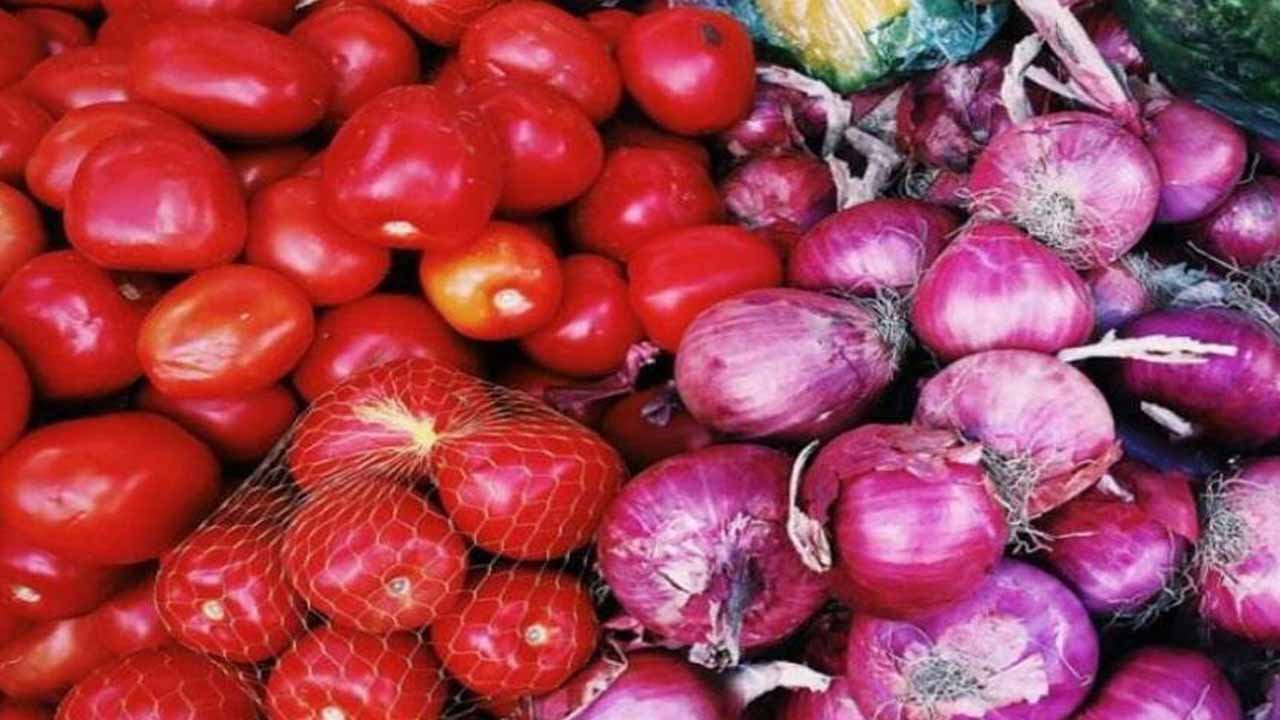
    Conversely, items that recorded an increase in their average prices included tomatoes (34.77 per cent), eggs (4.78 per cent), garlic (1.99 per cent), beef (0.88 per cent), cooked beef (0.41 per cent), georgette (0.40 per cent), gur (0.39 per cent), curd (0.32 per cent), and mustard oil (0.28 per cent).
  • Weekly inflation rises 1.28% as essential food items, fuel costs surge

    Weekly inflation rises 1.28% as essential food items, fuel costs surge

    In a challenging economic climate, food prices in Pakistan have surged, forcing consumers to purchase essential items at elevated costs.

    According to the Weekly Sensitive Price Indicator (SPI) released by the Pakistan Bureau of Statistics (PBS), the SPI for the Combined Group increased by 1.28 per cent week-on-week (WoW) for the week ending July 4, 2024.

     Additionally, the SPI saw a substantial year-on-year (YoY) rise of 23.59 per cent compared to the same period last year.

    The PBS data revealed that the Combined Index stood at 318.61, up from 314.57 a week earlier, and significantly higher than the 257.79 recorded a year ago. Out of 51 monitored items, prices of 29 (56.86 per cent) increased, 5 (9.80 per cent) decreased, and 17 (33.34 per cent) remained stable during the week.

    Significant weekly price increases were observed in tomatoes (70.77 per cent), wheat flour (10.57 per cent), powdered milk (8.90 per cent), diesel (3.58 per cent), and petrol (2.88 per cent). Conversely, notable price hikes on a yearly basis were recorded for onions (9.05 per cent), wheat (1.79 per cent), potatoes (1.04 per cent), eggs (0.79 per cent), and bananas (0.60 per cent).

    The SPI percentage change by income groups showed that the SPI rose across all income quantiles, ranging from 1.23 per cent to 1.44 per cent weekly. The lowest income group experienced a weekly rise of 1.43 per cent, while the highest income group saw a 1.23 per cent increase.

    Yearly SPI analysis across different income segments indicated increases ranging between 16.97 per cent and 26.49 per cent. The SPI for the lowest income group rose by 16.97 per cent, while the highest income group recorded a 21.39 per cent increase.

    Additionally, the average price of Sona urea was reported at Rs4,746 per 50 kg bag, which is 0.13 per cent higher than the previous week and 51.52 per cent higher compared to last year.

    Meanwhile, the average cement price reached Rs1,409 per 50 kg bag, marking a significant 10.48 per cent increase from the previous week and a 23.16 per cent rise from last year’s prices.

    The persistent rise in food and essential item prices continues to burden Pakistani consumers, exacerbating the financial strain on households across the country.

  • Weekly inflation rises with tomato prices up 27.14%, chicken 11.75%

    Weekly inflation rises with tomato prices up 27.14%, chicken 11.75%

    The Weekly Sensitive Price Indicator (SPI) for the Combined Group saw a 1.3 per cent week-over-week increase during the week ending June 13, 2024, according to data released by the Pakistan Bureau of Statistics (PBS).

    The SPI also showed a significant year-over-year rise of 23.03 per cent compared to the same period last year.

    The Combined Index reached 313.93, up from 309.91 the previous week, and significantly higher than the 255.17 recorded a year ago.

    During the week, out of 51 monitored items, prices of 19 items (37.26 per cent) increased, 8 items (15.68 per cent) decreased, and 24 items (47.06 per cent) remained stable.

    Major price increases were observed in tomatoes (27.14 per cent), chicken (11.75 per cent), electricity for Q1 (8.73 per cent), pulse gram (7.19 per cent), and LPG (6.14 per cent). On the other hand, notable price decreases were recorded in onions (5.00 per cent), chilies powder (1.95 per cent), rice basmati broken (1.65 per cent), garlic (1.32 per cent), and rice IRRI (1.08 per cent).

    The SPI percentage change by income groups indicated increases across all quantiles, ranging from 1.01 per cent to 1.31 per cent on a weekly basis. The lowest income group experienced a rise of 1.01 per cent, while the highest income group saw an increase of 1.29 per cent.

    Yearly analysis of SPI changes across different income segments showed increases ranging between 16.29 per cent and 26.07 per cent. These statistics highlight the varying impact of price changes on different income groups, reflecting broader economic trends and inflationary pressures within the country.

  • Weekly inflation rises as prices of essential food items increase

    Weekly inflation rises as prices of essential food items increase

    The Weekly Sensitive Price Indicator (SPI) for the Combined Group witnessed a 0.45 per cent increase week over week (WoW) during the week ending June 6, 2024.

    This surge marks a significant 21.69 per cent rise YoY compared to the corresponding period last year, as per data unveiled by the Pakistan Bureau of Statistics (PBS).

    The Combined Index stood at 309.91, showcasing a slight uptick from 308.52 the previous week, and a notable increase from 254.67 recorded a year ago.

    Among the 51 items monitored, the week saw prices of 19 items (37.26 per cent) soar, 14 items (27.45 per cent) witness a decline, while prices of 18 items (35.29 per cent) remained stable. Notable increases were observed in the prices of Onions (33.21 per cent), Tomatoes (15.34 per cent), Bananas (4.93 per cent), Pulse Gram (3.69 per cent), and Potatoes (2.62 per cent).

    Conversely, significant decreases were noted in the prices of Bread (3.02 per cent), Garlic (2.00 per cent), Wheat (-1.99 per cent), Petrol (1.74 per cent), and Pulse Masoor (1.43 per cent).

    The weekly SPI percentage change across income groups revealed a universal uptick, ranging between 0.33 per cent and 0.81 per cent. The lowest income group experienced the steepest weekly rise of 0.81 per cent, contrasting with a 0.33 per cent rise in the highest income group.

    On an annual basis, analysis of SPI changes across income segments indicated a consistent increase, ranging from 15.26 per cent to 25.04 per cent. Yearly SPI for the Lowest Income Group surged by 15.26 per cent, while the highest income group recorded a 19.45 per cent increase.

    In terms of specific commodities, the average price of Sona urea stood at Rs4,746 per 50 kg bag, marking a marginal 1.04 per cent decline from the previous week, yet reflecting a substantial 56.01 per cent increase compared to last year’s prices.

    Meanwhile, the average Cement price reached Rs1,255 per 50 kg bag, showing a 1.40 per cent increase from the prior week and a noteworthy 9.82 per cent surge compared to last year’s prices.

  • Tomato and onion price hikes push weekly inflation up

    Tomato and onion price hikes push weekly inflation up

    In a significant shift, weekly inflation in Pakistan has increased after seven weeks of consecutive declines.

    The Weekly Sensitive Price Indicator (SPI) for the Combined Group saw a 0.11 per cent week-on-week rise for the week ending May 30, 2024.

    This comes as a 21.4 per cent year-on-year increase compared to the same period last year, according to the Pakistan Bureau of Statistics (PBS).

    The Combined Index stood at 308.52, slightly up from 308.19 the previous week, and significantly higher than the 254.13 recorded a year ago.

    Out of the 51 items monitored, prices for 14 items (27.45 per cent) increased, 14 items (27.45 per cent) decreased, and 23 items (45.10 per cent) remained unchanged.

    Inflation drivers

    Notable price increases during the week were observed in tomatoes (11.25 per cent), onions (3.62 per cent), pulse mash (2.00 per cent), bananas (1.78 per cent), and potatoes (1.23 per cent).

    Conversely, significant price decreases were seen in eggs (6.14 per cent), chili powder (5.73 per cent), LPG (5.40 per cent), garlic (4.02 per cent), and rice IRRI (2.93 per cent).

    The SPI percentage change by income groups revealed increases across all segments, ranging from 0.08 per cent to 0.15 per cent. The lowest income group experienced a 0.09 per cent rise, while the highest income group saw a 0.08 per cent increase.

    On an annual basis, SPI changes showed increases between 14.68 per cent and 24.67 per cent across different income segments, with the lowest income group seeing a 14.68 per cent rise and the highest income group a 19.24 per cent increase.

    The average price of Sona urea was recorded at Rs4,796 per 50 kg bag, reflecting a 0.16 per cent decrease from the previous week but a 55.19 per cent increase from last year.

    Meanwhile, the average price of cement rose to Rs1,237 per 50 kg bag, up 0.30 per cent from the previous week and 9.80 per cent higher than the previous year.

  • Weekly inflation falls by 1%, but year-on-year rates remain high

    Weekly inflation falls by 1%, but year-on-year rates remain high

    The weekly inflation measured by the Sensitive Price Indicator (SPI) recorded a decrease of 1 per cent for the combined consumption groups during the week ended on May 02, according to data released by the Pakistan Bureau of Statistics (PBS).

    This marks a significant shift as inflation pressures ease for the first time in weeks. The SPI for the current week stands at 316.95 points, down from the previous week’s 320.14 points.

    However, compared to the corresponding week of the previous year, the SPI is up by 24.37 per cent, reflecting the ongoing inflationary trend across various sectors.

    The SPI, calculated with a base year of 2015-16, encompasses 17 urban centers and 51 essential items across all expenditure groups. The index serves as a critical barometer of inflationary trends in Pakistan.

    For the lowest consumption group, earning up to Rs17,732, the SPI decreased by 1.09 per cent, settling at 306.26 points, down from last week’s 309.64 points.

    Similarly, the SPI for consumption groups in the ranges Rs17,732-22,888, Rs22,889-29,517, Rs29,518-44,175, and above Rs44,175 saw decreases of 1.12 per cent, 1.02 per cent, 1.04 per cent, and 0.95 per cent, respectively.

    This broad-based decline indicates a general easing of inflationary pressures across different income groups.

    Price variations across essential items

    Out of the 51 items evaluated by the SPI, the prices of 18 items decreased, 15 increased, and 18 remained stable during the week.

    Items showing decreased prices

    Key items that recorded a notable decrease in their average prices on a week-on-week basis include:

    – Tomatoes: 22.05 per cent decrease

    – Chicken: 8.03 per cent decrease

    – Onions: 7.71 per cent decrease

    – Wheat flour: 6.88 per cent decrease

    – Bananas: 5.25 per cent decrease

    – Diesel: 2.89 per cent decrease

    Items with increased prices

    In contrast, some items saw a rise in their prices. These include:

    – Potatoes: 6.06 per cent increase

    – Salt powder: 0.91 per cent increase

    – Garlic: 0.85 per cent increase

    – Powdered milk: 0.70 per cent increase

    Year-on-year trends

    While the week-on-week numbers showed a decline, the year-on-year comparison paints a more complex picture.

    Certain commodities experienced significant increases over the past year. Notable among them are:

    – Gas charges for Q1: 570 per cent increase

    – Onions: 145.15 per cent increase

    – Tomatoes: 79.43 per cent increase

    – Garlic: 72.46 per cent increase

    – Chilies powder: 71.96 per cent increase

    However, some items witnessed a decrease in average prices over the year, including:

    – Bananas: 37.76 per cent decrease

    – Wheat flour: 23.15 per cent decrease

    – Cooking oil (5 litre): 20.45 per cent decrease

    These figures suggest a dynamic landscape of price fluctuations, with some areas showing improvement while others continue to face inflationary pressures.

    The decrease in SPI for the current week offers a brief respite from the upward inflation trend, but with significant year-on-year increases in many commodities, vigilance remains crucial.

  • Pakistan’s CPI-based inflation predicted to decline to 20%

    Pakistan’s CPI-based inflation predicted to decline to 20%

    Consumer Price Index (CPI)-based inflation in Pakistan is forecasted to witness a further decline, potentially settling at approximately 20 per cent on a year-on-year (YoY) basis for March.

    This projection marks a decrease from the 23.1 per cent recorded in February, as indicated by a report from Arif Habib Limited (AHL) released on Thursday.

    The anticipated headline inflation rate for March 2024 is projected to stand at 20.2 per cent YoY, reflecting a notable downturn from the preceding month’s figure of 23.1 per cent YoY.

    AHL’s report also highlights a substantial drop compared to the same period in the previous year, March 2023, when the YoY inflation rate was registered at 35.4 per cent.

    Consequently, it is envisaged that the average CPI for the first nine months of the fiscal year 2023-24 will hover around a 27.2 per cent YoY level, consistent with the figures observed during the same period last year (SPLY), according to the brokerage house.

    On a monthly basis, AHL’s projections for March 2024 suggest a modest increase of 1.3 per cent, contrasting with the average month-on-month (MoM) rise of 1.7 per cent recorded over the first eight months of the fiscal year.

    This upturn in monthly inflation is primarily attributed to rises in key indices, notably the food index (+1.3 per cent MoM), transport index (+1.5 per cent MoM), and housing index (+2.9 per cent MoM), the report stated.

    The brokerage house attributed the increase in the food index to the impending Ramadan season, foreseeing a month-on-month surge in prices of fresh fruits, potatoes, onions, and tomatoes.

    Meanwhile, the housing index is expected to see an uptick primarily due to increases in gas tariffs and LPG prices.

    Additionally, the transport index is anticipated to remain elevated owing to a month-on-month rise in petroleum product prices, according to AHL.

  • Pakistanis catch a break as weekly inflation hits 18-week low

    Pakistanis catch a break as weekly inflation hits 18-week low

    Short-term inflation in Pakistan dipped to 29.06 per cent year-on-year by the week ending March 21, stepping down from its prolonged stint above 30 per cent for the past 18 weeks, as per recent official data.

    The pullback in weekly inflation, tracked by the Sensitive Price Index (SPI), was primarily attributed to a drop in the prices of key staples like tomatoes, onions, and potatoes. The SPI noted a 1.13 per cent week-on-week decrease as of March 21, down from 32.89 per cent recorded in the previous week.

    This follows an unbroken 11-week stretch of inflation topping 40 per cent, starting from 29 per cent noted on November 8, 2023. The surge was largely fueled by upticks in gas prices, electricity tariffs, and essential kitchen item costs.

    Weekly inflation peaked at a record 48.35 per cent year-on-year in early May 2023, before cooling off to as low as 24.4 per cent in late August 2023, only to surge past 40 per cent again by the week ending November 16, 2023.

    Among the notable declines in prices on a week-on-week basis were tomatoes (36.73 per cent), onions (19.58 per cent), potatoes (4.02 per cent), garlic (2.87 per cent), pulse mash (1.25 per cent), wheat flour (1.02 per cent), sugar (0.95 per cent), pulse masoor (0.86 per cent), and diesel (0.60 per cent).

    Conversely, significant increases were seen in the prices of LPG (1.49 per cent), shirting (0.74 per cent), beef (0.53 per cent), rice basmati broken (0.48 per cent), mutton (0.42 per cent), mustard oil (0.40 per cent), rice irri 6/9 (0.25 per cent), powdered milk (0.14 per cent), and georgette (0.03 per cent) compared to the previous week.

    On an annual basis, notable price hikes were observed in gas charges for Q1 (570 per cent), chilli powder (86.05 per cent), gents sponge chappal (58.05 per cent), garlic (57.41 per cent), onions (54.65 per cent), gents sandal (53.37 per cent), gur (39.86 per cent), sugar (35.01 per cent), salt powder (33.29 per cent), energy saver (29.83 per cent), and pulse mash (27.31 per cent).

    In contrast, certain items witnessed declines, with cooking oil 5-litre dropping by 21.35 per cent, followed by vegetable ghee 2.5 kg (18.48 per cent), vegetable ghee 1 kg (18.44 per cent), mustard oil (13.90 per cent), bananas (13.52 per cent), diesel (2.47 per cent), and cigarettes (0.06 per cent).

    The short-term inflation, gauged through the SPI, stood at 323.50, compared to 327.21 in the preceding week and 250.66 a year ago. Comprising 51 items collected from 50 markets in 17 cities, the SPI is calculated weekly to monitor the prices of essential commodities and services at shorter intervals. Data indicates that prices of nine items increased, 17 items decreased, and 25 items remained stable compared to the previous week.

  • Inflation edges higher as weekly SPI indicates increase in prices

    Inflation edges higher as weekly SPI indicates increase in prices

    According to the Weekly Sensitive Price Indicator (SPI) released by the Pakistan Bureau of Statistics (PBS), the Combined Group’s SPI increased by 0.04 per cent during the week ending February 22, 2024.

    Additionally, the SPI surged by 30.68 per cent YoY compared to the same period last year.

    As of February 22, 2024, the Combined Index stood at 315.31, a slight uptick from 315.18 on February 15, 2024. A year ago, on February 23, 2023, the index was significantly lower at 241.29.

    Analysing the data for 51 items, it was found that the average prices of 23 items increased, 8 items decreased, and 20 items remained stable.

    Notable increases during the week were observed in the prices of tomatoes (22.71 per cent), bananas (7.40 per cent), diesel (3.02 per cent), chicken (1.22 per cent), and petrol (1.00 per cent).

    Conversely, onions (14.42 per cent), eggs (11.19 per cent), LPG (1.82 per cent), cooking oil (5 litres) (0.75 per cent), and wheat flour (0.36 per cent) experienced significant decreases.

    Breaking down the SPI percentage change by income groups, it was noted that SPI decreased across all 3 quantiles while increasing across 2 quantiles. The lowest-income group saw a weekly decline of -0.08 per cent, while the highest-income group recorded a rise of 0.09 per cent.

    On a yearly basis, the SPI change across different income segments revealed an increase ranging between 25.53 per cent and 35.39 per cent. The lowest-income group witnessed a 25.53 per cent increase, while the highest-income group recorded a 28.22 per cent rise.

    Specifically, the average price of Sona urea reached Rs4,928 per 50 kg bag, reflecting a 9.19 per cent increase from the previous week and a substantial 69.14 per cent surge compared to the same period last year.

    The surge in prices, especially for essential items, poses a challenge for the general populace, particularly those in lower-income groups.

    Authorities and policymakers are likely to face increasing pressure to address and mitigate the impact of inflation on the economy and the daily lives of people.

  • Yearly basis: Weekly inflation stays above 34%

    Yearly basis: Weekly inflation stays above 34%

    In the week concluding on February 15, 2024, the Weekly Sensitive Price Indicator (SPI) for the Combined Group exhibited a slight decrease of 0.78 per cent week-over-week (WoW).

    However, compared to the same period last year, the SPI surged by 34.25 per cent YoY, according to data released by the Pakistan Bureau of Statistics (PBS).

    The combined index, standing at 315.18, marked a slight dip from 317.65 recorded on February 8, 2024. A year ago, on February 16, 2023, the index was substantially lower at 234.77.

    Analysing the data further, out of the 51 items monitored, the average price of 22 items increased, 11 items witnessed a decrease, and 18 items remained stable.

    Notably, PBS did not release SPI data last week, following a 0.28 per cent WoW decline in the preceding week.

    During the week under review, significant decreases were noted in the prices of eggs (28.82 per cent), chicken (4.23 per cent), onions (3.48 per cent), LPG (2.85 per cent), and gur (1.13 per cent).

    Conversely, notable increases were observed in the prices of bananas (4.64 per cent), potatoes (2.80 per cent), match boxes (1.31 per cent), long cloth (1.29 per cent), and cooked daal (0.77 per cent).

    Analysing the SPI percentage change by income groups, a uniform decline of -0.82 per cent to -0.72 per cent was witnessed across all quantiles.

    The lowest-income group experienced a weekly decline of 0.78 per cent, while the highest-income group recorded a decrease of 0.77 per cent.

    On a yearly basis, SPI increased across all quantiles, ranging between 28.68 per cent and 38.54 per cent. The lowest-income group saw a 28.68 per cent increase, while the highest-income group recorded a 32.08 per cent rise.

    The average price of Sona urea fell to Rs4,513 per 50 kg bag, marking a 0.50 per cent decrease from last week and a significant 54.84 per cent increase from the previous year.

    Meanwhile, the average cement price recorded at Rs1,234 per 50 kg bag marked a 2.05 per cent increase from the previous week and a 14.27 per cent hike from the prices recorded last year.

    In a volatile market environment, these fluctuations in the SPI indicate the dynamic nature of the economic landscape, impacting consumers across various income groups.