Tag: food prices

  • Weekly inflation in Pakistan jumps to 42.3% as prices increase ahead of Ramadan

    Weekly inflation in Pakistan jumps to 42.3% as prices increase ahead of Ramadan

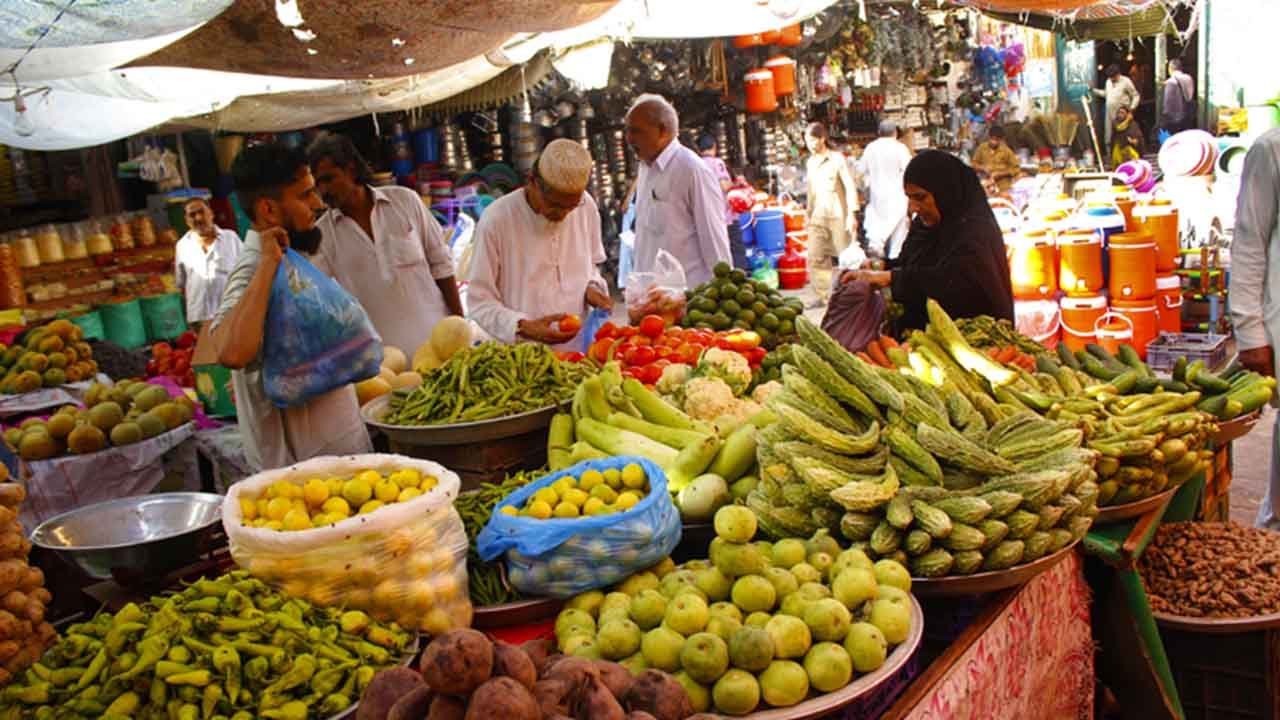
    According to data released by the Pakistan Bureau of Statistics (PBS) on Friday, weekly inflation surged by 1.37 per cent week-on-week and 42.27 per cent year-on-year during the week ended March 9. This marks a 25-week high on an annualized basis, as prices of perishables have started to rise ahead of Ramadan. The surge in the sensitive price indicator (SPI) was attributed to the increase in prices of various commodities, including tomatoes, potatoes, onions, sugar, bananas, cooking oil, wheat flour, vegetable ghee, printed lawn, curd, milk, tea, shirting, broken basmati rice, and powdered salt. Meanwhile, a major decrease was observed in the prices of chicken, garlic, pulse moong, eggs, pulse masoor, LPG, firewood, and pulse gram.

    For the week under review, SPI was recorded at 243.87 points, compared to 240.57 points registered last week and 171.41 points recorded during the week ended March 10, 2022. Brokerage Arif Habib Limited noted that this was the highest weekly YoY number since September 8, 2022, when Pakistan recorded a rise of 42.70 per cent YoY on account of an all-time high in the prices of wheat flour following massive flooding across the fertile plains of Punjab and Sindh.

    The PBS data attributed the YoY rise in SPI to the jump in the prices of onions, cigarettes, gas charges for Q1, diesel, eggs, rice Irri-6/9, petrol, broken basmati rice, bananas, pulse moong, tea, pulse mash, pulse gram, and bread. Inflation has been rising sharply over the past couple of years, with Pakistanis, particularly those from lower and middle-income groups, struggling to make ends meet.

    The sticky inflation numbers, along with the stalled International Monetary Fund (IMF) programme, have pushed the State Bank of Pakistan (SBP) to raise its benchmark interest rate by 300 basis points to a 26-year high. Pakistan is desperately trying to persuade the IMF to disburse critical $1.1 billion funding, but inflation worries have led the central bank to elevate its interest rates by 10 percentage points since January 2022.

    Analysts expect that the recent decisions taken by the government to please the IMF for a meagre $1.1 billion bailout tranche could result in massive poverty, while businesspersons have also not ruled out a default despite fiscal tightening. The YoY SPI increased by 39.09 per cent, 40.98 per cent, 41.79 per cent, 42.53 per cent, and 44.14 per cent respectively for the groups spending up to Rs17,732; Rs17,733-22,888; Rs22,889-29,517; Rs29,518-44,175; and above Rs44,175.

  • Gas and cigarette prices push Pakistan’s weekly inflation to 41%

    Gas and cigarette prices push Pakistan’s weekly inflation to 41%

    According to official data released by the Pakistan Bureau of Statistics (PBS), Pakistan’s weekly inflation has remained high, with an increase of 2.78 per cent week-on-week and 41.54 per cent year-on-year for the seven-day period that ended on February 23.

    The latest figures of the Sensitive Price Index (SPI) reveal that the rise is due to an increase in gas prices for Q1 (108.38 per cent), cigarettes (76.45 per cent), bananas (6.67 per cent), chicken (5.27 per cent), sugar (3.37 per cent), cooking oil 5 litre (3.07 per cent), vegetable ghee 2.5kg (2.79 per cent), vegetable ghee 1kg (2.20 per cent) and prepared tea (1.09 per cent).

    The government of Pakistan almost doubled the gas charges for up to 3.3719 mmBtu to secure the International Monetary Fund’s (IMF) approval for the $1.1 billion tranche out of the $6.5 billion bailout package under the Extended Fund Facility. Previously, the rate was Rs147.57, which now stands at Rs295.

    The PBS attributes the YoY increase in SPI to the rise in prices of onions (372.03 per cent), cigarettes (164.71 per cent), gas charges for Q1 (108.38 per cent), chicken (85.65 per cent), diesel (81.36 per cent), eggs (75.81 per cent), rice irri-6/9 (75.41 per cent), rice basmati broken (74.16 per cent), bananas (72.22 per cent), pulse moong (70.39 per cent), petrol (69.87 per cent), tea (62.76 per cent), pulse gram (57.02 per cent), bread (55.36 per cent), pulse mash (53.90 per cent) and LPG (52.59 per cent). However, there was a decrease in the prices of tomatoes (67.93 per cent), chilli powder (7.42 per cent) and electricity charges for Q1 (6.64 per cent).

    Analysts had predicted that inflationary pressures would intensify due to tax measures and adjustments in electricity, petroleum and gas prices made by the government to unlock the IMF programme.

    Consumers have been facing the burden of rising prices of essential kitchen items, particularly edibles. The average price of 1kg broiler chicken was Rs469.81 during the week under review compared to Rs446.29 last week. For the groups spending up to Rs17,732; Rs17,733-22,888; Rs22,889-29,517; Rs29,518-44,175; and above Rs44,175; WoW SPI increased 2.42, 2.86, 2.32, 2.18, and 3.10 per cent respectively.

    The YoY SPI for the expenditure groups went up 37.81, 39.80, 40.95, 41.94, and 42.98 per cent respectively. For the week under review, SPI was recorded at 241.29 points against 234.77 points registered last week and 170.47 points recorded during the week ended February 24, 2022.

  • Weekly inflation increases more than 38% as prices of petrol and food items hit the roof

    Weekly inflation increases more than 38% as prices of petrol and food items hit the roof

    According to the latest data released by the Pakistan Bureau of Statistics (PBS), the Sensitive Price Indicator (SPI) based inflation for the week ended February 16, 2023, registered an increase of 2.89 per cent. The rise in inflation can be attributed to an increase in the prices of both food and non-food items.

    Food Items that saw an increase in prices

    The following food items saw a significant increase in prices during the week ended February 16, 2023:

    • Cooking oil 5 litre (8.65 per cent)
    • Vegetable ghee 1kg (8.02 per cent)
    • Bananas (8.01 per cent)
    • Chicken (7.49 per cent)
    • Vegetable ghee 2.5 kgs (6.76 per cent)

    Non-food items that saw an increase in prices

    The following non-food items saw an increase in prices during the week ended February 16, 2023:

    • Petrol (8.82 per cent)
    • Diesel (6.49 per cent)
    • Cigarettes (6.18 per cent)

    Year-on-Year Trend

    The year-on-year trend depicts an increase of 38.42 per cent mainly due to an increase in the prices of the following items:

    • Onions (433.44 per cent)
    • Chicken (101.86 per cent)
    • Diesel (81.36 per cent)
    • Eggs (81.22 per cent)
    • Rice irri-6/9 (74.12 per cent)
    • Rice basmati broken (73.05 per cent)
    • Petrol (69.87 per cent)
    • Moong (67.98 per cent)
    • Bananas (67.68 per cent)
    • Tea Lipton (63.89 per cent)
    • Pulse gram (56.93 per cent)
    • Bread (55.36 per cent)
    • Maash (53.42 per cent)
    • LPG (52.68 per cent)
    • Cigarettes (50.02 per cent)

    On the other hand, the prices of tomatoes (65.30 per cent), electricity for q1 (7.50 per cent), and chillies powdered (7.42 per cent) saw a decrease during the same period.

    SPI for the week under review

    The SPI for the week under review in the above-mentioned group was recorded at 234.77 points against 228.17 points registered in the previous week. Out of 51 items, prices of 34 (66.67 per cent) items increased, 05 (9.80 per cent) items decreased and 12 (23.53 per cent) items remained stable.

    SPI for different consumption groups

    The SPI for the consumption group up to Rs17,732, Rs17,732-22,888, Rs22,889-29,517, Rs29,518-44,175 and above Rs44,175 consumption group increased by 2.45 per cent, 2.73 per cent, 2.79 per cent, 2.88 per cent, and 2.94 per cent, respectively.

    Items that recorded an increase in average prices

    The following items recorded an increase in their average prices during the week over previous:

    • Petrol super (8.82 per cent)
    • Cooking oil Dalda or other similar brand (sn), 5 litre tin each (8.65 per cent)
    • Vegetable ghee Dalda/Habib or other superior quality 1 kg pouch each (8.02 per cent)
    • Bananas (8.01 per cent)
    • Chicken (7.49 per cent)
    • Vegetable ghee Dalda/Habib 2.5 kg tin each (6.76 per cent)
    • Hi-speed diesel (6.49 per cent)
    • Cigarettes Capstan (6.18 per cent)
  • Weekly inflation up by 4% due to sharp increase in electricity prices

    Weekly inflation up by 4% due to sharp increase in electricity prices

    Owing to a sharp increase in electricity prices, the sensitive pricing index (SPI), which measures weekly inflation, increased by more than 4 per cent.

    According to data released on Friday by the Pakistan Bureau of Statistics (PBS), the SPI-based inflation rate increased 4.13 per cent from the previous week to the week ending October 27 while increasing 30.68 per cent from the same time last year.

    The cost of power, salt, rice, and other basic commodities went up on average during the previous week.

    According to Geo, there has been a decrease in the cost of 16 goods, including chicken, tomatoes, onions, and masoor pulses. In the meantime, the prices for 14 necessities remained the same.

    Electricity costs up by 89 per cent

    An increase from week to week is mostly caused by an 89 per cent increase in electricity costs.

    Recall that a negative Rs10 per unit adjustment to fuel prices was implemented in September. The government opted to postpone the Rs. 10 per unit adjustment for the June fuel price, but it had already been accounted for in the inflation figures for August, therefore it was corrected for in the September inflation figures.

    Inflation is expected to be 25.7 per cent in October, up from 23.2 per cent in September, according to the brokerage.

    In the week under examination, the combined income group index increased from 205.27 points for the week that concluded on October 20 to 213.74 points.

    In comparison to the prior week, the SPI for the income bracket with the lowest income rose by 4.64 per cent. The group’s index was 220.56 points, up from 210.78 points the previous week.

    Increase in prices

    Prices of the following items increased:

    Food items

    Salt powdered: 2.57 per cent

    Tea Lipton: 1.89 per cent

    Rice: 1.24 per cent

    Garlic: 1.04 per cent

    Non-food items

    Electricity charges for Q1: 89.34 per cent

    Energy saver: 1.57 per cent

    Reduction in prices

    Prices of the following items decreased:

    Food items

    Tomatoes: -3.77 per cent

    Onions: -2.97 per cent

    Pulse Masoor: -2.50 per cent

    Chicken: -1.86 per cent

    Pulse Gram: -1.35 per cent

    Gur: -1.09 per cent

    Non-food items

    LPG: -0.72 per cent

  • Japan’s consumer inflation hits 8-year high

    Japan’s consumer inflation hits 8-year high

    According to official data released on Friday, Japan’s core consumer prices increased 3.0 per cent year over year in September, the highest level since 2014 as households were hard-hit by the weakening yen and rising energy prices.

    According to Reuters, the statistic raises inflation considerably above the Bank of Japan’s long-term 2.0 per cent target, even when volatile fresh food prices are excluded. The central bank’s claim that the present rises do not yet fulfil its criteria for persistent price growth is supported by the fact that the figure was only 1.8 per cent when energy costs were excluded.

    The most recent data was in line with market forecasts, but when similar data was last seen, a VAT increase had artificially inflated prices. The rate of inflation in September was the highest in nearly 31 years, excluding years when tax increases had an impact on the rate.

    “The bulk of the price increases at the moment are rises in raw material prices,” while service prices associated with wages have not seen meaningful increases, Taro Saito, an economist at NLI Research Institute, said in a note released before the data.

    He projected that stabilising inflation in Japan will take longer time to achieve due to pay rises and rising service costs.

    The BoJ believes the present price hikes are related to extraordinary occurrences like the conflict in Ukraine, whereas other central banks have chosen to raise interest rates to combat skyrocketing inflation.

    It has persisted in its ultra-loose monetary policy and refrained from raising rates, claiming that the third-largest economy in the world has not yet attained the inflation target of 2.0 per cent that it believes is required to accelerate growth.

    The yen has fallen, especially against the dollar, as a result of the widening gap between the bank’s policy and other rate increases. The yen dropped to 150 versus the dollar on Thursday, the lowest level since 1990.

  • Vegetable prices soar amid low supply due to floods

    Vegetable prices soar amid low supply due to floods

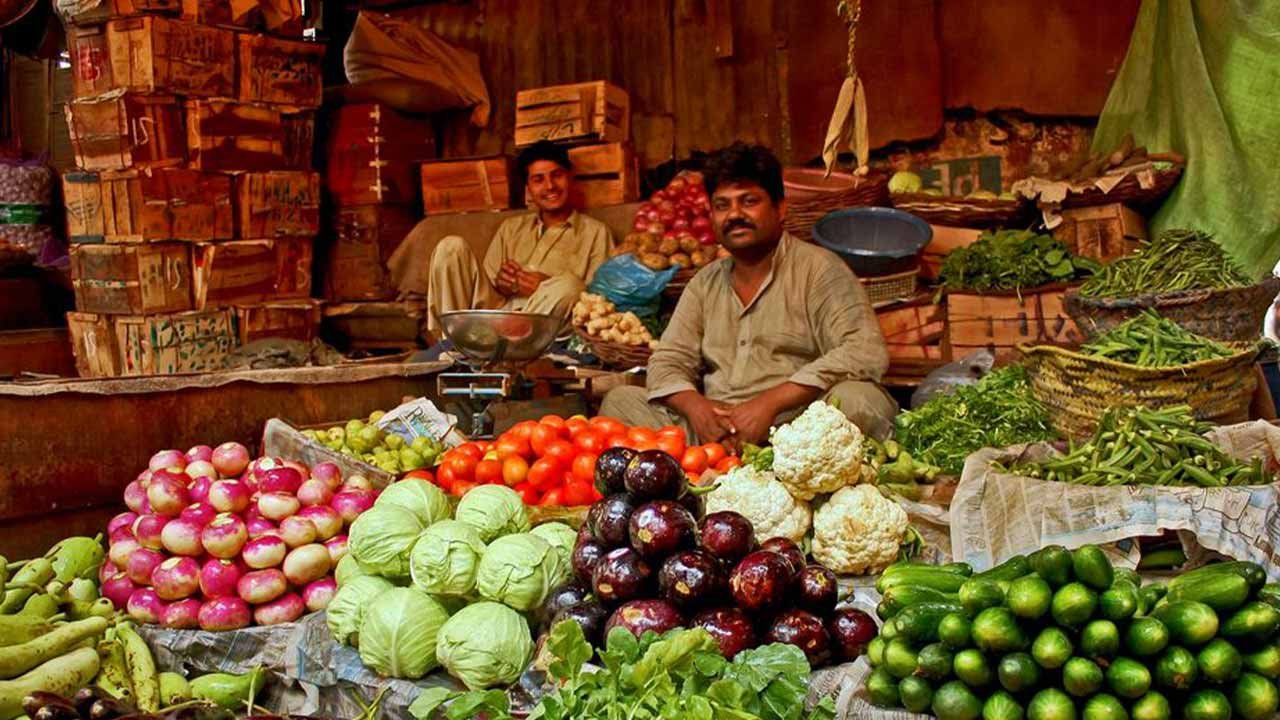
    Extreme flooding has hampered the supply of perishable items from agricultural areas, driving up the prices of onions and tomatoes in city markets.

    While tomatoes cost Rs400-450 per kilogramme (kg), onions cost Rs350-400 per kg. Onion prices rose by Rs75 per kg week over week in the official rate list, while tomato prices rose by Rs234 per kg.

    The supply chain is hampered by road blockages and transportation restrictions in flood-affected areas, according to The News.

    Onion A-grade cost Rs75 more per kg, was fixed at Rs180-190, and was sold for Rs350-400 per kg. Onion B-grade cost Rs160-167 per kg, was sold for Rs235-250 per kg, and onion C-grade was priced at Rs180-200 per kg.

    Tomato A-grade price increased by Rs234 per kg, maintained at Rs320-330 per kg, sold for Rs400-450 per kg, followed by B-grade price increase to Rs290-300 per kg, C-grade price increase to Rs240-250 per kg, and B&C price increase to Rs350 per kg.

    Chinese carrot prices increased by Rs11 per kg, from Rs80 to Rs85 per kg to Rs120 to Rs160 per kg for sale. Fenugreek (Methi) remained constant at Rs250-260 per kg and was sold for Rs400 per kg.

    This week, the price of chicken also climbed by Rs20 per kg, from Rs240 per kg to Rs280–300 per kg, and the price of chicken meat by Rs30 per kg, from Rs362/kg to Rs380–650/kg.

    Cucumber Farm increased its price by Rs50 per kg, fixed at Rs120-125 per kg, sold at Rs150 per kg, and locally sold cucumbers were sold for Rs200 per kg.

    Brinjal price increased by Rs5 per kg, from Rs86 to Rs90 per kg, and was sold for Rs120 to Rs140 per kg.

    Price of bitter gourd rose by Rs10 per kg, fixed at Rs160-165 per kg, and sold at Rs200 per kg.

    Local lemon prices increased by Rs20 per kg, from Rs235-245 per kg to Rs280-320 per kg when sold. Pumpkin remained at Rs60–63 per kg, sold for Rs80–100 per kg, and pumpkin long was sold for Rs140–150 per kg.