Tag: food

  • Over 95 Percent Of Sudanese Cannot Afford A Meal A Day: WFP

    Over 95 Percent Of Sudanese Cannot Afford A Meal A Day: WFP

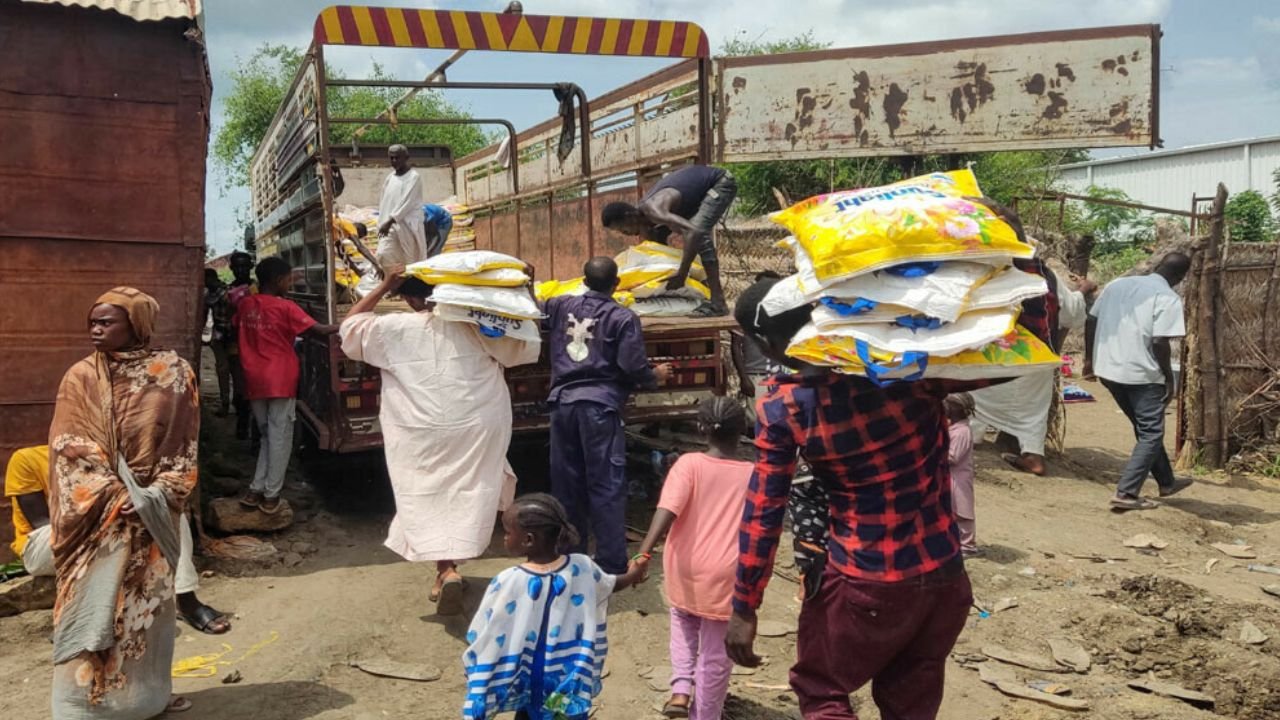
    Ten months into a war that has sent Sudan to the “verge of collapse”, the vast majority of its people are going hungry, the UN’s World Food Programme said Wednesday.

    “At this point, less than five percent of Sudanese can afford a square meal a day,” the WFP’s Sudan country director, Eddie Rowe, told reporters in Brussels.

    Since last April, Sudan has been gripped by fighting between the regular army and the paramilitary Rapid Support Forces, which has killed thousands and created what the United Nations calls “the world’s largest displacement crisis”.

    A combined 10.7 million people have been uprooted by the current war and previous conflicts, according to the UN.

    Nine million remain displaced within Sudan, where Rowe said a “lethal cocktail of continued conflict, stalled harvests and rampant and consistent displacement risks plunging millions more into a catastrophic humanitarian disaster.”

    Across Sudan, which the WFP says was already facing one of the world’s worst food crises before the war, 18 million people are facing acute food insecurity.

    Of those, Rowe said “close to five million are on the precipice of catastrophe” — enduring one of the worst emergency classifications the WFP uses, second only to famine.

    Aid groups have for months warned that as a result of hampered humanitarian access and severe underfunding, the spectre of famine looms over Sudan.

    But the same obstacles to aid delivery inhibit the ability to determine the extent of the catastrophe.

    According to Michael Dunford, WFP’s Eastern Africa regional director, there is a major issue in “the availability of the data to confirm one way or the other whether or not the thresholds (required to declare a famine) have been met”.

    With WFP only able to reach 10 percent of those in need, “there are large tracts of the country that we simply cannot access,” Dunford told reporters.

    Sudan’s most fertile regions could have helped ward off famine, if not for the fighting encroaching into the country’s agricultural heartlands.

    In December, a paramilitary advance brought the war to Al-Jazira state, just south of the capital Khartoum, which was set to produce the bulk of Sudan’s grains for the season.

    “Thousands of smallholder farms and even the large-scale schemes have been deserted, because people are on the move running away from the conflict,” Rowe said.

    “As we approach the hunger season,” he said, the crisis is only set to “further deteriorate”.

    The lean season, roughly from April to July, usually sees food prices run high as stocks dwindle ahead of the next harvest.

    With markets across the country already empty and an ongoing communications blackout hampering all transactions, Dunford says the future is bleak.

    “This is a country on the verge of collapse,” he said.
  • Food watchdog lodges complaint over Nestle mineral water ‘fraud’

    Food watchdog lodges complaint over Nestle mineral water ‘fraud’

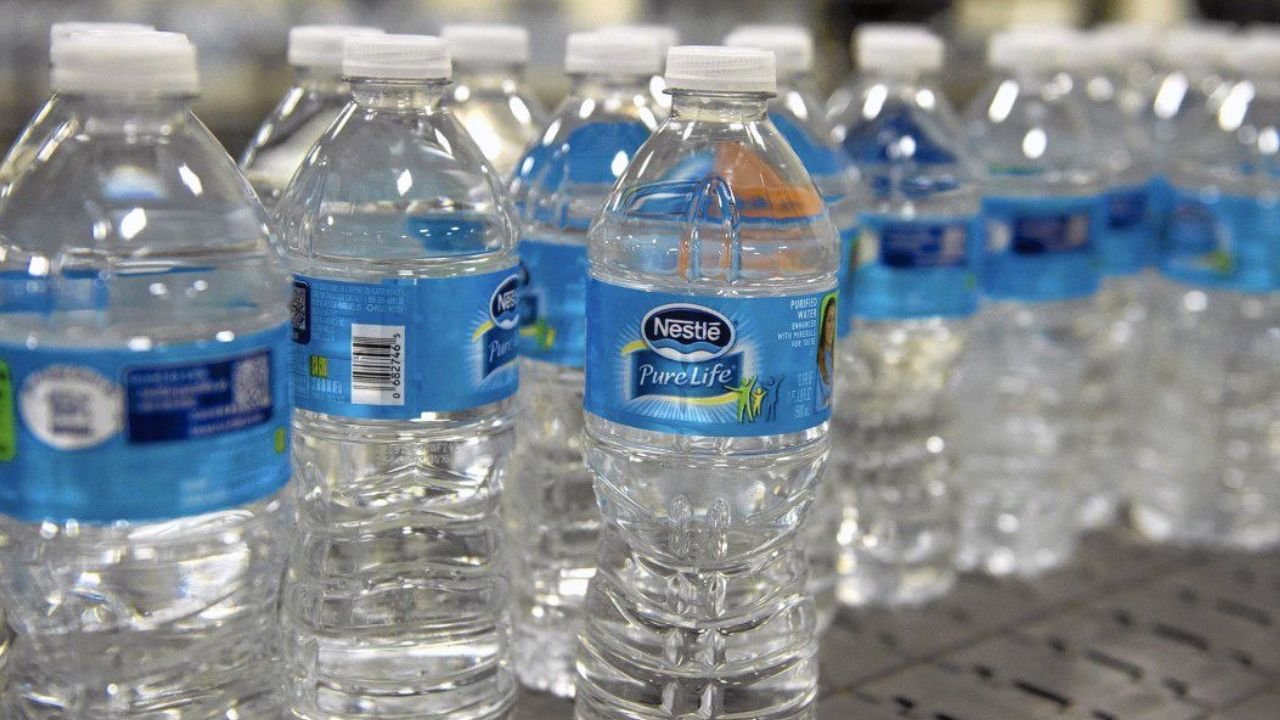
    Paris, France – Consumer watchdog Foodwatch said it was filing a legal complaint Wednesday against food giant Nestle and another group over them allegedly fraudulently treating water for their top mineral water brands.

    A government probe reported by media last month said about 30 percent of mineral water sold in France had undergone purification treatment only meant to be used on tap water.

    Foodwatch said it was lodging its complaint with a Paris court against Nestle Waters, behind brands such as Perrier and Vittel, and the Sources Alma group, which also owns several water labels.

    “This is a massive fraud for which Nestle Waters, the Sources Alma group and the French government must answer,” the European watchdog said.

    “Nobody, not even a multinational like Nestle, is above the law,” Foodwatch spokeswoman Ingrid Kragl said.

    The NGO claimed Nestle Waters and Sources Alma had “illegally processed their bottled waters and then sold them without informing consumers”.

    French law, based on a European Union directive, forbids such purification of mineral water, which is supposed to be of naturally high quality before bottling.

    French prosecutors last month said they had opened an investigation into suspected fraud by Nestle Waters after a complaint by France’s ARS health regulator.

    They spoke after Le Monde and Radio France reported that a government investigation had concluded in 2022 that “almost 30 percent of commercial brands undergo non-compliant treatments”.

    Nestle Waters said it put some top brands, such as Perrier and Vittel, through ultraviolet light and active carbon filters “to guarantee food safety”, and had informed French authorities about this in 2021.

    A government source told AFP that authorities had found “no health risk” linked to the bottled water.

    Foodwatch said it had also written to the European Commission, denouncing “the complacency of France, which… should have alerted European authorities and the other member states importing these waters”.

    max/spb/ah/rl

    © Agence France-Presse

  • Samosa recipes, Oppenheimer and Aliza Sahar; Pakistan’s most searched topics on Google in 2023

    Billions of topics are searched on Google every day and at the end of every year, the search engine releases a list of the most popular searches.

    Google has now released a list of the most searched topics in Pakistan during 2023.

    The eight different categories disclosed include cricket matches, events/occasions, how-to, news, recipes, TV shows and movies, technology and personalities.

    So, what has been searched under these categories?

    Cricket games

    Pakistan vs New Zealand was the most searched match in this category followed by the match between Pakistan and Afghanistan.

    Pakistan versus Australia in third, then India versus New Zealand, followed by Pakistan versus Netherlands in fifth place.

    Events/Occasions

    Pakistan Super League is at the top of this category followed by the Cricket World Cup, Asia Cup, Indian Premier League while the Ashes is on the fifth, respectively.

    Movies and TV shows

    This year in Pakistan the most searched movie was surprisingly from Hollywood rather than a Pakistani or Indian movie.

    Oppenheimer was the most searched followed by Shahrukh Khan’s Jawan (second) and Pathaan (third).

    Hollywood film Barbie was at the fourth position while Bollywood film Tiger 3 came fifth in the category.

    News

    The Gaza war topped the category in news that Pakistanis searched on Google.

    This was followed by Ehsaas program, Aliza Sahar, Akshay Kumar while Kajol came fifth, respectively.

    Recipes

    Forever-food-lovers, Pakistanis searched for samosa recipes followed by kaleji and then sheer khurma.

    Recipes for namkeen gosht and tomato ketchup recipes came in fourth and fifth respectively.

    Technology

    The top search in this category is not surprising as it has attracted people from all over the world over the past year: ChatGPT — chatbot based on artificial intelligence (AI) technology, which was introduced in November 2022 and went global in 2023.

  • The Weeknd donates $2.5 million to Gaza for aid

    The Weeknd donates $2.5 million to Gaza for aid

    Singer The Weeknd has made international headlines after his XO Humanitarian Fund is sending $2.5 million to Gaza to provide four million meals for civilians. Israel is again bombing the vulnerable population where already more than 15,000 civilians have died. Currently, the death toll after the ending of truce is 160 Palestinians.

    The artist, whose real name is Abel Tesfaya, stepped into the role of the Goodwill Ambassador in 2021 in October 2021, and set up the XO Humanitarian Fund with the United Nations World Food Program.

    “WFP is working round the clock to provide aid in Gaza but a major scale up is needed to address the desperate level of hunger we are seeing,” said UN WFP’s director for the Middle East, North Africa and Eastern European Region,  Corinne Fleischer. “Our teams need safe and sustained humanitarian access, and continued support from donors to reach as many people as we can. We thank Abel for this valuable contribution towards the people of Palestine. We hope others will follow Abel’s example and support our efforts.”

    On November 23, Tunasian Egyptian actress Hend Sabri announced on her Instagram account that she was resigning from her role as Goodwill Ambassador from the UN World Food Program because of the organisation’s inability to condemn the ongoing genocide of Gaza.

    “Over the past weeks, I have witnessed and shared the experiences of my dedicated WFP colleagues. Their frustration at being unable to do what they do best towards children, mothers, fathers and grandparents in Gaza. They could only do so much in the face of a grinding war machine that would not stop and would not spare civilians the agony and anguish as war encircles them.”

    “I had faith,” the actress wrote to her 3.3 million followers, “that WFP – which was named Nobel Peace Prize Laureate only three years ago after championing UN resolution 2417, against using hunger and starvation as a weapon of war – would use its voice forcefully as it had done in multiple emergencies and human crises. However, hunger and starvation have been used as weapons of war for over the past 46 days against more than 2 million civilians in Gaza.”

  • How many Pakistanis have never eaten noodles?

    Gallup Pakistan has conducted an interesting survey on the consumption of noodles by Pakistanis.

    Originally invented in China, noodles are devoured around the world and are usually easy-to-make, especially the packaged variety.

    Gallup Pakistan has released a new poll based on public opinion, according to which a surprising 59 per cent of Pakistanis have never eaten noodles, nor do they know what it tastes like.

    However, 39 percent of Pakistanis declared noodles as their favourite dish.

  • Pakistan imports tea worth Rs31.64 billion in just two months 

    Pakistan imports tea worth Rs31.64 billion in just two months 

    According to data from the Pakistan Bureau of Statistics (PBS), Pakistan’s imports of food items in the first two months of the fiscal year 2023–24 amounted to Rs378.98 billion. 

    The PBS data reveals that during this two-month period, Pakistan imported tea worth Rs31.64 billion, a notable increase from Rs20.23 billion during the corresponding period in the previous year.  

    Additionally, Pakistan imported palm oil valued at Rs158.7 billion and soybean oil worth Rs13.56 billion. 

    Furthermore, Pakistan imported pulses worth Rs48.25 billion and dry fruits valued at over Rs2 billion during the same two-month period. 

    It is worth noting that in July, the State Bank of Pakistan (SBP) lifted all import restrictions as part of its efforts to meet the conditions set by the International Monetary Fund (IMF). 

    Read more: Pakistani rupee gains value, now at Rs292.78 per US dollar 

    The central bank issued a circular to abolish these import restrictions and authorised banks to facilitate remittances to clear more than 6,000 containers. 

    The SBP clarified in the circular that remittances would be made available for all imports following the implementation of the latest order. 

  • Food outlets sealed in Rawalpindi

    The district administration in Rawalpindi has on Friday sealed Kentucky Fried Chicken (KFC) and OMG outlets in Chaklala Scheme-III and Askari-3 for using spoiled meat and poor hygiene in kitchens, reports Dawn News.

    Assistant Commissioner Cantonment Qandeel Fatima Memon sealed KFC Scheme 3 when she received a complaint that a steel wire was found in the fillet of a burger. The restaurant was sealed after the confirmation of the genuinity of the complaint.

    The outlets have been given a warning and told to oversee their kitchen staff and food preparation.
    OMG Restaurant in Askari 3 was sealed during the second raid.

    Commissioner Memon spoke with Dawn, stating that she received a complaint about OMG about smelly burgers. Resultantly, their kitchen was raided and the condition of the kitchen turned out to be “pathetic, as there were cockroaches everywhere and the jars laid without a lid so the restaurant was sealed”.

    She added that the food outlets had to obtain medical examination certificates from the district health authority and that it was mandatory for the food outlets to get the medical test of the chefs and workers twice a year and obtain medical reports from government hospitals.

    She also said the provincial government had directed to take strict measures against putting people’s lives at risk and she plans on conducting more surprise visits in the cantonment areas in coming days.

    Assistant Commissioner Cantonment Qandeel Fatima Memon stated that district administration Rawalpindi is available to look after its people and to ensure that clean and healthy food is served to people of the district, reports Dawn.

  • Influencer who ate only fruits died of malnutrition, friends say

    Influencer who ate only fruits died of malnutrition, friends say

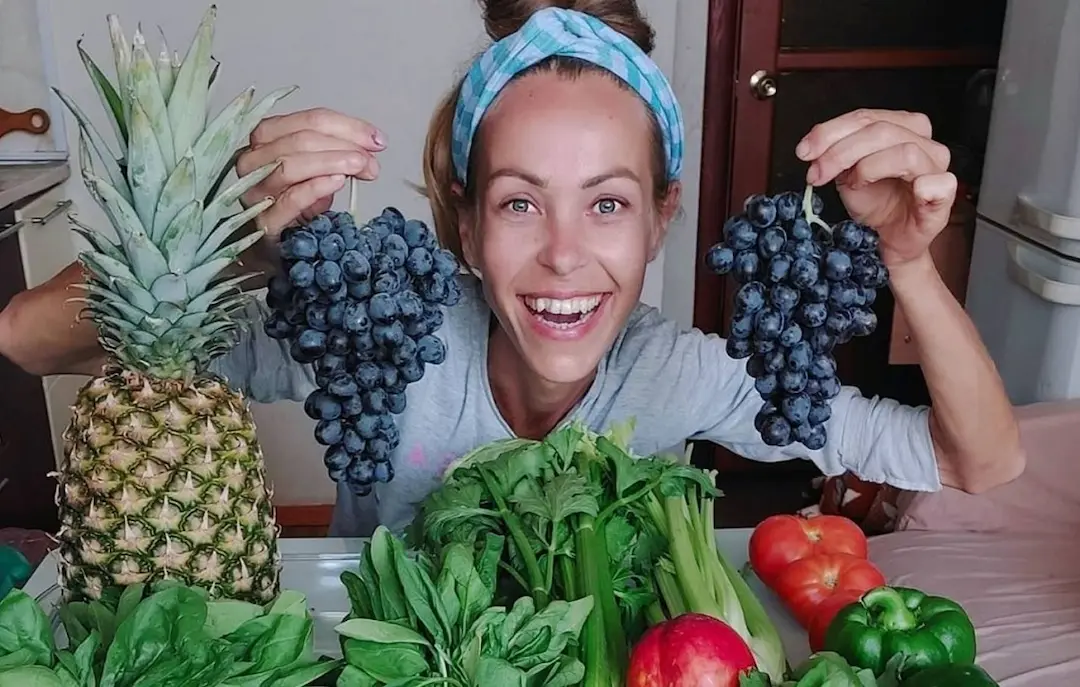
    Zhanna Samsonova, a vegan social media influencer who touted her diet of just “fruits, sunflower seed sprouts, fruit smoothies and juice,” has passed away, her mother has confirmed.

    The 39-years-old, who used the same surname D’Art on social media, was based in Phuket, Thailand, however media reports have said that she was touring South East Asia at the time of her death. She passed away on July 21 in Malaysia after seeking medical help for an unknown condition.

    Her friends have alleged that she died of malnutrition as a result of her only-fruit diet. “You don’t need to be a doctor to understand where this will lead,” a friend was quoted by Newsflash.

    Another of her friends also recalled seeing her “exhausted, with swollen legs,” a few months before her death. “They sent her home to seek treatment. However, she ran away again. When I saw her in Phuket, I was horrified,” they said.

    On her social media pages, Zhanna would promote a raw consisting mainly of fruit and seeds. Her mother has said that the family is waiting for the death certificate for an official cause of death, however, she suspects Zhanna died of a “cholera-like infection”.

  • ‘World’s hardest dish’; Chinese street food vendors selling stir-fried stones

    ‘World’s hardest dish’; Chinese street food vendors selling stir-fried stones

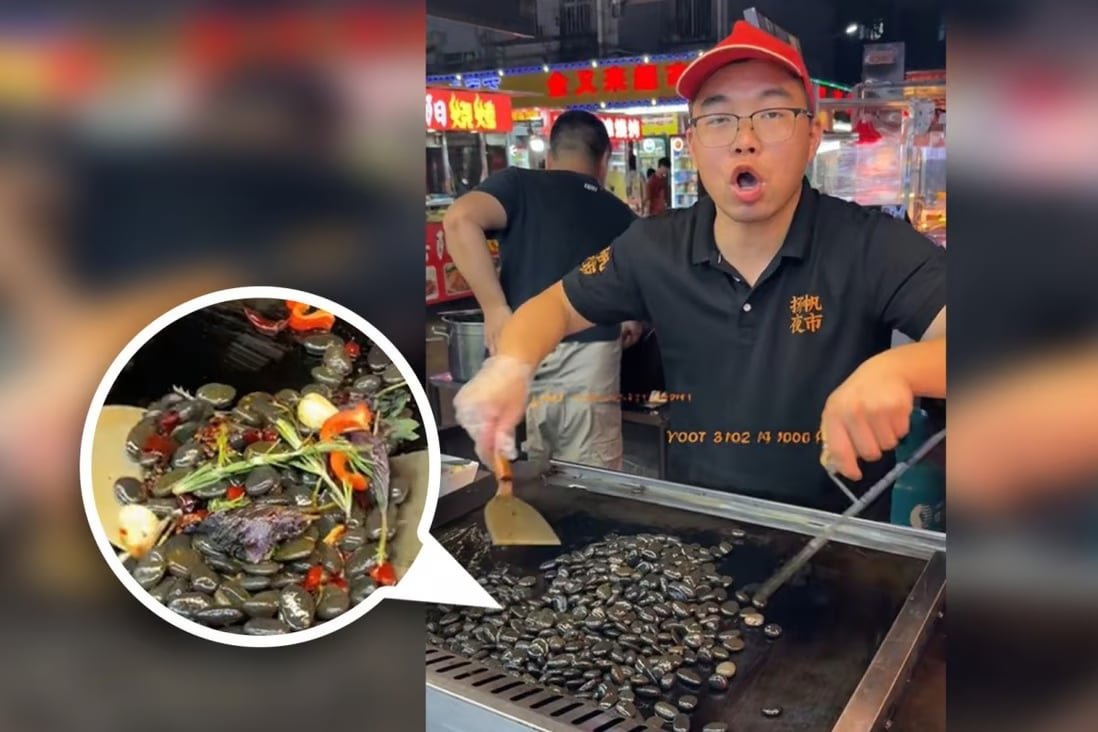
    Videos of customers sampling suodiu have appeared all over Chinese social media. Suodiu is a dish originating from the province Hubei, and it is made up of chilli oil, garlic, diced peppers, and – the main ingredient – river rocks. 

    Vendors pour chilli oil onto pebbles being grilled teppanyaki-style, sprinkle garlic sauce all over them, then stir-fry everything with a mix of garlic cloves and diced peppers. The way you’re meant to eat it is by sucking on the small rocks to relish the rich and spicy flavour before spitting out the rock.

    Hence the name suodiu, which means “suck and dispose”. The dish is believed to date back hundreds of years. It was passed down for generations by boatmen through their oral history.

    In a report by the Guardian when boatmen in the landlocked province of Hubei would run out of animals and vegetables while travelling along the Yangtze River, and would then turn to – you guessed it – the rocks beneath the river.

    Unsurprisingly, suodiu faded in popularity after Hubei developed economically, and motorised vessels appeared in the Yangtze, as it reduced the chances of boatmen being left stranded in the river. 

    The dish is also linked to the Tujia people, an ethnic minority who originate from the Wuling mountain range that straddles the borders of Hubei, Hunan and Guizhou.

    But what does it taste like?!

    According to one food blogger, these rocks acquire the taste of marine life over time and start tasting like fish. So when they’re cooked, they have a flavour similar to that of fish, oysters or clams. 

    Are you going to be trying suodiu on your next trip to China?

  • Indian food inspector drains dam to find fallen phone

    Rajesh Vishwas, a member of the Indian government, was suspended after he gave an order to empty a water reservoir in order to retrieve his phone, BBC reported on Saturday.

    The food inspector was taking a photo when his phone, which was valued at roughly $1,200, fell into the Kherkatta Dam in Chhattisgarh.
    Millions of gallons of water had to be pumped out of the dam. The process of draining the dam took three days.

    Vishwas has said in a video statement that after local divers failed to find it, he paid for a diesel pump to be brought in.

    The process was halted after an official from the water resource department arrived following a complaint.

    “He has been suspended until an inquiry. Water is an essential resource and it cannot be wasted like this,” Kanker district official Priyanka Shukla told an Indian newspaper.

    However, Vishwas insisted that he had not abused his authority and that the water had been drained because it was “