Tag: food

  • Weekly inflation down 8.1% due to lower FCA, timely import of vegetables

    Weekly inflation down 8.1% due to lower FCA, timely import of vegetables

    Weekly inflation measured by the Sensitive Price Indicator (SPI) for the week ending September 22, 2022, decreased by 8.11 per cent.

    The year-over-year (YoY) trend shows a rise of 29.28 per cent, which is down around 11 per cent from the 40.58 per cent observed last week. The YoY rise stayed above 40 per cent during the previous five weeks, reaching an all-time high of 45.50 per cent.

    The price increase over the previous year was mostly brought on by an increase in prices of tomatoes (117.55 per cent), diesel (105.12 per cent), petrol (91.87 per cent), pulse masoor (75.38 per cent), pulse gram (73.55 per cent), mustard oil (65.64 per cent), cooking oil-5 litre (63.63 per cent), washing soap (61.50 per cent), vegetable ghee-2.5 kg (59.42 per cent), pulse mash (56.93 per cent), vegetable ghee-1 kg (56.09 per cent), onions (50.83per cent) and LPG (49.89 per cent), while decrease was observed in the prices of electricity for q1 (45.61 per cent), chilies powder (43.05 per cent), sugar (19.20 per cent) and gur (3.37 per cent).

    According to the most recent PBS data issued on Friday, the SPI for the week under review in the aforementioned category was recorded at 203.21 points compared to 221.14 points observed in the previous week.

    Out of 51 items, 26 items (50.98 per cent) saw price increases during the week, 10 items (19.61 per cent) saw price decreases, and prices of 15 items (29.41 per cent) remain unchanged.

    For the first quarter, power charges were among the items whose average prices decreased on a week-over-week (WoW) basis showing a decrease of 64.23 per cent.

    Other items which recorded a decrease include tomatoes (8.15 per cent), LPG (3.82 per cent), bananas (1.90 per cent), garlic (1.31 per cent), pulse masoor (0.99 per cent), cooking oil-dalda or other similar brand (sn), 5 litre tin each (0.78 per cent), onions (0.46 per cent), vegetable ghee-dalda/habib 2.5 kg tin each (0.34 per cent) and vegetable ghee-dalda/habib or other superior quality 1 kg pouch each (0.06 per cent).

    The general populace has been impacted by the heavy rains and flooding since they are lacking in basic commodities while supply lines for food products have been disrupted.

    On the other hand, timely imports from Iran and Afghanistan are accountable for the decrease in vegetable prices, particularly for onions and tomatoes.


  • British pound hits 37-year low against US dollar as recession fears grow

    British pound hits 37-year low against US dollar as recession fears grow

    As central banks raised interest rates to combat soaring inflation, the pound fell to a record 37-year low versus the US dollar on Friday, raising concerns among traders about the economy’s outlook.

    Following the Bank of England’s Thursday increase in borrowing prices by 50 basis points, the value of the pound dropped as low as $1.1151, its lowest level since early 1985.

    That came after the Federal Reserve raised interest rates by three-quarters of a point on Wednesday and hinted at further increases.

    Additionally, the dollar rose versus the euro, with the euro trading at $0.9753, a fresh 20-year low.

    The Fed has taken a notably hawkish stance, stating it would not relent until the inflation, which is near four-decade highs, is controlled, even at the expense of the economy, while central banks around the world are raising borrowing prices.

    The focus of traders is now on London, where the new finance minister Kwasi Kwarteng is scheduled to present a mini-budget to assist individuals and companies.

    On Thursday, Kwarteng announced he would repeal a recent salary tax introduced by his predecessor Rishi Sunak and would disclose the price tag for the new administration’s proposal to cap energy costs for both homes and companies.

    It occurs when the Bank of England issues a warning that Britain is on the verge of entering a recession as a result of skyrocketing gasoline and food prices.

  • Weekly inflation decreases only 0.58 per cent from record high

    Weekly inflation decreases only 0.58 per cent from record high

    According to Pakistan Bureau of Statistics (PBS), the Sensitive Price Index (SPI) for the week ending September 8, 2022, decreased by 0.58 per cent as a result of falling food prices.

    In comparison to the previous week’s record high of 45.50 per cent, the yearly trend shows an increase of 42.70 per cent.

    The year-on-year increase was driven by an increase in prices of tomatoes (144.25 per cent), diesel (114.08 per cent), petrol (98.73 per cent), pulse masoor (76.34 per cent), cooking oil-5 liter (67.99 per cent), mustard oil (66.53 per cent), LPG (64.98 per cent), washing soap (64.50 per cent), electricity for Q1 (63.03 per cent), vegetable ghee-2.5 kg (62.53 per cent), pulse gram (61.02 per cent), onions (59.97 per cent) and vegetable ghee-1 kg (58.19 per cent), while a decrease was observed in the prices of chilies powder (43.42 per cent), sugar (18.07 per cent) and gur (2.08 per cent).

    As per the latest data, the SPI went down from 222.85 per cent during the week ended September 1st 2022 to 221.55 per cent during this week.

    During the week, out of 51 items, prices of 26 items (50.98 per cent) increased, nine items (17.65 per cent) decreased and 16 (31.37 per cent) items remained stable.

    The items which got more expensive include LPG (10.66 per cent), wheat flour (4.15 per cent), eggs (3.96 per cent), bread (3.27 per cent), pulse moong (2.74 per cent), curd (2.72 per cent), tea-lipton (2.50 per cent), pulse gram (1.65 per cent), chicken (1.58 per cent), milk fresh (1.57 per cent), fire wood (1.54 per cent), potatoes (1.02 per cent), and others

    A reduction was observed in the prices of onions (41.99 per cent), tomatoes (8.11 per cent), bananas (2.51 per cent), pulse masoor (1.37 per cent), vegetable ghee-1 kg (0.55 per cent), cooking oil-5 liter (0.33 per cent), mustard oil (0.16 per cent) and vegetable ghee-2.5 kg and sugar (0.11 per cent) each.

    Highest week-on-week decrease

    Onions: 41.99 per cent

    Tomatoes: 8.11 per cent

    Bananas: 2.51 per cent

    Pulse Masoor: 1.37 per cent

    Vegetable ghee (1kg): 0.55 per cent

    Highest week-on-week increase

    LPG: 10.66 per cent

    Flour: 4.15 per cent

    Eggs: 3.96 per cent

    Bread: 3.27 per cent

    Pulse Moong: 2.74 per cent

    Highest year-on-year increase

    Tomatoes: 144.25 per cent

    Diesel: 114.08 per cent

    Petrol: 98.73 per cent

    Pulse Masoor: 76.34 per cent

    Cooking oil (5 litre): 67.99 per cent

  • Pakistan inflation hits highest level since 1973

    Pakistan inflation hits highest level since 1973

    According to the Pakistan Bureau of Statistics (PBS), Pakistan’s Consumer Price Index-based inflation (CPI) climbed by 27.3 per cent on a year-over-year basis in August 2022 as opposed to an increase of 24.9 per cent the previous month and 8.4 per cent in August 2021.

    Inflation has increased by an average of 26.1 per cent in the first two months of the current fiscal year 2023 compared to 8.36 per cent in 2022. August’s inflation rate was the highest since November 1973.

    According to brokerage house Arif Habib Limited (AHL) the Consumer Price Index (CPI) for the month of Aug’22 clocked in at 27.26 per cent YoY (+2.45 per cent MoM). This takes 2MFY23 average inflation to 26.1 per cent compared to 8.36 per cent in 2MFY22.

    CPI inflation

    Urban

    In August 2022, urban CPI inflation was 26.2 per cent on an annual basis, up from 8.3 per cent in August 2021 and 23.6 per cent the month before.

    It climbed by 2.6 per cent month over month in 2022, compared to 4.5 per cent the month before and 0.5 per cent in August 2021.

    Rural

    In addition, rural CPI inflation reached 28.8 per cent on an annual basis in August 2022, up from 8.4 per cent in August 2021 and 26.9 per cent in the preceding month.

    In August 2022, it climbed by 2.2 per cent month over month, compared to 4.2 per cent the month before and 0.7 per cent in August 2021.

    Further increase expected

    Rising inflation has become a major worry for Pakistan’s economy, which is already experiencing a loss of foreign exchange reserves.

    In the midst of severe flash floods that have resulted in at least 1,100 fatalities, extensive destruction, and millions of displaced people, experts have cautioned that the country will experience additional increases in food costs.

  • Annual inflation in Pakistan jumps to 38.63% after weekly increase of 0.82%

    Annual inflation in Pakistan jumps to 38.63% after weekly increase of 0.82%

    The sensitive price indicator (SPI) hit an annualised high of 38.63 per cent due to a lack of perishable goods brought on by severe rains, and weekly inflation increased by 0.82 per cent for the seven days ending August 4, 2022.

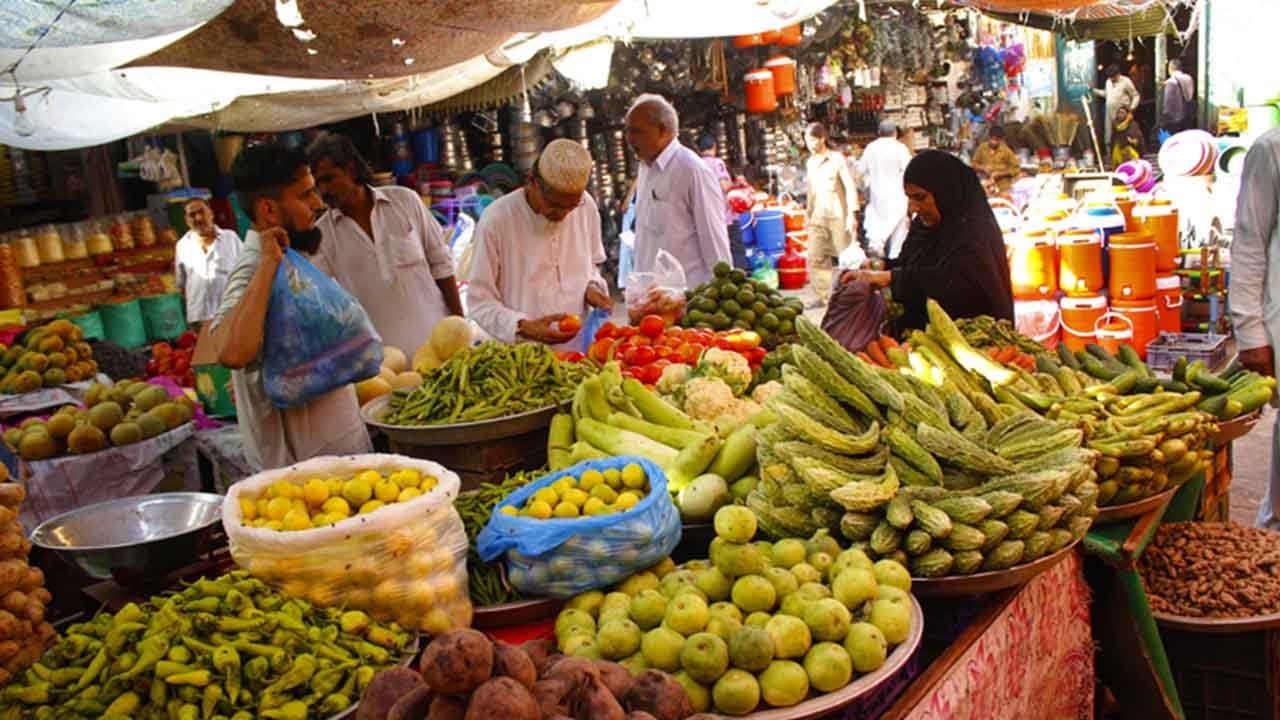
    The base for most cooked meals in the country is an onion and tomato. Onions increased in price from Rs75.41/kg to Rs94.2/kg while tomatoes increased from Rs74.07/kg to Rs82.91/kg.

    Data from the Pakistan Bureau of Statistics (PBS) indicates that the increase is attributable to the increased price of diesel (109.15 per cent), onions (107.95 per cent), pulse masoor (106.71 per cent), petrol (88.94 per cent), cooking oil 5 litre (74.44 per cent), mustard oil (73.89 per cent), chicken (73.42 per cent), vegetable ghee 1 kg and 2 kg (72.26 and 70.48 per cent), washing soap (62.62 per cent), pulse gramme (59.07 per cent), electricity for Q1 (52.61 per cent), gents sponge slippers (52.21 per cent), pulse maash (46.01 per cent) and garlic (41.16 per cent).

    According to The News, consumers are struggling with soaring food and fuel prices. Hi-speed diesel was being sold last August 5 for Rs117.58 per litre, but it is now Rs245.92 per litre.

    Various items in the SPI basket are given varying weightages. The goods with the heaviest weights in the bottom quintile are milk (17.5449 per cent), electricity (8.3627 per cent), wheat flour (6.1372 per cent), sugar (5.1148 per cent), firewood (5.0183 per cent), long cloth (4.2221 per cent), and vegetable ghee (3.2833 per cent).

    While the cost of firewood and electricity remained consistent, the cost of milk, wheat flour, sugar, long fabric, and vegetable ghee 2.5kg increased. Vegetable ghee 1kg saw a decrease in price.

    SPI is made up of 51 necessities that were gathered from 50 markets spread over 17 cities across the nation.

    Out of 51 goods, 33 (64.71 per cent) of the prices rose during the week, 4 (7.84 per cent) of the prices fell, and only 14 (27.45 per cent) of the prices kept the same.

    The price of onions increased by 24.92 per cent, tomatoes by 11.93 per cent, pulse moong by 5.72 per cent, pulse mash by 5.28 per cent, potatoes by 5.03 per cent, pulse masoor by 4.43 per cent, diesel by 3.78 per cent, pulse gramme by 2.69 per cent, eggs by 2.44 per cent, powdered milk by 1.61 per cent, gur by 1.53 per cent, LPG by 1.49 per cent, salt by 1.46 per cent, and garlic by 1.30 per cent on a WoW basis.

  • ‘90% of fish consumed in Pakistan is unfit for human consumption’: WWF

    ‘90% of fish consumed in Pakistan is unfit for human consumption’: WWF

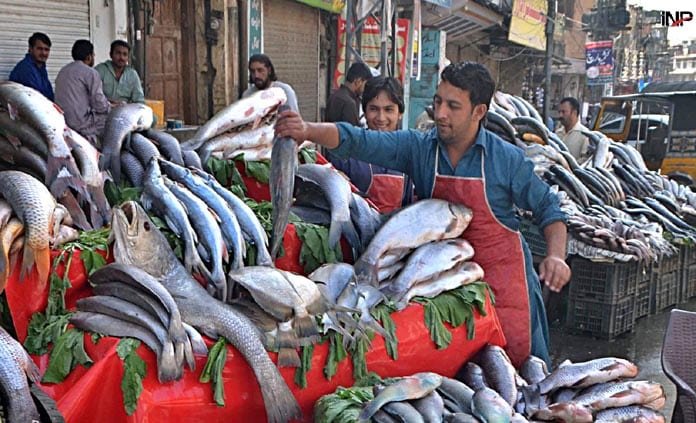
    An official at World Wide Fund (WWF) has revealed that approximately 90 per cent of the fish consumed in Pakistan is contaminated and unfit for human consumption.

    Muhammad Moazzam Khan, WWF’s technical advisor on marine fisheries, made the statement at a seminar titled “Blue Economy: An Avenue for Development in Pakistan” held at the Pakistan Institute of International affairs.

    He said that most of the fish sold on roadside carts is unhealthy for health because of lack of proper processing. He suggested that fish should be stored between 0 to 5 degrees Celsius to keep it from rotting.

    “Fish are very delicate protein items and putrefy very quickly if not iced or frozen as soon as possible,” said Khan. “It is usually kept at room temperature and sometimes at above 40 degrees Celsius and vendors sprinkle water on them to make them look fresher and keep them from decaying. But they have already become unfit for consumption, yet people buy and consequently, fall sick.”

    He also mentioned that the export of seafood was increasing but due to a lack of processing facilities and low-quality control, we were unable to achieve higher numbers. Pakistan exported around 10 per cent of the produce and the rest was degraded or damaged as most boats lacked deep freezers and other storage facilities.

  • Punjab Food Authority burns 200 kg dead meat in Lahore

    Punjab Food Authority burns 200 kg dead meat in Lahore

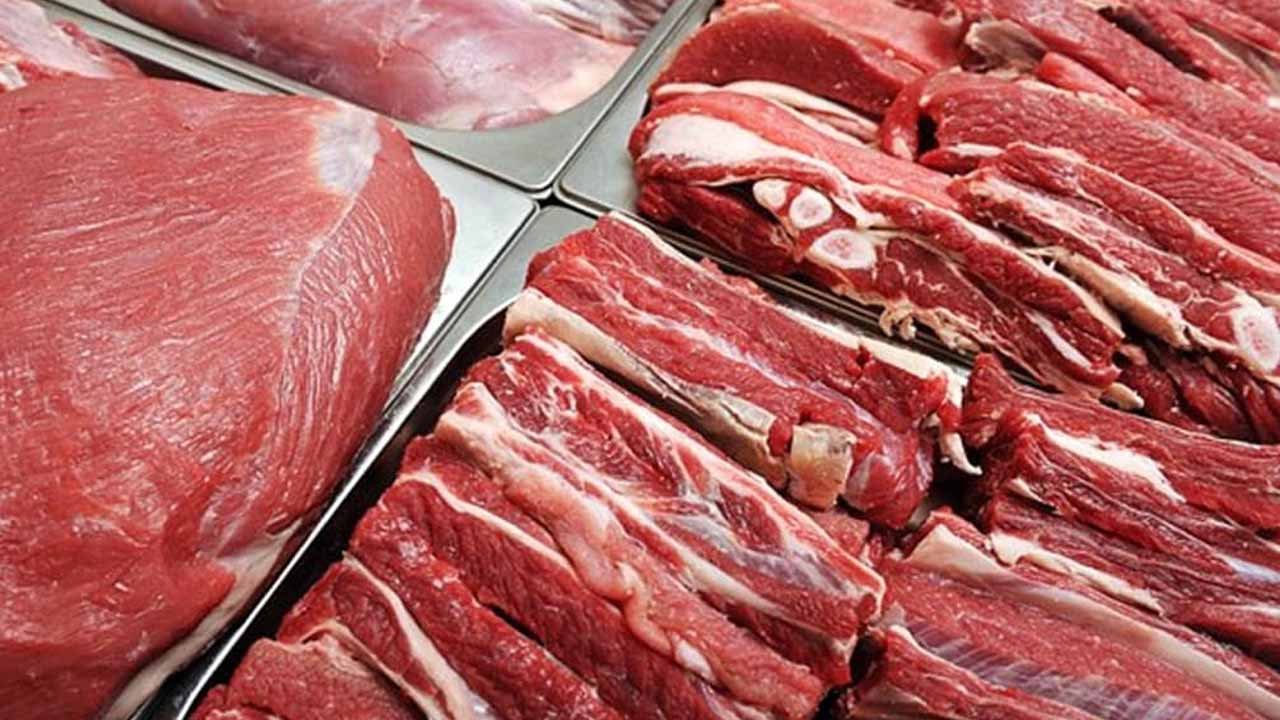
    Following a seizure during an operation in the provincial metropolis on Thursday, the Punjab Food Authority (PFA) has burned 200 kilogrammes of dead animal meat at PAMCO Furnace in accordance with environmental policy.

    As the Provincial Food Act was violated, the PFA reported the offender, Salik Ali (supplier), to the local police station.

    According to PFA Director General Shoaib Khan Jadoon, a raid was conducted against the supplier in Bakar Mandi after receiving a tipoff, and a man was caught in the act. He claimed that five maunds of ill and subpar chicken had been transported into the city on a vehicle (SAB-1493) for distribution to various neighbourhood fast food joints and eateries.

    According to PFA DG, using dead meat is unhealthy and unfit for human consumption. He issued a warning to butchers and meat suppliers, telling them to only sell the meat of healthy animals.

    In other news, the PFA ceased a well-known confectionery group’s production in Lahore on Friday due to the use of expired ingredients in the making of sweets.

    When PFA agents raided a factory that made sweets and pastries, they caught the employees in the act of making candies using semolina that had been infested with insects and expired, inferior food colours. During the raid, the team also noticed the lack of cleanliness.

  • Pakistan’s inflation hits 21.32 per cent in June 2022

    Pakistan’s inflation hits 21.32 per cent in June 2022

    In June 2022, Pakistan’s yearly inflation rate reached a 13-year high of 21.3 per cent, up from 9.7 per cent in June 2021 and 13.8 per cent in May 2022, according to the most recent data made public recently by the Pakistan Bureau of Statistics (PBS).

    According to PBS, monthly CPI-based inflation rose by 6.3 per cent in June 2022 as opposed to a 0.4 per cent increase the month before and a 0.3 per cent decrease in June 2021.

    Compared to increases of 14.1 per cent a month prior and 17.6 per cent a year prior, the Sensitive Price Index (SPI) inflation on a YoY basis increased by 21.7 per cent in June 2022. On a month-over-month basis, it increased by 6.2 per cent in June 2022 compared to a 0.6 per cent increase the previous month and a (-)0.4 per cent decrease in June 2021.

    The Consumer Price Index (CPI) reached 21.3 per cent on a year-over-year (YoY) basis as Pakistan’s economy battles a widening current account deficit brought on by a high import bill, rising inflation has become a major concern.

    In an effort to combat economic headwinds, the State Bank of Pakistan (SBP) increased the key interest rate by 150 basis points to 13.75 per cent earlier in May. At the time, the central bank predicted that as electricity and fuel subsidies are eliminated, inflation is likely to spike briefly, remain high through FY23, and then drop precipitously in FY24, according to Brecorder.

    The SBP is currently scheduled to decide the key interest rate at its upcoming Monetary Policy Committee meeting on July 7.

    On the other hand, the current administration increased the price of petroleum products in an effort to resurrect the International Monetary Fund (IMF) programme, which is anticipated to drive up inflation even further.

    The government announced a late-night price increase for petroleum products on Thursday, raising the ex-depot price of gasoline to Rs248.74 per liter (after an increase of Rs14.85) and diesel to Rs276.54 (after a hike of Rs13.23).

    CPI inflation in urban areas

    In contrast, year-over-year CPI inflation in urban areas increased by 19.8 per cent in June 2022 as opposed to increases of 12.4 per cent in May 2022 and 9.6 per cent in June 2021.

    In June 2022, it increased by 6.2 per cent month over month, compared to a 0.3 per cent increase the month before and a 0.4 per cent decline in June 2021.

    CPI inflation in rural areas

    In contrast to the previous month’s increase of 15.9 per cent and the increase of 9.7 per cent in June 2021, the CPI inflation rate in rural areas increased by 23.6 per cent on an annual basis in June 2022.

    Comparing June 2022 to June 2021, it increased by 6.6 per cent month over month, compared to increases of 0.6 per cent and 0.1 per cent, respectively.

  • Food price hikes pushes weekly inflation to 3.38 per cent

    Food price hikes pushes weekly inflation to 3.38 per cent

    According to the Pakistan Bureau of Statistics (PBS), the Sensitive Price Indicator (SPI) for the week ended June 16, 2022, surged by 3.38 per cent due to increases in the prices of food and non-food items.

    The year-over-year (YoY) trend indicates a 27.82 per cent rise, owing primarily to an increase in rates of following:

    Onions (135.31 per cent), diesel (132.61 per cent), tomatoes (117.27 per cent), petrol (110.16 per cent), vegetable ghee 1 kg (81.76 per cent), mustard oil (80.88 per cent), pulse Masoor (74.77 per cent), cooking oil 5 litre (71.52 per cent), vegetable ghee 2.5 kg (68.47 per cent), LPG (60.97 per cent), garlic (57.72 per cent), washing soap (52.73 per cent), garlic (57.72 per cent (51.11 per cent).

    On the flip side, a considerable decrease was reported in prices of chilli powder (43.42 per cent), pulse Moong (18.06 per cent), sugar (10.79 per cent), bananas (0.83 per cent), gur (0.45 per cent).

    According to the most recent data, the SPI increased from 182.88 per cent to 189.07 per cent during the week ended June 9, 2022.

    The SPI increased by 2.85 per cent, 3.45 per cent, 3.10 per cent, 3.12 per cent, and 3.10 per cent for consumption groups up to Rs17,732 and Rs17,733 to Rs22,888, Rs22,889 to Rs29,517, and Rs29,518 to Rs44,175 and above Rs44,175 respectively.

    According to the PBS, out of 51 items, 36 (70.59 per cent) increased in price, 06 (11.76 per cent) decreased in price, and 09 (17.65 per cent) remained stable during the week.

    Increase: Vegetable ghee Dalda/Habib or other superior quality 1 kg pouch each (4.95 per cent), tea prepared (4.83 per cent), bread plain (4.37 per cent), toilet soap Lifebuoy (4.13 per cent), pulse Masoor (3.50 per cent), cooking oil Dalda 5 litre tin each (2.87 per cent), Sufi washing soap (2.33 per cent), mustard oil (2.24 per cent), vegetable ghee Dalda/Habib 2.5 kg tin each (1.93 per cent), pulse Mash (1.71 per cent), beef with bone (1.50 per cent), energy saver (1.04 per cent), curd (1.01 per cent), mutton (0.89 per cent), eggs (0.85 per cent), salt powdered (0.79 per cent), lawn printed Gul Ahmed/Al Karam (0.77 per cent), basmati broken (0.68 per cent), garlic (0.59 per cent), tomatoes (0.49 per cent), milk fresh (0.45 per cent), powdered milk Nido (0.41 per cent).

  • Inflation in France hits record-high since 1990s

    Inflation in France hits record-high since 1990s

    Preliminary EU-harmonised statistics indicated that inflation in France surged more than projected in May to a new high, putting additional pressure on President Emmanuel Macron before upcoming legislative elections.

    Consumer prices rose 0.7 per cent in May, for a 12-month inflation rate of 5.8 per cent, up from 5.4 per cent in the last month and the highest rate since France started working on European Union methodology to generate the numbers in the early 1990s, as per the INSEE statistics.

    Inflation was predicted to grow to 5.6 per cent on average, considering a poll of eight economists in a report by Reuters.

    High inflation is at the top of France’s political agenda, and following the elections, Macron’s government has promised a new wave of measures to protect buying power.

    Apart from Malta, France has managed to maintain the inflation lower than the rest of the EU due to a 25 billion euro package of measures that includes, among other things, hefty price limits on gas and electricity.

    Annual inflation in France, as measured by the national consumer price index, climbed to 5.2 per cent in May from 4.8 per cent in April, reaching its highest level since September 1985, according to INSEE.

    This month, economists surveyed by Reuters projected an average growth rate of 5.0 per cent. In France, the national index is regularly monitored, whilst outside the country, the EU-harmonised index is used to assess inflation rates among euro-area nations.