Tag: foreign debt

  • Pakistan’s debt burden surges by Rs14,506 billion in one year

    Pakistan’s debt burden surges by Rs14,506 billion in one year

    Pakistan’s international debt burden has continued its ascent, soaring to a staggering Rs63,966 billion as of the conclusion of August 2023.

    In a recent briefing session focused on the nation’s debt situation, it was disclosed that foreign debt had surged to $24,174 billion by the end of August, while local debt had concurrently reached Rs39,791 billion.

    The data presented during the briefing demonstrated a substantial increase of Rs14,506 billion in total loans over the past year. 

    It’s worth noting that in August 2022, the loan volume was a more modest Rs49,571 billion. During that period, the foreign debt stood at $18 trillion, and the local debt was at Rs32,152 billion.

    Prior to this development, the International Monetary Fund (IMF) had demanded a tax collection plan of Rs6,670 billion from Pakistan by June 2024. 

    An IMF review mission arrived in Pakistan to assess the country’s economic performance during the initial three months of the current fiscal year, spanning from July to September.

    The IMF has insisted on a comprehensive tax collection report from all sectors as part of its projection report. 

    Negotiations for the next $700 million tranche commenced on Thursday.

    According to ARY News, reports indicate that the IMF team has emphasised the importance of the Federal Board of Revenue (FBR) achieving its tax collection revenue targets without any shortfall.

     Furthermore, the IMF team has called for a report from the FBR on the progress of tax cases pending in court.

    The FBR has shared details of one million new taxpayers added to the tax net with the IMF team, and the IMF has requested specific data on tax collection from various sectors. 

  • Rising debt levels: Pakistan’s national debt surpasses Rs61 trillion

    Rising debt levels: Pakistan’s national debt surpasses Rs61 trillion

    The federal government has witnessed a substantial increase in its total debt, which has surged to nearly Rs62 trillion. This significant escalation is primarily attributed to the government’s strategic borrowing from both domestic and foreign sources, a measure aimed at covering the fiscal deficit.

    According to The News, data from the State Bank of Pakistan (SBP) reveals that as of July 2023, the total debt of the government stands at Rs61.75 trillion. This figure reflects a substantial year-on-year increase of 22.11 per cent, compared to Rs50.57 trillion recorded in July 2022. Furthermore, on a month-on-month basis, the government’s debt exhibited a 1.49 per cent increase from Rs60.84 trillion in June 2023.

    The surge in the debt burden can be predominantly attributed to the government’s reliance on domestic and foreign borrowing mechanisms to address fiscal deficits.

    Breaking down the composition of the debt, data from the central bank highlights that a significant portion of Rs39.02 trillion is domestically sourced, representing a notable year-on-year growth of 24.08 per cent. This domestic debt comprises Rs29.59 trillion in long-term debt and Rs9.29 trillion in short-term debt. The remaining Rs22.73 trillion is external in nature.

    By the close of July 2023, the government’s long-term debt had escalated by 24.44 per cent year-on-year to Rs29.59 trillion when compared to the figure of Rs23.78 trillion recorded in the same period a year earlier. In parallel, short-term debt exhibited a substantial year-on-year increase of 27.14 per cent as opposed to Rs7.31 trillion in July 2022.

  • Pakistani rupee sinks to record low of Rs308 against US dollar in open market

    Pakistani rupee sinks to record low of Rs308 against US dollar in open market

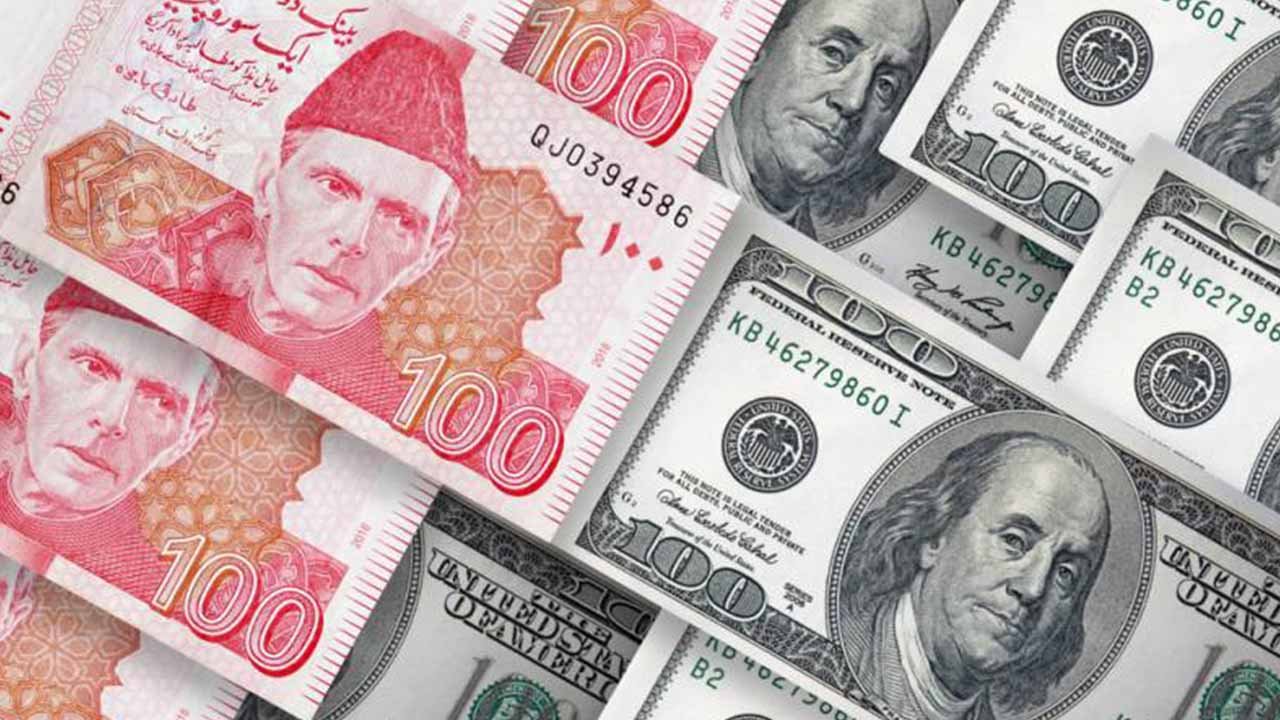
    On Tuesday, the Pakistani currency experienced a significant decline, reaching a new record low of Rs308 against the US dollar in the open market. This marked a 1 per cent decrease, or Rs3, from the previous day’s closing rate, as reported by the Exchange Companies Association of Pakistan.

    Consequently, the disparity between the exchange rates in the open market and the inter-bank market widened considerably, reaching a historic high of Rs21 to a dollar. Just a couple of months ago, this difference was in the range of Rs1-3.

    In inter-bank transactions, the central bank stated that the rupee continued its downward trend for the fifth consecutive working day, dropping by 0.21 per cent, or Rs0.59, to a 12-day low at Rs287.15 against the US dollar.

    There has been speculation in the market that the rupee is facing mounting pressure due to the expanding gap between the demand and supply of the US dollar in the currency market.

    In the meantime, Pakistan’s foreign exchange reserves have been consistently depleting and have now reached a critically low level of $4.3 billion. This is concerning because the country requires a comparatively large amount of foreign currency to cover import expenses and repay foreign debt.

    By the end of June 2023, Pakistan has to repay $3.7 billion in foreign debt. Additionally, it needs another $3.7 billion each month to ensure smooth importation of essential goods.

    Currency dealers in the open market have revealed that commercial banks are purchasing dollars in the informal market (kerb market) to settle international payments made through their clients’ credit cards. Furthermore, individuals are acquiring Saudi riyals and US dollars to cover expenses during the Hajj and Umrah pilgrimages.

    Experts strongly emphasize that the government must persuade the International Monetary Fund (IMF) to resume its $6.7 billion loan programme. Additionally, they urge friendly countries to provide fresh financing, which will help mitigate the risk of defaulting on external debt obligations.

    The resumption of the IMF programme will not only assist Pakistan in averting an imminent default but will also enable the country to attract financing from other global lenders and friendly nations. This new financing will bolster the foreign exchange reserves and aid in the reopening of the partially closed economy.

  • Pakistan takes money from China to pay back $1bn Saudi loan

    Pakistan takes money from China to pay back $1bn Saudi loan

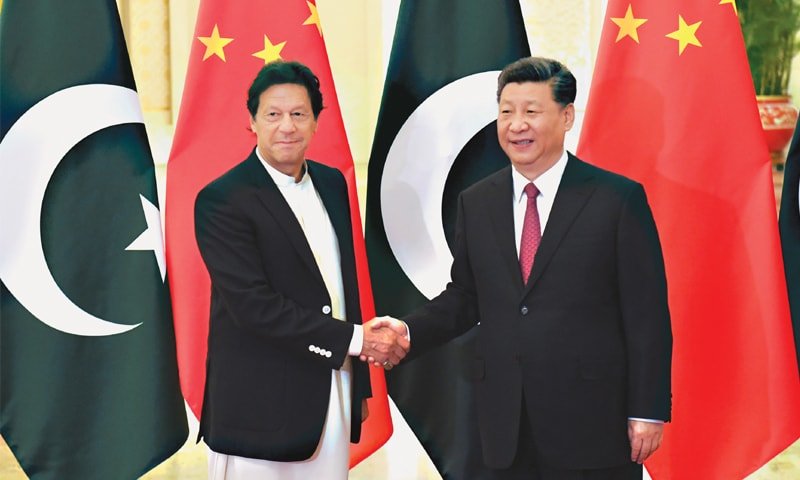
    Pakistan will return $1 billion to Saudi Arabia this week with the help from China that agreed to lend Islamabad $1-1.5bn on a short notice to pay back the Saudi loan.

    It may be noted here that Saudi Arabia had provided Pakistan a financial package, originally estimated at $6.2 billion, to help the government of Prime Minister Imran Khan to avoid looming default on international debt obligations two years ago.

    However, due to apparent strain in ties, the Saudis have already suspended the oil facility and taken a billion back. Pakistan paid it back as a first tranche in May this year. Pakistan returned $1 billion to Saudi Arabia after taking an equal amount of loan from China. Reports claim that the next tranche will be paid by the coming month to clear the remaining Saudi dues.

    The government has also not been able to get the suspended $6 billion IMF programme restored, which is making it difficult for it to continue uninterrupted foreign inflows.

    By Sept last year, Prime Minister Imran Khan-led government had admitted to taking $10.37 billion debt from different countries and international lenders.

    In a written reply to a question in the National Assembly, Minister for Economic Affairs Hammad Azhar had said the Pakistan Tehreek-e-Insaf (PTI) government secured $10.37 billion from various governments and international institutions from August 14, 2018, to September 30, 2019.

    The government, during this period, received $1.54 billion from China, $151.79 million from Saudi Arabia, $68.6 million from France, $0.4 million from Germany, $62.48 million from Japan, and $0.01 million from Kuwait.

  • Pakistan repays $1 billion Sukuk bonds issued by PML-N govt

    Pakistan repays $1 billion Sukuk bonds issued by PML-N govt

    Pakistan has successfully reapaid a foreign debt of over $1 billion, shaking up the country’s foreign currency reserves on the day Moody’s rating agency upgraded Islamabad’s credit rating outlook to from ‘negative’ to ‘stable’, Express Tribune reported.

    According to the details, Pakistan on Monday has paid back around $1 billion on maturity of five-year international Sukuk.

    “We paid over $1 billion including interest payment at the maturity of a Sukuk today (Monday),” reports quoted SBP’s official as saying.

    Pakistan had earlier launched a $-denominated Islamic bond worth $1 billion with a five-year tenure in the international bond market in November 2014, during the Pakistan Muslim League-Nawaz (PML-N) government’s tenure. The sovereign bonds were issued at a rate of 6.75%.

    The bond got matured in November 2019 and accordingly, the State Bank of Pakistan (SBP) has repaid $1 billion, borrowed to build the foreign exchange reserves.

    A sukuk is an Islamic financial certificate, similar to a bond in Western finance, also commonly referred to as “sharia compliant” bonds. Since the traditional Western interest-paying bond structure is not permissible, the issuer of a sukuk sells an investor group a certificate, and then uses the proceeds to purchase an asset, of which the investor group has partial ownership. The issuer of the sukuk bond must also make a contractual promise to buy back the bond at a future date at par value.

    The said payment from the SBP’s foreign exchange reserves will be reflected in the next weekly forex report. However, the reports reveal that with this repayment, the SBP’s reserves will most likely slip below $7 billion.

    Moody’s in its report has highlighted that Pakistan’s foreign exchange reserve adequacy remains low, adding that that foreign exchange reserve adequacy will take time to rebuild.

    At the time of launching the Sukuk, the bond fetched bids amounting to $2.3 billion, five times higher than the actual target set by the government.

    The government had planned to raise $1-2 billion in fresh foreign debt before the Sukuk payment was made.  The floating of new Sukuk and Eurobond has remained pending for long.

    At the time of launching the Sukuk bond, it fetched bids amounting to $2.3 billion which is five times higher than the actual target set by the government.

    The government had planned to raise $1-2 billion in fresh foreign debt before the Sukuk payment was made. The floating of new Sukuk and Eurobond has remained pending for long.