Tag: foreign direct investment

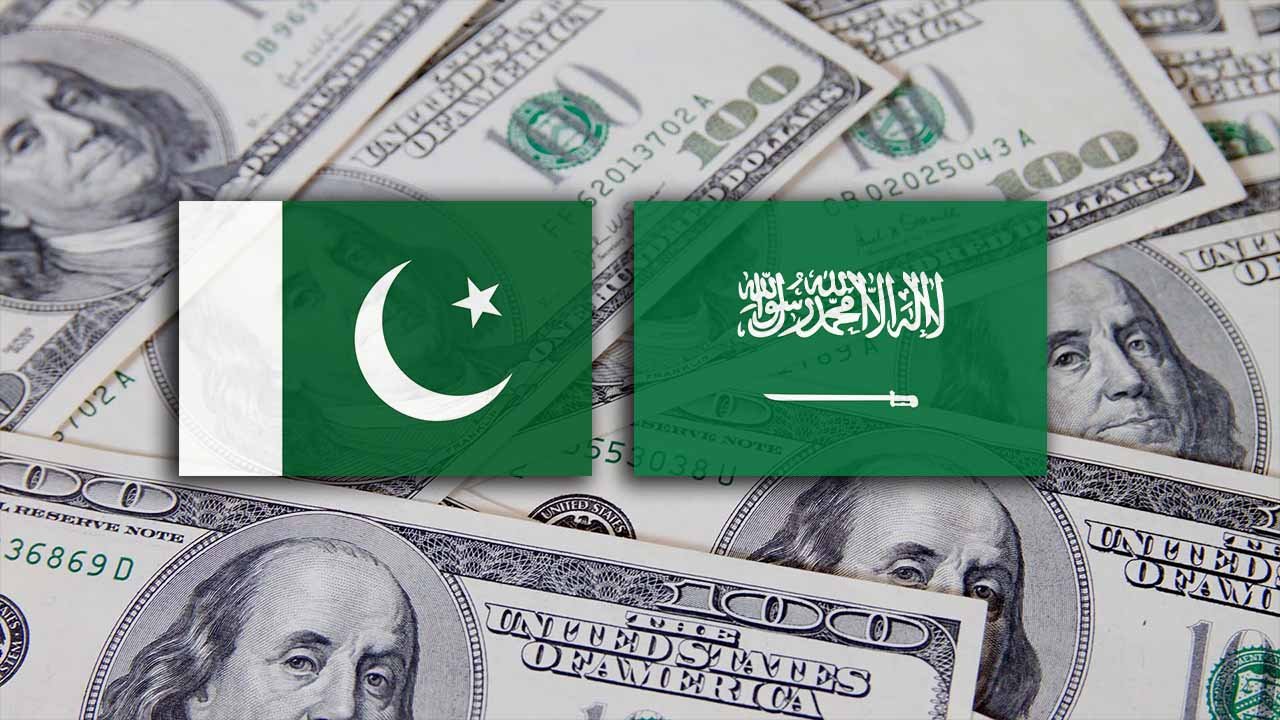
  • Pakistan eyes over $12 billion in Riyadh investments

    Pakistan eyes over $12 billion in Riyadh investments

    Business owners in Pakistan have their eyes set on the Riyadh meetings as developments in the Future Investment Initiative (FII) are underway.

    Prime Minister Shahbaz Sharif and the delegation from Islamabad is expected to bring back upwards of $12 billion in investments.

    Premier will be meeting the Crown Prince Muhammad bin Salman along with other high-ranking officials in an attempt to secure Saudi investments.

    Earlier this month, prior to the Shanghai Cooperation Organization (SCO) summit, a major Saudi delegation invested nearly $2 billion dollars into the country. With the Saudis expected to continue bankrolling investments in Pakistan, business owners are preparing to celebrate.

    This is due to the fact that Saudi investments will allow Pakistani businesses to expand their operations significantly. Businesses are already doing well, as can be seen with the Pakistan stock exchange (PSX) closing over 91000 points today.

    With international investments pouring in from Riyadh, investor confidence is projected to increase and further contribute to the growth of businesses in the economy.

    Riyal-fueled growth is likely to scale up the scope for projects of businesses, which will result in new employment posts. Once the hiring process by businesses ends, the situation of unemployment is likely to improve in the economy.

    Currently, the unemployment rate sits at an uneasy 5.5%, which translates into around 4.5 million people who are out of work. With more people working and with an increase of money flowing in the economy, businesses are likely to see an increase in the demand for their goods.

    The bulk of the Saudi investment will be made towards the petroleum refinery sector.

    If Pakistan is to develop a more extensive network of refineries, it could be able to greatly benefit from future oil discoveries.

    This is because Pakistan would have the necessary infrastructure to purify its own crude oil and not have to rely on foreign powers for petroleum imports. If oil is to be discovered and the refineries manage to reach the necessary capacity with Saudi investments, an annual saving of around $16.91 billion could be seen – as that is the current annual value of petroleum imports.

    The result of this could be appreciation of the PKR with fewer imports as the Pakistani rupee will be buying up fewer commodities in international markets, resulting in a reduction in its supply.

    This will spell great news as businesses that rely on processing imported goods to produce final goods will be able to import goods cheaply with strengthened rupee.

    Currently, the textile sector is involved in the importation of dyes and pigments to produce final products. However, these imports could be made cheaper if Saudi investments fund the construction of refineries.

    Economic collaboration between Saudi Arabia and Pakistan will be extremely beneficial to the latter.

    Will Islamabad’s delegation manage to snag billions in investments? Or will they return home empty-handed? Time shall tell.


  • World Bank forecasts 7% growth in Pakistan’s remittances for 2024

    World Bank forecasts 7% growth in Pakistan’s remittances for 2024

    Remittance flows to Pakistan are expected to rebound and grow by approximately 7 per cent, reaching $28 billion in 2024, with a further increase of 4 per cent to around $30 billion in 2025, according to the World Bank’s ‘Migration and Development Brief 40’ released on Wednesday.

    In 2023, Pakistan experienced a 12 per cent decline in remittance inflows, dropping to $27 billion, due to weak economic conditions, including a balance of payments crisis. Despite these challenges, Pakistan emerged as one of the top five recipient countries for remittances in 2023.

    “The top five recipient countries for remittances in 2023 are India with an estimated inflow of $120 billion, followed by Mexico ($66 billion), China ($50 billion), the Philippines ($39 billion), and Pakistan ($27 billion),” the report stated.

    Despite the global demand for labour in countries like the USA and those within the OECD, Pakistan’s internal economic struggles caused remittances to drop.

    The World Bank noted that many remittances were likely sent through informal channels in 2023, due to robust labour market conditions in destination countries.

    “Recent economic crises in Pakistan highlighted that delays in reforms not only deterred Foreign Direct Investment (FDI) but also negatively impacted formal remittance flows,” the report added.

    Home remittances play a crucial role in supporting Pakistan’s external account, stimulating economic activity, and supplementing the incomes of remittance-dependent households.

    During the first 11 months of FY24, workers’ remittances recorded an inflow of $27.093 billion, a 7.7 per cent increase compared to $25.146 billion during the same period in FY23.

    The report also revealed that with a share of 8 per cent of GDP, Sri Lanka and Pakistan are tied as the second most remittance-dependent countries in South Asia. Overall, remittances to South Asia grew by 5.2 per cent in 2023, reaching $186 billion, though this growth rate slowed from 12 per cent in 2022.

    This growth was primarily driven by India, which saw a 7.5 per cent increase to $120 billion, supported by strong labour markets in the United States and Europe.

    The slowdown was partly due to reduced outflows from GCC countries, impacted by declining oil prices and production cuts. Remittance flows to South Asia are projected to grow by 4.2 per cent in 2024.

    The World Bank highlighted that the economic conditions in South Asia’s largest recipients—India, Pakistan, and Bangladesh, which collectively receive 91 per cent of the region’s remittances—will be crucial in driving remittance growth.

    However, a weak economic recovery in Pakistan and Bangladesh poses a significant risk, potentially leading migrants to favour informal money transfer channels, thus reducing formal remittance growth.

  • Commerce minister warns of financial loss over proposed early market closure 

    Commerce minister warns of financial loss over proposed early market closure 

    Caretaker Minister for Commerce, Industries, and Production, Dr Gohar Ejaz, has voiced his opposition to the early market closure proposed as part of the energy conservation plan, expressing concerns over the significant financial losses the government could incur as a result.  

    According to ARY News, Dr Ejaz said that Pakistan currently has a surplus of electricity, making the decision to close markets prematurely economically unfavorable. 

    He revealed that recommendations were sought from all chambers of commerce across the country within a 30-day period. Additionally, Dr Ejaz announced an upcoming anti-gas theft initiative following the anti-power theft operation. He urged traders to be flexible, considering the limited gas resources in the country. 

    Furthermore, he revealed plans to invite 100 international brands to a conference in Pakistan, granting them the status of state guests. Dr Ejaz also mentioned the current exchange rate of the US dollar, which stands at Rs260. 

    To encourage the purchase of electricity from Thar, he directed Sindh and Punjab to do so, promising tax exemptions if they comply. This move aims to make electricity tariffs in these regions more competitive. 

    The caretaker minister stressed the need to boost exports, pointing out that Pakistan’s foreign direct investment is contingent on increased exports. He called for cooperation from business leaders to resolve various issues.  

    Dr Ejaz expressed his commitment to serving the country and previously outlined plans to support industry stakeholders in boosting exports and establishing business parks in major cities to stimulate economic growth. 

  • Saudi Arabia to invest $25 billion in Pakistan over five years: PM Kakar

    Saudi Arabia to invest $25 billion in Pakistan over five years: PM Kakar

    On Monday, Interim Prime Minister Anwaar ul Haq Kakar announced that the Kingdom of Saudi Arabia (KSA) intends to invest a substantial sum of up to $25 billion in Pakistan over the next two to five years.

    During a media briefing, PM Kakar explained that Saudi Arabia’s investment focus will primarily encompass the mining, agriculture, and information technology sectors. This initiative aims to boost foreign direct investment in Pakistan, which is currently facing financial challenges. 

    If this investment materialises, it will mark the largest-ever commitment by Saudi Arabia to Pakistan. The country is grappling with a pressing need for funds to address its trade deficit and repay international loans in the ongoing fiscal year. 

    While specific projects earmarked for Saudi investment were not disclosed during the meeting, Barrick Gold Corp. expressed interest last month in partnering with Saudi Arabia’s wealth fund for the Reko Diq mine in Pakistan. 

    Kakar emphasised that Pakistan holds substantial untapped mineral resources valued conservatively at $6 trillion. Additionally, the government intends to expedite two privatisation transactions, likely involving state-owned power sector entities, within the next six months. There is also a plan to privatise another government-owned company, preferably outside the energy sector. 

    Read more: Business community finds hope as COAS Munir vows to tackle corruption and boost investment  

    It’s worth noting that privatisation efforts in Pakistan have faced challenges in the past, as the sale of state assets is a politically sensitive issue that previous elected governments have largely avoided. 

    Currently, Pakistan is navigating a challenging path to economic recovery under a caretaker administration, following the approval of a $3 billion loan plan by the International Monetary Fund in July, which prevented a sovereign debt default. Islamabad is confronted with a balance of payments crisis and requires substantial funds to rectify its trade deficit and settle outstanding debts. 

  • Pakistan International Airlines faces potential Rs259 billion loss by 2030

    Pakistan International Airlines faces potential Rs259 billion loss by 2030

    Pakistan’s Aviation Minister, Khawaja Saad Rafique, delivered a grave warning on Friday about the precarious financial state of Pakistan International Airlines (PIA). He highlighted that without swift corrective action, the airline could incur staggering losses of up to Rs259 billion by 2030. To salvage the national carrier from its mounting debts, Minister Rafique urgently called for essential measures, including the transfer of administrative control to the private sector.

    Minister Rafique’s concerns were voiced during his address on the Senate floor, where he presented “The Pakistan International Airlines Corporation (Conversion) (Amendment) Bill, 2023.” He stressed the critical need for foreign direct investment (FDI) and the involvement of private entities to ensure the long-term sustainability of PIA, which currently grapples with an overwhelming debt burden of Rs742 billion.

    However, the proposal faced strong opposition from several senators during the proceedings. As a result, the Senate chairman referred the matter to the relevant standing committee for further evaluation, acknowledging the significance of FDI and private sector participation in transforming PIA into a profitable entity.

    The deliberations also witnessed PTI lawmakers raising concerns about the quorum, prompting a fifteen-minute bell ringing to meet the attendance requirement. Once the quorum was restored, House proceedings resumed to discuss the fate of PIA.

    The key provision of the bill proposes an amendment to Section 3, which specifies that the company’s shareholders would retain the same number of fully paid shares while preserving their existing rights and privileges. Additionally, the federal government could, through an official gazette notification, issue fresh shares or cancel existing ones as needed during the validity period.

    The destiny of Pakistan International Airlines now lies in the hands of the standing committee, tasked with thoroughly scrutinising the bill and its proposed amendments. The committee’s decision will significantly impact the future of the struggling airline and determine whether privatisation and foreign investment can pave the way for PIA’s financial recovery.