Tag: foreign exchange

  • Overseas workers’ remittances surge to $3 billion in March

    Overseas workers’ remittances surge to $3 billion in March

    In March 2024, Pakistan witnessed a significant surge in the influx of overseas workers’ remittances, reaching a notable milestone of $3 billion.

    This remarkable figure reflects a remarkable 31.3 per cent increase on a month-on-month basis compared to February 2024, when the remittances stood at $2.25 billion.

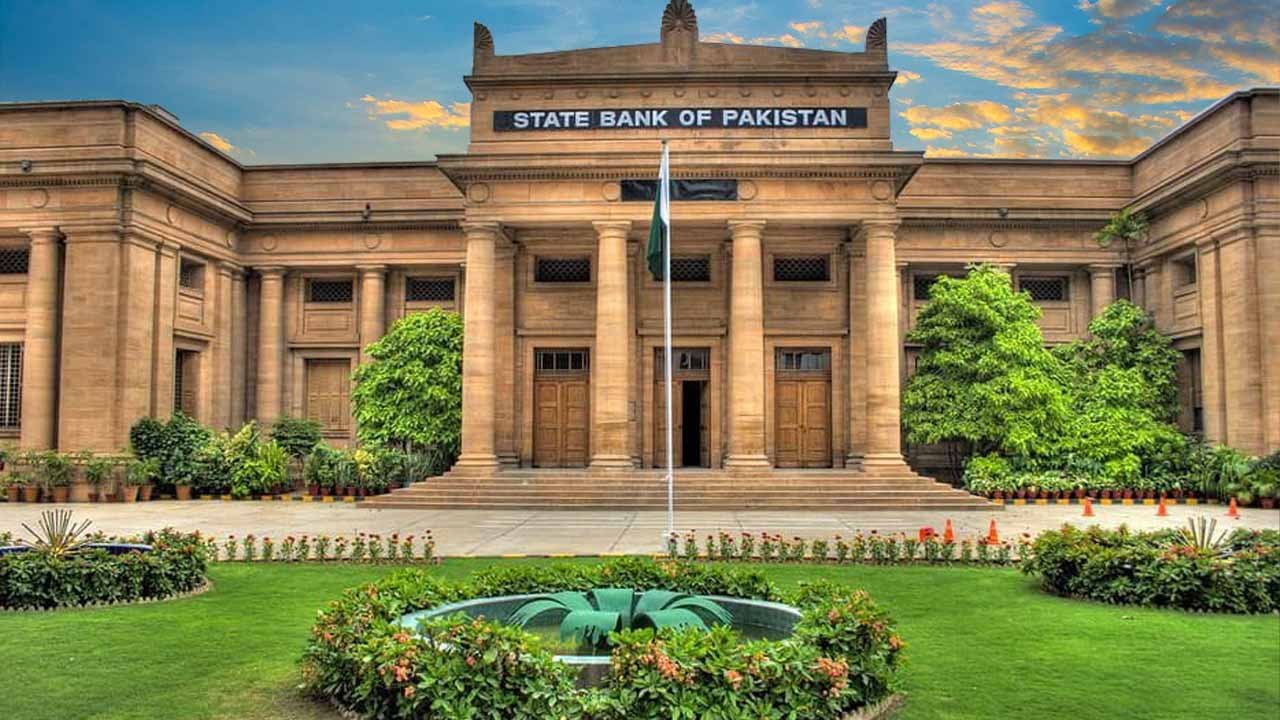
    The latest data released by the State Bank of Pakistan (SBP) unveiled this positive trend, highlighting the pivotal role remittances play in Pakistan’s economic landscape.

    Year-on-year comparisons also underscored the upward trajectory, with a 16.4 per cent increase noted in March 2024 compared to the same month in the previous year, when remittances amounted to $2.54 billion.

    Such consistent growth in remittances holds significance beyond mere monetary figures, as these funds contribute substantially to bolstering the country’s external account and fueling economic activity.

    Moreover, they serve as a crucial supplement to the disposable incomes of remittance-dependent households, enhancing their financial resilience.

    In a broader fiscal context, the first nine months of Fiscal Year 2024 witnessed a steady rise in workers’ remittances, totaling $21.0 billion.

    This marks a modest 0.9 per cent increase compared to the corresponding period in the previous fiscal year, where remittances amounted to $20.8 billion.

    Such stability and growth in remittances underscore the resilience of Pakistan’s overseas workforce and their commitment to supporting their families and homeland.

    Breaking down the sources of these remittances, Overseas Pakistanis in Saudi Arabia emerged as leading contributors, with remittances totaling $703.1 million in March 2024.

    This represents a substantial 30 per cent increase compared to the previous month and a noteworthy 24 per cent increase year-on-year.

    Similarly, remittances from the United Arab Emirates (UAE) witnessed a remarkable surge, jumping by 43 per cent on a monthly basis to reach $548 million in March, reflecting a 34 per cent increase compared to the same period last year.

    The United Kingdom also played a significant role in this surge, with remittances soaring to $462 million in March 2024, marking a notable 33 per cent increase compared to February 2024.

    Meanwhile, remittances from the European Union exhibited a robust 19 per cent monthly growth and a 6 per cent year-on-year improvement, amounting to $315 million in March 2024.

    Overseas Pakistanis in the United States also contributed significantly, send`ing $373 million in March 2024, reflecting an 18 per cent increase compared to the previous year and a substantial 30 per cent increase month-on-month.


  • Pakistan Customs officials foil attempt to smuggle PKR 1.5 crore in gold and cash

    Pakistan Customs officials foil attempt to smuggle PKR 1.5 crore in gold and cash

    Customs officials made a significant seizure of gold and cash at Jinnah International Airport in Karachi on Tuesday. 

    Acting on a tip-off, the officials intercepted a passenger scheduled to depart for Hong Kong on Thai Airways flight TG-342, suspected of carrying a substantial amount of undeclared valuables.

    Following the tip-off, Customs personnel conducted a thorough search of the passenger’s belongings, uncovering over $40,000 (PKR 11 million) in assorted foreign currencies, along with 21 tolas of gold coins and jewelry. 

    The combined value of the confiscated items is estimated to be approximately $56,000 (PKR 15 million).

    The detained passenger failed to declare the cash and gold, a requirement for amounts exceeding $10,000 (PKR 2.78 million), when leaving Pakistan, leading to allegations of money laundering and smuggling. An FIR has been filed, and the investigation is ongoing.

  • Indus Motor Company invests Rs3 billion to boost local auto production

    Indus Motor Company invests Rs3 billion to boost local auto production

    In a significant move within Pakistan’s automotive sector, Indus Motor Company Limited (INDU) has greenlit an investment of approximately Rs3 billion (around $10.76 million) aimed at bolstering the localisation of production.

    The company, renowned for being the manufacturer of Toyota-brand vehicles in the country, disclosed this pivotal development in a notice submitted to the Pakistan Stock Exchange (PSX) on Thursday.

    The announcement conveyed, “We are pleased to announce that the Board of Directors, in its meeting held on February 21, 2024, has approved an investment of around Rs3 billion to be made by the company for additional localization of parts and components of various existing vehicles.”

    Indus Motor revealed that this investment aligns with the company’s overarching strategy to continually augment the localization of parts and components of vehicles manufactured within the country.

    This move is poised to curtail the outflow of foreign exchange and foster growth within the local auto industry.

    “The announced investment shall be made towards expenditure in plant and machinery, moulds, dies, equipment, and related expenses for localization of parts and components to be manufactured locally for various existing vehicles,” stated Indus Motor.

    The timeline for this substantial investment is set to conclude by the third quarter of the calendar year 2025.

    Indus Motor has previously indicated its commitment to increasing product localization. Notably, the company introduced its Hybrid Electric Vehicle (HEV) Corolla Cross last year, emphasising that 50 per cent of its value was localized.

    CEO Ali Asghar Jamali highlighted that, after accounting for government taxes, over 50 per cent of the Corolla Cross’s value comprises localised parts, distinguishing it among other assembled hybrids in the country.

  • SBP’s foreign exchange reserves rise by $13 million

    SBP’s foreign exchange reserves rise by $13 million

    In a positive development for Pakistan’s economic landscape, the State Bank of Pakistan (SBP) reported a weekly increase of $13 million in its foreign exchange reserves, reaching a total of $8.05 billion as of February 9, according to data released on Thursday.

    The country’s overall liquid foreign reserves now stand at $13.15 billion, with commercial banks holding a significant share of $5.1 billion in net foreign reserves.

    The central bank, however, did not provide specific details or reasons for the notable upswing in reserves during the mentioned week.

    In a statement, the SBP stated, “During the week ended on February 9, 2024, the SBP’s reserves increased by US$ 13 million to US$ 8,056.5 million.”

    This positive development comes on the heels of last week’s decrease in Pakistan’s central bank reserves, which experienced a dip of $173 million.

    The recent rebound signals resilience and stability in the nation’s economic standing, and financial analysts are likely to scrutinise the factors contributing to this uptick in the coming days.

    As the global economic landscape continues to evolve, Pakistan’s foreign exchange reserves play a crucial role in navigating economic challenges, and the recent increase reflects ongoing efforts to bolster the country’s fiscal strength.

    Experts anticipate that a robust foreign reserve position will provide a buffer against external shocks and instill confidence in the financial markets.

  • Pakistan’s forex reserves dip by $173 million, SBP cites debt repayments

    Pakistan’s forex reserves dip by $173 million, SBP cites debt repayments

    The State Bank of Pakistan (SBP) has reported a decrease of $173 million in its foreign exchange reserves on a weekly basis, revealing a total of $8.04 billion as of February 2, according to data released on Thursday.

    The country’s overall liquid foreign reserves are reported to stand at $13.09 billion, with commercial banks holding net foreign reserves amounting to $5.05 billion.

    The SBP has identified debt repayments as the primary factor contributing to the decline in reserves. In an official statement, the SBP stated, “During the week ending on 2-Feb-2024, SBP’s reserves decreased by US$ 173 million to US$ 8,044.0 million due to debt repayments.”

    This follows a trend from the previous week when Pakistan’s central bank reserves experienced a decrease of $54 million. The ongoing challenges related to debt servicing continue to impact the nation’s foreign exchange reserves.

  • Pakistan’s forex reserves rebound: SBP gains $77 million in a week 

    Pakistan’s forex reserves rebound: SBP gains $77 million in a week 

    According to data released on Thursday, the State Bank of Pakistan (SBP) witnessed a weekly increase of $77 million in its foreign exchange reserves, reaching $7.26 billion as of November 24.  

    The total liquid foreign reserves for the country amounted to $12.39 billion, with commercial banks holding net foreign reserves at $5.13 billion. 

    During the week ending on November 24, 2023, SBP’s reserves increased by $77 million, reaching $7,257.0 million. Contrastingly, the previous week saw a decrease of $217 million in Pakistan’s central bank reserves. 

    In July of this year, the central bank’s reserves received a boost as Pakistan obtained the initial tranche of approximately $1.2 billion from the International Monetary Fund (IMF) following the approval of a new $3-billion Stand-By Arrangement (SBA).  

    This boost was complemented by inflows from Saudi Arabia and the UAE. 

    However, the SBP reserves faced pressure due to debt repayments, a surge in import payments after the easing of restrictions, and a lack of fresh inflows. 

    In a significant development, the IMF announced last week that its staff and Pakistani authorities had reached an agreement on the first review of the SBA.  

    The staff-level agreement is pending approval by the IMF Executive Board. 

    The IMF team reached a staff-level agreement (SLA) with the Pakistani authorities on the first review of their stabilization program supported by the IMF’s $3 billion (SDR2,250 million) SBA.  

    Upon approval, approximately $700 million (SDR 528 million) will become available, bringing total disbursements under the program to almost $1.9 billion. 

    Following the SLA with the IMF, Caretaker Finance Minister Dr Shamshad Akhtar expressed confidence that external financing would not be an issue, anticipating inflows in December 2023 to contribute to an increase in foreign exchange reserves. 

  • SNGPL commits uninterrupted winter gas supply to boost textile exports

    SNGPL commits uninterrupted winter gas supply to boost textile exports

    Sui Northern Gas Pipelines Limited (SNGPL) has provided a commitment to the All Pakistan Textile Mills Association (APTMA) regarding the seamless supply of gas to textile mills during the winter season.

    SNGPL, under the leadership of Managing Director Amer Tufail, assured an APTMA delegation led by Chairman Kamran Arshad that uninterrupted gas supply with optimal pressure would be maintained for the export industry.

    This measure aims to facilitate smooth production and enhance textile goods’ exports to maximise foreign exchange for the nation.

    During the meeting, MD Amer Tufail emphasised that the export industry, utilising a system integrated with RLNG (Regasified Liquefied Natural Gas), would be subject to a shared tariff of 50:50 for November.

    He highlighted the historical priority given to the export industry in gas supply and urged APTMA member mills without existing gas connections to apply promptly.

    Regarding new connections and load enhancements, Tufail mentioned that clarity on tariff applications would be sought from the Ministry of Petroleum in the near future.

    In anticipation of the non-availability of natural gas during the winter months from December to March, MD Tufail clarified that the industry would be charged at the RLNG rate set by OGRA on a monthly basis.

    Chairman Kamran Arshad raised concerns about industry confusion regarding gas tariffs for the upcoming winter months after the federal government’s tariff rationalisation.

    Discussions delved into issues such as gas tariff specifics for connections predating June 2022, post-June 2022 connections with or without zero-rated FBR certificates, and the utilisation of APTMA certificates for gas supply to zero-rated industrial units.

    MD Tufail acknowledged SNGPL’s limitations in determining eligibility for new connections, emphasising the need for the Commerce and Energy Ministries’ intervention to establish an eligibility framework.

    The meeting also addressed concerns related to new gas connections, faulty metre replacements, erroneous charging due to slow or faulty metres, and low gas pressure. MD Amer Tufail underscored the commitment to uninterrupted gas supply, particularly to export-oriented sectors, recognising the vital role of the textile industry in job creation, attracting investment, and boosting the country’s exports.

    He pledged a thorough examination of issues raised by APTMA and assured a proactive approach to ensure a smooth gas supply, with nominated focal persons from both SNGPL and APTMA tasked with holding periodic meetings to promptly resolve any gas-related challenges in the textile industry.

  • Pensions in dollars for 164 retired government servants settled abroad

    A Right to Information (RTI) request has revealed that civil and military pensioners living abroad are receiving their pensions in foreign currency, mainly dollars.

    According to the Ministry of Foreign Affairs (MoFA), there are as many as 164 pensioners who are living in foreign lands and receiving their pensions in a currency other than the Pakistani rupee. On the contrary, there are tens of thousands of government servants complaining about the non-payment of pensions which they receive in rupees.

    This information was extracted by Naeem Sadiq, an RTI activist who got to know, through an acquaintance, about a retired squadron leader who left the country to settle abroad and is receiving a pension from Pakistan in dollars. Before filing a petition in Islamabad High Court, Sadiq opted for all the official channels mentioned in the constitution, The News reports in detail.

    Sadiq then filed an RTI request to the Pakistan Air Force under the Right of Access to Information Act (2017), inquiring about the number of retired PAF officers living abroad and receiving pensions in foreign currency; he made sure not to ask for their names. The information however was not shared.

    The RTI Activist thought of asking MoFA about the same information. He inquired how many pension cases of such individuals are processed through it. The ministry was reluctant to share any information and so advised him to check with the Accountant General of Pakistan (AGPR). The AGPR also declined to provide the requested information.

    As all doors remain closed, Sadiq decided to approach the Pakistan Information Commission. This is the appellant body you turn to when such departments refuse information. The commission didn’t entertain his request either.

    This is when he decided to move to the Islamabad High Court. All the bodies mentioned previously were made a party to the case. When the court served a notice to the respondents to provide an explanation for refusing to furnish the requested information, MoFA agreed to share details with the complainant.

    The reply from the ministry stated, “There are a total of 164 civil and military Pakistani government pensioners, residing abroad, who are every month paid pension in foreign exchange, sent from Pakistan. That the yearly burden of this select few government pensioners is Rs200 million (paid in foreign exchange).”

    Sadiq wrote to both MoFA and AGPR that this practice is a sheer violation of Article 25 of the constitution which ensures the equality of all citizens before law. He accused the two departments of violating the law of the land harming the country’s interests. “The payment of pensions in forex to a chosen few deprives Pakistan of its critical and deficient resource ie foreign exchange. This is a country that had to sell its self-respect and compromise its sovereignty to beg for every single dollar. How come when Pakistan fights its battle for financial survival, you decide to provide special indulgence to an elite group of 164 individuals, this must come to an immediate end and all pensions of all retired government officials be paid in Pakistani rupees only,” Sadiq wrote in his letter.

    Incidents of diplomatic staff not getting their salaries on time due to a shortage of dollars have been reported in the past while the media has carried multiple reports of pensioners not getting their dues every month due to a shortage of funds.

  • Pakistani rupee declines by 48 paisa, closing at Rs280.57 against US dollar

    Pakistani rupee declines by 48 paisa, closing at Rs280.57 against US dollar

    In the financial markets this week, the Pakistani rupee (PKR) experienced a depreciation of 1.78 rupees against the US dollar (USD), closing the week’s trade at PKR 280.57.

    This marks a significant shift from the previous week’s closing rate of PKR 278.8 per USD.

    During today’s trading session, the local currency saw a decline of 48.1 paisa. The intraday high (bid) was recorded at Rs280.5, while the low (ask) reached Rs280.15 against the US dollar.

    In the open market, exchange companies quoted the US dollar at Rs279.5 for buying and Rs292.8 for selling, indicating a loss of 50 paisa compared to the previous closing rates of Rs279 for buying and Rs282 for selling.

    This decline against the US dollar signifies the second consecutive weekly decrease for the Pakistani rupee. In comparison to other major currencies, the PKR experienced fluctuations as well.

    Against the Euro, the PKR depreciated by 64.78 paisa, closing at Rs296.17 compared to the previous value of Rs295.53.

    The British Pound became more expensive by 1.21 rupees, closing at Rs339.94 in contrast to Rs338.73 from the previous day.

    PKR lost 0.69 paisa against the Japanese yen, closing at Rs1.869 versus Rs1.862 the previous day.

    The UAE dirham also increased in value by 12.89 paisa from Rs76.257 to Rs76.386.

    It’s noteworthy that during the current financial year, the PKR has appreciated against the dollar by Rs5.42, or 1.93 per cent.

    However, in the current calendar year, PKR has depreciated by 54.14 rupees, or 19.3 per cent.

    This dynamic market movement reflects the ongoing economic fluctuations in the country.