Tag: foreign exchange

  • Pakistani rupee records slight increase against US dollar, settles at Rs285.99

    Pakistani rupee records slight increase against US dollar, settles at Rs285.99

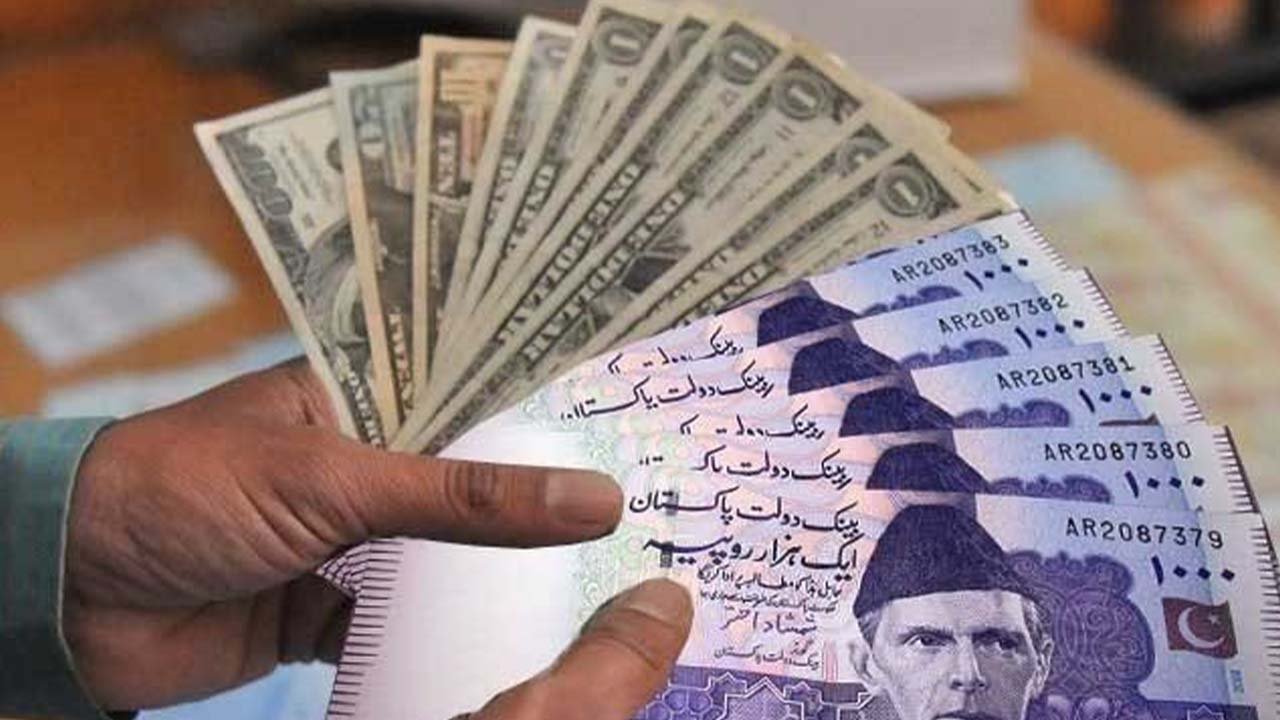
    The State Bank of Pakistan reported that the Pakistani Rupee (PKR) maintained an upward trajectory against the US dollar in the interbank foreign exchange market on Tuesday.

    The PKR experienced a gain of Rs0.072 against the greenback, resulting in a closing rate of Rs285.99. This marks an improvement from the previous day’s closing rate of Rs286.71.

    Experts attribute the rise in the dollar’s value to the government’s successful fulfillment of all conditions set by the International Monetary Fund (IMF).

    Prime Minister Shehbaz Sharif recently engaged in his fourth communication with the IMF Managing Director, Kristalina Georgieva, within a span of six days.

    It is worth noting that Pakistan’s ninth review by the IMF under the 2019 Extended Fund Facility, which aims to secure the release of $1.2 billion in funds, is still pending. With only three days remaining until the programme’s expiry on June 30, there is a pressing need to conclude the review process promptly.

  • Pakistani rupee maintains winning streak against dollar for third day to close at Rs286.73

    Pakistani rupee maintains winning streak against dollar for third day to close at Rs286.73

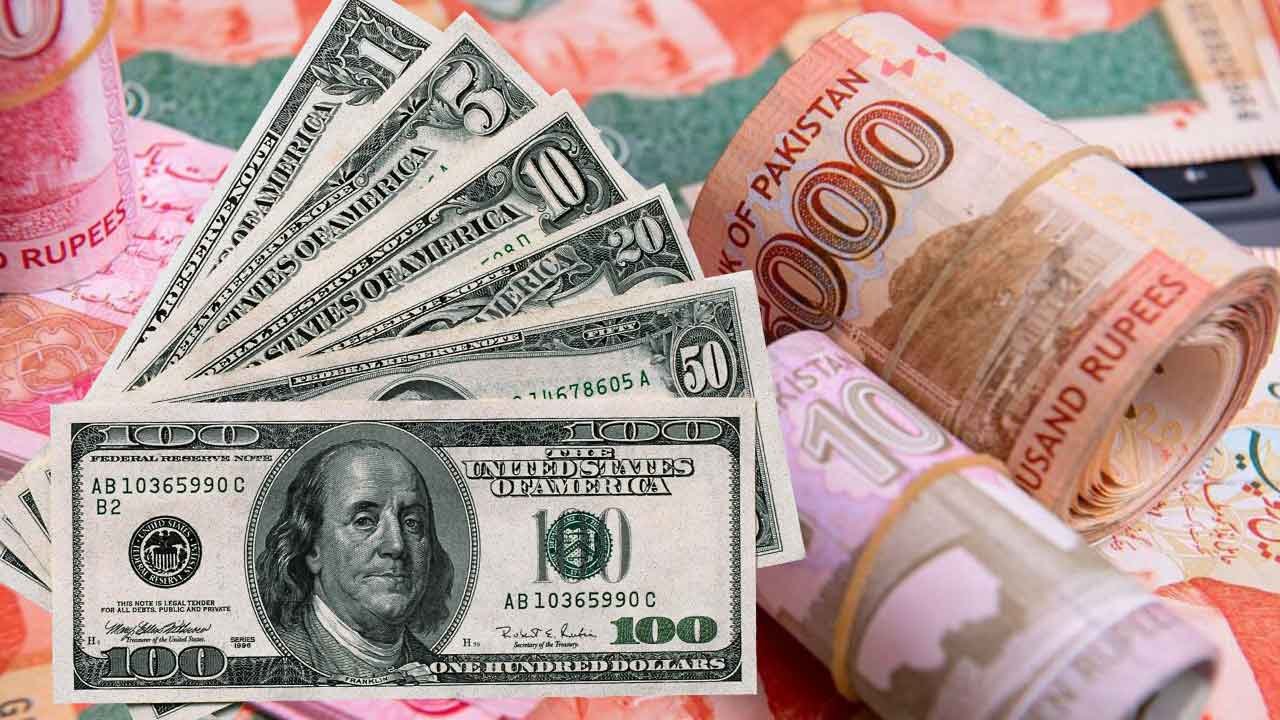
    The Pakistani rupee continued its upward trend against the US dollar for the third consecutive session in the inter-bank market on Thursday, appreciating by 0.09 per cent. According to the State Bank of Pakistan (SBP), the currency settled at Rs286.73 at the close, showing an improvement of Rs0.25 compared to the previous day’s rate of Rs286.98.

    In a significant development, Finance and Revenue Minister Ishaq Dar met with US Ambassador to Pakistan Donald Blome on Wednesday to discuss the economic ties between Pakistan and the United States, as well as the International Monetary Fund (IMF) loan program.

    This meeting took place following the IMF’s criticism of Islamabad’s budget proposals for the fiscal year 2023-24. Esther Perez Ruiz, the IMF’s Resident Representative for Pakistan, expressed dissatisfaction with the budget proposals, describing them as a missed opportunity to broaden the tax base. She also criticised the new amnesty scheme, stating that it sets a damaging precedent.

    Separately, Prime Minister Shehbaz Sharif stated on Wednesday that the immediate goal, with the assistance of the Special Investment Facilitation Council (SIFC), is to increase Foreign Direct Investment (FDI) in the country to $5 billion.

    On the international front, the US dollar remained close to a one-month low against a basket of currencies on Thursday. This followed Federal Reserve Chair Jerome Powell’s testimony, where he maintained his usual stance and offered little room for surprise.

    Powell’s comments to lawmakers on Capitol Hill aligned with the central bank’s previous policy meeting, indicating that further rate increases are likely if the economy continues its current trajectory. As a result, the greenback depreciated by nearly 0.5 per cent against six major peers in the previous session.

    Meanwhile, oil prices slightly declined on Thursday. Market expectations of further interest rate hikes were balanced by potentially bullish US oil inventory data, which indicated a decrease in stocks.

  • Saudi Arabia and UAE pledge $3 billion to Pakistan as IMF agreement nears

    Saudi Arabia and UAE pledge $3 billion to Pakistan as IMF agreement nears

    On Monday, Finance Minister Ishaq Dar stated that Pakistan has fulfilled all conditions set by the International Monetary Fund (IMF). He expressed hope that the IMF would soon sign the staff-level agreement, which would allow for the release of the $1.1 billion tranche.

    Since February, the two parties have been negotiating various conditions and external financing from friendly nations before signing the agreement. Speaking to Geo News, Dar stated that Saudi Arabia and the United Arab Emirates (UAE) have informed the IMF of their commitments to provide $3 billion to Pakistan.

    Riyadh has pledged $2 billion, while Abu Dhabi has promised $1 billion. The IMF has also been notified of this, according to Dar. The finance minister emphasized that all conditions for the staff-level agreement have been met, and he expressed optimism that the IMF’s Executive Board would approve it soon.

    The country’s foreign exchange reserves have dwindled to cover barely a month of imports since the IMF funding stalled in November. Pakistan must resume the bailout package, which was agreed upon in 2019 and is worth $6.5 billion, to avoid risking default on external payment obligations.

    Pakistan had to take several steps demanded by the IMF, including reversing subsidies in its power, export, and farming sectors, raising energy and fuel prices, imposing a permanent power surcharge, among other measures.

    These moves have pushed Pakistan’s inflation to its highest level ever, rising to over 35 per cent YoY in March. The IMF programme will disburse another tranche of $1.4 billion to Pakistan before it ends in June, and it will unlock other bilateral and multilateral financing for the cash-strapped country.

    In recent weeks, neighbouring China has rolled over $2 billion and refinanced another $1.3 billion.

  • Pakistani rupee reverses marginal gains, closes at Rs281.61 against US dollar

    Pakistani rupee reverses marginal gains, closes at Rs281.61 against US dollar

    On Monday, the Pakistani rupee faced renewed pressure against the US dollar, declining by 0.30 per cent in the inter-bank market after posting marginal gains on Friday. According to the State Bank of Pakistan (SBP), the rupee settled at Rs281.61, representing a decrease of Re0.84.

    Despite the rupee having found some relief on Friday with a 0.54 per cent appreciation in the inter-bank market, the currency had depreciated by 0.82 per cent against the US dollar during the previous week.

    The SBP has received inflows from China, which have provided support to critical levels of foreign exchange, but concerns over the delay in the International Monetary Fund (IMF) programme have continued to impact sentiment.

    Miftah Ismail, former Federal Finance Minister, suggested on Sunday that Pakistan should ensure 15 per cent tax on Gross Domestic Product (GDP) and 15 per cent exports to GDP in order to avoid the need for IMF programs.

    Internationally, the US dollar experienced a sharp decline on Monday due to the sudden collapse of Silicon Valley Bank (SIVB). The US government announced various measures on Monday to mitigate the impact of the bank’s collapse, including ensuring access to deposits for SVB customers and depositors of New York’s Signature Bank.

  • Pakistan’s oil industry on the brink of collapse, calls for urgent government intervention

    Pakistan’s oil industry on the brink of collapse, calls for urgent government intervention

    According to recent reports, the oil industry in the country is facing serious challenges in obtaining crude oil and petroleum products due to foreign exchange constraints and current product pricing. These challenges have been exacerbated by the recent depreciation of the currency and an increase in the central bank’s policy rate.

    The Oil Companies Advisory Council (OCAC), which comprises over three dozen major oil marketing companies (OMCs) and refineries, has expressed concern to the government about the possibility of a major disruption to the already fragile supply chain.

    In a communication to the ministers for finance and energy, the governor of the State Bank of Pakistan (SBP), and the chairman of the Oil and Gas Regulatory Authority (Ogra), the OCAC has urged for urgent engagement to address the “severe impact of the recent depreciation of the rupee.”

    The association has also requested the development and immediate implementation of a transparent mechanism for the recovery of foreign exchange losses in product pricing. If immediate revision of prices based on the current exchange rate is not feasible, the government should at least put a system in place immediately.

    The recent steep depreciation has rendered the existing letter of credit (LC) lines inadequate for the industry, which could lead to import disruption of crude and refined products. The industry has also expressed concern about the cost of opening confirmed LCs, which has gone up many times and adversely impacted profitability.

    Moreover, maintaining the 20 days’ mandatory stock cover as per OMCs license requirement at the current rupee-dollar parity and after the recent increase in the SBP policy rates has resulted in borrowing costs of more than 50 per cent of regulated margins. Additional working capital burdens can raise significant concerns around OMCs’ ability to sustain operations.

    The association has reported that its members have been doubly hit due to the erosion of equity from foreign exchange losses and a reduction in working capital lines due to an increase in the rupee-dollar parity coupled with a rise in international oil prices, particularly high-speed diesel. The OMCs have already reported about Rs35 billion cumulative losses in POL pricing in recent months.

    The international price of petrol has increased by 3 per cent ($2.8 per barrel) to $94.84 per barrel between Jan 1, 2022, and March 2, while HSD prices surged by $15.48 or 18 per cent to $103.53 per barrel. During the same period, the rupee depreciated by over 61 per cent or Rs108.38 against the US dollar. This means that oil prices and exchange rate changes require an increase in the oil industry’s needs by 90 per cent than LC limits in local currency compared with last year to produce the same quantity of HSD.

    Therefore, the oil industry has called upon the government to ensure that the banking sector enhances limits for oil companies and refineries, enabling them to manage the impact of increased oil prices and rupee depreciation that are critical for the survival of the sector and the integrity of the POL supply chain.

    According to Dawn, the OCAC has warned that the industry is on the brink of collapse, as fuel shortages in certain areas earlier this year highlight the fragile condition of the industry. Urgent government intervention is necessary to ensure uninterrupted supplies.
  • Pakistani rupee fell by 34 per cent in FY 2021-22: Report

    Pakistani rupee fell by 34 per cent in FY 2021-22: Report

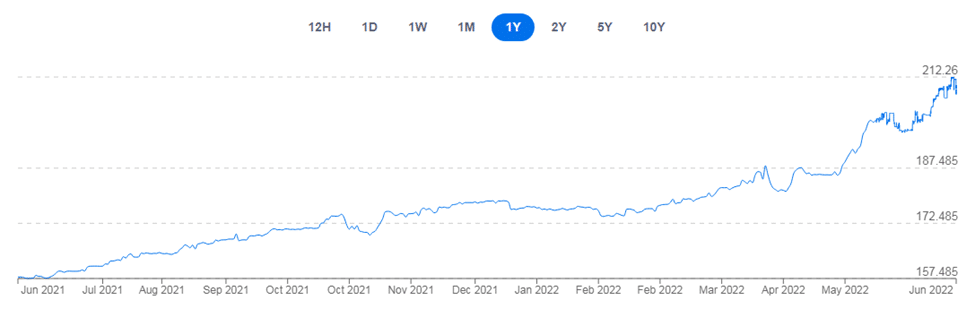
    Pakistan’s fiscal year starts on July 1st and ends on June 30th. The rupee to US dollar exchange rate was Rs158.06 at the beginning of fiscal year 2021-2022, and it reached an all-time high of Rs212.103 in the inter-bank market on June 21, 2022. This represents a depreciation of more than 34 per cent in less than a year.

    The graph below demonstrates how the PKR to USD exchange rate varied over time:

    During the fiscal year 2020-2021, the local currency plunged 17.47 per cent from Rs158.062 to Rs184.159 in 9 months, from July 1, 2022 to April 11, 2022, under the PTI regime. Since PDM took over, the rupee has lost nearly 14.31 per cent of its value in just three months.

    The table below compares PKR to dollar values over time, as well as the government in power at the time:

      PKR to Dollar Government
    July 2021 158.062 PTI
    August 2021 162.571 PTI
    September 2021 166.872 PTI
    October 2021 170.997 PTI
    November 2021 170.92 PTI
    December 2021 176.042 PTI
    January 2022 176.214 PTI
    February 2022 176.736 PTI
    March 2022 177.573 PTI
    April 2022 184.159 PTI and PDM
    May 2022 185.794 PDM
    June 2022 197.744 PDM
    June 23 2022 207.516 PDM

    Dollar demand remains strong in the market, pushing the greenback’s value higher against the rupee. The local currency is likely to remain volatile until the IMF agrees to disburse the next tranche of loans to Pakistan.

  • Pakistani rupee remains volatile as US dollar surpasses Rs211

    Pakistani rupee remains volatile as US dollar surpasses Rs211

    On Monday, the Pakistani rupee dropped sharply to a record low of over Rs211 against the US dollar in the interbank market, indicating that the currency remains highly volatile.

    The rupee’s latest devaluation against the US dollar is the result of panic buying by traders in response to reports that some financial institutions were out of foreign currency.

    According to the State Bank of Pakistan (SBP), the US dollar was available at Rs211.21 at 11:03 AM and had closed at Rs208.75 on Friday.

    It is worth noting that the Pakistani rupee has fallen for the seventh working day in a row, losing nearly Rs6, or more than 3 per cent, to date.

    Experts predict that the Pakistan rupee will continue to fall against the US dollar and other major currencies owing to concerns regarding the IMF’s $6 billion program’s restoration, the country’s expanding current account deficit, and dwindling foreign exchange reserves.

    The PKR which lost 32.5 per cent of its value in the current financial year 2021-22 is forecasted to remain under stress as the dollar is in high demand in the market due to economic crises.

    SBP appears helpless to stem the rupee’s speculative fall, as demand for the US dollar continues to rise due to quarter-end payment strain.

    Monetary specialists attribute the depreciation of the local currency to a widening trade deficit, political instability, and a drop in foreign direct investment. The currency expert believes that the positive news from the Financial Action Task Force (FATF) will help attract foreign investment, increasing the availability of the dollar.

    Traders expect the rupee to settle in a range of 195-200 per dollar until the end of the current fiscal year 2021-22 if the IMF deal is finalised.

    According to data compiled by Ismail Iqbal Securities, Pakistan’s currency has depreciated by 14.57 per cent against the dollar this year, making it one of the worst performers in the world.

    The worst-performing currency was the Sri Lankan rupee, which fell 43.9 per cent, followed by the Laotian Kip, which fell 24 per cent, the Turkish Lira, which fell 23.18 per cent, and the Ghana Cedi, which fell 22.33 per cent, according to the data.