Tag: foreign investors

  • Shipment of discounted Russian oil en route to Pakistan: 100,000 tons set to arrive next month

    Shipment of discounted Russian oil en route to Pakistan: 100,000 tons set to arrive next month

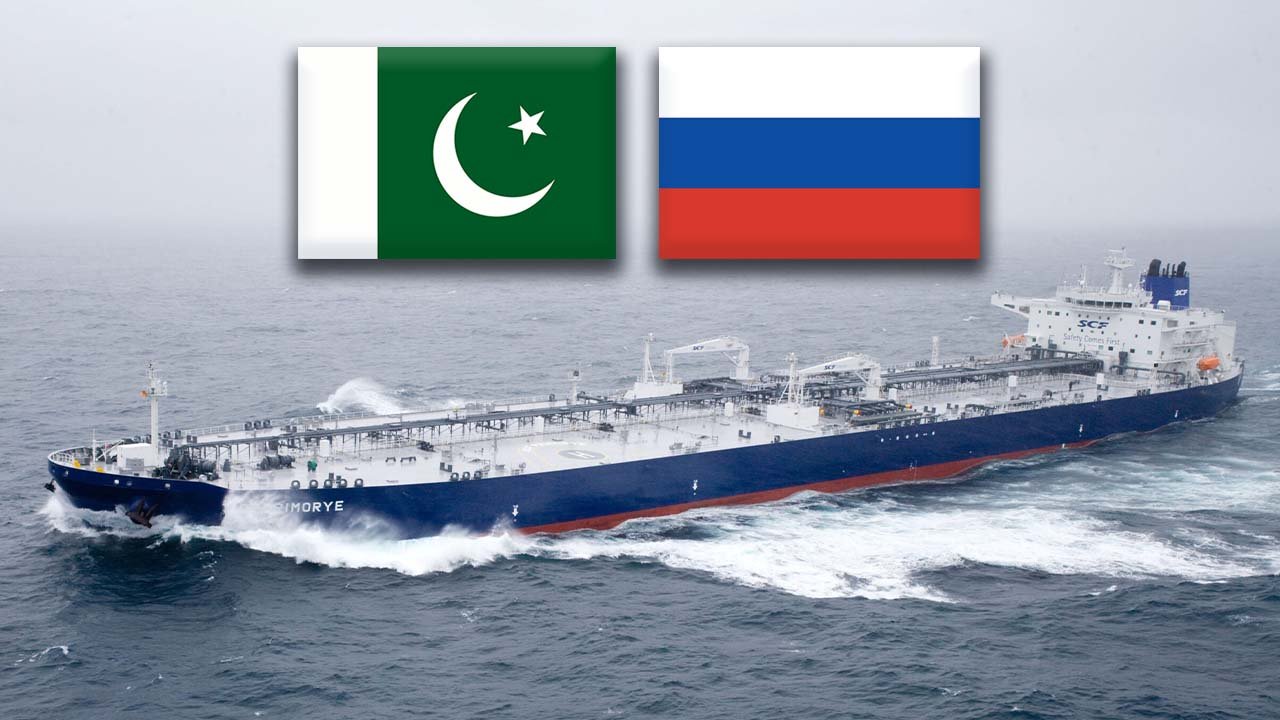
    The government’s energy security plan will soon see the arrival of vessels carrying 100,000 tons of discounted Russian oil at Pakistan ports in early June.

    Musadik Malik, the State Minister for Energy, made this announcement during a private meeting with members of the media, where he discussed the new refinery policy. The policy aims to encourage investments in new refineries for shallow, deep conversion, and ultra-deep conversion projects, with incentives lasting up to 20 years.

    Minister Malik revealed that the Russian cargo, consisting of 100,000 tons of Urals oil, would arrive at the Oman port on May 26-27. From there, the oil will be transported to Pakistan in smaller vessels, a journey expected to take between seven to ten days. Although the transportation cost will increase slightly, the minister assured that the impact would be minimal.

    While he did not disclose the discounted price or the payment method for the Russian oil, Minister Malik hinted that the payment was made through the banking channel. The heavy Urals oil will then undergo refining at Parco, where it will be mixed with light Arabian oil to lower the overall price.

    Highlighting the significance of the new refinery policy, Minister Malik emphasised that energy sector growth is crucial for economic development. He explained that a one per cent increase in the country’s GDP requires a corresponding growth rate of 1.5 to two per cent in the energy sector. Similarly, achieving a five per cent GDP growth necessitates a seven to ten per cent growth in the energy sector. Such growth is only possible with investments in refineries, as well as oil and gas exploration and production.

    Under the new refinery policy, refineries with a capacity of 300,000 tons or more will receive incentives for 20 years, while those below 300,000 tons will receive incentives for 10 years. However, it will be mandatory for these refineries to achieve financial closure within five years.

    Additionally, import duty on equipment used in the larger refineries will be set at 7.5 per cent for both petrol and diesel for the duration of 20 years. The same incentives will apply for 10 years to refineries below the 300,000-ton capacity. These refineries will also benefit from special economic zone (SEZ) laws.

    Minister Malik projected that by 2030, the country’s petrol and diesel consumption would increase from 20 million to 33 million. Currently, local refineries produce around 10 to 11 million, with the rest being imported. He noted that the global premium on diesel is approximately $18 due to high demand.

    The new refinery policy has garnered interest from multiple foreign countries and private companies, with a positive response received during a road show conducted in the United States to promote greenfield investment.

    The minister reiterated the government’s commitment to implementing a comprehensive plan for the country’s energy security before the end of its constitutional tenure. Negotiations for the Turkmenistan-Afghanistan-Pakistan-India (TAPI) pipeline project have resumed, while the Iran-Pakistan (IP) project has been delayed due to US sanctions. The LPG Air Mix policy and the brownfield policy are expected to be approved soon.
  • Pakistan’s default risk hits a 13-year-high, reflecting foreign investors’ lack of faith

    Pakistan’s default risk hits a 13-year-high, reflecting foreign investors’ lack of faith

    The risk of default for Pakistan, as determined by the 5-year credit default swap (CDS), increased on Tuesday by 3.07 percentage points in a single day to reach a 13-year high of 52.8 per cent, indicating that foreign investors no longer have confidence in the nation.

    Before the Covid-19 outbreak in Pakistan in February 2020, the CDS was between 5 per cent and 6 per cent.

    According to Express Tribune, owing to uncertainties surrounding the renewal of the International Monetary Fund (IMF) loan programme, it peaked at over 30 per cent in the middle of this year.

    Later, as the major lender resumed its $6.5 billion programme in late August 2022 and subsequently released a $1.2 billion tranche, the CDS experienced a small recovery.

    Today, meanwhile, it is rapidly rising once more, indicating that international investors now believe Pakistan will not be able to pay back its maturing debt.

    On December 5, 2022, the country is required to repay $1 billion to overseas investors against the maturity of the 5-year Sukuk.

    The 5-year Third Pakistan International Sukuk’s yield (rate of return) is quite high, hovering at 145 per cent. Before the Covid-19 epidemic, it was around 10 per cent.

    In addition, the yield on bonds due in 2024 and 2025 is currently high at 90 per cent and 57.5 per cent, respectively, up from a low of 10 per cent in the past.

    The country’s foreign exchange reserves have decreased by about $9 billion over the past 10 months, which has caused alarm among the foreign investors.

    They are currently only covering about 1.10 months’ worth of imports at $7.6 billion, down from $20 billion (three months’ worth of imports) in August 2021.

    Ishaq Dar, the finance minister, and Miftah Ismail, his predecessor, have taken every precaution to avoid the likely default.

    They have repeatedly reassured the foreign investors that when the time came, the nation would easily repay the maturing $1 billion in December as well as fulfil other international payment obligations.

    Foreign investors are receiving warnings from the situation that the nation may default.

    However, the leadership of the nation has fully secured the $36–40 billion needed from international lenders for the current fiscal year 2023 to pay off the nation’s approximately $21 billion in foreign debt, finance approximately $10–12 billion current account deficit, and increase its foreign exchange reserves to approximately $16 billion by June 30.

    According to experts, the country’s foreign exchange reserves will increase and confidence among foreign investors will be restored with the arrival of $1.5 billion from the Asian Development Bank (ADB) in a few days and another $500 million from the Asian Infrastructure Investment Bank (AIIB) in the current month.

    They continued by saying that the inflows should also aid in lowering bond and CDS yields.

    Experts said that Saudi Arabia was the destination of Prime Minister Shehbaz Sharif’s official visit. The host nation has declared that it is resuming its investment ambitions, which include establishing an oil refinery in Pakistan for an investment of $10 billion.

    The Kingdom’s investment choice coming to fruition will also aid in regaining the trust of foreign investors in Pakistan.

    When PM Shehbaz travels to the second-largest economy in the world in November, the nation is also anticipated to get a rollover loan from China worth $6.3 billion, they claimed.