Tag: foreign reserves

  • Beyond the surface: Analysing SBP’s 30-month foreign reserves high

    Beyond the surface: Analysing SBP’s 30-month foreign reserves high

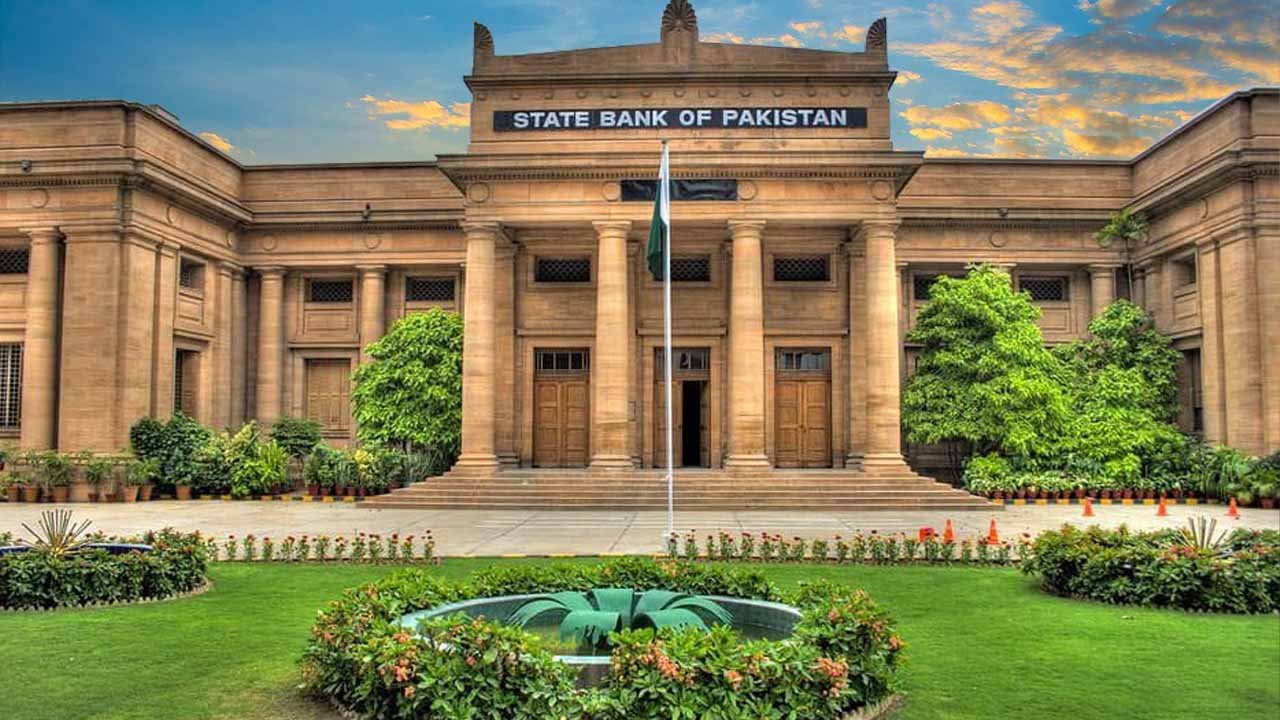
    Pakistan’s foreign currency reserves have risen to $15.98 billion, of which $5.28 billion are held by commercial banks and $10.7 billion by the State Bank of Pakistan (SBP). This is the highest level of reserves in 30 months achieved via the inflow of the IMF loan: A sign of short-term stability.

    Pakistan’s economic woes seem to be coming to a close with the upcoming Shanghai Cooperation Organization (SCO) summit in Islamabad, which begins October 16-17.

    Foreign investments, including possible multi-billion dollar settlements from Saudi Arabia in the Reko Diq mining operation and loans for the ML-1 railway project, are expected to come to Pakistan. These funds are expected to immediately give relief to the economy but will also alter the value of the PKR.

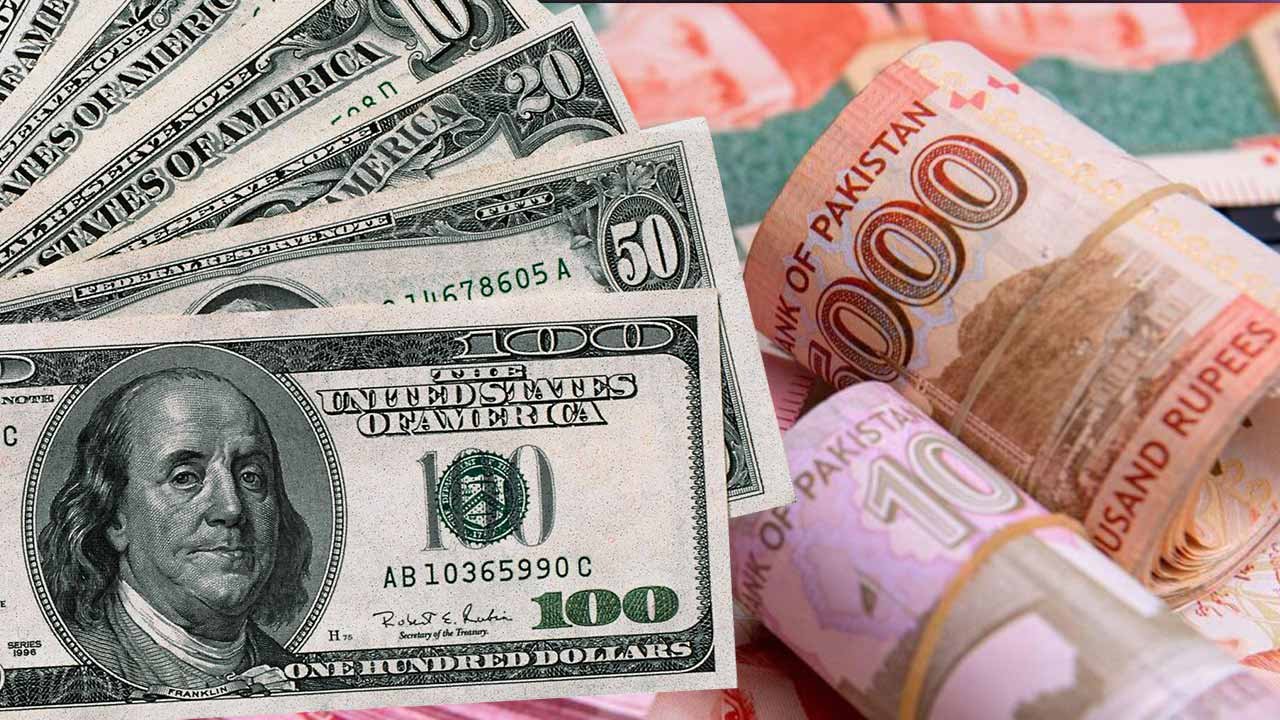
    It is possible that the foreign investment funds will increase the value of the PKR. This happens because when foreign funds arrive, they have to be converted into PKR before they are to be invested in local projects. As a result, the demand for PKR shoots up and the value of the PKR goes up. However, this appreciation is usually short-lived. Once the foreign funded projects are completed, the PKR tends to lose value again.

    This historical pattern is linked to Pakistan’s huge trade deficit, which was $24.09 billion for just the fiscal year 2023-24 alone. This is due to Pakistan importing much more than it exports.

    The imports that exceed exports are responsible for the outflow of foreign reserves which causes the PKR to depreciate.

    Historically, to prevent the PKR from depreciating too much, the SBP has come in and started selling off foreign currency reserves to support the value of the PKR when it starts to depreciate. However, the sale of reserves is not a viable option to stabilize the PKR value in the long term as Pakistan runs a persistent trade deficit.

    The more PKR the SBP buys, to artificially increase the value of the PKR, the more it depletes its reserves. Without any rise in the inflow of foreign currency from exports, this practice of artificially propping up the PKR is not sustainable.

    The recent rise in reserves and the temporary boost from the SCO summit may give a sense of stability, but they don’t address the core underlying economic problems. Structural changes in exports and imports will help the rupee to remain under pressure unless the trade deficit is curbed.

    While the SBP interventions may provide immediate relief, they only treat the symptoms, not the cause. To achieve true economic stability, the government needs to enforce reforms. Reducing the trade deficit by increasing exports to build sustainable foreign reserves is the need of the hour for Pakistan.

    While the 30 month foreign reserves high is a reprieve for the state bank, it’s just that: A reprieve. The real question, though, is whether Pakistan will be able to grow when world leaders leave Islamabad after the conclusion of the SCO.

  • SBP-held foreign exchange reserves climb to $9.153 billion with $51 million increase

    SBP-held foreign exchange reserves climb to $9.153 billion with $51 million increase

    The State Bank of Pakistan (SBP) has reported an increase of $51 million in its foreign exchange reserves, which reached $9.153 billion for the week ending August 2. The central bank has not disclosed the source of this inflow.

    This rise marks the second consecutive week of increases in the SBP’s reserves, which had previously declined significantly from $9.42 billion on July 12 to $9.027 billion on July 19.

    Overall, the country’s total foreign exchange reserves have risen to $14.472 billion, with $5.318 billion held by commercial banks.

    The SBP’s reserves are a key indicator of financial stability. By the end of the fiscal year 2024, reserves had increased to $9.389 billion, a substantial rise from $4.44 billion in June 2023. This increase has contributed to stabilising the exchange rate and boosting confidence among foreign investors.

    The exchange rate has remained stable for the past four months, attracting significant foreign investment. In this period, inflows into domestic bonds have reached their highest levels since before the Covid-19 pandemic, with $258 million received in July and $230 million in May.

    Looking ahead, financial analysts anticipate that the SBP’s reserves could reach up to $13 billion by the end of 2025, supported by new inflows from an IMF loan programme.

  • Pakistan grapples with massive Rs63.4 trillion debt

    Pakistan grapples with massive Rs63.4 trillion debt

    In November 2023, Pakistan’s total debt soared to an alarming Rs63.399 trillion, marking a significant increase from Rs50.959 trillion in the same month of the previous year. 

    According to details, this surge comprises Rs40.956 trillion in domestic loans and Rs22.434 trillion in international loans.

    The recent development follows Pakistan’s commitment to the International Monetary Fund (IMF) for a new loan programme. 

    As outlined in the Memorandum of Economic and Financial Table, Pakistan has pledged to boost foreign reserves to $13.6 billion in FY2024–25, facilitating access to the IMF’s financial assistance.

    To support its financial strategy, Pakistan is planning to roll over a $6.34 billion loan in the upcoming fiscal year, coupled with a targeted increase of $1.31 billion in foreign investments, as highlighted by the MEFPT. 

    These measures aim to navigate the country through its evolving economic landscape.

  • SBP-held forex reserves surge to $7.76 billion in December

    SBP-held forex reserves surge to $7.76 billion in December

    In the week concluding on December 22, 2023, Pakistan witnessed a substantial increase in its total liquid foreign reserves, reaching a noteworthy $12,855.7 million.

    This surge was reported by the State Bank of Pakistan (SBP), which highlighted that the central bank’s reserves saw a remarkable uptick to $7,757.1 million during the same period.

    The SBP revealed that the surge in reserves, amounting to $852 million, was primarily attributed to official inflows from the Government of Pakistan received during the week under review.

    Simultaneously, commercial banks in the country reported net foreign reserves amounting to $5,098.6 million, further contributing to the overall resilience of Pakistan’s financial position.

    This positive development follows the previous week’s figures, ending on December 15, 2023, where the total liquid foreign reserves were recorded at $12,068.4 million.

    During this period, the central bank held reserves worth $6,904.8 million, with commercial banks reporting net foreign reserves of $5,163.6 million.

    In contrast to the positive financial indicators, Pakistan’s auto industry faced significant challenges in 2023, marked by a sharp decline in car sales of up to 55 per cent. Factories involved in manufacturing car parts also experienced a substantial production cut of 70 per cent.

    The persistent challenges in the auto sector were attributed to the exchange rate crisis, causing a decline in income until the previous year.

    The repercussions of reduced car sales were not limited to impacting the national Treasury; they also resulted in a noticeable decrease in revenue from products.

    An essential factor in this context is the adjustment made by automobile companies following a decrease in the value of the US dollar against the Pakistani rupee.

    In the closing months of 2023, these companies responded by slashing the prices of their units, reflecting the dynamic interplay between economic forces and market conditions.

  • State Bank of Pakistan reports $21 million decline in forex reserves

    State Bank of Pakistan reports $21 million decline in forex reserves

    Pakistan’s total liquid foreign reserves reached a sum of $13,030.8 million, with the central bank holding reserves amounting to $7,615.4 million, as reported by the State Bank of Pakistan (SBP). 

    According to a statement released by the State Bank of Pakistan on Thursday, during the week ending on September 28, 2023, SBP’s reserves experienced a decrease of $21 million, resulting in a total of US$ 7,615.4 million. Concurrently, commercial banks held net foreign reserves totaling $5,415.4 million. 

    In the preceding week, ending on September 22, 2023, the country’s total liquid foreign reserves were reported at US$ 13.162 billion. Among these, the central bank held foreign reserves amounting to $7.636 billion, while commercial banks held net foreign reserves of $5.525 billion. 

    As of September 29, the total liquid foreign reserves of Pakistan stood at US$ 13.18 billion, with the central bank’s reserves totaling $7,636.7 million. The State Bank of Pakistan (SBP) spokesperson attributed the decrease in SBP’s reserves by $59 million to debt repayments during the week ending on September 22, 2023. Net foreign reserves held by commercial banks amounted to $5,525.1 million. 

    In the week ending on September 15, 2023, the country’s total liquid foreign reserves were recorded at $13.186 billion. Among these, the central bank held foreign reserves amounting to $7.695 billion, while commercial banks held net foreign reserves totaling $5.491 billion. 

  • Pilgrims paying in US dollars to receive special discount for upcoming Hajj

    According to recent reports, the government is planning to provide incentives to citizens who choose to pay their dues for the upcoming Hajj in US dollars.

    Additionally, the Ministry of Religious Affairs has allocated a 25 per cent special quota for pilgrims who deposit the amount in dollars, as per APP.

    This move is a response to the government’s efforts to strengthen the fast-dwindling foreign reserves. According to a report by SAMAA on Friday, pilgrims who pay their application fees and other charges in US dollars will receive a special discount.

    SAMAA also cited the draft of the Hajj Policy 2023, which states that pilgrims will be given the option to choose the currency in which they wish to pay. Those who choose to pay in dollars will be exempted from the balloting process under the new Hajj policy, as reported by APP.

  • Pakistani rupee falls to Rs233 per US dollar in the interbank market

    Pakistani rupee falls to Rs233 per US dollar in the interbank market

    The Pakistani rupee (PKR) continued to fall on Tuesday as the country’s political turmoil worsened, trading at Rs233 to the dollar in the interbank market.

    Today, the US dollar gained Rs3.12 versus the local currency, compared to the previous day’s finish of Rs229.88, which was an all-time high at the time.

    The local currency has been under pressure for the past week due to increased political tensions in the country following the July 17 by-elections in Punjab, which the PTI easily won. Also, the rupee has been one of the world’s worst performers, falling 30.2 per cent since the beginning of 2022.

    PKR had its worst week in more than two decades, ending on July 22, highlighting investor fear that a $1.2 billion loan tranche from the IMF approved last week could not be enough to alleviate the balance of payment crisis.

    Fears of Pakistan defaulting on its foreign repayments remain in the market, despite the central bank’s guarantee that the country would comfortably cover its funding obligations as long as an International Monetary Fund (IMF) loan programme remained in place.

    The rupee fell by nearly 8 per cent last week, the most in a single week since October 1998.

  • PKR closed at 184.09 against USD, the lowest level in history

    PKR closed at 184.09 against USD, the lowest level in history

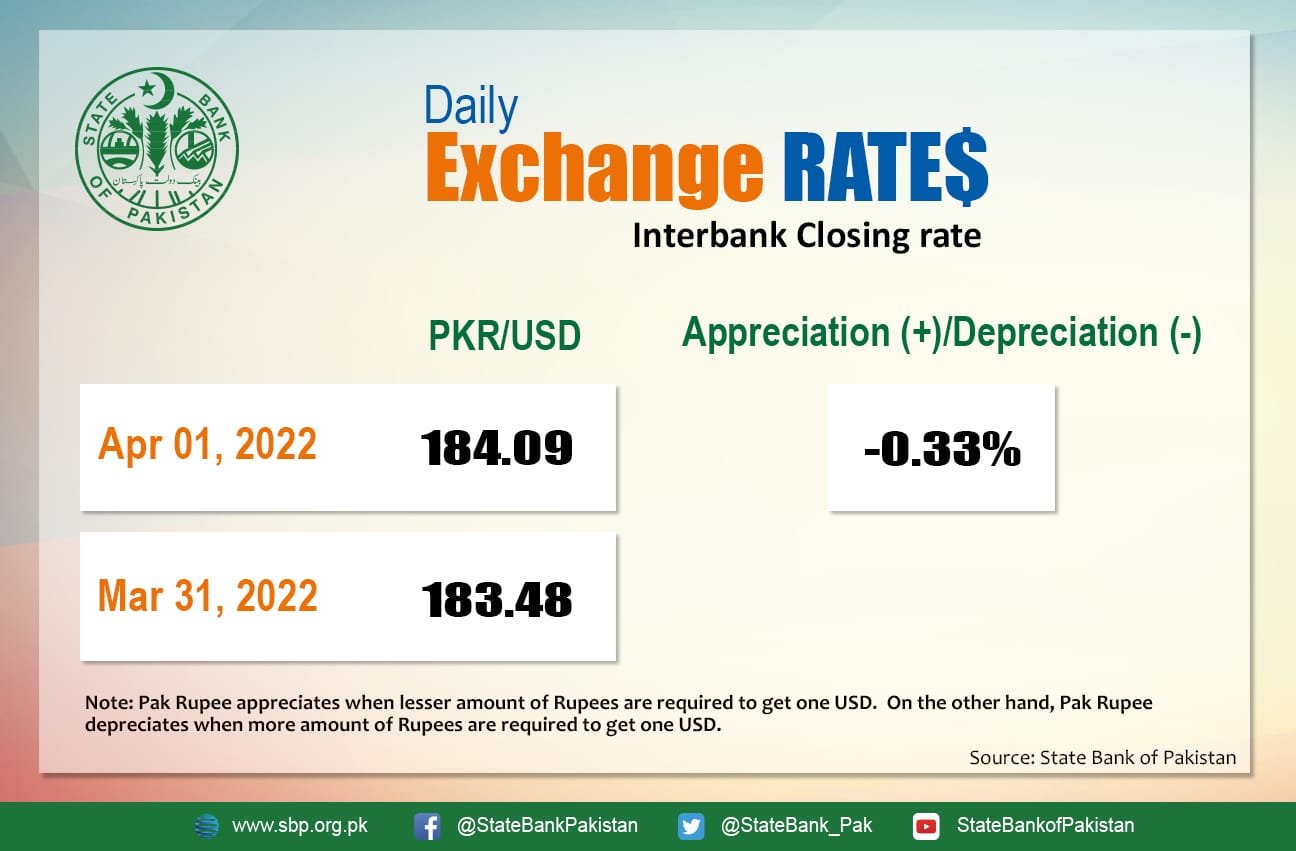
    A substantial decline in foreign exchange reserves, persistent political instability, and hefty petroleum costs dragged Pakistan’s currency (PKR) to new lows on Friday, with the rupee closing over the 184 level for the first time against the US dollar following a 0.33 per cent drop in the interbank market. 

    After a day-on-day devaluation of 61 paisas, the PKR closed at 184.09, its lowest level recorded, according to the State Bank of Pakistan (SBP).

    Since its most recent peak in May of last year, the PKR has lost over 17 per cent, while the local currency has devalued by over 14 per cent in the fiscal year to date (FYTD).

    The last time the PKR rose versus the US dollar (during its most recent weakening run) was on March 11. It has dropped in 13 sessions since that while staying stable in the remaining.

    Moreover, the State Bank of Pakistan’s (SBP) reserves also fell by $2.915 billion, to $12.05 billion, according to figures issued by the central bank on Thursday.

  • Forex reserves fall to $20.679bn

    Forex reserves fall to $20.679bn

    The Foreign Exchange reserves of Pakistan fell by $157 million or 0.75 per cent to clock in at $20.679 billion, said the central bank on Thursday.

    The total liquid foreign reserves held by the country stood at $20.836 billion in the previous week.

    The reserves held by the State Bank of Pakistan (SBP) decreased by $146 million to $13.527 billion due to external debt repayments. The reserves of commercial banks also reduced to $7.152 billion from $7.163 billion last week.

    Earlier, Pakistan received inflows amounting to $2.5 billion on Thursday evening as proceeds of recently launched Eurobonds.

    The central bank has confirmed on its Twitter account that SBP has received the government’s proceeds of $2.5 billion against Eurobond issuance, resulting in $16 billion surges in foreign exchange reserves. 

    After a gap of almost three years, Pakistan has entered the international capital market for Eurobonds trading. A multi-tranche transaction of 5-,10-, and 30- year Eurobonds was performed to build up the foreign exchange reserves. 

    During the past two years, Pakistan got almost $3 billion in foreign inflows and out of these, $2.5 billion from Eurobonds arrival on Thursday evening.

    Besides, in the last week of March, International Monetary Fund (IMF) gave around $500 million to Pakistan as a loan under Extended Fund Facility (EFF) for support. 

    As of April 2, 2021, SBP’s liquid foreign exchange reserves were $20.679 billion. With the addition of Eurobond proceeds, these foreign exchange reserves would likely cross the $23 billion mark.