Tag: Free speech

  • Witnesses name PPP MNA, two sons in Nasrullah Gadani murder case

    Witnesses name PPP MNA, two sons in Nasrullah Gadani murder case

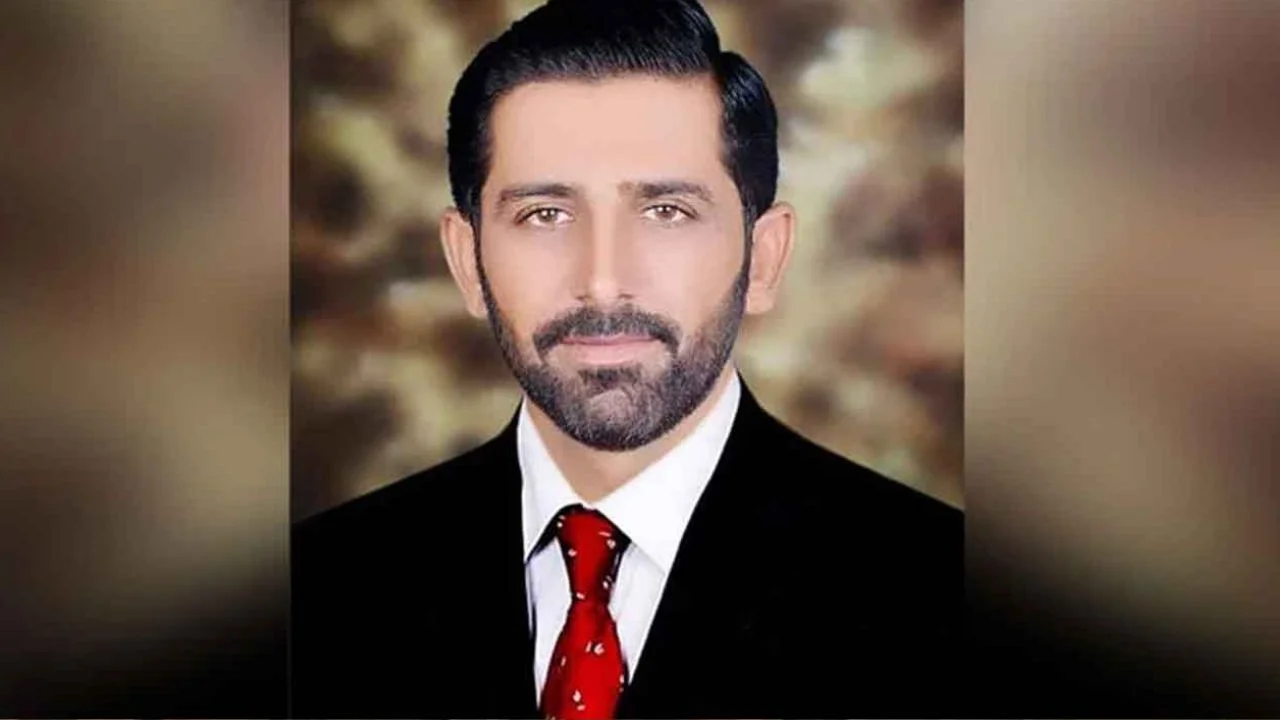
    The case of the murder case of journalist Nasrullah Gadani has been taken to court. During the last hearing, witnesses named a local MNA of the Pakistan People’s Party (PPP) and two of his sons for planning the assassination.

    The journalist’s brother and cousin Yaqoob Gadani and Salah Gadani recorded their statements under Section 164 of the Criminal Procedure Code (CrPC) before Second Civil Judge and Judicial Magistrate Mirpur Mathelo Muhammad Idress Jakhrani.

    Gadani was killed in Mirpur Mathelo on May 21. He was shifted to Karachi for treatment after the attack, where he succumbed to his injuries.

    According to the witnesses, on April 11, 2024, three people threatened Nasrullah because he did not stop reporting against them.

    On June 8, 2024, police reportedly arrested Asghar Loond, son of Hoat Loond, one of the three main suspects, and found the weapons, motorcycle, and three mobile phones used in the assassination.

    Police have declared Asghar Loond’s brother Barkat and Abdullah as absconders.

  • ‘Julian Assange is free’, has left Britain: WikiLeaks

    ‘Julian Assange is free’, has left Britain: WikiLeaks

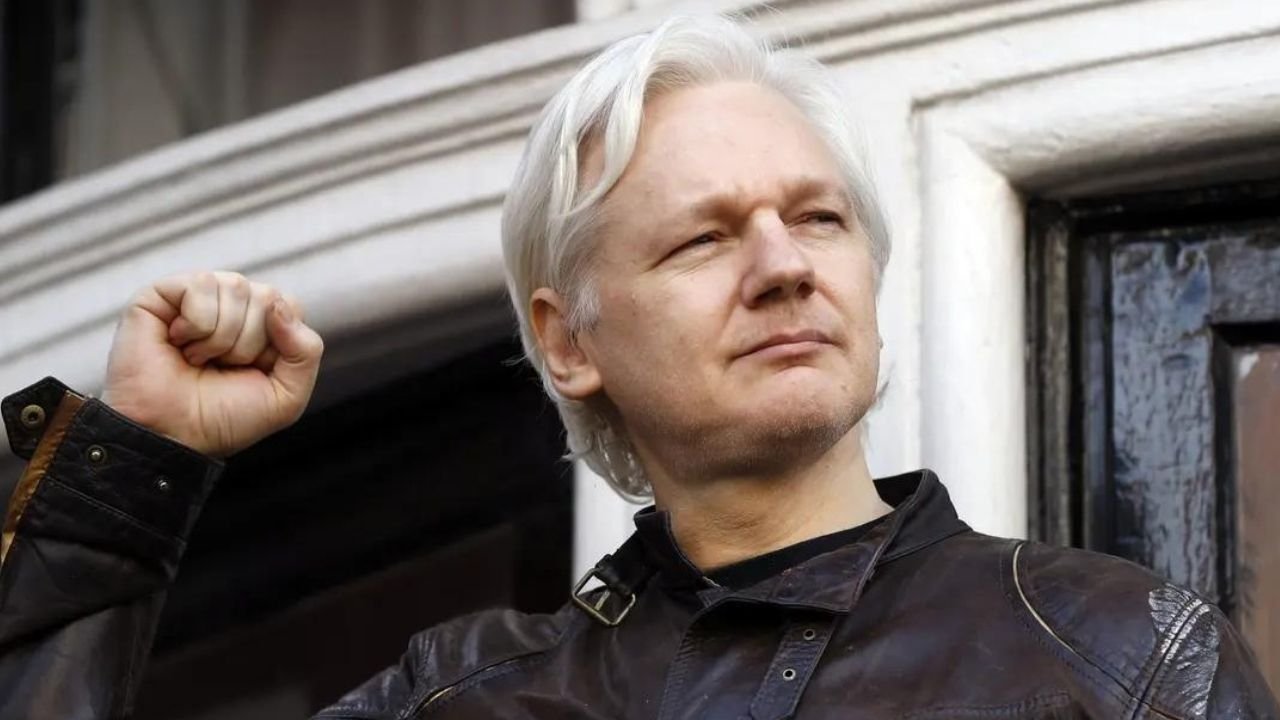
    Julian Assange’s wife Stella on Tuesday thanked campaigners for their support as the WikiLeaks founder was released after five years in British custody.

    “Julian is free!!!!” she wrote on the social media platform X following confirmation that he had left Belmarsh high-security prison in southeast London.

    “Words cannot express our immense gratitude” to everyone who had backed the global push for his release, she added.

    Stella Assange met the Australian publisher while he was holed up in Ecuador’s London embassy to avoid extradition to Sweden on sexual assault charges that were later dropped.

    Assange, accused of divulging US military secrets related to the wars in Afghanistan and Iraq, had been due back in court in London next month after winning an appeal against extradition.

    But WikiLeaks said in a statement: “Julian Assange is free. He left Belmarsh maximum security prison on the morning of June 24, after having spent 1,901 days there.

    “He was granted bail by the High Court in London and was released at Stansted airport during the afternoon, where he boarded a plane and departed the UK.”

    The media freedom group said sustained campaigning, from grassroots supporters to political leaders and the United Nations, “created the space for a long period of negotiations with the US Department of Justice”, leading to a deal.

    The organisation said the deal “has not yet been formally finalised”.

    Assange was initially detained for skipping bail in relation to the Swedish case and held in custody while the US extradition request wound its way through court.

    He will now be reunited with his wife, whom he married at a ceremony in the prison, and their two young children, it added.

    “WikiLeaks published ground-breaking stories of government corruption and human rights abuses, holding the powerful accountable for their actions,” the statement read.

    “As editor-in-chief, Julian paid severely for these principles, and for the people’s right to know.

    “As he returns to Australia, we thank all who stood by us, fought for us, and remained utterly committed in the fight for his freedom. Julian’s freedom is our freedom.”

    spe-phz/rsc

    © Agence France-Presse

  • Suspect arrested in Nasrullah Gadani murder

    Suspect arrested in Nasrullah Gadani murder

    A suspect involved in the murder of Nasrullah Gadani, a journalist working for the daily newspaper Awami Awaz, has been arrested by Yaro Lund police in Sindh.

    Gadani was killed in Mirpur Mathelo last month on May 21. He was shifted to Karachi for treatment after an attack, where he succumbed to his injuries.

    According to the police, the motorcycle used in the journalist’s murder was also recovered from the suspect who has been shifted to an unknown location for investigation.

    Raids are being conducted to arrest the associates of the man.

  • Tweets or ‘terrorism’?: Saudi’s jailed online activists

    Tweets or ‘terrorism’?: Saudi’s jailed online activists

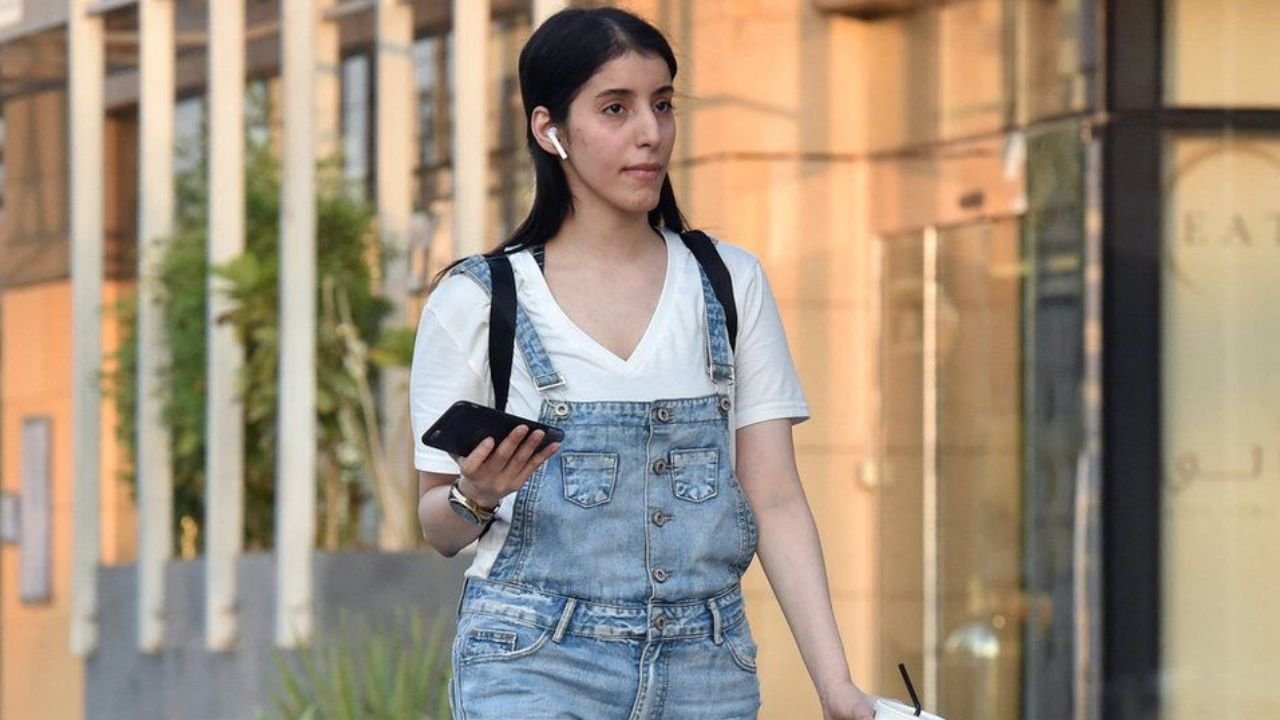
    A Saudi court’s decision to sentence fitness influencer Manahel al-Otaibi to 11 years in prison highlights what activists describe as a fierce crackdown on even vaguely critical online speech.

    In the past two years the Saudi judiciary has “convicted and handed down lengthy prison terms on dozens of individuals for their expression on social media”, the human rights groups Amnesty International and ALQST said in a joint statement on Tuesday.

    These cases are generally handled by the Specialised Criminal Court, which was established in 2008 to try suspects accused of terrorism, and Saudi authorities do not often comment on them.

    Here are some of the most high-profile recent examples:

    Nourah al-Qahtani

    A mother-of-five, Qahtani was arrested in July 2021 largely in connection with critical posts on Twitter, since rebranded as X, according to a sentencing document provided by Democracy for the Arab World Now (DAWN), a Washington-based rights group.

    She initially received a prison sentence of six-and-a-half years, however prosecutors appealed for a harsher sentence and got their wish: a 45-year term issued in mid-2022.

    Qahtani’s Twitter account, as identified in the sentencing document, features numerous posts criticising the government and others warning of attempts to arrest those behind public protests, which are not tolerated in Saudi Arabia.

    The court found Qahtani had used Twitter “to challenge the religion and justice” of King Salman and Crown Prince Mohammed bin Salman

    Get info without
    leaving the page., the kingdom’s 38-year-old de facto ruler, according to the sentencing document.

    It also says she incited “the activities of those who seek to disturb public order and destabilise the security of society and the stability of the state” by “publishing false and malicious tweets”.

    Qahtani did not have a large public profile and it is not clear how her anonymous Twitter account, which has fewer than 600 followers, attracted the attention of Saudi authorities.

    Salma al-Shehab

    A member of Sunni-ruled Saudi Arabia’s Shiite minority, Shehab had been studying for a doctorate in Britain and was arrested in January 2021 while visiting on holiday.

    In August 2022 she was sentenced to 34 years behind bars for aiding dissidents seeking to “disrupt public order” in the kingdom by relaying their tweets.

    The mother-of-two, who mostly posted about women’s rights to an account with just a few thousand followers, was also banned from travelling abroad for a further 34 years.

    Both the sentence and travel ban were later reduced to 27 years each, according to Amnesty.

    After Shehab’s sentence was made public, the University of Leeds, where she was studying, said in a statement it was “deeply concerned” and trying to find ways to support her.

    Mohammed al-Ghamdi

    A government critic who denounced alleged corruption and human rights abuses on social media, Mohammed al-Ghamdi was sentenced to death last year.

    The charges include conspiracy against the Saudi leadership, undermining state institutions and supporting terrorist ideology, sources briefed on the details of the verdict said.

    The case against him was at least partly built on posts criticising the government and expressing support for “prisoners of conscience” like the jailed religious clerics Salman al-Awda and Awad al-Qarni, Mohammed’s brother Saeed al-Ghamdi told AFP at the time.

    Mohammed al-Ghamdi, a retired teacher in his 50s, was arrested in June 2022.

    Human Rights Watch said in August 2023 it had seen court documents contending that Ghamdi “targeted the status of the King and the Crown Prince” and that the “magnitude of his actions is amplified by the fact they occurred through a global media platform, necessitating a strict punishment”.

    In an interview with Fox News that aired in September 2023, Prince Mohammed said he disapproved of the judgement and raised the possibility that Ghamdi might be spared death.

    “I’m hoping that in the next phase of trials, the judge there is more experienced. And they might look at it totally different,” Prince Mohammed said.

    Manahel al-Otaibi

    Otaibi, a 29-year-old blogger and fitness instructor, was arrested in November 2022.

    Rights groups contend that law enforcement targeted her for challenging Saudi male guardianship laws and requirements for women to wear the customary body-shrouding abaya robe.

    The Specialised Criminal Court sentenced her to 11 years in prison on January 9, but the sentence was only made public later in a Saudi submission to United Nations special rapporteurs inquiring about the case.

    That document, dated January 24 and seen by AFP on Tuesday, says Otaibi “was convicted of terrorist offences that have no bearing on her exercise of freedom of opinion and expression or her social media posts”.
  • X working with Pakistan govt to ‘understand concerns’ over ban

    X working with Pakistan govt to ‘understand concerns’ over ban

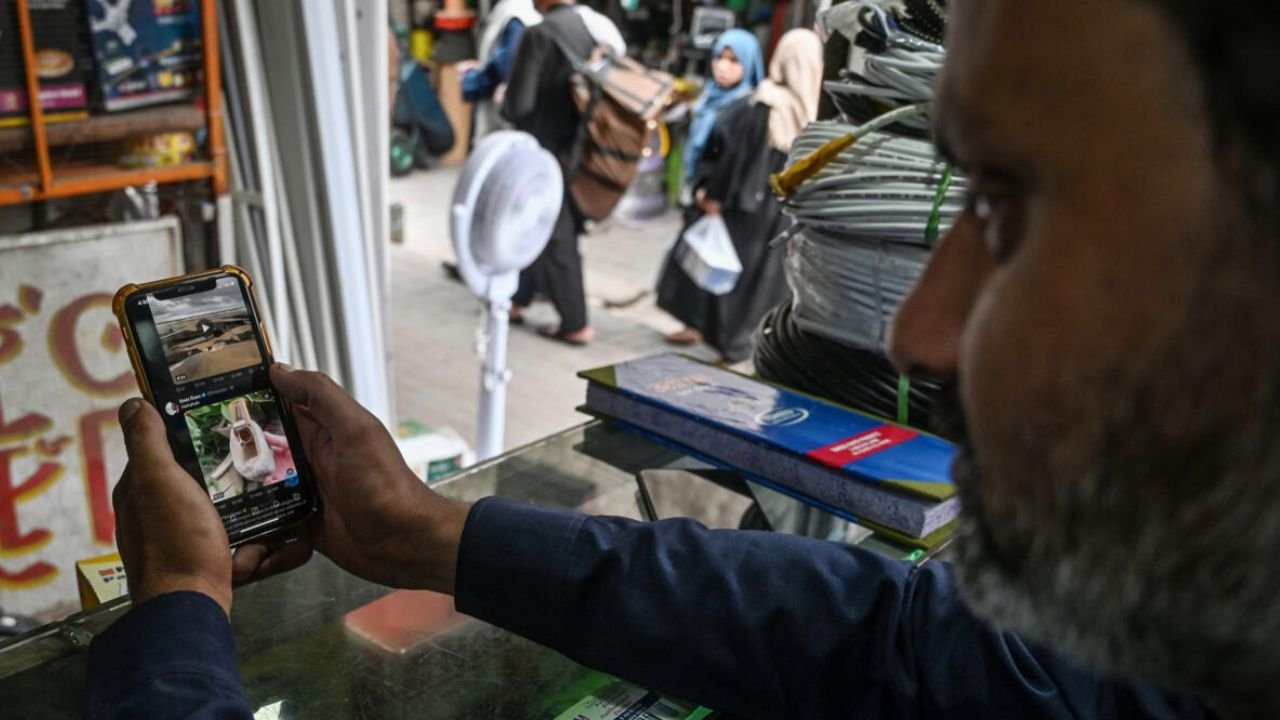
    Islamabad, Pakistan – Social media platform X said Thursday it would work with Pakistan’s government “to understand its concerns” after authorities insisted an ongoing two-month ban was based on security grounds.

    The platform, formerly known as Twitter, has been rarely accessible since February 17, when jailed former prime minister Imran Khan’s party called for protests following a government official’s admission of vote manipulation in the February election.

    “We continue to work with the Pakistani Government to understand their concerns,” X’s Global Government Affairs team posted, in their first comments since the site was disrupted.

    The Interior Ministry on Wednesday said X was blocked on security grounds, according to a report submitted to the Islamabad High Court where one of several challenges to the ban is being heard.

    On the same day, the Sindh High Court ordered the government to restore access to social media platform X within a week.

    “The Sindh High Court has given the government one week to withdraw the letter, failing which, on the next date, they will pass appropriate orders,” Moiz Jaaferi, a lawyer challenging the ban, told AFP.

    The court’s full decision is expected to be published this week.

    Both the government and the Pakistan Telecommunication Authority (PTA) had for weeks refused to comment on the outages.

    “It is the sole prerogative and domain of the federal government to decide what falls within the preview of terms of ‘defence’ or ‘security’ of Pakistan and what steps are necessary to be taken to safeguard National Security,” said the interior ministry’s report, submitted by senior official Khurram Agha.

    The interior ministry suggested intelligence agencies were behind the order.

    The closure of a social media service “when there is request from any security or intelligence agency” is “well within the scope of provisions of the PTA act”, the report said.

    Digital rights activists, however, said it was designed to quash dissent after February 8 polls that were fraught with claims of rigging.

    Access to X has been sporadic, occasionally available for short cycles based on the internet service provider, forcing users to use virtual private networks.

    Mobile services were cut across Pakistan on election day, with the interior ministry also citing security reasons.

    It was followed by a long delay in issuing voting results, giving rise to allegations of tampering.

    Khan’s opposition party had already faced heavy censorship in the weeks before the election, banned from television channels and from holding rallies, forcing its campaign online.

    Despite the crackdown, his party won the most seats but was kept from power by a coalition of rival parties that had the backing of the military.

    stm-ecl/jts/ssy

    © Agence France-Presse

  • ‘I am very happy that Twitter is now in sane hands’: Trump welcomes Musk’s takeover

    ‘I am very happy that Twitter is now in sane hands’: Trump welcomes Musk’s takeover

    The takeover was hailed, but former US president Donald Trump, who was permanently banned from Twitter after the riots on January 6, 2021, said little about making a comeback. “I am very happy that Twitter is now in sane hands, and will no longer be run by Radical Left Lunatics and Maniacs who truly hate our country.”

    Trump was banned after the 2021 attack on the US Capitol, which the Republican leader is suspected of instigating. Musk has said he might lift the ban.

    Former Russian President and current Vice-Chairman of the Russian Security Council, Dmitry Medvedev, tweeted his congratulations, saying “Good luck @elonmusk in overcoming political bias and ideological dictatorship on Twitter. And quit that Starlink in Ukraine business.”

    Others urged Musk to undo restrictions imposed by the social network. In response to @catturd2, a random account with 852,000 followers, known for being a big supporter of Trump’s election fraud claims, and who said it was “shadowbanned,” Musk tweeted “I will be digging in more today.”

    Margarita Simonyan, the head editor of the Russian state-run media outlet RT, pleaded with Musk to “unban RT and Sputnik accounts and take the shadow ban off mine as well.”

    Musk and Twitter are under increasing pressure since he plans to address the Twitter workers on Friday after the purchase is finalised.

    “Hey @ElonMusk, now that you own Twitter, will you help fight back against Trudeau’s online censorship bill C-11?” tweeted Canada Proud, a group attempting to unseat Justin Trudeau as prime minister of Canada.

    According to Musk, Twitter may serve as the basis for a “super app” that does everything from ride-hailing to retail and money transfers.

    However, Twitter is having trouble retaining its most active users, who are crucial to the company. Less than 10 per cent of monthly active users are “heavy tweeters,” but they produce 90 per cent of all tweets and 50 per cent of global income.

  • SpaceX fires employees involved in letter criticising CEO Elon Musk

    SpaceX fires employees involved in letter criticising CEO Elon Musk

    Elon Musk’s SpaceX has fired several employees as a result of a letter criticising the vocal billionaire’s public behaviour, according to a message to employees confirmed by AFP on Friday.

    SpaceX chief operating officer Gwynne Shotwell wrote in an email late Thursday that a “small group” of employees sought signatures from their coworkers as a show of support for the letter and participation in a survey.

    The mercurial billionaire uses Twitter on a regular basis to provoke, speak directly to customers and fans, and occasionally offend with unfiltered or crude remarks.

    According to Shotwell’s message, some employees felt “uncomfortable, intimidated, and bullied, and/or angry” because the letter pushed them to sign something that didn’t reflect their beliefs.

    “We have too much important work to do,” she continued, “and we don’t need this kind of overreaching activism”.

    The company “terminated a number of employees involved” after conducting an investigation, Shotwell said, without specifying how many.

    Musk’s public behaviour, as well as recent allegations of sexual harassment against him, were cited in the workers’ letter as “a frequent source of distraction and embarrassment for us,” according to The Verge.

    “Elon is seen as the face of SpaceX as our CEO and most visible spokesperson – every Tweet Elon sends is a de facto public statement by the company,” the letter continued.

    Musk, who also runs Tesla, is in the middle of a roller-coaster $44 billion bid to buy Twitter, which has heightened interest in the investor.

  • Elon Musk offers $43 billion to acquire Twitter

    Elon Musk offers $43 billion to acquire Twitter

    Elon Musk has submitted a takeover bid for Twitter, offering $54.20 per share, days after becoming the group’s largest shareholder. This is an offer worth more than $43 billion.

    According to a Securities and Exchange Commission (SEC) filing, Mr. Musk described this as a “best and last offer,” reflecting a 54 per cent premium over the day before he commenced investing in the business in late January 2022.

    Musk stated in the filing that “I don’t have faith in the management” and that he could not make the adjustments he desired in the public market.

    As per a letter written to CEO Salesforce and chairman of Twitter, Bret Taylor, Musk stated that if the proposal is not accepted, he will reassess his status as a shareholder as Twitter has a lot of potential which needs to be unlocked.

    The billionaire CEO of Tesla and SpaceX and the world’s richest man, purchased a 9.2 per cent share in Twitter on April 4, according to a regulatory filing. The tech mogul was invited to join Twitter’s board of directors the next day, but he denied the offer by the end of the week.

    Musk wrote to Mr. Taylor on April 13: “I invested in Twitter because I believe it has the potential to be the global platform for free speech, and I believe free speech is a societal requirement for a healthy democracy”.

    Read more: Elon Musk is no longer joining Twitter board as the microblogging network is “dying”

    “However, after making my investment, I’ve come to recognize that the company, in its current form, can neither thrive nor serve this societal need,” he wrote. “Twitter should be turned into a private firm”.

    Considering the tweeted document, Musk’s financial adviser for the proposal is Morgan Stanley.

  • EXCLUSIVE: ‘I did the speech knowing I would lose my job,’ Hamid Mir

    EXCLUSIVE: ‘I did the speech knowing I would lose my job,’ Hamid Mir

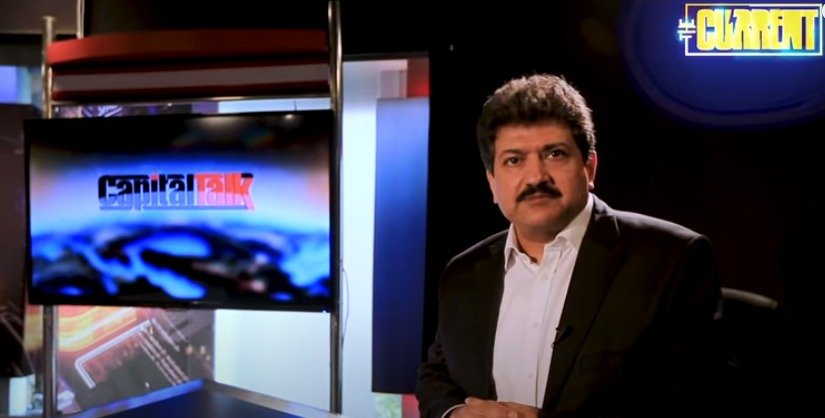
    Hamid Mir doesn’t sound like he’s down. On the contrary, the seasoned journalist sounds energised and alive. His phone was dead (or switched off) for the past two days, when The Current tried to reach out to him. Eventually when we got through, he didn’t pause for a second and gave us his version of the event that led to his removal from his flagship show, ‘Capital Talk’ on Geo News.

    “What will Geo probe?” he said when asked that Geo News had stated that they would “check for violation of policy and law” in a speech given by Hamid Mir “that resulted in backlash from different segments of society”.

    “My speech did not air on Geo News, it was not published in the newspaper,” Mir said categorically, “so how is Geo responsible when it never appeared on their television screens?”

    But Mir does admit that the pressure is intense on the management of his channel, which ultimately falls on him. “I am always prepared for pressure,” he says calmly, “I offered to leave the channel on Friday night when I was asked to clarify my statement. I told the management that when I never spoke on your channel, why do I need to issue a clarification? I was then told not to tweet on the issue and also that I should not take part in any other programmes,” Mir explained. “I was going to go on different news channels and said that I am not going to discuss my speech but to discuss the media ordinance. I was asked not to do so and therefore, I didn’t. I did tell them [management] that ‘they’ will ask you to remove me from the programme in a day or so and that’s exactly what happened.”

    When asked what it was about this particular case that drove Mir to give the speech, he said it was because of a man in a wheelchair.

    “When I was about to speak, if you notice in the video, there is a man on my right side sitting on a wheelchair. The man is an old journalist Qaiser Butt and he randomly said, ‘Larki ka bhai ho sakta hai‘ (it can be the girl’s brother) implying that Toor was part of an illicit relationship. That made me angry since Asad was standing right there as well. I got de-tracked and said, ‘larki ki maa bhi ho sakti hai jo General Rani hai‘. But it’s not just that.”

    Mir says the biggest reason for speaking out had been building up for the past three weeks. “In the past two, three weeks, some female colleagues were complaining that they were being threatened and one told me that ‘they’ came to her house. They didn’t cause her any harm but gave her a message.” He added that two female journalists also wanted to file a case but they have restrictions that are different. “Their husbands tell them not to report the cases; they face problems with their in-laws.”

    Mir is hopeful for change this time. “I did the speech knowing I would lose my job and I was prepared for that,” he says. “Right now, as I am speaking with you, I am at a meeting with the Human Rights Commission of Pakistan (HRCP). Hina Jilani is also here and the Pakistan Federal Union of Journalists (PFUJ) is going to be releasing a white paper on the new cases that have come up. I can’t tell you, I have been swamped with calls of people that are now finally coming forward with cases and want to raise their voice.”

    “Lots of people are taken off air, but there has never been such a big reaction,” Mir says, explaining that in this particular case, the local and international reaction is bigger than he expected. “I am getting a lot of calls from international networks wanting to cover the story and because of this interest, I believe that some pressure will be put on the political government for accountability.”

    “Lots of ministers are messaging me in private, lending their support,” Mir said. “Perhaps this time, we might see some actual change.”

    Hamid Mir was taken off air on Monday.