Tag: freedom

  • What messages did celebrities share on Pakistan’s Independence Day?

    What messages did celebrities share on Pakistan’s Independence Day?

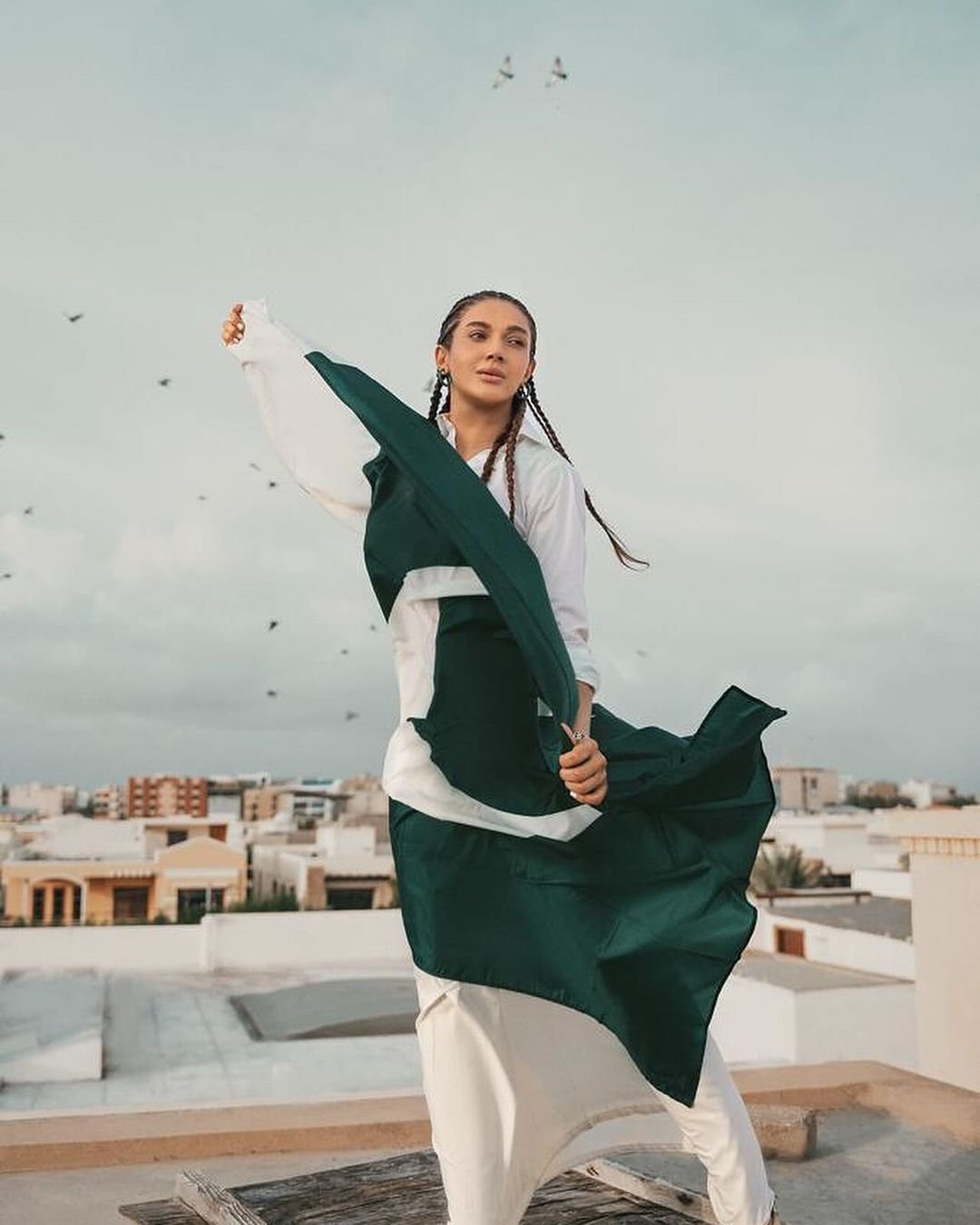
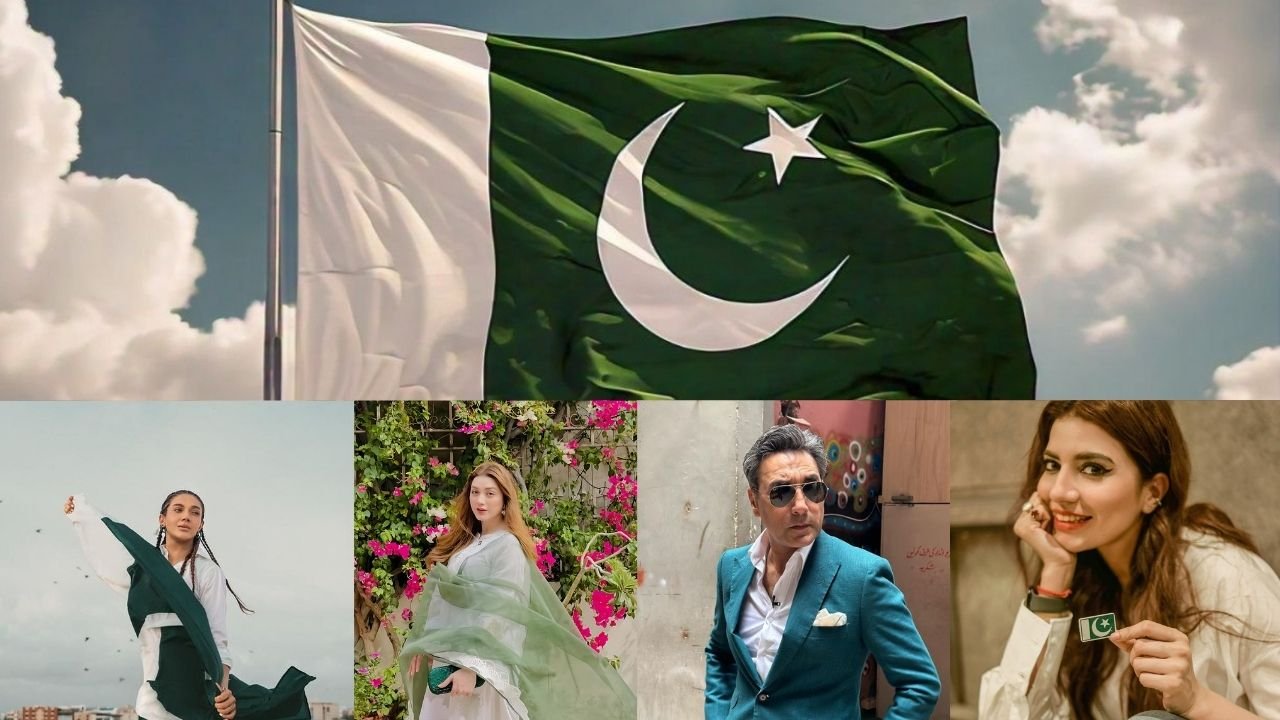
    On Pakistan’s 77th Independence Day, the country’s patriotic spirit was reflected in the messages shared by celebrities across social media.

    As the country celebrated its eventful history and achievements, different people from the entertainment industry took the opportunity to express their pride in their nation.

    Here are some stories and messages shared by the celebrities:

  • Suspect arrested in Nasrullah Gadani murder

    Suspect arrested in Nasrullah Gadani murder

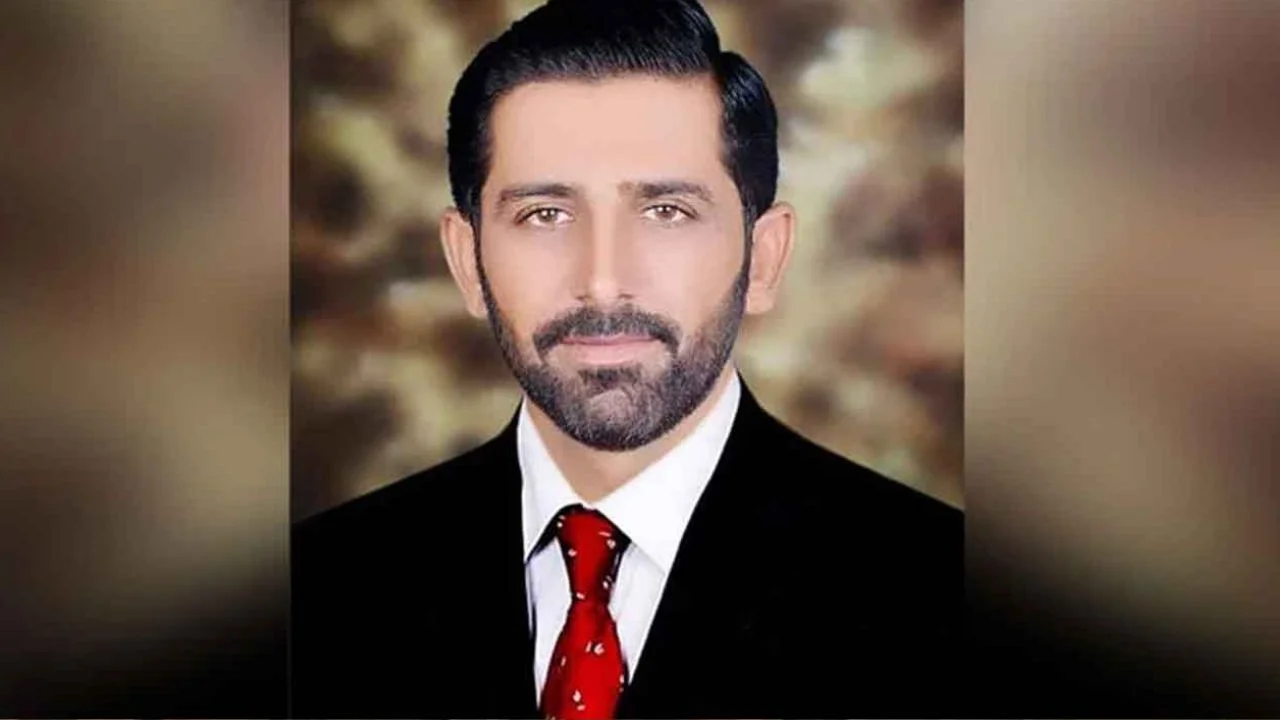
    A suspect involved in the murder of Nasrullah Gadani, a journalist working for the daily newspaper Awami Awaz, has been arrested by Yaro Lund police in Sindh.

    Gadani was killed in Mirpur Mathelo last month on May 21. He was shifted to Karachi for treatment after an attack, where he succumbed to his injuries.

    According to the police, the motorcycle used in the journalist’s murder was also recovered from the suspect who has been shifted to an unknown location for investigation.

    Raids are being conducted to arrest the associates of the man.

  • Suspension of internet during general elections was restriction on freedom of expression: Report

    Suspension of internet during general elections was restriction on freedom of expression: Report

    In its latest annual report, the Freedom Network states that the shutdown of mobile networks and suspension of the internet during the February 8 general elections was a restriction on access to information and freedom of expression.

    The report further highlights that e-safety and personal data protection bills will pose a threat to Pakistan’s digital economy.

    If the bills are passed, it will oblige Google, Facebook, X and YouTube to provide Pakistani users’ data upon demand by Pakistani authorities, institutionalizing forced censorship.

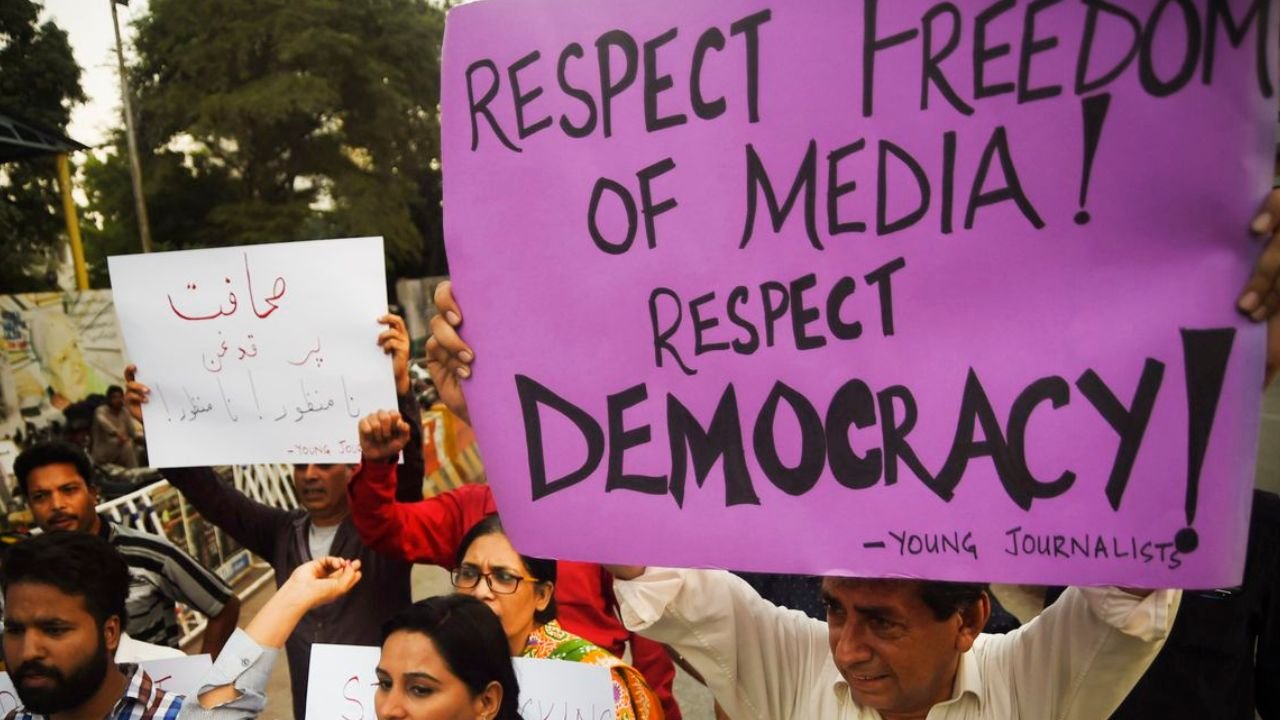
    Moreover, according to the report, four journalists were killed in Pakistan in 12 months, whereas 104 incidents of harassment of journalists were reported, and more than 70 legal notices were sent to more than 200 journalists and bloggers.

  • Ramy Youssef gets resounding applause on SNL at emotional call for freedom in Palestine

    Ramy Youssef gets resounding applause on SNL at emotional call for freedom in Palestine

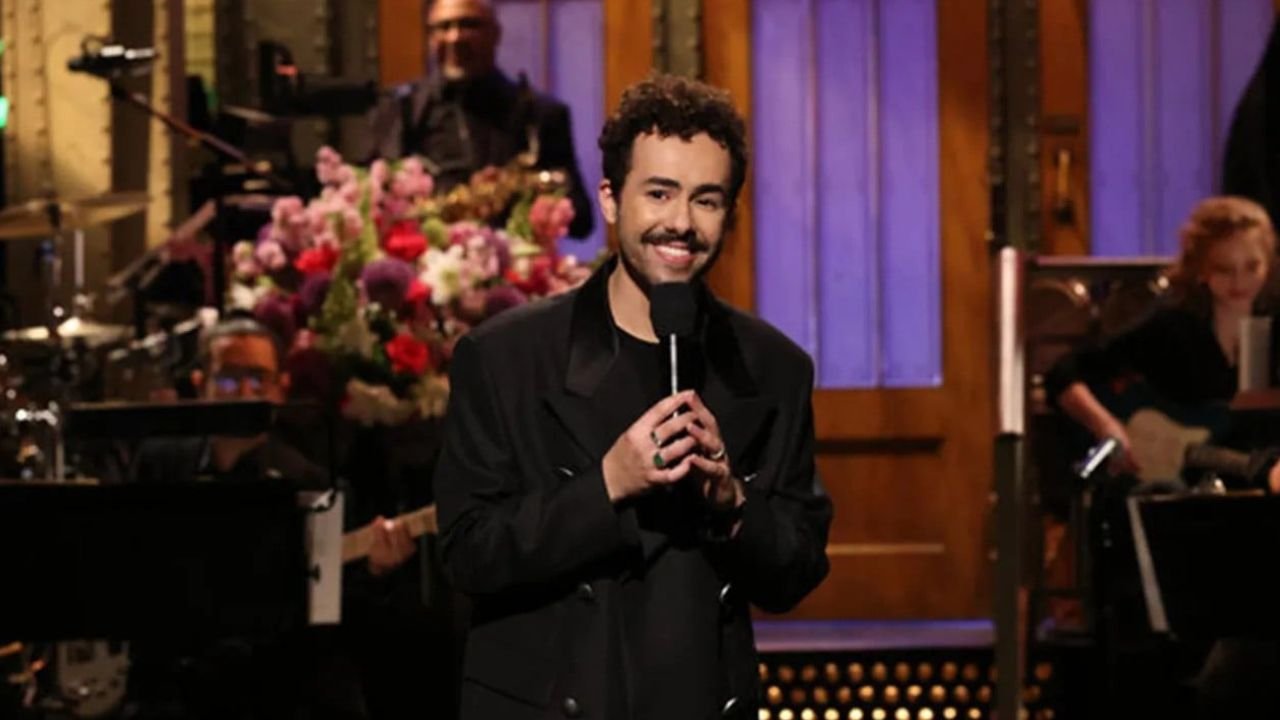
    Ramy Youssef has spoken up about the genocide in Gaza on Saturday Night Live, earning resounding applause. He made a heartfelt request to “stop the suffering” and “stop the violence.”

    Ramy Youssef, the creator of the show ‘Ramy’ and an actor in “Poor Things,” said: “This weekend is very spiritual. We’re in Ramadan, a holy month. Tomorrow is Easter. And yesterday, Beyoncé released a new album. There are just so many religions celebrating all at once.”
    Talking about prayer, Youssef said, “In my friend group, I’m one of the few who prays. I’m friends with a lot of sinners—really bad people. They call me when they’re in trouble because they want me to pray for them.”

    The publication mentioned that Youssef then made a joke about a friend who was in the middle of a custody battle over his dog. He then talked about another friend named Ahmed who called him asking for prayers for his family in Gaza. Youssef, who strongly supports peace in Palestine, said, “I’m like, ‘Dude, I got you.’ So that night, when I prayed, it was… complicated. I had a lot to ask for. I said, ‘God, please help Ahmed’s family. Please stop the suffering. Stop the violence. Please free the people of Palestine, please.’”
    While the audience cheered, Youssef said, “And please free the hostages, all the hostages, please.” Then he joked, “And while you’re at it, you know, free Mr. Bojangles. He’s a beautiful dog. I’m praying for that dog.”

    Youssef was among the people wearing an Artists for Ceasefire pin at the Academy Awards in March. He told Variety on the red carpet, “We’re asking for an immediate and permanent ceasefire in Gaza.”

    “We’re asking for peace and long-term fairness for the people of Palestine. It’s a message for everyone: ‘Let’s stop hurting children. Let’s not make more war.’ Nobody has ever thought bombing was a good idea when looking back at war. It’s amazing to be around many artists ready to speak out… the support is growing. Many people will wear these pins tonight. There’s a lot of talking on the news, but this is about speaking from the heart. We’re aiming to spread a big message of humanity.”

    Youssef was born in New York to parents from Egypt who moved to the United States. His TV show ‘Ramy,’ which he made and acted in as the main character, started in 2019. The show reflects his own life. It’s about a first-generation millennial American with immigrant parents. Youssef won a Golden Globe in January 2020 for his role.

  • Ban on abayas in state-run schools in France

    The French education minister has imposed a ban on students, prohibiting them from wearing abayas in state-run schools. The ban will be imposed from the next academic year starting September 4.

    France has always prohibited religious manifestations in state schools and government spaces as they “violate secular laws”.

    Ban on abayas has been implemented after months of debate over the attire worn in schools.

    Education Minister Gabriel Attal, while talking to France’s TF1 TV, said: “When you walk into a classroom, you shouldn’t be able to identify the pupils’ religion just by looking at them,

    “I have decided that the abaya could no longer be worn in schools.”

    With an increasing number of students wearing abayas, the political divide has widened as the right-wing parties are pressing for a ban while the left-wing is advocating for the rights of Muslim women and girls.

    “Secularism means the freedom to emancipate oneself through school,” added Attal. He believes that abaya is “a religious gesture, aimed at testing the resistance of the republic toward the secular sanctuary that school must constitute.”

    France implemented a strict ban on religious signs in schools back in the 19th Century which included Christian symbols like large crosses. The purpose was to eliminate any Catholic influence on public education. Now that people from other religions have a significant presence in French society, the laws have been updated and are targeted at the Muslim headscarf and Jewish kippa.

    France first imposed a ban on headscarf in state-run schools in 2004 while full face veils were banned in public in 2010.

  • What’s the point of helping them now?

    What’s the point of helping them now?

    This week started off with the commemoration of Pakistan’s 76th year of Independence. Despite the current political uncertainty and economic instability, the flag was hoisted high by the president; the national anthem was recited; and as per tradition, the lit roads were taken over by youth dressed in green and white.

    And while passionate speeches were made praising the sacrifices of those who fought for the freedom of Pakistan, somewhere in the district of Faisalabad, an inaudible alarm of impending destruction rang through.

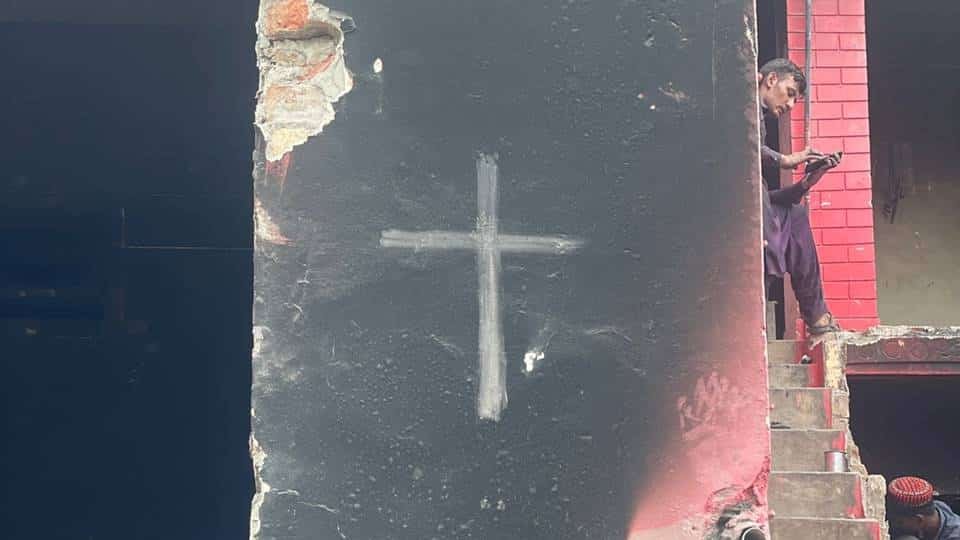
    On August 16, a mob of hundreds of people attacked the Christian community in Jaranwala over alleged blasphemy allegations against two Christian residents. By night, the Christians in Jaranwala were homeless in their own hometown. Even the churches, burnt and destroyed, could not accommodate its people in need.

    Members of our team visited Jaranwala yesterday and came back emotionally dazed after witnessing the helplessness and hopelessness of the Christian community. “What is the point of helping us now? Everything has been ruined,” one woman cried to us. And we could do nothing, say nothing to make her feel better.

    The people in that mob who wrecked an entire community are inheritors of the same freedom that is signalled to us on national television with pride. It is the freedom that was equally granted to Christians, Hindus, Ahmadis, and Sikhs along with Muslims. But somewhere along the way, it became the right of only one. Somewhere along the way, freedom became sectarian violence. Somewhere along the way, freedom became intolerance. And somewhere along the way, our freedom divided us.

    And so, today we mourn and deplore the horrors of mob violence for the umpteenth time.

    We continue to steer forward through blood and debris without minding the rotting smell of state’s conscience.

    Perhaps it is time to redefine ‘freedom’ in Pakistan. Like privilege, it only serves a few and obliterates the rest. Like hope, it is a yearning; but elusive as a mirage. Like tragedy, it has become our nightmare amidst all that could have been.

  • Afghan women under Taliban rule: two years later

    Afghan women under Taliban rule: two years later

    15 August 2023 marked two years of the fall of Kabul when the Taliban seized the capital, capturing the government in Afghanistan in 2021.

    While the Afghan government tried to ward off the assault for the longest time, the inevitable took place, leaving many sections of society devastated. Among them were women who knew what the Taliban takeover would mean for their freedom.

    “We are going to allow women to study and work within our framework. Women are going to be very active in our society,”, the Taliban had promised in their first press conference following their takeover. But as many feared, these words never became a reality.

    So, what have the Afghan girls and women endured since 15 August 2021?

    In March 2022, a ban on girls’ secondary education was imposed moments after the education ministry reopened schools for both girls and boys. The ban further barred girls from joining universities.

    Women were denied entry in the job market. This includes exclusion from NGOs as well as the government sector. Ban on beauty salons left women even more helpless. While Afghanistan’s economy has been in shambles, families have been struggling to make ends meet and with women’s exclusion from the job market, especially sole breadwinners like widows or single mothers, are in serious financial crisis. Out of options and desperation, some women have resorted to the profession of nursing and midwifery just to escape the four walls of their house and earn.

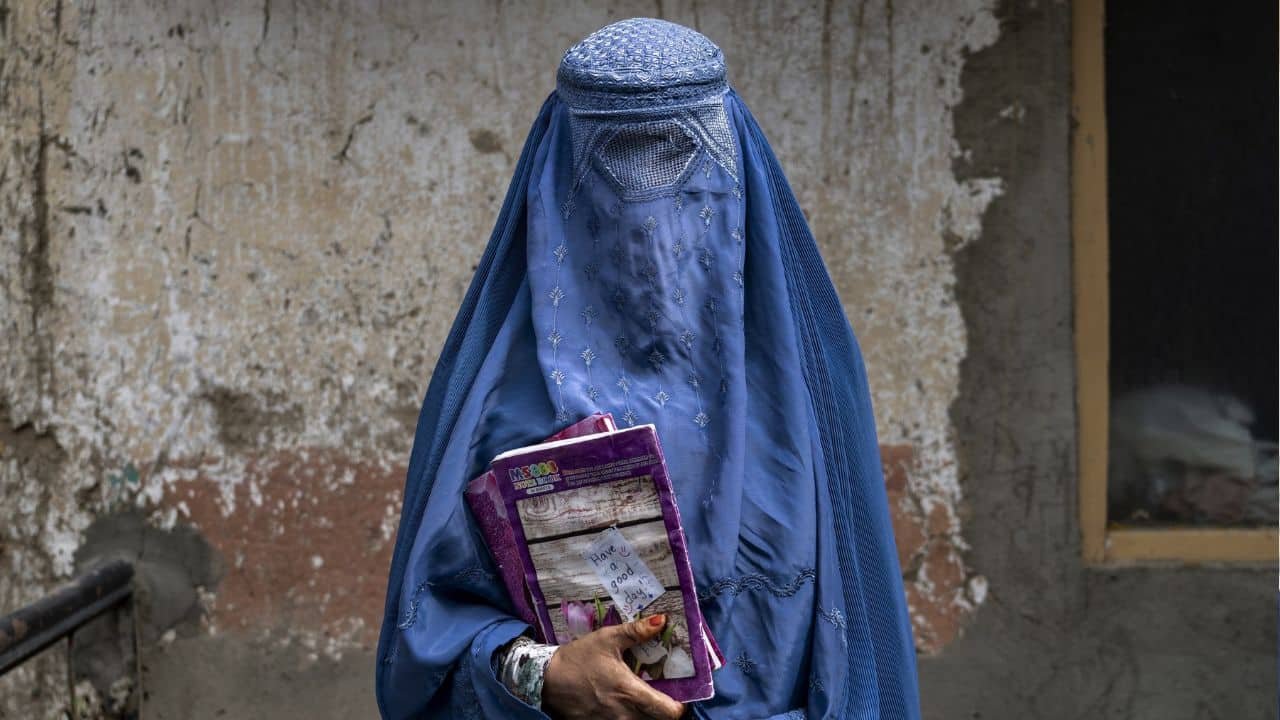
    Not only Afghan women cannot leave their house without a male chaperone (a mahram), but it is mandatory for them to wear burqas. They are also not allowed to wear make-up or heels, and are barred from accessing public places such as parks, gyms, marketplace etc.

    Having nothing to do with their lives as a result of numerous socio-political restrictions, young girls are forced into marriage. Others are sold in order to cover finances or compensate for debts. Parents fear for their daughters’ lives as they often know little about the families they are married into or sold to, but they find themselves to be powerless.

    There is a sense of fear and trauma amongst young girls and women which is leading to mental health issues.

    Following the takeover, valiant Afghan women have, nonetheless, taken their fight to the streets and have protested time and again. Resultantly, they have been threatened and even beaten, but two years on, their anger trumps fear and their struggle continues.
  • Pakistan needs unity more than ever

    Pakistan is celebrating its diamond jubilee, the 75th anniversary of its Independence Day today. A nation that was created in 1947 has come a long way — 75 years of resilience, hard work, commitment, struggle, dedication, and courage to keep fighting the odds. A country that is more than seven decades old sure deserves congratulations but it is high time we introspect because this 75-years-old Pakistan deserves better.

    Look around, what do you see? A nation that was built on unity, faith, and discipline lacks the core of these words. We were founded to have freedoms — the freedom to live, practice our religion, and be who we think and feel. Support whichever notion finds home within us. Have a creative and critical school of thought. Be protective of our fellow Pakistanis. Not judge them for their religious beliefs, political choices, and ethnicities.

    But what are we now? The present day’s 75-year-old Pakistan is far from the idea of its creation. How did we end up forgetting our reason for birth? How did we as a nation fail to stay in discipline and unity? This 75-year-old Pakistan is an amalgamation of extremism, fascism, political polarisation, and pluralistic ignorance. This country has been in the scientific laboratory for a long time now. It is time we find a litmus paper, unanimously to build this country. It is time we come out of this experimental phase and move toward a country that does not discriminate on the basis of gender. Where political leaders stay political and do not misuse religion as they please. Where the sole purpose and work of leaders is towards nation building. We can only hope that the 75-year-old Pakistan becomes strong for its girls and provides them an equal opportunity just like its boys. Where we provide an equal chance at life to the ones who have religious beliefs other than Islam. Where our minorities are not suppressed but rather treated as equals. Where rape, child marriages, abuse, and harassment ends.

    May we all give this country what it truly deserves because all it really takes is unity, faith, discipline, and introspection. Long live Pakistan. Pakistan Zindabad!

  • German gymnasts wear full-body suits at Olympics to promote freedom of choice

    German gymnasts wear full-body suits at Olympics to promote freedom of choice

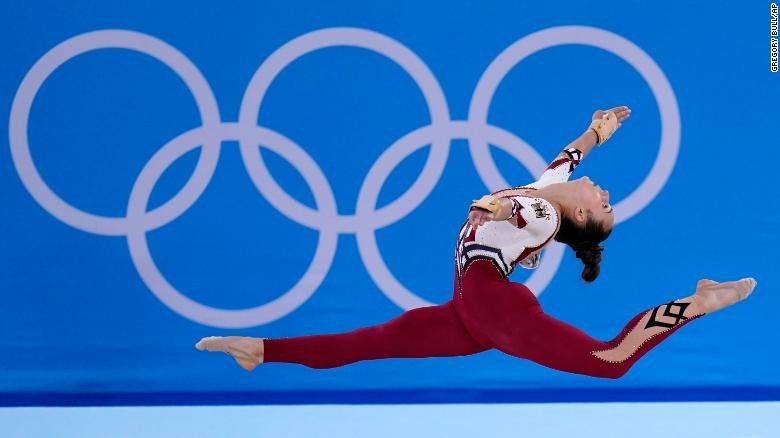
    The German women’s gymnastics team wore full-body suits in qualifications at the Tokyo Olympics on Sunday instead of their traditional bikini cut version to encourage all women to wear what makes them feel comfortable and to promote freedom of choice, reports Reuters.

    According to the German Gymnastics Federation, this act is against sexualisation in gymnastics. The aim is to present aesthetically- without feeling uncomfortable, they added in a tweet.

    The International Gymnastics Federation said that attire with full or half sleeves and leg coverings are allowed in the competition, as long as the colour matches the leotard (one-piece garment with no legs).

    Sarah Voss, one team member, first wore the suit while competing for the European championships in April.

    “We want to make sure everyone feels comfortable and we show everyone that they can wear whatever they want and look amazing, feel amazing, whether it is in a long leotard or a short one,” she said.

    After this, the entire team decided to participate in the multi-international sports event in red and white unitards and leggings extending to the ankles, in contrast to the costume worn by many other female gymnasts.

    Moreover, their mutual decision earned them praise from fellow competitors in Tokyo.

    Until now women and girls have only covered their legs in international competitions for religious reasons.

  • Regulating Freedom

    Regulating Freedom

    Earlier this month, Pakistan Electronic Media Regulatory Authority (PEMRA) uploaded a draft proposal on its website on regulating web and over the top television (OTT) content services.

    After going through the 25-page draft proposalThe Current is of the view that this is yet another effort by the government to silence independent voices. First of all, PEMRA has no authority and/or mandate to regulate social media. Secondly, Pakistan’s mainstream media is going through its worst period of censorship –- that too under a “democratic” dispensation. Pakistan is ranked 142 out of 180 countries in RSF’s 2019 World Press Freedom Index, i.e. three places lower than it was in 2018.

    Many Pakistani journalists have taken to social media to share their uncensored views online due to media censorship. Now, the government wants to regulate the internet by charging a hefty amount in fees for web TVs (both news and non-news) and OTTs and also issue licenses. They are also proposing a code of conduct without giving out any details. Reporters Without Borders rightly said that this draft proposal by PEMRA “betrays an intent to censor online video content relentlessly”. If this draft is not to discourage online content creators then what is? We, at The Current, firmly believe in freedom of expression and thus any moves to curtail our freedoms, our fundamental rights and our right to dissent, are unacceptable. Period.

    It is quite disappointing to see that a government that fully utilised social media and mainstream media before coming to power is now trying to shut down critics’ voices. Prime Minister (PM) Imran Khan recently said that he has stopped reading newspapers and watching evening news/current affairs shows because the media hammers him all the time is surprising, given that PM Imran has been media’s darling from the first day. His government is being criticised for its lack of performance and delivery. We believe the premier should not demonise media that helped him during his struggling days in politics and made him relevant.

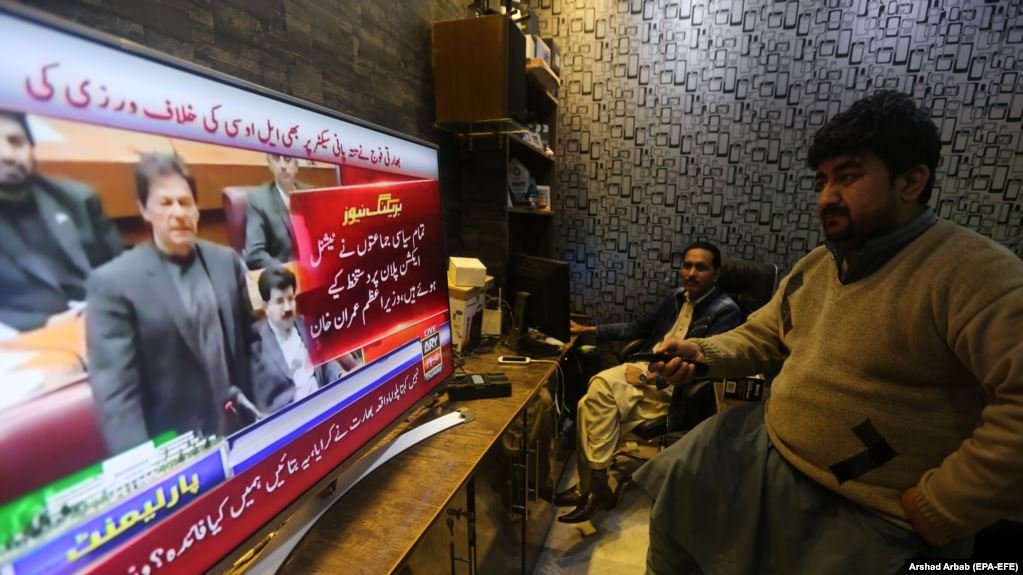
    It is also quite alarming to see that peaceful protesters in Islamabad were arrested and charges of sedition were levelled against them. Their only crime was to be a part of a protest seeking the release of Pashtun Tahafuz Movement (PTM) Manzoor Pashteen. Some were released, but 23 political activists and human rights defenders, including Ammar Rashid and Nawfal Saleemi, are still under arrest — not to mention citizens like Khurram Qureshi who was there for solidarity. Their families are not being allowed to meet them despite the fact that it is their legal right. We would like to ask the government how it is sedition to protest peacefully when it is our fundamental right to do so. Releasing these protestors would be the right thing to do.

    From censorship in media to curbing online dissent to booking peaceful protesters under sedition charges, the state of Pakistan is acting more like a police state and less as a democracy. Let’s not go down this path.