Tag: freedom of expression

  • NA body approves bill seeking criminal proceedings against anyone defaming military

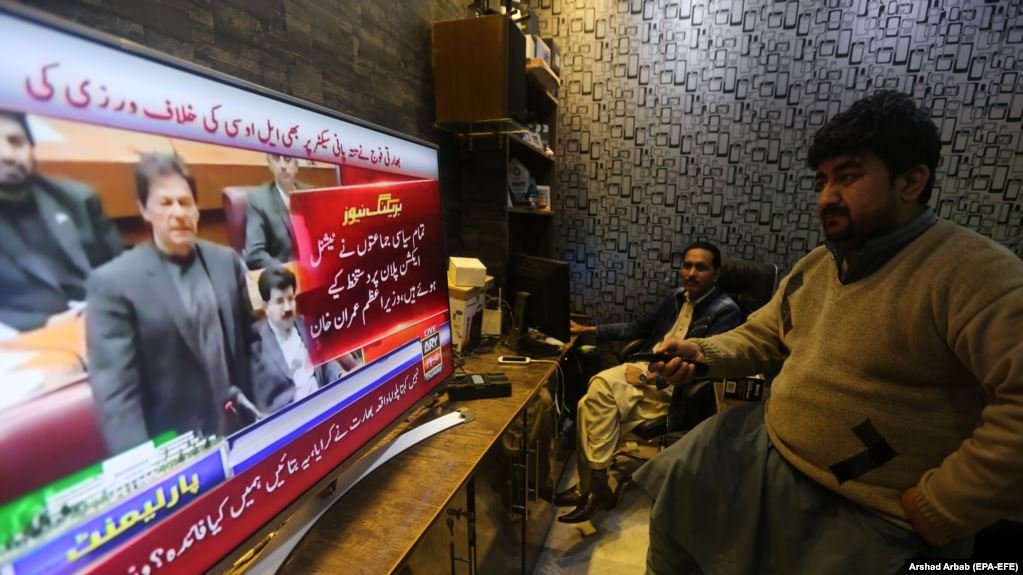
    A bill seeking criminal proceedings against anyone who defames the military, has been approved by National Assembly Standing Committee on Interior.

    The bill, under which the said act is punishable by up to two years in prison or a fine of Rs500,000 or both, will now be presented before the lower house of the parliament.

    According to sources, the Pakistan People’s Party (PPP) and Pakistan Muslim League-Nawaz (PML-N) have opposed it as a violation of right to freedom of expression.

    However, it received the votes of a majority during the NA body’s meeting.

    Last year, the National Assembly had introduced the Criminal Law Bill, 2020, to make intentional defaming and insulting the armed forces as a punishable felony.

    According to an insertion 500A in the Pakistan Penal Code Act 1860, anyone who deliberately ridicules or slanders the armed forces or member of the armed forces shall be found guilty.

  • Pakistan performs poorly, scores 30/100 on freedom of expression report

    Pakistan performs poorly, scores 30/100 on freedom of expression report

    Pakistan has performed poorly with respect to legal and practical protections for the right to freedom of expression of its citizens during 2020, according to a new assessment report published by Media Matters for Democracy.

    The Pakistan Freedom of Expression Report 2020 was launched through a webinar on Wednesday.

    Speaking at the report launch, European Union (EU) Ambassador to Pakistan Androulla Kaminara said the report provides a comprehensive analysis of the state of freedom of expression in Pakistan and highlights some concerning trends.

    “Freedom of Expression is enshrined in the European Charter of Fundamental Rights. It is also one of the important aspects of Pakistan’s GSP plus commitment to upholding the international Human Rights Conventions and a key priority in the Strategic Engagement Plan between EU and Pakistan.”

    “As this report confirms, the situation of journalists and documentation of threats they face through attacks, intimidation and harassment is particularly concerning. Disinformation is another area of concern, and one, which the European Union is working to address both at home and abroad. Misleading or false information can put lives in danger. It is crucial to resolutely counter disinformation with transparent, timely and fact-based communication and thus reinforce the resilience of societies,” she said.

    The report documents the situation of freedom of expression in Pakistan with a new index based on six dimensions namely the legal environment, press freedom, digital expression, pluralism, the socioeconomic and political situation.

    Pakistan scored low on all six dimensions to provide an overall score of only 30 points out of a total of 100 points on the assessment index. This cumulative score fell in the range of “poor” protections for freedom of expression in the country.

    The report found that during the year 2020 Pakistan’s media and Internet regulatory authorities continued to exert arbitrary legal and regulatory restrictions on speech and online content, by ordering bans, suspensions, and advisories against social media apps, entertainment content, and news discussions of social and political issues.

    Journalists remained vulnerable to physical, legal, and digital threats in the absence of long-awaited legislation on journalists’ safety, according to the study.

    The report found that at least eight individuals connected with the media were killed, at least 36 journalists were attacked in the line of duty, 10 were arrested, and as many as 23 instances of arbitrary detentions in connection with news reporting and online expression were recorded across Pakistan during the year.

    Women journalists were especially targeted with coordinated online attacks as they reported on political issues and the government’s pandemic response.

    The report noted that the coronavirus pandemic intensified the challenges to freedom of expression and access to information in Pakistan.

    Internet users were consistently exposed to disinformation while journalists reporting on the pandemic faced physical safety risks and restrictions on access to information sources, and many young citizens without Internet services found themselves abandoned as education systems shifted online, according to the report.

  • Anti-democracy rules

    Anti-democracy rules

    “Our democratic dispensation now rests on the courts to strike these draconian rules down, on the Parliament and especially the opposition parties to walk the talk of protecting democracy, and on the government to prove its sincerity to its digital dreams. Or should we stop pretending?”

    If the internet offers an open space for citizens to freely express themselves, the newly notified internet rules seek to clampdown on those very freedoms in an autocratic manner. Whether one considers the process by which they were drafted, or the substantive matter of the tules, they flout democracy.

    In a democracy, rules relating to the internet would at the very least be well-informed in terms of the functioning of technology; take input of the technology sector, human rights experts, the companies that these rules would impact, students, as well citizen groups; and follow a consultative process where multiple drafts were shared with stakeholders and discussed and revised before being notified.

    What we saw instead was surprise news early on in the year that rules had been notified by the federal cabinet. No consultation was held or stakeholder input sought.

    After national and international outcry by human rights groups, consortium of technology companies such as the Asia Internet Coalition (AIC), and multistakeholder forums such as the Global Network Initiative (GNI), the PM said he will “suspend” the rules and hold more consultations. Except legally, a cabinet notification can only be “taken back” — denotified — by the cabinet itself, and not the PM, as held in the Mustafa Impex case in the Supreme Court, as well as the rules of business.

    However, the cabinet never denotified the previous set of rules, and has recently notified yet another set.

    For the new set of rules, consultations were an eyewash as expected, as not only are the new ones any less draconian than the last, but also make several additions that raise several questions.

    For one, in an attempt to include safeguards and protections, they give the powers of judge, jury, and executioner to the PTA where the authority, which is clearly not above pressure of the federal government, has the power to order social media companies to block or restrict content on the internet, decide what content is unlawful, and also review appeals against such a decision. The stipulation for appeal at high court comes after all of these steps. This goes against the separation of powers that the Constitution outlines and forms the basis of democratic governance.

    “The important question is who is making these decisions? Is the PM sincere in his wishes for a Digital Pakistan?”

    That is all the more problematic when one sees the exceptions to freedom of speech that the rules stipulate. They empower the PTA to not only interpret Articles of the Constitution but also sections of the Pakistan Penal Code (PPC) relating to the blasphemy laws for defining “glory of Islam”, “obscenity and decency”, and “public order” where powers under section 144 are cited as the yardstick for determining what online content can be deemed illegal.

    Most problematic is the rule regarding “integrity, security and defence of Pakistan” whereby it goes on to not only give PTA the powers to interpret Article 260 of the Constitution with regards to defining these terms – which is a function of the higher judiciary – but also expands it to “also mean and include the dissemination of an information which intimidates or harms the reputation of federal or provincial government or any person holding public office” and “brings or attempts to bring into hatred or contempt, or excites or attempts to excite disaffection towards the federal or provincial government”, effectively covering any criticism of the government on the internet to be restricted or blocked on the orders of the PTA as it wishes.     

    Additionally, the rules also go against the parent legislation – PECA – by making intermediaries, i.e. internet companies and internet service providers liable for content regulation and data sharing, hence privatising censorship. Section 38 of PECA explicitly limits intermediary liability. No company is going to agree to implementing a government’s rules over its own detailed community standards, as obvious form the AIC statement that signaled that internet companies may exit Pakistan if these rules are to remain. Rules also expect the companies in face of these orders to open an office in Pakistan, establish local databases, and offer the FIA unrestricted access to user data.     

    The important question is who is making these decisions? Is the PM sincere in his wishes for a Digital Pakistan? Or is the vision to make it like China where the country is cut off from the rest of the world, capacity for which is lacking here exactly because of years of similar shortsighted policymaking mistakes, lack of state investment in encouraging a robust IT ecosystem, and ad-hoc policy of censorship and privacy violations that discourage potential investment and growth?

    Our democratic dispensation now rests on the courts to strike these draconian rules down, on the parliament and especially the opposition parties to walk the talk of protecting democracy, and on the government to prove its sincerity to its digital dreams. Or should we stop pretending?
  • Regulating Freedom

    Regulating Freedom

    Earlier this month, Pakistan Electronic Media Regulatory Authority (PEMRA) uploaded a draft proposal on its website on regulating web and over the top television (OTT) content services.

    After going through the 25-page draft proposalThe Current is of the view that this is yet another effort by the government to silence independent voices. First of all, PEMRA has no authority and/or mandate to regulate social media. Secondly, Pakistan’s mainstream media is going through its worst period of censorship –- that too under a “democratic” dispensation. Pakistan is ranked 142 out of 180 countries in RSF’s 2019 World Press Freedom Index, i.e. three places lower than it was in 2018.

    Many Pakistani journalists have taken to social media to share their uncensored views online due to media censorship. Now, the government wants to regulate the internet by charging a hefty amount in fees for web TVs (both news and non-news) and OTTs and also issue licenses. They are also proposing a code of conduct without giving out any details. Reporters Without Borders rightly said that this draft proposal by PEMRA “betrays an intent to censor online video content relentlessly”. If this draft is not to discourage online content creators then what is? We, at The Current, firmly believe in freedom of expression and thus any moves to curtail our freedoms, our fundamental rights and our right to dissent, are unacceptable. Period.

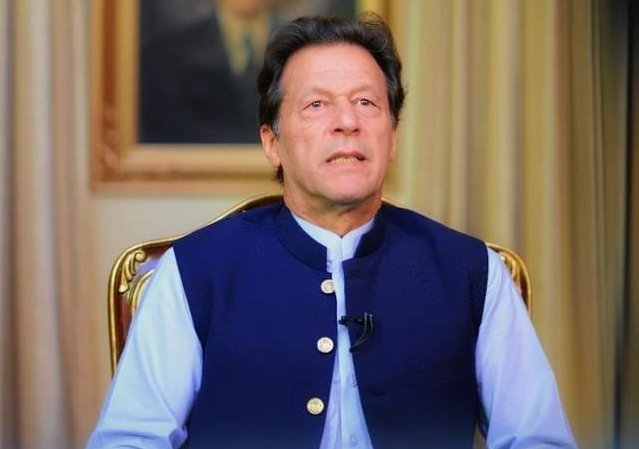
    It is quite disappointing to see that a government that fully utilised social media and mainstream media before coming to power is now trying to shut down critics’ voices. Prime Minister (PM) Imran Khan recently said that he has stopped reading newspapers and watching evening news/current affairs shows because the media hammers him all the time is surprising, given that PM Imran has been media’s darling from the first day. His government is being criticised for its lack of performance and delivery. We believe the premier should not demonise media that helped him during his struggling days in politics and made him relevant.

    It is also quite alarming to see that peaceful protesters in Islamabad were arrested and charges of sedition were levelled against them. Their only crime was to be a part of a protest seeking the release of Pashtun Tahafuz Movement (PTM) Manzoor Pashteen. Some were released, but 23 political activists and human rights defenders, including Ammar Rashid and Nawfal Saleemi, are still under arrest — not to mention citizens like Khurram Qureshi who was there for solidarity. Their families are not being allowed to meet them despite the fact that it is their legal right. We would like to ask the government how it is sedition to protest peacefully when it is our fundamental right to do so. Releasing these protestors would be the right thing to do.

    From censorship in media to curbing online dissent to booking peaceful protesters under sedition charges, the state of Pakistan is acting more like a police state and less as a democracy. Let’s not go down this path.

  • Damning bans

    Damning bans

    “Creativity takes courage” – Henri Matisse

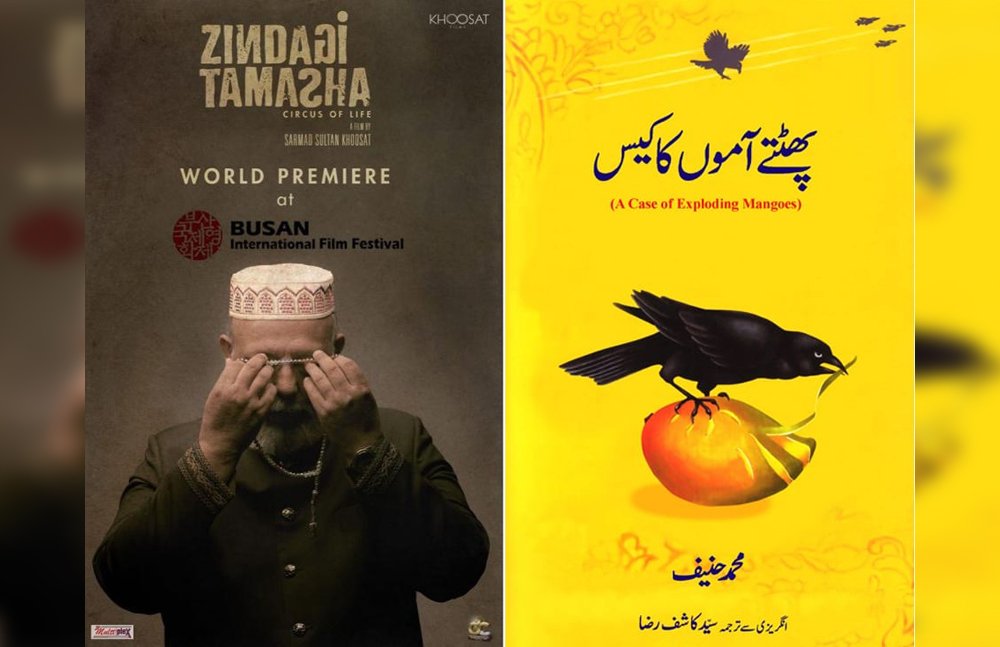
    Matisse wasn’t wrong. When filmmaker Sarmad Khoosat released the first trailer of his upcoming movie, ‘Zindagi Tamasha’, it created quite a buzz. The movie was supposed to release today (January 24) across Pakistan. It has already won the Kim Ji Seok Award at Busan International Film Festival. Film critics and the public at large were waiting for its release as Sarmad is known to be quite creative and the movie looked promising enough. Just like other governments, this government too promised the revival of Pakistani cinema. Sarmad Khoosat’s ‘Zindagi Tamasha’ seemed like a step in the right direction.

    But what happened when religious hardliner Tehreeke Labbaik Pakistan (TLP) threatened to hold protests against the movie just because the protagonist was a bearded man who is shunned by society after a video of him dancing at a wedding goes viral? The Pakistani state caved in to pressure, again.

    A film that was passed by three censor boards cannot be released now because the state fears the religious pressure group. The federal government has decided to block its release and has asked the Council of Islamic Ideology (CII) to critically review it. The Punjab government will review it on February 3 and a TLP representative will be in the review committee. The Sindh Censor Board halted its release citing the reason that it “may create unrest within religious quarters and may deteriorate and be detrimental to the peaceful circumstances in the country”.

    There is nothing outrageous or anti-Islam in the movie. Busting the myths about the movie, Mohammed Hanif writes for Samaa, “The only taboo the film breaks is showing a man with a beard doing house chores. It humanises a religious man.”

    Sarmad wrote two beautiful and heartfelt open letters – one was addressed to the president, prime minister, chief justice, army chief and information minister, while the other was for Pakistan and Pakistanis. He ended his first letter with these poignant words, “The space for rational and artistic thinking and expression must not be annexed by a few troublemakers for their political ends, but I fear this is what will happen if we buckle under this time.”

    We are barring the release of a movie that promises to be creative and critical while being sensitive and responsible at the same time. Why do we then complain about misogyny on our television screens if we will not allow films like ‘Zindagi Tamasha’ to be screened in our cinemas? Films that make us think, films that break stereotypes, films that make us question the dark side of our society; films that celebrate the beauty of our nation.

    There already are curbs on freedom of expression in Pakistan these days. Copies of the Urdu translation of Hanif’s ‘A Case of Exploding Mangoes’ were confiscated after threats to the publisher. The Punjab Assembly has recommended banning three books on Islam as they critically evaluate historical events. When a country starts banning books and movies, it means its descent into the dark ages is almost complete. Once we complete this downward journey, there’s no coming back.

    It’s better to stop right now and celebrate critical thinking instead of banning art and creativity.