
Tag: freelancing

  • What is Canada’s new visa policy for students?

    What is Canada’s new visa policy for students?

    As per official data, last year Canada issued nearly one million study permits, about three times that of a decade ago, and now they are changing their policy.

    In response to a housing shortage aggravated by explosive growth in foreign student numbers, Canada has announced a temporary two-year cap on the intake of international students.

    Last year, the country issued nearly one million study permits, triple the figures from a decade ago, according to government data. The new proposal aims to reduce the intake by almost a third.

    Canada’s Immigration Minister, Marc Miller, revealed that the Liberal government will implement a two-year cap on student visas, resulting in the issuance of approximately 364,000 visas in 2024.

    The plan also includes limitations on post-graduate work permits for foreign students, potentially encouraging them to return to their home countries.

    Previously viewed as a straightforward path to permanent residency, these permits will now be subject to stricter regulations.

    However, those pursuing master’s or post-doctorate programs will still be eligible for a three-year work permit.

    Additionally, spouses of international students enrolled in undergraduate and college programs will no longer be eligible for permits, Miller stated.

    The acceptance of new study permit applications in 2025 will be reassessed at the end of the current year.

    The government’s decision comes in response to the surge in international students, creating a housing crisis and driving up rents across the country.

    December 2023 saw a 7.7 per cent year-on-year increase in rents nationwide, according to Statscan. Prime Minister Justin Trudeau’s popularity has been dented mainly due to the affordability crisis, and opposition Conservative Party leader Pierre Poilievre has taken a commanding lead over Trudeau in opinion polls ahead of an election next year.

    Concerns about the quality of education provided by some institutions have also prompted the government to reevaluate its immigration policies.

    The move will not only affect the housing market but will also have economic implications. International students contribute approximately C$22 billion ($16.4 billion) annually to the Canadian economy.

    This decision will likely impact educational institutions that expanded their campuses in anticipation of a continuous influx of students.

    Ontario, the most populous province, has been the primary recipient of international students. Some businesses, including restaurants and the retail sector, have warned of potential labor shortages due to the cap on foreign students.

    Canada’s move will have repercussions for Canadian banks, as international students are required to have Guaranteed Investment Certificates (GICs) of over C$20,000, covering living expenses.

    Most foreign students, approximately 40%, hail from India, with China coming in second at around 12%, based on official data from 2022.

    In response to these changes, the University of Toronto has expressed its readiness to collaborate with all levels of government to ensure that the allocation of study permits considers institutions like U of T and addresses challenges in the system.

  • Canada to provide remote work visa for freelancers

    Canada to provide remote work visa for freelancers

    The Canadian government intends to give remote work visas for freelancers and digital nomads in 2024, to adapt to the changing nature of the labour market, reports Samaa.

    The program is aimed at drawing international talent by enabling people to live temporarily in the country while working remotely.

    According to the policy, a specific visa will be issued to freelancers, who are working remotely in Canada.

    Digital nomads were previously permitted a maximum of six months of stay on tourist visas in Canada.

    The government is now developing a comprehensive “tech talent strategy” to attract foreign workers in an effort to increase the size of its workforce.
    Immigration, Refugees and Citizenship Canada spokesman Isabelle Dubois emphasized the expected advantages, stating, “We anticipate that some digital nomads will opt to stay in Canada, contributing their skills to employers here.”

    In an attempt to draw in highly qualified IT professionals who thrive in remote work, plans are in motion to establish a framework that would allow entrepreneurs to apply for extended work licenses, which might last up to three years.

    Asserting Canada’s dedication to allowing remote workers, the Immigration, Refugees, and Citizenship Office promised further information in the coming months.

    The number of US citizens who work as digital nomads soared to 17.3 million, moving up by 2 percent in 2023.

    Apply for a Canada visa from Pakistan

    Pakistanis can also apply for a Canada Visit, via a temporary resident visa that allows South Asians to travel for tourism, business meetings, or to visit family members, according to Pakistan Observer.

    For Pakistanis, the Canada Visitor Visa offers multiple entries over 10 years, allowing stays of 180 days per entry. To apply for a visa, applicants must be without criminal or immigration convictions.

    The financial statement should prove the job, own residence, or family, to demonstrate a temporary visit intention. Adequate funds for the stay is also a pre-requisite.

    Required documents include a valid passport, national ID, and possibly additional documents like bank statements. The application process involves the submission of forms, checking the accuracy, and uploading supporting documents, followed by an appointment at the local visa center.

    Visa and biometric fees need to be paid at the center, and tracking information is shared.

  • VISA, NayaPay Partner to revolutionise digital payment system in Pakistan

    VISA, NayaPay Partner to revolutionise digital payment system in Pakistan

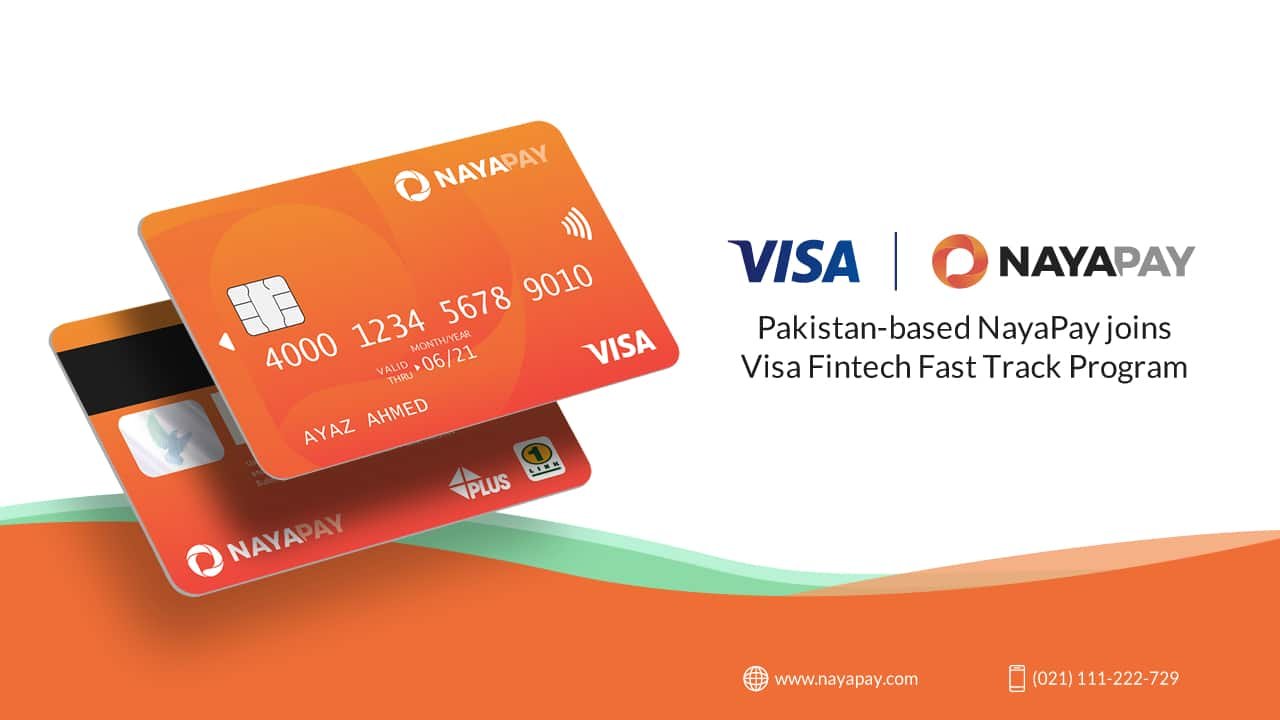
    NayaPay, an Electronic Money Institution (EMI), has collaborated with Visa, a leading global payment solution. Now they have access to Visa’s growing partner and global payments network, technology, and resources to accelerate innovation in digital payments in Pakistan.

    NayaPay will enable users to open electronic (E)-Money accounts within a few minutes and make hassle-free digital payments to each other and to businesses.

    NayaPay consumers and merchants can use their NayaPay Visa debit card to perform online and in-store transactions with millions of retailers worldwide as well as withdraw cash conveniently at any ATM location.

    NayaPay customers can also scan Visa merchant QR codes to make payments directly through their app.

    NayaPay will also facilitate cross-border money transfers for freelancers and other Pakistan-based businesses working with international clients, and households receiving remittances from their families abroad.

    Users will be able to accept funds instantly and directly into their NayaPay wallets from over a billion Visa cards across the globe.

    Danish Lakhani, CEO NayaPay, said: “We are delighted to have found a partner in Visa that shares our goals of making financial services simpler, more convenient and accessible to Pakistani users – the needs of whom have been overlooked for far too long. Over the past few months, we have been integrating Visa’s offerings to reinforce our issuing and acquiring capabilities and to deliver on our promise of becoming a part of citizens’ daily lives.”

    “We are committed to helping fintech achieve their potential – enabling big ideas to flourish and supporting them through the reach, scale, and security of the Visa network,” said Kamil Khan, Country Manager, Pakistan, Visa.

    “By joining Visa’s Fintech Fast Track program, exciting fintech like NayaPay gain unprecedented access to Visa experts, technology, and resources,” said Otto Williams, Vice President, Strategic Partnerships, Fintech and Ventures, CEMEA at Visa.

  • Freelancers payment limit raised to Rs. $25,000: State Bank of Pakistan

    Freelancers, who provide services in information and communication technology, can now receive payments worth up to $25,000 (Rs 3.9 million) per month, which, earlier, stood at a mere $5,000 (Rs 0.7 million).

    The decision has been made by the State Bank of Pakistan (SBP) to broaden the scope of remittances in Pakistan. This will facilitate freelancers to bring a greater value of funds through more economical and efficient channels of home remittances and help in receiving foreign exchange flow through formal banking.

    Read more – Pakistan’s first manmade island to be built in Gwadar at a cost of $10 billion

    According to SBP, “this would enable freelancers to expand their services and engage new individuals to join the workforce that will inevitably create more employment opportunities in Pakistan”.

    Read moreLargest gas reserve in 20 years discovered in Balochistan

    The concept of freelancing is the emerging trend in Pakistan. Freelancing is a term used commonly for people who are self-employed. Mostly, they are not committed to a particular employer for the long term. They provide services in the local and international market.