Tag: fruit

  • Pakistan farmers pin poor mango crop on climate change

    Pakistan farmers pin poor mango crop on climate change

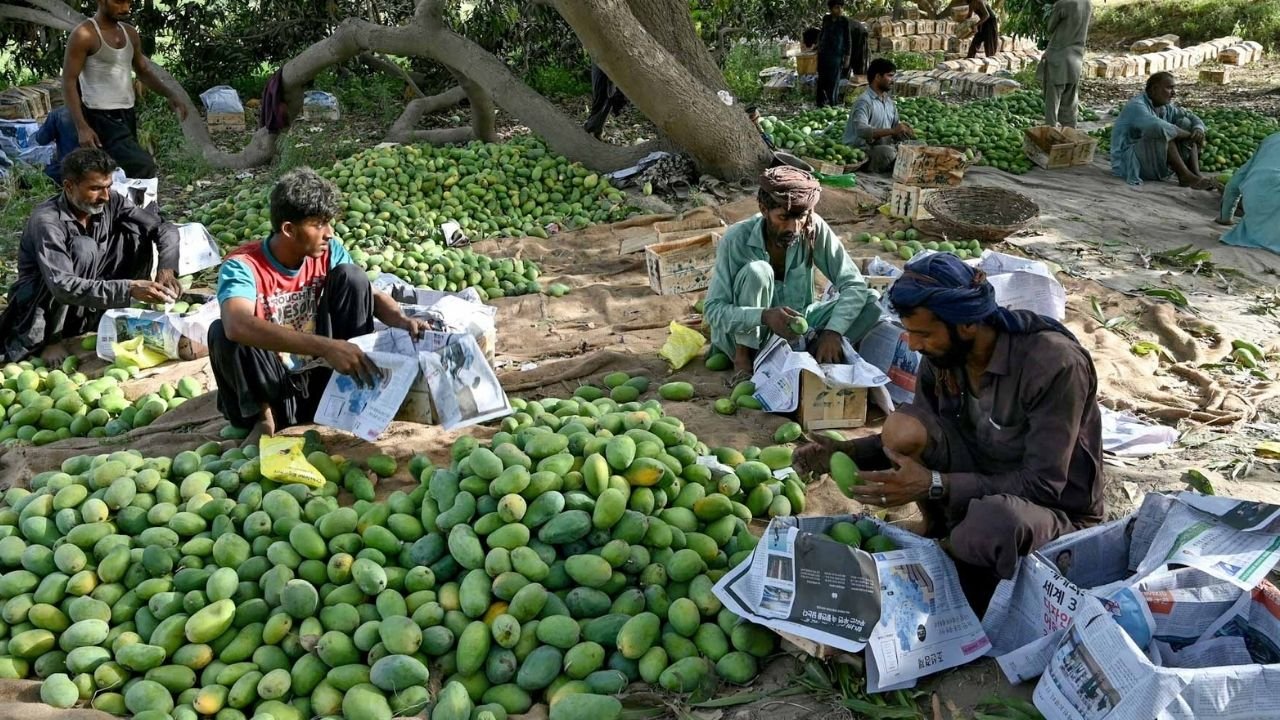
    Pakistan’s mangoes are normally a source of national pride and much-needed income, but farmers are blaming climate change for the parasites and extreme weather ruining much of this season’s crop.

    A white and orange scarf wrapped around his head in the scorching heat, farmer Muhammad Yusuf lamented the erratic weather.

    An abnormally long winter was followed by the wettest April in decades, while the country is now experiencing a heatwave with temperatures hitting up to 52 degrees Celsius (126 degrees Fahrenheit).

    “Buds didn’t flower on time, many buds just died. Those that started growing were infected with (parasite) black hopper,” said Yusuf, who has worked half his life growing mangoes.

    Now over 60 years old, Yusuf said “climate change has wreaked havoc” in his village of Tando Allahyar, around 200 kilometres (124 miles) northeast of economic hub Karachi.

    Pakistan is the world’s fourth-largest mango producer and agriculture accounts for almost a quarter of its GDP.

    Further south in Tando Ghulam Ali, Arsalan, who manages a 900-acre mango orchard, noticed the damage as soon as the harvest started this week.

    “We have production losses of 15 to 20 percent, and the picking has only just started so this figure will surely increase,” said the 32-year-old.

    Exports will be slashed as a result warned Arsalan, who goes by one name.

    “The mangoes turn yellow from the outside but remain underripe or overripe inside,” he explained.

    Ziaul Haq, a mango grower and exporter from Tando Ghulam Ali, said the “many attacks on fruit” by pests were unprecedented.

    “This, in our history, has never happened before,” he told AFP.

    ‘Feed our families’

    The proliferation of parasites has led to an explosion in spending on pesticides.

    This uptick was confirmed by several farmers in Sindh province, where Tando Allahyar and Tando Ghulam Ali are located, as well as those in the leading agricultural province of Punjab further north.

    They told AFP that chemicals are now used six to seven times per year, compared to just twice three years ago.

    Farmers in Sindh said they have been struggling since 2022 when a series of severe heatwaves were followed by unprecedented flooding, while those in Punjab said the declining crops yields date back several years more.

    “The losses in Punjab reached 35 to 50 percent and in Sindh, 15 to 20 percent” compared to last year, said Waheed Ahmed, head of the Pakistan Federation of Fruit and Vegetable Exporters Association (PFVA).

    Speaking to local media, he said that last year Pakistan had only managed to export 100,000 of the 125,000 tonnes of mangoes it planned to sell abroad.

    Pakistan’s 20 varieties of mangoes come second only to oranges as the most-produced fruit in the country.

    The income loss from a poor harvest could have a significant impact on the country, which is in talks to secure a loan from the International Monetary Fund (IMF).

    Mashooq Ali, a 30-year-old labourer in Tando Ghulam Ali, wants the government to help farmers cope.

    “Landowners will earn less this year,” said Ali, whose wife has started trading clothes to earn extra cash.

    “And even if they paid us as much as last year, with inflation, we won’t be able to feed our families.”

    srq/rsc/lb

    © Agence France-Presse
  • Food price hikes pushes weekly inflation to 3.38 per cent

    Food price hikes pushes weekly inflation to 3.38 per cent

    According to the Pakistan Bureau of Statistics (PBS), the Sensitive Price Indicator (SPI) for the week ended June 16, 2022, surged by 3.38 per cent due to increases in the prices of food and non-food items.

    The year-over-year (YoY) trend indicates a 27.82 per cent rise, owing primarily to an increase in rates of following:

    Onions (135.31 per cent), diesel (132.61 per cent), tomatoes (117.27 per cent), petrol (110.16 per cent), vegetable ghee 1 kg (81.76 per cent), mustard oil (80.88 per cent), pulse Masoor (74.77 per cent), cooking oil 5 litre (71.52 per cent), vegetable ghee 2.5 kg (68.47 per cent), LPG (60.97 per cent), garlic (57.72 per cent), washing soap (52.73 per cent), garlic (57.72 per cent (51.11 per cent).

    On the flip side, a considerable decrease was reported in prices of chilli powder (43.42 per cent), pulse Moong (18.06 per cent), sugar (10.79 per cent), bananas (0.83 per cent), gur (0.45 per cent).

    According to the most recent data, the SPI increased from 182.88 per cent to 189.07 per cent during the week ended June 9, 2022.

    The SPI increased by 2.85 per cent, 3.45 per cent, 3.10 per cent, 3.12 per cent, and 3.10 per cent for consumption groups up to Rs17,732 and Rs17,733 to Rs22,888, Rs22,889 to Rs29,517, and Rs29,518 to Rs44,175 and above Rs44,175 respectively.

    According to the PBS, out of 51 items, 36 (70.59 per cent) increased in price, 06 (11.76 per cent) decreased in price, and 09 (17.65 per cent) remained stable during the week.

    Increase: Vegetable ghee Dalda/Habib or other superior quality 1 kg pouch each (4.95 per cent), tea prepared (4.83 per cent), bread plain (4.37 per cent), toilet soap Lifebuoy (4.13 per cent), pulse Masoor (3.50 per cent), cooking oil Dalda 5 litre tin each (2.87 per cent), Sufi washing soap (2.33 per cent), mustard oil (2.24 per cent), vegetable ghee Dalda/Habib 2.5 kg tin each (1.93 per cent), pulse Mash (1.71 per cent), beef with bone (1.50 per cent), energy saver (1.04 per cent), curd (1.01 per cent), mutton (0.89 per cent), eggs (0.85 per cent), salt powdered (0.79 per cent), lawn printed Gul Ahmed/Al Karam (0.77 per cent), basmati broken (0.68 per cent), garlic (0.59 per cent), tomatoes (0.49 per cent), milk fresh (0.45 per cent), powdered milk Nido (0.41 per cent).

  • Weekly inflation based on SPI, records a slight decline

    Weekly inflation based on SPI, records a slight decline

    Pakistan Bureau of Statistics (PBS) revealed that the weekly Sensitive Price Indicator (SPI) for the joint consumption group fell 0.26 per cent for the week ending May 26, owing primarily to a drop in the prices of vital food products.

    The consolidated index was 174.62 on May 19, 2022, compared to 175.08 on May 19, 2021, while the SPI increased 16.97 per cent year on year when the index was 149.29 on May 27, 2021.

    The minor price reductions in essential items may be a sign that the government is finally gaining control of the country’s skyrocketing inflation, which has afflicted the poor strata.

    Here are the items that witnessed a decrease or increase in their prices:

    Decrement

    Wheat Flour (12.25 per cent), Chillies Powdered (6.48 per cent), Chicken (4.41 per cent), Garlic (2.99 per cent), and non-food item LPG (0.43 per cent) were among the commodities that saw a decline in their rates on a WoW premise out of the 51 supervised items, with a cumulative effect of (-1.00 per cent) into the total SPI for the blended group of goods (-0.26 per cent).

    Increment

    27 items elevated in the week, including potatoes (8.43 per cent), tomatoes (6.33 per cent), eggs (6.29 per cent), rice basmati broken (4.71 per cent), mustard oil (4.16 per cent), pulse masaoor (3.93 per cent), milk fresh (3.47 per cent), onions (3.03 per cent), pulse gramme (2.58 per cent), curd (2.35 per cent), washing soap (2.13 per cent), cooked beef (1.55 per cent), beef (1.42 per cent), pulse mash (1.33 per cent), cooked daal (1.24 per cent). While 19 commodities’ prices remained stable.

  • PHA plants hundreds of fruit trees along Canal Road Lahore

    PHA plants hundreds of fruit trees along Canal Road Lahore

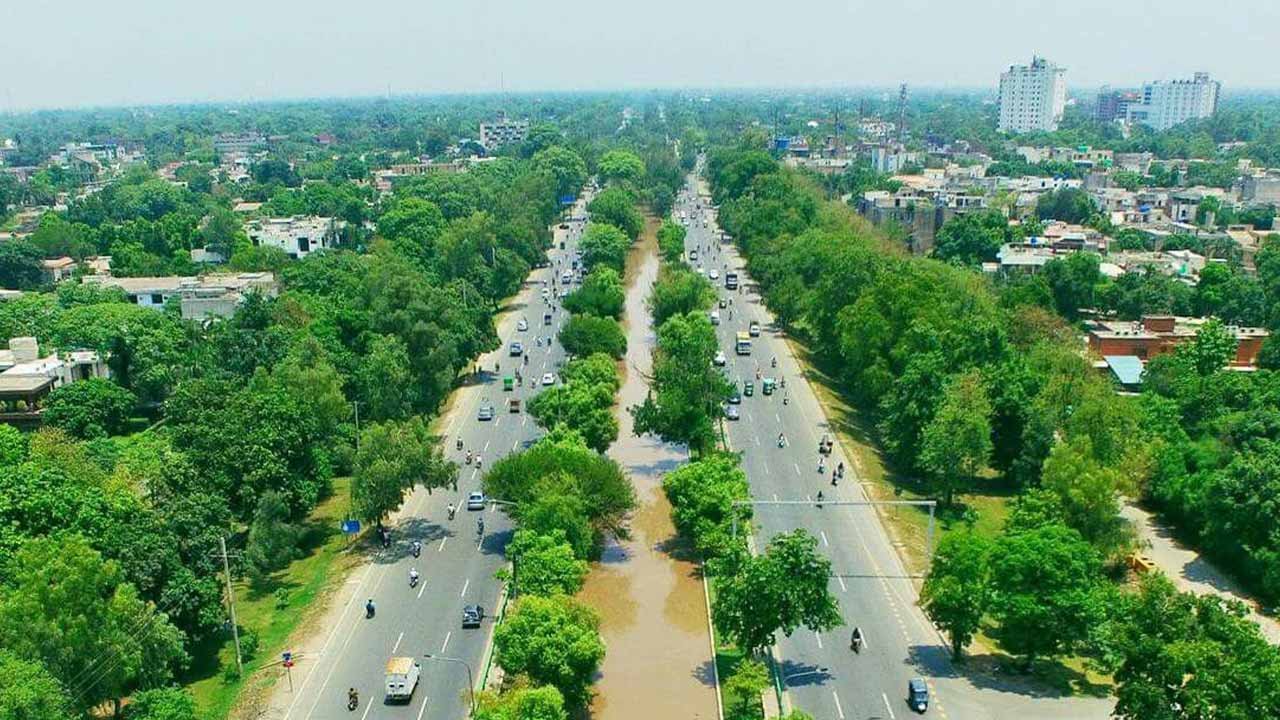
    The Parks and Horticulture Authority (PHA) on May 17 planted around 400 fruit trees alongside the canal road Lahore which were provided by the civil society.

    The Director-General (DG) PHA Zeeshan Javed applauded the efforts of PHA for the beautification of the provincial capital.

    He also praised the PHA workers for performing their responsibilities outside in such heat and insisted that PHA is dedicated to beautifying the city by implementing various beautification programmes.

    Last week, Commissioner Lahore Captain (retd) Muhammad Usman presided over a meeting at the PHA office to examine the city’s beautification efforts. The DG PHA Zeeshan Javed briefed the Commissioner on clean and green Lahore, tree planting, and ongoing and finished projects in the city during the meeting.

    Read more: Lahore ranks first in reporting most traffic accidents

    He urged the officials to take steps to beautify the city’s main highways, green belts, and provincial capital’s entrances and exits.

  • Turkey: Food prices surged by 89 per cent, transportation costs increased by 106 per cent

    Turkey: Food prices surged by 89 per cent, transportation costs increased by 106 per cent

    Turkey’s inflation rate skyrocketed to almost 70 per cent last month, creating a substantial challenge for President Recep Tayyip Erdogan, whose unusual economic strategies are frequently blamed for the country’s economic woes.

    Erdogan, defying economic conventional wisdom, insists that major interest rate cuts are essential to reduce spiralling consumer costs.

    Turkey’s consumer price index (CPI) climbed by 69.97 per cent on a year-on-year (YoY) basis in April 2022, compared to 61.14 per cent in March 2022, according to the national statistics agency, indicating a massive increase.

    The transportation industry saw the largest price rises in April, up 105.9 per cent, while food and non-alcoholic drinks cost increased by 89.1 per cent.

    Likewise, lira’s depreciation has quadrupled the cost of energy imports, and international investors are progressively fleeing the formerly emerging economy. Energy price hikes and production constraints have been worsened by Russia’s invasion of Ukraine and the coronavirus outbreak.

    According to economists, Turkey’s yearly inflation rate – the highest since Erdogan’s ruling AKP party took office in 2002 – is entirely due to Erdogan’s unusual economic thinking.

    Read more: Transporters continue to overcharge ahead of Eid-ul-Fitr

    Erdogan has pushed the supposedly independent central bank to reduce interest rates. Despite strong inflation, the bank maintained its benchmark interest rate for the fourth month in a row in April, yielding to criticism.

  • 264 shopkeepers arrested in Peshawar for overcharging

    264 shopkeepers arrested in Peshawar for overcharging

    During a three-day crackdown on racketeers in Peshawar, the district administration arrested 264 shopkeepers from various parts of the provincial capital on April 11.

    Officials of the district administration visited bazaars in, Hayatabad, Kohat Road, Interior City, Nauthia, Ring Road, Charsadda Road, Dilzak Road, University Road, GT Road, Pajagee Road, Bara Road, and other localities to examine Ramzan bazaars, along with the availability of vital food products, on the orders of the Deputy Commissioner (DC) Peshawar, Shafiullah Khan.

    They investigated the quality and status of the commodities sold at Mega Malls set up as Ramazan Facilitation Counters and detained 264 profiteers from various areas. Fruit and vegetable vendors, milk vendors, butchers, grocers, and others were among those arrested. The district government has signaled that legal action may be taken against them.

    Read more: SBP determined to curb inflation, improve foreign exchange reserves

    Previously, the Minister for Food, Science, and Information Technology in Khyber Pakhtunkhwa, Muhammad Atif Khan had also directed the responsible authorities on April 8 to constantly monitor the relief provided to people by the provincial government in terms of food costs.

  • Fruit and Vegetable prices getting out of control in Quetta

    Fruit and Vegetable prices getting out of control in Quetta

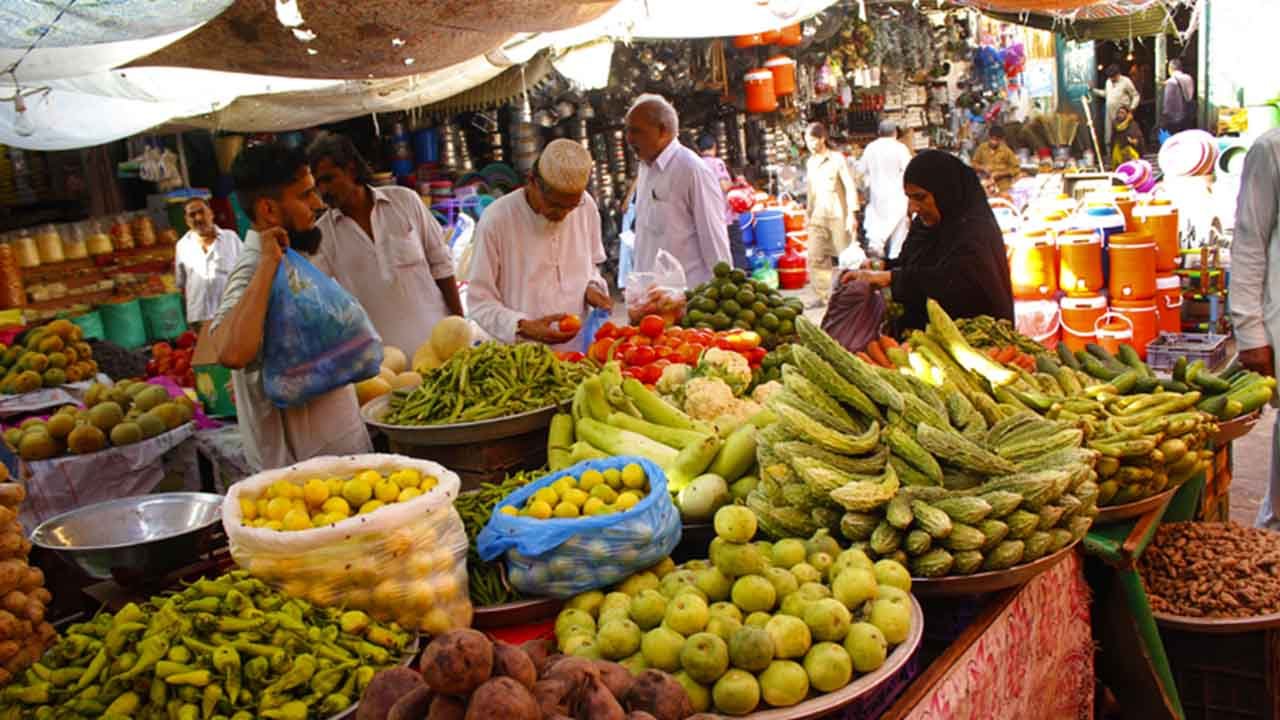
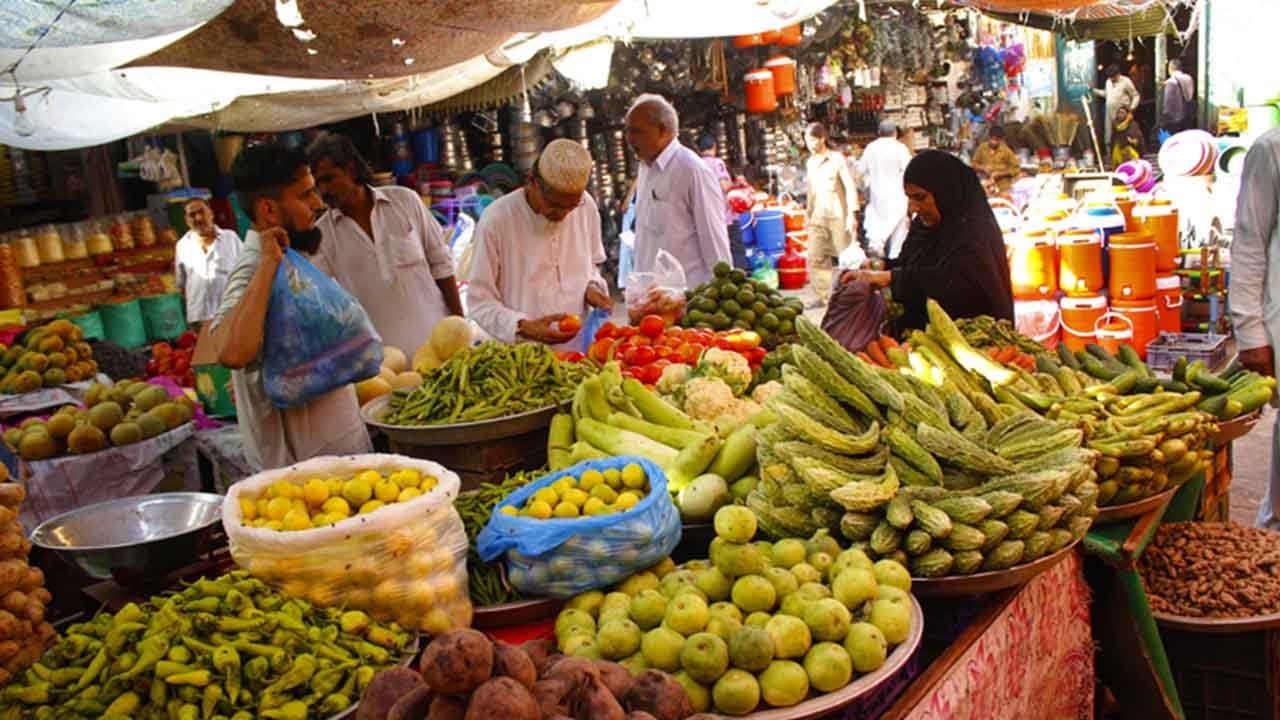
    During the holy month of Ramzan, the price of vegetables and fruits in Quetta rocketed instead of decreasing. Tomatoes, which were previously selling for Rs120 per kilogramme in the vegetable market are now being sold at Rs160.

    Some other reports even suggest that a few shopkeepers were selling tomatoes for up to Rs190, minting money directly in front of the district administration’s eyes.

    Ladyfinger which was sold at Rs240, is now available for Rs280, potatoes, and onions after getting a hike of Rs10 are being sold at Rs50 and Rs60, respectively. Ginger, lemon, and garlic are now priced between Rs300 to Rs320.

    The government of Balochistan has not set up any Ramzan or ‘Sasta bazaar’ this year to facilitate citizens during the holy month of fasting. Formerly, district governments held Ramazan bazaars on the orders of provincial governments to assist the people.

    Previously, the Quetta administration had issued shops with a detailed list of commodities and their pricing. The shop owners, on the other hand, are not obeying the administration’s directives and selling items at their desired rate. These artificial rates have multiplied the problems of the common man.

  • Ramzan Relief Package: Utility Stores Corp announces discount on 1,500 items at 4,000 outlets

    Utility Stores Corporation of Pakistan (USC) will sell various food items at prices cheaper than the open market through its country-wide retail outlets as a part of its Ramzan Relief Package.

    The state-owned enterprise is offering discounted prices for 19 food items besides 1,500 total items that will be available at 4,000 stores throughout the holy month of Ramzan.

    Consumers will pay Rs950 for a 20-kilogram wheat flour bag under the package, instead of its original price of Rs1100-1350. Similarly, one kilogramme (kg) of sugar would be offered at Rs85 instead of Rs86-93. One kg of subsidized ghee costs Rs260 at USC, whereas edible ghee costs Rs470 on the open market.

    The price of one liter of cooking oil at USC is Rs407, while the open market is offering the same at Rs500.

    Likewise, one kg of daal channa costs Rs162 at USC, while it is being sold at Rs180-190 on the open market. Similarly, a kg of dal moong (washed) costs Rs170, and the open market sells it for Rs180-200 per kg. Washed daal mash costs Rs268 at USC, as compared to its price of Rs280-320 on the open market.

    Furthermore, one kg of daal masoor costs Rs215 at USC, instead of Rs250-280 in the open market. Sella rice will cost Rs165 per kg, basmati rice Rs155 per kg, and tota rice Rs85 per kg.

    The dates will cost Rs140 per kg, whereas dates on the general market will continue selling for Rs200 and Rs240. The 950gm tea pack costs Rs1,042 at USC, in contrast to its price of Rs1,250 in the open market.

    Read more: FBR records 29.1% growth during July 2021 to March 2022

    Ultra-high temperature (UHT) or pasteurized milk at USC is offered at USC for Rs142, and costs Rs165 in the general market. Squashes are sold for Rs250 instead of Rs290, and squashes and syrups (1,500 ml) are available for Rs437, compared to the original price of Rs495 in the open market.