Tag: fuel prices

  • Pakistan’s hopes for IMF agreement rise as Saudi Arabia confirms $2 billion in additional deposits

    Pakistan’s hopes for IMF agreement rise as Saudi Arabia confirms $2 billion in additional deposits

    The International Monetary Fund (IMF) has informed Pakistan that Saudi Arabia has confirmed $2 billion in additional deposits, which has rekindled hopes of an early agreement signing. Since January, Islamabad has been negotiating with the IMF for the release of $1.1 billion from a $6.5 billion bailout package that was agreed upon in 2019.

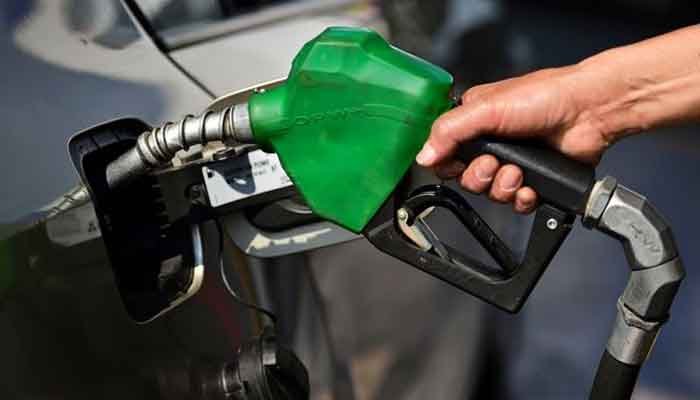
    To unlock the funding, the Pakistani government has cut back on subsidies, removed an artificial cap on the exchange rate, added taxes, and raised fuel prices. However, assurances from friendly nations for additional funds have delayed the agreement.

    The lender has informed Pakistani authorities of the development and the Fund staff is reportedly satisfied with the latest confirmation. The report states that the Saudi authorities are set to make a public announcement, possibly during the upcoming visit of Prime Minister Shehbaz Sharif to the kingdom.

    The Saudi envoy in Pakistan had also hinted in a recent interview that his country had always supported Pakistan in critical situations and that good news would be shared soon. The sources have stated that all eyes are focused on the UAE for getting confirmation on another $1 billion deposit from them, which may pave the way for striking the staff-level agreement (SLA) with the IMF.

    Finance Minister Ishaq Dar is expected to visit UAE on his way to the US where he will hold talks on the release of funds. However, there is still another stumbling block in the way of signing the SLA with the IMF. The Ministry of Petroleum, in consultation with the PM Office, had announced an unplanned cross-fuel subsidy for owners of motorcycles and cars up to 800cc, which needs to be scrapped at this stage.

    The government has not yet withdrawn the proposed cross-fuel subsidy, which cannot be implemented in a half-baked manner. Such schemes were considered in the past during the tenure of former finance minister Shaukat Tarin and even during the era of the PDM-led government when Miftah Ismail had the charge of the Ministry of Finance.

    Even Miftah Ismail had allocated Rs48 billion on the eve of the last budget in the name of Sasta Petrol, but it could not be implemented because such schemes could not be designed properly. The announcement of a half-baked cross-fuel subsidy had provided an excuse to the IMF for delaying the SLA signing, as they were still raising questions for getting more details to ascertain how the scheme was going to be implemented in a transparent manner.
  • Pakistan’s inflation expected to rise due to policy decisions and economic uncertainty, warns Finance Ministry

    Pakistan’s inflation expected to rise due to policy decisions and economic uncertainty, warns Finance Ministry

    Finance Ministry has warned that inflation in Pakistan is set to rise further due to a second-round effect of policy decisions made earlier this year to raise energy and fuel prices, the central bank’s policy rate, and the depreciation of the rupee to secure IMF funding.

    The recent political and economic uncertainties in the country are causing inflationary expectations to rise. The short-term rate of inflation measured by the Sensitive Price Indicator (SPI) hit a record 46.65 per cent last week, while monthly inflation recorded by the Consumer Price Index (CPI) reached 31.6 per cent in February – the highest in six decades.

    The ministry expects inflation to stay at an elevated level due to market frictions caused by the relative demand and supply gap of essential items, exchange rate depreciation, and recent upward adjustments of administered prices of petrol and diesel. Production losses due to floods have not yet been fully recovered, especially those of major agricultural crops. The shortage of essential items has persisted due to these factors.

    Moreover, the delay of stabilisation program has exacerbated economic uncertainty, due to which inflationary expectations have remained strong. The Economic Adviser’s Wing of the finance ministry has also conceded ineffective policy measures and the haplessness of the authorities in containing the inflationary spiral.

    A report from ministry warns that bulk buying during Ramzan might cause the demand-supply gap and result in escalation of essential items prices, although the government is taking steps to ensure a smooth supply of essential items. The report also warned that being largely dependent on prevailing climatic conditions, as witnessed last year, the delay in rains and early heatwave forecast by the Pakistan Met Office in April and May could adversely impact wheat production.

    On a positive note, the report said that despite challenges and uncertainties, the economy was showing continuous signs of resilience as depicted through contained fiscal and current account deficits during the current fiscal year.

  • Petroleum Division refutes Imran Khan’s assertion about Russia’s low-cost fuel offer

    Petroleum Division refutes Imran Khan’s assertion about Russia’s low-cost fuel offer

    There is no formal evidence in the petroleum division of Russia’s offer of inexpensive LNG, crude oil, and POL products, as former Prime Minister Imran Khan has often claimed.

    Syed Zakria Ali Shah, Joint Secretary of Development and a spokesman for the Petroleum Division, stated this to a reporter.

    According to sources in the petroleum sector, trading of crude oil, POL products, and LNG was not even on the table when Khan discussed the purchase of LNG. There was no mention in the meeting minutes of any Russian offer of providing LNG and gasoline at a 30 per cent lower rate.

    According to the spokesman, the government wrote letters to Russia on March 30 through the Ministry of Foreign Affairs in reference to the February 2022 visit of a Pakistan delegation, expressing Pakistan’s desire to enter long-term agreements on the import of crude, POL products, and LNG at discounted rates.

    The Petroleum Division also wrote to the Foreign Ministry, asking if Russia had provided any lower tariffs on LNG and fuel items. He also stated that it had given two reminders to this effect in the first week of April 2022, but the ministry stated that it had not received any letter from Russia for conversation in this respect.

    The Former energy minister, Hammad Azhar attracted the attention of his Russian peer, in a letter dated March 30, 2022, to an Inter-Governmental Agreement (IGA) on LNG cooperation that had been in force between the two friendly nations since 2017. The Russian minister was informed that Pakistan was willing to strengthen its partnership by expediting negotiations between the two selected nominees so that a long-term agreement for LNG delivery on a G2G basis could be reached as soon as possible.

    Then-energy-minister recommended two to three Russian LNG cargoes each month, each holding 140,000 cubic metres of LNG.

    There was no mention of any Russian offer in that letter, only a request for negotiation on a long-term contract for the import of gasoline and LNG at a reduced rate.

    According to officials at the energy ministry, India has been purchasing crude oil from Russia for decades and has continued to do so despite EU and US sanctions imposed as a result of its conflict with Ukraine. They claimed that India’s foreign policy was largely independent due to its strong economic power and enticing market for large economies.

    They further claimed that India had obtained a special dispensation from the US from its sanctions against Iran and had been buying crude oil and POL products from Iran despite US and UN sanctions for a long time. They claimed that India was the US’s strategic partner in the area against China.

    “India always pitches its argument before the US saying if it does not import fuel from Iran, its economy will hurt and it will never be on a par with China. As far as Pakistan is concerned, it is not possible to import crude oil, POL products, and LNG at discounted rates even in the wake of EU and US sanctions on Russia, as the country’s economic muscle is very weak and the country is always dependent on the IMF programme”. The officials said that Pakistan had also failed to complete the IP gas line project just because of US and UN sanctions on Iran.

    Via: The News

  • Imran Khan or Shehbaz Sharif: Social media divided over who to thank for unchanged fuel prices

    Imran Khan or Shehbaz Sharif: Social media divided over who to thank for unchanged fuel prices

    Prime Minister Shehbaz Sharif has rejected the proposal of the Oil and Gas Regulatory Authority (OGRA) to increase the prices of petroleum products.

    The announcement was made on Twitter by Pakistan Muslim League-Nawaz’s (PML-N) Economy account.

    OGRA had proposed an increase in the price of diesel by Rs51.32 per liter (35.7%), petrol Rs21.30 per liter (14.2%), kerosene oil Rs36.03 per liter (28.7%) and light diesel oil (LDO) Rs38.89 per liter (39.9%).

    PML-N Vice President Maryam Nawaz shared the news report of PM rejecting the summary and wrote: “Well Done Shehbaz Shairf.

    PML-N leader Shahid Khaqan Abbasi, while talking to media said that petroleum prices will remain unchanged. He added that the previous PTI-led government made a mistake by subsidising petroleum goods, which he claimed will harm the country’s economy.

    On the other hand. social media users — including journalists and PTI leaders — are saying this is due to the policies of the pervious government, and are thanking Imran Khan.

    In addition, some are concerned about the decision of not increasing the fuel prices.

  • Shahzeb Khanzada warns of December crisis, Hammad Azhar ignores question in heated debate

    Shahzeb Khanzada warns of December crisis, Hammad Azhar ignores question in heated debate

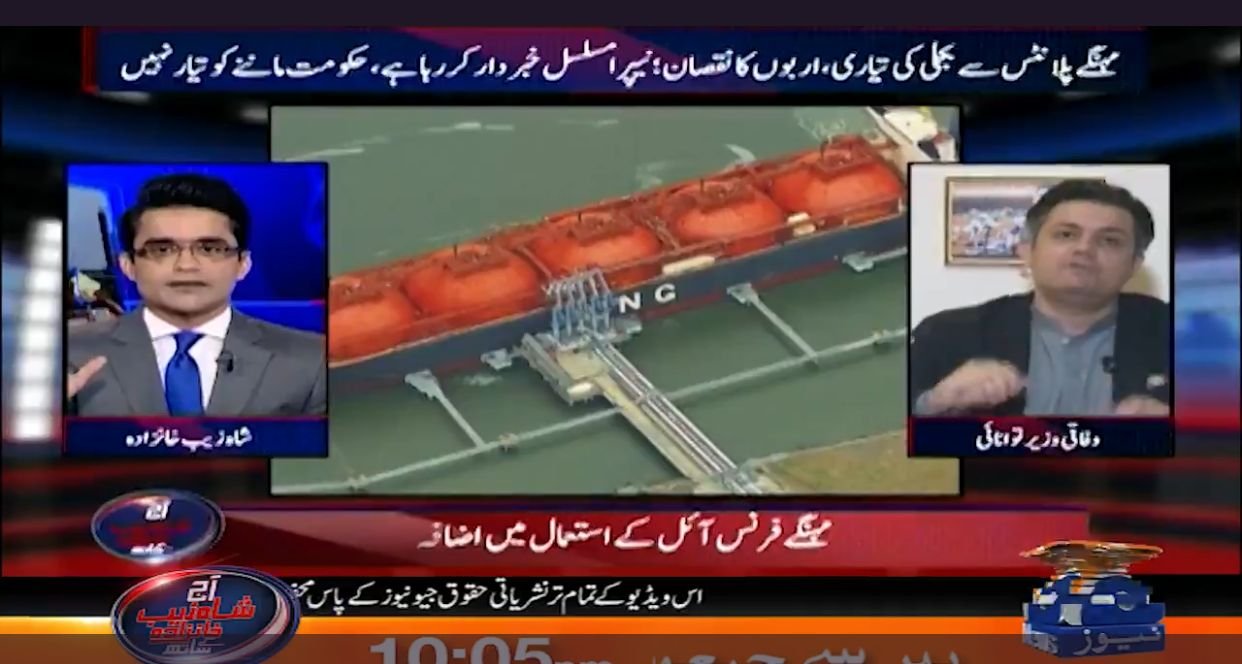
    Energy Minister Hammad Azhar appeared in Geo News’ programme Aaj Shahzeb Khanzada Kay Sath on Monday, during which the minister indulged in a heated debate with the host of the programme, Shahzeb Khanzada.

    During the show, Khanzada asked Azhar about the expected shortfall of gas in the winter season but the minister refused to answer the question. The minister kept refusing to answer the question about an expected gas crisis in December saying that he will appear again to talk about it.

    The federal minister said that he has only come to talk about the facts presented on Friday’s episode of the programme. The host mentioned that in Friday’s programme, he did talk about the expected shortfall of gas in the winter.

    The show on Friday, October 15, shared data from a report, compiled by Nepra, on the performance of the Ministry of Energy and asked the question: why is the ministry delaying the purchase of liquefied natural gas (LNG), which is costing the public dearly.

    Khanzada claimed earlier that he had invited the minister on his show 27 times, but the minister refused to come.

    Earlier in Friday’s show, Khanzada warned of the expected gas shortage during the winter season as Pakistan will not have the required number of LNG cargoes. He explained that during the winter season the government will only have 10 LNG cargoes. The government has the capacity to have 14 LNG cargoes but in the winter, the demand for LNG is more than 14 cargoes.