Tag: fuel shortage

  • PIA struggles to stay afloat as fuel shortage forces cancellation of 349 flights  

    PIA struggles to stay afloat as fuel shortage forces cancellation of 349 flights  

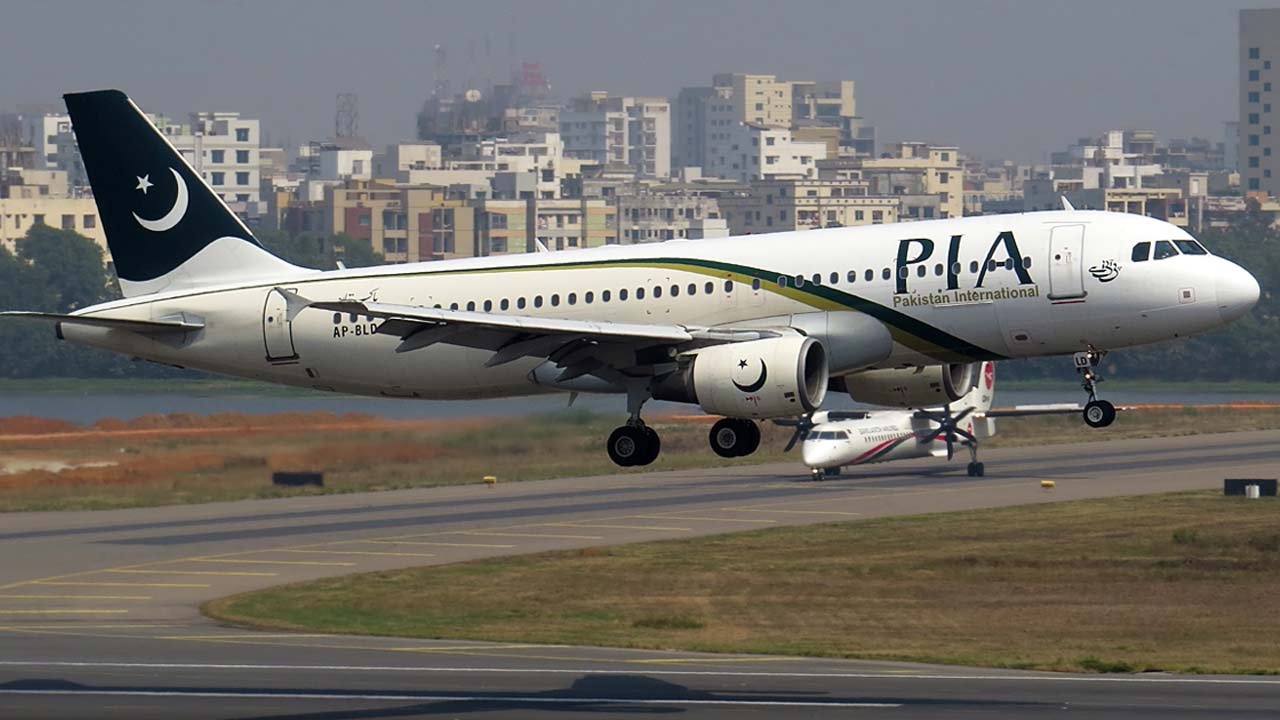
    Over the past two weeks, Pakistan International Airlines (PIA) has been compelled to cancel 349 flights due to a severe fuel shortage, underscoring the challenges faced by the financially struggling national carrier.

    According to a spokesperson, these flight cancellations, which began on October 14, have affected both domestic and international routes, causing significant inconvenience to passengers. 

    PIA has issued a statement confirming that daily flight rescheduling is ongoing, but without specifying the expected duration of this crisis. Flight schedules are being adjusted based on fuel availability, as mentioned in the statement. 

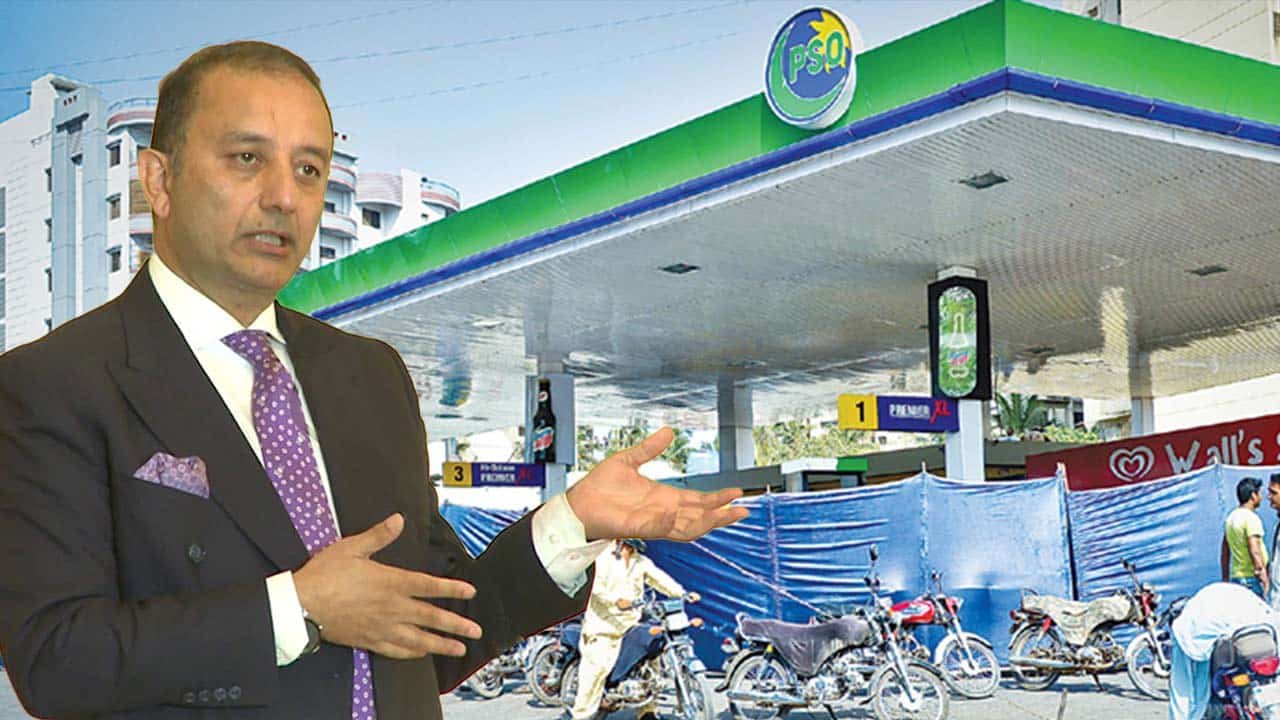
    This situation has arisen from an ongoing financial dispute between PIA and the Pakistan State Oil Company (PSO). PIA alleges that PSO has suspended its credit line for fuel and is now requiring daily advance payments before supplying the necessary fuel. 

    PIA has emphasised its efforts to manage its funds and has indicated that the return to regular flight schedules depends on the availability of financial resources. 

    To keep affected travellers informed, PIA has outlined its priority destinations once flight operations resume. Canada, Turkey, China, Malaysia, and Saudi Arabia are expected to be among the first countries to be reconnected. 

    However, PIA’s flights to Europe and the UK have remained suspended since 2020 following the revocation of the national carrier’s authorization by the European Union’s Aviation Safety Agency due to the pilot licence scandal. 
  • Private airlines seize opportunity to charge high fares amid PIA flight disruptions

    Private airlines seize opportunity to charge high fares amid PIA flight disruptions

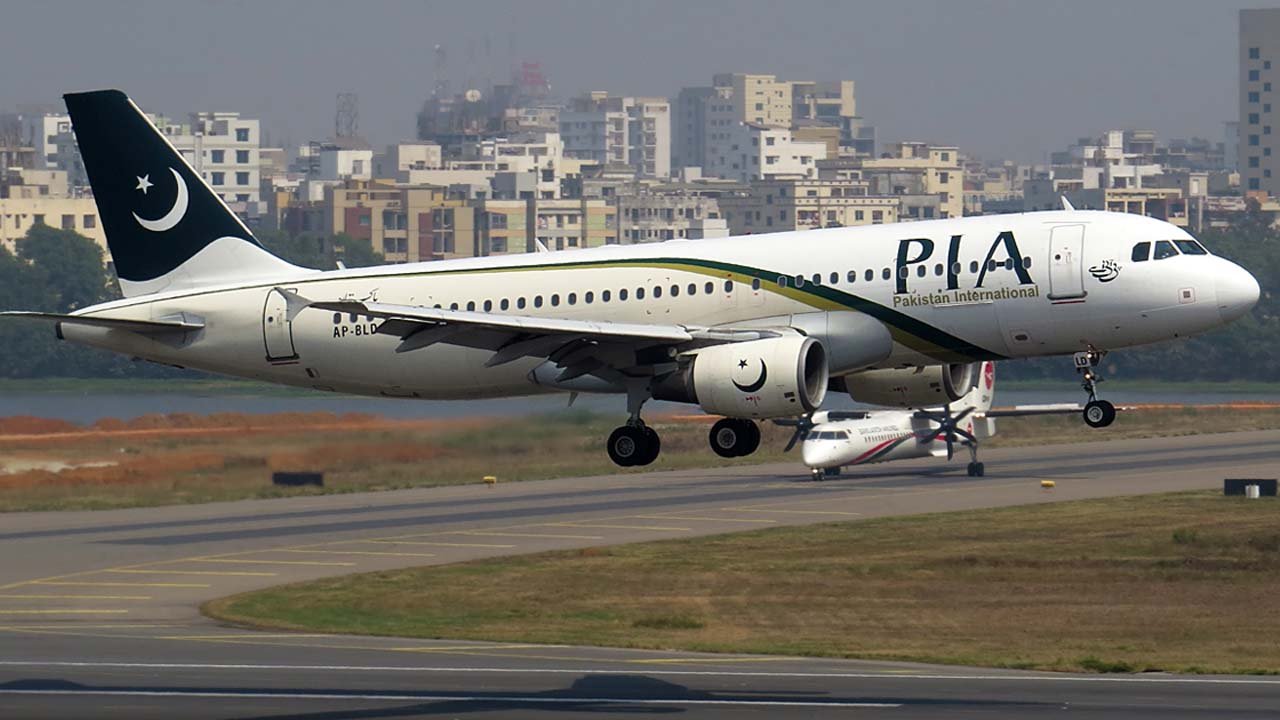
    Pakistan International Airlines (PIA), the nation’s flagship carrier, is grappling with operational challenges caused by a shortage of fuel. 

    Concurrently, private airlines are capitalising on this situation for their own advantage.

    In light of the disruption in PIA’s flight operations, private airlines have swiftly increased their fares. Domestic flights are now priced at a range of Rs40,000 to Rs70,000, with Lahore-Karachi routes reaching as high as Rs49,000 per seat. 

    Meanwhile, one-way fares from Karachi to Islamabad are commanding prices between Rs55,000 and Rs61,000.

    This development follows a week of disruptions in PIA’s domestic flight schedule, resulting in a surge of intending passengers. A spokesperson for a private airline attributed the disparity in demand and supply to this sudden influx of travellers.

    Simultaneously, PIA’s financial predicament is deepening, with the cancellation of 35 domestic and foreign flights. The interruption in fuel supply has also caused significant delays for both domestic and international flights across the country. Airline administrations have scrambled to create new departure schedules for these affected flights.

    Regarding outstanding dues, the Pakistan State Oil (PSO) revealed that PIA owed Rs3.45 billion for fuel supplied between October 1 and 18, with an additional Rs195 million provided on the mentioned Thursday. 

    The total liabilities for the current month have reached Rs2.11 billion, compounding PIA’s existing debt of Rs26 billion accumulated over the years. A provisional agreement between PSO and PIA for daily fuel supply in exchange for daily payments has been established.

    The current turmoil in PIA’s flight operations is primarily attributable to the suspension of fuel supply by the Pakistan State Oil due to non-payment of dues. 

    According to Samaa, the suspension has impacted Karachi, Lahore, Islamabad, and Peshawar, although international flights remain unaffected. PIA’s financial woes have already led to flight cancellations and delays, making the fuel supply suspension a significant setback for the struggling airline.

  • Pakistan has enough petrol for 20 days: Musadik Malik refutes fuel shortage rumours

    Pakistan has enough petrol for 20 days: Musadik Malik refutes fuel shortage rumours

    On Tuesday, many petrol stations in the cities of Punjab were closed, causing inconvenience for commuters searching for fuel. However, State Minister for Petroleum, Musadik Malik, refuted reports of a nationwide fuel shortage.

    Despite a recent increase of Rs35 per litre in petrol and diesel prices, consumers are still facing difficulties due to limited supply.

    This situation mirrors a similar occurrence earlier this month prior to the price hike. On January 29, the government raised the prices of petrol and diesel by Rs35 per litre in response to the significant devaluation of the rupee against the dollar.

    The devaluation of the local currency against the dollar reached historic lows after the unofficial cap on the greenback was removed. Consumers in cities such as Faisalabad, Gujranwala, Sargodha, Shakargarh, Khushab, Mandi Bahauddin, and Gojra have encountered difficulties obtaining fuel. Petrol stations that remained operational have experienced long lines of vehicles, with reports of owners rationing the commodity by only providing limited amounts to customers.

    According to Geo, the State Minister for Petroleum has issued a warning against hoarding, as the fuel supply is already precarious. The minister stated that hoarders should be prepared for the possibility of having their licenses revoked.

    He said that there is a 20-day supply of petrol and a 25-day supply of diesel in the country. He urged the public to report any petrol stations that may be restricting supply for profit.

    Malik emphasized that there is no shortage of petrol in the country and confirmed that there will be no increase in the prices of petroleum products before February 15.

  • Millions in Pakistan without electricity after countrywide outage

    Millions in Pakistan without electricity after countrywide outage

    Millions of Pakistanis were left without electricity on Monday due to a nationwide power outage, which threatened to unleash chaos in the South Asian country, which is already experiencing fuel shortages during the winter.

    The country’s Ministry of Energy said in a statement the country’s National Grid went down at 7:34 am local time, “causing a widespread breakdown in the power system,” according to initial reports.

    “System maintenance work is progressing rapidly,” the statement added.

    A “limited number of grids” in Islamabad and Peshawar have had power restored, the ministry said.

    The duration of the power outage is unknown, but attempts are being made to bring power back to various areas of the country.

    The disruption occurs as the country’s frail economy continues to face numerous difficulties, including a serious energy crisis.

    Earlier this month, Prime Minister Shehbaz Sharif ordered all federal agencies to cut their energy use by 30 per cent. In addition, his administration mandated that all stores and restaurants close at 8:30 pm.

  • Pakistan has ample fuel stocks available: PSO denies reports of petrol, diesel shortage

    Pakistan State Oil (PSO) on Friday denied all the rumours about the shortage of fuel reserves and said that there is ample stock of petroleum products in the country.

    The Ministry of Energy and Oil & Gas Regulatory Authority (OGRA), according to the PSO spokesman, is keeping an eye on the general situation regarding product availability by other oil marketing companies to ensure that the nation’s supply chain is maintained smoothly.

    He claimed that PSO would continue to supply the nation with petroleum products on an uninterrupted basis, that there is enough gasoline and diesel in the country, and that 80,000MT and 90,000MT, respectively, of each have arrived at Karachi Port.

    According to the OGRA spokesperson, local oil marketing firms and refineries are also working to meet the demand for petroleum products.

    The Oil Companies Advisory Council (OCAC) requested last week that the federal government step in right away to guarantee the prompt issuing of lines of credit to import petroleum products in order to prevent a fuel scarcity in the nation.

    On behalf of oil marketing companies (OMCs) and refineries, the OCAC sent a letter outlining the difficulties resulting from the opening of letters of credit (LCs) for the import of petroleum products being delayed.

    There haven’t been many oil shipment cancellations as a result of the LCs being closed.

    Mogas, High-Speed Diesel (HSD), and 650,000 MT of crude oil must all be imported into Pakistan on a monthly basis for a total cost of about $1.3 billion.

  • Govt plans to provide gas three times a day for cooking only

    The government has decided to provide gas to the residential sector only three times a day for cooking purposes throughout December to March to minimise gas shortages in Pakistan, reports Dawn.

    “Gas to residential sector shall be provided three times a day for cooking only,” the meeting was informed by the Ministry of Energy (Petroleum Divi­sion), who added that Regasified Liquefied Natural Gas (RLNG) diversion to domestic consumers is to be made bare minimum for stability.

    Gas supply to power and fertiliser sectors of the country is expected to remain stable. Their supply and demand would remain unchanged.

    This was all decided by Cabinet Committee on Energy (CCoE) during a meeting presided over by Minister for Planning and Develop­ment Asad Umar. This is part of the Gas Load Management Plan for winter 2021-22, which was presented to the committee.

    It should be noted that the world is experiencing a fuel and gas shortage as recently it has been reported that the United States (US) government urged its citizens to leave Haiti because of the severe lack of fuel and closing down of gas stations in the country that have affected hospitals, schools, and banks.

    During the meeting, Oil and Gas Regulatory Authority (OGRA) also presented their additional measures against illegal gains and other revised rules according to which fines have been revised for licensees. The maximum penalty for major violations now starts from Rs10 million to Rs500 million.

    Like every year, Pakistan is expected to be hit by a major gas crisis, reports Geo News.

    One of the reasons is that local discoveries of gas have witnessed a dip, so the domestic gas reserves are reduced, the sources explained, adding that the local gas supply stood at 4,300 mmcfd a few years back but now it has depleted and stands at 3,300 mmcfd. 

  • Shahzeb Khanzada warns of December crisis, Hammad Azhar ignores question in heated debate

    Shahzeb Khanzada warns of December crisis, Hammad Azhar ignores question in heated debate

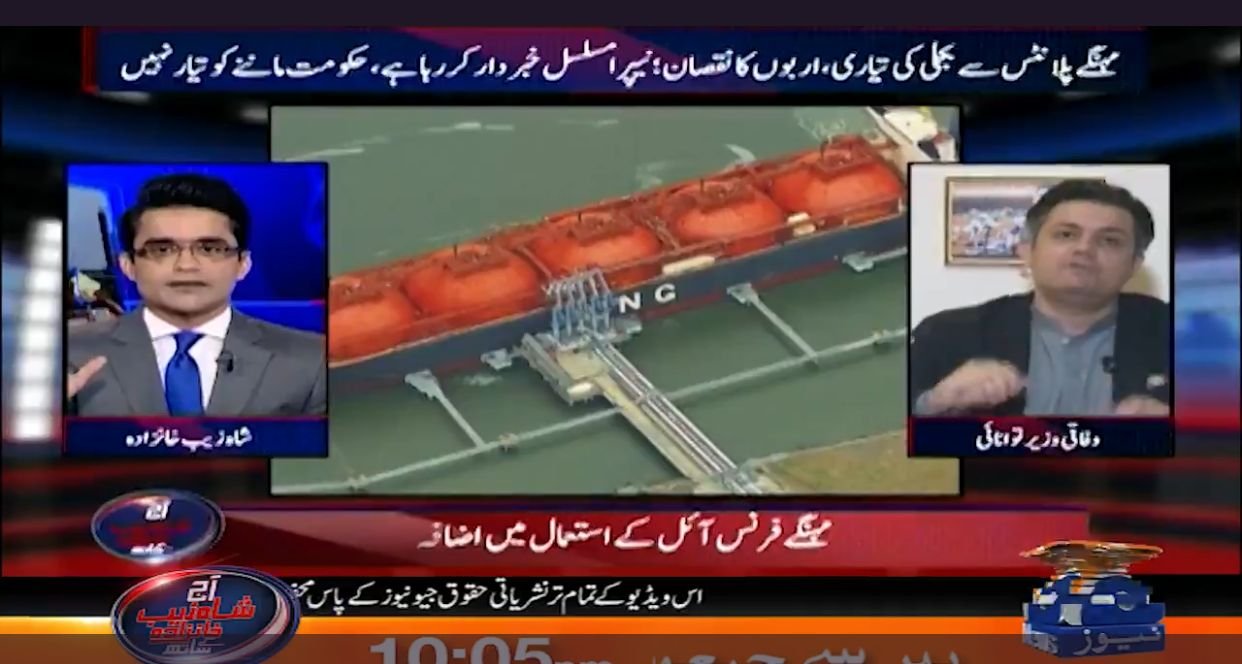
    Energy Minister Hammad Azhar appeared in Geo News’ programme Aaj Shahzeb Khanzada Kay Sath on Monday, during which the minister indulged in a heated debate with the host of the programme, Shahzeb Khanzada.

    During the show, Khanzada asked Azhar about the expected shortfall of gas in the winter season but the minister refused to answer the question. The minister kept refusing to answer the question about an expected gas crisis in December saying that he will appear again to talk about it.

    The federal minister said that he has only come to talk about the facts presented on Friday’s episode of the programme. The host mentioned that in Friday’s programme, he did talk about the expected shortfall of gas in the winter.

    The show on Friday, October 15, shared data from a report, compiled by Nepra, on the performance of the Ministry of Energy and asked the question: why is the ministry delaying the purchase of liquefied natural gas (LNG), which is costing the public dearly.

    Khanzada claimed earlier that he had invited the minister on his show 27 times, but the minister refused to come.

    Earlier in Friday’s show, Khanzada warned of the expected gas shortage during the winter season as Pakistan will not have the required number of LNG cargoes. He explained that during the winter season the government will only have 10 LNG cargoes. The government has the capacity to have 14 LNG cargoes but in the winter, the demand for LNG is more than 14 cargoes.

  • Kaghan Valley overwhelmed as tourists arrive in multitude

    Kaghan Valley overwhelmed as tourists arrive in multitude

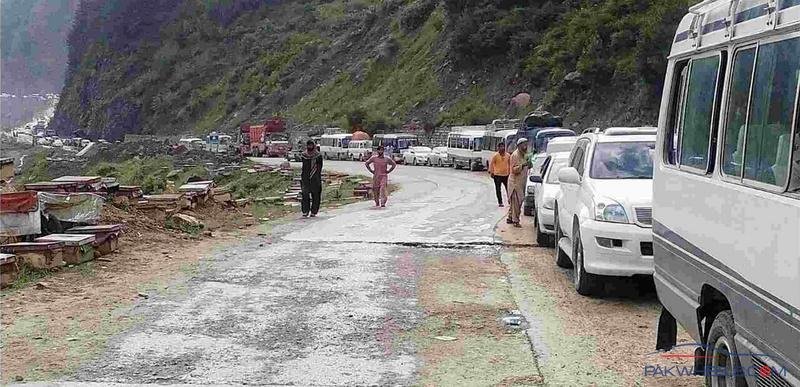
    Tourists arrived in multitude to the Kaghan Valley in Khyber Pakhtunkhwa in record numbers this Eid-ul-Azha, with hundreds of thousands of vehicles blocking the roads and causing huge traffic jams at the tourist site, reports Dawn.

    Tourists heading to the Kaghan Valley faced a fuel shortage and long queues of vehicles could be seen at every filling station in the area.  

    “Around 0.7 million vehicles carrying tourists have entered the valley so far and more motorists are on the way to this picturesque destination,” District Police Officer (DPO) Asif Bahadur said, reports Geo News.

    A video of the blocked route started making rounds on social media.

    Tourists already stuck in the jam urged people not to visit and declared a ‘traffic emergency’ in the region.

    Prime Minister Imran Khan had praised the beauty of Kaghan Valley.

    “I have toured the world but have not witnessed such a beauty that has been bestowed by Allah upon this Kaghan Valley,” he had said.