Tag: fuel

  • Govt increases petrol price instead of decreasing, new rate stands at Rs237.43 per litre

    Govt increases petrol price instead of decreasing, new rate stands at Rs237.43 per litre

    The government officially announced the amended prices for petroleum products on Wednesday after a delay of almost a week, notifying consumers of an increase of Rs1.45 in the price of petrol.

    According to the notification, the price of gasoline has gone up from Rs235.98 to Rs237.43, while the price of high-speed diesel (HSD) has remained the same at Rs247.43.

    Light diesel oil’s price has dropped from Rs201.54 to Rs197.28 by Rs4.26, and kerosene’s price has dropped from Rs210.32 to Rs202.02 by Rs8.3.

    According to initial reports, the cost of petroleum products were expected to decrease from Rs235.98 per litre to Rs226.36 per litre on Friday, September 16, after a reduction of Rs9.62 per litre for the next two weeks.

    The new petroleum prices were expected to be revealed on September 16, but the administration postponed the announcement.

  • Shell Pakistan posts after-tax profit of Rs7.4 billion in first half of 2022

    Shell Pakistan posts after-tax profit of Rs7.4 billion in first half of 2022

    The results for the first half of the year are announced by Shell Pakistan Limited’s (SPL) Board of Directors. In comparison to the profit of Rs2,153 million recorded during the same period last year, the company reported an after-tax profit of Rs7,469 million in 2022.

    The significant rebound is a result of increased company performance with a strategic focus, a positive shift in the government’s pricing methodology for the S&P Global Platts indexes, and safe and effective fuel operations.

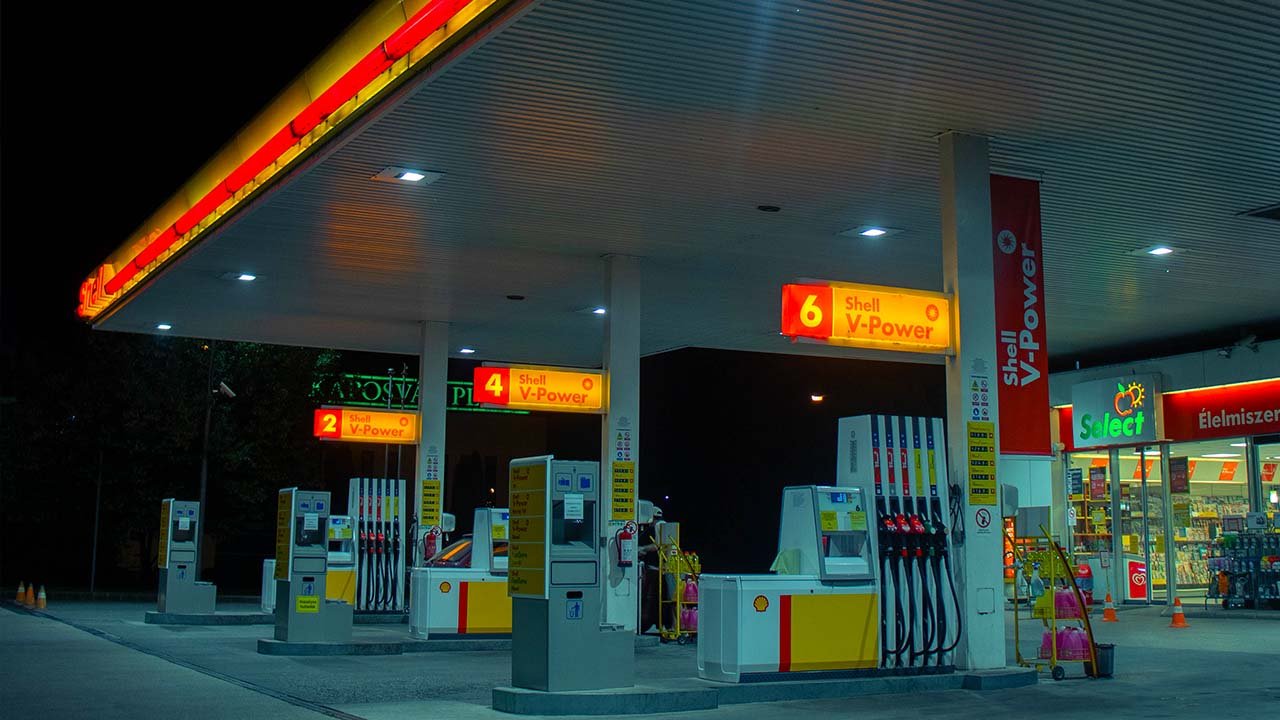
    According to Brecoder, the petroleum business added 13 new retail locations during this span, that will contribute to increased volume. In the market for premium fuels, Shell V-Power continues to be the market leader.

    In order to ensure that the business plays a significant part in the development of Pakistan’s energy future, the company will actively work to curtail the impact of present impediments and strive to grasp opportunities.

    Earlier, the business also confirmed its decision to cease its aviation operations in Pakistan. Currently, SPL operates its aviation-related business out of four locations.

    Including Nawabshah Airport, Begum Nusrat Bhutto Airport in Sukkur, Quetta International Airport, and Jinnah Airport in Karachi. SPL has concluded that it is no longer commercially viable to continue with its aviation operations in the country after careful consideration.

    In order to promote practices that will make Pakistani roads safer, the business also wrote the road safety book “Once Upon a Road.” The book will be covered in Pakistan’s sixth-grade curriculum developed by the Care Foundation.

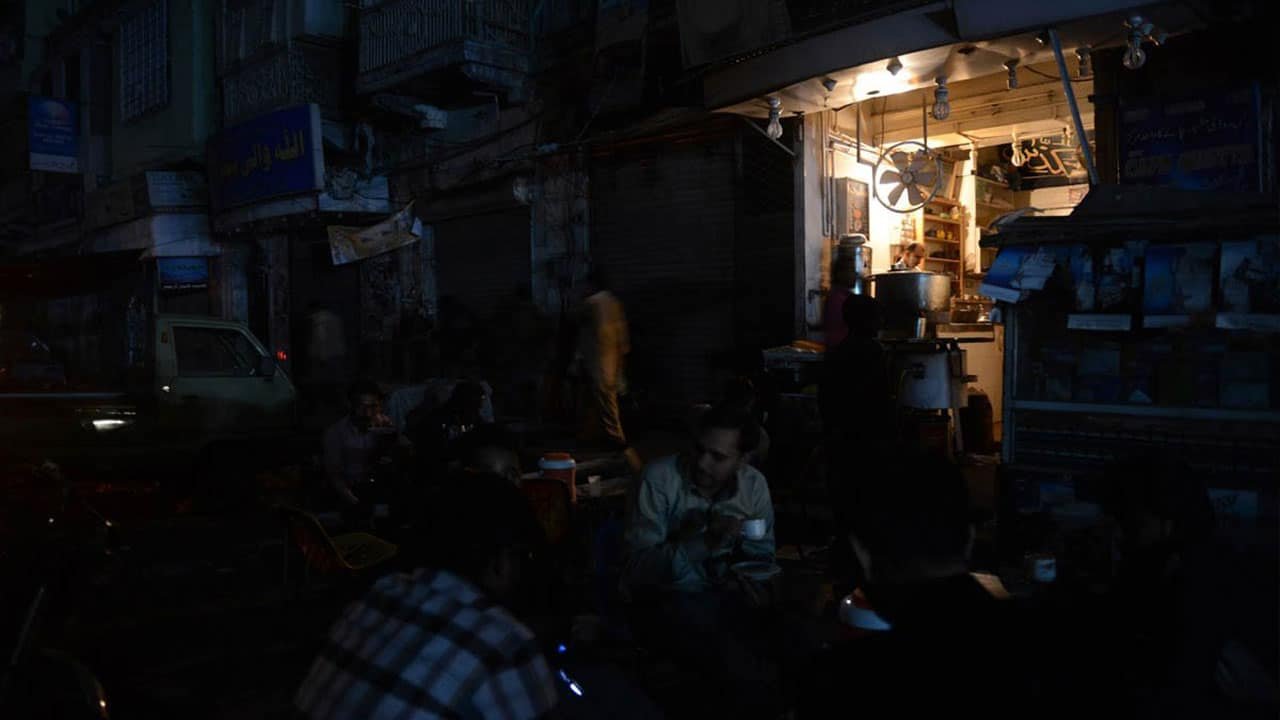
  • Pakistan pushed into darkness due to Europe’s decision to cut off Russian fuel

    Pakistan pushed into darkness due to Europe’s decision to cut off Russian fuel

    The European attempt to abandon Russian oil is intended to punish Moscow for its invasion of Ukraine. It’s also wreaking havoc thousands of miles away, throwing Pakistan into darkness, destabilising one regime, and jeopardising the country’s new leadership’s stability.

    According to Bloomberg, Pakistan invested heavily in liquefied natural gas and inked long-term contracts with Italian and Qatari suppliers. Some of those suppliers have now defaulted, although continuing to sell into the more lucrative European market, putting Pakistan in the very situation it hoped to avoid.

    The country took particular precautions a decade ago to protect itself from the sorts of price increases that are currently shaking the market.

    Last month, the government spent about $100 million on a single LNG shipment from the spot market to avert outages during the Eid holiday, a record for the cash-strapped country.

    The country’s LNG costs could reach $5 billion in the fiscal year ending in July, more than double what they were a year ago. Even still, the government is powerless to protect its citizens: the IMF is in talks to bail out the country on the condition that it reduces fuel and energy subsidies.

    Outages lasting more than 12 hours

    Parts of Pakistan are currently suffering scheduled blackouts lasting more than 12 hours, reducing the ability of air conditioning to provide respite during the current heat wave. The former prime minister continues to gather enormous audiences to demonstrations and marches, exacerbating voters’ discontent with 13.8 per cent inflation. The hosts of prime-time talk shows frequently discuss how Pakistan will obtain the petroleum it requires and how much it would have to spend.

    The administration introduced a fresh set of energy-saving measures last week. Civil servants were relieved of their normal Saturday shifts, and the security budget was slashed by half.

    Prime Minister (PM) Shehbaz Sharif remarked in an April tweet before of the Eid holiday, “I am acutely aware of the sufferings people are facing”. That same week, he ordered his government to resume purchasing costly overseas natural gas shipments.

    He also warned earlier this month that they don’t have the money to keep importing gas from other countries.

    Rerouted supply to power plants

    There will be more than just outages as a result of the supply shortage. The government has rerouted existing natural gas supply to power plants, causing fertiliser manufacturers to be shortchanged. This approach could jeopardise the next harvest, resulting in even higher food prices the following year. Backup generators are being used by cellphone towers to keep service going during the blackouts, but they, too, are running out of fuel.

    There’s not much hope in the future. LNG prices have risen by over 1,000 per cent in the previous two years, first due to post-pandemic demand and subsequently due to Russia’s invasion of Ukraine. Russia is Europe’s largest natural gas supplier, and the possibility of supply disruptions pushed spot rates to an all-time high in March.

    Increasing LNG demand in Europe

    Meanwhile, Europe is increasing its need for LNG. Europe’s LNG imports have increased by 50 per cent so far this year compared to the same period last year, and show no signs of slowing down. As they cut ties with President Vladimir Putin’s regime over the crisis in Ukraine, European Union policymakers created a plan to considerably increase LNG deliveries as an alternative to Russian gas.

    Floating import terminals are being built at a breakneck pace in countries like Germany and the Netherlands, with the first ones set to open in the next six months.

    “Europe is draining LNG from the rest of the globe,” according to Steve Hill, executive vice president of Shell Plc, the world’s largest LNG trader. “However, this means that less LNG will be sent to developing markets”.

    Pakistan was formerly thought to be the LNG industry’s bright future. Demand for the fuel had peaked in developed markets by the mid-2010s. However, technological developments had reduced the costs and time it took to build import terminals, and new gas sources had reduced the cost of the fuel itself.

    Poor nations could finally contemplate the gasoline at the new, lower prices. Suppliers flocked to these new markets, and when Pakistan published a request for long-term LNG supply, over a dozen businesses competed for the contract.

    Pakistan chose Italy’s Gunvor Group Ltd to sell LNG to the country for the next decade in 2017. The terms were favourable at the time, and the prices were lower than those of a comparable arrangement struck with Qatar the previous year.

    Delay in supplies

    However, due to the rise in European gas prices, the two suppliers have postponed more than a dozen shipments slated for delivery between October 2021 and June 2022.

    According to Bruce Robertson, an expert at the Institute for Energy Economics and Financial Analysis, such defaults are nearly unheard of in the LNG market. Bloomberg spoke with traders and industry insiders who couldn’t recall the last time so many cargoes were rejected without being linked to a big outage at an export terminal.

    Eni and Gunvor stated they had to cancel because they were experiencing their own supply problems and didn’t have enough LNG to export to Pakistan. When exporters confront such difficulties, they typically replace deliveries by purchasing a consignment on the spot market, but Eni and Gunvor have not done so.

    Vendors are generally averse to cancelling orders. It harms the company connection and is often extremely costly. In established markets, fines for “failure to deliver” might be as high as 100 per cent.

    “It’s quite rare for LNG suppliers to renege on long-term contracts beyond force majeure occurrences,” says Valery Chow, an analyst at Wood Mackenzie Ltd.

    Pakistan’s contracts stipulated a lower cancellation penalty of 30 per cent, most probably in exchange for cheaper overall costs. The European spot market prices are currently high enough to more than compensate for the penalties.

    Pakistan’s $12 million LNG supply contract

    As per sources, an LNG supply to Pakistan for delivery in May under a long-term contract would cost $12 per million British thermal units. In comparison, spot cargoes to Europe for May delivery were trading for more than $30. Eni and Gunvor have kept their promises to customers in the region.

    As a result, Pakistan is back to square one, in a weaker negotiation position than before. After a dispute with Pakistan’s army over a variety of problems, including his management of energy supply and the greater economy, Prime Minister Imran Khan was deposed in April.

    Shehbaz Sharif, the new prime minister, has directed the state-owned importer to obtain the petroleum at any cost in order to end the debilitating blackouts. It’s also attempting to reach new long-term LNG purchase agreements, albeit the conditions will almost probably be harsher than six years ago.

    High risk of default

    The cost is having its own cascading repercussions. The government is now “at high risk of default,” according to a paper published last month by the Institute for Energy Economics and Financial Analysis. Moody’s Investors Service reduced Pakistan’s outlook from stable to negative, citing financial worries including a potential IMF bailout delay.

    Pakistan’s dependency on LNG, as well as its suppliers’ tendency to default, has exacerbated the country’s energy dilemma. Pakistan isn’t alone in this regard. Emerging economies all around the world are trying to meet their residents’ requirements while staying within their budget restrictions.

    It has also prompted them to purchase electricity from Russia, reducing the impact of Europe’s attempts to isolate them.

    Pakistan seeks LNG supply contract with Russian companies

    According to reports, Pakistan is also looking at long-term LNG supply agreements with Russian companies. India has already increased its purchases from Russia, and this trend is likely to continue. The government has directed power plants to purchase fuel from overseas in response to the scorching summer heat.

    Other cash-strapped importers, such as Bangladesh and Myanmar, are likely to suffer as a result of Pakistan’s problems. Bangladesh’s state-owned utility recently purchased the country’s most expensive LNG shipments on the spot market to keep the grids functioning and industry stocked, while Myanmar has stopped importing LNG for the past year owing to price increases.

    Other nations, such as India and Ghana, may be prompted to reconsider long-held plans to increase their reliance on super-chilled fuel as a result of Europe’s major change. Instead, governments would increase their reliance on polluting coal or oil, thwarting efforts to meet ambitious emission reduction objectives this decade.
  • Energy sector to get a massive portion of the Rs699 billion subsidy

    Energy sector to get a massive portion of the Rs699 billion subsidy

    The government has proposed allocating Rs699 billion to multiple sectors in order to provide relief to the masses during the new fiscal year 2022-23.

    According to budget estimates, the government plans to boost subsidies by Rs17 billion to Rs699 billion for the next fiscal year, up from Rs682 billion in the previous fiscal year.

    The government has reduced power sector subsidies by Rs26 billion to Rs570 billion for the next fiscal year, down from Rs596 billion in the previous fiscal year and proposed increasing the total subsidy for the power sector for PEPCO by Rs18 billion to Rs275 billion. The budget 2022-23 proposed reducing the subsidy amount for K-Electric by Rs5 billion to Rs80 billion.

    Moreover, subsidies for Independent Power Producers (IPPs) are slashed by Rs39 billion to Rs215 billion for the coming fiscal year.

    The amount of petroleum subsidy has been upped from Rs51 billion to Rs71 billion. During the next fiscal year, the Utility Stores Corporation (USC) will receive a Rs17 billion subsidy. PASSCO will also receive Rs7 billion subsidy.

    During the next fiscal year, Rs8 billion has been set aside for wheat subsidies to Gilgit-Baltistan. For the coming fiscal year, the subsidy for the metro bus service has been increased to Rs4 billion. Similarly, the fertiliser plant subsidy has been increased to Rs15 billion.

    Read more: Govt unveils Rs9.5 trillion budget 22-23, focused on sustainable growth

    The new government has reduced the Naya Pakistan Housing and Development Authority (NAPHDA) subsidy amount to Rs500 million for the next fiscal year, down from Rs30 billion in the previous fiscal year. NAPHDA’s markup subsidy has also been reduced, from Rs.3 billion to Rs.500 million for the coming fiscal year.

  • Khyber Pakhtunkhwa reduces free fuel allocation for ministers and govt officials

    Khyber Pakhtunkhwa reduces free fuel allocation for ministers and govt officials

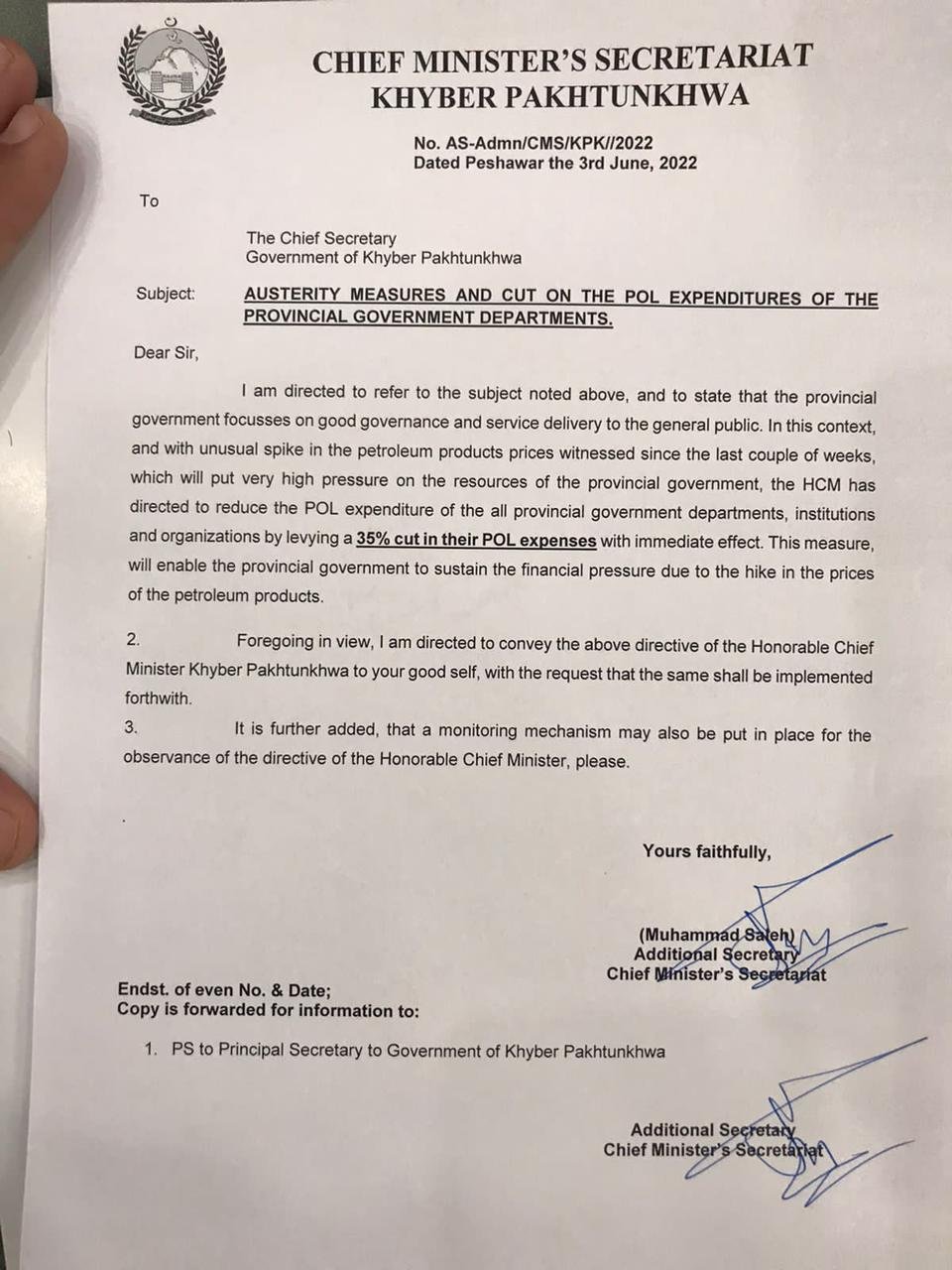
    Following Sindh, the Khyber Pakhtunkhwa (KP) government has decreased free petroleum quotas for all provincial government departments, institutes, and organisations.

    Chief Minister of KP, Mehmood Khan, has approved a 35 per cent reduction in the free gasoline allotment, according to an official notification issued by the KP Chief Secretary.

    The news comes just hours after the Sindh government decided to reduce the Chief Minister’s (CM), ministers’, and provincial government employees’ free fuel quotas.

    Keeping in view a substantial spike in POL prices within the last few days, the decision was made to limit spending and decrease the strain on the national kitty.

    Read more: Petrol quota for ministers, govt officials in Sindh lowered by 40 per cent

    The latest petrol price hike came just hours after the National Electric Power Regulatory Authority (NEPRA) approved a power tariff hike of Rs7.91 per unit.

  • 40-50 per cent hike expected in gas tariff

    40-50 per cent hike expected in gas tariff

    The government plans to hike the system gas tariff by up to 50 per cent as part of its efforts to gain access to the International Monetary Fund (IMF) bailout.

    The Ministry of Energy anticipates the Oil and Gas Regulatory Authority (OGRA) determining the revenue requirement for the coming fiscal year in June. As per The News, which cited sources, the tariff increase will take effect on July 1, 2022.

    Sui Southern Gas Company Limited (SSGC) and Sui Northern Gas Pipelines Limited (SNGPL), according to an Energy Ministry official, have suffered massive combined losses of Rs550 billion in recent years.

    Both are losing money since the system gas rate has not been raised in a long time. SNGPL is expected to lose Rs350 billion, while SSGC is expected to lose roughly Rs200 billion.

    OGRA will now calculate the system gas tariff under the modified OGRA statute. The IMF has encouraged the government to ensure that gas firms do not lose money as a result of the gas tariff’s stagnation, as well as to follow the modified OGRA law in its entirety.

    It’s worth noting that the government raised the price of petroleum goods by Rs30 per liter last week after the IMF stated that the bailout package would not be resumed unless the country ended petroleum product subsidies.

  • Here’s where you can get petrol in Lahore

    Here’s where you can get petrol in Lahore

    Following oil industry’s warning of possible petroleum product shortages in Punjab and neighbouring areas due to road and highway blockades, a number of petrol pumps in the city have been closed.

    Majority of petrol pumps in Lahore have been shut, particularly in the Cantt, DHA, Gulberg, and Johar Town area. When asked, the majority of retailers refused to comment on when petroleum sales would resume.

    We have, however, contacted multiple managers of prominent petrol pumps in Lahore and asked if they are currently selling fuel.

    Here are a few filling stations in different parts of the city that are still selling fuel:

    1. Euro Oil petrol pump opposite Shahnawaz Mercedes-Benz Showroom Gulberg
    2. Total parco Mazang road, Mazang Chungi
    3. Hascol DHA phase 2 U Block, opposite DHA cinema
    4. PSO Chowk Thokar Niaz Baig , Multan Road

    Earlier, Oil Companies Advisory Council (OCAC) said that oil marketing companies are supplying fuel to retailers but the deliveries could be slowed owing to road blockages in Punjab’s major cities.

  • OCAC warns of petrol supply shortages due to roadblocks

    OCAC warns of petrol supply shortages due to roadblocks

    Oil Companies Advisory Council (OCAC) said that oil marketing companies are supplying fuel to retailers but the deliveries are being slowed owing to road blockages in Punjab’s major cities, which could affect deliveries to filling stations.

    It warned provincial authorities in Punjab that the road blockades have severed connectivity between major cities and neighboring areas, affecting fuel supplies inside the province.

    The Oil Companies Advisory Council affirmed that there are sufficient stockpiles of gasoline products throughout the country, including depots in Punjab.

    It also highlighted fears about the current scenario of roadblocks and the rumoured assumption of minimal stocks spreading on numerous platforms and asked the public to refrain from panic buying. Despite the roadblocks, there are enough stockpiles of petrol and high-speed diesel (HSD) in Punjab, and OMCs are constantly working to restock retail outlets on time.

    OCAC expressed its concerns to the Chief Secretary of Punjab, requesting the local administration’s assistance in ensuring the safe and secure transit of tankers from different depots to different petrol outlets across the province till the scenario stabilizes.

  • Petroleum Division refutes Imran Khan’s assertion about Russia’s low-cost fuel offer

    Petroleum Division refutes Imran Khan’s assertion about Russia’s low-cost fuel offer

    There is no formal evidence in the petroleum division of Russia’s offer of inexpensive LNG, crude oil, and POL products, as former Prime Minister Imran Khan has often claimed.

    Syed Zakria Ali Shah, Joint Secretary of Development and a spokesman for the Petroleum Division, stated this to a reporter.

    According to sources in the petroleum sector, trading of crude oil, POL products, and LNG was not even on the table when Khan discussed the purchase of LNG. There was no mention in the meeting minutes of any Russian offer of providing LNG and gasoline at a 30 per cent lower rate.

    According to the spokesman, the government wrote letters to Russia on March 30 through the Ministry of Foreign Affairs in reference to the February 2022 visit of a Pakistan delegation, expressing Pakistan’s desire to enter long-term agreements on the import of crude, POL products, and LNG at discounted rates.

    The Petroleum Division also wrote to the Foreign Ministry, asking if Russia had provided any lower tariffs on LNG and fuel items. He also stated that it had given two reminders to this effect in the first week of April 2022, but the ministry stated that it had not received any letter from Russia for conversation in this respect.

    The Former energy minister, Hammad Azhar attracted the attention of his Russian peer, in a letter dated March 30, 2022, to an Inter-Governmental Agreement (IGA) on LNG cooperation that had been in force between the two friendly nations since 2017. The Russian minister was informed that Pakistan was willing to strengthen its partnership by expediting negotiations between the two selected nominees so that a long-term agreement for LNG delivery on a G2G basis could be reached as soon as possible.

    Then-energy-minister recommended two to three Russian LNG cargoes each month, each holding 140,000 cubic metres of LNG.

    There was no mention of any Russian offer in that letter, only a request for negotiation on a long-term contract for the import of gasoline and LNG at a reduced rate.

    According to officials at the energy ministry, India has been purchasing crude oil from Russia for decades and has continued to do so despite EU and US sanctions imposed as a result of its conflict with Ukraine. They claimed that India’s foreign policy was largely independent due to its strong economic power and enticing market for large economies.

    They further claimed that India had obtained a special dispensation from the US from its sanctions against Iran and had been buying crude oil and POL products from Iran despite US and UN sanctions for a long time. They claimed that India was the US’s strategic partner in the area against China.

    “India always pitches its argument before the US saying if it does not import fuel from Iran, its economy will hurt and it will never be on a par with China. As far as Pakistan is concerned, it is not possible to import crude oil, POL products, and LNG at discounted rates even in the wake of EU and US sanctions on Russia, as the country’s economic muscle is very weak and the country is always dependent on the IMF programme”. The officials said that Pakistan had also failed to complete the IP gas line project just because of US and UN sanctions on Iran.

    Via: The News