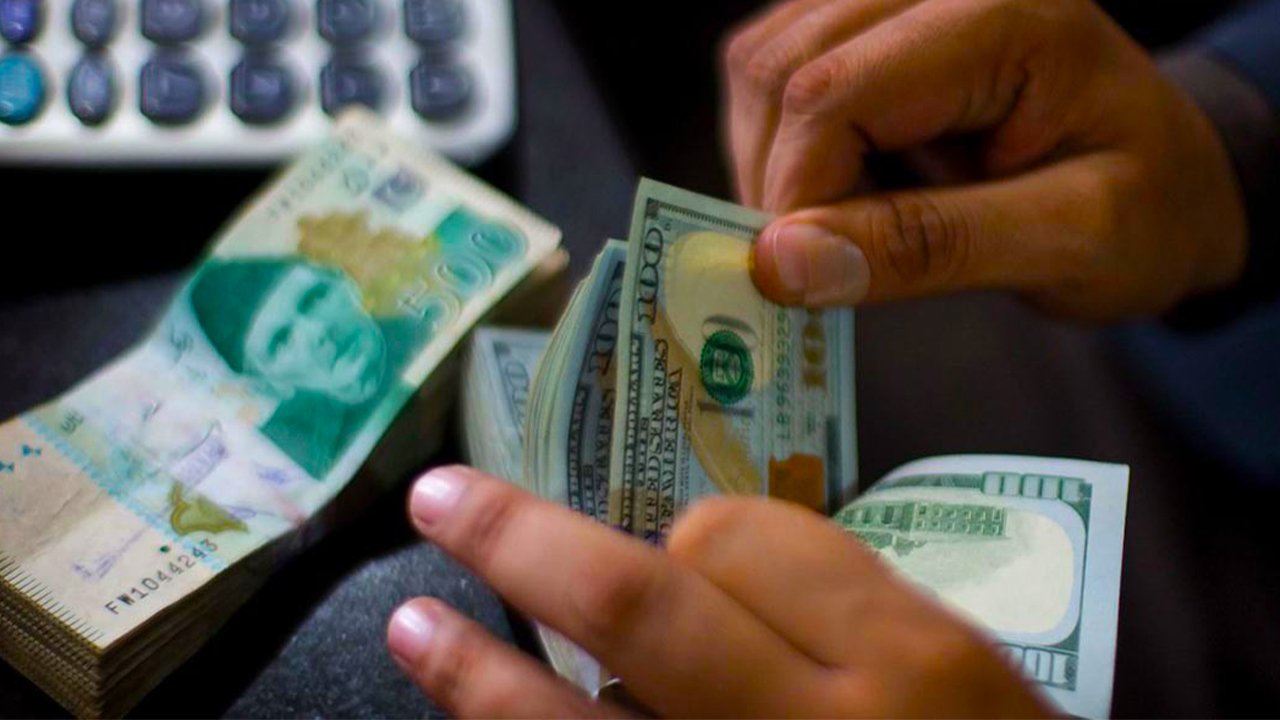
The Pakistan Stock Exchange’s (PSX) benchmark KSE-100 index experienced significant gains on Friday, rising by over 500 points and closing just below the 46,000 mark.
The index reached 46,073.61 points at 3:47 pm, showing a notable increase of 675.30 points from the previous day’s closing of 45,398.31. However, by the end of the day, it closed at 45,920.73, up by 522.42 points or 1.15 per cent.
Pakistan Stock Exchange gained 600 points today to reach 46000 points which is it’s highest level in the past 15 months! We’re getting there insha’Allah #PakistanBackOnTrackpic.twitter.com/FdIxTfT7Fr
According to Dawn, Ahsan Mehanti, the Director of Arif Habib Corporation, mentioned that foreign capital was actively buying shares in the energy sector. He attributed the stock market rally to favorable financial results, the Islamabad High Court’s ruling declaring the imposition of a super tax on various companies unlawful, and reports indicating the policy rate would remain unchanged.
As a result of these factors, the index reached the 46,000 mark after a gap of 15 months, signaling an overall improvement in all sectors. Mehanti also pointed out the positive impact of the recently announced standby agreement with the International Monetary Fund (IMF).
Looking ahead, if the market continues to close above 46,000, it is expected to see further growth. Amir Shehzad, Director of First National Equities Limited, referred to the recent market fluctuations as a “technical correction” and expressed optimism that the market could surpass the 47,000 point barrier in the coming week. He believed that maintaining an unchanged monetary policy by the central bank would likely have a positive effect on the market, possibly leading to new record levels.
The KSE-100 increased for the fourth consecutive session on Friday as the rupee continued to strengthen against the US dollar, maintaining positive investor confidence at the Pakistan Stock Exchange (PSX).
The price of WTI crude oil was $87.95 per barrel during the day, while Brent crude oil was being sold at $93.75 per barrel, bringing the global oil prices to multi-month lows.
The domestic equities market gained 670.87 points, or 1.62 per cent, to close at 42,096.24 points as a result of this development.
The Pakistani currency’s ongoing rebound, which continued for the sixth day in a row against the US dollar, provided additional support for the market.
Despite initial selling pressure on the market and a period of time in which the KSE-100 index traded flat, investor interest picked up toward the end of the first session, and the market closed roughly 300 points higher.
The rise gained momentum in the second session, which enabled the index to pass the 42,000-point threshold and conclude with significant gains.
The day ended strongly for index heavyweights in the banking, fertiliser, cement, chemical, automobile, and cement industries. On a weekly basis, the benchmark KSE-100 increased by 4.85 per cent. Capital Stake said that the PSX had strong sentiment for the fourth straight session.
According to Topline Securities’ analysis, Pakistan’s stocks saw good momentum as a result of softening global energy prices for coal and oil, which experienced some correction.
The decline enabled the market maintain its purchasing mood from Thursday and helped the KSE-100 index conclude the day at 42,096 points.
A day after economic slowdown fears dragged the major British stocks to their sixth straight session of losses, UK equities stabilised on Tuesday, with some positive momentum from financial sectors and some excellent earnings announcements.
By 0712 GMT, the FTSE 100 had up 0.6 per cent, with shares in British bank HSBC up 2.6 per cent providing the biggest boost to the blue-chip index.
Following volatile crude prices, oil majors BP Plc and Shell Plc climbed 1.5 per cent and 0.8 per cent, respectively.
After finishing at its weakest level in more than three months on Monday, the domestically focused mid-cap FTSE 250 index gained 0.7 per cent. Paragon Banking increased by 4.7 per cent after raising its expectations for 2022 and indicating robust new lending growth.
FirstGroup jumped 1.2 per cent when the transportation company reported a higher yearly profit and restarted dividend payments, as passenger numbers on its buses increased after COVID-19 limitations were relaxed.
Crest Nicholson rose 6.1 per cent after projecting an adjusted profit before tax of between 135 and 140 million pounds for fiscal year 2022. In 2021, the housebuilder made an adjusted profit of 107.2 million pounds.
The lack of clarity on both economic and political fronts worsened the Pakistani rupee’s (PKR) difficulties, as the local currency sank to Rs200 against the US dollar during intraday trading in the interbank market on Thursday, May 19.
Pakistani currency officially breached the 200-barrier in the open market on May 18, closing at Rs198.39 after a day-on-day devaluation of Rs2.65 or 1.3 per cent.
Investors, on the other hand, are concerned about the reactivation of the stalled $6 billion Extended Fund Facility (EFF) programme due to the government’s inability to implement IMF conditions. Meanwhile, market sentiment was severely harmed by continued domestic political uncertainties.
Pakistan and the IMF are holding talks in Doha as the South Asian country wants to revive the IMF programme. On Wednesday, Federal Minister of Finance and Revenue Miftah Ismail met virtually with IMF Mission Chief Nathan Porter.
During the meeting, Ismail underlined the government’s resolve to implement the IMF’s reforms and meet the program’s structural goals.
He stated that the administration recognises the need to make difficult decisions while minimising the impact of inflation on the middle and lower income groups.
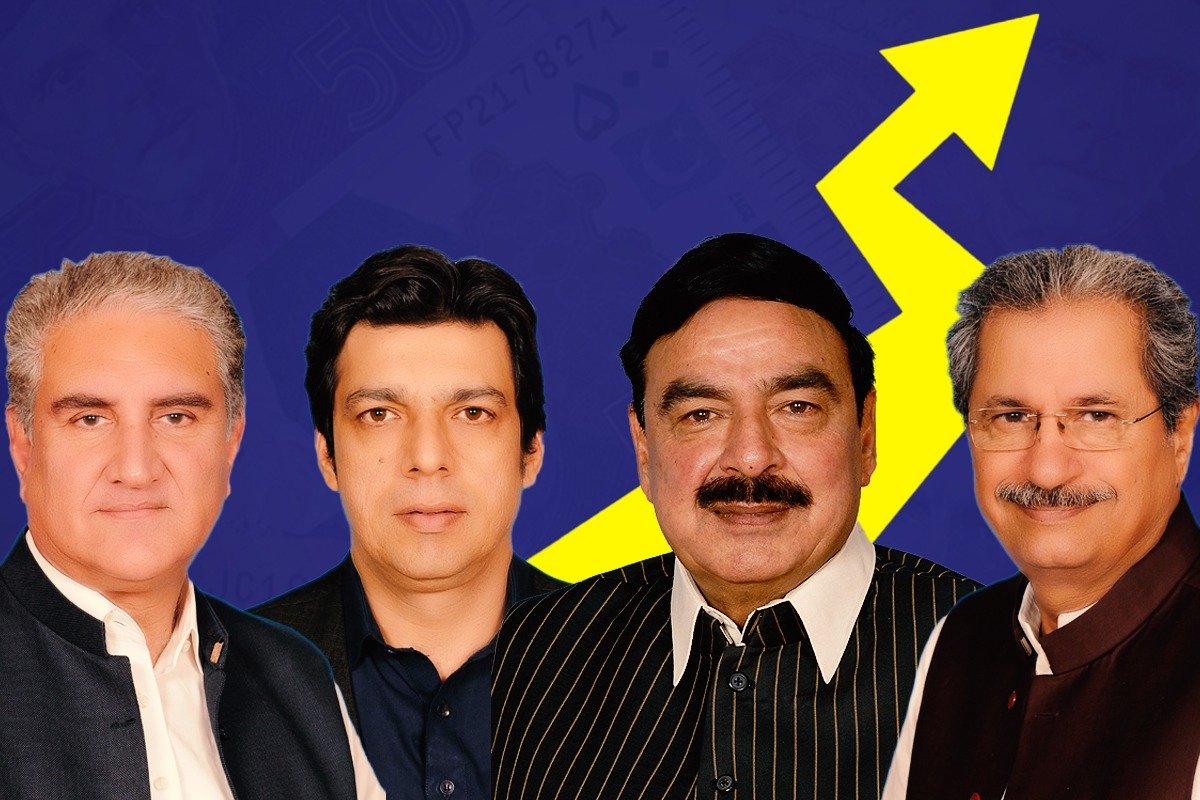
Official documents revealed that several members of Pakistan Tehreek-e-federal Insaf’s cabinet enjoyed gains in their fortunes during their term in parliament and as ministers, despite being elected on pledges of fighting corruption.
According toSAMAA TV, Shah Mehmood Qureshi and Sheikh Rasheed Ahmad, Omar Ayub Khan, Azam Khan Swati, Khusro Bakhtiar, Faisal Vawda, Shafqat Mehmood, Fehmida Mirza, Zubaida Jalal, Mahboob Sultan, and Tariq Cheema are among the listed former ministers.
Since select ministers received notices to explain their excessive wealth, the majority blamed weak wealth and asset declaration regulations, which did not contribute to increases in the valuation of assets overtime or the amalgamation of entities.
An inquiry into assets spontaneously declared before the Election Commission of Pakistan (ECP) and Pakistan’s tax authorities — primarily the Federal Board of Revenue (FBR) — by cabinet members who worked under former Prime Minister Imran Khan disclosed that plenty of of them saw a tremendous upsurge in their riches, with growth proportions primarily in the triple digits.
As per the official record, the ECP sent notices to at least six former ministers while they were still in government in 2019 and 2020, requesting them to clarify their wealth-related issues.
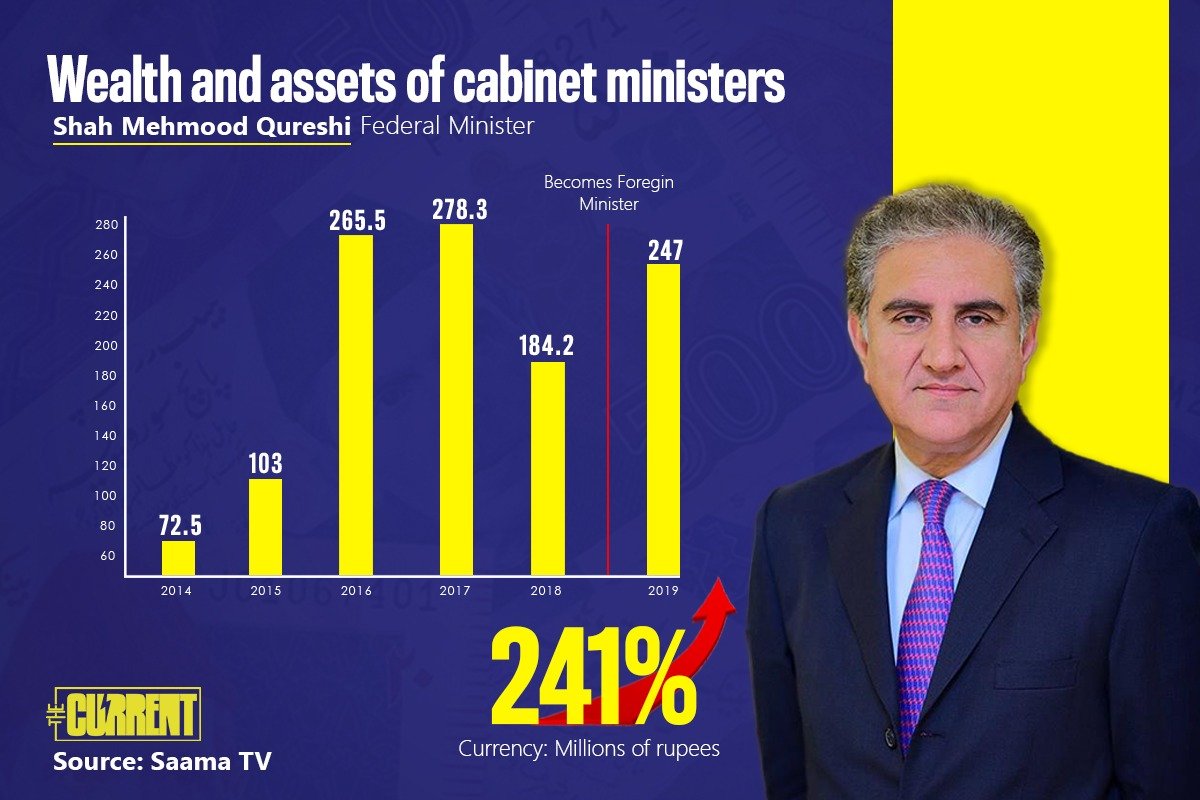
From 2014 to 2019, former foreign minister Shah Mahmood Qureshi, who has been a staple of the parliament for more than a decade and served twice in the federal cabinet in two different governments, had a 241 per cent growth in his wealth.
He and his wife held assets worth only Rs72.5 million in 2014, according to asset declarations he submitted to the ECP and the FBR. In the following three years, his assets nearly quadrupled, reaching Rs278.3 million, a 283.86 per cent increase over his wealth in 2014. Qureshi’s fortune dropped dramatically to Rs184.2 million in 2018, the year he returned to the Treasury benches, albeit with a new party, the PTI. However, while in power, it soon increased to Rs247.1 million in 2019, a rise of 240.82 per cent since 2014.
When questioned, Qureshi recounted how the worth of his assets had evolved over the years.
“The reason for the increase in assets was that during 2015-16, my wife received her share from the sale of property situated in Lahore, which had been gifted by her mother, and shares from sale proceeds of inherited property worth Rs169.6 million and Rs22.6 million,” he claimed. In October 2017, duplicates of sale deeds were handed to the ECP, according to the former minister.
“The ECP raised this observation too,” he said regarding the increase in his wealth, adding, “I and my dependent family members are all filers with the FBR”.
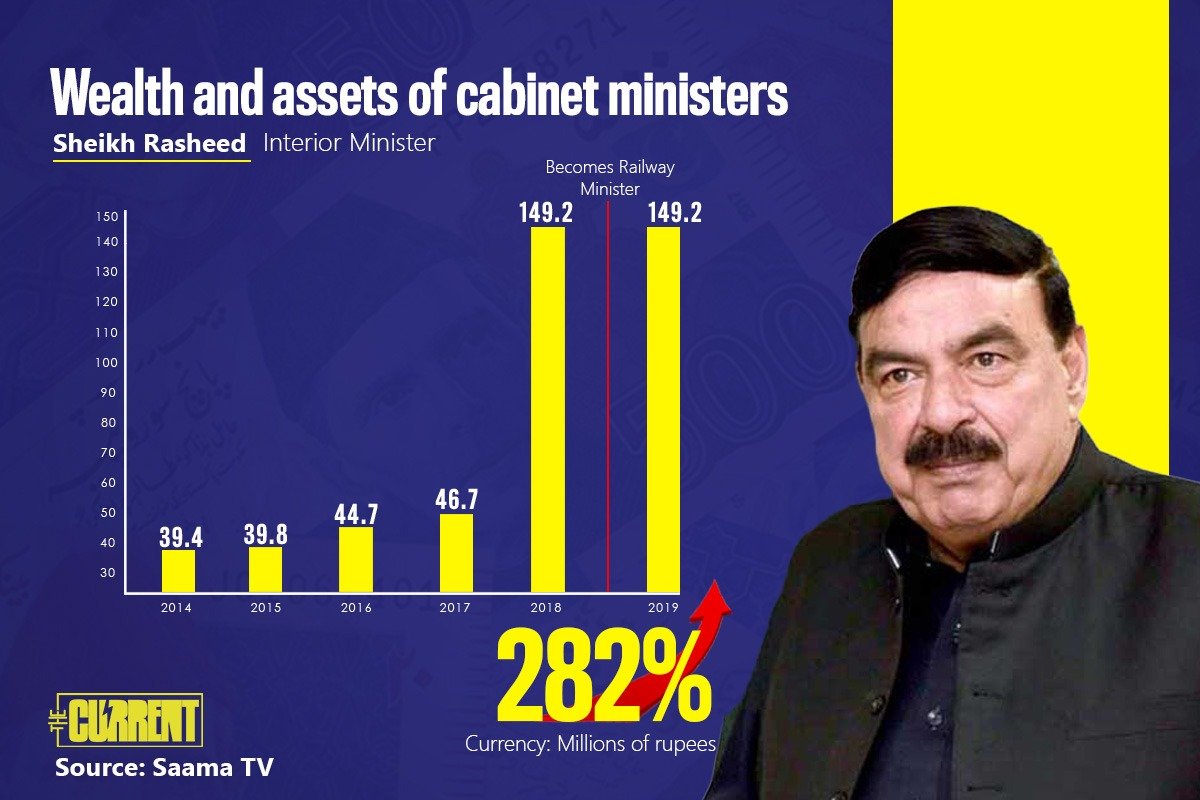
Sheikh Rashid, the former interior minister, watched his fortune increase by nearly 278.68 per cent between 2014 and 2019.
The financial disclosures for 2014 revealed that he only had Rs39.4 million in assets. Earnings climbed by Rs0.4 million to Rs39.8 million. His holdings steadily expanded over the next two years, reaching Rs44.7 million in 2016 and Rs46.7 million in 2017.
Conversely, in 2018, the time he was elected to power, his assets boosted by Rs100 million to Rs149.2 million. In 2019, there was no movement in reported assets. After inquired why his assets had suddenly changed, Rashid said that the discrepancy was due to an advance payment he had obtained for reselling a portion of land in 2018.
“I received Rs100 million as advance after making a deal of land to be sold last year, [2021],” he said, adding, “There is no such increase in my assets”. The former interior minister stated that the rise in his declarations submitted with the FBR and the ECP had been properly disclosed.
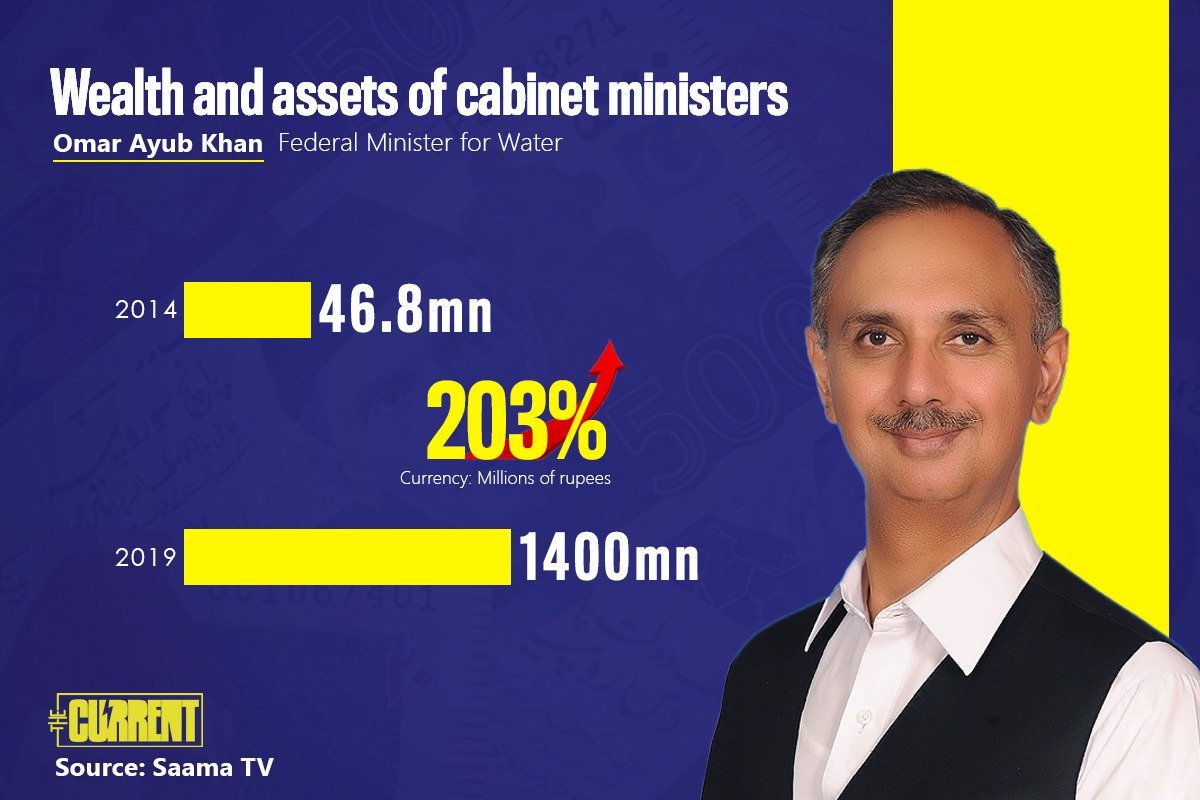
Between 2014 and 2019, the fortune of former federal minister of water Omar Ayub and his wife jumped by 203 per cent.
As per Ayub’s filings to the ECP and FBR in 2014, he and his wife held assets worth Rs461.8 million. This comprised Rs132 million in assets held by his wife and Rs329 million in assets owned by the minister. This value had risen to Rs1.4 billion by 2019. Surprisingly, while his wife’s holdings increased slightly to Rs201 million, Ayub’s assets increased to Rs1.2 billion. Each has debts worth only Rs26.3 million, according to the disclosures.
As a result, the ECP expressed concerns about Ayub’s and his family’s unexpected surge in wealth.
“It was explained to the ECP in 2019 that it [increase in wealth] is because of group formation having no cash involvement,” Ayub said, confirming that the top poll body had issued him a notice on this subject. Ayub claimed that he owned shares in Nova Synpac Ltd. and NovaGene Pharmaceuticals Ltd., which increased in value by approximately Rs1.071 billion.
“My assets have decreased (excluding this group formation) since I took an oath as a minister because I resigned from my group,” he claimed, adding that the increase was due to the consolidation of all of his businesses under the group.
“This cannot be reflected in a declaration, which is always a reflection of statements submitted to the FBR and there cannot be any difference [between them] otherwise it would have been challenged there,” he explained.
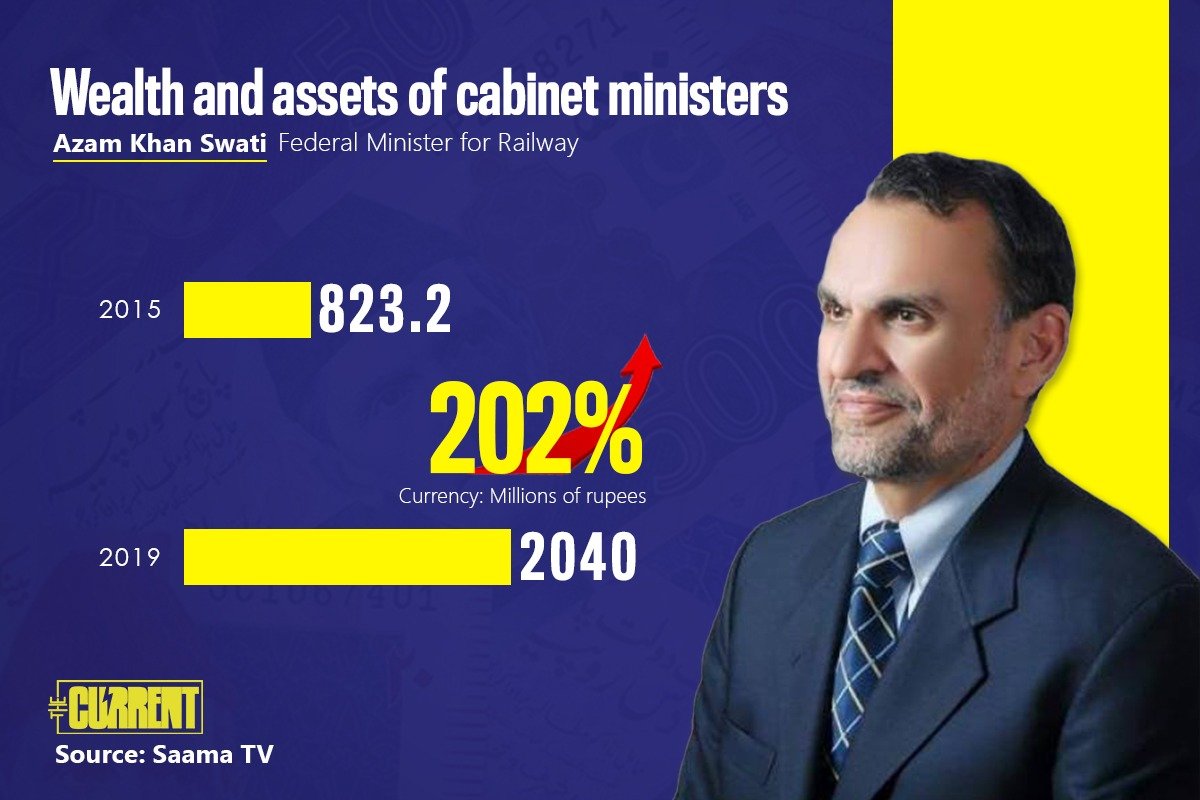
Azam Swati, the former federal railways minister, saw his fortune grow by 202 per cent from Rs823.2 million in 2015 to about Rs2.04 billion in 2019. He reported that his liabilities increased from Rs417 million in 2015 to Rs811 million in 2019.
“[Your] figures are wrong due to incomplete information being furnished before ECP by members and cabinet members owing to faulty legal requirements mentioned in ECP Act 2017,” he explained.
He further said that his situation was slightly unusual. “In Pakistan, I have no income and no business.” I am confident that our FBR wealth statement [filed] will be compared to ECP in 2019 [asset declarations],” he remarked, worried that the statistics may contain a few errors.
“ECP has no efficiency and capability to audit assets and liabilities,” he disclosed, adding, “We were making mistakes filing combined [wife and husband together]”.
“Now we have corrected the mistake and filed separately because the wife is not dependent,” Swati told SAMAA TV.
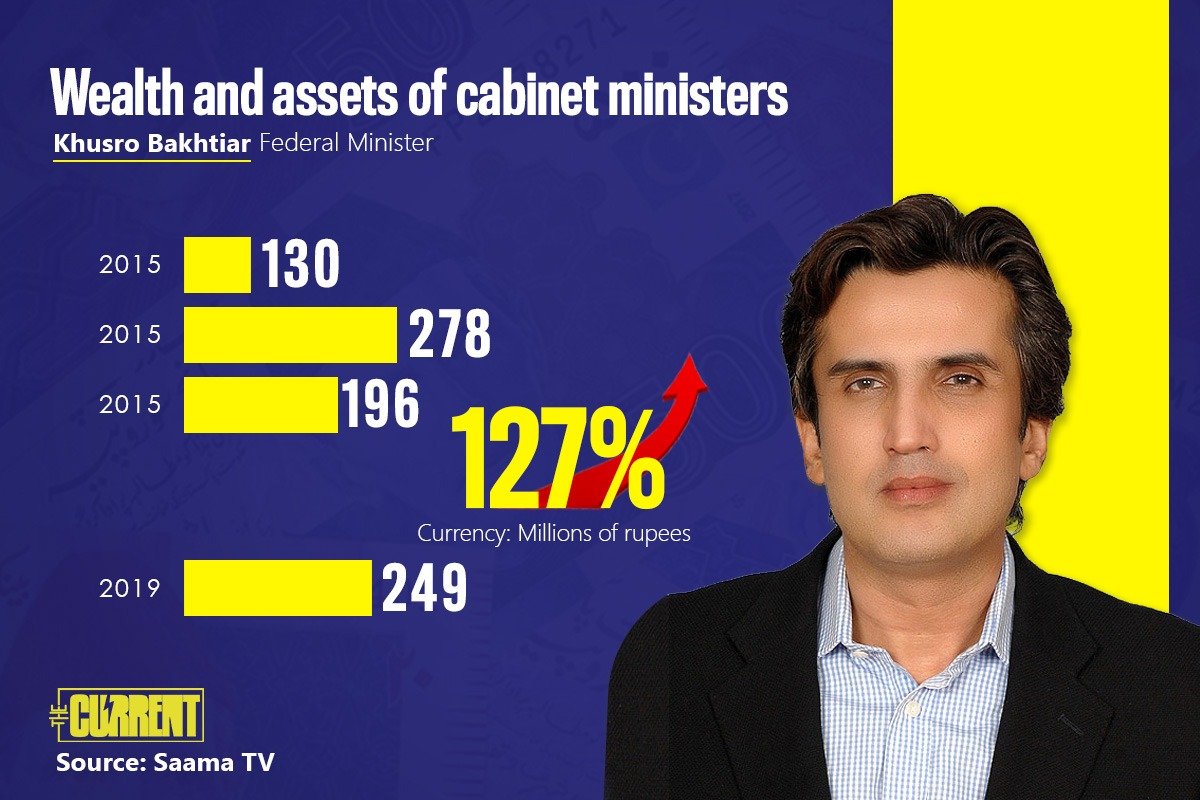
Khusro Bakhtiar, the former federal commerce minister, saw his fortune rise by 127.8% from Rs109.3 million in 2013 to Rs249 million in 2019. In 2014, he had assets of Rs130 million, which more than doubled to Rs278 million in 2015, shrank to just Rs196 million in 2016, and then surged again in the next three years.
“Increase in assets were mainly comprised of [various] sources during the year 2014 to 2019,” he told SAMAA TV, detailing that these sources included savings from agricultural income, proceeds from the sale of land worth Rs40 million, other sources which contributed Rs20 million.
Bakhtiar also claimed that he actually paid Rs27.5 million in agricultural taxes from 2017 to 2020, and that he owed Rs60 million in 2016.
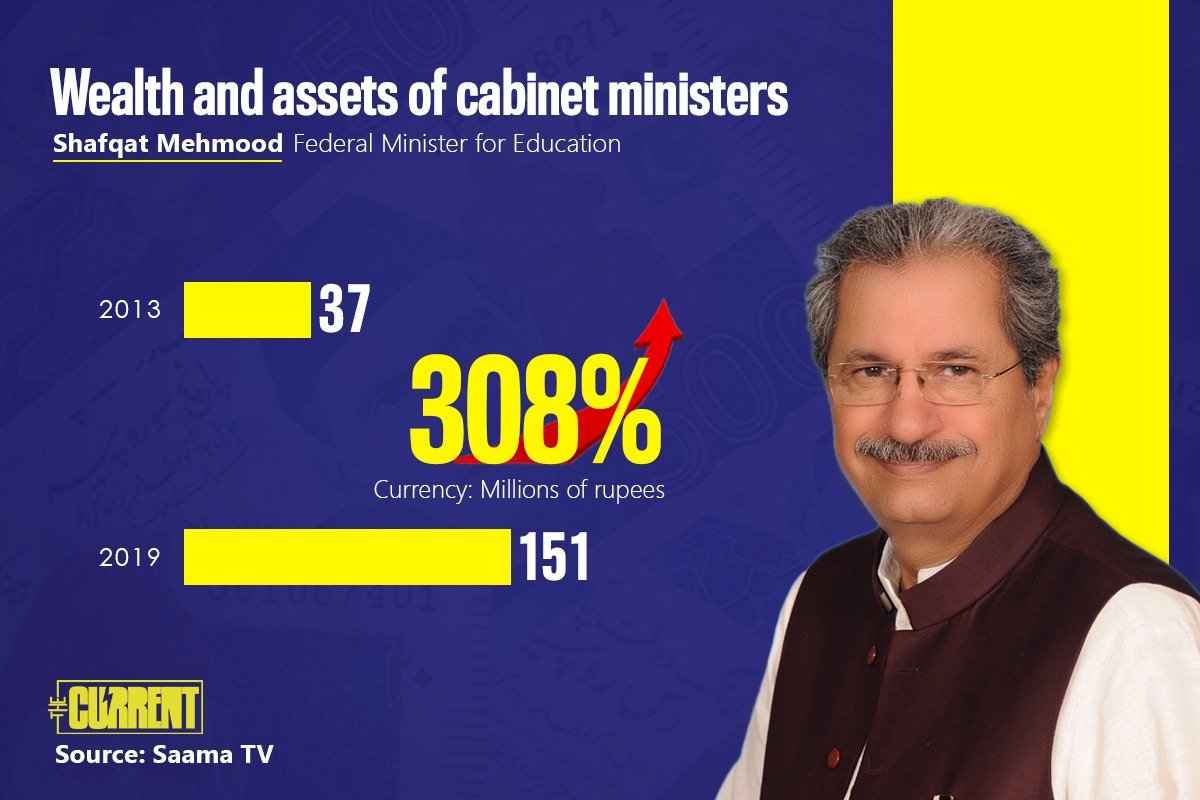
Former federal minister for education Shafqat Mahmood and his family had a 308 per cent growth in asset valuation between 2013 and 2019, making them one of the most successful federal ministers in terms of percentage increases. According to Mehmood’s filings, his and his family’s assets were valued at just Rs37 million in 2013, but had grown to Rs151 million by 2019.
“My assets have not changed since 2013 onwards,” Mehmood asserted, explaining “The change that you see is the cost re-evaluation from purchase price to market price”. The ex-minister further said that he has 360 kanals of hereditary land, a few more plots, and automobiles that he never assessed.
“There will, of course, be some variation regarding bank accounts. There will also be a slight difference in detail offered to FBR and ECP with regards to bank accounts,” he maintained. He went on to say that in his previous disclosure, he had combined the amounts in all of his bank accounts to present a single total.
“My wife is a distinct taxpayer because she works, but I have included her assets as well”, he explained.
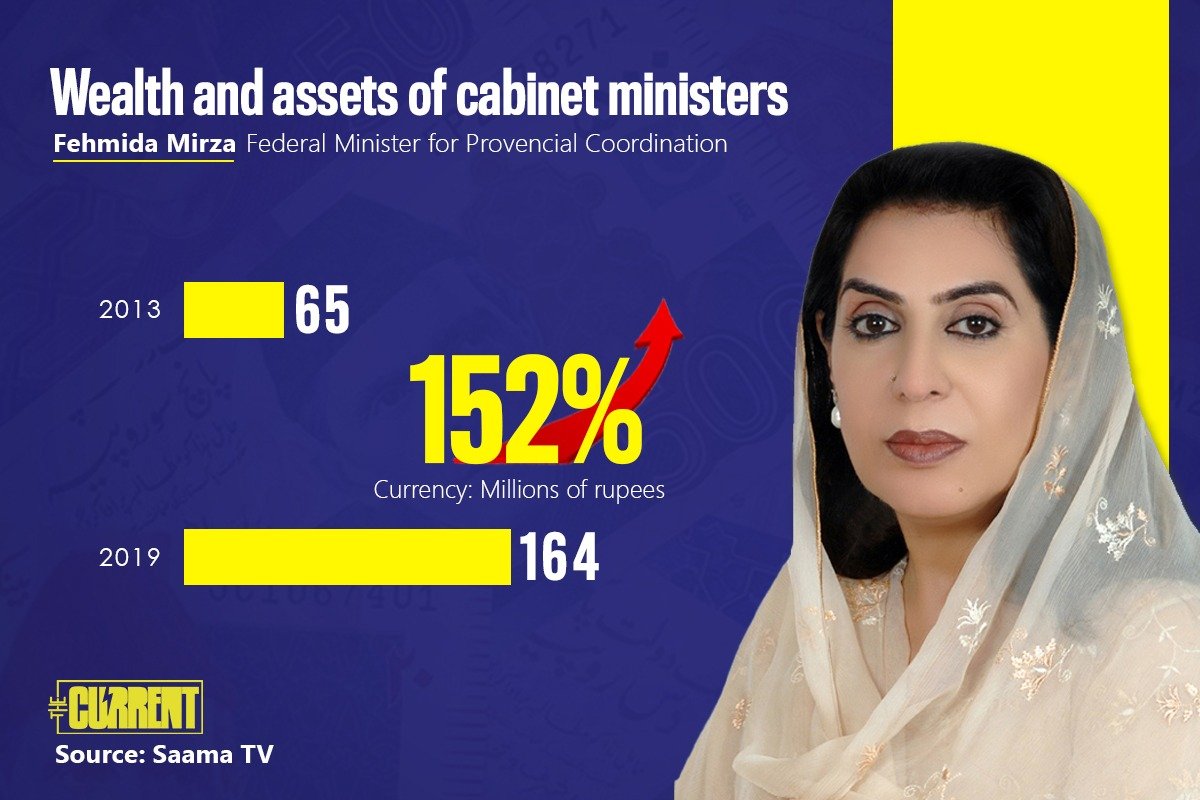
Fehmida Mirza, the former federal minister for interprovincial coordination, had a similar scenario, with her net worth rising from Rs65 million in 2013 to Rs164 million in 2019.
“I did not see any rise in my assets and wealth at all,” she told SAMAA TV. She did, although, reveal that she had sold some property in Pakistan in order to purchase a home in the United Kingdom.
“This new increase in my assets has already been declared with the FBR and the ECP,” she stated.
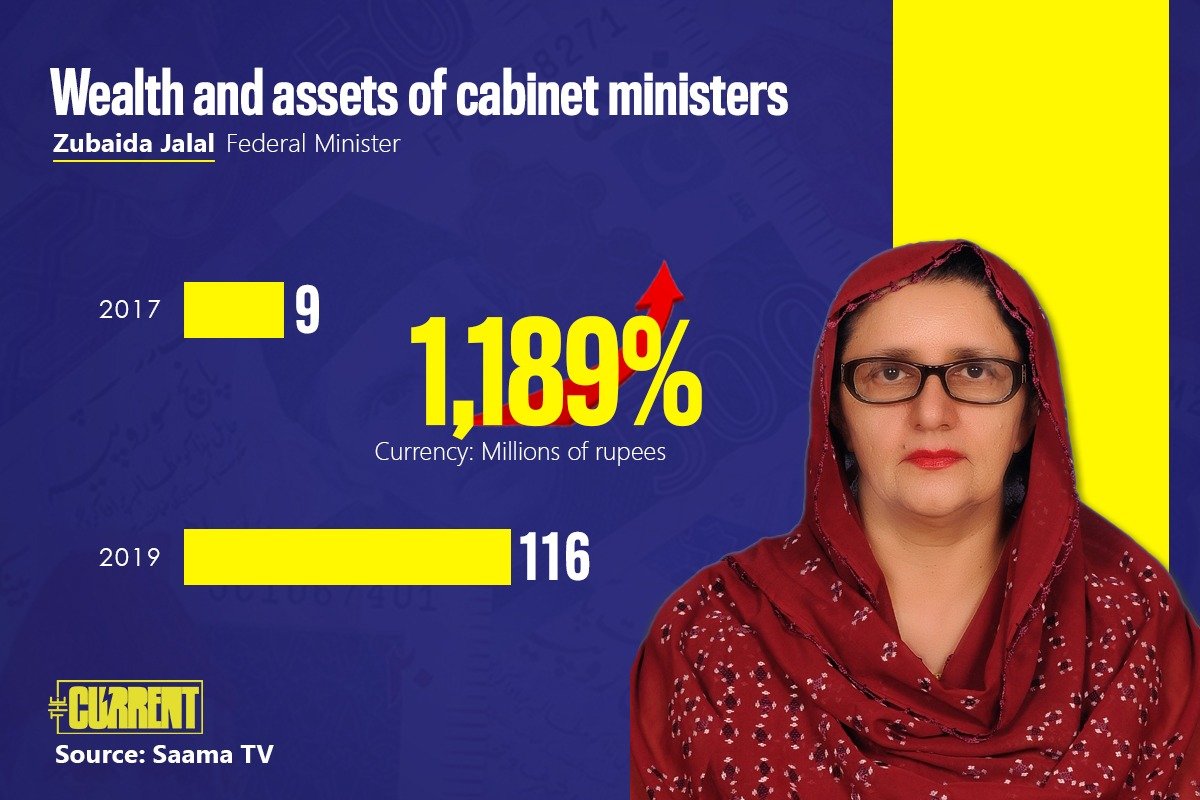
Contrary to the PTI’s cabinet’s millionaire members, one of the “weakest” members of the federal cabinet, former federal minister Zubaida Jalal and her husband, had a 1,189 per cent growth in their fortune in a short period of time. Their riches increased from Rs9 million to Rs116 million in 2019.
Jalal, on the other hand, described the quick spike in wealth as the outcome of changes in declaration requirements.
“There is no big difference in my assets’ declaration” she asserted while speaking to SAMAA TV. The value of immovable assets was not mentioned in data provided in past elections, she said, noting that the ECP declaration requirements changed over time.
“[We are] required to mention values of assets in the asset declaration for this time,” she stated. She explained that the variations in asset values were attributable to market forces working on enterprises.
“Ups and downs will keep happening [in mining operations and business],” she said, as she reminded that her husband owns the National Coal Mining Company since the 1960s.
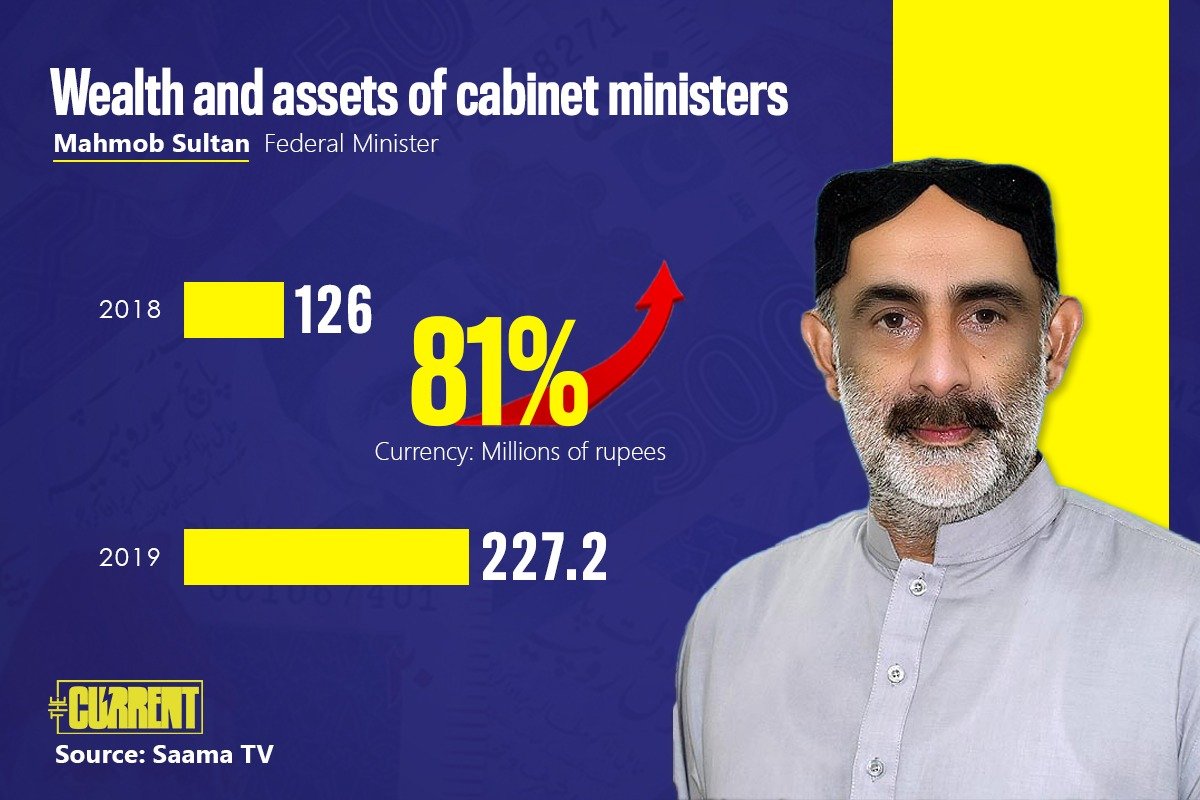
Former state minister Mahboob Sultan was one among the ministers who saw only double-digit asset growth. Only 81 per cent of his assets increased from Rs126 million in 2018 to Rs227.2 million in 2019. It’s worth noting, however, that his growth of nearly Rs100 million occurred while he was in the cabinet of ministers.
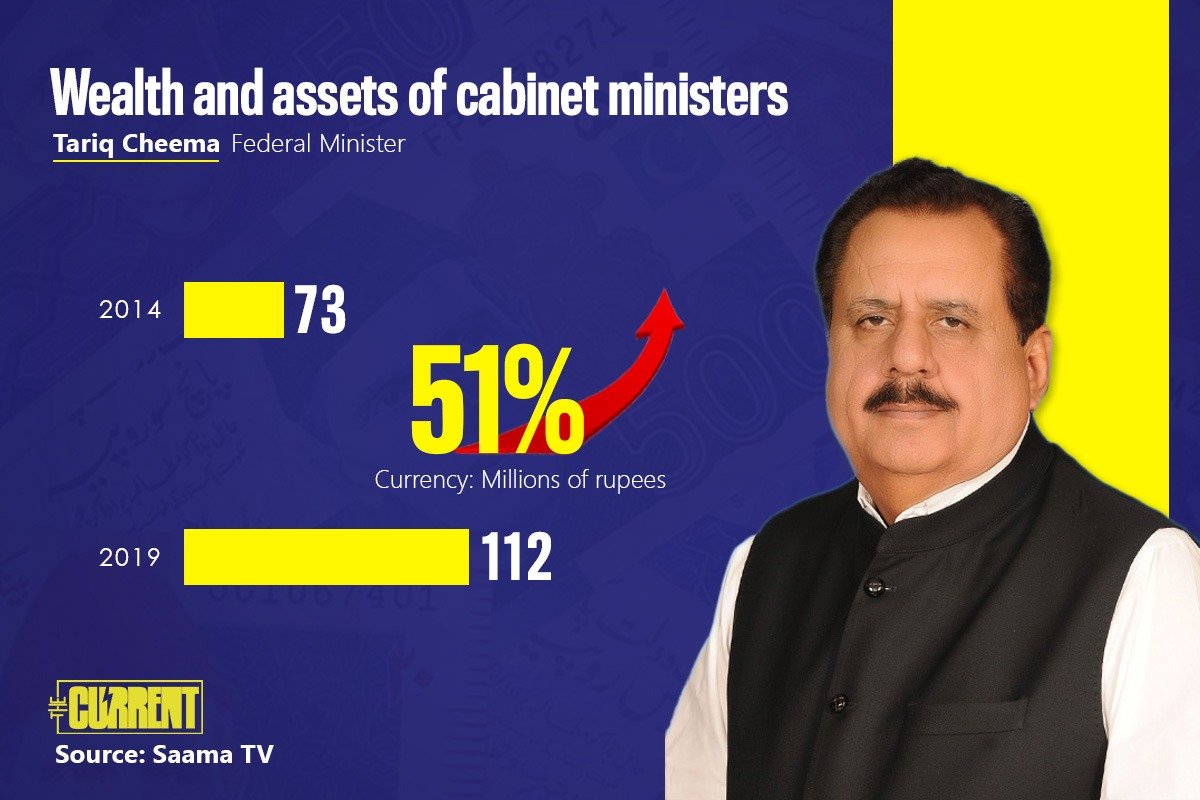
Tariq Cheema, the former federal minister for housing and infrastructure, showed the smallest growth in his wealth, going from Rs73 million in 2014 to Rs112 million in 2019. He did not, however, assess the value of his inherited assets and report them to the electoral or tax authorities.
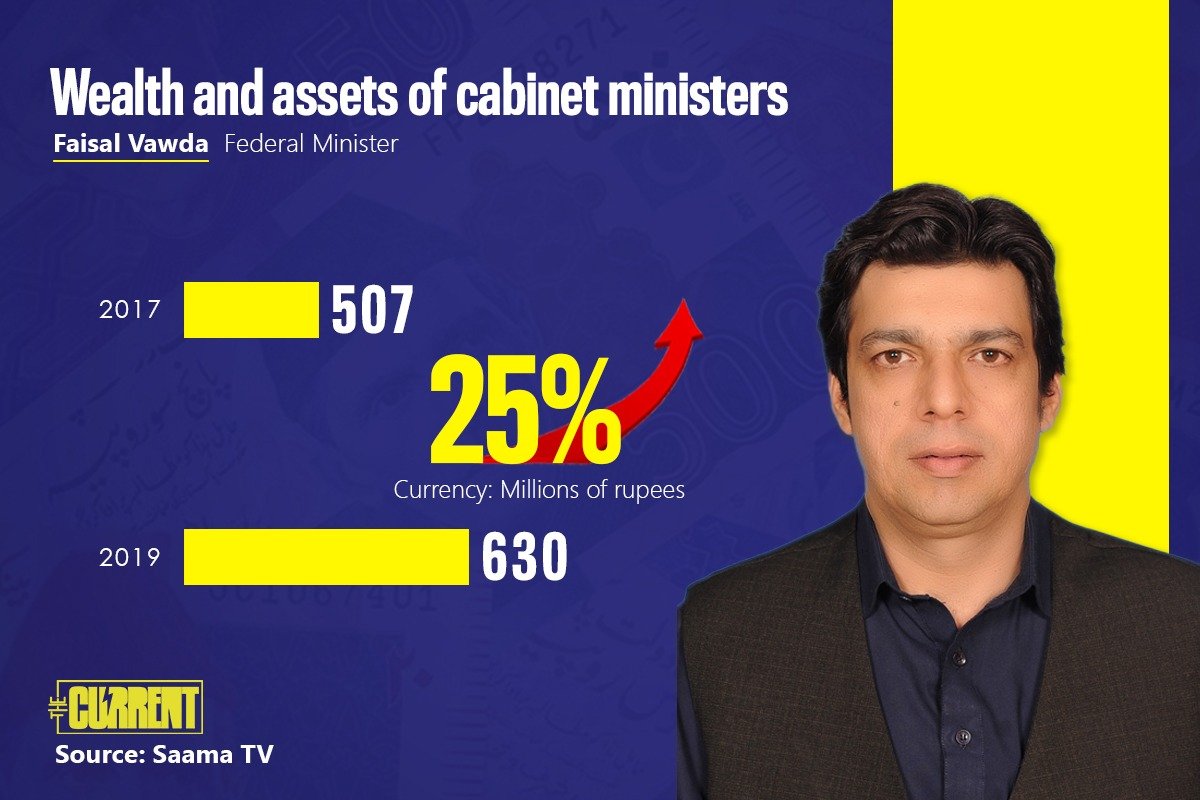
Former federal minister Faisal Vawda and his family witnessed their fortune increase by 25 per cent from Rs507 million in 2017 to Rs630 million in 2019. He was among the most controversial cabinet ministers who were eventually dismissed by the ECP.
Despite multiple requests from SAMAA TV, neither Sultan, Cheema, Vawda, nor an ECP official have commented on inquiries regarding their wealth.
In today’s interbank session, the Pakistani rupee (PKR) fell by Rs1.05 versus the US dollar (USD), concluding at Rs186.97 per US Dollar, compared to Rs185.92 per USD on April 20.
The rupee had a tumultuous market session, with an intraday high of Rs187.10 and a lowest of Rs186.25. This depreciation of PKR is attributed to the country’s expanding current account deficit and dwindling foreign exchange reserves. However, the country must pay a significant amount in the final quarter of FY22, putting additional strain on the local unit.
Pakistan’s currency has lost Rs29.42 versus the US dollar since July 21. According to data published by Mettis Global, the rupee declined by Rs10.45 in CYTD, with the month-to-date (MTD) position showing a drop of 1.87 percent.
PKR has shed 18.56 per cent versus the US dollar in the previous 52 weeks, with a low of 186.97 today and a peak of 152.27 on May 7, 2021.
Furthermore, the local currency has lost 10.11 per cent versus the euro since its high on May 5, 2021. Since its high on May 7, 2021, it has declined 13.24 per cent against the pound.
The PKR slid Rs2.4 against the pound sterling, completing the day at Rs244.4 per GBP, down from Rs241.97 per GBP the previous session. Similarly, the PKR lost three rupees against the euro, closing at Rs204.08 at the interbank today.