Tag: Gallup Pakistan

  • Divorce rate highest in Pakistan since 2019: Gallup survey

    Divorce rate highest in Pakistan since 2019: Gallup survey

    The divorce rate has reached the highest in Pakistan according to a survey conducted by Gallup and Gilani Pakistan.

    2 out of every 5 Pakistanis believe that in-laws are the major reason for most failed marriages. The survey also recorded that 58 per cent of the population in Pakistan believe that divorce cases have increased in society, reports The News.

    It has been observed that the lockdown during the Covid-19 pandemic contributed to mental health problems where couples experienced interference from the in-laws.

    In Karachi, 3800 divorce cases have been registered. Recently, 10,312 cases have been recorded by the District Judiciary of Rawalpindi between January 1 to November 9 in 2021 that including 10,312 cases of divorce, khula, guardianship, and maintenance whereas 13,000 cases are still waiting for the verdict in family courts of the Rawalpindi district.

    Around 70 per cent of the divorce cases filed were of women who married with their free will. Some women claimed the interference and bitterness from the in-laws as the marriage was not arranged by them [in-laws].

    Family Advocate Hamid Rashid Gondal also revealed that few cases of divorce end up in a settlement in court.

    Forced marriages are another contributing factor in increasing divorce numbers.

  • 59% traders consider Pakistan is not ‘moving in right direction’: Gallup Survey

    The ratio of traders who consider that Pakistan is not moving in the right direction has jumped from 37 per cent from the last quarterly report to 59 per cent states Gallup Pakistan’s fourth quarterly report of Business Confidence Index (BCI).

    The survey was conducted from October 13-28 and nearly 580 respondents, belonging to the country’s traders’ community participated in it.

    The report states that responders have expressed great anxiety over the future of business in the country as the ratio of those predicting improvement in future business has dropped from 70 per cent to 61 per cent in the survey, reports Geo News.

    Surprisingly, the given statistics in the report show that in Gallup Pakistan’s second quarterly report, 49 per cent of traders were happy with business activity but now 54 per cent of them expressed their satisfaction.

    While answering the question, “which issues do the respondents want the government to address instantly”, 48 per cent declared inflation as the biggest problem for business, 16 per cent sought relief for the business class, 14 per cent for the stability of the Pakistani currency, 13 per cent for consistency in government policies, 6 per cent for controlling corruption, 6 per cent for the elimination of Covid-19 and ending lockdowns, 3 per cent for ending political instability, 3 per cent for improving export policies and two percent for non-availability of PayPal.

    Among them, seven percent of respondents said they had no issue which could be resolved by the government.

  • Gallup survey: 92% respondents think Karachi is the best city to live

    Gallup survey: 92% respondents think Karachi is the best city to live

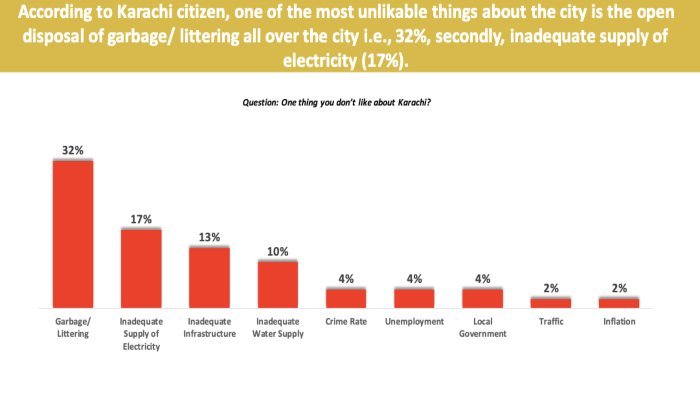
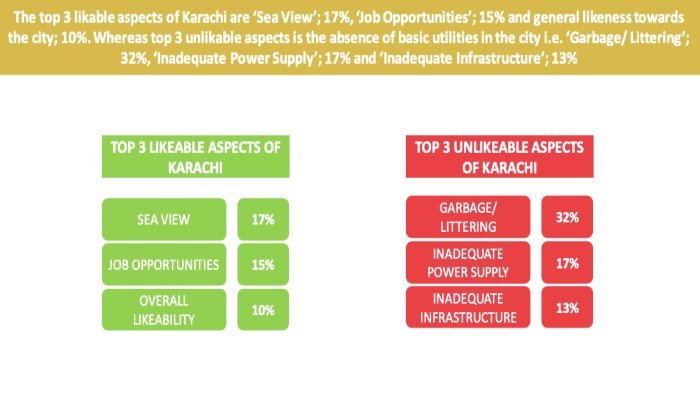
    The survey conducted by Gallup Pakistan has revealed that 92% of the respondents think that Karachi is the best place to live expressing that the Sea View was their most likeable feature of the city, while garbage/littering is the most unlikable aspect of the city.

    Over 500 people from across Karachi took part in the poll conducted by Gallup Pakistan that was held from Oct 27 to November 17, 2020.

    Photo Courtesy: Gallup Pakistan.

    17% Karachiites were not satisfied with the city’s electricity’s supply.

    Photo Courtesy: Gallup Pakistan.

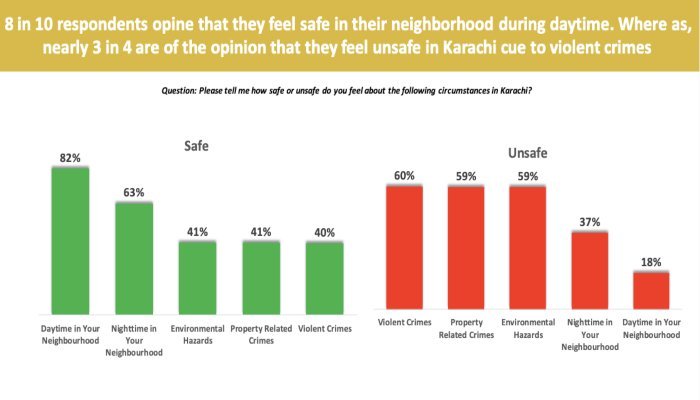
    8 out of 10 citizens representing 82% of the respondents have shared that they felt safe in their neighbourhood during the day. 3 out of 4 expressed that they feel unsafe in the city due to violent crimes.

  • Coronavirus: The absurdities Pakistanis believe in

    The outbreak of the new coronavirus – COVID-19 – that affected almost 23,518,343 people worldwide, out of which 810,492 died, and was declared a global pandemic by the World Health Organization (WHO), was hardly taken seriously by the people of Pakistan.

    Even as the virus peaked in June-July, people flouted social distancing guidelines as well as government-introduced standard operating procedures (SOPs), believing that the virus did not even exist.

    And now that both the number of coronavirus cases and fatalities have drastically decreased, many across the country, including those who did take precautionary measures earlier, are under the impression that virus has gone extinct.

    GALLUP SURVEY:

    According to a Gallup Pakistan survey based on the responses of more than 1,300 respondents from all across the country, as many as 70% Pakistanis agree that the risk of the coronavirus is being exaggerated, which shot up from 55% in a previous survey.

    MISINFORMATION:

    But what led to people doubting the gravity of the situation and suspecting exaggeration as the world suffered in the battle against coronavirus?

    The answer is misinformation. From WhatsApp forwards to Facebook posts and tweets… viral conspiracy theories besides fake news by unauthentic sources contributed to the formation of ill-informed opinions of a major chunk of the population being told by the government to not panic because the virus was “no more serious than seasonal flu”.

    Four critical months being followed by the introduction of ‘smart lockdowns’ and the permission to re-open businesses for the sake of the economy and the poor, despite experts’ warnings of a second and even third wave of the virus, also contributed to people the virus less seriously than they should have.

    CONSPIRACY THEORIES:

    Many believed the government was exaggerating the situation on the ground to seek foreign aid and doctors were “secretly killing patients” for the number of virus casualties to soar on the government’s directions. But it wasn’t where the absurdity ended.

    Posts on social media added to the list of conspiracy theories regarding the origin of the coronavirus, leading to chaos as some even took to streets to protest against the government and COVID-19.

    According to the Gallup survey, the number of Pakistanis who consider coronavirus to be a foreign conspiracy has doubled from 23% in March to 55% in July-August while 54% believe that COVID-19 is a lab-made virus to which the world was exposed on purpose.

    Some also believe that coronavirus is a conspiracy against Islam and wearing a mask and following SOPs is nothing but a “Jewish agenda”.

    Another popular theory is that the virus was released as part of an Israeli plan to implant chips in the minds of the people, especially Muslims, while vaccinating them to control their minds.

    ‘COVID-19 NOW UNDER CONTROL’

    The survey also revealed that a sweeping majority — nearly 80% people — believe that COVID-19 is now under control and any there is no need to continue taking precautionary measures. This figure has rose from 32% in a previous survey to 79% within a few months.

    Large gatherings, including religious congregations and family feasts over the Eid weekend, and a large number of people taking to roads on August 14 to express their love for Pakistan, also go on to prove how seriously has the pandemic been taken by a majority that risked their own lives as well as that of others, mistaking the decline for coronavirus eradication.

    But while the number of coronavirus cases in the country has dropped and so has the rate of infections as well as fatalities despite negligence but owing to a number of suspected reasons, Pakistan, like the rest of the world, is still at risk. 

    Winters can also add to the probability of an outbreak from the top, experts say, yet again stressing the need for people to keep on taking precautionary measures.

  • Only 10% of IT graduates in Pakistan are employable: Gallup

    Only 10% of IT graduates in Pakistan are employable: Gallup

    According to a recent study conducted by Gallup, which is the country’s leading social research lab, software houses hire only 10 per cent of the graduates from lower-tier universities. The software houses with low-end IT services employ only 50 per cent of such graduates.

    Research shows that Pakistan’s top universities generate 25,000 IT graduates, but only 5,000 get employed at top local IT companies. The other graduates simply do not meet the selection criteria as a result of their outdated education and lack of relevant skills.

    Furthermore, there is a skill gap between graduates of high-tier and low-tier universities. The gap is widening due to the lack of nationwide IT skills training. The lack of fluency in communication has also been identified as a problem due to the lack of qualified teachers and modern curriculum.

    “There is a need for Pakistan to focus on human capital related to technological innovations” states the research. The best way to boost employability, according to Gallup, is to impart skills upon graduates that are required by the IT industry and digital economy.

    The IT Ministry is aware of it and thus been working on setting up an authority to boost the quality of IT curriculums. The hope is that across Pakistan, IT education can be brought up to global standards.