Tag: Galwan

  • Akshay Kumar launches FAU-G after India bans PUBG

    After India banned PlayerUnknown’s BattleGrounds (PUBG) along with 117 other Chinese apps, Akshay Kumar announced the launching of a multiplayer action-game, Fearless and United: Guards (FAU-G). According to the actor, the game is in “line with Prime Minister Narendra Modi’s vision of “AtmaNirbhar Bharat’”. ‘Atmanirbhar Bharat’ is the vision of PM Modi of making India a self-reliant nation.

    Kumar shared that through the game, players “will also learn about the sacrifices of our soldiers.” He added that 20 percent of its net revenue would be donated to ‘Bharat Ke Veer’ trust – which gives homage and support to the country’s brave hearts.

    Talking about the new game, Kumar said: “For youngsters in India, gaming is becoming an important form of entertainment. With FAU-G, I’m hoping that as they play the game they will learn about the sacrifices of our soldiers and also contribute to the families of the martyrs; and with this, each one of us has the ability to support PM Modi’s vision of Atmanirbhar”.

    According to details, FAU-G is based on real scenarios encountered by the Indian Security Forces to deal with both domestic and foreign threats. It is expected to launch at the end of October with its first-level set in the Galwan Valley backdrop followed by third-person shooting gameplay in the subsequent releases. The game will be available on the Google Play Store and the Apple App Store.

    Earlier, Ajay Devgn had announced a film based on the tensions between Indian soldiers and Chinese troops in Ladakh’s Galwan Valley. According to details, the film will narrate the “story of the sacrifice of 20 Indian army men who fought the Chinese army”.

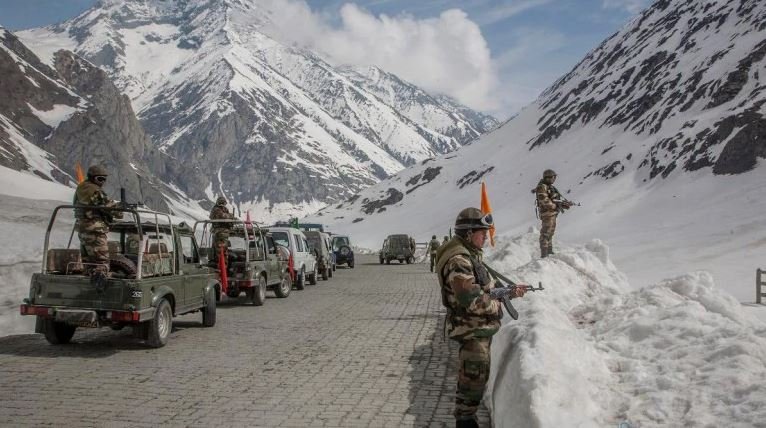
    Meanwhile, recent reports have stated that India and China have agreed to work towards reducing tensions along their contested border, following a meeting of the defence ministers of the two countries. Both sides had deployed additional forces along the frontier running through the western Himalayas after a clash in June, during which 20 Indian soldiers were killed in hand-to-hand fighting. China has not released casualty figures for its troops.
  • India accuses China of preparing attack on border troops

    India accuses China of preparing attack on border troops

    India has accused Chinese troops of meticulously preparing an attack on its soldiers on the treacherous Himalayan border, claiming they erected a tent on the Indian side, dammed a river, brought in machinery and then lay in wait with stones and batons wrapped in barbed wire, The Guardian reported.

    The incident on Monday night, in which 20 Indian soldiers died and 76 were injured, was the worst violence between India and China in 45 years. China has not said whether it sustained any casualties.

    Ten Indian soldiers who were reportedly captured by Chinese troops during the attack were back in India on Thursday night. China said it had not seized any Indian personnel.

    Both sides continue to blame the other for the clash. China is now claiming sovereignty over the Galwan valley in Ladakh, where the attack happened, and has accused Indian troops of three times crossing into its territory. “The responsibility entirely lies with Indian side,” said Zhao Lijian, a spokesman for the Chinese ministry of foreign affairs.

    India accused China of carrying out a “premeditated and planned action” on its side of the border. Satellite images of the Galwan Valley taken by Planet Labs, an imaging company, in the days before the clash appear to show increased activity on the Chinese side, including the damming of a river and the movement of troops and machinery close to the disputed and poorly defined border.

    The Australian Strategic Policy Institute said its analysis of satellite images found there was “evidence that strongly suggests People’s Liberation Army forces have been regularly crossing into Indian territory temporarily on routine patrol routes”.

    Indian officials said commanders from the Indian and Chinese sides had met on 13 June and agreed to each retreat back two kilometres in the Galwan valley and Pangong Lake area.

    But rather than retreating, the officials said, Chinese troops erected a tent in disputed territory close to what is known as Patrolling Point 14. They said India’s 16 Bihar Regiment, led by Col Santosh Babu, dismantled the structure in an attempt to push back the PLA troops.

    According to accounts given to the Hindu newspaper, when Babu and his troops later approached the Chinese side to challenge the refusal to retreat, they were ambushed by PLA forces on the steep mountain precipice. The Chinese allegedly unblocked the dammed river, releasing a rush of water to destabilise Indian soldiers, and they attacked with stones and makeshift spiked weapons.

    Indian troops retaliated, it was reported, and reinforcements were summoned on both sides until there were upwards of 600 soldiers in hand-to-hand combat in the dark and icy conditions. No shots were fired.

    There were reports that the Indian soldiers were unarmed, but India’s external affairs minister, Subrahmanyam Jaishankar, said: “Let us get the facts straight. All troops on border duty always carry arms, especially when leaving post. Those at Galwan on 15 June did so.”

    Due to the treacherous conditions, many of the bodies of the Indian soldiers could not be retrieved until the next morning, by helicopters working with troops and border police. The injured were taken to hospitals in the Ladakh city of Leh.

    India and China have agreed to continue the process of disengagement that was first agreed on 6 June, and discussions are ongoing through political and diplomatic channels. Army generals from both sides have also had three days of talks at Patrolling Point 14. However, the Indian army and air force in Ladakh remain on high alert.