Tag: gas crisis

  • Gas supply to industrial sites suspended for two days

    Gas supply to industrial sites suspended for two days

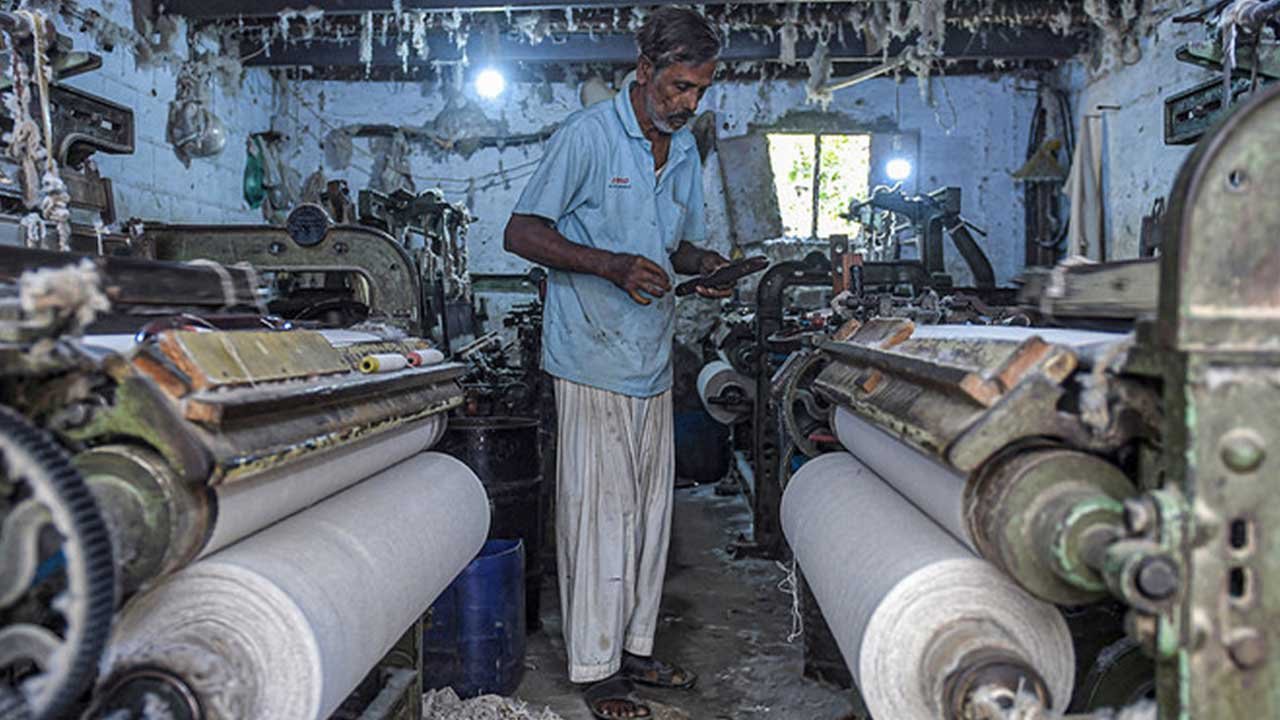
    The gas crisis has grown worse in the economic hub of Pakistan as the duration of gas load-shedding in Karachi industries was extended for up to two days.

    The industrial sites in Karachi will be facing two-day gas load-shedding instead of one.

    According to the information obtained, all industrial facilities and captive power plants in Karachi will not be supplied gas for two days.

    From December 17 to December 19, seven industrial zones and captive power plants were instructed to refrain from using Sui Southern Gas Company’s (SSGC) gas supplies on Saturday and Sunday.

    In addition to conducting unannounced raids on all industrial sites, the SSGC surveillance teams will also take legal action against those who violate the rules.

    Imtiaz Shaikh, the energy minister for Sindh, criticised the gas load-shedding on December 13 and claimed that although the province is generating more natural gas than it needs, it is still being denied its legitimate right.

    Imtiaz Shaikh, the energy minister, demanded that Sindh be given preference over other parts of the country in the provision of natural gas.

    “We will take the matter to court if required,” Sindh’s energy minister said. “We are also considering raising the issue in the Council on Common Interest (CCI),” he said.

    He said that the chief minister had discussed Sindh’s case regarding the gas issue during discussions between the state and federal governments. He expressed hope that the prime minister will pay attention to the situation.

    The provincial minister stated that when additional petrol is provided to the province, Karachi’s industry will resume operation.

    The most natural gas-producing province in Pakistan, Sindh, is now experiencing a severe natural gas shortage for home, industrial, and commercial customers.
  • Fears of an energy crisis increase as Pakistan fails to clinch an LNG deal

    Fears of an energy crisis increase as Pakistan fails to clinch an LNG deal

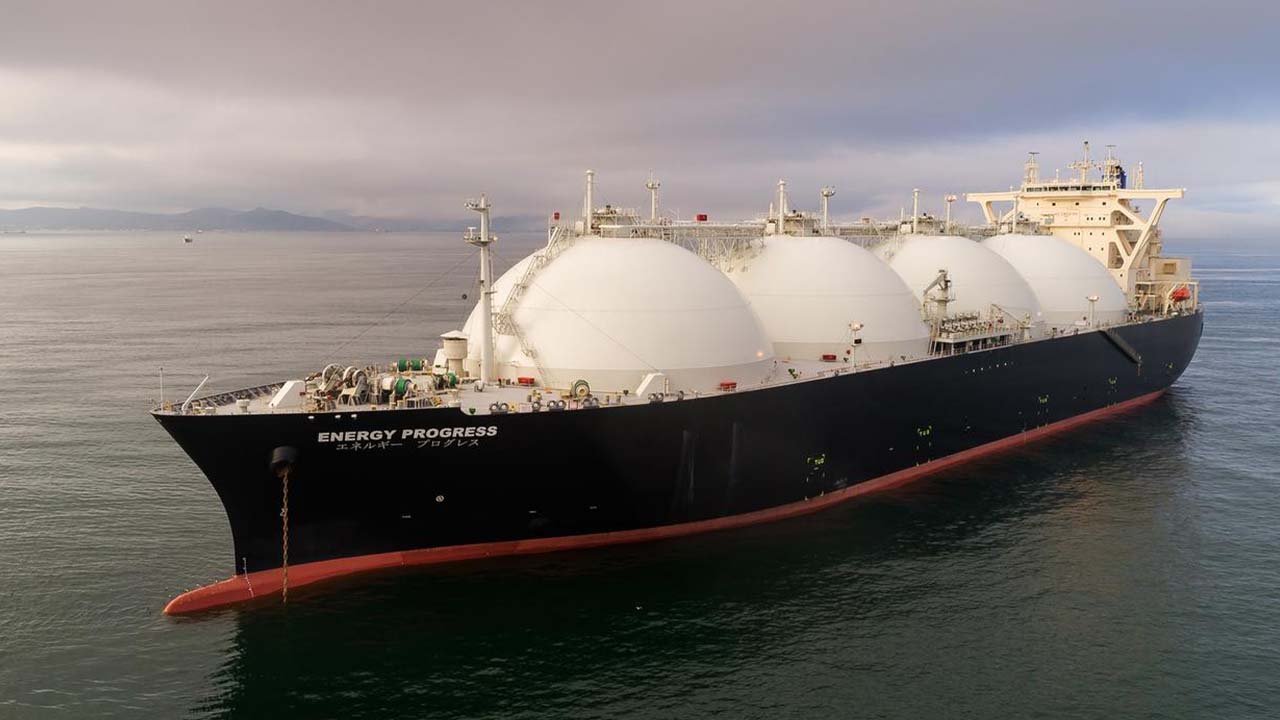
    A tender for the acquisition of liquefied natural gas (LNG) that expired on Monday did not receive a single bid from any overseas suppliers, according to Pakistan LNG Limited (PLL), a wholly-owned subsidiary of Government Holdings Private Limited (GHPL).

    PLL originally issued an invitation for bids in August for 72 LNG cargoes to be delivered over a six-year term from foreign suppliers.

    According to PLL, bids were requested from reputable organisations to convey cargo on a Delivered Ex-Ship basis (DES) at Port Qasim, Karachi, and suppliers had until September 14 to submit their offers.

    “Bid documents shall be available from 10 August 2022 to 13 September 2022,” it said.

    Failure of an LNG contract in Pakistan contributes to the energy crisis

    The Pakistani procurement, which had an expiration date of October 3, saw no suppliers participate, according to PLL bid documents.

    According to the documents, the corporation was looking for one shipment each month for the six-year period.

    PLL was required by the Pakistani government to carry out the business of importing, buying, storing, supplying, distributing, transporting, transmitting, processing, measuring, metering, and selling natural gas, LNG, and re-gasified LNG. Each cargo was to have a volumetric quantity of 140,000m3, it added.

    For the timeframe of July through September, PLL sought worldwide suppliers to submit proposals for 10 LNG cargoes.

    By July 7, suppliers were invited to submit their bids. Each cargo was required to have a volumetric quantity of 140,000m3, according to PLL documentation.

    Bloomberg, citing traders with knowledge of the situation, said that the state-owned LNG purchaser did not receive any bids in a $1 billion LNG purchase tender at the time. The article at the time stated that “it highlights both the scope of the worldwide fuel shortage as well as the unwillingness of suppliers to sell to a country in the depths of an economic crisis.”

    The Russia-Ukraine conflict has caused supply chains to be disrupted globally, which has driven up the cost of key commodities like LNG.

    Pakistan, on the other hand, is experiencing a fuel scarcity, especially in the electricity sector. The most recent development is anticipated to worsen the energy situation, particularly during the winter when there will be an increase in heating demand that would affect both families and companies.

  • Pakistanis to face gas shortage in winter once again

    Pakistanis to face gas shortage in winter once again

    The government has warned of an impending gas crisis in the nation due to a dramatic reduction in gas supplies and a gradually growing imbalance between demand and supply.

    With each passing year, Pakistan’s gas reserves are declining by roughly 10 per cent annually in past years, according to DAWN.

    Officials from the Public Accounts Committee (PAC) gathered to discuss the Petroleum Division’s annual report for 2019–20.

    We cannot purchase the gas, according to Petroleum Secretary Ali Raza Bhatti, who spoke to PAC about the state of the market. Since the start of the war in Ukraine, gas prices have risen everywhere. Gas prices had increased by about 4% at the time.

    According to Bhatti, Pakistan is considering purchasing gas from other nations as the prime minister just visited Qatar and held a private meeting where a request for extra cargoes was on the agenda.

    Nevertheless, the government is currently thinking about importing gas from friendly nations. Previously, the nation got its gas from Qatar, but now it wants to get supplies from other friendly countries to make up for the deficit.

    According to him, domestic consumers use the majority of the gas in Pakistan’s system, which is extensively subsidised by the government.

    Qatar is the most dependable provider, it should be noted. According to the petroleum secretary, Qatar has continued to provide Pakistan with LNG at a rate of $15 per million British thermal units (mmBtu), down from the $60 per mmBtu it was previously charging from other nations, despite the market’s rising demand.

    Sui Northern was also asked to provide information on defaulters in the Gas Infrastructure Development System by the PAC, which was led by Noor Alam Khan.

    The committee instructed gas firms to take payment from late payers within seven days, and the government to cut off the defaulters’ connections right away.

  • OGDCL confirms gas discovery near Ghotki, Sindh

    OGDCL confirms gas discovery near Ghotki, Sindh

    On Wednesday, the Oil and Gas Development Company Limited (OGDCL) announced the finding of gas from an exploration well near Ghotki, Sindh.

    “The joint venture (JV) of Guddu Block comprising Oil & Gas Development Company Limited as an operator (70 per cent), SPUD Energy PTY Limited (SEPL) (13.5 per cent), IPR Transoil Corporation (IPRTOC) (11.5 per cent), and Government Holdings (Private) Limited (GHPL) (5 percent) has discovered Gas from an exploratory well namely Umair South East # 01, which is located in District Ghotki, Sindh,” the company stated in a notice.

    The Umair South East # 01 well, according to OGDCL, was spudded on May 9, 2022, as an exploration well to investigate the hydrocarbon potential of the Pirkoh Formation and Habib Rahi Limestone (HRL) to a projected depth of 785m.

    “Based on the interpretation of wireline logs, successful Drill Stem Test-1 in HRL tested 1.063 million standard cubic feet per day (mmscfd) gas through choke size 32/64” at 210 pounds per square inch (PSi) Well Head Flowing Pressure (WHFP)”.

    The finding of Umair South East-1 is the outcome of Guddu Joint Venture Partners’ aggressive exploration approach, according to the Pakistani oil and gas business.

    “It has opened a new route and will favourably contribute to alleviating energy demand and supply gaps from indigenous resources, while also adding to OGDCL’s and the country’s hydrocarbon reserves base,” it said.

    The discovery comes at a fortunate time for Pakistan, which has recently experienced huge power outages and a gas scarcity.

    Mari Petroleum Company Limited (MPCL) discovered gas/condensate earlier this month in the Bannu West-1 ST-1 Exploration Well, which was drilled in the Bannu West Block in North Waziristan, Khyber Pakhtunkhwa.

  • Another hike of Rs4.9 per unit approved in power tariff

    Another hike of Rs4.9 per unit approved in power tariff

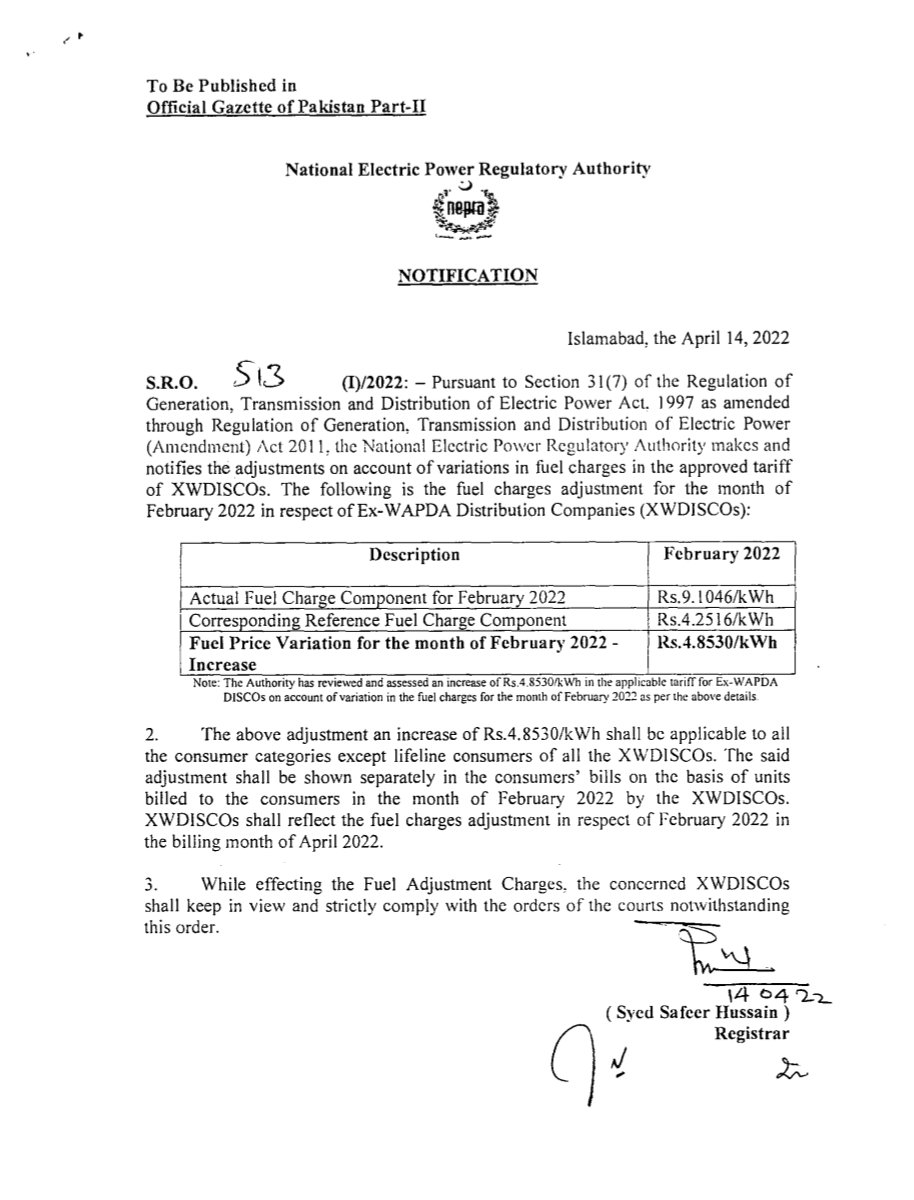
    Owing to the monthly Fuel Cost Adjustment (FCA) for February, the National Electric Power Regulatory Authority (NEPRA) on April 15 increased the price of electricity by Rs4.85 per unit.

    It has also announced an increase in the price of power, stating that the power output in February was more expensive than the previously set fuel price.

    According to the notice, the power distribution companies (DISCOs) will collect the amount from electricity consumers in the April bill. In addition, consumers will be hit with a charge of Rs37.7 billion, excluding general sales tax (GST). However, K-Electric and lifeline customers will be exempt from the hike.

    On March 31, the NEPRA held a hearing to determine the FCA but did not make a decision. The Central Power Purchasing Agency (CPPA) requested that the cost per unit be increased to Rs4.94 by the NEPRA.

    Following the monthly FCA, which only operates for one month, the administration had already hiked the power price to Rs5.95 per unit for the month of January.

    As per NEPRA’s data, the most expensive energy production sources, including High-Speed Diesel (HSD) and Residual Fuel Oil (RFO), were used more than average in the prior months, raising the overall cost of production.

  • Shaukat Tarin denies what he said on national television

    Shaukat Tarin denies what he said on national television

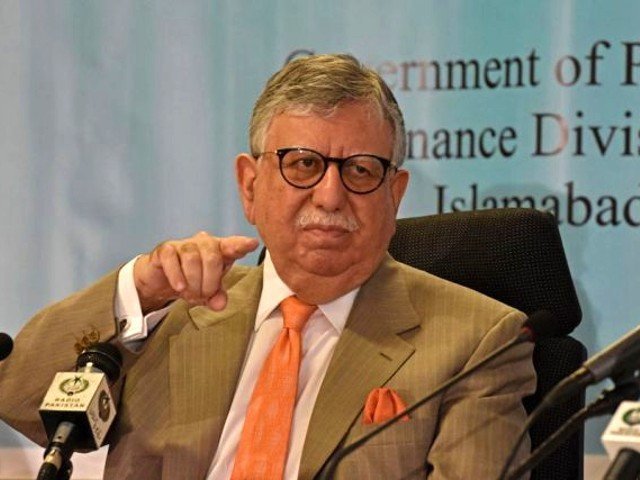
    Advisor to the Prime Minister on Finance Shaukat Tarin admitted to the present gas crisis in the country on Samaa News. However, a day later, Tarin denied his own words and issued a clarification.

    After the show was aired and various news media outlets covered the story,  Energy Minister Hammad Azhar took to Twitter and blamed Geo for manipulating Tarin’s words.

    Hammad tweeted, “What Tarin actually said: -intl prices high due to global shortage. -Noone can predict intl price. – some time ago (July) they had refused a tender (July) but that was for a limited time & wouldn’t have changed things now.”

    “Geo: Gas crises due to not purchasing LNG on time, Fin Min,” added Hammad.

    Shaukat Tarin, after admitting to the gas crisis, took to Twitter and shared his clarification.

    https://twitter.com/shaukat_tarin/status/1463427014711468036

    “News item published in Daily The News titled ‘Govt couldn’t purchase gas Cargoes in time, admits Tarin’ is completely misleading & out of the context,” read the statement.

    “When anchor (Nadeem Malik) asked about the gas shortfall situation in the country, he stated the reasons including the ongoing global LNG shortages which have created fiasco, and it was not in control of anybody.”

    “Government has been buying the gas as required, despite higher international prices. However, he has mentioned there was one tender scrapped in July, but this has nothing to do with winter gas. The Adviser Finance has not mentioned at any point that winter gas shortfalls are due to non-procurement of LNG on time.”

    On November 23, Shaukat Tarin appeared on Samaa News’ programme, ‘Nadeem Malik Live’, and said the very words being denied now.

    “We [government] should have bought the gas cargoes on time as the purchasing time for it was over,” said Tarin.

    Tarin further said nobody knew about the international prices, which he stated were quite high, and that the government should have bought some cargoes earlier.

  • ‘Government should have bought gas cargoes earlier’: Shaukat Tarin admits to gas crisis

    ‘Government should have bought gas cargoes earlier’: Shaukat Tarin admits to gas crisis

    Advisor to the Prime Minister on Finance Shaukat Tarin admitted to the present gas crisis in the country.

    While speaking on Samaa News’ programme, ‘Nadeem Malik Live’, Shaukat Tarin said, “We [government] should have bought the gas cargoes on time as the purchasing time for it was over.”

    Tarin further said nobody knew about the international prices, which he stated were quite high and that the government should have bought some cargoes earlier.

    Tarin said the country’s imports of petroleum and gas touched almost $20 billion per year, which had been at $12 to $13 billion per year and now it had to pay $7-8 billion more in that regard.

    Shaukat Tarin said that as per the market pundits, the prices would come down during December and January when the intensity of the Covid-19 pandemic would start declining.

    Speaking on the gas crisis, Tarin said Pakistani companies were supplying gas to consumers. He added that a couple of gas discoveries were made in Lakki Marwat, however, money was needed for the extraction process.

    Last week, Energy Minister Hammad Azhar took to Twitter to challenge journalist Shahzeb Khanzada to a debate on Liquefied Natural Gas (LNG) and gas.

    Shahzeb Khanzada, a year ago, had warned that the gas crisis was impending, kept reiterating that the crisis needs immense attention, otherwise the consequences shall be huge.

    Azhar took to Twitter and proposed a challenge.

    “I would like to challenge Shahzeb Khanzada to debate LNG and Gas issues with me moderated by a neutral anchor and with Independent experts. Let the ppl [people] see the facts without persistent interrupting, volume controls, teleprompters etc,” tweeted Azhar.

  • Twitter reacts to PTI’s Hammad Azhar’s challenge to journalist Shahzeb Khanzada

    Twitter reacts to PTI’s Hammad Azhar’s challenge to journalist Shahzeb Khanzada

    Energy Minister of Pakistan, Hammad Azhar took to Twitter to challenge journalist Shahzeb Khanzada to a debate on Liquefied Natural Gas (LNG) and gas.

    Pakistan at present is facing a gas crisis throughout the country. Journalist Shahzab Khanzada, a year ago, had warned that the gas crisis was impending, kept reiterating that the crisis needs immense attention, otherwise the consequences shall be huge.

    Khanzada called the minister on his political news programme ‘Aaj Shahzeb Khanzada Kay Sath’ five times but each time the minister declined despite promising to appear on the show.

    On Friday, Azhar took to Twitter and proposed a challenge.

    “I would like to challenge Shahzeb Khanzada to debate LNG and Gas issues with me moderated by a neutral anchor and with Independent experts. Let the ppl [people] see the facts without persistent interrupting, volume controls, teleprompters etc,” tweeted Azhar.

    His words, “a neutral anchor” and “let the ppl see the facts without persistent interrupting, volume controls, teleprompters” caught a lot of criticism and sparked reactions from the Twitterati.

    Senior Journalist Abbas Nasir wrote, “People are suffering acute gas shortages and this man wants to debate and not accept his abject failures.”

    Adil Shahzeb wrote, “Use of [a] teleprompter is a common practice globally for news shows (for OCs/monologues) to ensure accuracy and manage time (read rate).”

    Anchorperson Muhammad Junaid wrote, “Like PTI’s Favourite Stephen Sackur of BBC was made to sit in a debate moderated by a Neutral Anchor? There is no gas in thousands and thousands of households FIX THAT FIRST MR MINISTER!”

    Journalist Khurram Husain tweeted, “And how will this help plug our winter gas deficit?”

    Aimun, a Twitter user wrote, “Why? Are facts displayed on teleprompters not facts?”

    A Twitter user wrote, “Rather than apologising for causing huge loss to the exchequer n discomfort to the public, this man wants a debate to address the issue.”

    Another Twitter user wrote, “My man’s out here trying to get air time rather than fixing the crisis.”

    Another person tweeted, “The big ‘tu mujhe bahar mil [meet me outside]’ energy.”

    https://twitter.com/chasinggcars/status/1461671639230423045?s=21

    Last week, the government decided to provide gas to the residential sector only three times a day for cooking purposes throughout December to March to minimise gas shortages in Pakistan.