Tag: Gaza

  • Entire Gaza population at ‘severe levels of acute food insecurity’: Blinken

    Entire Gaza population at ‘severe levels of acute food insecurity’: Blinken

    The entire population of Gaza is experiencing “severe levels of acute food insecurity”, US Secretary of State Antony Blinken said Tuesday, underscoring the urgency for increasing the delivery of humanitarian aid into the Palestinian territory.

    “According to the most respected measure of these things, 100 percent of the population in Gaza is at severe levels of acute food insecurity. That’s the first time an entire population has been so classified,” Blinken told a press conference in the Philippines where he is on an official visit.

    Blinken’s remarks came on the eve of his return to the Middle East, this time to Saudi Arabia and Egypt, to discuss efforts to secure a ceasefire in Gaza and ramp up aid deliveries.

    A United Nations-backed food security assessment warned Monday that half of Gazans are experiencing “catastrophic” hunger, with famine projected to hit the north of the territory by May unless there is urgent intervention.

    Martin Griffiths, the UN’s humanitarian chief, has called for Israel to allow unfettered aid into the besieged Palestinian territory, saying there was “no time to lose”.

    With aid agencies reporting huge difficulties gaining access to Gaza, particularly the north, the UN has warned for weeks that a famine is looming.

    Donors have turned to deliveries by air or sea, but these are not viable alternatives to land deliveries, UN agencies say.

    The Integrated Food Security Phase Classification partnership said Monday that while the technical criteria for a famine had not yet been met, “all evidence points towards a major acceleration of deaths and malnutrition”.

    Citing UN data, Blinken said 100 percent of the population in Gaza needed humanitarian assistance, compared with 80 percent in Sudan and 70 percent in Afghanistan.

    “This only underscores both the urgency, the imperative, of making this the priority,” Blinken said of aid deliveries.

    “We need more, we need it to be sustained, and we need it to be a priority if we’re going to effectively address the needs of people.”

    Blinken is in Manila as part of a brief Asia tour aimed at reinforcing US support for regional allies against China.

    During a joint press conference with his Philippine counterpart, Blinken was asked about steps he was taking to address the lack of access to Gaza for foreign journalists.

    “There are obviously profound security considerations in an active war zone and those have to be taken into account,” Blinken said.

    “But the basic principle of access for journalists is something we stand strongly behind.”
  • Gaza world’s biggest ‘open-air graveyard’: EU’s Borrell

    Gaza world’s biggest ‘open-air graveyard’: EU’s Borrell

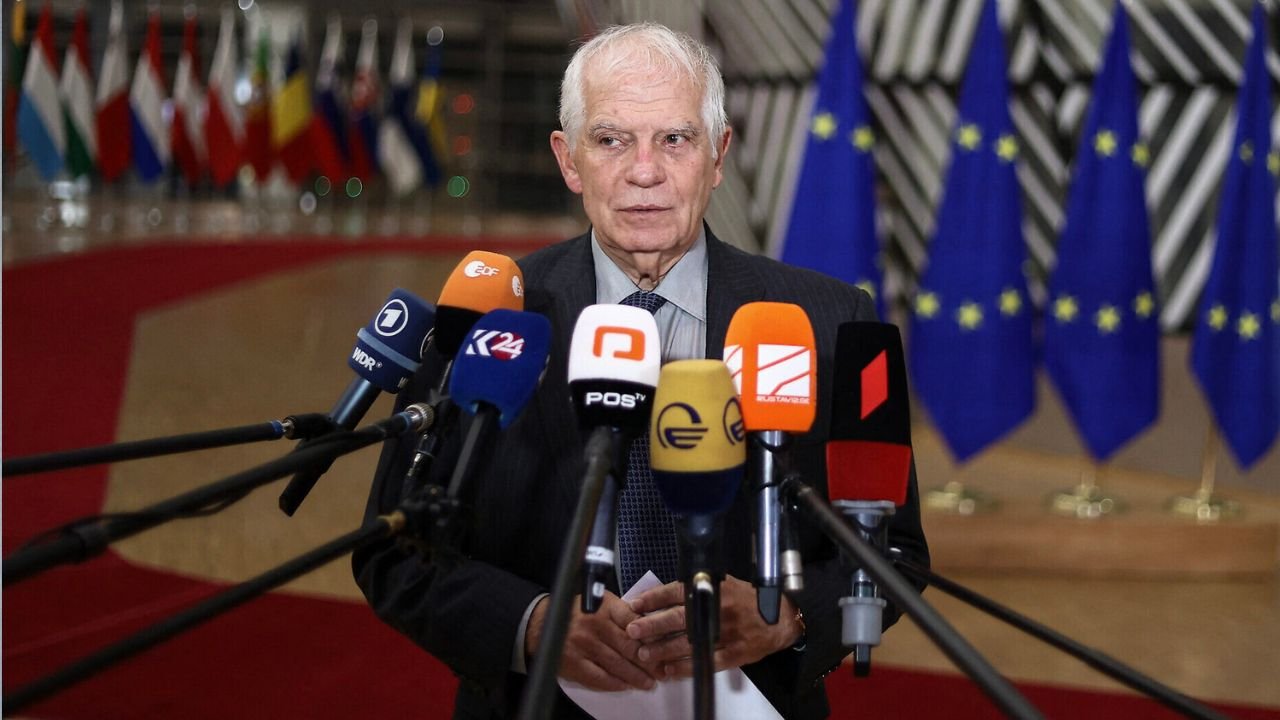
    EU foreign policy chief Josep Borrell said Monday that Israel’s military campaign in Gaza had turned the territory into the world’s biggest “open-air graveyard”.

    “Gaza was before the war the greatest open-air prison. Today it’s the greatest open-air graveyard,” Borrell said at a meeting of EU ministers in Brussels.

    “It’s a graveyard for tens of thousands of people and also a graveyard for many of the most important principles of humanitarian law.”

    Borrell on Monday also reiterated his accusation that Israel was using famine as a “weapon of war” by not allowing aid trucks into Gaza.

    “Israel is provoking famine,” he told a humanitarian conference.

    The Islamist militants also seized about 250 hostages, of whom Israel believes 130 remain in Gaza, including 33 who are presumed dead.

    Israel has carried out a relentless bombing campaign and ground offensive that Gaza’s health ministry says has killed at least 31,726 people, most of them women and children.

    The 27-nation EU has struggled to come up with a united response to the war in Gaza as some members firmly back Israel and others are more pro-Palestinian.

    EU ministers were set to discuss a proposal by Ireland and Spain to suspend a cooperation agreement with Israel, but that move was unlikely to get the support of all 27 countries.

    The bloc was however expected to agree on sanctions both against Hamas for sexual violence on October 7 and against violent Israeli settlers in the West Bank for attacking Palestinians.

    Britain and the United States have already imposed sanctions targeting a small number of “extremist” settlers.

  • Israeli military tells Gazans to evacuate Al-Shifa hospital

    Israeli military tells Gazans to evacuate Al-Shifa hospital

    Palestinian Territories

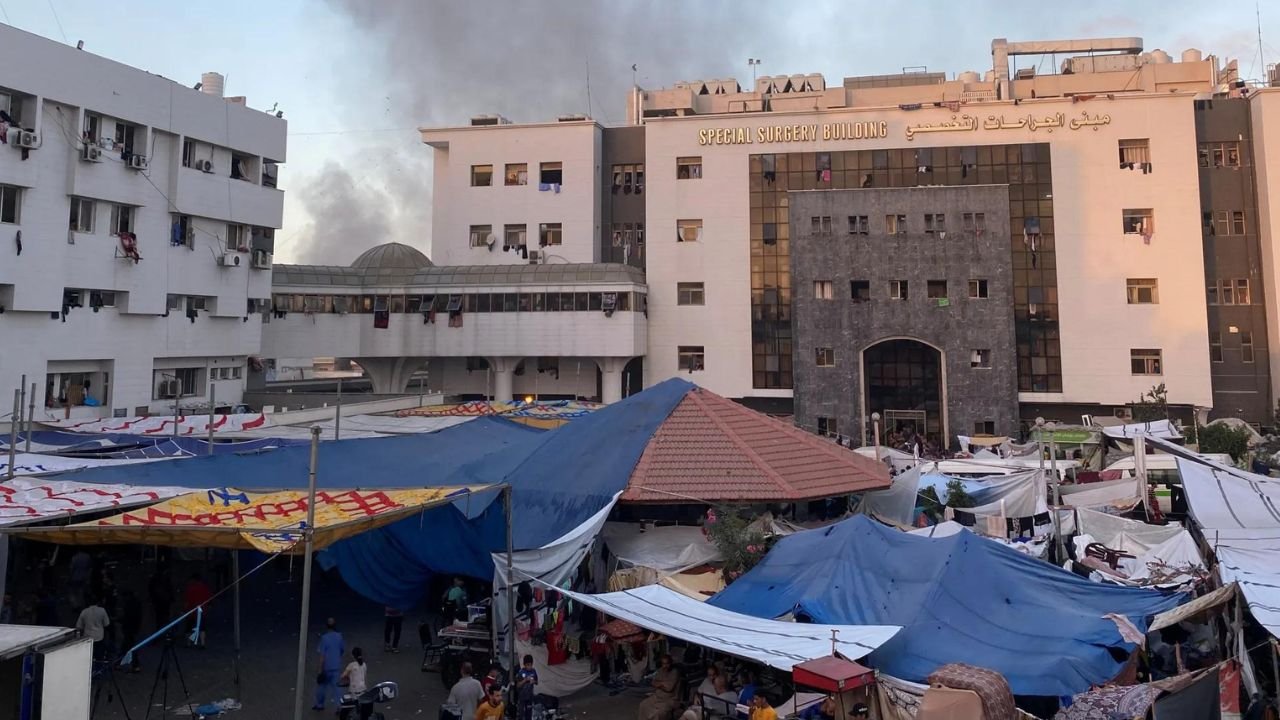
    Israel’s military on Monday called on Gazans to evacuate the area in and around the territory’s largest hospital as battles raged at the complex crowded with patients and displaced people.

    “In order to maintain your security, you must immediately evacuate the area,” army spokesman Avichay Adraee said on social media platform X, instructing “all those present” to head west and then south to a “humanitarian area”.

    ha-rcb/jm/fz

    © Agence France-Presse

  • ‘Bloody’ Ramzan Friday as Gaza strike kills 36 relatives

    ‘Bloody’ Ramzan Friday as Gaza strike kills 36 relatives

    Palestinian Territories: Displaced by Israeli bombardment, the Tabatibi family gathered in central Gaza to eat together during the first Friday night of Ramzan, a scene that soon turned into a bloodbath.

    An air strike hit the building where they were staying as women prepared the pre-fasting meal, killing 36 members of the family, survivors told AFP on Saturday.

    The health ministry in Gaza, which provided the same death toll, blamed Israel for the strike in Nuseirat, while the Israeli military said it was looking into the incident.

    “This is my mother, this is my father, this is my aunt, and these are my brothers,” 19-year-old Mohammed Al-Tabatibi, whose left hand was injured in the strike, said through tears at the Al-Aqsa Martyrs Hospital in nearby Deir Al-Balah.

    “They bombed the house while we were in it. My mother and my aunt were preparing the suhoor food. They were all martyred.”

    He spoke as bodies were spread out in the hospital courtyard, then stacked on a truck to be driven to a cemetery.

    Because there were not enough body bags, some of the dead — including at least two children — were wrapped in white cloth stained with blood, AFPTV footage showed.

    The first Friday of Ramzan, the Muslim fasting month which began on Monday, passed peacefully in Israeli-annexed east Jerusalem, despite concerns about tensions at the sacred Al-Aqsa Mosque compound.

    But it was a different story in Gaza.

    The strike in Nuseirat was one of 60 “deadly air strikes” reported overnight by the press office of the government, from Gaza City in the north to Rafah in the south.

    “This is a bloody night, a very bloody night,” said Salama Maarouf of the media office.

    Israel’s retaliatory military campaign has killed at least 31,553 people in Gaza since October 7, mostly women and children, according to the health ministry.

    In Rafah, where the majority of Gaza’s 2.4 million people have sought refuge, more bloodshed is feared after Israeli Prime Minister Benjamin Netanyahu’s office said on Friday he had approved plans for a military operation there.

    Yet even before any such operation begins, air strikes continue, including one early Saturday that witnesses said killed Issa Duhair, the muezzin of a mosque, along with his two sons.

    Mahmoud Duhair, a 41-year-old relative who lives nearby, described the muezzin as “a good man” who, as usual, dutifully performed the call to prayer before dawn on Saturday, then went to eat with his family “when his house was struck.”

    Back in Nuseirat, in central Gaza, Yussef Tabatibi said the true toll of the strike that killed 36 members of his family could rise.

    “Some of the martyrs we are unable to retrieve. We lack equipment, bulldozers, machinery, or anything else, ” he told AFP, his hands and sweatshirt covered with dust from trying to clear rubble.

    “We retrieve them only with our hands. We brought shovels and hammers, but to no avail. Look at the extent of the destruction.”

  • In Gaza, there are no more ‘normal-sized babies’: UN official

    In Gaza, there are no more ‘normal-sized babies’: UN official

    The humanitarian situation in Gaza is a “nightmare” for mothers and babies, with doctors reporting small and sickly newborns, stillbirths and women forced to undergo C-sections without adequate anesthesia, a UN official said Friday.

    “I’m personally leaving Gaza this week terrified for the one million women and girls of Gaza… and most especially for the 180 women who are giving birth every single day,” Dominic Allen, UN Population Fund (UNFPA) representative for the state of Palestine, said in a video news conference from Jerusalem.

    “Doctors are reporting that they no longer see normal-sized babies,”  Allen said after visiting hospitals still providing maternity services in the north of Gaza, where need is especially great.

    “What they do see though, tragically, is more stillborn births… and more neonatal deaths, caused in part by malnutrition, dehydration and complications.”

    The numbers of complicated deliveries are roughly twice what they were before the war with Israel began — with mothers stressed, fearful, underfed and exhausted — and caregivers often lacking necessary supplies.

    “We have had reports of insufficient anesthetic being available” for Caesarean sections, “which again is unthinkable.”

    “Those mothers should be wrapping their arms around their children,” he said. “Those children should not be wrapped in a body bag.”

    Israel has defended its policies as it pursues its stated goal of destroying Hamas, saying the UN should send more aid to the war-ravaged territory, pushing back on reports by the UN and NGOs that cumbersome Israeli inspections are blocking food and other essentials.

    Allen said Israeli authorities had refused to allow in some UNFPA supply shipments, such as kits for midwives, or had removed supplies like flashlights and solar panels.

    “It’s a nightmare which is much more than a humanitarian crisis,” he said. “It is a crisis of humanity… beyond catastrophic.”

    What he saw while driving through Gaza, he said, “really broke my heart.”

    Everyone he passed or spoke to, Allen said, “was gaunt, emaciated, hungry” and exhausted from the daily struggle to survive.

    At one military checkpoint, he said, he saw a boy who appeared to be about five years old walking with his hands held high, clearly frightened, as his slightly older sister followed behind, holding a white flag.

    Israel’s military operations has killed at least 31,490 people in Gaza since October 7, most of them women and children, according to the health ministry.

  • All cargo offloaded from first aid ship to reach Gaza: NGO

    All cargo offloaded from first aid ship to reach Gaza: NGO

    A US charity said Saturday its team in Gaza Strip had finished unloading the first maritime aid shipment to reach the besieged territory.

    “All cargo was offloaded and is being readied for distribution in Gaza,” World Central Kitchen said in a statement, noting that the aid was “almost 200 tonnes of food”.

    The group is preparing a second boat of 240 tonnes of food to set sail from Cyprus, the starting point of a new maritime aid route across the eastern Mediterranean.

    The humanitarian effort is intended to mitigate food shortages that have prompted UN famine warnings in Gaza from the United Nations and aid workers.

    “That shipment includes pallets of canned goods and bulk product including beans, carrots, canned tuna, chickpeas, canned corn, parboiled rice, flour, oil and salt,” World Central Kitchen said.

    The second shipment would also include a forklift and a crane to assist with deliveries, it added.

    The humanitarian group said it had “no information to release on when our second boat and the crew ship will be able to embark.”

    The Israeli military on Friday confirmed the first vessel, operated by the Spanish charity Open Arms, had arrived and said soldiers had been deployed to secure the area and conduct a security inspection.

    The military also said the delivery of humanitarian aid by sea did not constitute a breach of its years-long maritime blockade of Gaza, which has been ruled since 2007 by Hamas.

    World Central Kitchen had to build a jetty southwest of Gaza City to deliver the aid.

    Israel has killed at least 31,490 people in Gaza since October 7, mostly women and children, according to the health ministry in the Hamas-run territory.

    As cumbersome Israeli security checks and logistical hurdles slow overland aid delivery to Gaza, countries have pursued alternatives including airdrops and the new maritime corridor.

    Jose Andres, founder of World Central Kitchen, said on social media platform X on Friday that the first shipment was “a test” and that “we could bring thousands of tonnes each week.”

  • Sirajul Haq warns against privatising state institutions   

    Sirajul Haq warns against privatising state institutions   

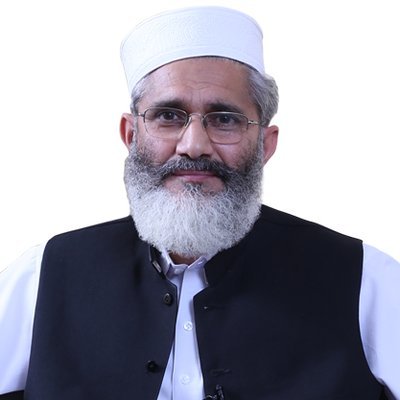
    Jamaat-e-Islami (JI) Emir Sirajul Haq has warned against the privatisation of state institutions on Friday, as per SAMMA.

    Sirajul Huq criticised the newly-elected government by saying that “the government is holding talks with the International Monetary Fund (IMF) on more slavery rather than securing the next tranche.”

    “The privatisation of state institutions is unfair to the masses. The country’s economy cannot afford the privatisation,” Haq said.

    He also called on the global community to play a role in the Gaza ceasefire. “No strategy has been formulated in the assembly for the protection of the people of Gaza.”

    “I was of the view that Nawaz Sharif and Shehbaz Sharif would do something to save the people of Gaza.”

  • Hamas Proposes New Six-week Gaza Truce, Hostage-prisoner Exchange: Official

    Hamas Proposes New Six-week Gaza Truce, Hostage-prisoner Exchange: Official

    Hamas has proposed a new six-week truce in Gaza and an exchange of several dozen Israeli hostages for Palestinian prisoners, an official from the militant group told AFP on Friday.

    “The agreement is for a six-week ceasefire and a prisoner exchange,” the official said after weeks of so far fruitless mediation efforts, adding that the group would want this to lead to “a complete (Israeli) withdrawal from the Gaza Strip and a permanent ceasefire”.

    During the proposed truce, Gaza militants would release about 42 hostages seized during the October 7 attack that triggered the war in Gaza, the official said, requesting anonymity because of the sensitivity of the talks.

    The official said that between 20 and 50 Palestinian prisoners held in Israeli jails would be released per hostage — down from a previous proposal of a roughly 100-to-one ratio, according to a Hamas source in late February.

    Under the new proposal, the initial exchange could include women, children, elderly and ill hostages, the official said.

    During the October 7 attack, militants seized about 250 Israeli and foreign hostages, dozens of whom were released during a week-long truce in November. Israel believes about 130 captives remain in Gaza including 32 presumed dead.

    The latest proposal appears to be a shift for Hamas, whose armed wing said earlier this month there would be “no compromise” on its demand that Israel withdraw from Gaza before any more hostages are freed.

    Now the militants are saying that, during a six-week truce, Israeli forces would need to withdraw from “all cities and populated areas in the Gaza Strip” and allow for the return of displaced Gazans “without restrictions”, the official said.

    The Hamas proposal also calls to ramp up the flow of humanitarian aid, the official added.

    The terms of an eventual ceasefire would see Israel’s “complete military withdrawal from the Gaza Strip” and a comprehensive hostage-for-prisoner exchange involving the release of all hostages for “an agreed-upon number of Palestinian prisoners”, according to the official.

    “Egypt and Qatar, along with the United States, are responsible for following up and ensuring the implementation of the agreement,” the official said.

    Israel’s retaliatory military campaign after October 7 has disproportionately killed at least 31,490 people in Gaza, mostly women and children, according to the health ministry.

    Israeli Prime Minister Benjamin Netanyahu’s office said late Thursday that Hamas “is continuing to hold unrealistic demands” but that an update on truce talks would be submitted to Israel’s war cabinet on Friday.

  • Palestinian leader names adviser Mohammed Mustafa as PM

    Palestinian leader names adviser Mohammed Mustafa as PM

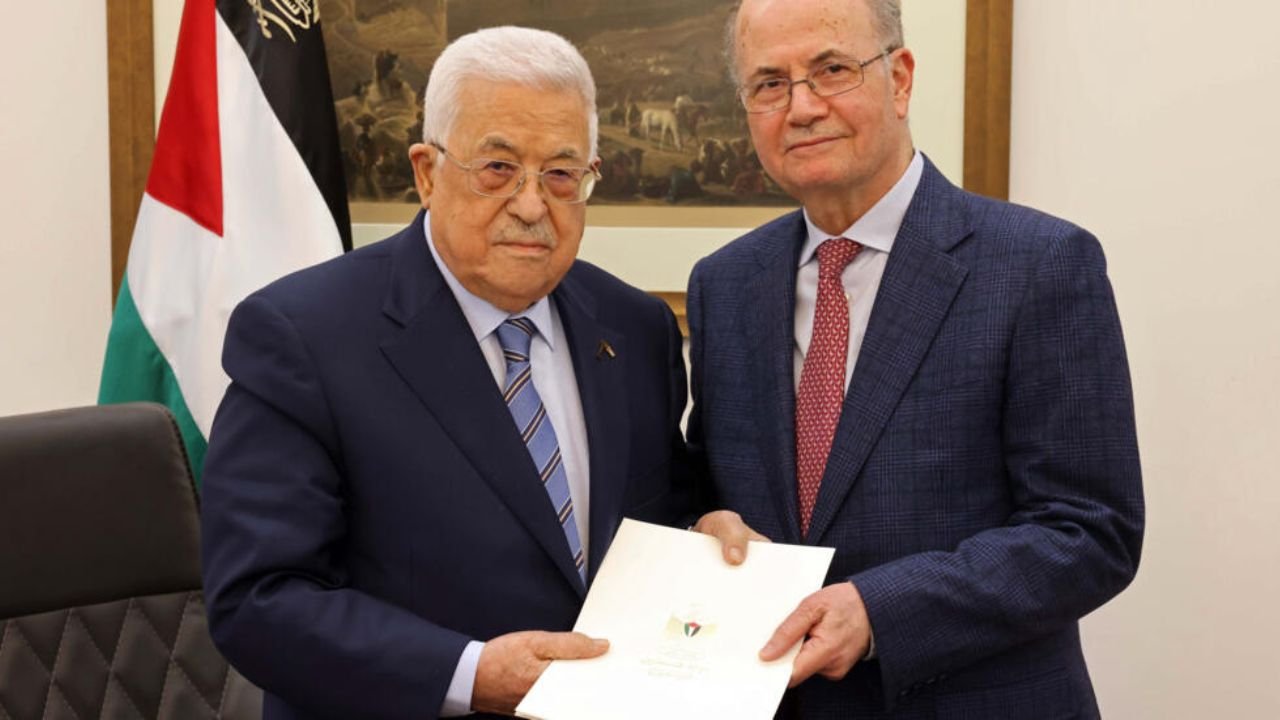
    Ramallah (Palestinian Territories) (AFP) – Palestinian president Mahmud Abbas has appointed Mohammed Mustafa, a long-trusted adviser on economic affairs, as prime minister, the official Wafa news agency said on Thursday.

    Mustafa’s appointment comes less than three weeks after his predecessor, Mohammed Shtayyeh, resigned, citing the need for change after the October 7 attacks leading to Israeli genocide in Gaza.

    The 69-year-old now faces the task of forming a new government for the Palestinian Authority, which has limited powers in parts of the Israeli-occupied West Bank.

    Since 2007, control of the Palestinian territories has been divided between Abbas’s Palestinian Authority in the West Bank and Hamas in the Gaza Strip.

    Mustafa, who studied at George Washington University in the United States, is an independent executive committee member of the Palestine Liberation Organisation — dominated by the ruling Fatah movement.

    He has served as deputy prime minister for economic affairs, held a board seat at the Palestine Investment Fund and worked in a number of senior positions at the World Bank.

    He has also advised the Kuwaiti government and the sovereign wealth fund of Saudi Arabia, the Public Investment Fund.

    Mustafa was also involved in reconstruction efforts in Gaza after Israel’s 2014 invasion.

    ‘Right-hand man’

    Mustafa’s appointment represents an attempt to bolster Palestinian institutions and “close some loopholes in the Palestinian Authority” at a time when Abbas is “under siege and under pressure” from Israel and the United States, Palestinian analyst Abdul Majeed Sweilem told AFP.

    Mustafa would likely be seen as “acceptable to the Americans as he follows a liberal approach,” Sweilem added.

    The White House on Thursday welcomed Mustafa’s appointment, calling on him to deliver “credible and far-reaching reforms” as he prepares his cabinet.

    “A reformed Palestinian Authority is essential to delivering results for the Palestinian people and establishing the conditions for stability in both the West Bank and Gaza,” National Security Council spokesperson Adrienne Watson said in a statement.

    Yet Khalil Shaheen, political analyst and writer, said Mustafa’s closeness to Abbas limits prospects for major change.

    “In the end, the man (Mustafa) remains the right-hand man of President Abbas… Abbas wants to say that he supports reforms, but they remain under his control,” Shaheen said.

    The Israeli military offensive after October 7 in Gaza has killed at least 31,341 people, most of them women and children, according to the territory’s health ministry.

    During the war, violence in the West Bank has flared to levels unseen in nearly two decades.

    Israeli troops and settlers have killed at least 430 Palestinians in the West Bank since the Gaza war began, according to the health ministry in Ramallah.

    The United States and other powers have called for a reformed Palestinian Authority to take charge of all Palestinian territories after the end of the war.

    Israeli Prime Minister Benjamin Netanyahu’s government has rejected postwar plans for Palestinian sovereignty.

    Shortly after Shtayyeh’s resignation in late February, Palestinian factions including Hamas and Fatah participated in talks hosted by Russia that addressed the war in Gaza and post-war plans.

    Afterwards the factions said in a statement they would pursue “unity of action” in confronting Israel.

  • Israeli general in Gaza criticises political leaders

    Israeli general in Gaza criticises political leaders

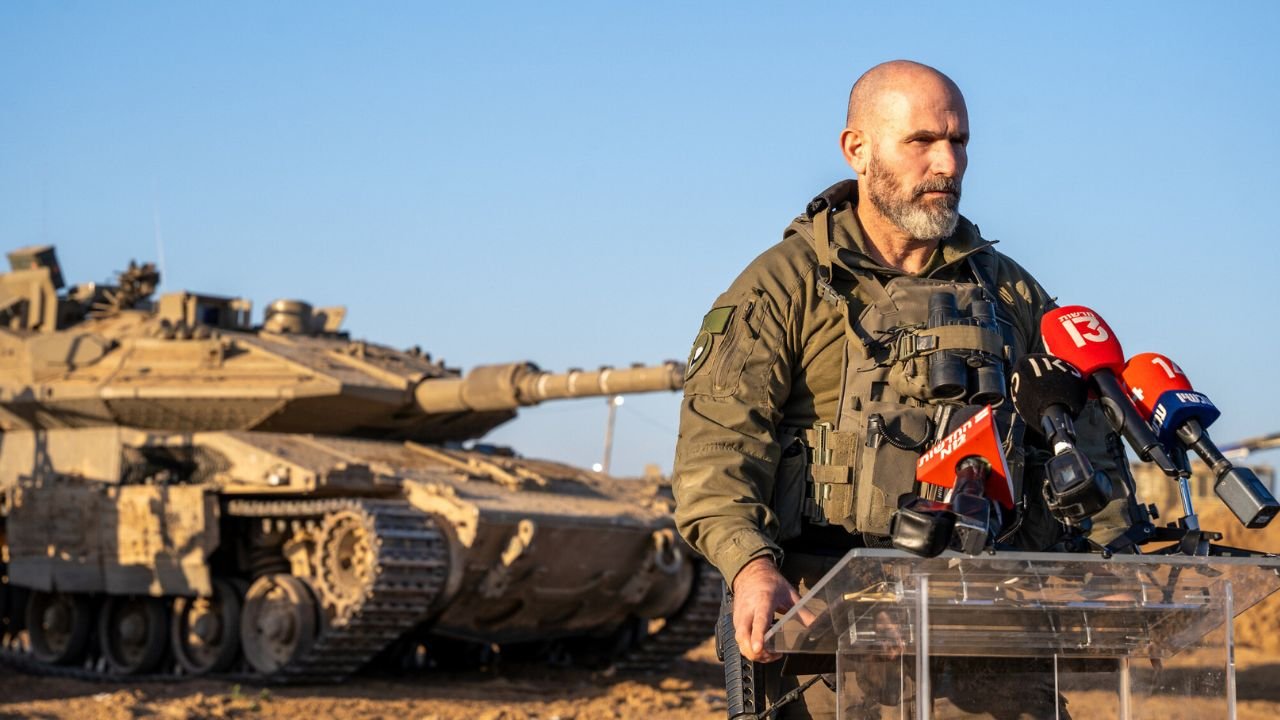
    An Israeli general leading troops in Gaza has delivered rare public criticism of the country’s political leadership, demanding it “be worthy” of the soldiers fighting against Hamas in the Palestinian territory.

    Brigadier General Dan Goldfus, head of the 98th division deployed in Gaza’s main southern city of Khan Yunis, also appeared to enter into a row over exempting ultra-Orthodox Jews from military service.

    He was subsequently summoned by the military leadership for his comments, which breached a long-standing taboo on uniformed officers publicly wading into politics.

    “You must be worthy of us,” Goldfus said of his country’s leaders, in comments broadcast on Israeli television on Wednesday.

    He called for Israeli politicians “to push aside the extreme, and adopt togetherness” in the Gaza following October 7 attacks.

    The general vowed that military commanders and soldiers would take responsibility for their actions.

    Prime Minister Benjamin Netanyahu has so far stopped short of assuming personal responsibility for Israel’s intelligence failures on October 7 and said any official investigations must take place after the war.

    “We will not run from responsibility. We bow our heads in light of our reverberating failure on October 7, but at the same time are leading forward,” the general said.

    Since Israel launched a ground offensive in Gaza on October 27, 249 soldiers have been killed in the Palestinian territory, according to the military.

    Addressing Israel’s political leaders, Goldfus called on them to ensure that “everyone takes part” in enlisting in the armed forces, in an apparent reference to ultra-Orthodox Israeli men being exempt from national service — a contentious political issue.

    Most Jewish men are required by law to serve in the Israeli military, but members of the ultra-Orthodox minority — known in Hebrew as Haredim — have long been given sweeping exemptions.

    Since the October 7 attack, public frustration over the exemption has resurfaced, adding pressure on Netanyahu’s governing coalition, which relies on ultra-Orthodox allies staunchly opposed to drafting Haredi men.

    Neither Netanyahu nor Defence Minister Yoav Gallant publicly responded to Goldfus’s remarks.

    Some lawmakers voiced their approval while others expressed dissatisfaction with the general making political statements of any kind.

    Yoav Segalovitz, a centrist opposition lawmaker, told Kan public radio on Thursday that “a uniformed officer needs to talk only about what’s related to his decisions or take off the uniform”.

    Writing in the Yedioth Ahronoth newspaper, columnist Nahum Barnea said that “with all respect to the heartfelt sentiments of the esteemed officer, fighting in Gaza doesn’t give him the right or the authority to express a position on political matters”.

    Israel’s offensive in Gaza has killed at least 31,341 Palestinians since October 7, mostly women and children, according to the health ministry.