Tag: Gaza

  • South Africa to arrest citizens fighting alongside Israeli forces in Gaza

    South Africa to arrest citizens fighting alongside Israeli forces in Gaza

    South Africa’s foreign minister Naledi Pandor has said that citizens who are fighting in the Israeli armed forces or alongside them in Gaza will be arrested when they return home.

    Naledi, part of South Africa’s governing African National Congress party, passed the policy statement earlier this week at a Palestinian event. “I have already issued a statement alerting those who are South African and are fighting alongside or in the Israeli Defense Forces: We are ready. When you come home, we are going to arrest you,” Pandor said, to rapturous applause from the audience.

    The minister asked people to protest outside the embassies of what she called the “five primary supporters” of Israel and its military action in Gaza. She didn’t name them but almost certainly was referring to the United States, the U.K., and Germany among others.

    Those with dual South African-Israeli citizenship could be stripped of their South African citizenship, she said further.

    Pandor’s comments represent an apparent hardening of the government’s stance.

    It’s not clear how many South African citizens have fought for Israel during the current war in Gaza. South Africa has a significant Jewish population of around 70,000 people, as reported by the Associated Press.

    The South African government is a vocal supporter of the Palestinian people and a critic of Israel. Back in December, the foreign ministry had said that the South African government was concerned that some of its citizens or permanent residents had joined the IDF to fight in Gaza and warned that they could face prosecution if they hadn’t been granted permission to do so under South Africa’s arms control laws.

    Pandor asked audience members at the Palestinian solidary event this week to make posters with the words “Stop Genocide” and protest outside the embassies of what she called the “five primary supporters” of Israel.

    “Don’t only come to this dinner. Be visible in the support of the people of Palestine,” she said.

    The recent statement by the minister is a proof that the Government may deal with these citizens iron-handedly for going against the state’s policy.

    Read more: All you need to know about South Africa’s genocide case against Israel at ICJ

  • Teenager on bicycle stabs two Israelis at West Bank checkpoint

    Teenager on bicycle stabs two Israelis at West Bank checkpoint

    A 15-year-old boy riding a bicycle stabbed two Israeli security personnel at a checkpoint in the occupied West Bank on Wednesday before he was “neutralised,” police said.

    The attack occurred at around 8:15 am (0615 GMT) at the Tunnels checkpoint south of Jerusalem when the teenager arrived on a bicycle, the force said in a statement.

    “When security forces at the crossing attempted to check him, the terrorist drew a knife and began stabbing the forces present at the scene,” the police said.

    “An armed civilian guard immediately engaged with the terrorist, and simultaneously IDF (army) forces at the location responded with precise gunfire neutralising the terrorist.”

    Two security personnel were wounded in the stabbing, the police said. It was unclear whether the attacker had been killed.

    The knife attack comes a day after a 12-year-old Palestinian boy died after being shot by Israeli border police at a refugee camp in Israeli-annexed east Jerusalem.

    Rami Hamdan al-Halhuli, 12, suffered a fatal gunshot wound during clashes between residents of the Shuafat refugee camp and police, who said the child had aimed fireworks at them.

    Hundreds of extra police have been deployed in the Old City of east Jerusalem since the Muslim fasting month of Ramadan began on Monday.

    myl-jd/kir

    © Agence France-Presse

  • Hezbollah Launched Over 100 Rockets At Israeli Positions

    Hezbollah Launched Over 100 Rockets At Israeli Positions

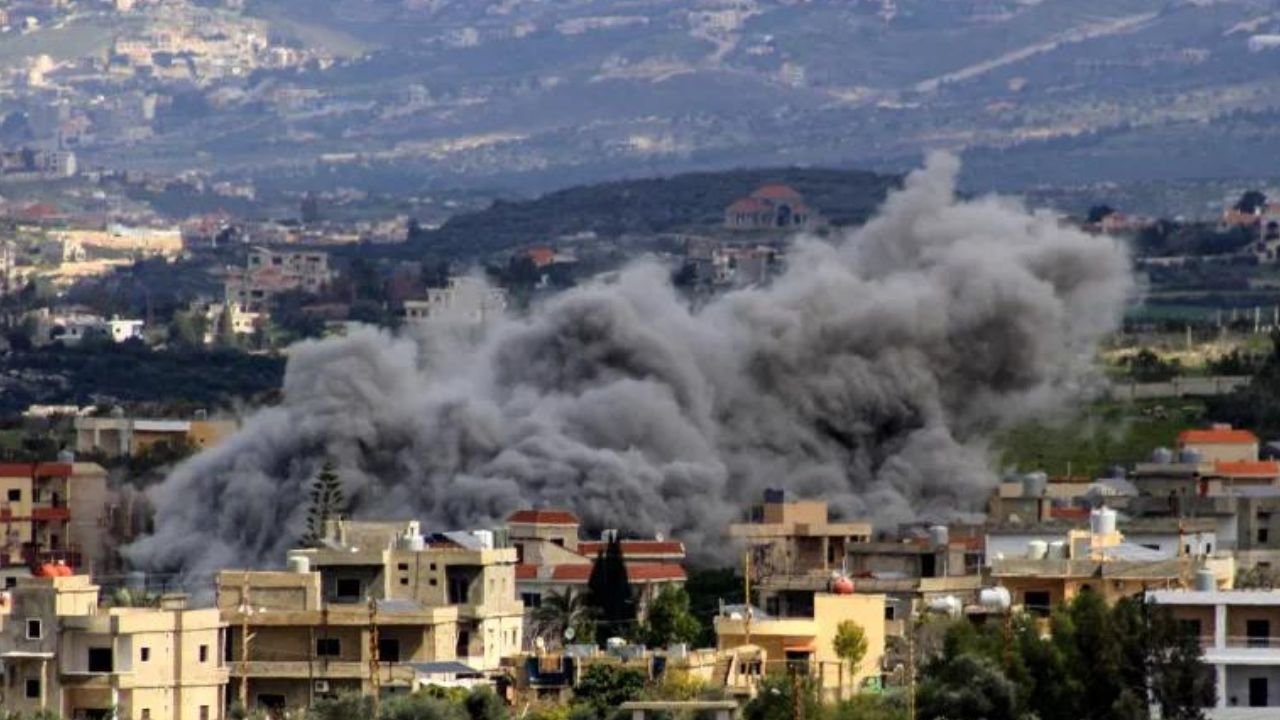
    Lebanon’s Hezbollah said Tuesday it launched over 100 rockets at Israeli military positions in retaliation for a strike on the country’s east that killed one person the day before.

    Hezbollah and Israel have exchanged near-daily cross-border fire since the genocide in Gaza erupted in October, but several Israeli strikes have recently hit Hezbollah positions further north, raising fears of a full-blown conflict.

    Hezbollah launched “more than a hundred katyusha rockets” Tuesday morning at two military bases in the occupied Golan Heights, the group said in a statement.

    This was “in response to the Israeli attacks on our people, villages and cities, most recently near the city of Baalbek and the killing of a citizen”, it added.

    On Monday, Israeli air strikes near Lebanon’s eastern city of Baalbek killed one person, in the second raid on the Hezbollah stronghold since cross-border hostilities began.

    The Israeli military confirmed its jets had hit two sites belonging to “Hezbollah’s aerial forces” in retaliation for strikes on the occupied Golan Heights over several days.

    On February 26, Israeli strikes targeted Baalbek, some 100 kilometres (60 miles) from the border, killing two Hezbollah members.

    Earlier on Tuesday, Hezbollah said its chief Hassan Nasrallah met with Khalil al-Hayya, a leading member of Hamas’s political bureau.

    They discussed ceasefire talks for the Gaza war, as well as attacks by Hamas’s regional allies to support its war efforts, the Hezbollah statement said.

    Nasrallah is due to give a televised speech on Wednesday.

    Hezbollah has repeatedly said it will only stop its attacks on Israel with a ceasefire in Gaza.

    But Israeli Defence Minister Yoav Gallant recently said any truce in Gaza would not change Israel’s goal of pushing Hezbollah out of southern Lebanon, by force or diplomacy.

    Since the increased Israeli attacks on Gaza following October 7, at least 317 people, mainly Hezbollah fighters but also 54 civilians, have been killed in Lebanon, according to an AFP tally.

    In Israel, at least 10 soldiers and seven civilians have been killed in the cross-border hostilities.

  • Call for ceasefire at the Oscars

    Call for ceasefire at the Oscars

    Celebrities at the 96th Academy Awards were seen wearing red pins symbolising the call for a ceasefire in Gaza.

    These pins represent the stars’ support to Artists4Ceasefire — an open letter signed by celebrities and people from the entertainment industry, urging US President Biden to call for a ceasefire.

    The signatories near 400 which include Bradley Cooper and America Ferrera, who are both Oscar nominees this year, as well as Cate Blanchett, Drake, Ben Affleck and Jennifer Lopez.

    “We’re all calling for an immediate and permanent ceasefire in Gaza. We’re calling for the safety of everyone involved. We really want lasting justice and peace for the Palestinian people,” Guardian quotes Ramy Youssef from an interview at the red carpet. “We really just want to say, ‘let’s just stop killing children.’ There’s so much there to process and it feels like the easiest way to have the conversations that people want to have is when they’re isn’t an active bombing campaign happening.”

  • Aid boat readied as Israeli attacks in Gaza rage before Ramadan

    Palestinian Territories – A boat laden with food for Palestinians in Gaza was “ready” to set sail from Cyprus, an NGO said Saturday, as Israeli military operations in Gaza raged.

    The sea route aims to counter aid access restrictions, which humanitarians and foreign governments have blamed on Israel, more than five months into the genocide which has left Gaza’s 2.4 million people struggling to survive.

    Hopes were fading fast for a pause in the fighting before Ramadan, which could begin as early as Sunday depending on the lunar calendar, as Israel accused Hamas of seeking to “inflame” the region during the Muslim fasting month.

    The United Nations has repeatedly warned of looming famine, particularly in north Gaza where no overland border crossings are open.

    In Rafah, in Gaza’s far south, “we can barely get water,” said displaced Palestinian woman Nasreen Abu Yussef.

    Roughly 1.5 million Palestinians have sought refuge in the city, where Atallah al-Satel said he wanted an end to the genocide.

    “We are just exhausted citizens,” said Satel, who had fled to Rafah from Khan Yunis.

    Spanish charity Open Arms said its boat, which docked three weeks ago in Cyprus’s Larnaca port, was “ready” to embark but awaits final authorisation.

    It would be the first shipment along a maritime corridor from Cyprus — the closest European Union country to Gaza — that the EU Commission hopes will open on Sunday.

    Open Arms spokeswoman Laura Lanuza told AFP that Israeli authorities were inspecting the cargo of “200 tonnes of basic foodstuffs, rice and flour, cans of tuna”.

    US charity World Central Kitchen, which has partnered with Open Arms, has teams in the besieged Gaza Strip who were “constructing a dock” to unload the shipment, Lanuza said.

    With ground access limited, countries have also turned to airdropping aid, although a parachute malfunction turned one delivery deadly on Friday.

    The health ministry in Gaza said three more children had died from malnutrition and dehydration, with the total number of such deaths now 23.

    ‘Only part of the solution’

    Another 82 people were killed in strikes over the previous day, the ministry said, bringing the number of deaths in Israel’s bombardment and ground offensive of Gaza to 30,960, mostly women and children.

    Israel’s campaign to destroy Hamas began after the movement’s October 7 attack on Israel resulted in about 1,160 deaths, mostly civilians, according to Israeli official figures.

    The UN’s World Food Programme has warned that the volume of aid that can be delivered by sea will do little if anything to stave off famine in Gaza.

    European Commission chief Ursula von der Leyen, in Larnaca on Friday, said a “pilot operation” would be launched in partnership with World Central Kitchen, supported by aid from the United Arab Emirates.

    A US effort for a “temporary pier” to receive aid off Gaza, which the Pentagon said would take up to 60 days to establish, builds upon the maritime corridor proposed by Cyprus, senior US officials said.

    Humanitarian workers and UN officials say easing the entry of trucks to Gaza would be more effective than aid airdrops or maritime shipments.

    The US military said it airdropped more than 41,000 meals into Gaza on Saturday, and Canada has said it too will join aerial aid delivery missions.

    But a steady flow of relief into Gaza was “only part of the solution”, said International Committee of the Red Cross chief Mirjana Spoljaric.

    The warring sides must do more to “safeguard civilian life and human dignity”, she said, decrying the “unacceptable” civilian death toll.

    ‘Tough’ truce talks

    After a week of talks with mediators in Cairo failed to produce a breakthrough, Hamas’s armed wing said it would not agree to a hostage-prisoner exchange unless Israeli forces withdraw.

    Israel has rejected such a demand.

    On Saturday, Prime Minister Benjamin Netanyahu’s office said Mossad spy agency chief David Barnea had met CIA director William Burns on Friday “as part of the ceaseless efforts to advance another hostage release deal”.

    US President Joe Biden acknowledged it would now be “tough” to secure a new truce deal in time for Ramadan.

    Saturday’s Israeli statement accused Hamas of “entrenching its positions like someone who is not interested in a deal and is striving to inflame the region during Ramadan”.

    Israeli military spokesman Daniel Hagari said Israel was preparing for “all possible operational scenarios” during the Muslim holy month.

    On the ground in southern Gaza, the Israeli army said fighting persisted in the area of Khan Yunis and Hamas authorities reported more than 30 air strikes overnight.

    Hamas chief Ismail Haniyeh called for the speedy distribution of aid to Gazans and for the full opening of border crossings “to end the siege of our people”.

    The war’s effects have been felt across the region, including off Yemen where Iran-backed Huthi rebels, who say they are acting in solidarity with Gazans, have repeatedly targeted ships plying the vital Red Sea trade route.

    US and allied forces shot down 28 one-way attack drones fired towards the Red Sea and Gulf of Aden on Saturday, the US military said, after one of the largest such rebel strikes.

    bur-srm/kir/ami

    © Agence France-Presse

  • Gaza Government Says Israel Returned 47 Exhumed Bodies

    Gaza Government Says Israel Returned 47 Exhumed Bodies

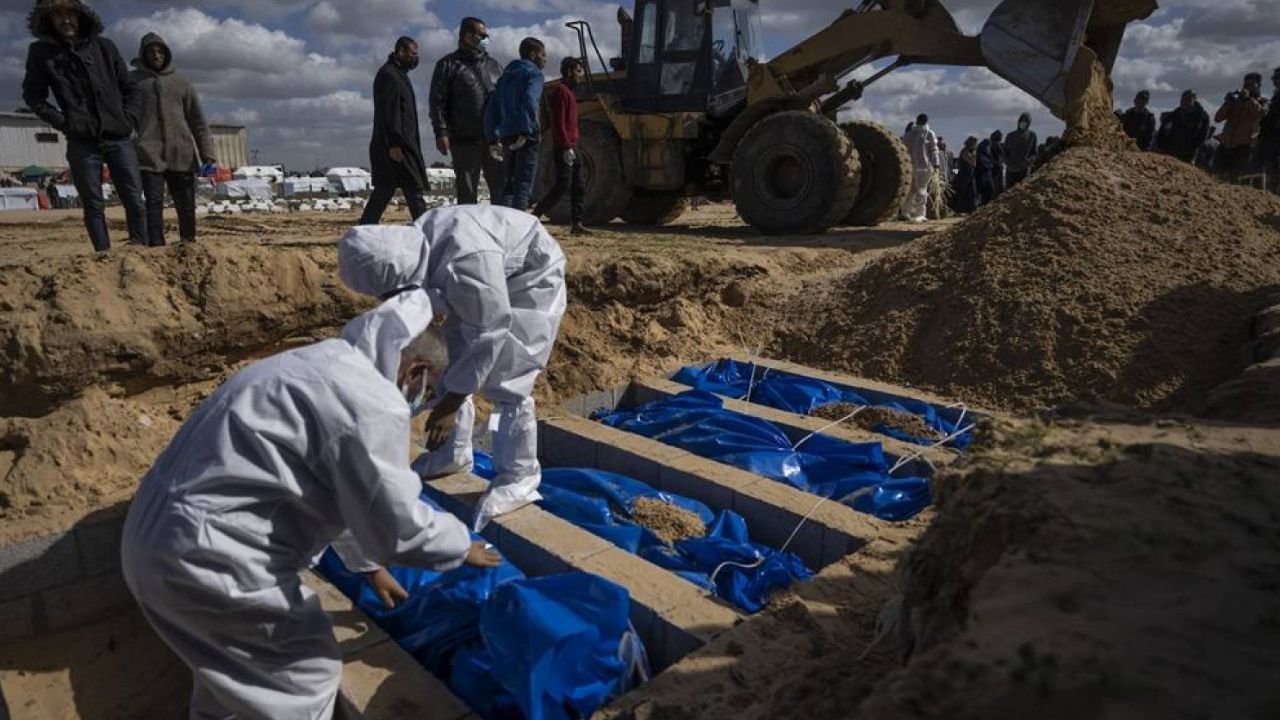
    Gaza’s government media office said Thursday that Israel had returned dozens of bodies that had been exhumed from graves in the besieged territory in recent weeks.

    Israeli forces have on several occasions taken bodies from Gaza to Israel for examinations as they look for hostages seized during Hamas’s October 7 attack.

    AFP journalists have previously witnessed the reburial of bodies which Gaza officials said had been exhumed by Israeli forces in November, December and January.

    The 47 new bodies sent back by Israel on Thursday “have been transferred to Al-Najjar Hospital” in Rafah, in southern Gaza, the besieged territory’s crossings and borders authority said in a statement.

    A separate statement from the government media office said they would be “buried in a recently established mass grave” near Rafah.

    “The bodies were seized and transferred to Israel under the pretext of examination and verification” to ensure they were not those of hostages held in Gaza, the government statement said.

    Since the start of the war, Israeli officials have exhumed “hundreds” of bodies from graves at hospitals in the Gaza Strip, it said.

    The Israeli army told AFP it was looking into reports about the latest group of returned bodies.

    Hamas took around 250 Israeli and foreign hostages during the October 7 attack, dozens of whom were released during a week-long truce in November. Israel believes 99 of them remain alive in Gaza and that 31 have died.

    The attack resulted in the deaths of around 1,160 people, mostly civilians, according to an AFP tally of official figures.

    Israel’s genocide in Gaza after October 7 has resulted in the deaths of at least 30,800 people in Gaza, the majority of them women and children, according to the territory’s health ministry.

    Prime Minister Benjamin Netanyahu’s government is under immense domestic pressure to secure the return of hostages as part of any new truce deal with Hamas.

    That pressure intensified after soldiers killed three hostages in December, mistakenly perceiving them as a threat.

  • Tensions in Israel war cabinet as genocide in Gaza rages on

    Tensions in Israel war cabinet as genocide in Gaza rages on

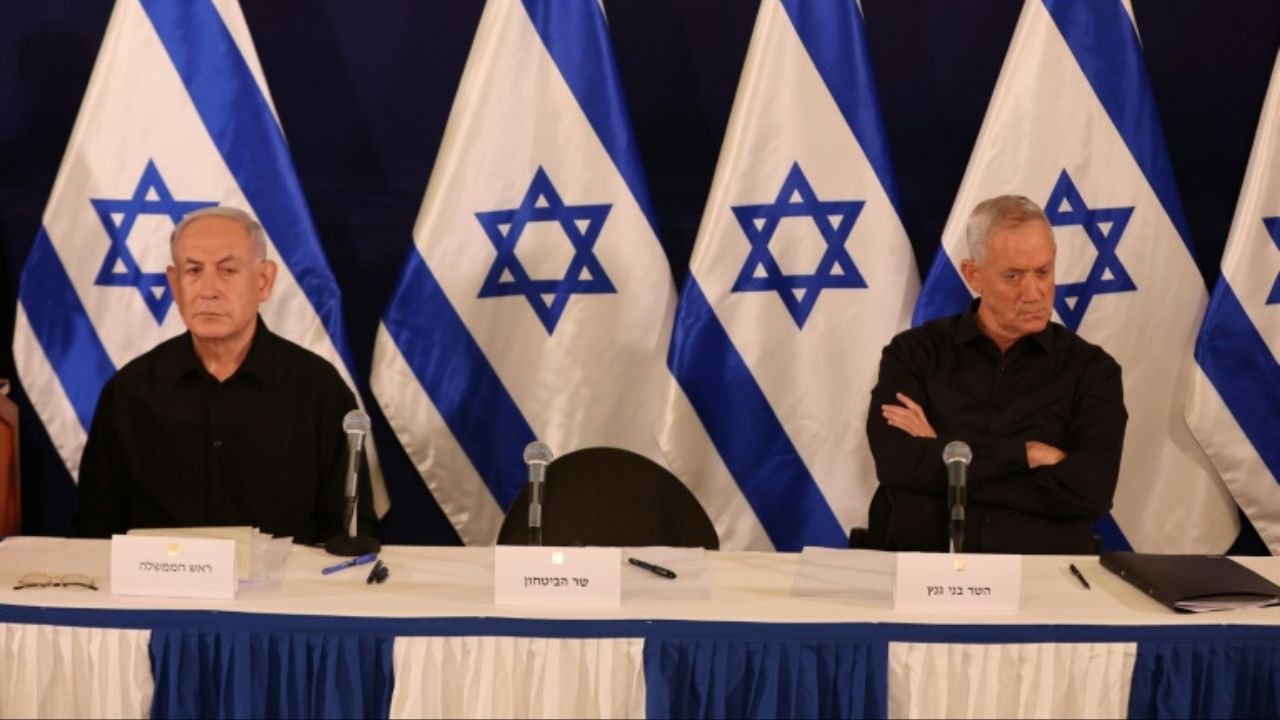
    Jerusalem (AFP) – Israel’s war cabinet, seen as a symbol of national unity in the assault on Gaza, has been shaken by political rivalry between Prime Minister Benjamin Netanyahu and centrist Benny Gantz, analysts say.

    A former military chief and ex-defence minister, Gantz visited Washington Monday before heading to London on Wednesday for high-level talks in a trip which was not authorised by Netanyahu.

    It served to highlight the deep divisions between the two men as international pressure mounts on Israel over the growing humanitarian crisis in the Gaza Strip, with the genocide entering its sixth month.

    Gantz’s visit to the United States — Israel’s staunchest ally — shows that “his level of trust in Netanyahu is very low,” said Yohanan Plesner, president of the Israel Democracy Institute think tank.

    It demonstrates he wanted to present an alternative view to Washington, he added.

    Gantz, who left the political opposition to join the war cabinet after Hamas’s October 7 attacks in southern Israel, has been at odds with Netanyahu on how to win the release of hostages and draw up an exit strategy from the conflict.

    But his trip to Washington has raised attention in Israel, and drew strong criticism from ministers of Netanyahu’s right-wing party Likud.

    “It looks like some kind of subversion,” said Transport Minister Miri Regev, adding Gantz is “working behind the prime minister’s back.”

    Dudi Amsalem, Israel’s regional cooperation minister and Netanyahu ally, said that Gantz had joined the wartime government “to create unity in an emergency, not to be a Trojan horse”.

    ‘Hate each other’

    “Tensions were always there,” between these “two people who hate each other,” said Reuven Hazan, a political science professor at Jerusalem’s Hebrew University.

    Five members make up the war cabinet, with Netanyahu, Gantz and Defence Minister Yoav Gallant seen as the main players.

    Hazan said Gantz travelled to Washington and London in a bid to demonstrate that he has the right profile to be a potential future prime minister.

    He met with US Vice President Kamala Harris a day after she delivered some of the most stinging US criticism of Israel since the war began calling for an “immediate ceasefire”.

    She also voiced the US administration’s concerns over the humanitarian crisis in Gaza, and “urged Israel to take additional measures” to increase the flow of aid.

    Israel has vowed to eliminate Hamas after its October 7 attack.

    The withering Israeli bombardment of Gaza has left more than 30,700 people dead in five months of war, and caused widespread destruction. UN agencies have also warned of the growing threat of famine as aid has struggled to reach those in need in Gaza.

    US President Joe Biden and Netanyahu are in an “open conflict” as the White House presses the Israeli leader not to “continue with a massive civilian casualties in Gaza” and “without knowing what to do the day after” the war, said Hazan.

    Gantz ‘comfortable counterpart’

    “Gantz is not where Netanyahu is, he is closer to the American position” on the war’s aftermath, said Hazan.

    He’s a “more comfortable counterpart” for Washington, “is more open to dialogue with moderate partners in the region” and over the role that the Palestinian Authority could play in Gaza after the war, Plesner added.

    Last week Gantz applauded Gallant’s proposal to reform military service in order to include ultra-Orthodox Jews, who are currently exempted for religious reasons.

    But the announcement shook Israeli politics to its core and was perceived in some Israeli media as a challenge from Gallant to Netanyahu, with both belonging to the same party.

    The proposal was a political bombshell and forces the prime minister into a tight corner, as the two main parties representing ultra-Orthodox Jews could topple his precarious coalition at any moment.

    Netanyahu is working on “avoiding an early election” that would benefit Gantz at any cost, said Plesner.

    Recent polls suggest that if there is an election, Gantz’s party will win the largest number of seats.

    “If there is one issue that might get out of hand and lead to a collapse of the coalition (it) is the issue of recruitment of ultra-Orthodox”, Plesner said.

    Gantz has to time his exit from the government in a way that makes Israelis feel he is “looking out for Israel’s interests” and create a perception that “Netanyahu is only looking at his personal interests,” said Hazan.

  • Yemen faces ‘environmental disaster’ as sunken ship threatens Red Sea

    Yemen faces ‘environmental disaster’ as sunken ship threatens Red Sea

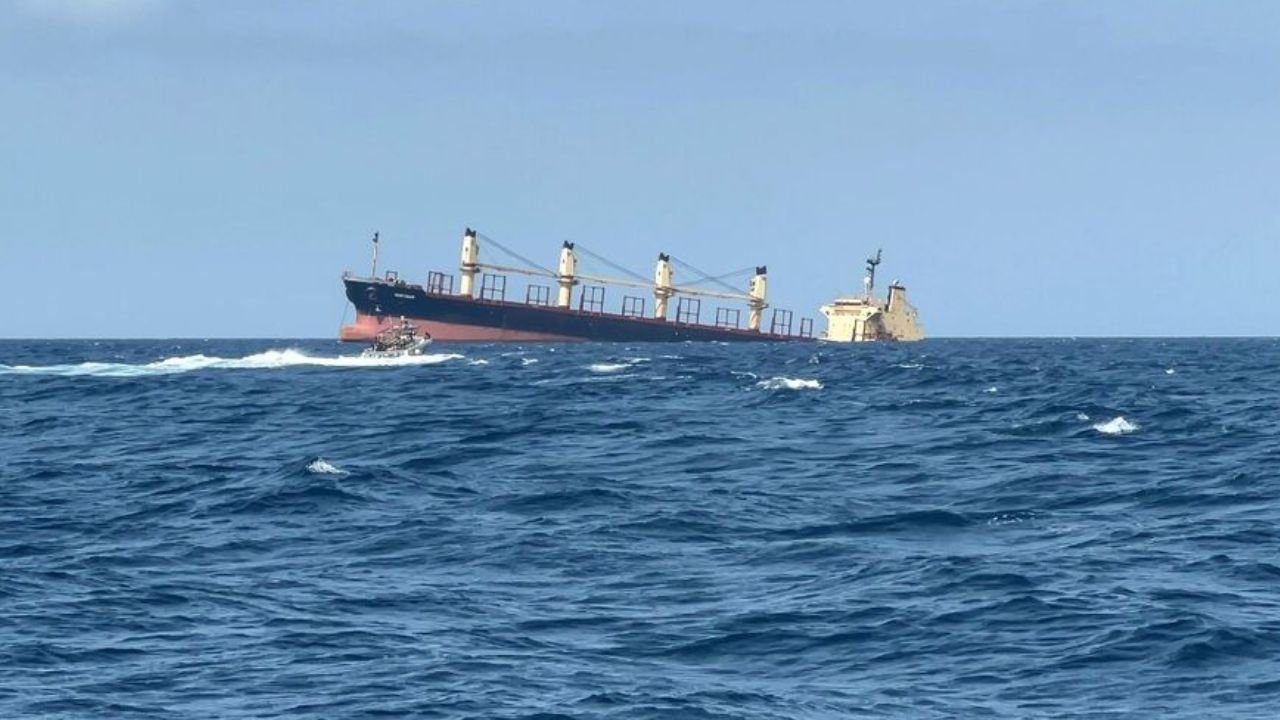
    The sinking of a bulk carrier off Yemen after a Houthi missile attack poses grave environmental risks as thousands of tonnes of fertilizer threaten to spill into the Red Sea, officials and experts warn.

    Leaking fuel and the chemical pollutant could harm marine life, including coral reefs, and impact coastal communities that rely on fishing for their livelihoods, they said.

    The Belize-flagged, Lebanese-operated Rubymar sank on Saturday with 21,000 metric tons of ammonium phosphate sulfate fertilizer on board, according to U.S. Central Command (CENTCOM).

    It had been taking in water since a Houthi missile strike on Feb. 18 damaged its hull, marking the most significant impact on a commercial ship since the rebels started targeting vessels in November.

    After already leaving a slick from leaking fuel while it was still afloat, the Rubymar now poses a new set of environmental threats underwater.

    Abdulsalam al-Jaabi of the Yemeni government’s environmental protection agency warned of “double pollution” that could impact 78,000 fishermen and their families — up to half a million people.

    “The first pollution is oil pollution resulting from the large amount of fuel oil on board,” he said, estimating the quantity to be over 200 metric tons.

    The second risk is posed by the fertilizer, which is highly soluble and could harm “fish and living organisms such as coral reefs and seaweed” if released into the sea, Jaabi added.

    The overall contamination could incur “significant economic costs,” especially on coastal communities that depend on fishing for survival, the official warned.

    Yemen’s Houthi rebels seized the capital Sanaa in 2014, pushing the internationally recognized government south to Aden and prompting Saudi Arabia to lead a military coalition to help prop it up the following year.

    A cease-fire since April 2022 has largely held.

    The Rubymar is the first ship to sink since the Houthis started their Red Sea campaign that they say is in solidarity with Palestinians in the Gaza Strip amid Israeli genocide.

    Plans to tow the vessel failed after port authorities in Aden, Djibouti and Saudi Arabia refused to receive the ship, according to Roy Khoury, the chief executive of Blue Fleet Group, the ship’s Lebanese operator.

    The Yemeni government’s transport minister, Abdulsalam Humaid, said Aden’s “refusal comes out of fear of an environmental disaster.”

    Djibouti also refused the ship over “environmental risks,” said an official close to the country’s presidency.

    Saudi authorities were not immediately available for comment.

    “Without immediate action, this situation could escalate into a major environmental crisis,” warned Julien Jreissati, Middle East and North Africa program director at Greenpeace.

    “The sinking of the vessel could further breach the hull, allowing water to contact with the thousands of tonnes of fertilizer,” he added.

    This would “disrupt the balance of the marine ecosystems, triggering cascading effects throughout the food web,” Jreissati said.

    U.N. Special Envoy Hans Grundberg said five experts from the United Nations Environment Programme were due in Yemen this week to conduct an assessment in coordination with the Yemeni environment ministry.

    George Wikoff, the head of the U.S. Navy’s Bahrain-based Fifth Fleet, warned that the “tonnes of chemicals carried on the sinking vessel Rubymar presents environmental risk to the Red Sea in the form of algae blooms and damaged coral.”

    Speaking during a conference in Doha on Tuesday, Wikoff said the ship also poses a threat to Red Sea navigation as it “presents a subsurface impact risk” to other ships transiting the critical waterway that normally carries around 12% of global trade.

    It remains unclear who is ultimately responsible for the Rubymar, which was sailing from the United Arab Emirates to Bulgaria.

    CENTCOM and maritime security firm Ambrey said the vessel was registered in Britain but its Lebanese operator said the ship was registered in the Marshall Islands.

    Yemeni official Faisal al-Thalabi, a member of a crisis cell tasked with dealing with the Rubymar, said Yemen has been in contact with both the owner and operator but noted that the outreach “made no difference.”

    The owner “is part of the problem … as he did not respond to official messages issued from Yemen,” Thalabi said, without disclosing the owner’s identity.

    To contain a potential environmental crisis, Yemeni authorities will dispatch teams to collect water samples and survey beaches for pollution, Thalabi said.

    Water sources and seawater desalination plants in coastal communities may also be affected, he cautioned.

    “We have special containment booms and we are ready to place them in environmentally sensitive areas such as damaged islands” if they are contaminated, he said.

    The “worst-case scenario is contamination,” Thalabi said.

  • Trump backs Israel’s military operations in Gaza

    Trump backs Israel’s military operations in Gaza

    Washington (AFP) – Republican presidential frontrunner Donald Trump expressed his support for Israel’s military operations in Gaza Tuesday, in his most explicit comments yet on the fighting, as international pressure grows on the United States to rein in its ally.

    “Yes,” Trump responded, when asked during an interview on Fox News if he was “in Israel’s camp.”

    The interviewer then asked if the former president was “on board” with the way Israel was executing its offensive in Gaza.

    “You’ve got to finish the problem,” Trump responded.

    President Joe Biden, whom Trump is set to challenge for the White House in November, has come under increasing fire both internationally and from his own Democratic base over his backing for Israel as the death toll in Gaza soars and the specter of famine looms.

    Israel’s disproportionate retaliatory offensive in the Gaza Strip has killed 30,534 people, mostly women and children, according to the health ministry.

    US protest movements have urged voters to punish Biden at the polls over his support for Israel. More than 100,000 people in Michigan voted “uncommitted” rather than cast their ballot for him in the US swing state’s Democratic primary last week.

    As conditions deteriorate, Israel is facing an increasingly sharp rebuke from its top ally the United States.

    Vice President Kamala Harris expressed “deep concern about the humanitarian conditions in Gaza” during talks in Washington on Monday with Israeli war cabinet member Benny Gantz.

  • Israel says to allow worshippers access to Al-Aqsa in Ramzan as in ‘previous years’

    Israel says to allow worshippers access to Al-Aqsa in Ramzan as in ‘previous years’

    Israel will allow as many Muslim worshippers to access Al-Aqsa mosque in Jerusalem during the first week of Ramzan as in previous years, the prime minister’s office said Tuesday.

    “In the first week of Ramzan, worshippers will be allowed to enter the Temple Mount, in similar numbers to those in previous years,” the statement said, using the Jewish term for the site.

    “Every week there will be a situation assessment in terms of security and safety and a decision will be made accordingly,” it added.

    Every year, tens of thousands of Muslim worshippers perform Ramzan prayers at the Al-Aqsa mosque.

    Ramzan comes this year as Israel wages a genocide in the Gaza Strip in a disproportionate response to Hamas in Israel on October 7.

    Israel has been assessing how to address worship in Jerusalem during Ramzan, the Islamic fasting month due to start on March 10 or 11, depending on the lunar calendar.

    Israel’s far-right National Security Minister Itamar Ben Gvir had recently said that Palestinian residents of the West Bank “should not be allowed” entry to Jerusalem to pray during Ramzan.

    “We cannot take risks,” he said, adding: “We cannot have women and children hostage in Gaza and allow celebrations for Hamas on the Temple Mount.”

    Ben Gvir leads a hard-right party advocating Jewish control of the compound.

    Days later, the United States called on Israel to allow Muslims to worship at Al-Aqsa.

    “It’s not just a matter of granting people religious freedom that they deserve… it’s also a matter that directly is important to Israel’s security,” State Department spokesman Matthew Miller said.

    “It is not in Israel’s security interest to inflame tensions in the West Bank or in the broader region.”

    Hamas has called for a mass movement on Al-Aqsa for the start of Ramzan.

    “Ramzan is sacred to Muslims; its sanctity will be upheld this year, as it is every year,” the Israeli government statement said after Prime Minister Benjamin Netanyahu held a meeting of all security agencies on Tuesday.