Tag: GDP

  • Ghar ki murghi, sona barabar; chicken at all time high prices

    Ghar ki murghi, sona barabar; chicken at all time high prices

    Prices of chicken have skyrocketed in the past days in Pakistan, rising by Rs. 200 per kilogram to reach Rs 697 per kg, reports Bol News.

    Prices in Gujranwala have begun selling chicken at will, disregarding the official government rate of Rs 680 per kg, Samaa has reported.

    Like other cities in the country, in Faisalabad too, the price of chicken had soared beyond expectations.

    Within a month, after an increase of Rs25, it has reached up to Rs750 per kg.

    Chicken sellers in Rawalpindi staged a demonstration outside the Rawalpindi Press Club to reject the official prices of chicken meat. They also observed a full-fledged strike over the price mechanism.

    The rate fixed by the government is Rs. 435 while the price of chicken has surged in the open market, with live chicken selling at Rs550 per kg and chicken meat at Rs850 per kg.

  • Pakistan moves forward with budget planning despite delayed IMF programme

    Pakistan moves forward with budget planning despite delayed IMF programme

    The government is expected to present an overall budget deficit of 5.1 per cent of the GDP for the fiscal year 2023-24, as stated in the delayed Budget Strategy Paper (BSP) to be presented before the federal cabinet. A recent report by The News highlighted that the paper will be tabled amid the government’s failure to revive the stalled International Monetary Fund (IMF) programme.

    The budget-making process has already been affected by uncertainty on both the IMF and political fronts. Nonetheless, the government has decided to present the next budget on June 9. Despite failing to reach a staff-level agreement with the IMF, the government will present the BSP for a medium-term period of three years. The proposed federal government budget deficit stands at 6.4 per cent of the GDP, while the overall deficit of the country is estimated to be lowered to 5.1 per cent of the GDP for the next financial year.

    In addition, the BSP for the upcoming fiscal year has proposed an allocation of Rs1.7 trillion for the defence budget compared to Rs1.56 trillion in the outgoing fiscal year. The overall primary surplus of budget deficit is estimated to be 0.3 per cent of the GDP for the next fiscal year, up from the previous projection of 0.2 per cent for the outgoing year.

    The Federal Board of Revenue (FBR) has been set a target of Rs9.2 trillion for the next budget, and the finance ministry suggests this is on the higher side. The FBR estimates that it could collect Rs7.2 trillion in the outgoing fiscal year against the targeted Rs7.64 trillion. In the next budget, the FBR could collect up to Rs8.6 trillion, subject to import restrictions being lifted, which could boost revenue collection. The government is projecting a GDP growth rate of 3.4 per cent for the next fiscal year, while inflation is expected to hover around 21 per cent.

    According to the IMF’s latest press briefing, the country may experience stagflation, which means low growth and higher inflation rates. If stagflation continues, it could lead to rising poverty and unemployment in Pakistan. The current account deficit is estimated to be approximately $8 billion for the next budget, and there is hope that import restrictions will be gradually lifted during the next financial year.

    The BSP has to be approved by the federal government under the Public Finance Management Act, which states that the paper must contain quantified macroeconomic and fiscal projections for the medium-term, be approved by April 15 of each year, and published on the Finance Division’s official website. Upon approval, the Finance Division will issue indicative budget ceilings to ministries and divisions.

    The minister for finance will also discuss the budget strategy paper with the Standing Committees for Finance and Revenue in the Senate and the National Assembly. The government may extend the deadline mentioned in Sub-section (1) of the PFM Act in case of an extreme requirement.

  • Ishaq Dar says Pakistan’s foreign exchange reserves will strengthen soon

    Ishaq Dar says Pakistan’s foreign exchange reserves will strengthen soon

    Pakistan’s foreign exchange reserves, which currently stand at $10 billion, will strengthen very soon, according to Finance Minister Ishaq Dar.

    Dar recalled the economic achievements made by the PML-N government from 2013 to 2018, saying that during that time, the GDP of the nation increased from $244 billion to $356 billion.

    He said, “Pakistan reserves stood at a total of $10 billion — $4 billion of the State Bank of Pakistan and $6 billion of commercial banks. Pakistan is repaying its loans on time, and the foreign exchange reserves will soon boost.”

    The finance minister announced that an IMF group would soon be in the nation and that he would be seeing IMF representatives at the Geneva summit.

    The coalition administration plans to seek money at the International Conference on Climate Resilient Pakistan on January 9 in Geneva, Switzerland, in order to recover from the disastrous floods.

    Dar informed the media outlet that he will travel to the United Arab Emirates (UAE) for a three-day official tour after his visit to Geneva comes to an end.

    “Funds from Saudi Arabia and other friendly countries will soon be received,” the finance minister said, who told journalists earlier this week that he expects inflows from China “in a few days.”

  • Pakistan’s GDP growth expected to remain below 3–4% in FY23: SBP

    Pakistan’s GDP growth expected to remain below 3–4% in FY23: SBP

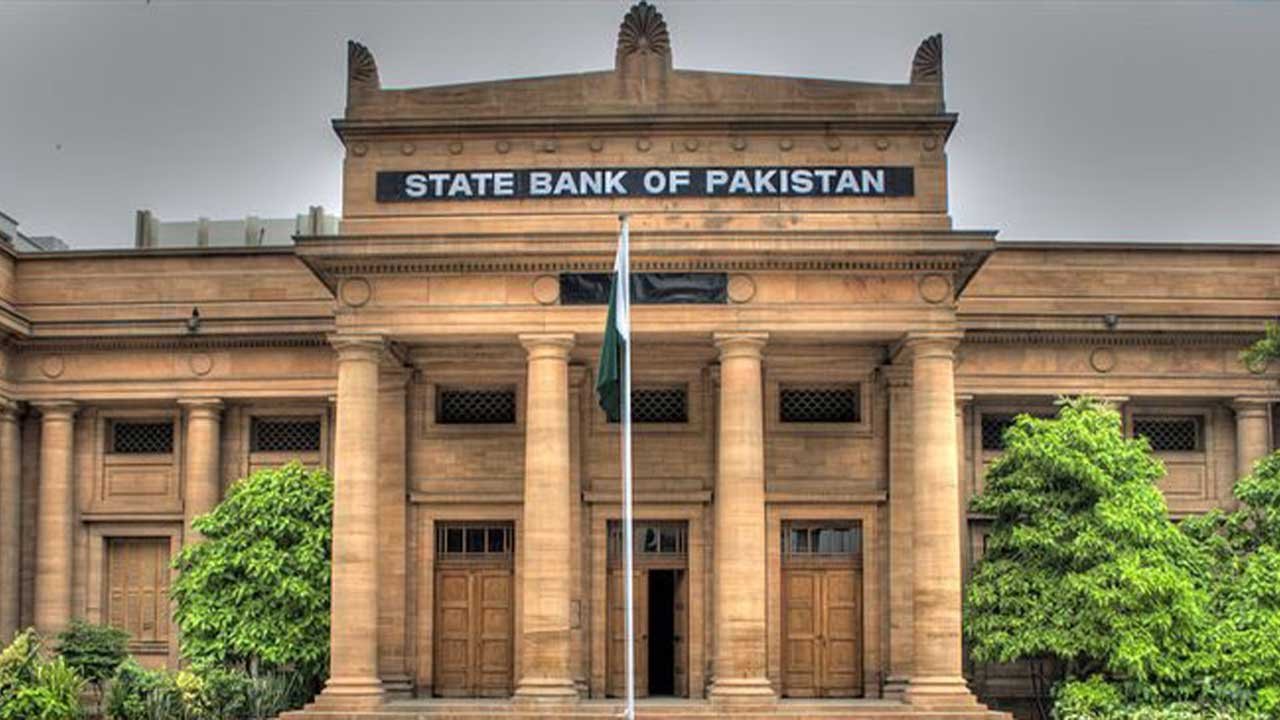
    In its annual economic health report released on Wednesday, the State Bank of Pakistan (SBP) slashed its predicted GDP growth from the previously disclosed range of 3–4 per cent for the current fiscal year, citing flood-induced destruction and the stabilisation policy as important contributors.

    However, the central bank stated that economic growth was stronger than anticipated in the 2021–22 fiscal year as real GDP increased by 6 per cent compared to 5.7 per cent a year earlier in its Annual Report on the State of Pakistan’s Economy, which mainly covered the previous fiscal year that ended on June 30.

    According to Geo, the GDP grew by 6 per cent in the previous fiscal year. In its monetary policy announcement from October, the SBP already reduced the economic growth to around 2 per cent.

    According to the research, increased agricultural output and a broad-based expansion of large-scale manufacturing (LSM) were the main forces behind this gain.

    Macroeconomic imbalances returned during FY22 as a result of a combination of unfavourable global and domestic circumstances.

    When widespread flooding struck a significant portion of the nation at the beginning of the current fiscal year, the SBP claimed that the economy was in the middle of a stabilisation phase.

    According to the report, the flooding was predicted to have an impact on the nation’s real economic activity through a number of channels. It was feared that losses in agriculture resulting from the destruction of crops and livestock would spread to the rest of the economy through a number of backward and forward links.

    According to the bank, the extensive devastation of infrastructure in the afflicted provinces might also harm the nation’s chances for growth this year.

    Due to the deteriorating economic climate, the SBP avoided stating a range for the growth rate of the current fiscal year. Due to the high rate of inflation and the scarcity of gas and electricity, industries have either stopped operating entirely or substantially reduced their production.

    The SBP’s restriction on the opening of letters of credit (LCs) for imports in an effort to save money is a significant contributing factor.

    In the event that the gas supply is not restored and no LCs are opened, the All-Pakistan Textile Mills Association has warned to declare layoffs within days.

    According to the textile industry, up to 500,000 people who were either directly or indirectly employed by the business have lost their jobs. However, there are no official statistics in this regard.

  • Bangladesh’s GDP is expected to reach $1 trillion by 2040 due to a fast-growing consumer market

    Bangladesh’s GDP is expected to reach $1 trillion by 2040 due to a fast-growing consumer market

    Bangladesh is on track to have a $1 trillion economy by 2040, owing to consumer confidence, innovation in growing economic sectors, and a young, energetic workforce.

    According to a Boston Consulting Group (BCG) analysis released on Friday, the South Asian country has beaten rivals including India, Indonesia, Vietnam, Philippines, and Thailand with average annual growth of 6.4 per cent between 2016 and 2021.

    The domestic consumer market in Bangladesh is expected to expand to be the ninth-largest in the world. The survey also noted that between 2020 and 2025, a quickly growing middle class and wealthy class are expected to increase significantly, with a thriving gig economy supporting a workforce where the average age is only 28, according to Bloomberg.

    “The country could have easily been overshadowed by its neighbor to the northeast — China — or its continental cousin to the west — India — but in this region of economic powerhouses, Bangladesh stands tall,” BCG wrote.

    In 2015, Bangladesh moved up the income scale from poor to lower-middle income. Bangladesh’s GDP per capita is already larger than its neighbour, even though it is five years later than India. By 2031, the country hopes to reach upper middle income status.

    Some obstacles still exist. According to BCG, recent liquidity problems, as well as pressures from foreign exchange and inflation, could shorten growth. However, Bangladesh has made steps to prepare its $416 billion economy for a prosperous few decades, provided it keeps its average growth rate around 5 per cent.

    According to a BCG survey study, 57 per cent of respondents “continue to feel that, especially as the nation shifts to a skill-based economy, the next generation would have better lifestyles than themselves.”

    “Though the economy faces some near-term volatility, we are confident that this highly resilient economy will continue to demonstrate robust growth in the long term,” the report said.

  • IMF expects Pakistan’s govt gross debt to decline by 6.7%

    IMF expects Pakistan’s govt gross debt to decline by 6.7%

    According to projections made by the International Monetary Fund (IMF), Pakistan’s government gross debt will decrease from 77.8 per cent of GDP in 2022 to 71.1 per cent in 2023.

    The predictions for Pakistan’s fiscal year 2022–2023, however, are made using data as of the end of August 2022 and do not take the current floods’ effects into account.

    The net debt for Pakistan is predicted to decrease from 71.5 per cent of GDP in 2022 to 66.1 per cent in 2023, according to the IMF study “Fiscal Monitor, Helping People Bounce Back.”

    According to projections, government revenue will represent 12.4 per cent of GDP in 2023 and 12.8 per cent of GDP in 2024, compared to 12.1 per cent during the same time in 2022.

    The primary balance of the government was predicted by the Fund to be 0.2 per cent in 2023 as opposed to -3.0 per cent in 2022. Furthermore, compared to 2022, 2023 is expected to see a decrease in the government’s overall balance of 4.8 per cent.

  • Pakistan’s GDP likely to decrease to 2% in FY23 as flood damage may cost $30 billion

    Pakistan’s GDP likely to decrease to 2% in FY23 as flood damage may cost $30 billion

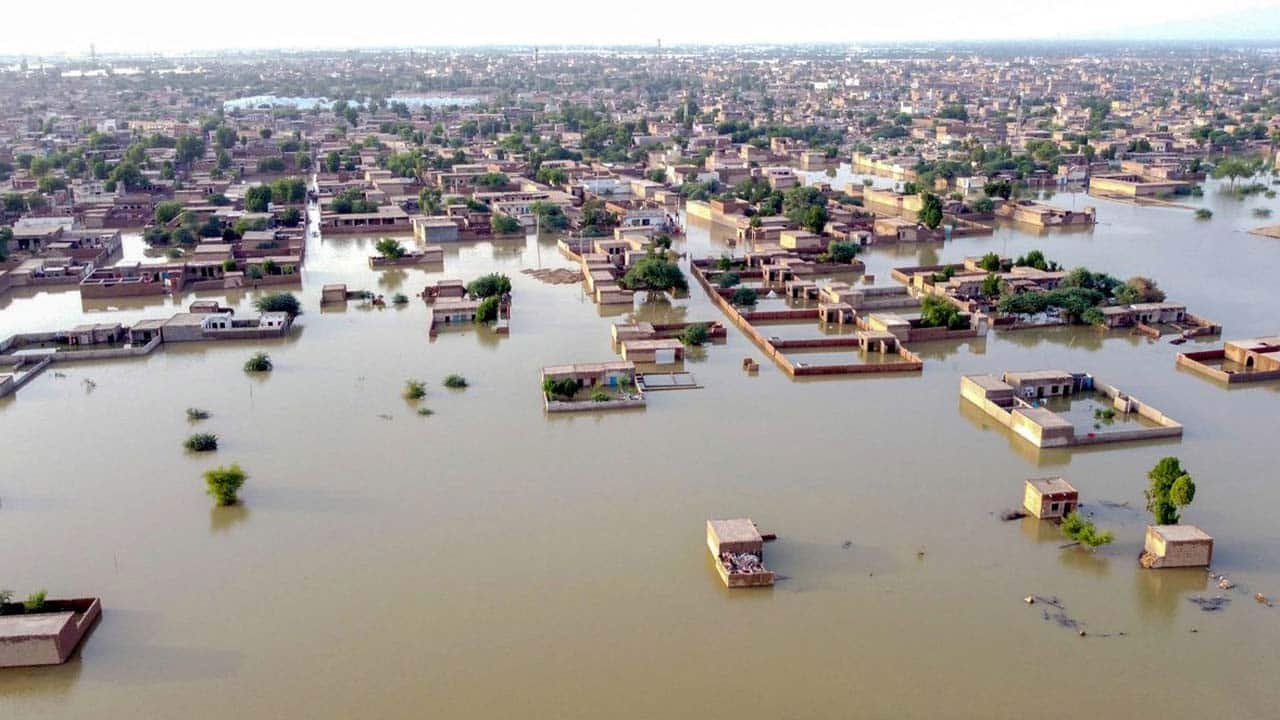
    Syed Zafar Ali Shah, Secretary of the Ministry of Planning, Development, and Special Initiatives, stated on Thursday that a preliminary estimate indicated that the GDP growth rate may remain at two percent in the current fiscal year and that the estimated cost of damage repair, including reconstruction, may be $30 billion as a result of the nation’s floods.

    He stated that we are gathering damage assessment data for a preliminary report and that the preliminary report and verification procedure would both be finished by October 15.

    According to The Nation, teams from the government and ten international development organisations, such as the World Bank (WB), the Asian Development Bank (ADB), the United Nations (UN), and others, are working together to prepare the preliminary report for the damage assessment of the country’s floods.

    In order to prepare early estimates on damage and reconstruction, he claimed that 100 specialists from development partners, such as the World Bank, the ADB, the UN, the EU, Turkey, etc., are currently working in 12 to 17 sectors.

    According to him, the Pakistani government would take the initiative in relief operations, and technical skills will be provided by professionals to evaluate the field damage and the cost of rehabilitation. The administration will solicit donations for reconstruction after making the final determination.

    In relation to the evaluation of the damage to the railways, Zafar Ali stated that it has been initially predicted that $2.3 billion will be needed for the reconstruction of the railroad tracks, bridges, and other associated facilities that have been harmed by floods. In total, 113 districts in Pakistan have been damaged by flooding, but 83 of those areas are catastrophe hit and require complete repair and rehabilitation work, according to him.

    He claimed that the cost to rebuild homes is projected to be $3 billion. However, he said that the provinces are consistently reassessing damage. When the water recedes, he said, the Sindh government will begin work on reassessing those places. He claimed that water covers the majority of Sindh’s railroad rails.

    He claimed that the Sindh flood had a significant negative impact on cotton, rice, and other crops. According to him, three million cotton bales are thought to have been lost. However, it appears that things are improving and the loss may only total 2.7 million bales, the secretary said, adding that it is still too early to provide a precise estimate of the cotton crop’s losses. He predicted that future wheat crop farming in Sindh and Khyber-Pakhtunkhwa would also be impacted.

    He claimed that the nation’s severe flooding has had an impact on 4.3 million families. He stated that more than 0.3 million people in Balochistan had been impacted by the floods. According to him, the ADB has authorised a $3 million grant to boost the Pakistani government’s emergency relief efforts in the wake of massive flooding around the nation.

    The planning secretary also mentioned that a Dutch expert would be working with NESPAK to update the flood prevention strategy for 2017. He said that the administration has so far used $303 million in donor funding that was intended for disaster relief. According to him, this sum consists of $3 million from the ADB and $300 million from the World Bank.

    Despite the $160 million in pledges made so far by the world community, he claimed that much more money will be needed to complete the reconstruction and rehabilitation.

    The planning secretary responded to a question concerning diverting PSDP-2022–23 monies for flood victims by saying that work is still being done on this issue, but no decisions have been made as of yet. He stated that the Benazir Income Support Program is now supporting the flood-affected population with Rs70 billion from the government.

  • India beats UK to become fifth-largest economy in the world

    India beats UK to become fifth-largest economy in the world

    India has surpassed the United Kingdom to take over as the world’s fifth-largest economy. The country was ranked as having the fifth-largest economy after outperforming England in the first three months of 2021.

    The UK has moved up to the sixth spot from where it was rated during the 2019 fiscal year. According to a survey by Bloomberg, the US economy was worth USD 854.7 million in ‘nominal’ cash terms in the quarter ending in March, compared to USD 816 million for the UK.

    According to reports, the mark was calculated using an adjusted basis and the dollar exchange rate on the last day of the relevant quarter.

    The update was released two days after the government published the first-quarter GDP figures.

    According to statistics, the Indian economy is expanding by 13.5 per cent annually. Despite the fact that this figure was lower than the RBI’s prediction, the rate is reported to be the highest among emerging nations.

    This fiscal year, India is expected to grow at a rate of about 7 per cent.

  • IMF report exposes incorrect PTI policies that led to rupee’s devaluation

    IMF report exposes incorrect PTI policies that led to rupee’s devaluation

    The International Monetary Fund (IMF) has issued its country report for Pakistan, exposing erroneous policies implemented by the PTI administration that, according to the Fund, undermined the country’s currency reserves and led to the rupee’s devaluation.

    The study also discloses what the present administration, led by the PML-N, has promised the international lender, according to Samaa.

    The study does not identify any political party, but it does mention rising GDP, which the PTI has said is the outcome of its policies. Pakistan’s GDP increased by 6 per cent in fiscal year 2021-22 (FY22), which ended less than three months after Imran Khan was overthrown by parliament in early April.

    According to experts, the increase in GDP was driven by unsustainable expansion, which resulted in economic overheating. The IMF study comes to the same conclusion.

    According to the Fund, GDP growth in FY22 was “driven by permissive fiscal policy and a delayed monetary reaction to inflationary pressures.”

    These factors, together with worldwide food and fuel price shocks, resulted in a major worsening of the external situation, including an unsustainable current account deficit, a considerable decrease in reserves, and a significant devaluation of the rupee.

    The PTI administration failed to respond to the worldwide commodity price increase, and its policies caused the rupee to depreciate and currency reserves to dwindle, according to the international lender.

    Pakistan is at a crossroads in its economic development. Internal demand reached unsustainable levels as a result of a challenging external environment paired with procyclical domestic measures. According to the IMF, the resulting economic overheating resulted in high fiscal and external deficits in FY22, contributed to increasing inflation, and destroyed reserve buffers.

    The PTI administration broke its pledges quickly after collecting roughly $1 billion from the IMF. Following the completion of the sixth evaluation, programme implementation worsened. In the midst of a volatile political scene, planned fiscal adjustment was reversed, and some significant EFF agreements were honoured, as per the report.

    According to the report, the present administration has informed the Fund that it would reimpose the general sales tax (GST) on petroleum products and will not provide any fuel subsidies.

    The current administration will not declare a tax amnesty unless Parliament first approves it. It will also simplify the sales tax on services throughout the country. Currently, different provincial territories apply varying rates of sales tax on services.

    The Fund takes notice of the actions implemented by the PML-N administration to re-establish the IMF programme, including a budget based on a basic surplus, a rise in interest rates, and the elimination of fuel subsidies.

    The IMF has advised the government to maintain a market-based currency rate, enhance tax income, and strengthen foreign reserves. The IMF also said that the lending programmes entail exceptional risks even after policy adjustments.

  • ADB projects Pakistan’s economy to ‘recover slightly’ in FY23

    ADB projects Pakistan’s economy to ‘recover slightly’ in FY23

    In FY2023, Pakistan’s Gross Domestic Product (GDP) growth is expected to modestly improve due to structural changes, according to the Asian Development Bank (ADB).

    According to the bank’s most recent Asian Development Outlook Supplement, Pakistan’s GDP growth is predicted to decrease in FY22 (which ends on June 30, 2022), as a result of fiscal tightening measures taken to control rising demand pressures and contain external and fiscal imbalances.

    As the country’s inflation surged from 12.3 per cent in December 2021 to 21.3 per cent in June 2022, the bank slightly lowered Pakistan’s inflation for FY22 and dramatically for FY23.

    “In addition to the effects of elevated global energy and food prices, the government’s efforts to revive the stalled International Monetary Fund (IMF) programme has meant raising power tariffs and withdrawing subsidies in the oil and power sectors,” said ADB.

    In comparison to Sri Lanka, which boosted its policy rate by 950 basis points over the previous six months, the State Bank of Pakistan (SBP) has upped interest rates by 525 basis points since January 1. This also makes it one of the most active central banks in the region.

    The ADB also reduced its 2022 growth prediction for Asia and issued a warning that things could become worse as a result of the conflict in Ukraine and supply chain disruptions that are expected to drive up costs.

    Read more: Pakistani rupee plunges to Rs227 against US dollar at midday trading

    Although Covid-19’s effects had subsided, the region was now dealing with the consequences of Russia’s invasion of Ukraine, lockdowns in China, and aggressively raised interest rates, according to the Manila-based lender.

    The bank reduced its 2022 growth prediction to 4.6 per cent to reflect the decline in developing Asia, which runs from Kazakhstan in Central Asia to the Cook Islands in the Pacific.

    South Asia’s economy is anticipated to grow less than the projected rate of growth in the Asian Development Outlook 2022.