Tag: GDP

  • Pakistan’s GDP projected to climb by 5-6 per cent in FY 22-23

    Pakistan’s GDP projected to climb by 5-6 per cent in FY 22-23

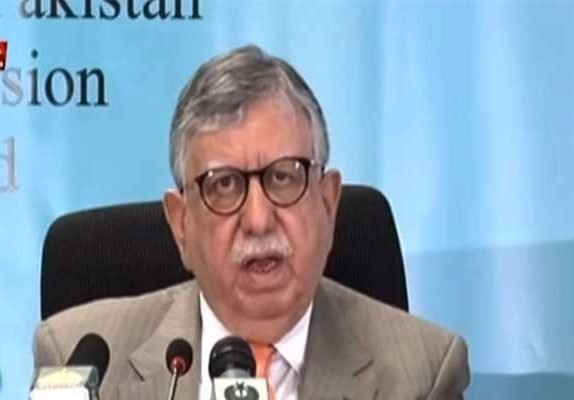
    Finance Minister Miftah Ismail forecasted that Pakistan’s GDP would expand by 5 per cent to 6 per cent, and that the government would keep inflation under control, while speaking at the pre-budget conference on Tuesday, June 7.

    The Finance minister expressed his ‘high confidence’ in the agreement with the International Monetary Fund (IMF) and revealed that the government had developed a progressive fiscal budget with a deficit of less than 5 per cent, according to Express News.

    “We had to make difficult decisions; it’s difficult for any prime minister to authorise such a hike in petrol costs, but we were losing money.” “Every month, we lost more than 120 billion rupees,” the minister said.

    According to him, the PTI administration signed an IMF agreement that mandated the reduction of fuel subsidies.

    Miftah claimed the administration has re-engaged with China, Saudi Arabia, and the United Arab Emirates (UAE), among other countries, as part of the present government’s successful negotiations.

    “Following a meeting between Foreign Minister Bilawal Bhutto and Chinese Prime Minister [Li Keqiang], China decided to re-roll their $2.4 billion programme. China has lowered its borrowing rate from 2.5 per cent to 1.5 per cent, saving the country money “Miftah said, “Roughly $23 million”.

    He went on to say that the Saudis had agreed to increase Pakistan’s “oil line” and offer the country with a $100 million revolving credit.

    According to Miftah, the current government inherited a country with the world’s third highest inflation rate, 20 million people living in poverty, and widespread unemployment.

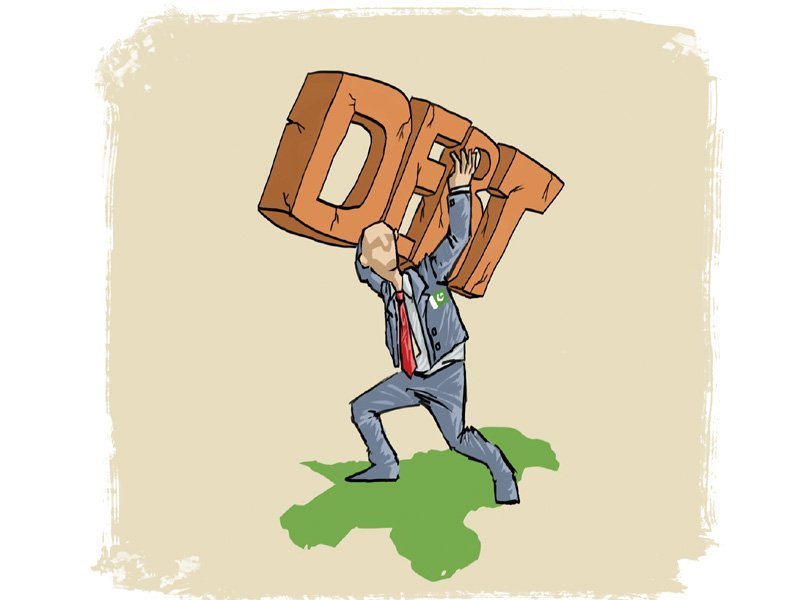
    He went on to say that the country’s debt payments had increased tremendously as a result of the amount of loans taken on by the PTI government.

    Pakistan’s economic paradigm, according to the minister, is inherently faulty. “We enrich the wealthy,” he remarked.

    The finance minister also spoke about one-time Rs2,000 assistance for 14 million families. The amount will be distributed in June at a cost of Rs28 billion to the government.

    Aside from the 7.3 million BISP recipients, the package also covers 6.7 million households with poverty levels of less than 37.

    According to Miftah, the country’s industry and consumers are heavily reliant on imports, causing the current account to be in deficit. He went on to say that Pakistan’s economy focuses on import substitution rather than export development, a paradigm that has been replicated in a number of developing countries.

    Aside from textiles, Pakistan has no big exports because the agriculture sector is failing to remain productive.
  • Finance Ministry warns public of further increase in inflation

    Finance Ministry warns public of further increase in inflation

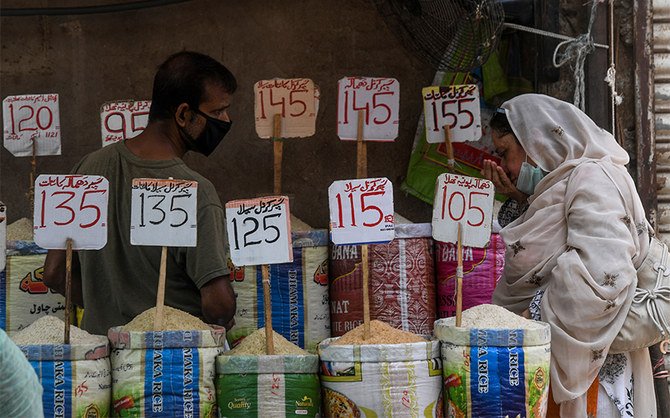
    The Finance Ministry of Pakistan has warned the public that the exchange rate, commodity supplies, and seasonality could increase the prices and transportation costs in the country, reports Dawn.

    The fiscal deficit in July-August was recorded at 0.9 per cent of the Gross Domestic Product (GDP), same as the previous year.

    Economic Adviser’s Wing of the Ministry of Finance in its monthly Economic Update & Outlook states, “The effect of these impulses — surge in international oil prices, exchange rate depreciation and adjustments in administered prices — may intensify the magnitude of prices and transportation cost.”

    The ministry said the country had seen some improvement in economic activities but an unprecedented increase in international commodity prices was putting pressure on domestic prices as well as on the local currency. However, the government’s pro-growth initiative along with efficient monitoring of prices is expected to provide relief to the general public.

    The ministry further explained that the country’s inflation rate was mainly driven by monetary and supply-side factors, including domestic and international commodity prices, dollar exchange rate, seasonal factors.

    As per a report, petrol prices in Pakistan may go up by Rs7 per litre from November 1.

    Earlier, it was reported that inflation in Pakistan has broken a 70-year record in the last three years, with food prices doubling, while the prices of ghee, oil, sugar, flour, and poultry have reached historic levels.

    A couple of weeks ago, Adviser to the Prime Minister on Finance and Revenue Shaukat Tarin said that things are becoming more expensive all over the world and the reasons are unknown.

  • Shaukat Tarin presents the Pakistan Economic Survey 2020-21

    Shaukat Tarin presents the Pakistan Economic Survey 2020-21

    Finance Minister Shaukat Tarin presented the Pakistan Economic Survey 2020-21 at a press conference in Islamabad on Thursday. However, the document did not have the latest figures on poverty and unemployment.

    Tarin revealed that the industrial and services sectors had helped the country post-Gross Domestic Product growth of 3.94 per cent in the first nine months of the fiscal year [FY](July to March), significantly higher than the target of 2.1 per cent.

    “The agriculture and manufacturing sectors helped the economy grow to 4.4%, laying stress on the need for sustainable growth in Pakistan in the years to come,” added Tarin.

    Coronavirus Pandemic

    The minister opened his press briefing by speaking highly of Prime Minister Imran Khan’s policies in combating the coronavirus pandemic.

    “The government itself had set [GDP] growth will be 2.1pc and the IMF predicted even lower. But the decisions by this government such as incentivising manufacturing and textiles, construction, and interventions in agriculture have helped the economy recover,” said Tarin.

    He said many people lost their jobs when the pandemic hit Pakistan, however, due to PM’s visionary policy of not imposing a complete lockdown across the country, millions of people who were unemployed were hired again. 

    “The economy is recovering,” he said. 

    Remittances

    Tarin said Pakistan’s remittances had broken records, adding that they had crossed $26bn. He said that lately imports, especially food in the form of wheat and sugar, were increasing as Pakistan’s economy was growing at the same time. 

    “We were net exporter of food but now, we have become a net importer,” he said. “Our exports registered a growth but our remittances increased manifold,” he added. 

    Ehsaas Programme

    Tarin spoke highly of the Ehsaas programme, adding that the World Bank had described it as “one of the best and the largest” poverty alleviation initiatives across the globe. 

    “Full credit goes to Sania Nishtar,” he said, adding that handing out cash to 15 million people was not a small achievement.

    Growth rate

    Tarin said he had told the prime minister it was time to focus on sustainable growth “until we go to 5-8pc GDP growth”.

    “We will do interventions and take care of the poor. The poor man has been crushed in this stabilisation phase because the dreams we have shown them have been of a trickledown economy. And this can only happen when growth is sustainable and continuous for 20-30 years,” he said.

    “Countries which had sustainable growth, they grew continuously for 20-30 years. What have we done? Every time we grow by borrowing money, which is credit-based growth.”

    Current Account

    According to the survey, during FY 2021, while the world was reeling from the economic impact of the pandemic, Pakistan’s “external sector appeared as a key buffer for resilience.”

     “The main driver of improvement in current account balance was the robust growth in remittances,” it stated.

    Trade Deficit

    “During July-March FY 2021, export of goods grew by 2.3 percent to $18.7 bn as compared to US$ 18.3 bn the same period last year. Import of goods grew by 9.4pc to $37.4 bn as compared to US$ 34.2 bn last year. Consequently, the trade deficit increased by 17.7per cent to $18.7bn as compared to $15.9bn last year,” the survey said.

    Inflation

    The finance minister said the government wanted to control inflation “but prices are still high and affecting the common man”.

    “So the way to solve this is by increasing production and that is why we have focused on agriculture in this budget,” Tarin said.

    Federal Board of Revenue (FBR)

    Speaking about the FBR, Tarin said he would end the practice of people being harassed by the bureau. “FBR will not audit [businesses or persons] but a third-party audit will be conducted,” he said. 

    International Monetary Fund (IMF)

    Tarin said Pakistan’s negotiations with the IMF were ongoing, adding that the international money lender had asked the government to hike tariffs and increase taxes. 

    The finance minister said Pakistan and the IMF want the same thing; sustainable growth, adding that the country cannot afford to increase taxes or hike tariffs so that the poor and the salaried class do not feel additional burden of inflation. 

    “This is a red line for the prime minister,” he said. “We will not further burden the poor,” he added. 

    Energy Sector

    Tarin said Pakistan’s economy was burdened due to the overcapacity in the power sector, saying that “it was a very big challenge and a black hole” for Pakistan. 

    Privitisation

     Tarin said it was fair to ask how he can privatise state-owned enterprises when all others, before him, promised to do the same but failed to. 

    “Nawaz Sharif used to shout the same slogan during the first time [when he was prime minister] and then for a second time [when he again became the prime minister] and then a third, but nothing happened,” he said. 

  • PTI fudging economic figures, claims PML-N

    A pre-budget seminar was organised by the Pakistan Muslim League-Nawaz (PML-N) on June 3 in Islamabad.

    The seminar was organised by the Economic Advisory Council of the PML-N on the direction of party president Shehbaz Sharif.

    Titled ‘Economy sinking under Imran Khan’s government’, the seminar discussed all the economic issues before the upcoming budget. The main focus was on the economic policies of the Pakistan Tehreek-i-Insaf (PTI) government.

    Graphs shown during the seminar entailed that Pakistan’s gross domestic product (GDP) grew by 5.8 per cent in PML-N’s last year, the highest in 16 years. In addition, GDP growth consistently remained above 4 per cent in each of PML-N’s 5 years. GDP growth has significantly declined during PTI’s tenure with 2.1 per cent growth in 2019.

    PTI is claiming 3.9 per cent growth now in 2021, but this claim is being challenged by independent economists. Whereas, GDP has significantly declined during PTI’s tenure with 2.1 per cent growth in 2019.

    Shehbaz Sharif claimed that the government was pushing out wrong statistics and misinforming the public since the start of the its tenure.

    “The government’s statistics [regarding the budget] have already become a subject of debate,” Shehbaz said while addressing the seminar virtually.

    “Their past is evident and they have been putting forth forged figures,” he said. “This comes on top of the government’s worst performance and major failures.”

    Last week, on Sunday, while addressing the nation live, Prime Minister Imran Khan said the Opposition parties were complaining about the government misleading the nation on the economy as they had not expected it to achieve a growth rate of nearly 4 per cent.

    “The economic growth rate has baffled political opponents who wanted the government to fail in meeting these challenges left behind by our predecessors,” added Khan.

  • First two years of PTI: Lowest development spending in decade, 46% increase in per capita debt

    First two years of PTI: Lowest development spending in decade, 46% increase in per capita debt

    The per capita debt of Pakistan has jumped to Rs175,000 at the end of last fiscal year — a 46 per cent increase within two years, the Ministry of Finance told the National Assembly.

    In the Fiscal Policy Statement of 2020-21, the finance ministry admitted that the government violated the Fiscal Responsibility and Debt Limitation (FRDL) Act of 2005 by failing to reduce the federal fiscal deficit to 4% of the size of national economy, reported Express Tribune.

    The federal deficit stood at 8.6% of GDP, the report said.

    According to the fiscal statement, the current expenditures were at 28-year high level in FY19-20, whereas the development spending was the lowest in a decade in terms of total size of the economy. “Total expenditures in terms of the size of economy were at the highest level in 21 years — at 23.1% of GDP,” it reported.

    The report mentioned that the public debt was recorded at Rs36.4 trillion at the end of June 2020 which means per person debt increased by Rs21,311 or 14% in the last one year. The debt ratio was formulated on the assumption of the total population of 208 million.

    In June 2018, the total public debt was Rs24.9 trillion and the finance ministry at that time worked out the per capita debt at Rs120,099. In the first year of the PTI government, there was a 28 per cent increase in the per capita debt, while in the second the debt rose by 14 per cent.

  • GDP growth in 2021: Pakistan likely at par with Nigeria at 1.5%; India at 11.5%, China at 8.1%

    GDP growth in 2021: Pakistan likely at par with Nigeria at 1.5%; India at 11.5%, China at 8.1%

    The International Monetary Fund (IMF) has raised its forecast for global economic growth in 2021 but warned that there was still “extraordinary uncertainty” about the outlook.

    According to the latest World Economic Outlook forecast, the IMF projects global growth at 5.5%, which is higher than their previous forecast in October. Global growth will moderate to 4.2% growth in 2022, the IMF said.

    As per the forecast, Pakistan’s gross domestic product (GDP) growth in the ongoing year will stand at 1.5% that it shares with Nigeria, while neighbouring India and China are likely to stand at staggering 11.5% and 8.1%, respectively.

    GDP is the total monetary or market value of all the finished goods and services produced within a country’s borders in a specific time period. As a broad measure of overall domestic production, it functions as a comprehensive scorecard of a given country’s economic health.

    Malaysia’s growth is likely to stand at 7%, Turkey: 6%, Spain: 5.9%, France: 5.5%, the United States (US) 5.1%, Indonesia: 4.8%, the United Kingdom (UK): 4.5%, Mexico: 4.3%, Brazil: 3.6%, Canada: 3.6%, Germany: 3.5%, Japan: 3.1%, Russia: 3%, Italy: 3%, while the GDP growth of Saudi Arabia has been predicted to stand at 2.6%.

    The upgrade for this year reflects the positive effects from the start to vaccinations in some countries, additional fiscal support in the US and Japan, and at least a partial return to business and consumer normality as the health crisis wanes.

    “Much now depends on the outcome of this race between a mutating virus and vaccines to end the pandemic, and on the ability of policies to provide effective support until that happens,” said IMF chief economist Gita Gopinath in a blog post accompanying the updated forecast.

    The global economy contracted by 3.5% in 2020, the worst peacetime contraction since the Great Depression of the 1930s, the agency said.

    Close to 90 million people are expected to enter extreme poverty in 2020 and 2021, reversing the trends of the past two decades, the IMF said.

    Altogether, the COVID-19 pandemic will cost the global economy $22 trillion over 2020-2025 relative to pre-pandemic projected levels.

  • E-commerce can create two million jobs and boost GDP up to $40 billion in Pakistan

    E-commerce can create two million jobs and boost GDP up to $40 billion in Pakistan

    E-commerce in Pakistan has the potential to create two million jobs and it can boost the country’s Gross Domestic Product (GDP) up to the level of $40 billion in the next couple of years.

    President of Rawalpindi Chamber of Commerce and Industry (RCCI) Saboor Malik, stated that transformation is required in the Information, Communications, and Technology sectors to uplift the digital economy of Pakistan.

    Saboor Malik has urged the government of Pakistan to adopt new dimensions of the economy as the digital platforms have been rapidly growing around the world and countries like Pakistan are still far behind in this race.

    More than 66 per cent of payments for e-shopping are being made as Cash on Delivery (COD) which does not reflect the true sense of digital platform.

    The Federal cabinet has already approved the E-commerce policy for promoting the digital culture and paperless trade to help enhance the trade volume.

    RCCI President remarked that Pakistan has huge participation in the global mobile market, with over 160 million mobile phone subscribers and around 150 million internet users.

    He suggested that the government must overhaul the whole banking infrastructure and encourage businesses, retailers, petrol pumps, PIA, Railways ticketing, superstores, schools and colleges to introduce payment gateways and banks should offer credit cards to businessmen.

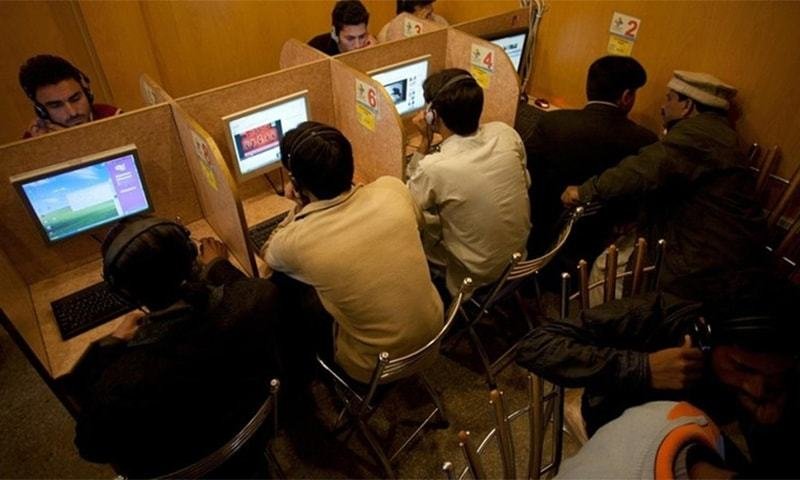
  • Pakistan ranks 76th on ‘Inclusive Internet Index 2020’

    Pakistan ranks 76th on ‘Inclusive Internet Index 2020’

    Pakistan ranks 76th out of 100 countries on the inclusive internet index 2020 released by the Economist Intelligence Unit (EIU), reported DAWN.

    The ‘Inclusive Internet Index’ place countries on the availability, affordability, relevance and the readiness of masses to use it. This annual report is generated by Facebook.

    READ MORE: US firm helps Modi govt keep social media blocked in held Kashmir

    This report covered 100 countries, which includes 91 per cent of the world’s population and 96pc of global GDP.

    On a benchmark of one (best) to 100 (worst), Pakistan stood at the 76th place out of the total countries surveyed. Apart from the global index, Pakistan ranks 24th out of 26 Asian countries.

    The fundamental reasons for this ranking are gender gaps, low levels of digital literacy and relatively poor network quality, according to the EIU report.

    READ MORE: Apple, Nike and Samsung among 83 brands using Uyghur Muslim ‘forced labour’

    In terms of availability — a category that examines the quality and breadth of available infrastructure required for access and levels of internet usage — Pakistan ranked 86th out of 100.

    The country fared relatively better on affordability (57th) that is described as the cost of access relative to income and the level of competition in the internet marketplace.

    READ MORE: Sensitive personal information of Pakistanis leaked over the internet

    In terms of readiness — measured on the basis of access to the internet, including skills, cultural acceptance, and supporting policy — the country ranked 64th. Finally, Pakistan stood 71st on relevance, which is the existence and extent of local language content and relevant content.

    Looking at South Asia, Pakistan ranked the lowest, Bangladesh at 70th, Sri Lanka at 56 and India on the 46th spot.

    The first country ranked in this year’s index is Sweden, followed by New Zealand and the United States. Australia and Denmark both ranked fourth, followed by South Korea, Canada, the United Kingdom, France and Spain.

    Among the global worst are Burandi at 100th, Liberia, Madag­ascar, Malawi and Burkina Faso.