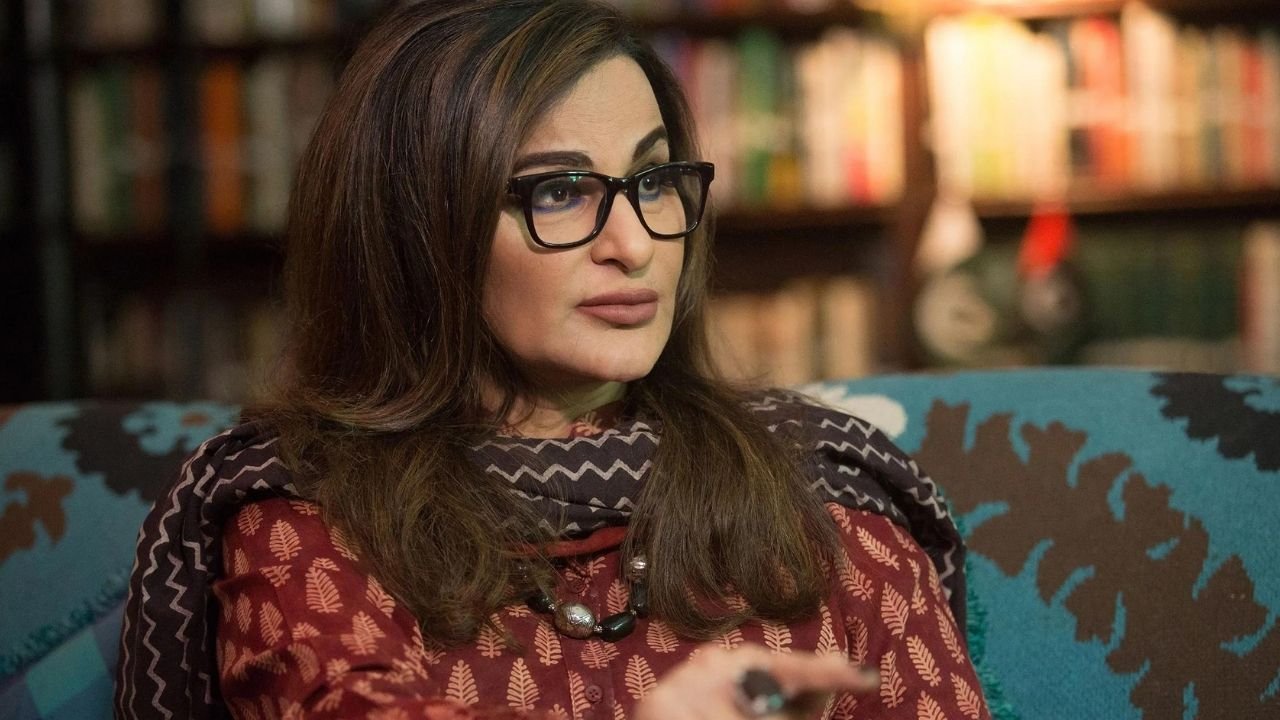
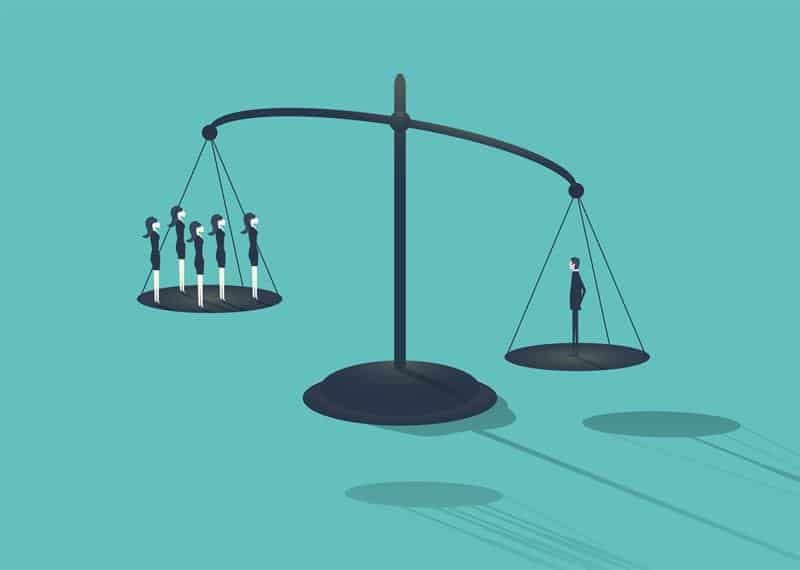
Pakistan People’s Party (PPP) Vice President and Parliamentary leader Sherry Rehman has highlighted a very common and a misogynistic issue women face in the workplace.
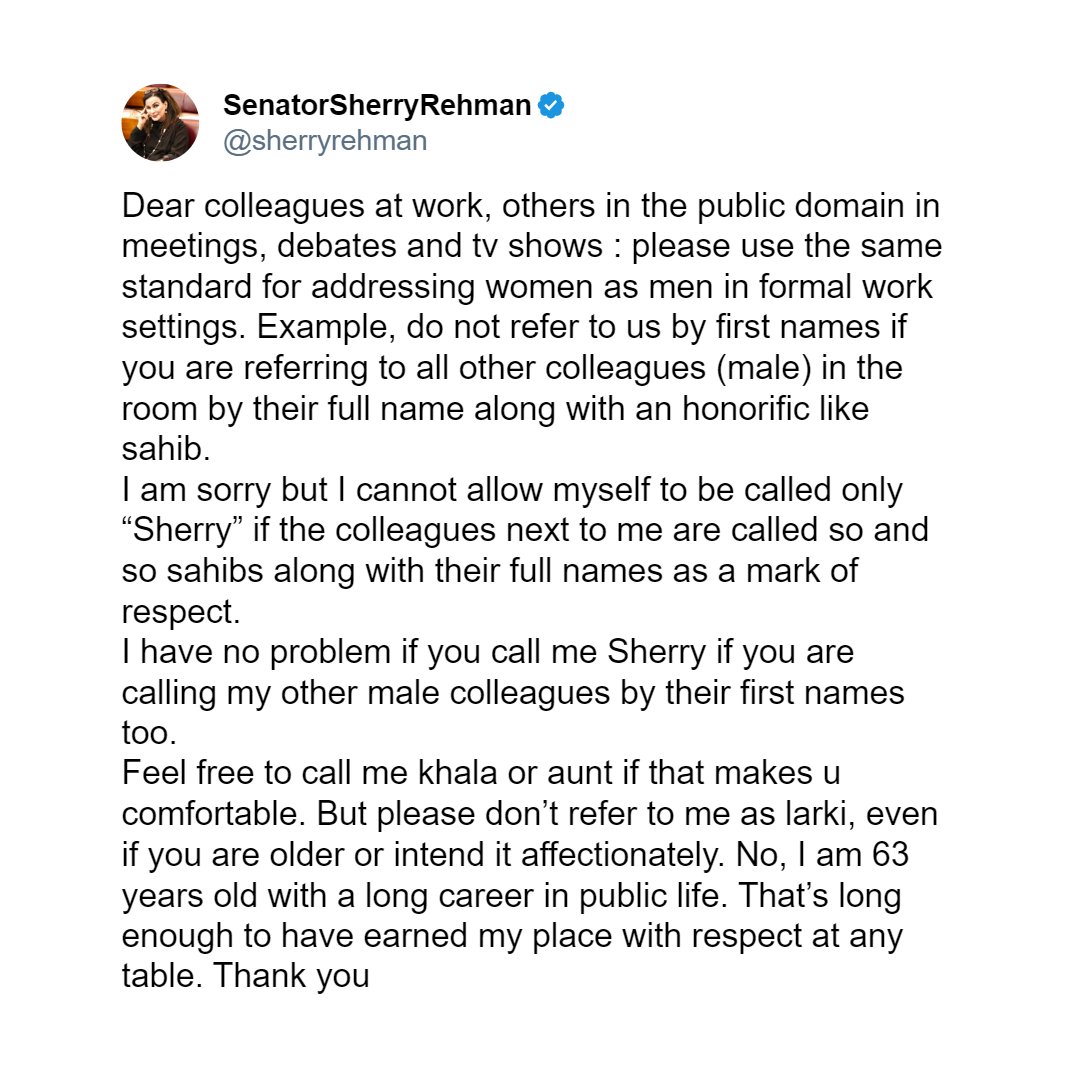
In her latest post on X (formerly Twitter), Rehman alluded to male professionals in Pakistan who discriminate in their manner of addressing female colleagues.
“I am sorry but I cannot allow myself to be called only “Sherry” if the colleagues next to me are called so and so sahibs along with their full names as a mark of respect.
I have no problem if you call me Sherry if you are calling my other male colleagues by their first names too”, she pointed out.
While men in workplaces are commonly referred to as ‘Sir,’ ‘Sahab,’ or by their full name out of respect for their professional status or simply their gender, women, on the other hand, are mostly called by their first name or derogatorily as ‘larki’ or ‘bibi,’ etc.
While professionally, calling someone by their first name is not inherently wrong, using more socially respectful language for men compared to women makes the practice sexist.
This lack of courtesy traditionally stems from the patriarchal idea of deeming women as intellectually and professionally inferior.
The Asian Development Bank (ADB) has granted a $250 million loan to Pakistan to enhance the country’s power transmission system, addressing persistent electricity shortages.
The approved aid aims to ensure a reliable electricity supply by expanding and enhancing the power transmission network in Punjab and Khyber Pakhtunkhwa provinces, as outlined in an official ADB statement.
The initiative, known as the Power Transmission Strengthening Project, focuses on fortifying the national grid’s stability by increasing transmission capacity.
The project includes the expansion of high-voltage transmission networks, specifically 500 kilovolt (kV) and 220 kV transmission line loops, with the goal of reducing transmission losses in Lahore, Punjab, through the replacement of outdated transmission lines.
ADB Director General for Central and West Asia, Yevgeniy Zhukov, emphasised the significance of a reliable power supply for inclusive and sustainable economic growth.
He expressed satisfaction in continuing ADB’s support for Pakistan’s pursuit of energy security and improved energy efficiency.
In addition to reinforcing power transmission, the project aims to complement ADB’s existing assistance to the National Transmission & Despatch Company Limited (NTDC).
This support targets energy security, climate resilience, and increased transmission capacity for the deployment of sufficient, reliable, clean, and cost-effective energy.
The project’s key objectives extend to enhancing the management of the national transmission system.
Beyond strengthening power transmission, ADB’s initiative will improve the project and financial management of NTDC, incorporating climate resilience in planning and operations.
To promote gender equality and women’s involvement in the energy sector, ADB plans to develop mentorship guidelines, conduct awareness campaigns, establish childcare centres, and provide technical training for female staff within NTDC.
The project also includes livelihood skills development for women in the designated areas, aiming to enhance their economic opportunities.
Additionally, local communities will receive training to enable them to respond effectively to climate-induced natural hazards.
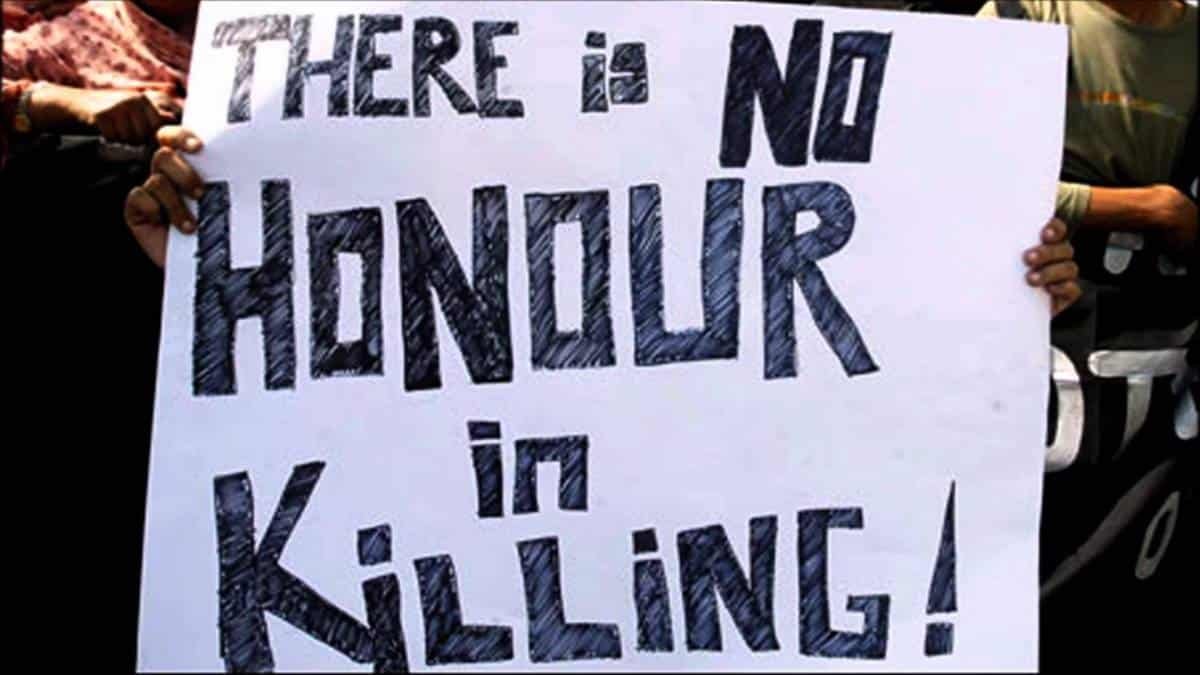
Peshawar High Court has granted bail in two separate cases involving honor killings.
The first case involved Swat resident, Akhtar Ali, suspected of being involved in the killing of his wife and another man over three months ago.
The bail was granted by Justice Shahid Khan of a single-member bench, who directed the submission of two surety bonds of Rs200,000 each for Ali’s release.
The incident, which took place on July 22, 2023, was initially reported at the Shaheedan Wenai police station in Swat under sections 302 and 311 of the Pakistan Penal Code and Section 15 of the Arms Act.
The complainant in the FIR, station house officer of the police station, Mohammad Zaib Khan, claimed that he along with a police team went to the crime site after learning about the murder of a man and a woman and found out that the deceased were killed by the petitioner, who suspected that the two had an extramarital affair
During the hearing, the bench noted that the case lacked substantial evidence against Ali.
It added that the complainant in the case had neither disclosed the name of the person who informed him about the involvement of the petitioner nor did he produce any other “cogent and reliable information, which could prima facie spoke about the guilt or otherwise of the petitioner.”
Lawyers Saeed Khan, Askar Khan, and Dunya Zeb, representing the petitioner, emphasized the absence of witnesses and evidence connecting Ali to the crime.
They added that the murders took place at nighttime and that there was no evidence to connect the petitioner with the commission of the offense.
Similarly, the court also granted bail to Habib Khan and his three sons – Talim Khan, Owais Khan, and Zarif Khan – from Lower Dir district.
It accepted the joint bail petition of suspects on the condition of furnishing two surety bonds of Rs100,000 each.
They were arrested on suspicion of the honor killing of Habib’s daughter-in-law, Nish Bibi, whose body was found at their residence on Sept 23, 2023.
An FIR was lodged by the mother of the girl, who alleged mistreatment and torture by her husband and in-laws.
The complainant claimed that her daughter was married to Dawood six years ago but she didn’t have kids and she often asked her husband for medical treatment.
She claimed that for the same reason, relations between the couple were strained and that she was mistreated by her husband and in-laws and was also tortured by them.
Legal counsel Shabbir Khan Daulatkhel defended the petitioners, maintaining that the prosecution’s case was founded on rumors, lacking any concrete evidence against the accused.
The initial bail application of the petitioners was rejected on Oct 12, 2023, by an additional sessions judge in the Chakdara area of Lower Dir district.
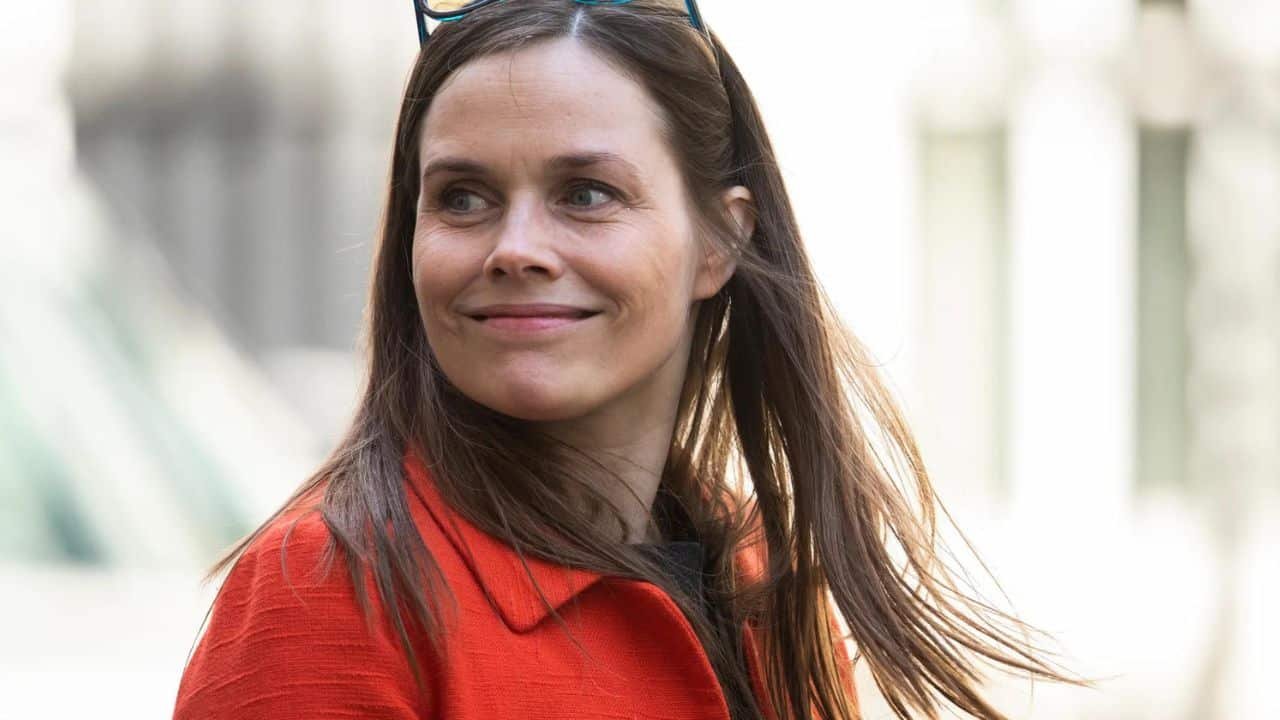
Tens of thousands of women in Iceland, including the prime minister, walked off the job on Tuesday to demand equal pay and protest violence against women, organisers said.
Iceland already tops a World Economic Forum (WEF) ranking for gender equality, but organisers said the country needed to make even more progress and lead by example.
“We are keenly aware that we have not reached gender equality, and even though the situation may be better than other places, there is no reason to just call it a day,” Steinunn Rognvaldsdottir, one of the organisers of “Kvennafri” (Women’s Day Off), told AFP.
The protest day has been called six times since 1975, this was only the second time that organisers made it a full-day strike, she added.
The other times, women walked off the job at a symbolic hour after which they were technically no longer earning a salary compared to male colleagues.
The average wage gap between men and women was 10.2 percent in 2021, according to Statistics Iceland.
Around 90 percent of Iceland’s women took part in the first protest in 1975, “which was momentous”, Rognvaldsdottir said.
Prime Minister Katrin Jakobsdottir was among those striking, her office told AFP.
“She will not attend to official duties and in that regard today’s scheduled cabinet meeting has been moved to tomorrow,” a spokesman said.
– ‘A present for mother-in-law’ –
Tens of thousands of women gathered for a large demonstration in the afternoon at the main square of the capital Reykjavik, and protests were also planned in other towns around the country of 400,000 people.
In Reykjavik, where 75 percent of city employees are women, 59 daycare centres and preschools were closed and all city services were affected by the strike.
City employees taking part in the strike will not lose pay, the city said.
Organisers of the movement said they expected men to take charge of the unpaid work that often falls to women.
“For this one day, we expect husbands, fathers, brothers and uncles to take on the responsibilities related to family and home, for example: preparing breakfast and lunch boxes, remembering birthdays of relatives, buying a present for your mother-in-law, making a dentist appointment for your child.”
“We always have to be on guard when it comes to our rights,” Lina Petra Thorarinsdottir, 45, told AFP.
“In Iceland we are proud of what we have accomplished and I am thankful for the women that came before us,” said Thorarinsdottir, head of tourism at marketing group Business Iceland.
But she said would continue to protest until women enjoyed “equal rights in full”.
The strikers also wanted their protest to raise awareness of gender-based violence.
“We still see that up to 40 percent of women have experienced some form of violence or will experience some form of violence in their lifetime,” Thorarinsdottir said.
“The strike is for both equality when it comes to paid and unpaid work, it also has to do with violence against women and non-binary people,” she said.
Fjola Helgadottir, a 41-year-old nurse, was unable to take part in Tuesday’s strike action.
“I would have liked to participate in today’s protest but because we work in the children’s emergency room, we have to provide that service,” she told AFP.
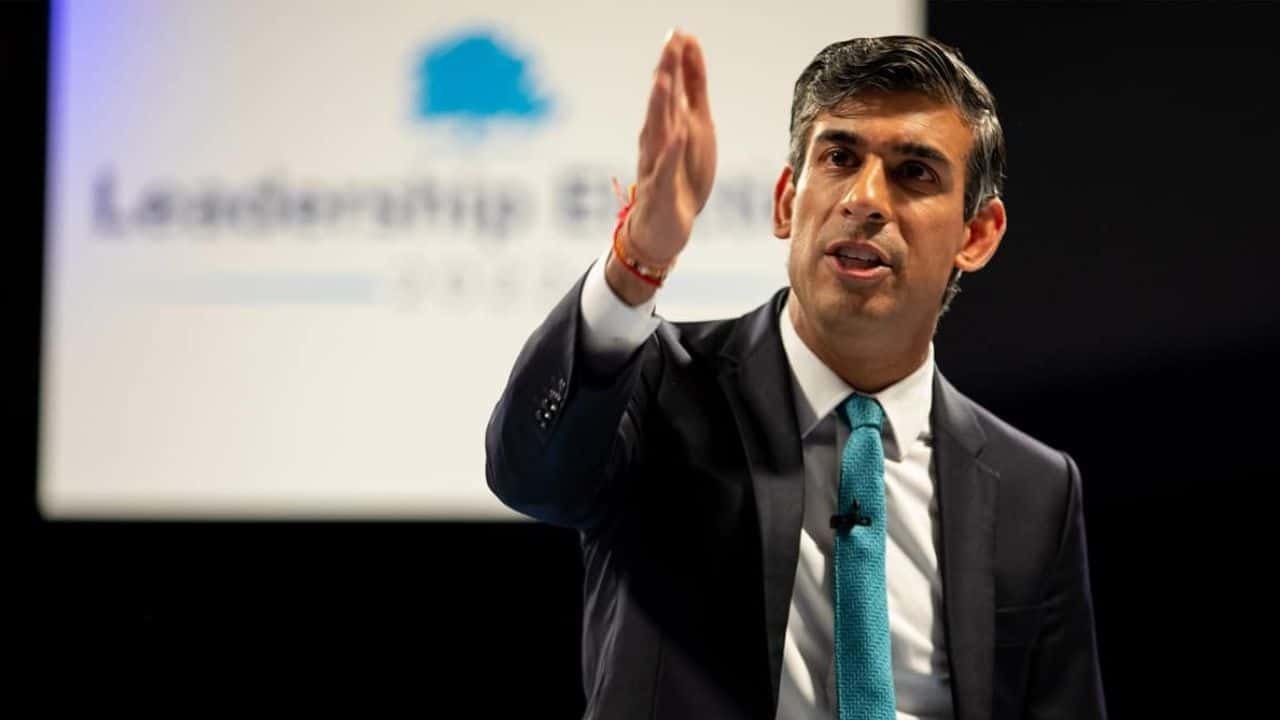
Rishi Sunak stated that it was “common sense” that “a man is a man and a woman is a woman.”
On Wednesday, the British Prime Minister shared his stance on gender identity at a conference speech.
“We shouldn’t be bullied into believing that people can be any sex they want to be, they can’t. A man is a man, a woman is a woman, that’s just common sense.”
“We shouldn’t get bullied” into believing that “people can be any sex they want to be”
“A man is a man, and a woman is a woman, that’s just common sense,” PM Rishi Sunak says
He announced a ban on trans women from female-only hospital wards.
He also added that it “shouldn’t be controversial” for parents to be informed what their children were being taught about sex and relationships at school.
“It shouldn’t be controversial for parents to know what their children are being taught in school about relationships. Patients should know when hospitals are talking about men or women.”
He laid emphasis on family, saying that Conservatives should “never be afraid” to advocate its importance for a stable society.
His comments come about as the debate about trans rights gains steam in Britain, and the rest of the western world. Conservatives and liberals have squared off about trans issues, most notably allowing children to begin hormone therapy, the inclusion of biological men in women’s sports and the matter of allowing trans women to be kept in women’s hospital wards, jails and bathrooms.
The crowd responded to him with a loud applause on his views over gender, whereas people on X (formerly Twitter) got divided on his stance.
Rishi Sunak : There are only two genders. A man is a man and a woman is a woman. No more discussion.
He is giving tough time to Leftists who are trying to hijack movements across the world pic.twitter.com/MAI28rHVXL
A LinkedIn user named Fizza Ijaz recently posted about receiving her order from a female KFC rider, Meerab.
Meerab belongs to Lahore and is currently pursuing a degree in fashion designing.
“Today I ordered KFC in Lahore and received a call from a female saying: ‘Hello, I am your rider speaking’,” the post read.
“I got so excited that I stood outside the gate to receive her and we (my friends and I) spoke to her for a good 10 minutes about many things including her pursuits, passion and bike riding skills. Meet Meerab from Youhanabad, Lahore.”
“She is pursuing an undergraduate degree in Fashion Designing and does her night duty as a KFC rider to cover her fees. She intends to remain a rider for another 3 years until she graduates post which she plans to launch her own Fashion Brand!”
The post has received over 50,000 likes and over 1,500 comments.
Meerab’s university fees are paid by the KFC Female Higher Education Scholarship Programme.
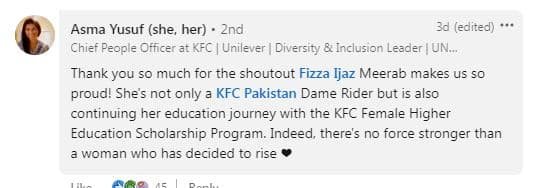
Asma Yusuf, KFC Pakistan’s Cheif People Officer (CPO), commented, “Thank you so much for the shoutout Fizza Ijaz Meerab makes us so proud! She’s not only a KFC Pakistan Dame Rider but is also continuing her education journey with the KFC Female Higher Education Scholarship Program. Indeed, there’s no force stronger than a woman who has decided to rise.”
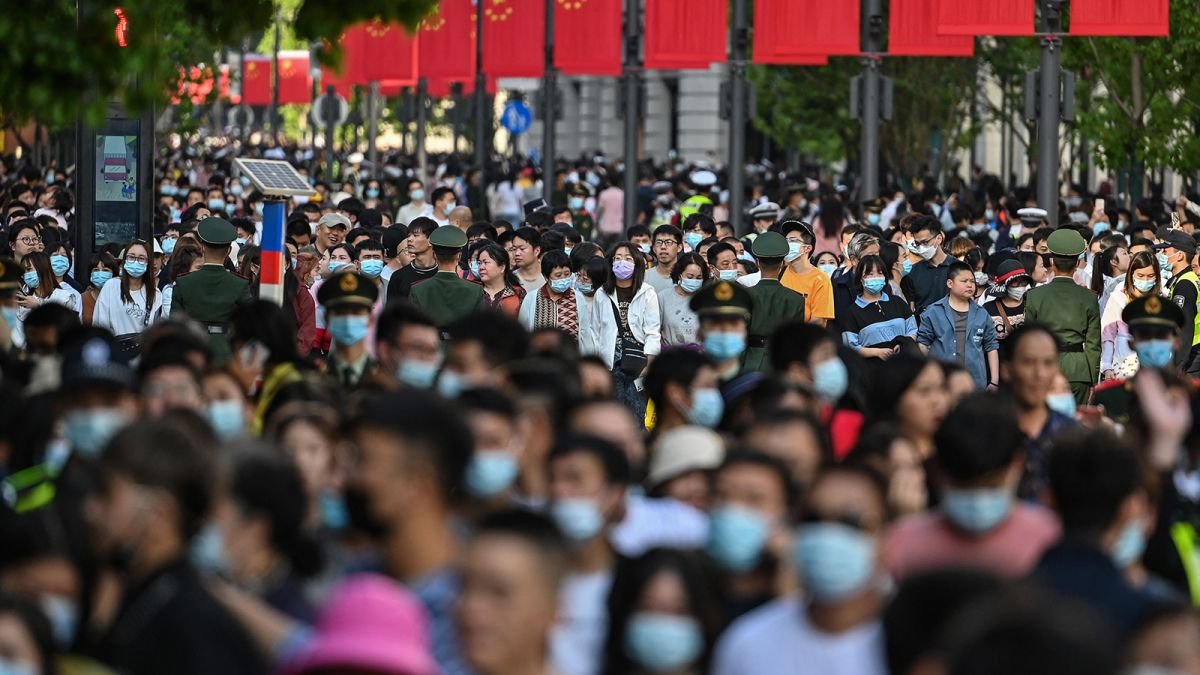
China’s population is expected to start to shrink before 2025 as the country’s birth data showed that the number of new births in 2021 was the lowest in decades in several provinces. Currently, China is the most populous country with nearly 1.4 billion residents.
The head of population and family affairs at the National Health Commission said that China’s population is expected to start to shrink in 2021-2025.
In recent years, the population of the country has slowed significantly. According to the state-backed Global Times, the number of births in central Hunan province fell below 500,000 for the first time in nearly 60 years.
The change in China’s laws last year that allowed women to have three children has not helped the country in any way. Many Chinese women have argued that the change comes too late and they are facing problems like insufficient job security and gender equality.
Pakistan is the second-worst country in the world in terms of gender parity as per the Global Gender Gap Report 2022. In a report released by the World Economic Forum (WEF) on Wednesday, Pakistan is ranked 145 out of 146 countries in the Global Gender Gap Index.
The report examined gender differences in 146 nations in a variety of fields, including politics, health, economic opportunities, and education.
The Global Gender Gap Report 2022 is live.
Contained inside, the world’s most gender-equal countries, where the gap still needs closing, and the actions being taken to do so.
The report says that Pakistan is a nation where women have the least proportion of senior executive and legislative jobs.
“Pakistan is the country where women have the smallest share of senior, managerial and legislative roles (4.5%), compared to Jamaica, where women represent 56.6% of workers in that category, or Togo, which has the highest share of women in senior roles,” revealed the WEF report.
Labour-force participation of women has also seen a reduction of 1.9 percentage points in 2022.
Pakistan was one of the five nations with a gender gap of more than 5 per cent — the others being Qatar, Azerbaijan, China, and India.
The Taliban issued a decree that bans forced marriages in Afghanistan on Friday, saying women should not be considered “property” and must consent to marriage, reports Al Jazeera.
It was annouced by Taliban Chief Hibatullah Akhunzada. The international community, which has frozen billions of dollars in funds for Afghanistan, has made women’s and human rights a key element of any future engagement with Afghanistan.
The decree said, “Both women and men should be equal. No one can force women to marry by coercion or pressure.”
However, it didn’t mention a minimum age for marriage, which previously was set at 16-years-old.
The Taliban also allowed a window to re-marry after 17 weeks of her husband’s death. Moreover, the Taliban leadership has ordered Afghan courts to treat women fairly, especially widows seeking inheritance as next of kin.
The development was hailed on social media by some social media users while most of them shared their concerns.
Welcome today’s decree reinforcing a woman’s right to determine if & whom she marries. At the same time, much more is needed to ensure women’s rights in every aspect of Afghan society including schools, workplaces, politics and media.
— U.S. Special Representative Thomas West (@US4AfghanPeace) December 3, 2021
The Taliban are an extremist group with virtually no belief in women’s rights this decree is just try to cheating international community in practical they do violence and cruel for women and basic rights of people
keeping women chained inside homes, no education, not allowed to think or express any feelings, their very essence as human being taken away – how could women in Afg. ever know what’s their rights and how to get them. TLBN of any rank have up to 4 wives, can any of those say no?
During the Taliban’s previous rule from 1996 to 2001, it banned women from leaving the house without a male relative, full face and head covering and girls were made compulsory and restricted from getting education.
However, now they claim that they have changed but many women, advocates and officials remain skeptical.
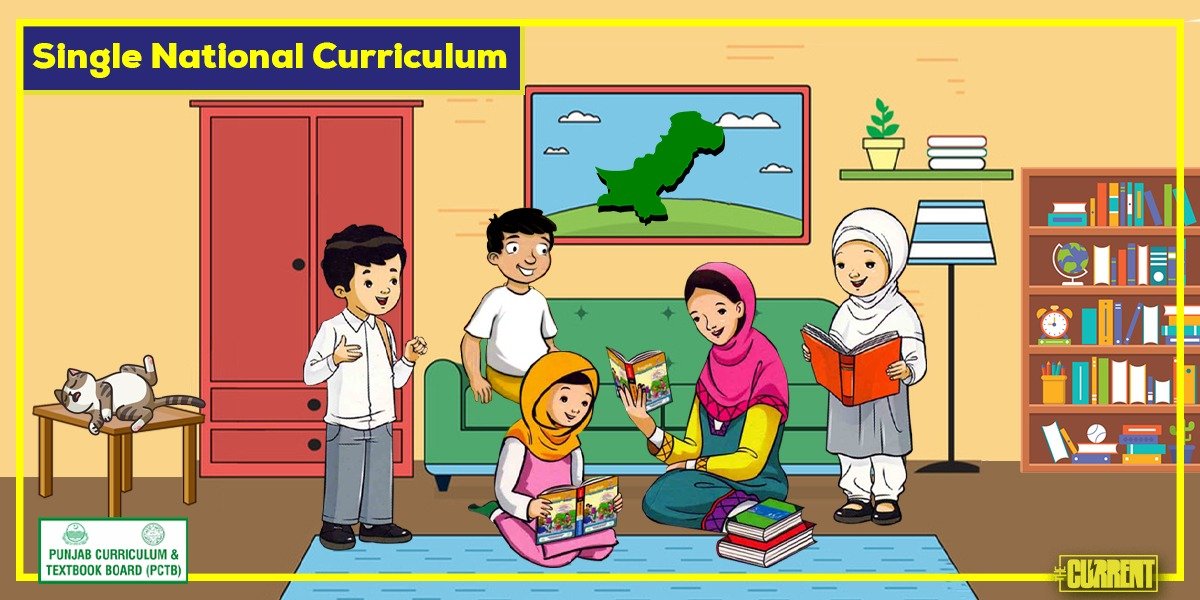
On August 16, 2021, Prime Minister Imran Khan officially launched the Single National Curriculum (SNC). The newly launched curriculum was prepared by the National Curriculum Council (NCC) and the Ministry of Federal Education, in consultation with the provinces. According to PM Khan, “SNC would transform the nation into a unified one.”
What is SNC?
According to the Ministry of Federal Education and Professional Training, the SNC is a ‘uniform’ system of education, which means the same curriculum for everyone. All public schools, private schools, and madrassas were meant to have the same curriculum so that the learning outcomes are similar and without any discrimination in teaching standards. This is not the first time SNC was imposed in Pakistan. It was previously introduced in 2006 by Former President Musharraf. Whereas the previous SNC was a curriculum-based initiative, the one introduced by the PTI government is imposing the use of the textbooks produced by the provincial boards.
Is it being implemented across the country?
No. Sindh has decided not to implement the curriculum since education is a provincial issue. Only Punjab and Khyber Pakhtunkhwa have enforced it so far. However, many schools in both provinces — including the prestigious Aitchison College, Lahore — expressed their concerns over the books in the curriculum. The Director of the National Curriculum Council (NCC), Dr Mariam Chughtai, has also said that madrassas will implement the SNC syllabus in five to six years, which undermines the reason why the government had wanted to introduce the SNC in Pakistan – to bring madrassas into the mainstream so students would be able to get jobs in other professions after they graduated.
Controversies surrounding the SNC
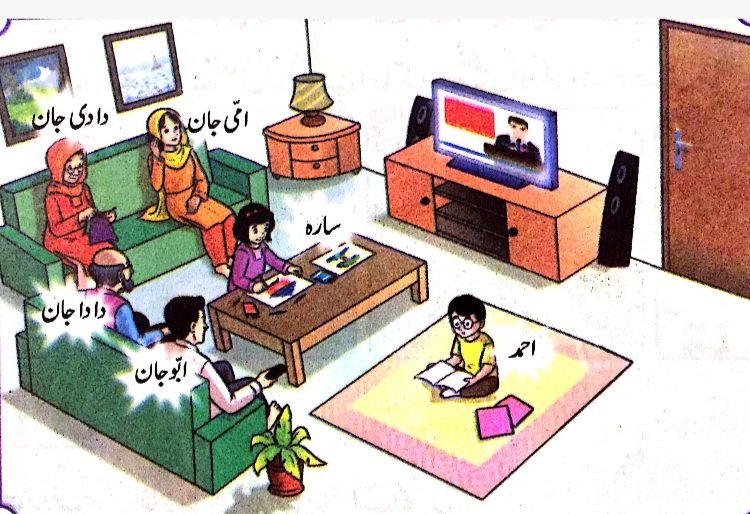
After the SNC syllabus was imposed on schools across Punjab, many controversies surrounding the books and the curriculum came forward. From the disparity in gender representation, the reinforcement of patriarchal gender roles, the lack of female heroes, and religious texts in the non-religious books.
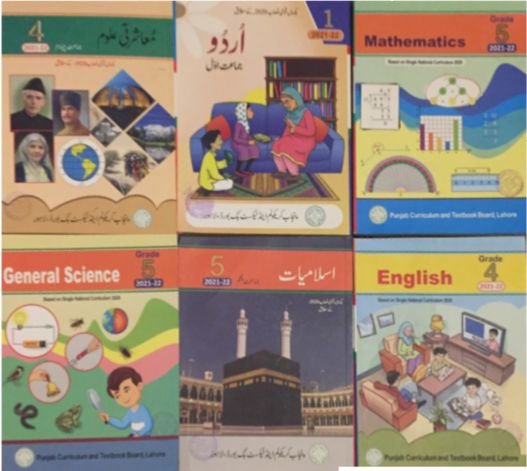
To see if the criticism is valid, The Current analysed the following books published under the Punjab Textbook Board (PTB):
Urdu books from grades 1 to 5, English books from grades 1-5, Mathematics books grades 1, 2, 4, and 5, General Science grades 4-5, Waqfiyat Aama grade 1 and 3, Social Studies 4-5, and Islamiat grade 1- 5.
Two books were not available at the time of research. Grade 3 Math and Waqfiyat Aama grade 2, which have not been included in the study.
The analysis here has been divided into two parts.
Part one comprises the data analysis of all the books included in the SNC by the Punjab Text Book board.
Part two comprises the data analysis of individual subjects being taught to the students.
We studied the total number of male and female representations in the books, a comparison of the eastern and western wear of both genders, the presence of religious (Islam and others) content in non-religious books, and studying the distribution of power roles assigned to both men and women.
Here is the list of most common criticism against the curriculum and the evidence we found:
SUMMARY OF CONTENT IN ALL SNC BOOKS
1- Disparity in Gender Representation:
One of the most debatable points in the entire SNC is the representation of men and women.
After a thorough evaluation, we found that the concerns about the disparity in gender representation are TRUE.
The study reveals that a total of 60.2 percent of the books have images of men, including boys and only 39.4 percent of the books have images of women, including girls.
2-Women represented in hijab vs non-hijab, and women in western clothes:
What the women are wearing became a source of contention in the discussion about the SNC, with critics suggesting that the women should equally represent the country in terms of the hijab, eastern clothes, and the choice to wear western wear.
It is TRUE that there is no equal representation of women’s appearance in the books.
Women’s appearance was divided into three categories.
A) Number of women wearing eastern clothes with hijab.
B) Number of women wearing eastern clothes without hijab.
C) Number of women wearing western clothes.
Our research shows that 41.6% of all women and girls in the SNC books are wearing a hijab, 28.9% are wearing eastern clothes without a hijab, and 29.4% of the images show girls wearing western wear. It is important to note that in the western wear percentage, almost all of the images are of young girls. Older women are not shown wearing western wear.
3-Men represented in eastern vs western clothes:
Since the appearance of women in eastern wear and hijab became controversial, we also studied how many times men appeared in western or eastern wear.
A massive 79.9 percent of men were seen wearing western clothes, in comparison to 20 percent dressed in eastern clothes.
4- More men in ‘power roles’ compared to women:
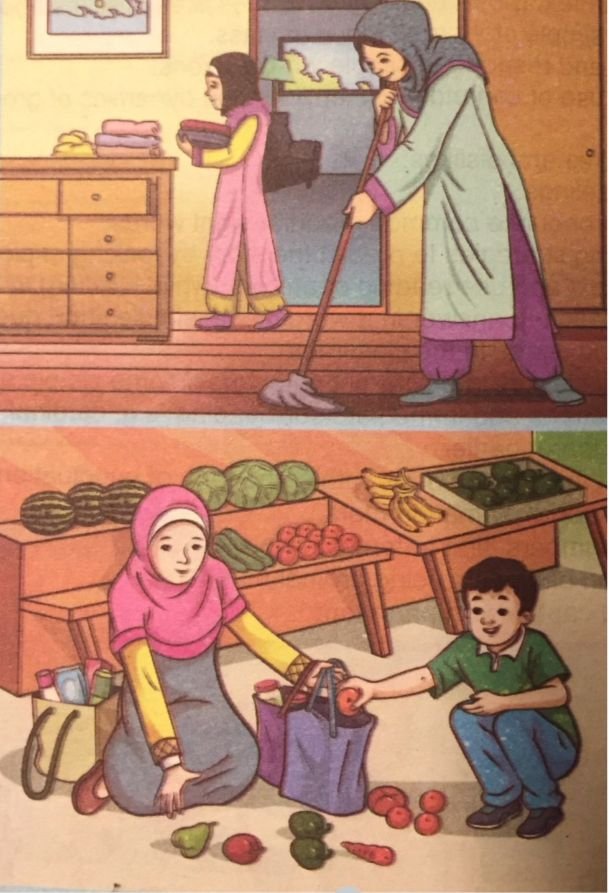
Another controversy suggested that the books did not show women in positions of ‘power’, and they were mostly listed as helpers or homemakers. While there were many images that showed women in ‘inferior roles’ to men, there were women that were shown in roles of power.
This controversy is TRUE.
We defined power roles shown in the books as doctor, pilot, lawyer, police officer, traffic warden, army sports personality, etc and after analysing all the books, we found that a men are given power roles three times more than women. The results in the graphic below are based on the total number of images shown of men and women in all the SNC Punjab books.
I
5. Religious content in non-religious books
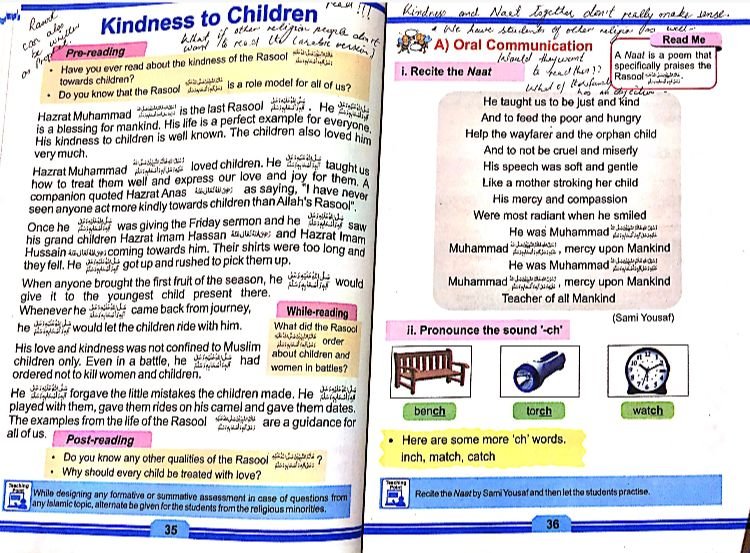
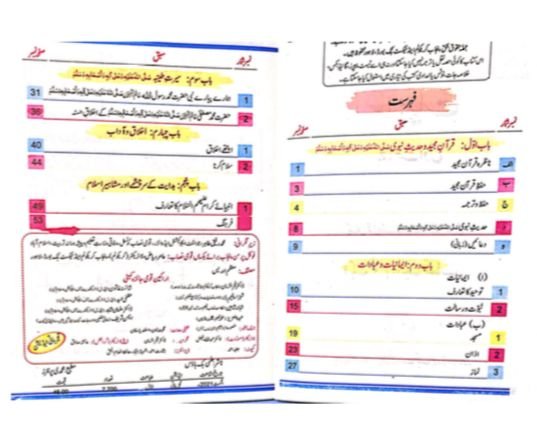
In almost all the books which were studied, we saw the presence of religious references or mentions in non-religious books. Minorities felt their rights were being compromised since books that are not for religious studies should not have references to a specific religion, which may come under the context of ‘preaching’.
In our analysis, we saw a total of 7.77 percent of religious text in all SNC non-religious books, which lends TRUTH to the fact that there is religious content in non-religious books.
Religious content is present in 7.7 percent of English, Math, Social Studies, Urdu, Science, and General Knowledge books.
7.47 percent of books have references to Islam while 0.27 percent mention other religions in all non-religious books.
Dr Mariam Chughtai, while answering a question for The Current about the religious references in non-religious books, did not provide a clear answer but stated that these are model books that require changes.
SNC BOOKS ANALYSIS – SUBJECT ANALYSIS
This section of the report comprises an analysis of individual subjects being taught to students. The subjects under study were, Urdu books from grades 1-5, English books from grades 1-5, Mathematics books grades 1, 2,4, and 5, General Science grades 4- 5, Waqfiyat Aama (General Knowledge) grades 1-3, Muashrati Uloom (Social Studies) grades 4-5.
The graphical representation of the subject-wise evaluation is as follows:
English:
In 668 pages of English books, 58.1 percent have male representation while females have 41.8 percent.
29.7 percent of women are seen with Hijab and 70.2 percent are without Hijab.
There is a total of 9.8 percent presence of religious text in English books. This is based on the total number of pages in English books.
Mathematics:
In 672 pages of the Math books, when gender representation was analysed, 51.1 percent of the books have male representation and 48.8 percent have female representation.
A total of 53.9 percent of females are seen without hijab and 46 percent are seen wearing hijab.
The Math books have a 4.1 percent presence of religious text. This is based on the total number of pages in Math books.
Urdu:
The five Urdu books comprising 791 pages. A total of 59.7 percent presence of males are seen as compared to 40.4 percent of females.
58.5 percent of women/girls are seen wearing hijab and 41.4 percent are seen without hijab.
12.8 percent of religious text is present in Urdu books. This is based on the total number of pages in Urdu books.
General Science:
Out of 310 pages, 76.8 percent have male representation as compared to 23.1 percent female representation.
64 percent of women/girls are seen without hijab and 36 percent of women/girls are seen with hijab.
The General Science books have a 0.96 percent presence of religious content. This is based on the total number of pages in Science books.
Waqfiyat Aama (General Knowledge):
49.5 percent of male images are seen in comparison to 50.15 percent of females.
23.1 percent of females are seen with hijab and 76.8 percent without hijab.
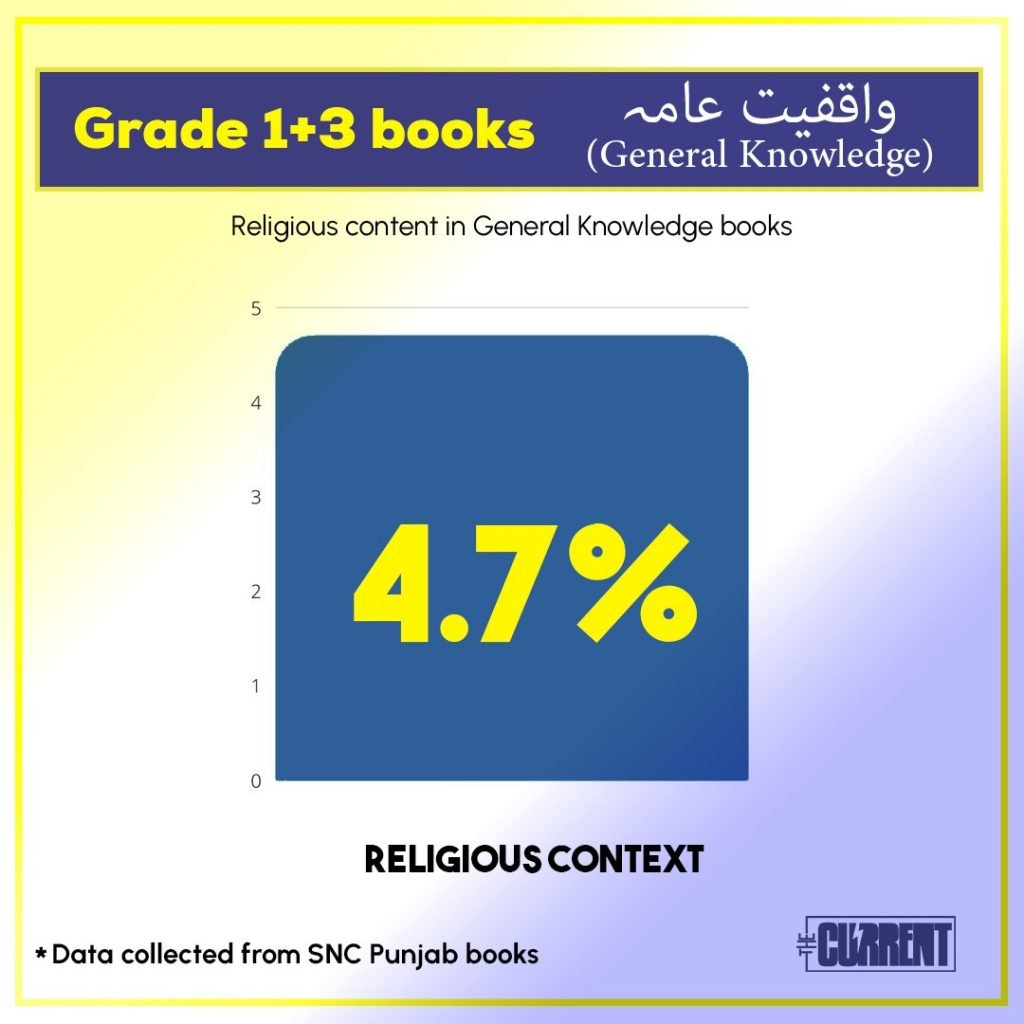
There is a 4.7 percent presence of religious text in the books studied. This is based on the total number of pages in General Knowledge books.
Muasharti Uloom (Social Studies):
From 234 pages analysed, 65.1 percent of men/boys are represented in the books and 34.8 percent of females are shown.
36.8 percent of females are seen without hijab and 63.1 percent are seen with hijab.
10.2 percent of religious content is present in the books. This is based on the total number of pages in Social Studies books.
The last portion of the report highlights the pros and cons, which we have observed in almost all the books. We have provided both positive and negative outcomes deduced from the books after careful analysis.
The positive outcome deduced from the books:
1. The books are locally published and designed. The books are affordable, with a total set for one grade set at Rs. 800 per child according to Dr Chughtai.
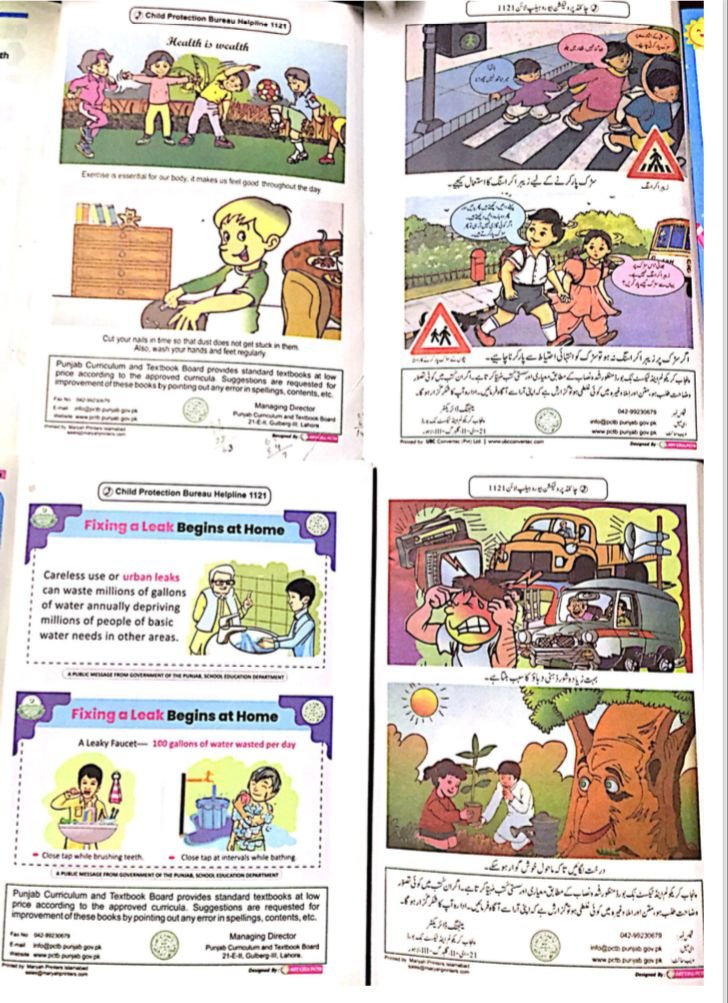
2. There is a public service message printed at the end of each book to raise awareness against talking to strangers, crossing the road, exercising, and even information about fighting dengue.
The possible negative impact of the books
1. After analysing the books, we deduced that mostly nuclear families have been shown in the books. No representation of single parents or children being raised by guardians is seen. Moreover, the presence of both parents is seen as almost essential in all stories in the books.
2. Women are mostly shown doing domestic work, taking care of the family, and looking after their children. In stories as well, they seem to come second to their male counterparts.
3. As discussed in detail above, there is the presence of religious text in non-religious books.
4. The stylisation of the books are difficult to understand, fonts and texts are way too clustered. The quality of the pages is not refined, making them unattractive and confusing for students.
CONCLUSION:
According to NCC director, Dr Chughtai, the curriculum is an evolving process and the books can be changed in future publications, based on the response by schools and parents. The biggest hurdle to the books is that the teachers have not been trained in teaching these new books and according to Dr Chughtai, it is up to the school to teach and implement the books. There are no worksheets given with the books and from initial student reactions, students are confused and wary of books that are laid out in a clustered fashion. There is also the subject of a language change. Where students study general knowledge, a precursor to Science, in Urdu, they switch to difficult English in grades 4-5.
While the government should be commended in trying to create a national syllabus, the forced enforcement of the books along with the lack of supplemental information and training will make this very difficult for teachers and students. Moreover, parents should be given a choice as to what they want their children to study. This implementation should be a free choice rather than that of enforcement. What would have been a practical approach is that the government should have improved the structure of the government/public schools, provided better teacher training, spent more on financially improving the conditions rather than lowering the standard for all.
*Graphics credits: Asma Ahmad (Graphic Designer)
How did we collect the data?
The percentage of male characters in the books: Divided the total number of male by the total number of characters. The percentage of female characters in the books: Divided the total number of female by the total number of characters.
The percentage of Islam: Divided the Islamic pictures or references given in the books by the number of total pages of all books. The percentage of other religion: Divided the other religions pictures or reference given in the books by the number of total pages of all books.
The percentage of female power roles: Divided the number of female by the total number of characters (female and male). The percentage of male power roles: Divided the total number of male by the total number of characters (female and male).
The same process/calculation/method was applied to the findings of each book.