
Tag: gender parity

  • Women’s Health Gap Costs $1 Trillion Worldwide: Report

    Women’s Health Gap Costs $1 Trillion Worldwide: Report

    The huge gap between how women and men’s health are treated costs $1 trillion a year worldwide, the World Economic Forum said on Wednesday.

    Women spend a quarter more of their lives suffering from poor health than men, a disparity that includes an unequal focus on men across medical research, diagnosis and treatment, the report said.

    Closing this gap would boost the global economy by $1 trillion annually by 2040 — a 1.7 percent increase in per capita GDP driven by women, it added.

    The report was released as the WEF hosts its 54th annual conference in Davos, Switzerland.

    The Swiss firm Ferring Pharmaceuticals and McKinsey Health Institute also contributed to the 42-page report.

    Every US dollar invested in women’s health would return three dollars in projected economic growth, the report said.

    A large part of this growth would come from sick women getting back into the workforce.

    The gender health gap causes around 75 million years of life lost due to poor health annually, equating to a week per woman every year, the report said.

    For example, addressing the inequities related to endometriosis and menopause — which only affect women and have long been considered under-studied — could contribute $130 billion to global GDP by 2040, it estimated.

    Research also suggests that fewer than half the women living with endometriosis have been properly diagnosed, the report added.

    The study also looked at how treatment and diagnosis has benefitted men more than women.

    Asthma inhalers, for example, have been found to be significantly less effective for women than men.

    Women are diagnosed later than men for 700 different diseases, previous research has shown. It also takes women two and a half years longer to be diagnosed with cancer.

    WEF healthcare head Shyam Bishen said the analysis demonstrates that “investing in women’s health must be a priority for every country”.

    “Beyond improving women’s quality of life, ensuring women have access to innovations in healthcare is one of the best investments that countries can make for their societies and their economies,” he said in a statement.

    The WEF announced it was launching the Global Alliance for Women’s Health, with $55 million pledged for women’s health.

  • Iceland’s Prime Minister strikes over gender pay gap

    Iceland’s Prime Minister strikes over gender pay gap

    Tens of thousands of women in Iceland, including the prime minister, walked off the job on Tuesday to demand equal pay and protest violence against women, organisers said.

    Iceland already tops a World Economic Forum (WEF) ranking for gender equality, but organisers said the country needed to make even more progress and lead by example.

    “We are keenly aware that we have not reached gender equality, and even though the situation may be better than other places, there is no reason to just call it a day,” Steinunn Rognvaldsdottir, one of the organisers of “Kvennafri” (Women’s Day Off), told AFP.

    The protest day has been called six times since 1975, this was only the second time that organisers made it a full-day strike, she added.

    The other times, women walked off the job at a symbolic hour after which they were technically no longer earning a salary compared to male colleagues.

    The average wage gap between men and women was 10.2 percent in 2021, according to Statistics Iceland.

    Around 90 percent of Iceland’s women took part in the first protest in 1975, “which was momentous”, Rognvaldsdottir said.

    Prime Minister Katrin Jakobsdottir was among those striking, her office told AFP.

    “She will not attend to official duties and in that regard today’s scheduled cabinet meeting has been moved to tomorrow,” a spokesman said.

    – ‘A present for mother-in-law’ –

    Tens of thousands of women gathered for a large demonstration in the afternoon at the main square of the capital Reykjavik, and protests were also planned in other towns around the country of 400,000 people.

    In Reykjavik, where 75 percent of city employees are women, 59 daycare centres and preschools were closed and all city services were affected by the strike.

    City employees taking part in the strike will not lose pay, the city said.

    Organisers of the movement said they expected men to take charge of the unpaid work that often falls to women.

    “For this one day, we expect husbands, fathers, brothers and uncles to take on the responsibilities related to family and home, for example: preparing breakfast and lunch boxes, remembering birthdays of relatives, buying a present for your mother-in-law, making a dentist appointment for your child.”

    “We always have to be on guard when it comes to our rights,” Lina Petra Thorarinsdottir, 45, told AFP.

    “In Iceland we are proud of what we have accomplished and I am thankful for the women that came before us,” said Thorarinsdottir, head of tourism at marketing group Business Iceland.

    But she said would continue to protest until women enjoyed “equal rights in full”.

    The strikers also wanted their protest to raise awareness of gender-based violence.

    “We still see that up to 40 percent of women have experienced some form of violence or will experience some form of violence in their lifetime,” Thorarinsdottir said.

    “The strike is for both equality when it comes to paid and unpaid work, it also has to do with violence against women and non-binary people,” she said.

    Fjola Helgadottir, a 41-year-old nurse, was unable to take part in Tuesday’s strike action.

    “I would have liked to participate in today’s protest but because we work in the children’s emergency room, we have to provide that service,” she told AFP.

    “The cause is extremely important.”

  • Claudia Goldin wins Nobel economics prize for work on women’s pay

    Claudia Goldin wins Nobel economics prize for work on women’s pay

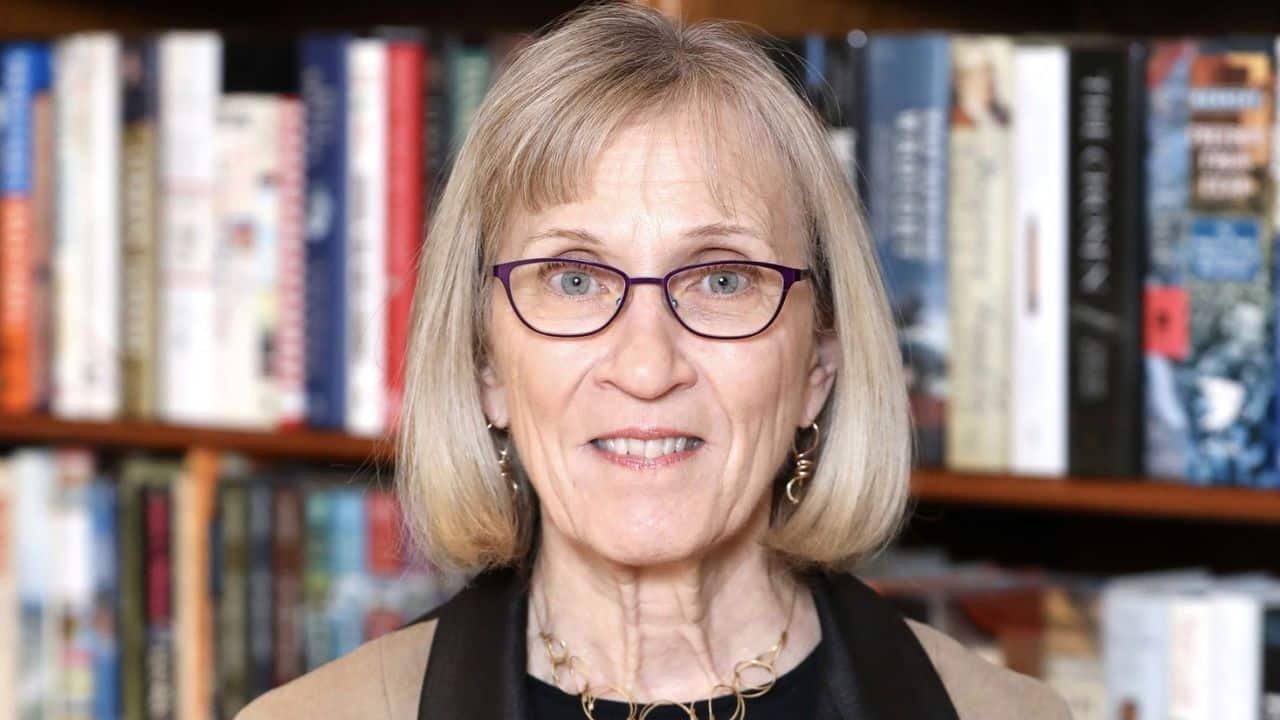
    An economic historian and Harvard professor, Claudia Goldin, has been awarded with the Nobel Prize in economics for her work examining the gender pay gap.

    Goldin’s unprecedented research highlights the fact that women, despite their higher academic qualifications, are paid less than men; and that mostly this difference arises after childbirth.

    “This year’s Laureate in the Economic Sciences, Claudia Goldin, provided the first comprehensive account of women’s earnings and labour market participation through the centuries,” the Royal Swedish Academy of Sciences said on Monday.

    “Her research reveals the causes of change, as well as the main sources of the remaining gender gap.”

    After Elinor Ostrom in 2009 and Esther Duflo in 2019, Goldin is the third woman to be awarded the Nobel Prize in economics — a category with the lowest number of female laureates.

    Goldin’s research examines data tracing 200 years of women’s participation in the workforce in the United States.

    As per her research, a woman’s role in the job market and her pay are, in part, decided by individual decisions, including educational choices, as well as broad social and economic changes.

    The prize committee highlights that while much of the earnings gap historically could be explained by differences in education and occupational choices, Goldin “has shown that the bulk of this earnings difference is now between men and women in the same occupation, and that it largely arises with the birth of the first child”.

  • Women outperform men but 13% less likely to be promoted: Study

    Women outperform men but 13% less likely to be promoted: Study

    A study from MIT Sloan Associate Professor Danielle Li finds that female employees are less likely to be promoted than their male counterparts, despite outperforming them and being less likely to quit.

    In the paper, ’Potential’ and the Gender Promotion Gap, Li found that even though female employees received higher performance ratings than male employees, they still received 8.3 per cent lower ratings for potential than men. Results showed that women were 14 per cent less likely to be promoted than their male counterparts. The annual promotion rate is 1.64 percentage points lower for women, corresponding to a 13 per cent lower likelihood.

    Management-track of 30,000 employees at a large North American retail chain between February 2009 and October 2015 was studied. Women made up about 56 per cent of entry-level workers. Rising through the ranks, women made up 48 per cent of department managers, 35 per cent of store managers, and 14 per cent of district managers.

    The research found out that relative to men with the same scores for potential, women outperformed their previous year’s score. Yet they were still given lower potential ratings heading into the next year.

    “The result I found most depressing in the paper is the result in which women outperform their stated potential,” said Professor Danielle Li in an interview. “Women have to hit a higher threshold of future performance in order to justify the same potential score.”