Tag: General Sales Tax

  • FBR imposes 18% GST on packaged food items to boost revenue

    FBR imposes 18% GST on packaged food items to boost revenue

    The Federal Board of Revenue (FBR) has announced the imposition of an 18 per cent General Sales Tax (GST) on packaged food items, including formula milk.

    The announcement was made during a meeting of the Senate Standing Committee on Finance, chaired by Senator Saleem Mandviwalla. Amjad Zubair, Chairman of the FBR, informed the committee that the GST will be applied to all packaged items sold at departmental stores and large retail outlets, but will not affect unpackaged food items sold at general stores.

    In response to concerns raised during the meeting, the committee recommended a reduction in the GST rate on formula milk due to its critical importance for infant health. Chairman Zubair acknowledged the significant tax revenue generated from formula milk and expressed the government’s willingness to consider a reduction in tax rates if companies agree to lower their prices.

    The committee also addressed the issue of unregistered outlets selling formula milk, recommending that these outlets be blacklisted to ensure compliance with tax regulations.

    It is notable that this move aligns with a demand from the International Monetary Fund (IMF). During recent talks with Pakistani authorities for a new loan agreement, the IMF recommended increasing the general sales tax to 18 per cent.

    The IMF mission observed that Pakistan’s current sales tax collection system faces challenges, with the federal government collecting tax on commodities and the provinces on services. The IMF suggested that sales tax collection should be centralized under the federal government and that GST exemptions be eliminated.

    This development is part of broader efforts to streamline Pakistan’s tax system and enhance revenue collection as the country seeks financial assistance from international lenders.
  • Govt to maintain 18% GST rate in upcoming budget 2023-24

    Govt to maintain 18% GST rate in upcoming budget 2023-24

    In the forthcoming budget for 2023-24, it is anticipated that the government will maintain the current standard rate of General Sales Tax (GST) at 18 per cent. Additionally, efforts are being made by the government to increase the rates of withholding taxes, where applicable, with the aim of augmenting tax revenues.

    Another aspect being considered is the implementation of amendments for retailers, with the objective of including a larger number of businesses within the tax bracket. It is worth noting that previous schemes designed to entice retailers into the tax system have proved unsuccessful over the past few decades.

    According to The News, various proposals are currently being deliberated upon for the imposition of Minimum Asset Tax (MAT) on both movable and immovable assets. However, the Federal Board of Revenue (FBR) has been advised to seek constitutional validation for these proposed taxation measures in order to avoid potential legal disputes.

    Moreover, the government is exploring options to enhance documentation within the property sector, as part of its ambitious goal to achieve a tax collection target ranging between Rs9 and Rs9.2 trillion for the upcoming budget.

    These proposals were thoroughly discussed in a meeting chaired by Finance Minister Senator Ishaq Dar, which focused on budgetary considerations within the Finance Division. Present at the meeting were State Minister for Finance Dr Ayesha Ghous Pasha, Special Assistant to the Prime Minister (SAPM) on Finance Tariq Bajwa, SAPM on Revenue Tariq Mehmood Pasha, Chairman of the Reforms and Resource Mobilization Commission (RRMC) Ashfaq Yousuf Tola, the finance secretary, FBR chairman, and other senior officials from the Finance Division and FBR.

    During the meeting, FBR Chairman Asim Ahmad provided a comprehensive presentation on the budgetary proposals for the Federal Budget 2023-24.

  • Short-term inflation skyrockets to record 45.64% in Pakistan: What’s causing the surge?

    Short-term inflation skyrockets to record 45.64% in Pakistan: What’s causing the surge?

    The Pakistan Bureau of Statistics (PBS) has released data revealing that short-term inflation based on the Sensitive Price Index (SPI) rose to a record 45.64 per cent for the combined income group on a year-on-year basis for the week ending March 16.

    This increase was driven by the consistent rise in the prices of essential commodities. However, on a week-on-week basis, short-term inflation increased by 0.96 per cent due to the rising cost of tomatoes, potatoes, cooking oil and fruits.

    The SPI is expected to intensify further as the full impact of depreciation, an increase in petroleum products, a hike in general sales tax and higher energy costs has yet to be reflected in official data. Commodity prices are likely to increase rapidly with a spike in demand. The year-on-year SPI surged to 45.5 per cent during the week ending September 1, 2022, and stayed above 40 per cent for the first time since August 18 last year when the reading was 42.31 per cent.

    Of the 51 items in the SPI basket, prices of 28 items soared, while those of 11 items decreased, and rates of 12 items remained unchanged. During the week under review, the prices of onions, cigarettes, gas charges for Q1, diesel, tea Lipton, petrol, rice irri-6/9, rice basmati broken, bananas, eggs, pulse moong, wheat flour and bread increased the most over the same week a year ago.

    On a week-on-week basis, the biggest change was observed in the prices of tomatoes, tea Lipton, potatoes, bananas, sugar, wheat flour, cooking oil 5 litre, vegetable ghee 2.5 Kg, lawn, diesel, shirting, and petrol. Products whose prices saw the highest decline over the previous week were onions, chicken, garlic, pulse masoor, eggs, LPG, vegetable ghee 1 Kg, pulse gram, pulse mash, pulse moong, and mustard oil.

    The government has been taking strict measures, such as hikes in fuel and power tariffs, withdrawal of subsidies, market-based exchange rate, and higher taxation, under the International Monetary Fund (IMF) programme to generate revenue for bridging the fiscal deficit, which may result in slow economic growth and higher inflation in the coming months. The increase in the policy rate to 20 per cent, general sales tax rate from 17 per cent to 18 per cent on most items, and to 25 per cent on more than 800 imported food and non-food items will further increase the retail prices of consumer goods.

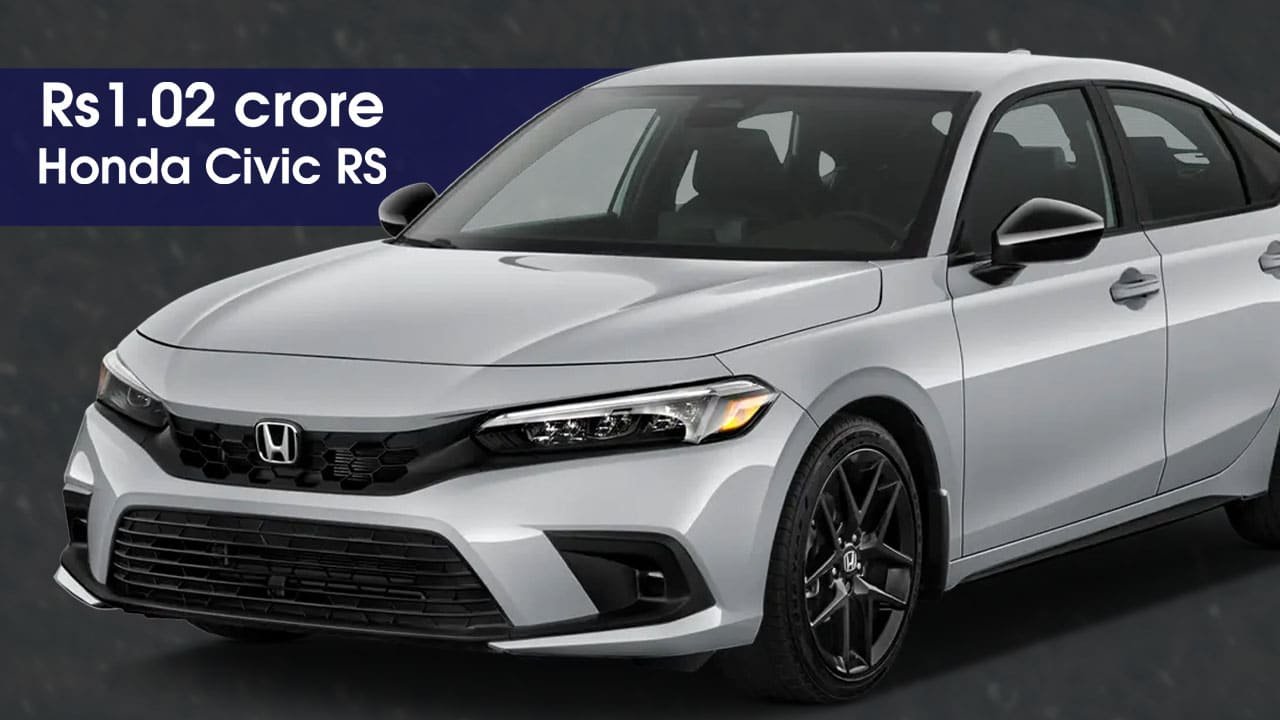
  • Rupee devaluation, GST hike forces Honda to increase car prices up to Rs1 million

    Rupee devaluation, GST hike forces Honda to increase car prices up to Rs1 million

    Honda Atlas Cars Limited (HACL) has announced its fourth price hike in less than 90 days, citing the government’s implementation of a 25 per cent general sales tax (GST) on luxury items.

    This time, the automaker has raised car prices up to Rs1 million. According to a recent notification, HACL has attributed the most recent price hike to the devaluation of the Pakistani rupee against the US dollar, as well as the increase in sales tax from 18 per cent to 25 per cent.

    Below are the new ex-factory and provisional prices that are applicable from March 14, 2023:

    Model Old Price (Rs) New Price (Rs) Increase (Rs)
    Honda City M/T 1.2L 4,579,000 4,799,000 220,000
    Honda City CVT 1.2L 4,729,000 4,929,000 200,000
    Honda City CVT 1.5L 5,019,000 5,549,000 530,000
    Honda City Aspire M/T 1.5L 5,229,000 5,759,000 530,000
    Honda City Aspire CVT 1.5L 5,419,000 5,979,000 560,000
    Honda BR-V CVT S 5,949,000 6,529,000 580,000
    Honda HR-V VTi 7,199,000 7,899,000 700,000
    Honda HR-V VTi S 7,399,000 8,199,000 800,000
    Honda Civic 1.5L M-CVT 7,779,000 8,599,000 820,000
    Honda Civic 1.5L Oriel M-CVT 8,099,000 8,949,000 850,000
    Honda Civic RS 1.5L LL-CVT 9,199,000 10,199,000 1,000,000
    Latest Honda Car prices in Pakistan – effective from 14 March 2023
  • Toyota IMC increases car prices by up to Rs2 million due to GST hike

    Toyota IMC increases car prices by up to Rs2 million due to GST hike

    Indus Motor Company (IMC) has increased the prices of all Toyota vehicles in Pakistan due to the recent hike in the General Sales Tax (GST) from 18 per cent to 25 per cent by the Federal Government. The models affected by the price hike include Toyota Yaris, Toyota Corolla Altis X, Toyota Hilux Revo (IMV III), and Toyota Fortuner (IMV IV).

    According to a circular released by the company, the economic uncertainties and extreme volatile situation of Pakistani rupee against US dollar have adversely impacted the cost of manufacturing for IMC. The company has therefore been compelled to pass on some impact to the market.

    The government of Pakistan has also enhanced the rate of Sales Tax to 25 per cent on all CKD vehicles with an engine capacity of 1400cc and above, except for IMV-I Single Cabin.

    Toyota Pakistan has stated that the mentioned car prices are subject to change and the prevailing prices at the time of delivery shall be applicable on all orders. Any change in Government levies and taxes, tariff, fiscal policies, import policies, forex, etc. will be on account of the customer.

    Here are the new prices of all Toyota cars after tax hike:

    Toyota Corolla Altis X latest prices

    Model Old price (Rs) New price (Rs) Hike (Rs)
    Toyota Corolla 1.6 MT 5,576,000 6,169,000 593,000
    Toyota Corolla 1.6 CVT 6,111,000 6,769,000 658,000
    Toyota Corolla 1.6 Special Edition 6,716,000 7,429,000 713,000
    Toyota Corolla 1.8 CVT 6,423,000 7,119,000 696,000
    Toyota Corolla 1.8 CVT SR 6,998,000 7,759,000 761,000
    Toyota Corolla 1.8 CVT SR BLK 7,039,000 7,799,000 760,000

    Toyota Yaris latest prices

    Model Old price (Rs) New price (Rs) Hike (Rs)
    Toyota Yaris 1.3 GLi MT 4,316,000 4,499,000 183,000
    Toyota Yaris 1.3 GLi CVT 4,588,000 4,789,000 201,000
    Toyota Yaris 1.3 ATIV MT 4,558,000 4,759,000 201,000
    Toyota Yaris 1.3 ATIV CVT 4,790,000 4,999,000 209,000
    Toyota Yaris 1.5 ATIV X MT 4,911,000 5,429,000 518,000
    Toyota Yaris 1.5 ATIV X CVT 5,213,000 5,769,000 556,000

    Toyota Hilux Revo latest prices

    Model Old price (Rs) New price (Rs) Difference (Rs)
    Hilux Revo STD 10,316,000 11,439,000 1,123,000
    Hilux Revo G MT 11,184,000 12,409,000 1,225,000
    Hilux Revo G AT 11,728,000 13,019,000 1,291,000
    Hilux Revo V 12,969,000 14,389,000 1,420,000
    Hilux Revo V AT ROCCO 13,675,000 15,179,000 1,504,000

    Toyota Fortuner latest prices

    Model Old Price (Rs) New Price (Rs) Hike (Rs)
    Toyota Fortuner G 4x2L 14,230,000 15,809,000 1,579,000
    Toyota Fortuner V 4×4 16,297,000 18,099,000 1,802,000
    Toyota Fortuner Sigma 17,175,000 19,079,000 1,900,000
    Toyota Fortuner Legender 18,112,000 20,129,000 2,017,000
  • From soap to air tickets: What’s getting costlier after mini-budget?

    From soap to air tickets: What’s getting costlier after mini-budget?

    The Federal Board of Revenue (FBR) has issued an SRO to increase the standard 17 per cent general sales tax (GST) to 18 per cent, which will collect taxes worth Rs115 billion. The remaining Rs55 billion will be generated through other measures mentioned in the Finance (Supplementary) Bill 2023.

    The top tax collection authority stated in the notification that the 18 per cent GST would be applicable to consumer packaged goods, which include various items used in everyday life.

    Following the increase in GST, the following items will experience a hike in their prices:

    • Biscuits
    • Jam
    • Jelly
    • Noodles
    • Edible oil
    • Coffee
    • Chocolates
    • Make-up
    • Shampoos
    • Creams
    • Lotion
    • Soap
    • Toothpaste
    • Hair colour
    • Hair removal cream
    • Hair gel
    • Shaving foam
    • Shaving gel
    • Shaving cream
    • Shaving blades
    • Computers
    • Laptops
    • Electronic gadgets
    • Smartphones
    • iPods
    • TVs
    • LEDs
    • LCDs
    • Juicers
    • Blenders
    • Other electronic machinery
    • Car shampoos
    • Car polishes
    • Perfumes
    • Children’s toys

    In addition to the aforementioned actions, the government intends to raise the Goods and Services Tax (GST) on luxury items from 17 per cent to 25 per cent. The Federal Excise Duty (FED) on first and business class air tickets will be increased to either Rs20,000 or 50 per cent, whichever amount is higher.

    Marriage halls will be subject to a ten percent withholding adjustable advance income tax, and the FED on soft drinks, sugary drinks, and cement will also be increased.

  • Petrol price likely to rise by Rs20 per litre in upcoming review

    Petrol price likely to rise by Rs20 per litre in upcoming review

    Oil industry sources report that there may be a Rs20 per litre increase in petrol prices at the upcoming review on February 15, 2023. The increase is based on calculations of the international price of petrol, specifically on a free on board (FOB) basis.

    During the previous fortnightly review of fuel prices, the government implemented a substantial increase of Rs35 per litre. Currently, the government imposes a petroleum levy (PL) of Rs50 per litre, while the general sales tax (GST) has not yet been levied.

    Sources suggest that the price of petrol could increase further if the foreign exchange rate is adjusted at the next review. They noted that the exchange rate is currently unfavorable, negating any potential benefits or reductions for local consumers.

    Despite a decrease in international petrol prices, the sharp depreciation of the rupee against the dollar has offset gains, adversely affecting domestic consumers. Additionally, the sources warned that the government may implement a Rs20 per litre adjustment to account for the exchange rate, which could result in an overall increase of up to Rs40 per litre.

    The price of diesel, as reported by sources, has not seen any increase on FOB without exchange rate adjustments. However, they stated that diesel prices could potentially increase in the next review if the exchange rate is adjusted. The government previously adjusted Rs14 per litre on diesel due to the exchange rate, but the recent appreciation of the dollar has effectively negated this adjustment from the last review.

    While global diesel prices have reportedly decreased by five to six dollars per barrel, the depreciation of the rupee prevents the government from passing on the reduction to local consumers.

    The most recent price adjustment of petroleum products was made on January 29, 2021, by the federal government. Following the review, petrol was priced at Rs249.80 per litre, high-speed diesel at Rs262.80 per litre, kerosene oil at Rs189.83 per litre, and light-speed diesel at Rs187 per litre.

    The government implemented an increase in petrol and high-speed diesel prices by Rs35 per litre each, and raised the rates of kerosene oil and light diesel oil by Rs18 per litre each on January 29, 2023.

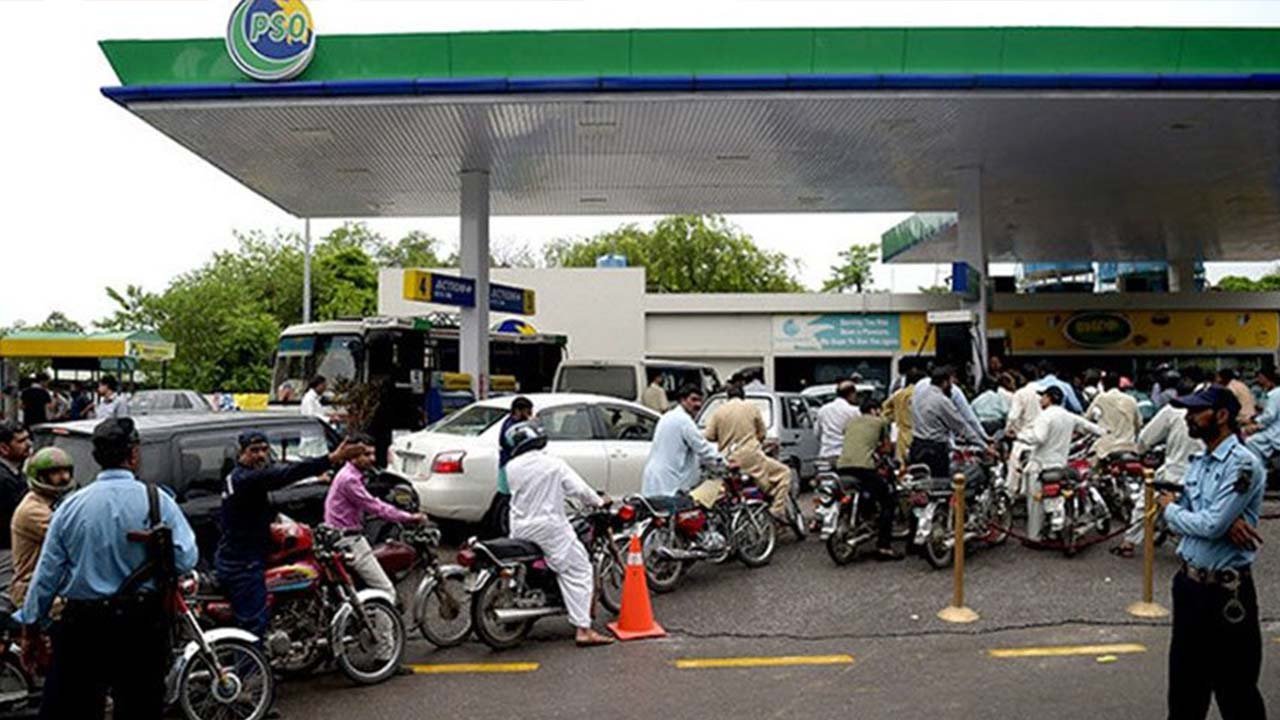
    Pakistan is currently experiencing a shortage of petrol, with its most populous province, Punjab, being hit the hardest. The crisis has affected major and minor cities, towns, and villages in Punjab, with the shortage being attributed to petroleum dealers.

    Sources previously reported that in addition to a low import of petrol by most Oil Marketing Companies (OMCs), petroleum dealers were also involved in hoarding petrol in anticipation of an expected price increase in mid-February.