Tag: genocide

  • Macron believes France, allies ‘could have stopped’ 1994 Rwanda genocide

    Macron believes France, allies ‘could have stopped’ 1994 Rwanda genocide

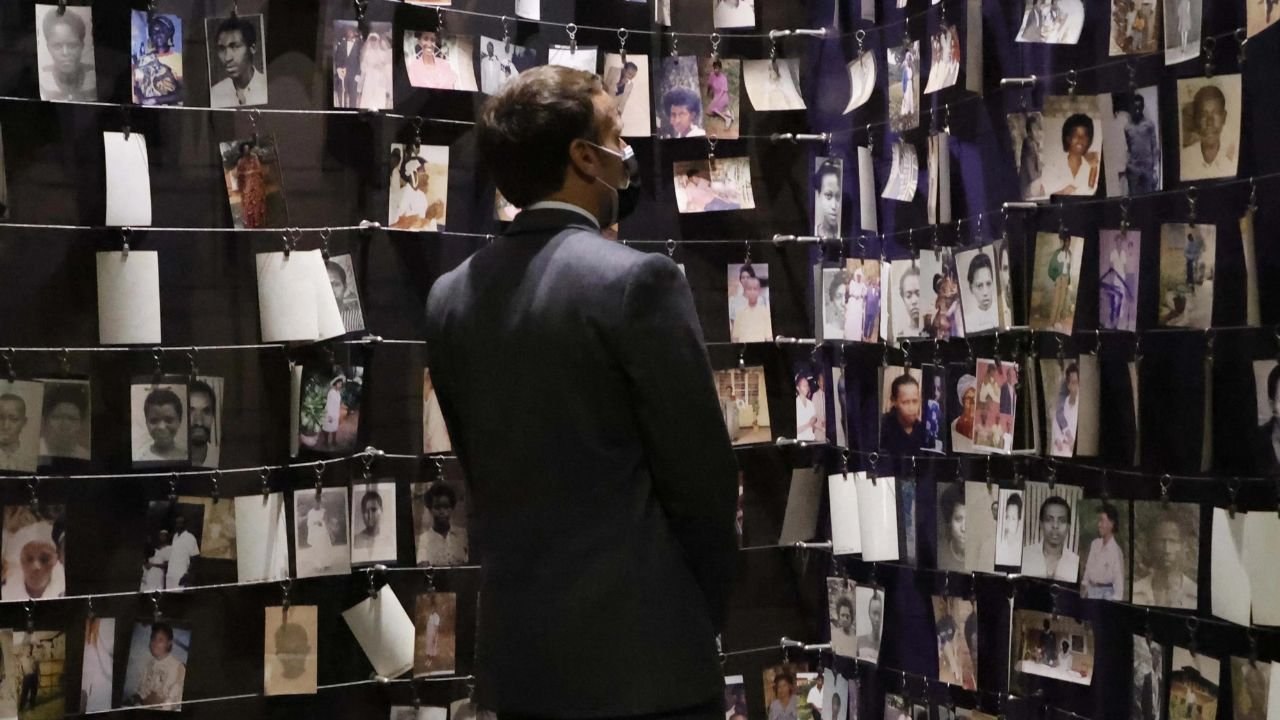
    President Emmanuel Macron believes France and its Western and African allies “could have stopped” Rwanda’s 1994 genocide but did not have the will to halt the slaughter of an estimated 800,000 people, mostly ethnic Tutsis, the presidency said on Thursday.

    In a video message to be published on Sunday to mark the 30th anniversary of the genocide, Macron will emphasise that “when the phase of total extermination against the Tutsis began, the international community had the means to know and act”, a French presidential official said, asking not to be named.

    The president believes that at the time, the international community already had historical experience of witnessing genocide with the Holocaust in World War II and the mass killings of Armenians in Ottoman Turkey during World War I.

    Macron will say that “France, which could have stopped the genocide with its Western and African allies, did not have the will” to do so, the official added.

    The president will not be heading to Kigali to attend commemorations of the genocide this Sunday alongside Rwandan President Paul Kagame, and France will instead be represented by Foreign Minister Stephane Sejourne.

    Macron, during a visit to Rwanda in 2021, recognised France’s “responsibilities” in the genocide and said only the survivors could grant “the gift of forgiveness”.

    But he stopped short of an apology and Kagame, who led the Tutsi rebellion that ended the genocide, has long insisted on the need for a stronger statement.

    A historical commission set up by Macron and led by historian Vincent Duclert also concluded in 2021 that there had been a “failure” on the part of France under former leader Francois Mitterrand, while adding that there was no evidence Paris was complicit in the killings.

    Marcel Kabanda, president of the Ibuka France genocide survivor association, welcomed Macron’s new message reported on Thursday.

    “It goes even further than the Duclert report or his message in Kigali” in 2021, he said.

    “I’m overjoyed he is giving France this positive image of a country that recognises its faults and grows through recognising its history,” he said.

    In his video message, Macron is to “reiterate the importance of the duty of remembrance, but also of developing and disseminating reference knowledge, in particular through the education of younger generations in France,” the presidency said.

  • Countries at UN rally behind expert who accused Israel of ‘genocide’

    Countries at UN rally behind expert who accused Israel of ‘genocide’

    GENEVA: The UN expert who concluded Israel was committing acts of genocide in the Gaza Strip received broad support at the United Nations on Tuesday, with countries speaking up to back her and her report.

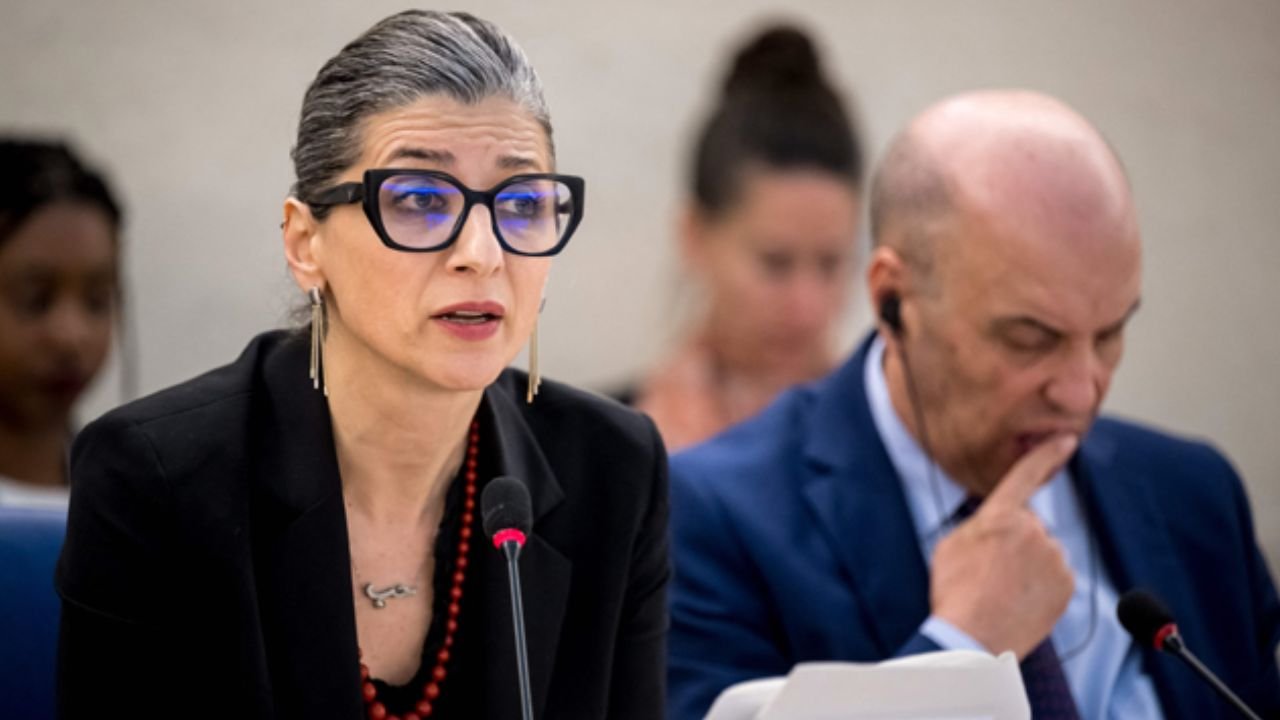
    Francesca Albanese, the special rapporteur on human rights in the Palestinian territories, told the UN Human Rights Council that countries should impose an arms embargo and sanctions on Israel.

    Expanding in person on her report released on Monday, Albanese said Israel was characterising the entire Gazan population as “targetable, killable and destroyable,” and had ostentatiously laid bare its “genocidal intent” to “rid Palestine of Palestinians.”

    Dozens of diplomats, mostly representing Arab and Muslim countries but also Latin America, took the floor to defend her mandate and her work.

    Pakistan, speaking for the Organization of Islamic Cooperation, backed her call for sanctions and an arms embargo.“We commend your courage in documenting… acts amounting to genocide in Gaza,” Islamabad’s representative said.

    “The occupation force’s dangerous and ruthless push for a final solution to the Palestinian question is plain for all to see, as its forces encircle Rafah like vultures and its ravenous land grab continues unabated in the West Bank.”

    Egypt, speaking for Arab group countries, affirmed their support for Albanese’s mandate and said they were gravely concerned about Israel’s “structured and systematic attack to make the Gaza Strip uninhabitable.”

    And Qatar, on behalf of the Gulf Cooperation Council, thanked Albanese for her report and demanded the international community “put an end to genocide being perpetrated by the Israeli war machinery.”

    In her speech, Albanese told the top UN rights body that Israel had “destroyed Gaza.”

    “When genocidal intent is so conspicuous, so ostentatious, as it is in Gaza, we cannot avert our eyes: we must confront genocide, we must prevent it and we must punish it,” she said.

    “The genocide in Gaza is the most extreme stage of a long-standing settler-colonial process of erasure of the native Palestinians.”

    Special rapporteurs are independent experts appointed by the Human Rights Council, although they do not speak on behalf of the UN.

    In response, Russia said it was “horrified” by Israel’s military operation that had seen “civilian infrastructure targeted” while China said it was was ready to facilitate peace talks.

    The European Union called for “proper and independent investigations on all allegations” and while appalled by the civilian death toll it recognized Israel’s right to self-defense.

    Albanese’s speech concluded to applause in the chamber. Israel was not present, nor was its chief ally the United States.

    Israel has long been harshly critical of Albanese, and on Monday immediately rejected her report as an “obscene inversion of reality.”

    The United States called her mandate “biased against Israel.”

    In the rights council on Tuesday, the only firm support for such positions came from non-governmental organizations.

    The World Jewish Congress said Albanese’s mandate “seeks to entrench divisions and a one-sided narrative instead of pursuing a balanced and inclusive approach.”

    The European Union of Jewish Students said Albanese’s “resignation is imperative” for the council to retain any credibility on issues concerning Israel and the Palestinian territories.

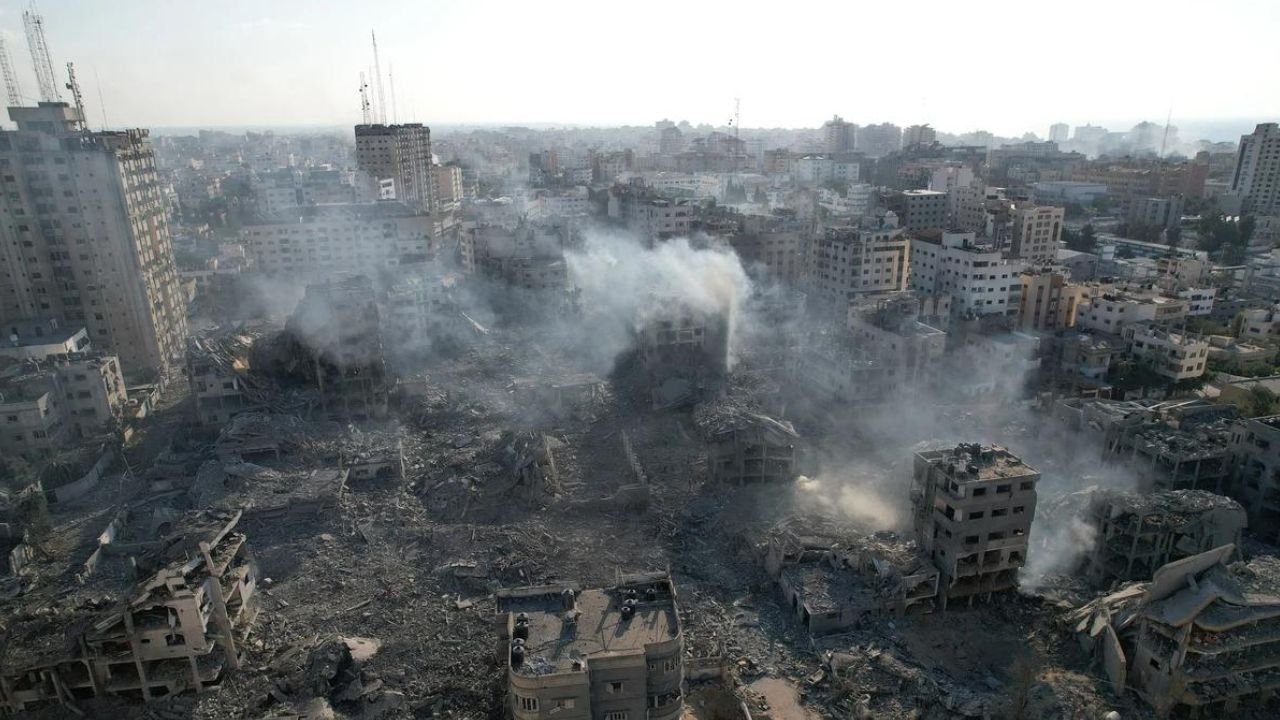
    Israel’s genocide in Gaza has killed at least 32,400 people in the besieged Strip, most of them women and children, according to the health ministry in the territory.

  • Israel furious at US abstention on Security Council ceasefire vote

    Israel furious at US abstention on Security Council ceasefire vote

    Israel reacted angrily on Monday to the first UN Security Council vote to demand an “immediate ceasefire” in the Gaza war, after its closest ally the United States abstained, while fighting raged in the Palestinian territory.

    Immediately after the resolution passed, Israel cancelled the visit of a delegation to Washington, which the United States had requested to discuss concerns over a mooted Israeli invasion of Rafah, in crowded southern Gaza.

    Israel said the US abstention “hurts” both its war effort and efforts to release hostages.

    It was “a clear retreat from the consistent position of the US,” Prime Minister Benjamin Netanyahu’s office said.

    While diplomatic attention turned to New York, fighting continued across the Gaza Strip, with Israeli forces battling Hamas militants around at least two major hospitals.

    Washington insisted that its Security Council abstention did not mark a shift in policy, although it has taken an increasingly tougher line with Israel in recent weeks.

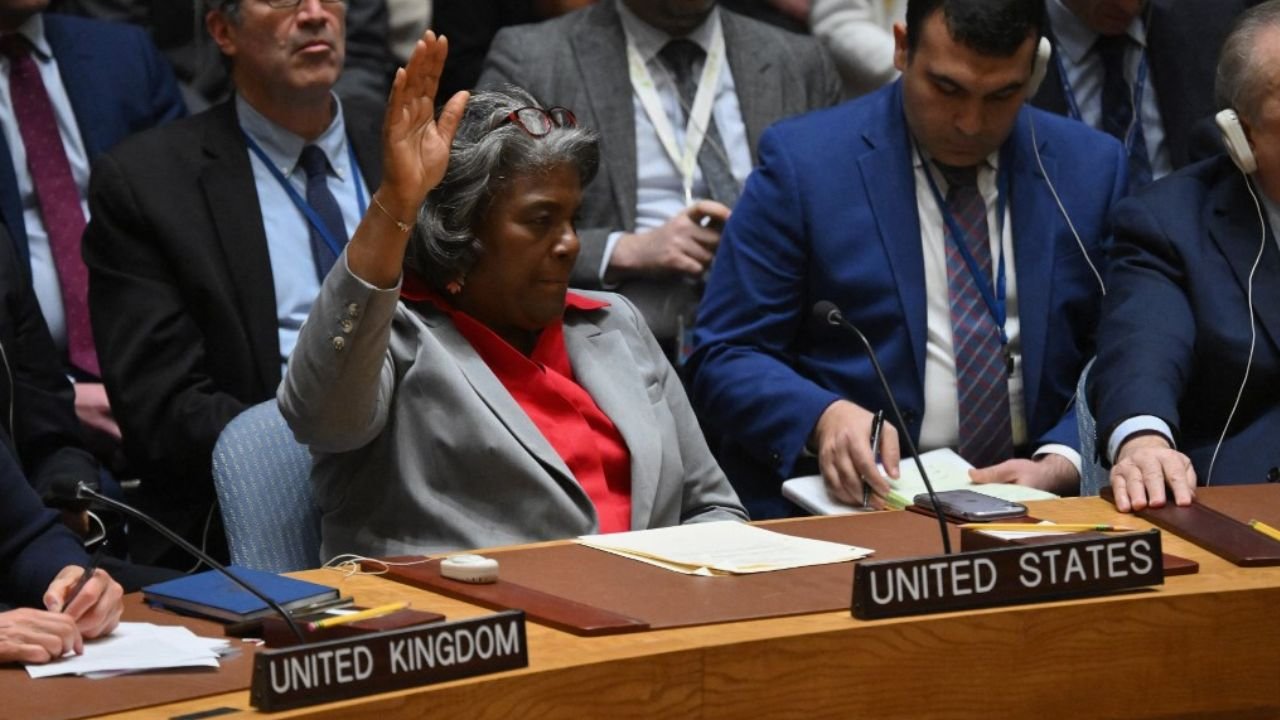
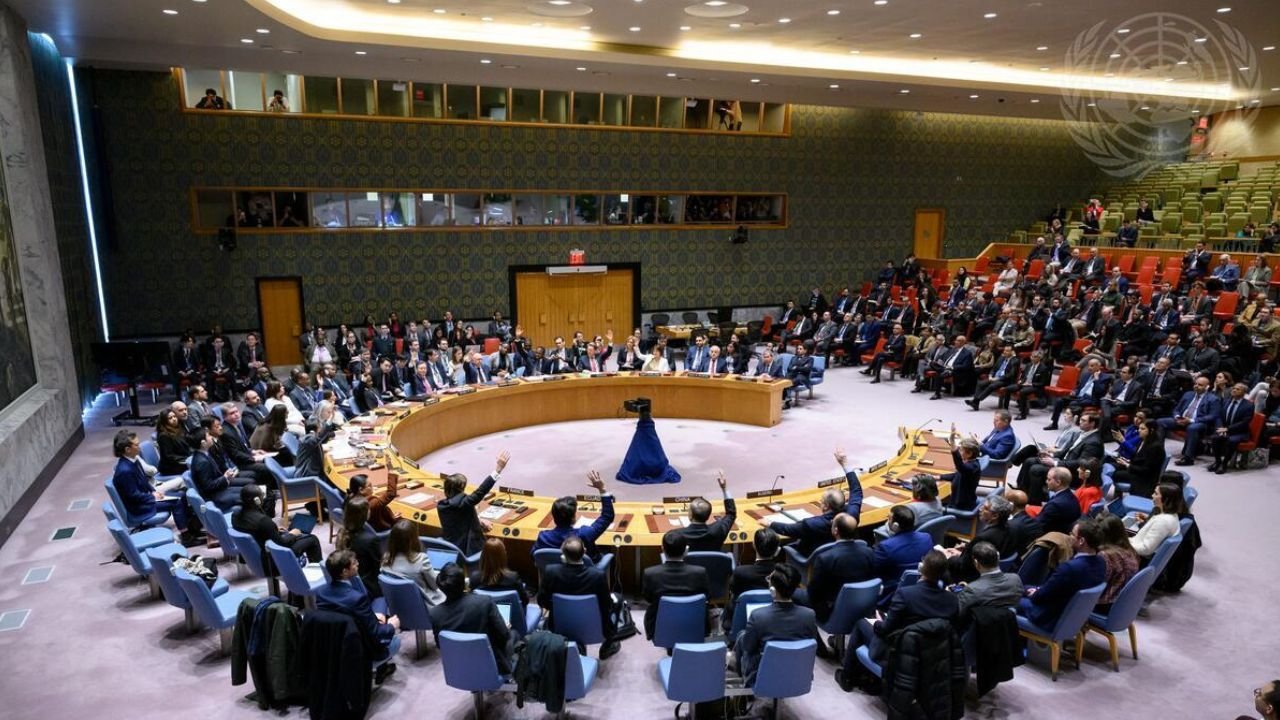
    The United States had repeatedly vetoed Security Council resolutions calling for an immediate ceasefire, but on Friday it put forward its own unsuccessful text mentioning one, before abstaining on Monday’s resolution drafted by non-permanent Council members.

    Applause

    It meant that the resolution, which demands an “immediate ceasefire” for the ongoing Muslim holy month of Ramadan that leads to a “lasting” truce, went through with all other 14 Security Council members voting yes.

    The resolution drew applause in the usually staid council and also demands that Hamas and other militants free hostages they seized, though it does not directly link a release to the ceasefire.

    The Gaza war broke out with Hamas’s unprecedented attack of October 7 which resulted in about 1,160 deaths in Israel, mostly civilians, according to an AFP tally based on official Israeli figures.

    Militants also seized about 250 hostages, of whom Israel believes around 130 remain in Gaza, including 33 presumed dead.

    Netanyahu’s failure to bring home the hostages has led to regular protests in Israel.

    Vowing to destroy Hamas and free the captives, Israel has carried out a relentless bombardment of the coastal territory and a ground invasion that began in Gaza’s north before moving southward.

    The health ministry in the Hamas-run Gaza Strip on Monday put the total Palestinian death toll at 32,333, most of them women and children.

    Hamas welcomed the Security Council resolution and said it was reaffirming its readiness to negotiate the release of hostages in exchange for Palestinian prisoners held by Israel.

    Member states are obliged to comply with resolutions passed by the Security Council, whose vote came while Israeli Defence Minister Yoav Gallant visited Washington.

    After the UN decision, Gallant said the war will go on.

    “We have no moral right to stop the war while there are still hostages held in Gaza,” he said.

    Tensions between the two allies have grown alongside US concerns about the humanitarian crisis in Gaza, where the UN says famine is imminent.

    Netanyahu’s determination to launch a ground operation in Rafah, the city on Gaza’s southern border where most of the territory’s population is sheltering, has become a key point of contention.

    Prior to the UN vote, US Vice President Kamala Harris told ABC TV that a Rafah invasion would be “a huge mistake”. Asked hether she would rule out “consequences” for Israel, Harris said: “I am ruling out nothing”.

    Before heading to Washington, Gallant said his focus would include “our ability to obtain platforms and munitions”.

    Hospital battles

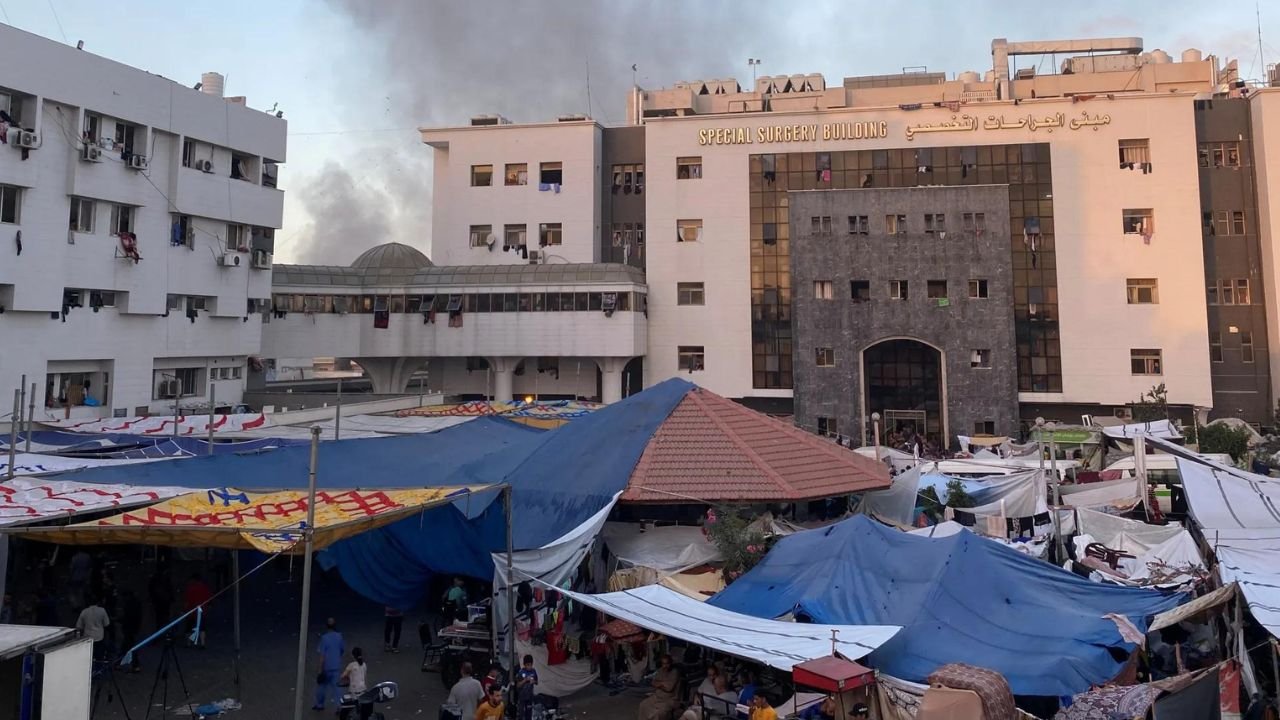
    Troops and tanks have encircled Gaza City’s Al-Shifa Hospital, the territory’s biggest, for a week and more recently moved on Al-Amal Hospital in the main southern city of Khan Yunis.

    Israel has labelled its operations “precise operational activities” and said it has taken care to avoid harm to civilians, but aid agencies have voiced alarm about civilians caught up in the fighting.

    The Israeli military said it was battling militants around the two hospitals and reported around 20 militants killed around Al-Amal over the past day in close-quarters combat and air strikes.

    Palestinians living near Al-Shifa have reported hellish conditions, including corpses in the streets, constant bombardment and the rounding up of men who are stripped to their underwear and questioned.

    The Al-Shifa raid was in its eighth day and the military reported having detained a total of about 500 militants “affiliated with” Hamas and Islamic Jihad, another militant group.

    ‘We are suffering’

    Israel has signalled an extended presence at Al-Shifa which troops also raided in November, to an international outcry.

    At Al-Amal Hospital, the Palestinian Red Crescent said Israeli troops ordered staff and patients to evacuate, but the departing convoy got stuck due to debris on the road.

    The charity reported that Israeli troops opened fire on staffers who tried to clear the debris, wounding two — one of whom made it back to the convoy.

    Israel’s military did not immediately respond to a request for comment.

    The military said its Al-Amal operation included “raids on several terrorist infrastructure sites”, where they found explosive devices, rocket-propelled grenades and other military equipment.

    UN chief Antonio Guterres, on a visit to the Middle East, has pleaded for an end to the “non-stop nightmare” for the 2.4 million people trapped in Gaza’s worst-ever war and stalked by starvation.

    According to Gaza’s health ministry, at least 107 people were killed in a 24-hour period into Monday, and the Hamas government press office said more than 50 airstrikes rained down on the Gaza Strip.

    Israel’s armed forces gave a similar number and said its fighter jets and helicopters had struck about 50 targets.

    Food and water shortages have deepened the suffering, especially in northern Gaza where residents, mostly women and children, waited in line to fill up jerrycans and buckets in Jabalia.

    “We don’t even have food to give us the energy to go to collect the water — let alone the innocent children, women and the elderly,” said one man, Bassam Mohammed al-Haou.
  • Countries call for swift implementation of UN ceasefire vote

    Countries call for swift implementation of UN ceasefire vote

    The UN Security Council on Monday called for an immediate ceasefire in Gaza five months into the grinding war, despite Israel’s ally the United States abstaining.

    Here are some reactions to the resolution to halt fighting over the Muslim holy month of Ramadan with an aim for a “lasting” truce, which drew rare applause at the Security Council:

    UN Secretary-General Antonio Guterres called for swift implementation of a ceasefire after Israel voiced anger over the resolution.

    “Failure would be unforgivable,” Guterres wrote on X, formerly known as Twitter.

    Hamas welcomed the resolution to halt fighting in Gaza while saying it was ready to negotiate the release of hostages in exchange for Palestinian prisoners.

    “We also affirm our readiness to engage in an immediate prisoner exchange process that leads to the release of prisoners on both sides,” the militant group said.

    Israeli Prime Minister Benjamin Netanyahu’s office said the UN vote “hurts both the war effort and the effort to release the abductees”.

    “It gives Hamas hope that international pressure will allow them to accept a ceasefire without the release of our abductees,” the statement said. It also took aim at the US abstention, calling it a “clear retreat” from its earlier position.

    Hussein al-Sheikh, minister for civilian affairs of the Palestinian Authority which has partial administrative control in the Israeli-occupied West Bank, hailed the resolution in a post on X.

    “We call for a permanent cessation to this criminal war and Israel’s immediate withdrawal from the Gaza Strip,” he wrote.

    Following the vote, the United States said a ceasefire can “only” be implemented once Hamas begins releasing hostages it still holds.

    “A ceasefire can begin immediately with the release of the first hostage,” US ambassador to the UN Linda Thomas-Greenfield said.

    After the United States vetoed previous drafts, National Security Council spokesman John Kirby told journalists that the US decision to abstain from Monday’s vote does not represent a “shift in our policy”.

    The Arab League’s Secretary-General Ahmed Aboul Gheit said the decision “comes late”.

    “The lesson now is to implement the decision on the ground, stop military operations and Israeli aggression immediately and completely,” he added.

    Top European Union officials welcomed the resolution, calling for a ceasefire and the unconditional release of all hostages.

    “Implementation of this resolution is vital for the protection of all civilians,” European Commission President Ursula von der Leyen wrote on X.

    The resolution “represents the first important and necessary step to stop the bloodshed,” the Egyptian ministry of foreign affairs said in a statement to the UN.

    The Brazilian government said it “hopes that the ceasefire will be implemented immediately, as stipulated by the resolution, and reiterated “the urgency of ensuring the effective entry of an expanded and regular flow of humanitarian aid into Gaza, as well as the release of all hostages”.

    France’s UN representative called for a sustained truce between Israel and Hamas beyond the ongoing month of Ramadan.

    “This crisis is not over,” said Nicolas de Riviere. “After Ramadan, which ends in two weeks, it will have to establish a permanent ceasefire.”

    German Foreign Minister Annalena Baerbock said she was “relieved by the adoption of the resolution”. “Every day counts,” she added.

    Baghdad’s foreign minister applauded the resolution in a statement and stressed “the importance for the parties to respect their obligations under international law”.

    Jordan’s foreign ministry expressed hope that the UN and international community would “take action to safeguard the two-state solution and ensure the establishment of an autonomous and sovereign Palestinian state”.

    Lebanese Prime Minister Najib Mikati hailed the “first stage in the process of ending Israeli aggression against the Gaza Strip.”

    He also called for a political solution “to end the conflict and give the Palestinians their rights”.

    Qatar said it hopes the resolution “represents a step towards a permanent cessation of fighting in the Strip”.

    The gas-rich emirate has been engaged in weeks of mediation between Israel and Hamas to secure a truce in Gaza and an exchange of hostages and prisoners.

    Foreign minister Naledi Pandor welcomed the resolution on public radio but stressed that “the ball is in the court of the Security Council”.

    Spanish Prime Minister Pedro Sanchez on X applauded the resolution, and said that “the realisation of two states, Israel and Palestine, living side-by-side in peace and security is the only realistic and viable solution for the region”.

    Outgoing Dutch Prime Minister Mark Rutte said the next step was “to stop the violence, free the hostages, immediately send in vastly more humanitarian aid to Gaza and find a lasting solution”.

    The country’s far-right leader, Geert Wilders, who swept to victory in recent polls, on X voiced support for Israel “against the dark forces of hate and destruction called Hamas”.

    Turkey called the resolution and prospective return of humanitarian access to Gaza “a positive step”.

    “We hope that Israel will comply with the requirements of this resolution without delay,” Turkish foreign affairs spokesman Oncu Keceli wrote on X.

    Chile’s foreign office said it was “necessary to progress the two state solution, in which Palestine and Israel can live in peace inside internationally recognised borders.”

    “I invite the world’s nations if Israel breaks this ceasefire to break diplomatic relations with this country,” said Colombian President Gustavo Petro on X.

    Amnesty International’s Secretary General Agnes Callamard said the resolution is “long overdue” and called for “an immediate and comprehensive arms embargo”.

    Human Rights Watch’s UN lead Louis Charbonneau called for Israel to halt “unlawful attacks”, for Palestinian armed groups to “immediately release all civilians held hostage”, and for the US and others to suspend “arms transfers to Israel”.

    Oxfam’s UN representative Brenda Mofya said the resolution should provide “much-needed respite from the relentless and devastating Israeli violence”.

  • UN expert accuses Israel of several acts of genocide in Gaza

    UN expert accuses Israel of several acts of genocide in Gaza

    A UN rights expert on Monday said there were “reasonable grounds” to determine that Israel has committed several acts of “genocide” in its war in Gaza, also warning of “ethnic cleansing”.

    Francesca Albanese, the UN special rapporteur on the rights situation in the Palestinian territories, said there were clear indications that Israel had violated three of the five acts listed under the UN Genocide Convention.

    “The overwhelming nature and scale of Israel’s assault on Gaza and the destructive conditions of life it has inflicted reveal an intent to physically destroy Palestinians as a group,” she said in a report, which was immediately rejected by Israel as an “obscene inversion of reality”.

    Albanese, an independent expert appointed by the UN Human Rights Council but who does not speak on behalf of the United Nations, said she had found “reasonable grounds to believe that the threshold indicating the commission of… acts of genocide against Palestinians in Gaza has been met”.

    The report, entitled “Anatomy of a Genocide”, listed those acts as: “killing members of the group; causing serious bodily or mental harm to the group’s members; and deliberately inflicting on the group conditions of life calculated to bring about its physical destruction in whole or in part”.

    Israel’s diplomatic mission in Geneva said the country “utterly rejects the report”, describing it as “simply an extension of a campaign seeking to undermine the very establishment of the Jewish State”.

    “Israel’s war is against Hamas, not against Palestinian civilians,” it said in a statement, slamming Albanese’s “outrageous accusations”.

    Israel has long been harshly critical of Albanese and her mandate, which the United States on Monday called “biased against Israel.”

    Washington is “aware” of Albanese’s report but has “no reason to believe Israel has committed acts of genocide in Gaza,” a US official told AFP.

    Last month Israel slapped a visa ban on her after she made comments denying that Hamas’s October 7 attack, which sparked the war in Gaza, was anti-Semitic.

    Israel’s relentless bombardment and ground offensive in Gaza has since killed more than 32,300 people, mainly women and children, according to the health ministry in Gaza.

    South Africa has already filed a complaint against Israel before the International Court of Justice, alleging its assault on Gaza amounts to a violation of the genocide convention.

    The court has yet to rule on the underlying issue, but earlier this year ordered Israel to do everything it could to prevent genocidal acts during its campaign and also to allow in humanitarian aid.

    In Albanese’s report, which she is due to present to the Human Rights Council on Tuesday, she maintained that Israel’s “genocidal acts” followed “statements of genocidal intent”.

    Statements by some senior Israeli officials spelling out an intent to forcibly displace Palestinians and replace them with Israeli settlers, she said, indicated that “evacuation orders and safe zones have been used as genocidal tools to achieve ethnic cleansing”.

    The report also found that Israel was treating all Palestinians and their infrastructure “as ‘terrorist’ or ‘terrorist-supporting’, thus transforming everything and everyone into either a target or collateral damage”.

    “In this way, no Palestinian in Gaza is safe by definition,” it said.

    “This has had devastating, intentional effects, costing the lives of tens of thousands of Palestinians.”

    The report also stressed that Israel’s mistreatment of the Palestinians had not begun on October 7.

    “Israel’s genocide on the Palestinians in Gaza is an escalatory stage of a longstanding settler colonial process of erasure,” it said.

  • Hamas welcomes China, Russia veto of US-backed Gaza resolution

    Hamas has reportedly shown “appreciation” as Russia and China vetoed a US-led draft resolution on a Gaza ‘ceasefire’ at the UN Security Council on Friday.

    The United States proposed a resolution endorsing “the urgent need for an immediate and enduring ceasefire” and, notably, condemning the October 7 attack carried out by Hamas for the first time.

    “We express our appreciation for the position of Russia, China and Algeria who rejected the biased American resolution of aggression against our people,” the Hamas said in a statement.

    They added that the draft consists of “misleading wording that is complicit” with Israel and “grants it cover and legitimacy to commit a genocidal war against the Palestinian people in the Gaza Strip.”

    On the other hand, prior to the vote, Russia’s ambassador to the UN, Vassily Nebenzia, urged members against endorsing the resolution, deeming it as “excessively politicized” and implying it endorsed Israeli military operations in Rafah, Gaza, where more than half of its 2.3 million residents sought shelter in camps to escape the Israeli offensive in the northern regions.

    Nebenzia asserted that several non-permanent Security Council members had crafted an alternative resolution, which he portrayed as a fair proposal, calling on all members to support it.

  • Entire Gaza population at ‘severe levels of acute food insecurity’: Blinken

    Entire Gaza population at ‘severe levels of acute food insecurity’: Blinken

    The entire population of Gaza is experiencing “severe levels of acute food insecurity”, US Secretary of State Antony Blinken said Tuesday, underscoring the urgency for increasing the delivery of humanitarian aid into the Palestinian territory.

    “According to the most respected measure of these things, 100 percent of the population in Gaza is at severe levels of acute food insecurity. That’s the first time an entire population has been so classified,” Blinken told a press conference in the Philippines where he is on an official visit.

    Blinken’s remarks came on the eve of his return to the Middle East, this time to Saudi Arabia and Egypt, to discuss efforts to secure a ceasefire in Gaza and ramp up aid deliveries.

    A United Nations-backed food security assessment warned Monday that half of Gazans are experiencing “catastrophic” hunger, with famine projected to hit the north of the territory by May unless there is urgent intervention.

    Martin Griffiths, the UN’s humanitarian chief, has called for Israel to allow unfettered aid into the besieged Palestinian territory, saying there was “no time to lose”.

    With aid agencies reporting huge difficulties gaining access to Gaza, particularly the north, the UN has warned for weeks that a famine is looming.

    Donors have turned to deliveries by air or sea, but these are not viable alternatives to land deliveries, UN agencies say.

    The Integrated Food Security Phase Classification partnership said Monday that while the technical criteria for a famine had not yet been met, “all evidence points towards a major acceleration of deaths and malnutrition”.

    Citing UN data, Blinken said 100 percent of the population in Gaza needed humanitarian assistance, compared with 80 percent in Sudan and 70 percent in Afghanistan.

    “This only underscores both the urgency, the imperative, of making this the priority,” Blinken said of aid deliveries.

    “We need more, we need it to be sustained, and we need it to be a priority if we’re going to effectively address the needs of people.”

    Blinken is in Manila as part of a brief Asia tour aimed at reinforcing US support for regional allies against China.

    During a joint press conference with his Philippine counterpart, Blinken was asked about steps he was taking to address the lack of access to Gaza for foreign journalists.

    “There are obviously profound security considerations in an active war zone and those have to be taken into account,” Blinken said.

    “But the basic principle of access for journalists is something we stand strongly behind.”

  • Israeli military tells Gazans to evacuate Al-Shifa hospital

    Israeli military tells Gazans to evacuate Al-Shifa hospital

    Palestinian Territories

    Israel’s military on Monday called on Gazans to evacuate the area in and around the territory’s largest hospital as battles raged at the complex crowded with patients and displaced people.

    “In order to maintain your security, you must immediately evacuate the area,” army spokesman Avichay Adraee said on social media platform X, instructing “all those present” to head west and then south to a “humanitarian area”.

    ha-rcb/jm/fz

    © Agence France-Presse

  • Hamas Proposes New Six-week Gaza Truce, Hostage-prisoner Exchange: Official

    Hamas Proposes New Six-week Gaza Truce, Hostage-prisoner Exchange: Official

    Hamas has proposed a new six-week truce in Gaza and an exchange of several dozen Israeli hostages for Palestinian prisoners, an official from the militant group told AFP on Friday.

    “The agreement is for a six-week ceasefire and a prisoner exchange,” the official said after weeks of so far fruitless mediation efforts, adding that the group would want this to lead to “a complete (Israeli) withdrawal from the Gaza Strip and a permanent ceasefire”.

    During the proposed truce, Gaza militants would release about 42 hostages seized during the October 7 attack that triggered the war in Gaza, the official said, requesting anonymity because of the sensitivity of the talks.

    The official said that between 20 and 50 Palestinian prisoners held in Israeli jails would be released per hostage — down from a previous proposal of a roughly 100-to-one ratio, according to a Hamas source in late February.

    Under the new proposal, the initial exchange could include women, children, elderly and ill hostages, the official said.

    During the October 7 attack, militants seized about 250 Israeli and foreign hostages, dozens of whom were released during a week-long truce in November. Israel believes about 130 captives remain in Gaza including 32 presumed dead.

    The latest proposal appears to be a shift for Hamas, whose armed wing said earlier this month there would be “no compromise” on its demand that Israel withdraw from Gaza before any more hostages are freed.

    Now the militants are saying that, during a six-week truce, Israeli forces would need to withdraw from “all cities and populated areas in the Gaza Strip” and allow for the return of displaced Gazans “without restrictions”, the official said.

    The Hamas proposal also calls to ramp up the flow of humanitarian aid, the official added.

    The terms of an eventual ceasefire would see Israel’s “complete military withdrawal from the Gaza Strip” and a comprehensive hostage-for-prisoner exchange involving the release of all hostages for “an agreed-upon number of Palestinian prisoners”, according to the official.

    “Egypt and Qatar, along with the United States, are responsible for following up and ensuring the implementation of the agreement,” the official said.

    Israel’s retaliatory military campaign after October 7 has disproportionately killed at least 31,490 people in Gaza, mostly women and children, according to the health ministry.

    Israeli Prime Minister Benjamin Netanyahu’s office said late Thursday that Hamas “is continuing to hold unrealistic demands” but that an update on truce talks would be submitted to Israel’s war cabinet on Friday.

  • Israeli general in Gaza criticises political leaders

    Israeli general in Gaza criticises political leaders

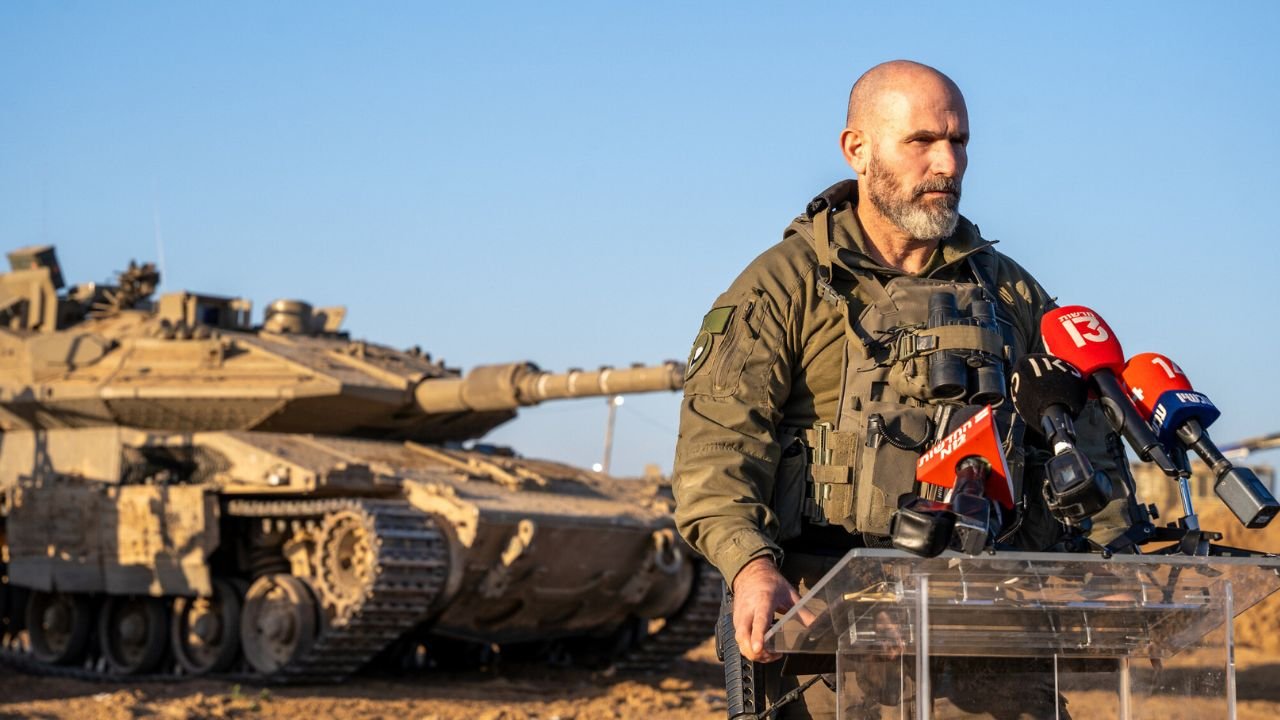
    An Israeli general leading troops in Gaza has delivered rare public criticism of the country’s political leadership, demanding it “be worthy” of the soldiers fighting against Hamas in the Palestinian territory.

    Brigadier General Dan Goldfus, head of the 98th division deployed in Gaza’s main southern city of Khan Yunis, also appeared to enter into a row over exempting ultra-Orthodox Jews from military service.

    He was subsequently summoned by the military leadership for his comments, which breached a long-standing taboo on uniformed officers publicly wading into politics.

    “You must be worthy of us,” Goldfus said of his country’s leaders, in comments broadcast on Israeli television on Wednesday.

    He called for Israeli politicians “to push aside the extreme, and adopt togetherness” in the Gaza following October 7 attacks.

    The general vowed that military commanders and soldiers would take responsibility for their actions.

    Prime Minister Benjamin Netanyahu has so far stopped short of assuming personal responsibility for Israel’s intelligence failures on October 7 and said any official investigations must take place after the war.

    “We will not run from responsibility. We bow our heads in light of our reverberating failure on October 7, but at the same time are leading forward,” the general said.

    Since Israel launched a ground offensive in Gaza on October 27, 249 soldiers have been killed in the Palestinian territory, according to the military.

    Addressing Israel’s political leaders, Goldfus called on them to ensure that “everyone takes part” in enlisting in the armed forces, in an apparent reference to ultra-Orthodox Israeli men being exempt from national service — a contentious political issue.

    Most Jewish men are required by law to serve in the Israeli military, but members of the ultra-Orthodox minority — known in Hebrew as Haredim — have long been given sweeping exemptions.

    Since the October 7 attack, public frustration over the exemption has resurfaced, adding pressure on Netanyahu’s governing coalition, which relies on ultra-Orthodox allies staunchly opposed to drafting Haredi men.

    Neither Netanyahu nor Defence Minister Yoav Gallant publicly responded to Goldfus’s remarks.

    Some lawmakers voiced their approval while others expressed dissatisfaction with the general making political statements of any kind.

    Yoav Segalovitz, a centrist opposition lawmaker, told Kan public radio on Thursday that “a uniformed officer needs to talk only about what’s related to his decisions or take off the uniform”.

    Writing in the Yedioth Ahronoth newspaper, columnist Nahum Barnea said that “with all respect to the heartfelt sentiments of the esteemed officer, fighting in Gaza doesn’t give him the right or the authority to express a position on political matters”.

    Israel’s offensive in Gaza has killed at least 31,341 Palestinians since October 7, mostly women and children, according to the health ministry.