Tag: genocide

  • Gaza Government Says Israel Returned 47 Exhumed Bodies

    Gaza Government Says Israel Returned 47 Exhumed Bodies

    Gaza’s government media office said Thursday that Israel had returned dozens of bodies that had been exhumed from graves in the besieged territory in recent weeks.

    Israeli forces have on several occasions taken bodies from Gaza to Israel for examinations as they look for hostages seized during Hamas’s October 7 attack.

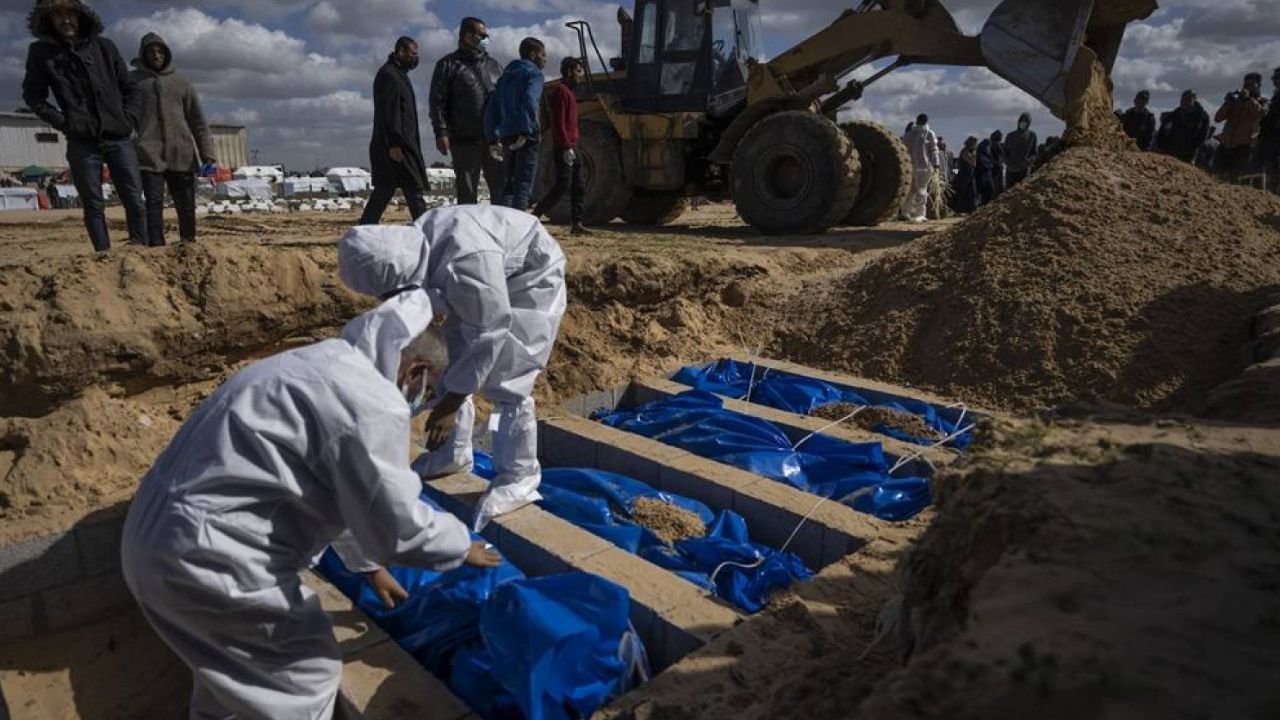
    AFP journalists have previously witnessed the reburial of bodies which Gaza officials said had been exhumed by Israeli forces in November, December and January.

    The 47 new bodies sent back by Israel on Thursday “have been transferred to Al-Najjar Hospital” in Rafah, in southern Gaza, the besieged territory’s crossings and borders authority said in a statement.

    A separate statement from the government media office said they would be “buried in a recently established mass grave” near Rafah.

    “The bodies were seized and transferred to Israel under the pretext of examination and verification” to ensure they were not those of hostages held in Gaza, the government statement said.

    Since the start of the war, Israeli officials have exhumed “hundreds” of bodies from graves at hospitals in the Gaza Strip, it said.

    The Israeli army told AFP it was looking into reports about the latest group of returned bodies.

    Hamas took around 250 Israeli and foreign hostages during the October 7 attack, dozens of whom were released during a week-long truce in November. Israel believes 99 of them remain alive in Gaza and that 31 have died.

    The attack resulted in the deaths of around 1,160 people, mostly civilians, according to an AFP tally of official figures.

    Israel’s genocide in Gaza after October 7 has resulted in the deaths of at least 30,800 people in Gaza, the majority of them women and children, according to the territory’s health ministry.

    Prime Minister Benjamin Netanyahu’s government is under immense domestic pressure to secure the return of hostages as part of any new truce deal with Hamas.

    That pressure intensified after soldiers killed three hostages in December, mistakenly perceiving them as a threat.

  • Trump backs Israel’s military operations in Gaza

    Trump backs Israel’s military operations in Gaza

    Washington (AFP) – Republican presidential frontrunner Donald Trump expressed his support for Israel’s military operations in Gaza Tuesday, in his most explicit comments yet on the fighting, as international pressure grows on the United States to rein in its ally.

    “Yes,” Trump responded, when asked during an interview on Fox News if he was “in Israel’s camp.”

    The interviewer then asked if the former president was “on board” with the way Israel was executing its offensive in Gaza.

    “You’ve got to finish the problem,” Trump responded.

    President Joe Biden, whom Trump is set to challenge for the White House in November, has come under increasing fire both internationally and from his own Democratic base over his backing for Israel as the death toll in Gaza soars and the specter of famine looms.

    Israel’s disproportionate retaliatory offensive in the Gaza Strip has killed 30,534 people, mostly women and children, according to the health ministry.

    US protest movements have urged voters to punish Biden at the polls over his support for Israel. More than 100,000 people in Michigan voted “uncommitted” rather than cast their ballot for him in the US swing state’s Democratic primary last week.

    As conditions deteriorate, Israel is facing an increasingly sharp rebuke from its top ally the United States.

    Vice President Kamala Harris expressed “deep concern about the humanitarian conditions in Gaza” during talks in Washington on Monday with Israeli war cabinet member Benny Gantz.

  • Gaza detainees released by Israel ‘traumatized,’ report abuse: UNRWA

    Gaza detainees released by Israel ‘traumatized,’ report abuse: UNRWA

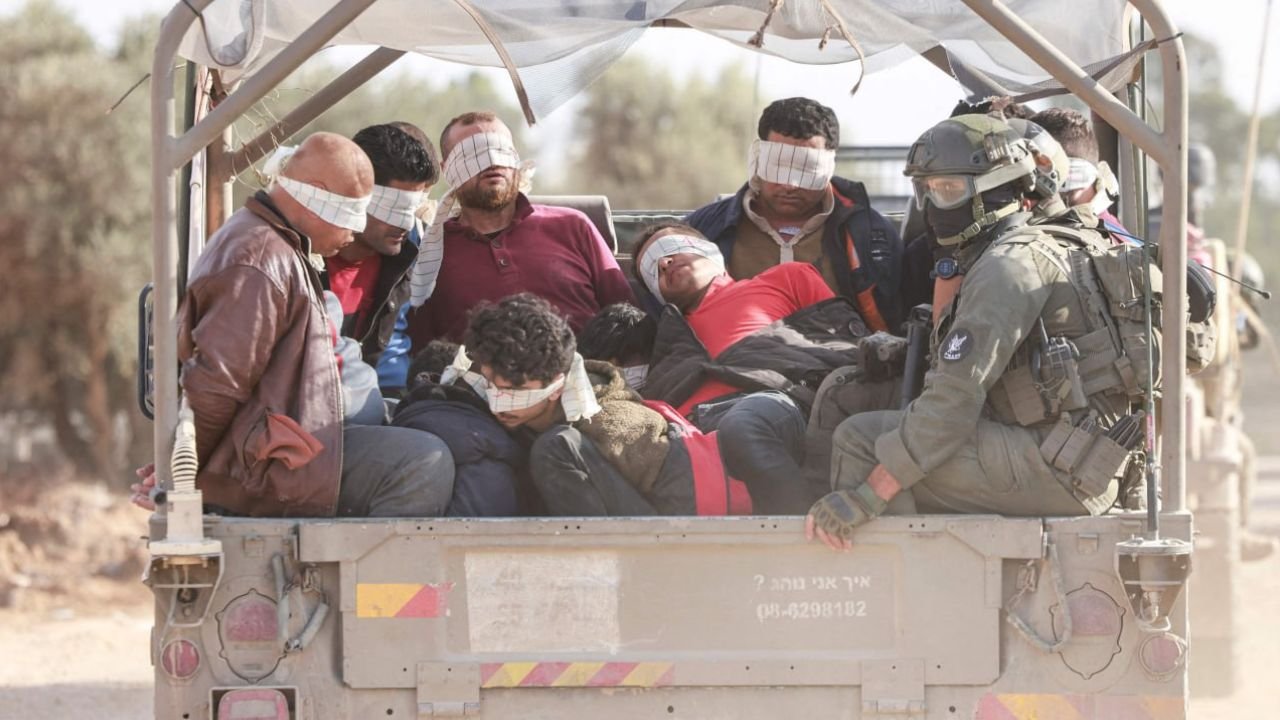
    United Nations (United States) (AFP) – Gazans detained by Israeli forces are coming back “completely traumatized” upon release and reporting abuses while in captivity, the head of the UN’s Palestinian refugee agency said Monday.

    Detainees reported being subjected to a “broad range of ill treatment” including threats of electrocution, being photographed naked, sleep deprivation and having dogs used to intimidate them, UNRWA chief Philippe Lazzarini told a media briefing.

    The comments follow reporting by the New York Times on an internal investigation compiled by UNRWA staff documenting the state of returning detainees at the Kerem Shalom border.

    “We have seen these people coming back from detention, some of them for a couple of weeks, some of them for a couple of months, and most of them coming back (are) completely traumatized by the ordeal they have gone through,” Lazzarini said.

    “A number of people have been… debriefed about their ordeal, and we have indeed (compiled) an internal report about their experiences.”

    The report had been shared with rights groups specializing in detention, he added.

    Lazzarini’s comments capped a tumultuous day during which Israel and UNRWA have traded accusations, with Israel accusing the agency of having employed more than 450 “terrorists.”

    Ahead of Lazzarini’s comments, meanwhile, UNRWA said Israeli authorities had “detained several of its staff from the Gaza Strip,” who later described abuses in custody.

    “Our staff have reported atrocious events while they were detained and during interrogations by the Israeli authorities. These reports included torture, severe ill-treatment, abuse and sexual exploitation,” UNRWA said in a statement to AFP.

    “Some of our staff have conveyed to UNRWA teams that they were forced to sign confessions under torture and ill-treatment” while being asked about Hamas’s October 7 attack.

    Israel in Gaza has killed 30,534 people, mostly women and children, according to the latest toll from Gaza health ministry.

  • Arab singers’ songs shine light on genocide in Gaza

    Arab singers’ songs shine light on genocide in Gaza

    Songs written by Arab singers from across the Middle East in response to Israel’s offensive in Gaza are making the Palestinian issue a major topic of conversation in Arab popular culture again, Express Tribune has reported.

    In Cairo, a well-liked Egyptian wedding singer named Rudy is now singing songs with new words that praise Abu Obaida, the military spokesperson for Hamas. These songs mix feelings of defiance, helplessness, and anger because of the war between Israel and Hamas, the group that controls the Gaza Strip.

    “Abu Obaida, O Lion-Hearted … set them all ablaze,” she belts out to a percussive beat.

    In Jordan, artists from different Arab states came together in October to record a song dreaming of Palestinians going back to the lands occupied by Israel. This song has been watched by millions on social media.

    The increasing popularity of songs that sympathize with Palestinians or support Hamas, even from artists who usually stay away from politics, shows frustration over Israel’s attacks on Gaza, its control over Palestinian land, and the support it gets from the U.S. and Europe for its military actions.

    It also shows the support among Arab people for Hamas and for armed resistance as Israel tries to eradicate the group.

    Hamas militants killed 1,200 people and took 253 hostages in an attack on Israel on October 7, according to Israeli reports. Gaza health officials say nearly 30,000 Palestinians have been confirmed killed in Israel’s military retaliation.

    The conflict has caused division around the world and led to broader cultural disagreements.

    At the annual Eurovision Song Contest, meant to be non-political, there has been controversy over Israel’s entry mentioning the October 7 attack.

    In the United States, heated debates on university campuses have affected some staff members’ careers, with students accusing each other of antisemitism and Islamophobia.

    In Israel, artists have created songs about October 7. Some focus on the victims’ suffering, while others express revenge.

    One music video shows a survivor of a Hamas attack at a music festival on October 7. Another, by Israeli rapper Subliminal, depicts Gaza neighborhoods being destroyed by airstrikes while Israeli tanks and snipers prepare for war.

    KEYS AND KUFFIYAHS

    In Arab societies, many people believe that the war is supported by Western countries and is aimed at harming Palestinian civilians.

    Wedding singer Rudy said watching Israeli attacks left her feeling helpless and wanting to sing in support of Hamas.

    At weddings where she performs, guests often ask her to sing about Gaza. One of her songs praises Abu Obaida, a Hamas spokesperson, whom many see as a hero defending children from Israeli attacks.

    “Abu Obaida – we see him as a hero who stands up against Israel. There are children dying and he is standing up to defend them,” Rudy said.

    Lebanese rapper Jaafar Touffar also raps about Abu Obaida and the Aqsa Flood – the name Hamas gave its October 7 assault – and says ‘more is coming’ to Israel.

    A poll by the Doha Institute for Graduate Studies found that 67 percent of 8,000 respondents viewed the October 7 attack as a justified act of resistance against occupation.

    Before October 7, the Palestinian cause was often overlooked as Gulf countries normalized relations with Israel and stopped pushing for a Palestinian state.

    Now, these issues are at the forefront of regional discussions, from social media to everyday conversations.

    In a music video by Kuwaiti singer Humood Al Khuder, symbols like keys representing homes lost in the Nakba of 1948, the black-and-white kuffiyah headscarf, and a refugee child called Handala are used to show solidarity with Palestinians.

    ‘NEVER FORGET WHAT’S HAPPENING’

    Lebanese musician Zeid Hamdan said he now focuses his music on the war and its impact on Lebanon where Israel and the militant group Hezbollah often fight each other with rockets and airstrikes.

    “I don’t perform anymore just to become famous as an artist. I’m on stage to wake people up and send an urgent message. I’m going from one fundraiser to another to protest,” he said.

    Arab musicians understand that their music might not change the war’s course or influence Arab leaders.

    Ghaliaa Chaker, who recorded the song ‘Returning’ with 24 other Middle Eastern artists in Jordan, says her goal is to keep the suffering in Gaza in people’s minds.

    “I really hope they (Gazans) know they’re in our prayers,” she said. “That’s the best we can hope for … to keep talking about it. Never forget what’s happening.”

  • Death toll in Gaza exceeds 30,000 as Israeli attacks continue and famine looms

    Death toll in Gaza exceeds 30,000 as Israeli attacks continue and famine looms

    Palestinian Territories – The health ministry of Gaza said Thursday more than 30,000 Palestinians have been killed since October 7 as Israel intensified its attacks on the besieged strip.

    While mediators say a truce deal between Israel and Hamas could be just days away, aid agencies have sounded the alarm of a looming famine in Gaza’s north.

    Children have died “due to malnutrition, dehydration and widespread famine” at Gaza City’s Al-Shifa hospital, said the health ministry, whose spokesman Ashraf al-Qudra has called for “immediate action” from international organisations to prevent more of these deaths.

    Citing the deteriorating conditions in Gaza, USAID head Samantha Power said Israel needed to open more crossings so that “vitally needed humanitarian assistance can be dramatically surged”.

    “This is a matter of life and death,” Power said in a video posted on social media platform X.

    The latest overall toll for Palestinians killed in the war came after at least 79 people died overnight across the war-torn Gaza Strip, the health ministry said Thursday.

    Mediators from Egypt, Qatar and the United States have been seeking a six-week pause.

    Negotiators are hoping a truce can begin by the start of Ramadan, the holy Muslim month that kicks off March 10 or 11, depending on the lunar calendar.

    The proposals reportedly include the release of some Israeli hostages held in Gaza in exchange for several hundred Palestinian detainees held by Israel.

    Short of the complete withdrawal Hamas has called for, a source from the group said the deal might see Israeli forces leave “cities and populated areas”, allowing the return of some displaced Palestinians and humanitarian relief.

    US President Joe Biden is “pushing all of us to try to get this agreement over the finish line”, said his secretary of state, Antony Blinken.

    Famine ‘imminent’

    The crucial southern Gaza city of Rafah is the main entry point for aid crossing the border from neighbouring Egypt.

    But the World Food Programme said no humanitarian group had been able to deliver aid to the north for more than a month, accusing Israel of blocking access.

    Neighbouring Jordan has coordinated efforts to air-drop supplies over southern Gaza.

    “If nothing changes, a famine is imminent in northern Gaza,” the World Food Programme’s deputy executive director Carl Skau said.

    Israeli officials have denied blocking supplies, and the army on Wednesday said “50 trucks carrying humanitarian aid” had made it to northern Gaza in recent days.

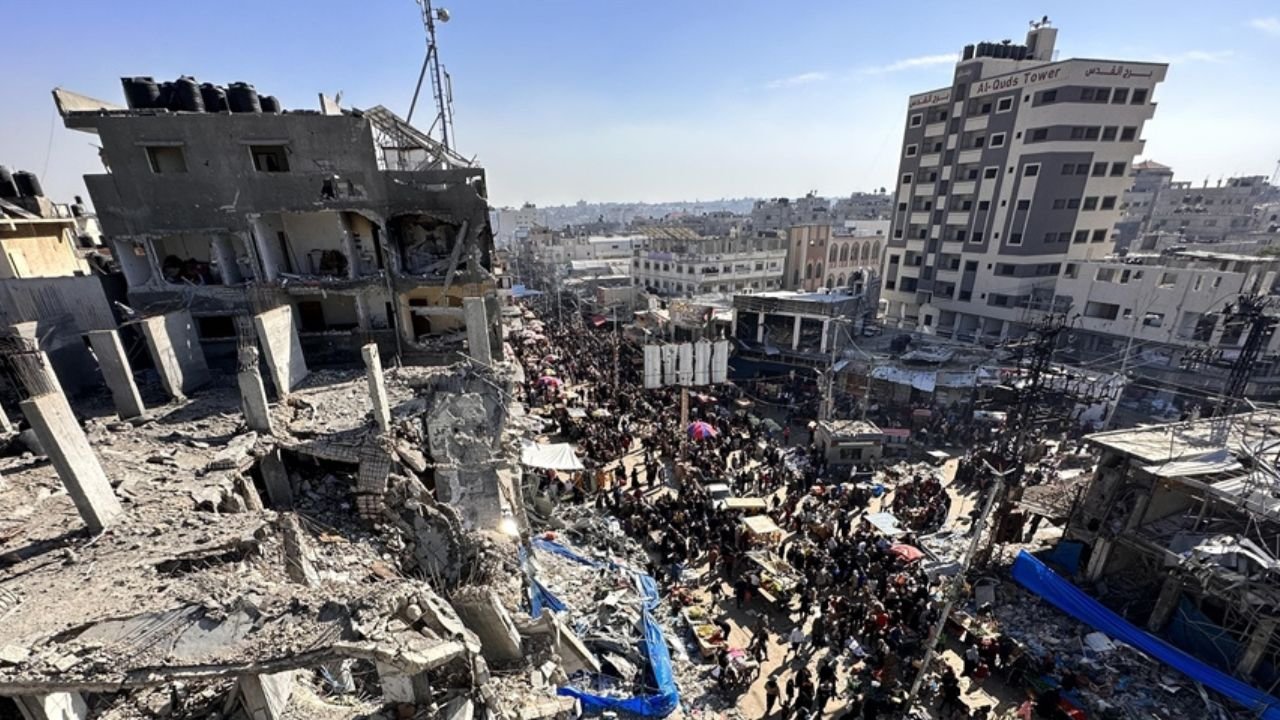
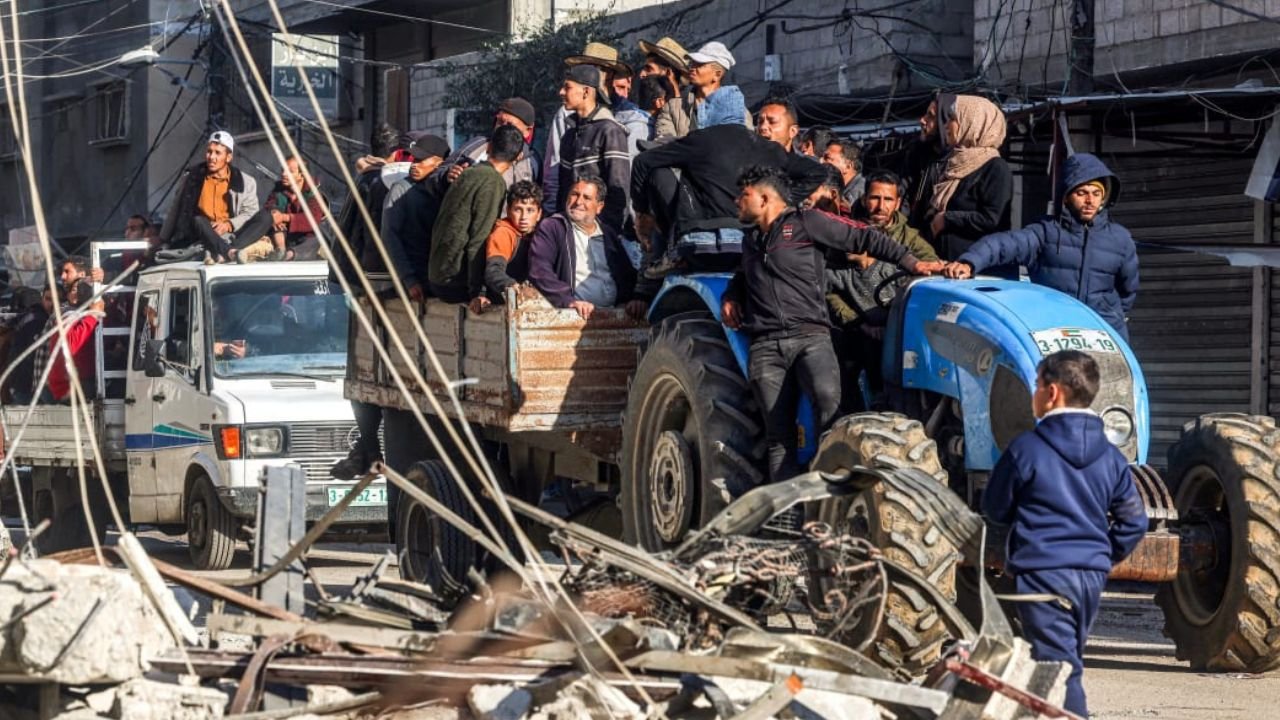
    Israel’s retaliatory military campaign in Gaza has left hundreds of thousands displaced, with nearly 1.5 million people now packed in Rafah.

    In a sign of growing desperation among Gazans over living conditions, a rare protest was held Wednesday by residents over the soaring prices of commodities.

    “Everyone is suffering inside these tents,” said Amal Zaghbar, who was displaced and sheltering in a makeshift camp.

    “We’re dying slowly.”

    Israel has repeatedly threatened a ground offensive on Rafah, with Prime Minister Benjamin Netanyahu saying a truce would only delay it, as such an operation was needed for “total victory” over Hamas.

    Egypt — which borders Rafah — says an assault on the overcrowded city would have “catastrophic repercussions”.

  • Israeli military proposes ‘plan for evacuating’ Gaza civilians

    Israeli military proposes ‘plan for evacuating’ Gaza civilians

    Palestinian Territories – Israel’s military proposed a plan for evacuating civilians from the Gaza Strip, Prime Minister Benjamin Netanyahu’s office announced Monday, after he said a ground invasion of the Palestinian territory’s southern city Rafah was necessary for “total victory”.

    Foreign governments and aid organisations have repeatedly expressed fears that such an operation will inflict mass civilian casualties.

    More than 1.4 million Palestinians – most of them displaced from elsewhere – have converged on the last Gazan city untouched by Israel’s ground troops.

    It is also the entry point for desperately needed aid, brought in via neighbouring Egypt.

    Israel’s military “presented the War Cabinet with a plan for evacuating the population from areas of fighting in the Gaza Strip, and with the upcoming operational plan”, a statement in Hebrew from Netayahu’s office said Monday.

    The statement did not give any details about how or where the civilians would be moved.

    The announcement comes after Egyptian, Qatari and US “experts” met in Doha for talks also attended by Israeli and Hamas representatives, state-linked Egyptian media reported, the latest effort to secure a truce before the Muslim holy month of Ramadan.

    Israel’s ally the United States said ongoing mediation efforts produced “an understanding” towards a ceasefire and hostage release, while a Hamas source said the group insisted on the withdrawal of Israeli forces.

    But Netanyahu – who has dismissed the withdrawal demand as “delusional” – said a ground invasion of Rafah would put Israel within weeks of “total victory” over Hamas.

    “If we have a (truce) deal, it will be delayed somewhat, but it will happen,” he said of the ground invasion in an interview with CBS Sunday.

    “It has to be done because total victory is our goal and total victory is within reach — not months away, weeks away, once we begin the operation.”

    Amid a spiralling humanitarian crisis, the main UN aid agency for Palestinians urged political action to avert famine in Gaza.

    Dire food shortages in northern Gaza are “a man-made disaster” that can be mitigated, said Philippe Lazzarini, head of the UN agency for Palestinian refugees, UNRWA.

    “Famine can still be avoided through genuine political will to grant access and protection to meaningful assistance.”

    The UN has said it faces restrictions, particularly on aid deliveries to northern Gaza.

    ‘No aid’

    Nearly five months into the war, desperate families in Gaza’s north have been forced to scavenge for something to eat.

    “We have no food or drink for ourselves or our children,” Omar al-Kahlout told AFP, as he waited near Gaza City for aid trucks to arrive.

    “We are trapped in the north and there is no aid reaching us — the situation is extremely difficult.”

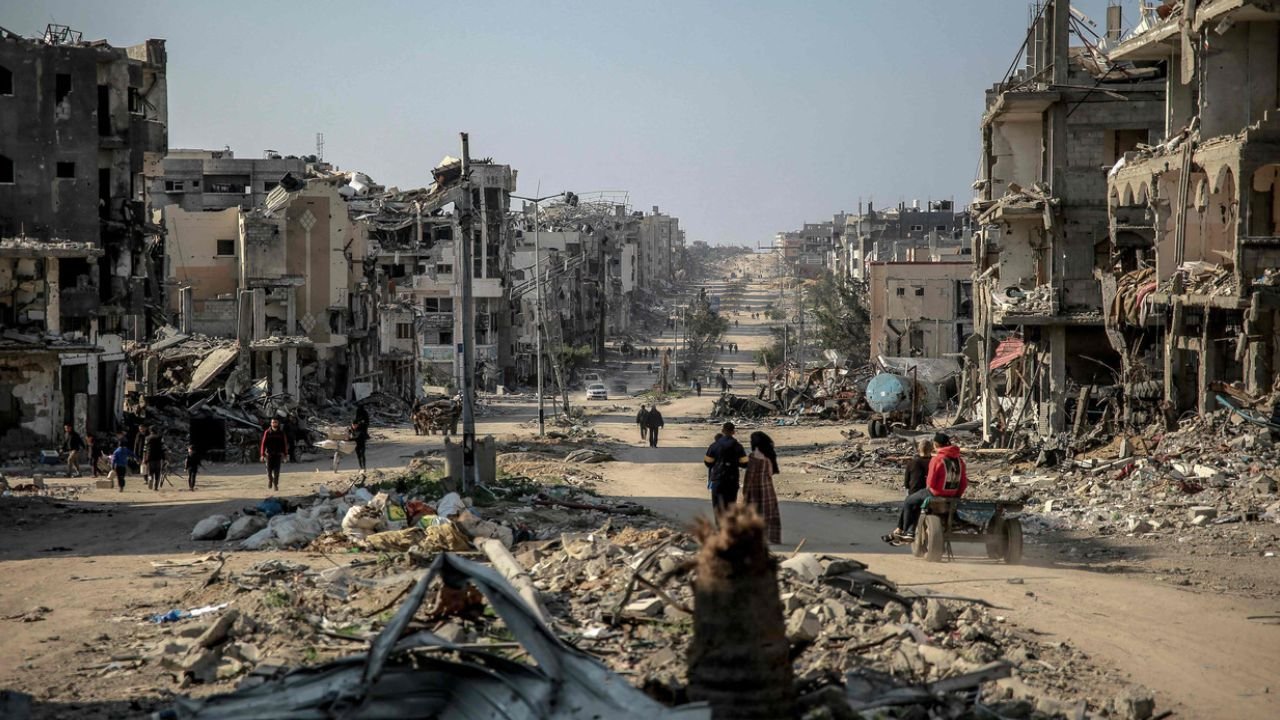
    Hundreds of Palestinians headed south whichever way they could, walking down garbage-strewn roads between the blackened shells of bombed-out buildings, said an AFP correspondent.

    Israeli forces continued striking targets across the Palestinian territory and battling militants in heavy urban combat centred on the southern city of Khan Yunis, near Rafah.

    The Israeli military campaign has killed at least 29,692 people in Gaza, mostly women and children, according to the Hamas-run territory’s health ministry.

    The war broke out after Hamas’s unprecedented attack, which killed about 1,160 people in Israel, mostly civilians, according to an AFP tally of official figures.

    ‘Expanding the conflict’

    Mediators have voiced hope that a temporary truce and a hostage-prisoner exchange can be secured before the start of Ramadan on March 10 or 11, depending on the lunar calendar.

    Jordan’s King Abdullah II warned fighting during the holy month “will increase the threat of expanding the conflict”, according to a royal statement.

    Qatar’s Emir Sheikh Tamim bin Hamad Al-Thani, whose country hosts Hamas leaders and had helped broker a one-week truce in November, is due in Paris this week, the French presidency said.

    Media reports suggest the warring parties are weighing a six-week halt to fighting and the initial exchange of dozens of female, underage and ill hostages for several hundred Palestinian detainees held by Israel.

    Hezbollah threat

    Across from overcrowded Rafah, neighbouring Egypt has kept its border closed, saying it will not help facilitate any operation to push Palestinians out of Gaza.

    But satellite images show it has built a walled enclosure next to Gaza, in an apparent effort to brace for the possible arrival of large numbers of refugees.

    Inside Israel, pressure has grown on Netanyahu from families of hostages demanding swifter action, and resurgent anti-government protests.

    Defence Minister Yoav Gallant said there would be no let-up in action against Hamas’s powerful Lebanese ally Hezbollah, whose militants have traded near-daily fire with Israeli forces since early October.

    burs-dhc/lb

    © Agence France-Presse

  • Israel to discuss ‘next steps’ in Gaza truce talks

    Israel to discuss ‘next steps’ in Gaza truce talks

    Palestinian Territories – Israel sounded a positive note Saturday on efforts to broker a new hostage release and ceasefire deal in its war on Gaza, as concern deepened over the growing humanitarian crisis in the war-torn Gaza Strip.

    As aid agencies warned of unprecedented levels of desperation and looming famine, dozens more Gazans were killed in Israeli strikes, the health ministry said.

    An Israeli delegation led by Mossad intelligence agency chief David Barnea travelled to Paris for a fresh push towards a deal over a ceasefire.

    National security advisor Tzachi Hanegbi said Israel’s war cabinet would meet later Saturday to hear an update after the delegation returned from the talks with mediators.

    “There is probably room to move towards an agreement,” Hanegbi told N12 News television in an interview, without elaborating.

    Prime Minister Benjamin Netanyahu said that Saturday’s meeting would discuss the “next steps in the negotiations”.

    As with a previous week-long truce in November that saw more than 100 hostages freed, Egypt, Qatar and the United States have been spearheading efforts to secure a deal.

    White House envoy Brett McGurk held talks this week with Israeli Defence Minister Yoav Gallant in Tel Aviv, after speaking to other mediators in Cairo who had met Hamas chief Ismail Haniyeh.

    As civilians in the besieged territory struggled to get food and supplies, the United Nations agency for Palestinian refugees warned Gazans were “in extreme peril while the world watches”.

    In northern Gaza’s Jabalia refugee camp, bedraggled children held plastic containers and battered cooking pots for what little food was available.

    – ‘Unprecedented desperation’ –

    Food is running out, with aid agencies unable to get into the area because of the bombing, while the trucks that do try to get through face frenzied looting.

    Residents have taken to eating scavenged scraps of rotten corn, animal fodder unfit for human consumption and even leaves.

    The World Food Programme said this week its teams reported “unprecedented levels of desperation” while the United Nations warned that 2.2 million people were on the brink of famine.

    The health ministry said on Saturday that a two-month-old baby identified as Mahmud Fatuh had died of “malnutrition” in Gaza City.

    Save the Children said the risk of famine would continue to “increase as long as the government of Israel continues to impede the entry of aid into Gaza”.

    Israel has defended its track record on allowing aid into Gaza, saying that 13,000 trucks carrying relief supplies had entered the territory since the start of the war.

    With tempers rising dozens of people in the Jabalia camp on Friday held an impromptu protest.

    “We didn’t die from air strikes but we are dying from hunger,” read a sign held by one child.

    ‘Bring them back’

    Following October 7 attack, Hamas took hostages, 130 of whom remain in Gaza, including 30 presumed dead, according to Israel.

    Israel’s retaliatory offensive has killed at least 29,606 people, mostly women and children, according to the latest tally from Gaza’s health ministry.

    Pressure has mounted on Netanyahu’s government to negotiate a ceasefire and secure the release of the hostages.

    A group representing their families held a rally in Tel Aviv on Saturday evening to demand swifter action.

    “We keep telling you: bring them back to us! And no matter how,” said Avivit Yablonka, 45, whose sister Hanan was captured on October 7.

    Hamas said Saturday that Israeli forces launched more than 70 strikes on civilian homes in Gazan cities including Deir al-Balah, Khan Yunis and Rafah over the previous 24 hours.

    The health ministry said at least 92 people were killed.

    More Rafah strikes

    An AFP reporter in Rafah said there had been at least six air strikes on the city on Saturday evening.

    At Najjar hospital in the city, AFP saw bodies carried from ambulances and placed in the courtyard of the hospital in body bags, while relatives grieved nearby.

    Inside the hospital, medics treated several wounded men who were laid out on the floor, one with his head wrapped in bandages.

    In Khan Yunis, which has seen heavy fighting in recent weeks, Israel’s military said it was “intensifying the operations” using tanks, close-range fire and aircraft.

    “The soldiers raided the residence of a senior military intelligence operative” in the area, a military statement said.

    With war still raging after more than four months, Netanyahu unveiled a plan for post-war Gaza this week which envisages civil affairs being run by Palestinian officials without links to Hamas.

    It also says Israel will continue with the establishment of a security buffer zone inside Gaza along the territory’s border.

    The plan has been rejected by both Hamas and the Palestinian Authority in the Israeli-occupied West Bank.

    Israel’s key ally the United States said it did not support a “reoccupation” or a “reduction of the size of Gaza”, and said “Palestinian people should have a voice and a vote… through a revitalised Palestinian Authority”.

    burs-rox/kir

    © Agence France-Presse
  • Palestinians call out Israel for ‘apartheid’ at UN top court

    Palestinians call out Israel for ‘apartheid’ at UN top court

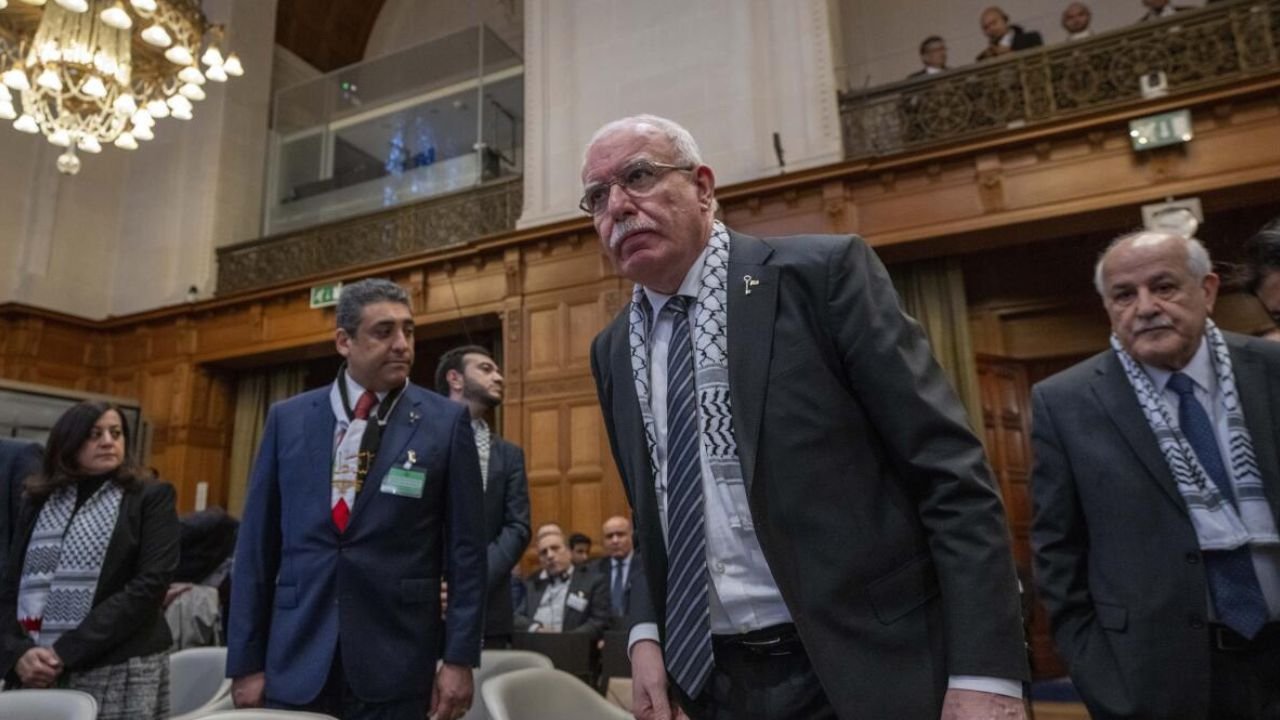
    The Hague (AFP) – Palestinian foreign minister Riyad Al-Maliki told the UN’s top court Monday his people were suffering “colonialism and apartheid” under the Israelis, urging judges to order an immediate and unconditional end to the occupation.

    “The Palestinians have endured colonialism and apartheid… There are those who are enraged by these words. They should be enraged by the reality we are suffering,” Al-Maliki told the International Court of Justice (ICJ).

    The ICJ is holding hearings all week on the legal implications of Israel’s occupation since 1967, with an unprecedented 52 countries, including the United States and Russia, expected to give evidence.

    Speaking in the Peace Palace in The Hague, where the ICJ sits, the minister urged judges to declare the occupation illegal and order it to stop “immediately, totally and unconditionally.”

    “Justice delayed is justice denied and the Palestinian people have been denied justice for far too long,” he said.

    “It is time to put an end to the double standards that have kept our people captive for far too long.”

    ‘Impunity and inaction’

    In December 2022, the UN General Assembly asked the ICJ for a non-binding “advisory opinion” on the “legal consequences arising from the policies and practices of Israel in the Occupied Palestinian Territory, including East Jerusalem.”

    While any ICJ opinion would be non-binding, it comes amid mounting international legal pressure on Israel over the intense attacks on Gaza.

    The hearings are separate from a high-profile case brought by South Africa alleging that Israel is committing genocidal acts during the current Gaza offensive.

    Al-Maliki charged however that “the Genocide underway in Gaza is a result of decades of impunity and inaction.”

    “Ending Israel’s impunity is a moral, political and legal imperative,” he said.

    In January, the ICJ ruled in that case that Israel must do everything in its power to prevent genocide and allow humanitarian aid into Gaza, stopping short of ordering a ceasefire.

    On Friday, it rejected South Africa’s bid to impose additional measures on Israel, but reiterated the need to carry out the ruling in full.

    ‘Prolonged occupation’

    The UN General Assembly asked the ICJ to consider two questions.

    Firstly, the court should examine the legal consequences of what the UN called “the ongoing violation by Israel of the right of the Palestinian people to self-determination”.

    This relates to the “prolonged occupation, settlement and annexation of the Palestinian territory occupied since 1967” and “measures aimed at altering the demographic composition, character and status of the Holy City of Jerusalem”.

    In June 1967, Israel crushed some of its Arab neighbours in a six-day war, seizing the West Bank including east Jerusalem from Jordan, the Golan Heights from Syria, and the Gaza Strip and Sinai Peninsula from Egypt.

    Israel then began to settle the 70,000 square kilometres (27,000 square miles) of seized Arab territory. The UN later declared the occupation of Palestinian territory illegal. Cairo regained Sinai under its 1979 peace deal with Israel.

    The ICJ has also been asked to look into the consequences of what it described as Israel’s “adoption of related discriminatory legislation and measures.”

    Secondly, the ICJ should advise on how Israel’s actions “affect the legal status of the occupation” and what are the consequences for the UN and other countries.

    The court will rule “urgently” on the affair, probably by the end of the year.

    Dozens of pro-Palestinian protesters demonstrated outside the court, waving flags and brandishing banners.

    “I really hope justice will prevail,” organiser Nadia Slimi told AFP.

    “I really hope all the combined efforts to pressure Israel, to demand a more humane policy, will finally lead to some steps to liberate the Palestinian people,” said the 27-year-old.

    ‘Despicable’

    The ICJ rules in disputes between states and its judgements are binding although it has little means to enforce them.

    However, in this case, the opinion it issues will be non-binding although most advisory opinions are in fact acted upon.

    Israel is not participating in the hearings and reacted angrily to the 2022 UN request, with Prime Minister Benjamin Netanyahu calling it “despicable” and “disgraceful”.

    Human Rights Watch (HRW) said that while advisory opinions are non-binding, “they can carry great moral and legal authority” and can eventually be inscribed in international law.

  • Israel sets Ramadan deadline for Rafah assault

    Israel sets Ramadan deadline for Rafah assault

    Israel will launch its long-threatened offensive against Rafah next month if the remaining hostages held in Gaza are not freed by the start of Ramadan, Israeli war cabinet member Benny Gantz said.

    “The world must know, and Hamas leaders must know — if by Ramadan our hostages are not home, the fighting will continue everywhere, including the Rafah area,” Gantz, a retired military chief of staff, told a conference of American Jewish leaders in Jerusalem on Sunday.

    Ramadan, the holy month, is expected to begin on March 10.

    The Israeli government has not previously specified a deadline for its planned assault on the city where the majority of the 1.7 million displaced Palestinians have sought refuge.

    Fearing the potential for mass casualties, foreign governments and aid organisations have repeatedly urged Israel to spare Rafah, the last major Gazan city not invaded by ground troops during the four-month-old war.

    Despite the mounting international pressure, including a direct appeal from US President Joe Biden, Israeli Prime Minister Benjamin Netanyahu insists the war cannot be completed without pressing into Rafah.

    Speaking at the same Jerusalem conference on Sunday, Netanyahu renewed his vow “to finish the job to get total victory” over “Hamas”, with or without a hostage deal.

    Gantz added that an offensive would be carried out in a coordinated manner and in conversation with Americans and Egyptians to facilitate an evacuation and “minimise the civilian casualties as much as possible”.

    But where civilians can safely relocate to on the besieged Gaza Strip remains unclear.

    The comments come after weeks of ceasefire talks have failed to produce a deal, with key mediator Qatar acknowledging over the weekend that the prospects are dimming.

    Washington, Israel’s key ally and military backer, has been pushing for a six-week truce in exchange for the release of the 130 hostages still estimated by Israel to be held in Gaza, including around 30 presumed dead.

    Israel has said it believes many of those hostages, as well as the Hamas leadership, are holed up in Rafah.

    The militants took about 250 people hostage during the October 7 attacks that triggered the war and resulted in the deaths of about 1,160 people in Israel, according to an AFP tally of Israeli figures.

    Israel’s retaliatory campaign has killed at least 28,858 people, mostly women and children, according to the health ministry.

  • Alarm over fate of major Gaza hospital after Israeli raid

    Alarm over fate of major Gaza hospital after Israeli raid

    Palestinian Territories – There was growing concern Friday over a key Gaza hospital a day after a raid by the Israeli army, with the health ministry saying several patients had died there due to a lack of oxygen.

    The health ministry said the power was cut off and the generators stopped after the raid at the Nasser hospital in the southern city of Khan Yunis, and that four patients had died Friday.

    In recent days, intense fighting has raged in the vicinity of the hospital – one of the Palestinian territory’s last remaining major medical facilities that are still operational.

    On Thursday Israeli army spokesman Daniel Hagari said there was “credible intelligence” to suggest hostages seized by Gaza militants in the October 7 attack that sparked the war had been held at the hospital, and that bodies of some of the captives may still be inside.

    But the military said later it had “not yet found any evidence of this”, although forces had found “weapons, grenades and mortar bombs” at the hospital complex.

    On Friday it said Israeli forces had taken into custody more than “20 terrorists” suspected of involvement in the October 7 attack at the hospital.

    A witness who declined to be named out of fear for their safety told AFP the army had shot “at anyone who moved inside the hospital”.

    The health ministry also raised fears over the fate of six other patients in the intensive care unit and three children, saying it held Israel “responsible for the lives of patients and staff considering that the complex is now under its full control”.

    ‘Pattern of attacks’

    Medical charity Doctors Without Borders described a “chaotic situation” at the hospital, with one employee unaccounted for and another detained by Israeli forces.

    “Our medical staff have had to flee the hospital, leaving patients behind,” it said.

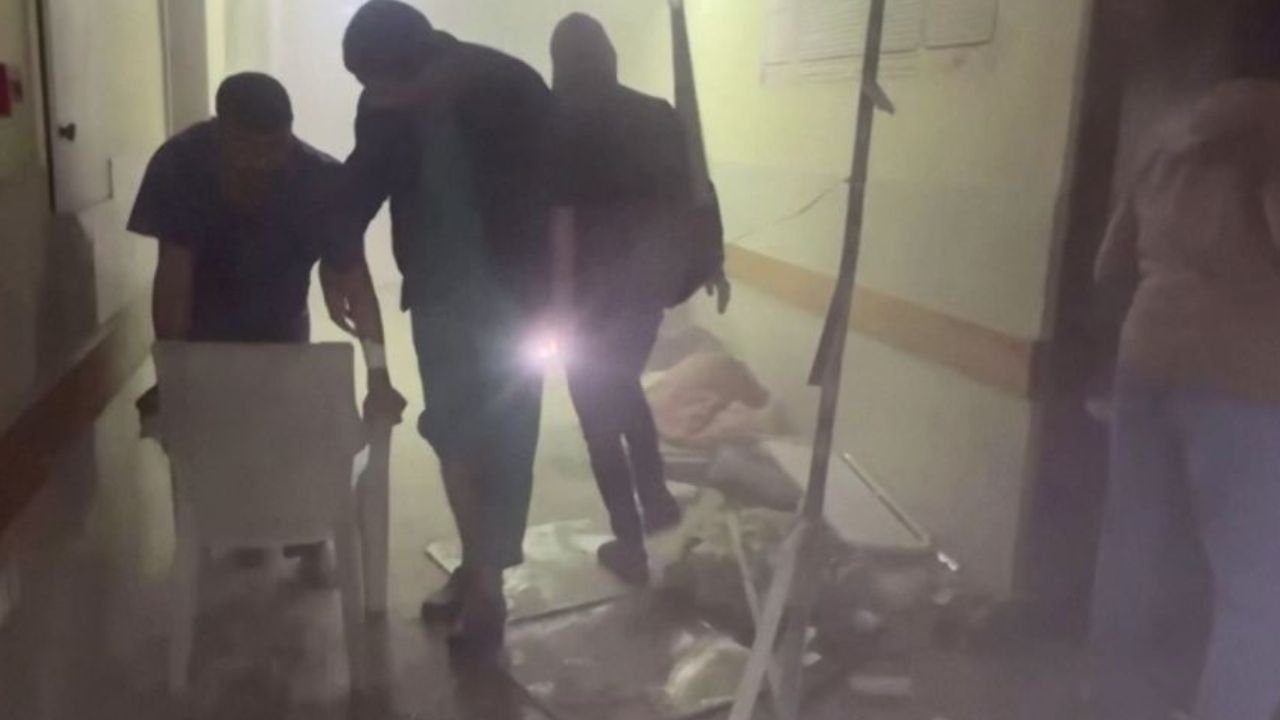
    Footage circulating on social media, which AFP could not independently verify, showed rescuers trying to move patients through dust-filled corridors amid fallen debris.

    At least 28,775 people, mostly women and children, have been killed in Israel’s assault on the Palestinian territory, according to the health ministry.

    The UN Human Rights Office said Israel’s raid on the Nasser hospital appeared to be “part of a pattern of attacks by Israeli forces striking essential life-saving civilian infrastructure in Gaza, especially hospitals”.

    The World Health Organization has described the Nasser hospital as a critical facility “for all of Gaza”, where only a minority of hospitals are even partly operational.

    Israeli strikes continued in the besieged territory overnight, with the health ministry saying Friday another 112 people were killed.

    ‘Dying slowly’

    Nearly 1.5 million displaced Palestinians are trapped in Rafah – more than half of Gaza’s population – seeking shelter in a sprawling makeshift encampment near the Egyptian border.

    There are fears about a growing humanitarian disaster without adequate supplies.

    “They are killing us slowly,” said displaced Palestinian Mohammad Yaghi. “We are dying slowly due to the scarcity of resources and the lack of medications and treatments in the city of Rafah.”

    “There is no medicine,” said Jihan al-Quqa, who was displaced from Khan Yunis to Rafah.

    “There are no antibiotics or any other treatments,” she added.

    “Everyone is sick, children and the elderly, and there is no medicine.”

    US President Joe Biden spoke by phone with Israeli Prime Minister Benjamin Netanyahu late Thursday, the White House said, and urged him again not to carry out an attack on Rafah without a plan to keep civilians safe.

    Britain, Australia, Canada and New Zealand have also urged Israel not to launch a ground offensive in the city.

    Despite international pressure, Netanyahu has insisted he would push ahead with a “powerful” operation in the overcrowded city to achieve “complete victory” over Hamas.

    Media reports suggested Egyptian authorities were building a new wall near the frontier with Gaza, amid fears of an influx of refugees.

    Truce talks

    Mediators from the United States, Qatar and Egypt gathered in Cairo this week to try and broker a deal to halt the fighting and see the release of the remaining hostages in exchange for Palestinian prisoners held by Israel.

    CIA director Bill Burns made an unannounced visit to Israel Thursday for talks with Netanyahu and the head of Israel’s Mossad intelligence agency, David Barnea.

    Barnea had already held talks with Burns and Egyptian and Qatari representatives in Cairo on Tuesday, before a Hamas delegation visited Wednesday.

    US Secretary of State Antony Blinken said he believed an agreement was still “possible”.

    But there has been limited sign of progress.

    Netanyahu said Thursday he rejected a plan for international recognition of a Palestinian state, following reports of the move in The Washington Post.

    burs-rox/dv

    © Agence France-Presse