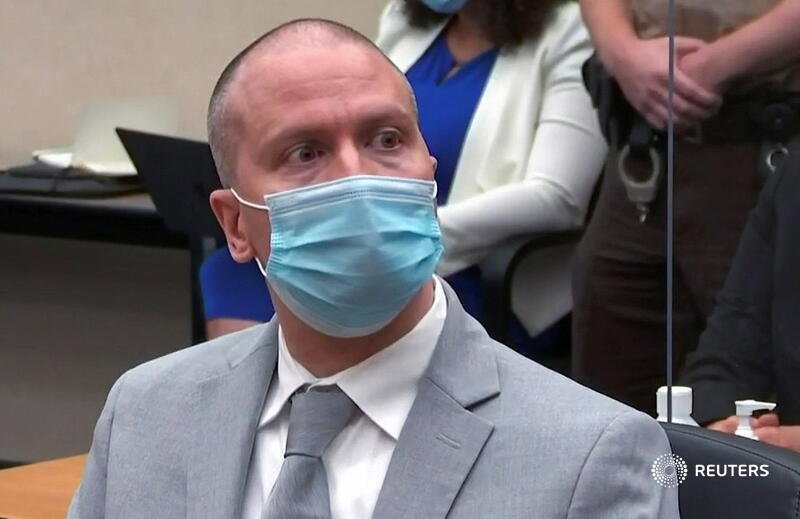
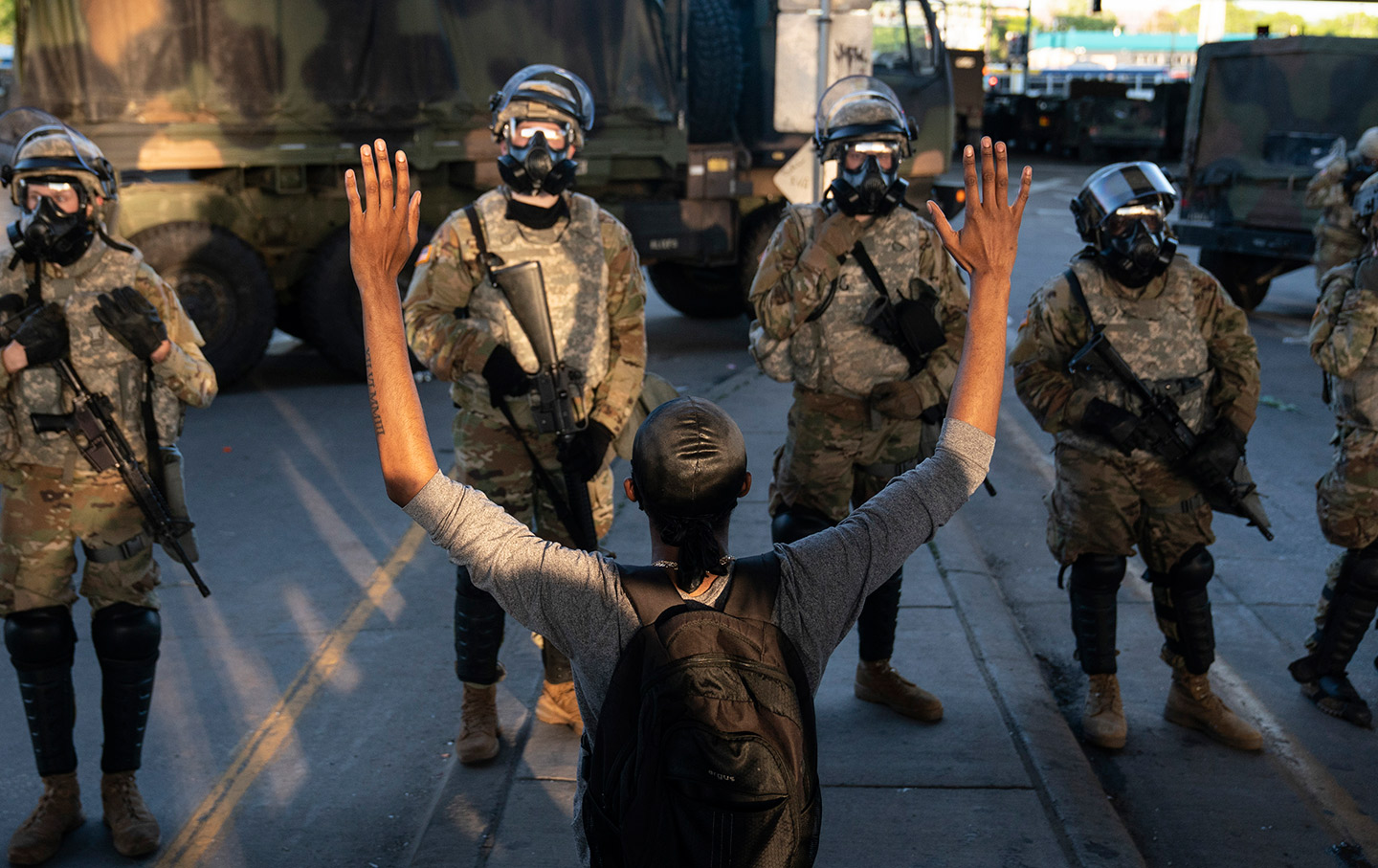
A judge sentenced former Minneapolis police officer Derek Chauvin to 22 years and six months in prison on Friday for the murder of George Floyd during an arrest in May 2020. Floyd’s murder galvanised a national protest movement against racism, reports Reuters.
A jury found Chauvin guilty on April 20 of unintentional second-degree murder, third-degree murder, and second-degree manslaughter in the death of Floyd. The verdict was widely seen as a landmark rebuke of the disproportionate use of police force against Black Americans.
Chauvin’s sentence was one of the longest ones to be given to a former police officer for using unlawful deadly force in the United States, said Minnesota Attorney General Keith Ellison, whose office prosecuted the case. Successful prosecutions of police officers in such cases have been rare.
Former Minneapolis police officer Derek Chauvin was sentenced to 22 years, six months on Friday for murdering George Floyd in May 2020 after a trial that was widely seen as a watershed moment in the history of U.S. policing. More photos: https://t.co/4GNDHFDs08pic.twitter.com/Dr1vbm6yrr
“Today’s sentencing is not justice but it is another moment of real accountability on the road to justice,” Ellison said outside the courtroom, calling on law enforcement leaders around the US to see it as a moment for reform.
Hennepin County District Judge Peter Cahill said it was important to recognise the pain of the Floyd family.
“I’m not basing my sentence on public opinion,” Cahill said. “I’m not basing it on the attempt to send any messages. The job of a trial court judge is to apply the law to specific facts and to deal with individual cases.”
In a 22-page sentencing memorandum, Cahill gave weight to prosecution arguments that Chauvin acted with cruelty and abused his position of authority, aggravating factors that allowed him to give a harsher sentence than would be indicated by state sentencing guidelines for first-time offenders.
Prosecutors had asked for a 30-year prison sentence, double the upper limit indicated in sentencing guidelines.
Video of Chauvin kneeling on the neck of the handcuffed Floyd for more than nine minutes on May 25, 2020, caused outrage around the world and led to one of the largest protest movements seen in the US in decades.
Being away from my country, I am having a difficult time processing world affairs, especially the killing of George Floyd, which has left many around the world, including me, speechless, angry and stunned. To all the black people who have long and continue to suffer the systematic oppression in Western countries, especially in the United States (US), I stand with all of you.
I don’t understand or can gauge your pain, but in silence, words, and action, I am with you.
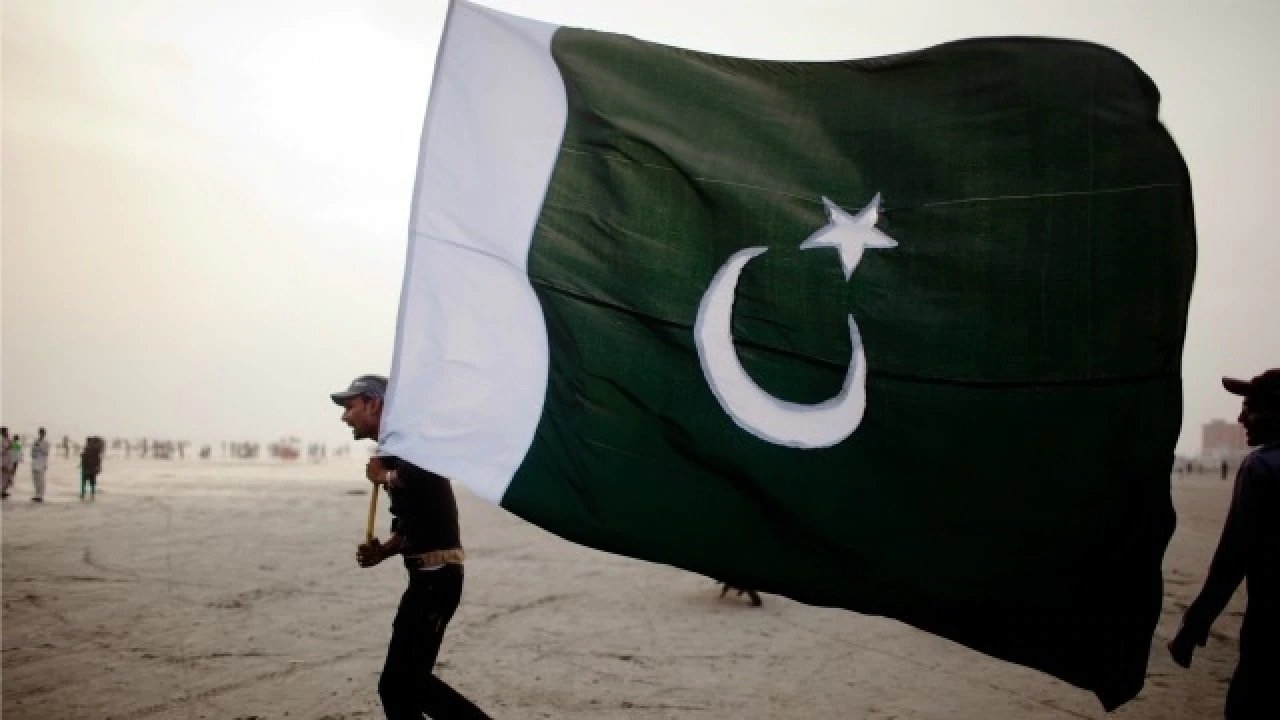
Respecting the suffering of African-Americans, I would like to bring to limelight the racial stigmas related to being black or a dark-toned person in Pakistan. For hundreds of years, having a dark complexion has been looked down upon in South Asian countries. Pakistanis are no less, where a dark skin shade is culturally wired in our brains as synonymous with poverty, illiteracy, and slavery.
I won’t be overstating that all of us have been racist at some point in our life, be it casually, unintentionally, or knowingly. To me, it seems that we are in a race to be whiter than white people. For us, our sense of pride is skyrocketed when someone compliments our facial colour and delivery of the English language. As a result, we adopt practices that corrupt society at large and infuses it with just not racism but injustice too.
“It is just not the educational system, but this racism is systematic and deep-rooted in our societies, for which we are equally responsible. There are racial slurs pretty standard such as “Kalia,” “Kali,” or “Kalu” to disrespectfully address someone with a dark skin tone. As if their measurement of respect comes with the shade of your body.”
I am sure, like many others, I had a strange experience of unintentional racism through our education system. We were repeatedly lectured on how Islam treats everyone equally. The guiding example of Prophet Muhammad (PUBH) was quoted now and then, on how despite resistance from Arab society, he (PUBH) appointed Bilal ibn Rabah to call the first prayers, but in the same breath, our very teachers favour kids with a fairer skin tone. Those kids were likely to become your teachers’ favorite students. I also heard remarks such as, “OMG! You are so beautiful because you are white” or rejoining the classes after the summer break; one teacher unforgivingly remarked, “What have you done during your summer break, you have become so black!”
It is just not the educational system, but this racism is systematic and deep-rooted in our societies, for which we are equally responsible. There are racial slurs pretty standard such as “Kalia,” “Kali,” or “Kalu” to disrespectfully address someone with a dark skin tone. As if their measurement of respect comes with the shade of your body. It doesn’t stop there; brown parents want a fairer daughter-in-law for their son, which helps them boost their societal pride as if she is a commodity or a showpiece. In the same bid, women are obliged to use fairness creams so that they can wed their prince charming.
I have always had a difficult time coping with advertisements prescribing color change possibility with-in 20 days of regular use. To add further, I knew someone who went to the US for higher education and wanted to marry an African-American. The family back in Pakistan didn’t approve of the marriage, objecting to her appearance. Similarly, I think of all women in Pakistan whose wedding proposals are causally rejected, on being dark. The amount of trauma and stress it leaves the person with, is unexplainable.
“I can write a long speech about how I support the black lives movement in the US, but my head continues to bow down in shame because the ones in Pakistan are treated far worse.”
I, however, am still speaking from a privileged position of being a man and can hardly relate to the suffering of women in Pakistan.
We often criticise US authorities for the handling of black people, but it is worse here in Pakistan. From security guards to cab drivers, the initial mental framework of respect is proportional to someone’s fairness. These and many other instances add up to racism at all levels in Pakistan. I can write a long speech about how I support the black lives movement in the US, but my head continues to bow down in shame because the ones in Pakistan are treated far worse. I, therefore, pick to criticise my own country and culture, with an ambition to change myself and the people around me in understanding that somebody’s colour should not be a measurement of their ability, intelligence, worth or respect.
Please remember when you lash out at white people with #blacklivesmatter hashtags on your digital channels. Use your presence to be the voice of those who are unheard or racially abused in Pakistan. Whatever inspires you in your life, be it religion, science, or culture, let’s reform our vocabulary and lifestyle, and celebrate people beyond their color, ethnicity, race or gender.
Violent protests have erupted across the United States (US) since after the death of George Floyd who died in police custody, sparking outrage over police brutality, especially the treatment of African-Americans at the hands of authorities.
With people across the country taking to streets, shaking the States to its core as some protests turn ugly, here is everything you need to know about it.
WHO WAS GEORGE FLOYD?
On May 25, George Floyd, a 46-year-old African-American man suspected of passing a counterfeit $20 bill, died in Minneapolis city of Minnesota after a white cop, Derek Chauvin, pressed his knee to Floyd’s neck for almost nine minutes while the suspect was handcuffed face down in the street.
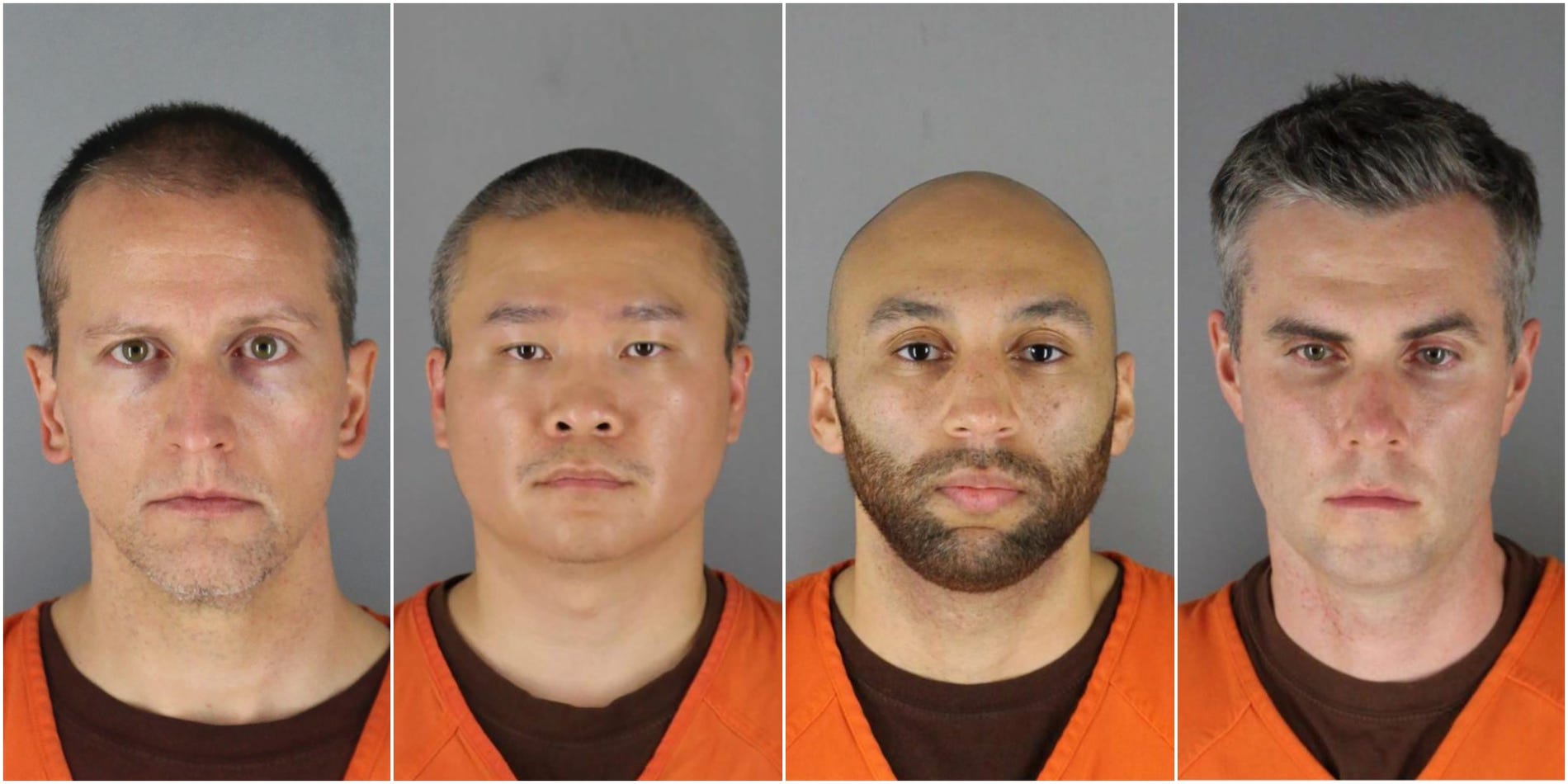
Two other officers further restrained Floyd while a fourth prevented onlookers from intervening.
During the final three minutes, Floyd was motionless and had no pulse, but officers made no attempt to revive him and Chauvin kept his knee on Floyd’s neck even as arriving emergency medical technicians attempted to treat him.
VIRAL VIDEOS & CRIMINAL COMPLAINT:
Several bystanders took videos of the incident, which were widely circulated and broadcastalong with security-camera footage from nearby businesses; two of the officer’s body cams footage has, however, not yet been released.
[GRAPHIC WARNING]
A criminal complaint later filed against Chauvin stated that Floyd repeatedly said he could not breathe while standing outside a police car, resisted getting in the car, and intentionally fell down; he went to the ground face down and, after Chauvin placed his knee on Floyd’s neck, Floyd repeatedly said “I can’t breathe”, “mama” and “please”.
POSTMORTEM EXAMINATION:
Two autopsies determined the manner of Floyd’s death to be a homicide. The Hennepin County medical examiner’s autopsy found that Floyd died from cardiac arrest during the application of “neck compression”, also noting as significant conditions “arteriosclerotic and hypertensive heart disease; fentanyl intoxication; and recent methamphetamine use”.
An independent autopsy commissioned by Floyd’s family found that the “evidence is consistent with mechanical asphyxia as the cause” of death, with neck compression restricting blood flow to the brain, and back compression restricting breathing.
OFFICERS’ FATE & PROBE:
All four officers were fired the day after the incident. On May 29, Chauvin was charged with third-degree murder and second-degree manslaughter while on June 3, Minnesota attorney general amended Chauvin’s charges to include second-degree murder, and the other three officers were charged with aiding and abetting second-degree murder.
The Federal Bureau of Investigation (FBI) is conducting a federal civil rights investigation at the request of the Minneapolis Police Department, and the Minnesota Bureau of Criminal Apprehension is also investigating.
WIDESPREAD PROTESTS:
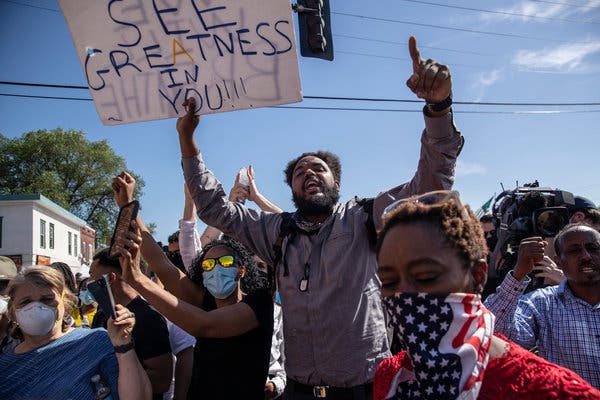
After Floyd’s death, demonstrations and protests against use of excessive force by police officers and lack of police accountability were held globally.
Protests in the Minneapolis–Saint Paul area were initially peaceful on May 26, and became violent as a police precinct and two stores were set on fire, and many stores were looted and damaged. Some demonstrators skirmished with police, who fired tear gas and rubber bullets.
BREAKING: The third precinct police station is on fire. Rioters have taken over pic.twitter.com/AJg4jDr9Tz
Tens of thousands of people have demonstrated, mainly peacefully, across the US for the ninth night while one of the largest protests, joined by Floyd’s relatives, took place in his hometown of Houston, Texas.
Many defied curfews in several cities, imposed after violence and looting in some districts.
“I’m protecting my business and they’ve robbed us after being closed for 3 months”.
With the episode drawing reactions from across the world, from global leaders, including the Canadian president among others, the Pope has also issued a call for racism not to be ignored.
Addressing his “brothers and sisters in the United States” from the Vatican on Wednesday, Pope Francis condemned the death of George Floyd and lead a prayer for “all those others who have lost their lives as a result of the sin of racism.” https://t.co/t2NsjfRz1spic.twitter.com/xZ4718Zh2X
“We cannot tolerate or turn a blind eye to racism,” he said, but also condemned the violence.
Police stations and other buildings have been set ablaze, government establishments and offices of media organisations among other prominent structures across the country have been vandalised, and grocery, as well as luxury stores, looted.
While military has now been deployed after President Donald Trump’s warning to protesters, support for protesters and against the regime is widespread.
Cops, at places, have also been spotted lending support to peaceful protests.
The protest in Flint, Michigan yesterday was peaceful, with no rioting, looting, or fighting (based on social media posts). The city’s sherriff marched with the protesters after they chanted ‘Walk With Us,’ as well as giving multiple small speeches throughout the evening. pic.twitter.com/rX2fDpyZfG
As part of the protests, the White House was also almost attacked. The president spent nearly an hour in an underground bunker at the White House last week when hundreds of protesters gathered outside the mansion.
The bunker, also known as the Presidential Emergency Operations Center (PEOC), has been used on rare occasions to secure US presidents in times of peril.
Meanwhile, a photo of blackout at White House also started making rounds on the internet with people calling it a “powerful symbol” of Trump’s “lack of leadership”.
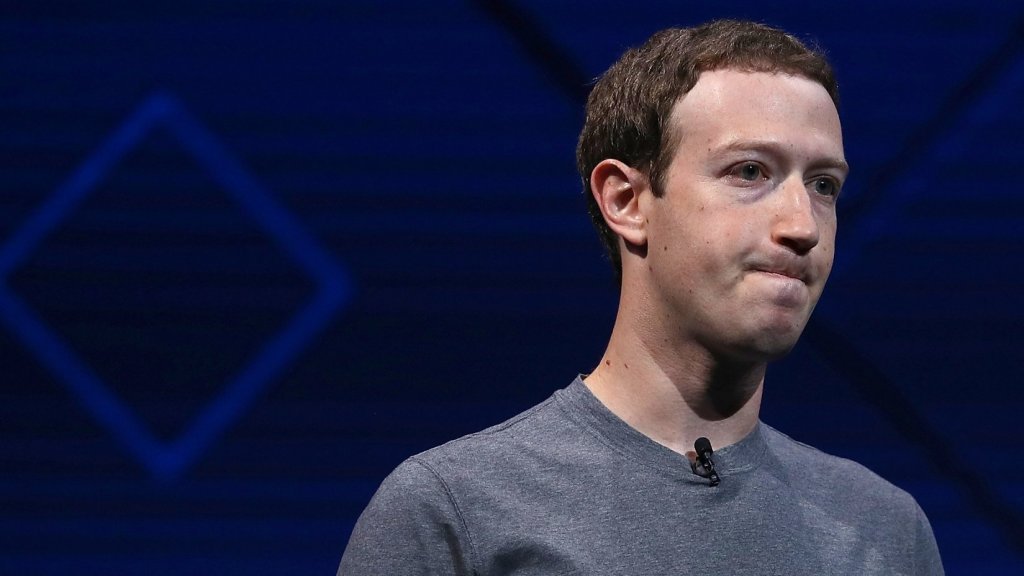
Facebook employees have walked away from their work-from-home desks and taken to Twitter to accuse Chief Executive Officer (CEO) Mark Zuckerberg of not taking a stand against United States (US) President Donald Trump’s hateful posts on social media.
As per the details, Reuters observed dozens of tweets against Mark in what was a rare case of the social media giant’s staff publicly standing against its CEO.
Thousands of people, including seven engineers of teams that maintain the react code library critical for Facebook’s apps, were among those who tweeted.
“Mark is wrong and I will endeavour in the loudest possible way to change his mind,” said Ryan Freitas, director of product design for Facebook’s newsfeed. He added that he mobilised more than 50 like-minded people to lobby for internal change.
Katie Zhu, a product manager at Instagram, tweeted a screenshot showing she had entered “#BLACKLIVESMATTER” to describe her request for time off as part of the walkout.
Facebook Inc will allow its employees to take part in the protest and will not draw down their vacation days, said spokesperson Andy Stone.
Talkspace CEO Oren Frank tweeted he would “not support a platform that incites violence, racism, and lies”. The online therapy company also announced that it had ended partnership discussions with Facebook.
It is worth mentioning here that Facebook CEO landed in hot water when he told Fox News that private social media platforms “shouldn’t be the arbiter of truth of everything that people say online”.
President Trump retweeted the interview that had come after Twitter flagged his tweet about mail-in ballots as misleading.
It wasn’t later that Twitter responded to another Trump tweet pertaining to countrywide riots, for glorifying violence. Twitter covered up the tweet with a message warning it “violated Twitter rules about glorifying violence”.
The viewers had to click on the message to see the underlying tweet.
….These THUGS are dishonoring the memory of George Floyd, and I won’t let that happen. Just spoke to Governor Tim Walz and told him that the Military is with him all the way. Any difficulty and we will assume control but, when the looting starts, the shooting starts. Thank you!
Trump posted the same message on Facebook, but Mark decided to let it stand unchallenged. “I have been struggling with how to respond to the president’s tweets and post all day,” he wrote in a post Friday.
“Personally, I have a visceral negative reaction to this kind of divisive and inflammatory rhetoric,” he said, adding that the company’s position, however, was that it should enable as much expression as possible unless it would cause an imminent risk of specific harms or dangers spelt out in clear policies.
“I don’t know what to do, but I know doing nothing is not acceptable,” Jason Stirman, a member of Facebook’s research and development team, wrote on Twitter in response to Mark.
I don’t know what to do, but I know doing nothing is not acceptable. I’m a FB employee that completely disagrees with Mark’s decision to do nothing about Trump’s recent posts, which clearly incite violence. I’m not alone inside of FB. There isn’t a neutral position on racism.