Tag: Germany

  • German gymnasts wear full-body suits at Olympics to promote freedom of choice

    German gymnasts wear full-body suits at Olympics to promote freedom of choice

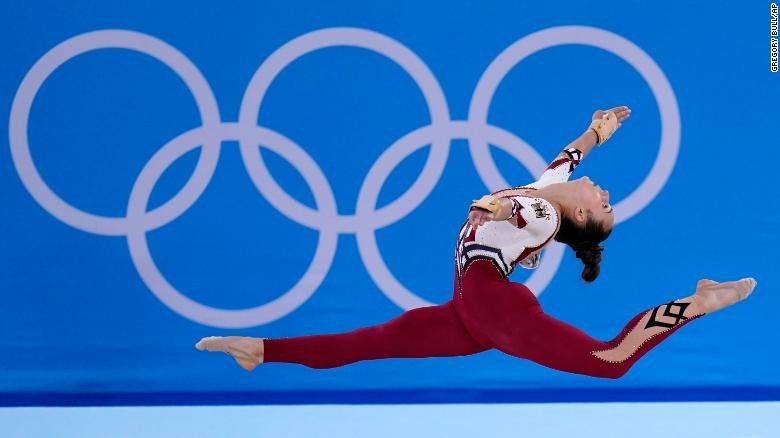
    The German women’s gymnastics team wore full-body suits in qualifications at the Tokyo Olympics on Sunday instead of their traditional bikini cut version to encourage all women to wear what makes them feel comfortable and to promote freedom of choice, reports Reuters.

    According to the German Gymnastics Federation, this act is against sexualisation in gymnastics. The aim is to present aesthetically- without feeling uncomfortable, they added in a tweet.

    The International Gymnastics Federation said that attire with full or half sleeves and leg coverings are allowed in the competition, as long as the colour matches the leotard (one-piece garment with no legs).

    Sarah Voss, one team member, first wore the suit while competing for the European championships in April.

    “We want to make sure everyone feels comfortable and we show everyone that they can wear whatever they want and look amazing, feel amazing, whether it is in a long leotard or a short one,” she said.

    After this, the entire team decided to participate in the multi-international sports event in red and white unitards and leggings extending to the ankles, in contrast to the costume worn by many other female gymnasts.

    Moreover, their mutual decision earned them praise from fellow competitors in Tokyo.

    Until now women and girls have only covered their legs in international competitions for religious reasons.

  • Norway takes back decision to boycott Qatar World Cup 2022

    Norway takes back decision to boycott Qatar World Cup 2022

    Norwegian Football Federation (NFF) on Sunday ruled out the decision of boycotting next year’s FIFA World Cup in Qatar, amid the pressure from grassroots activists over accusations of the mistreatment of migrant workers.

    As per reports, a congress was called by the federation to make a final decision in which 368 delegates voted for a motion rejecting a boycott while 121 were in favour.

    In addition to this, Sandvik, spokesman of the Norwegian Supporters Alliance (NSA), said the matches in Qatar will “unfortunately be like playing on a cemetery”.

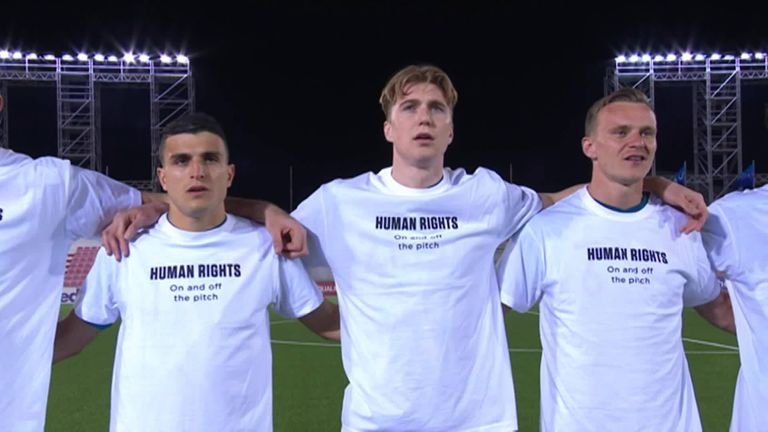
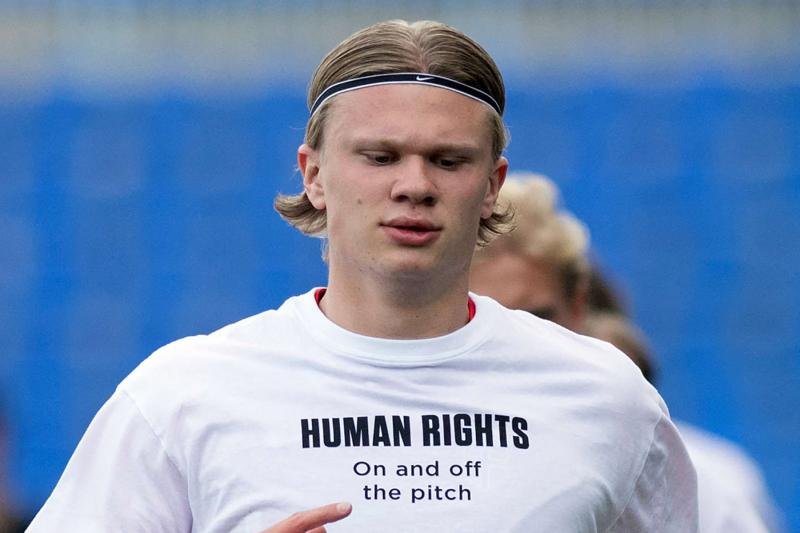
    The movement was highlighted when the Norwegian professional football club, Tromsø IL, spoke out against the Gulf State. This year in March, Norwegian National Football players wore t-shirts with the slogan ‘Human rights, on and off the pitch’, as they were warming up before FIFA World Cup Qatar 2022 qualification match.

    Norway is currently fourth in its World Cup qualifying group and hasn’t qualified for a major international Football competition since Euro 2000.

    It is to be noted that not only Norway but other European countries such as Germany and Netherlands have protested against the Gulf State.

    The major reason behind the boycott is that a media report published earlier this month alleged that approximately 6,500 migrant workers from South Asia had died in Qatar since 2010 when the country was awarded hosting rights of the 2022 tournament. In the past, there were also a lot of protests against harsh working conditions, especially during the summer, they are forced to work under the scorching sun.

    There is a lack of rights for migrant workers, who comprise about 95 percent of Qatar’s population, reports Al Jazeera.

  • Sisters in Germany invent COVID-19 themed board game

    Sisters in Germany invent COVID-19 themed board game

    Four sisters in Germany invented a coronavirus-themed board game during the first lockdown in the country. Corona is the name of the board game that can be played by four players at one time.

    The players compete to purchase all the groceries on a shopping list for an elderly neighbour who is shielding against the virus.

    The players collect and swap game cards. The winner is the one who delivers all the items first. The obstacles along the way include bump into the virus that would send you into quarantine, or finding that hoarders have already snapped up all the pasta or toilet rolls.

    “The basic principle is one of solidarity. But each of the players can decide to cooperate with the others or make thing harder for them by blocking their path with viruses,” Sarah told Reuters TV from their family home in the western city of Wiesbaden, Germany.

  • Pakistani doctor Asifa Akhtar to receive Germany’s highest scientific award

    Pakistani doctor Asifa Akhtar to receive Germany’s highest scientific award

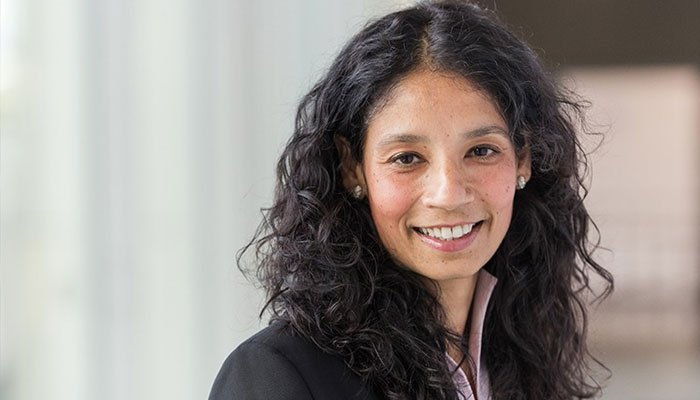
    Pakistani-born Dr Asifa Akhtar has been selected to receive Germany’s highest scientific award, the ‘Leibniz Prize’. In addition to the award, she will also receive prize money of 2.5 million euros.

    According to details, Dr Asifa Akhtar has been selected for the award on the basis of her “cell biological work on mechanisms of epigenetic gene regulation and understanding chromosome regulation (“dosage compensation”). This is a mechanism in which the genes of the X chromosome are produced in equal strength in the male and female sex.”

    German Consulate General Karachi congratulated Dr Asifa on her achievement and said that she makes “both Pakistan and Germany extremely proud with your outstanding contributions to science!”

    Dr Asifa received her PhD from the Imperial Cancer Research Fund in London in 1997. She continued her research at the European Molecular Biology Laboratory in Heidelberg, where – after a stopover at the LMU Munich – she headed a research group from 2001 to 2009. Akhtar has been a member of the National Academy of Sciences Leopoldina since 2019.

    She is currently serving as the director at the Max Planck Institute for Immunobiology and Epigenetics in Freiburg. She is also the Vice President of the Max Planck Society. Established in 1948, the Max Planck Society is Germany’s most successful research organisation with 18 Nobel laureates from the ranks of its scientists. It is on par with the best and most prestigious research institutions worldwide.

    The Leibniz Prize will be awarded digitally on 15 March 2021. The Leibniz Prize has been honouring up to ten scientists each year since 1986.

  • Muslim denied German citizenship for viewing handshake as a ‘threat of seduction’

    Muslim denied German citizenship for viewing handshake as a ‘threat of seduction’

    The Administrative Court of Baden-Württemberg (VGH), Germany ruled on Friday that a Muslim man was rightly denied the German citizenship because of his refusal to shake the hand of a woman, as he viewed it as “danger of sexual temptation”.

    According to details, a 40-year old Lebanese doctor, who came to Germany in 2002, applied for citizenship through naturalization in 2012. Though he aced the naturalization test, his citizenship was cancelled at the final stage of the process. During his citizenship ceremony, he refused to shake hands with the female bureaucrat, officiating his hearing. As a result, the woman withheld his certificate and rejected his application.

    Defending his actions, the man appealed to the VGH, and stated that he had made a promise to his wife never to touch another woman. However, the court found that refusal to shake hands on gender-specific grounds is in breach of the sexual equality principles laid down in the German constitution. The judge further stated that the handshake symbolizes the conclusion of a contract and is deeply rooted in social, cultural, and legal life. Thus it was concluded that those who are able to demonstrate that they can live according to the values set out in the German constitution are entitled to the German citizenship

    Although handshake is a questionable practice nowadays, thanks to COVID-19, the judge was convinced that the practice would survive the global pandemic.

    This is, however, not the first time citizenship across European countries was denied on the bases of refusal to shake hands with people of the opposite sex for religious reasons. In 2018, a Muslim couple was denied Swiss citizenship because of a lack of respect for gender equality. According to details, the couple’s application was rejected after they refused to shake hands with people of the opposite sex during their interview.

  • ‘Neutral’ Switzerland helped CIA spy on Pakistan, others?

    ‘Neutral’ Switzerland helped CIA spy on Pakistan, others?

    Outraged commentators warned on Wednesday that the CIA and Germany’s intelligence service had for decades used a Swiss encryption company for spying, seriously damaging Switzerland’s cherished reputation for neutrality, AFP reported.

    Critics voiced particular concern that Bern may have been at least tacitly complicit in the secret operation. Switzerland, which takes pride in its neutral and non-aligned status, “was hosting a quasi ally intelligence agency,” the Tribune de Geneve daily said in an editorial.

    Swiss officials “very likely” knew what was going on but “closed their eyes” in the name of neutrality, it added. Home to the United Nations European headquarters and the International Committee of the Red Cross, Switzerland is recognised worldwide for its standing as an honest broker.

    But media revelations on Tuesday told how for decades the US and West German intelligence services raked in the top-secret communications of governments around the world. The Trojan horse they used was their hidden control of Swiss encryption company Crypto AG.

    The company supplied devices for encoded communications to some 120 countries from after World War II to the beginning of this century, including Iran, South American governments, and India and Pakistan.

    Unknown to those governments, Crypto was secretly acquired in 1970 by the US Central Intelligence Agency together with the then West Germany’s BND Federal Intelligence Service.

    Together they rigged Crypto’s equipment to be able to easily break the codes and read the government’s messages, according to reports by the Washington Post, German television ZTE and Swiss state media SRF.

    Citing a classified internal CIA history of what was originally called operation “Thesaurus” and later “Rubicon,” the reports said that in the 1980s the harvest from the Crypto machines supplied roughly 40 percent of all the foreign communications US code-breakers processed for intelligence.

    The spy agencies were thus able to gather precious information during major crises such as the hostage crisis at the US embassy in Tehran in 1979 the 1982 Falklands War between Argentina and Britain. They also got information on several political assassinations in Latin America.

    The Swiss government said on Tuesday it had named a retired federal judge to look into the matter, with his findings due out in June. But Carolina Bohren, a Swiss defence ministry spokeswoman, stressed the difficulties ahead. “The events in question began in 1945 and are difficult to reconstruct and interpret today,” she said.

    Bern also announced it had suspended export licenses for Crypto’s successor companies, until the situation has been “clarified”. But a number of political parties, insisting that far more needed to be done, on Wednesday called for a full-blown investigation.

    The Swiss Socialist Party wondered in a tweet whether the country’s own intelligence service was a “victim or an accomplice”, demanding “clarifications and a full investigation”. The Greens and Christian Democrats also suggested a parliamentary commission might be called for.

    Amnesty International’s Swiss chapter meanwhile raised questions about the Swiss authorities’ responsibility both for the espionage and for how the information gathered had been used.

    “Were our intelligence services and the government aware of the torture and the murders committed by military dictatorships in Chile and Argentina?” it asked in a tweet. “Did they take any measures? A full investigation must be carried out.”

    Switzerland has a centuries-old tradition of neutrality. It avoided being drawn into either of the World Wars and has stayed outside political and military alliances such as NATO.

    Several media reports noted on Wednesday that this reputation ended up providing excellent cover for the United States and Germany when they set up their spying operation there.

    Whether this was done “out of incompetence, because of a desire to cover for foreign secret service agents, or to profit from the information they uncovered, must now be clarified,” the Tages-Anzeiger daily insisted. “That is the only way to get out of this mess.”

  • VIDEO: Özil congratulates Pakistani couple holding Arsenal banner at wedding

    VIDEO: Özil congratulates Pakistani couple holding Arsenal banner at wedding

    German professional footballer and Arsenal star Mesut Özil has congratulated the viral Pakistani couple that held an Arsenal banner at its wedding while also making the hand gesture that Özil makes each time he scores.

    Sharing the viral video on his official Twitter handle, the German footballer wrote:

    “Congratulations to this @Arsenal Pakistan couple Inam ul Haq and Arooj Talat Khan! Btw nice celebration in the end. All the best for you two! #wedding#YaGunnersYa#M1Ö [sic],” he tweeted.

    ARSENAL VS CHELSEA:

    Meanwhile, midweek Premier League actions sees Chelsea host Arsenal as part of Matchday 24 with both clubs coming off of disappointing results last Saturday.

    Chelsea enters in fourth place with a 12-3-8 record but just lost 1-0 at Newcastle on a last-minute goal. Arsenal, meanwhile, was held to a draw at home against Sheffield United and enters this game in 10th place, struggling for any type of consistency.

    These two teams just met on December 29, with Chelsea coming back with two late goals to win 2-1 at Arsenal in Mikel Arteta’s home debut as coach of the Gunners.