Tag: Global Economy

  • 24-karat gold price plunges by Rs1,800 per tola, reflecting global market trends

    24-karat gold price plunges by Rs1,800 per tola, reflecting global market trends

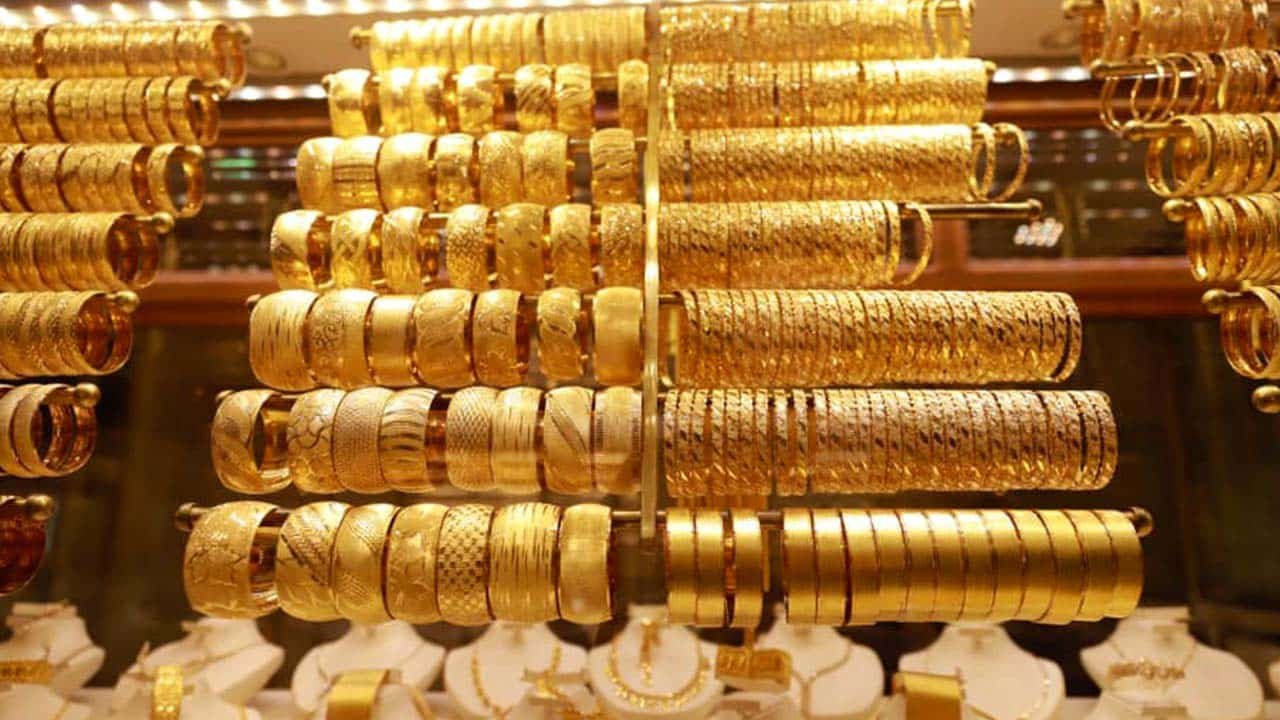
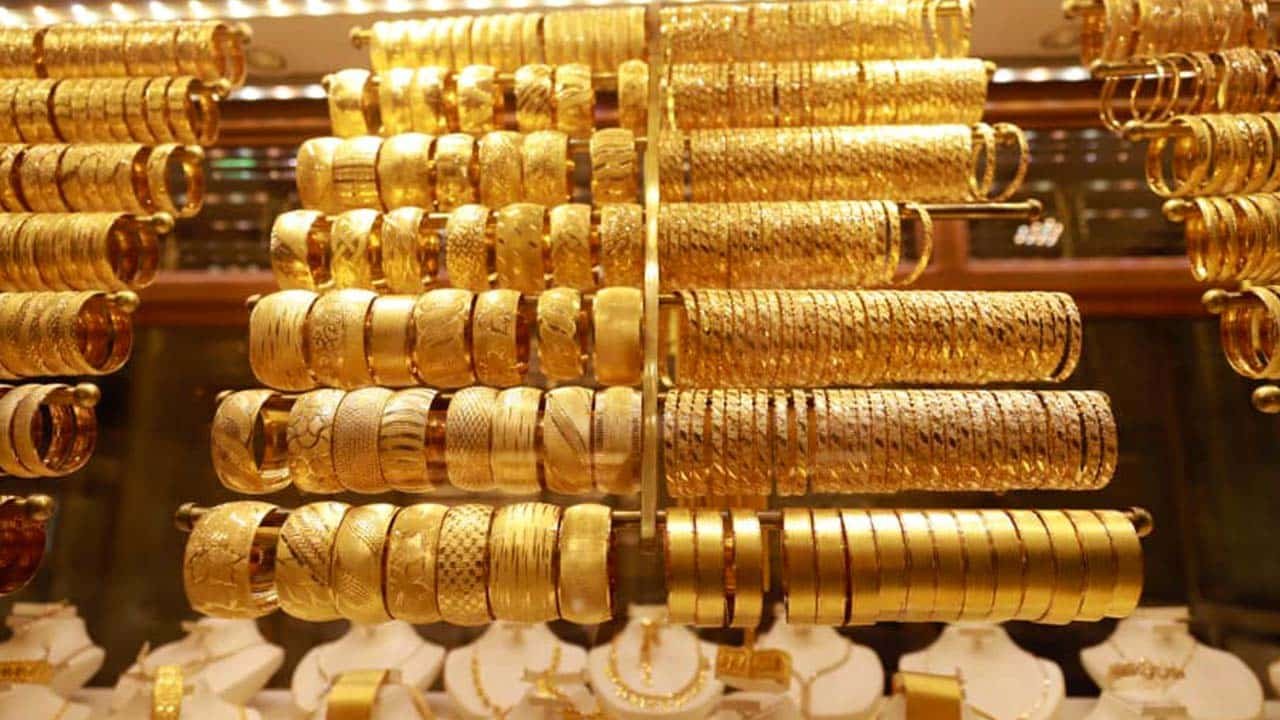
    On Tuesday, the price of gold experienced a further decline, with 24-karat gold witnessing a decrease of Rs1,800, settling at Rs213,600 per tola.  

    The Karachi Sarafa Association indicated that the closing rate for 10 grammes of 24-karat gold in today’s session was Rs183,128, reflecting a loss of Rs1,543.  

    Simultaneously, 10 grammes of 22-karat gold registered a decline to Rs167,867, down by Rs1,415. 

    Last week, gold investors in the domestic bullion market faced a significant setback when the price of 24-karat gold plummeted by Rs8,000 per tola.  

    This drop was attributed to a notable decrease in international prices and the strengthening of the local currency. 

    In contrast, the price of silver remained stable in the domestic market today, with 24-karat silver and 10 grammes of 24-karat silver closing at Rs2,600 and Rs2,229.08, respectively.  

    The downturn in the local market is linked to the ongoing decline in international prices. 

    The international spot gold market experienced a 1.04 per cent decrease this week, currently standing at $1,994.46.  

    This decline is influenced by the pressure stemming from a stronger dollar and increased US Treasury yields, marking the second consecutive session in which the commodity has traded in the red zone. 

    Market participants are eagerly anticipating the US consumer price report scheduled for 05:30 pm PST today.  

    This report could offer valuable insights into potential rate cuts ahead of the Federal Reserve’s statement and Chair Jerome Powell’s comments on Wednesday. 

    In the domestic market, gold prices are also susceptible to fluctuations in the local exchange rate.  

    Rupee remains stable against US dollar

    During yesterday’s interbank session, the Pakistani rupee (PKR) maintained stability, settling at PKR 283.9 per USD, representing a marginal depreciation of around 3 paisa against the US dollar compared to the previous session’s closing of PKR 283.87 per USD.  

    As gold is denominated in US dollars, a strengthening local unit contributes to a decrease in the value of PKR-denominated gold. 

  • Overseas workers’ remittances to Pakistan dip to $2.3 billion

    Overseas workers’ remittances to Pakistan dip to $2.3 billion

    In November 2023, overseas workers sent a total of $2.3 billion in remittances to Pakistan, reflecting an 8.6 per cent decrease from the $2.5 billion recorded in October 2023, as per data released by the State Bank of Pakistan (SBP). 

    However, on a yearly basis, there was a 3.6 per cent increase in the monthly inflow compared to the same month in the previous year.

    Remittances are a crucial element in supporting Pakistan’s external accounts and play a vital role in boosting the country’s economic activity while also supplementing the disposable incomes of households dependent on remittances.

    The recent rise in remittances was attributed to an improved exchange rate following a crackdown against currency smugglers and hoarders. 

    This crackdown resulted in a reduction of the rate gap between the open and interbank markets. However, despite this positive trend, remittances have observed a decline on a monthly basis again this November.

    In the first five months of the fiscal year 2024, remittances amounting to $11 billion have been recorded, in contrast to $12.3 billion in the same period of the previous year.

    Breaking down the remittances, it was noted that overseas Pakistanis in Saudi Arabia sent the highest amount in November 2023, totaling $540.3 million. 

    This amount represented a 12.5 per cent monthly decline but was 5.5 per cent higher than the remittances in the same month of the previous year. 

    Remittances from the United Arab Emirates (UAE) also declined on a monthly basis by 13.6 per cent, from $473.9 million in October to $409.4 million in November. 

    However, there was a yearly improvement of 7.6 per cent. Remittances from the United Kingdom increased by 3.5 per cent to $341.7 million compared to October 2023.

    Conversely, remittances from the European Union declined by nearly 10 per cent on a monthly basis, amounting to $268.3 million in November 2023. Overseas Pakistanis in the US sent $261.5 million in November 2023, experiencing a month-on-month decrease of 7.7 per cent.

  • Gold price in Pakistan surge with global trend, reach Rs216,500 per tola

    Gold price in Pakistan surge with global trend, reach Rs216,500 per tola

    On Friday, gold prices in Pakistan experienced a notable uptick, mirroring the global surge in rates. 

    The precious metal attained a value of Rs216,500 per tola, marking a substantial single-day increase of Rs2,200. 

    As reported by the All Pakistan Gems and Jewellers Sarafa Association (APGJSA), the 10-gramme gold reached Rs185,614, reflecting a rise of  Rs1,886. 

    This shift follows a decline of Rs500 in gold prices on Thursday, settling at Rs214,300 per tola. 

    According to APGJSA, the international gold rate exhibited a $20 increment on Friday, reaching $2,006 with a $20 premium. In comparison, the previous day witnessed a closing rate of $1,986. 

    In contrast, silver prices remained steady at Rs2,550 per tola on the same day, exhibiting resilience in the face of fluctuations observed in the gold market. 

  • Gold price increases to Rs213,100 per tola

    Gold price increases to Rs213,100 per tola

    The gold price in Pakistan witnessed an increase on Friday, with the cost of 24-karat gold rising by Rs1,300 per tola, settling at Rs213,100 in today’s session.

    The Karachi Sarafa Association reported that the closing price for 10 grammes of 24-karat gold was Rs 182,698, indicating a loss of Rs1,114.
    Meanwhile, 10 grammes of 22-karat gold saw an increase, reaching Rs166,452, up by Rs1,022.

    In contrast, the silver prices remained unchanged in the domestic market, with 24-karat silver and 10 grammes of 24-karat silver closing at Rs2,580 and Rs2,211.93, respectively.

    It is noteworthy that domestic gold prices are influenced by fluctuations in international prices and changes in the local currency’s interbank exchange rate.

    Despite intraday gains, the Pakistani rupee (PKR) is facing its fourteenth consecutive loss against the USD.

    The depreciation of PKR against the USD leads to an increase in the value of PKR-denominated gold since gold is denominated in US dollars.

    On the global front, international gold prices experienced a decline, marking the second consecutive week of losses. International spot gold is currently trading at $1,954.29, down by 0.20 per cent for the day.

  • Pakistani rupee experiences 11th consecutive session of decline against US dollar

    Pakistani rupee experiences 11th consecutive session of decline against US dollar

    .

    The Pakistani rupee faced its eleventh consecutive session of losses against the US dollar, depreciating by 0.34 per cent in the inter-bank market on Monday.

    According to the State Bank of Pakistan (SBP), the rupee settled at 285.29, marking a decline of Re0.98.

    In the preceding week, the rupee had also suffered losses against the US dollar, closing 1.33 per cent lower at 284.31 in the inter-bank market, equivalent to a decrease of Rs3.74. This marked the third consecutive week of declines for the local currency.

    Prior to this recent trend, the Pakistani rupee had maintained a positive trajectory for 28 consecutive sessions, one of the longest appreciation runs, gaining a cumulative 10.93 per cent since reaching a record low of 307.1 in the inter-bank market on September 5.

    This surge was largely attributed to efforts to combat smuggling and increased controls on exchange companies.

    However, the situation has since shifted in favour of the US dollar, with global currencies remaining stable on Monday but appearing poised to continue their recent uptrend. This comes as the US dollar retreated following a moderation in the Federal Reserve’s hawkish stance.

    Internationally, major global currencies showed stability early on Monday, with the US dollar index flat at 105.11 and the euro at $1.0726.

    The dollar index experienced its most significant decline since mid-July, falling over 1 per cent last week and reaching a six-week low.

    Weakness in US job data, softer global manufacturing figures, and declining longer-term Treasury yields also contributed to the dollar’s weakened position.

  • IMF’s $700 million tranche approval crucial for Pakistani rupee’s recovery

    IMF’s $700 million tranche approval crucial for Pakistani rupee’s recovery

    The Pakistani Rupee (PKR) is expected to rebound against the US dollar this week, with this revival contingent on the approval of the next tranche by the International Monetary Fund (IMF).

    Last week, the PKR weakened by 1.78 rupees (0.6 per cent), closing at Rs280.57 against the US dollar, marking a second consecutive week of decline. On the last trading day, it reached a high of Rs280.5 and a low of Rs280.15 against the greenback.

    In the open market, the rupee depreciated by 50 paisa, closing at Rs279.5 for buying and Rs292.8 for selling, compared to Rs279 and Rs282 a week ago.

    The rupee’s decline is attributed to expectations of the IMF’s approval for the next $700 million tranche of its $3 billion loan. Geopolitical tensions in the Middle East and decreased export receipts have also played a role.

    Despite hopes for recovery post-IMF approval, concerns linger about its long-term stability, with Goldman Sachs predicting a short-lived strong performance.

    The rupee’s fate remains tied to the 280 level until the IMF’s decision. The upcoming weeks and months hold uncertainty amid global economic challenges and geopolitical issues.

    Economists and financial experts are closely watching events, especially the IMF’s decision, which will significantly impact Pakistan’s economic stability as it strives to restore economic health and growth.

  • Pakistani rupee declines by 48 paisa, closing at Rs280.57 against US dollar

    Pakistani rupee declines by 48 paisa, closing at Rs280.57 against US dollar

    In the financial markets this week, the Pakistani rupee (PKR) experienced a depreciation of 1.78 rupees against the US dollar (USD), closing the week’s trade at PKR 280.57.

    This marks a significant shift from the previous week’s closing rate of PKR 278.8 per USD.

    During today’s trading session, the local currency saw a decline of 48.1 paisa. The intraday high (bid) was recorded at Rs280.5, while the low (ask) reached Rs280.15 against the US dollar.

    In the open market, exchange companies quoted the US dollar at Rs279.5 for buying and Rs292.8 for selling, indicating a loss of 50 paisa compared to the previous closing rates of Rs279 for buying and Rs282 for selling.

    This decline against the US dollar signifies the second consecutive weekly decrease for the Pakistani rupee. In comparison to other major currencies, the PKR experienced fluctuations as well.

    Against the Euro, the PKR depreciated by 64.78 paisa, closing at Rs296.17 compared to the previous value of Rs295.53.

    The British Pound became more expensive by 1.21 rupees, closing at Rs339.94 in contrast to Rs338.73 from the previous day.

    PKR lost 0.69 paisa against the Japanese yen, closing at Rs1.869 versus Rs1.862 the previous day.

    The UAE dirham also increased in value by 12.89 paisa from Rs76.257 to Rs76.386.

    It’s noteworthy that during the current financial year, the PKR has appreciated against the dollar by Rs5.42, or 1.93 per cent.

    However, in the current calendar year, PKR has depreciated by 54.14 rupees, or 19.3 per cent.

    This dynamic market movement reflects the ongoing economic fluctuations in the country.

  • Pakistani rupee continues to lose against US dollar

    Pakistani rupee continues to lose against US dollar

    The Pakistani rupee experienced a 0.16 per cent depreciation against the US dollar in the inter-bank market on Wednesday, settling at 279.88, marking a decrease of Re0.45, as reported by the State Bank of Pakistan (SBP).

    The previous day, the rupee had depreciated by 0.11 per cent, closing at 279.43 against the US dollar. In a related development, the SBP anticipates an increase in remittances to Pakistan due to a notable rise in labour migration. 

    In fiscal years 2022 and 2023, Pakistan observed a significant surge in labour migration compared to the preceding two years, with around 0.8 million Pakistani workers registered through the Bureau of Emigration and Overseas Employment (BEOE) and Overseas Employment Corporation (OEC) during FY23.

    Internationally, the US dollar gained strength on Wednesday, supported by robust US economic data. Meanwhile, the euro faced challenges due to a dimming growth outlook in the Eurozone. US business output showed improvement in October, signalling a recovery from a five-month contraction, as reported on Tuesday. 

    In contrast, data from the same day indicated an unexpected downturn in business activity in the Eurozone. The euro, against the dollar, was up 0.05 per cent at $1.0595 but had declined by 0.75 per cent the previous day. This shift boosted the dollar index, which steadied at 106.23, moving away from a one-month low of 105.35 recorded in the previous session.

    Furthermore, oil prices remained above $88 on Wednesday, driven by concerns about escalating conflicts in the Middle East, which offset worries about reduced demand due to the gloomy economic prospects in Europe.

  • Pakistani rupee set to become best performer against US dollar following record-low recovery

    Pakistani rupee set to become best performer against US dollar following record-low recovery

    In September, Pakistan’s rupee emerged as the global front-runner in currency performance, driven by the interim government’s vigorous measures to curb illicit US dollar trading.

    According to a comprehensive report by Bloomberg, the Pakistani rupee has experienced a remarkable surge of nearly 6 per cent during this month, a notable accomplishment given the downward trajectory of most other currencies like the Thai baht and South Korean won against the strengthening US dollar, fueled by expectations of prolonged high US interest rates.

    On Thursday, the rupee exhibited resilience by rising 0.1 per cent, reaching Rs287.95 per dollar after hitting a record low of approximately Rs307 earlier in the month.

    Khurram Schehzad, the Chief Executive Officer of Alpha Beta Core Solutions Pvt. Ltd., a financial consultancy located in Karachi, commented on the situation, highlighting the prevalence of leakages through informal channels such as hawala and hundi trade, which are common in South Asia.

    Schehzad noted, when the USD rate reverses, everyone from hoarders to exporters, who have been holding onto their export proceeds, starts offloading their dollars.

    The Bloomberg report underscores the Pakistani government’s intensified efforts to crack down on illegal dollar trading, which have significantly contributed to the rupee’s resurgence.

    In addition to these measures, the central bank has raised capital requirements for smaller exchange companies and mandated large banks to establish their exchange entities, aiming to enhance transparency and oversight in the retail foreign exchange market.

  • Good news: the gain of the rupee continues, now at Rs288.75

    Good news: the gain of the rupee continues, now at Rs288.75

    The Pakistani rupee continued to exhibit strength against the US dollar, marking a 0.36 per cent gain in the inter-bank market on Wednesday. Remarkably, this marks the rupee’s 16th consecutive appreciation against the greenback.

    According to the State Bank of Pakistan (SBP), the rupee settled at Rs288.75, reflecting an increase of Rs1.05 in the inter-bank market. This follows a 0.37 per cent appreciation observed on Tuesday, settling at Rs289.80.

    Over the past days, the rupee has consistently followed an upward trajectory, showcasing a remarkable recovery of over 6 per cent since reaching a historic low of Rs307.1 against the US dollar in the inter-bank market on September 5.

    On the global stage, the US dollar maintained its robust position, trading near a 10-month high against major currencies on Wednesday. This situation is underpinned by the persistent elevation of Treasury yields, driven by expectations of sustained higher US interest rates. Concurrently, the yen faced challenges as it edged closer to a critical intervention threshold.

    Recent statements from Federal Reserve officials have hinted at the possibility of further interest rate hikes, despite the central bank’s decision to hold rates steady the previous week. This has led to an ascent in US Treasury yields to levels not seen in several years, as financial markets recalibrate their expectations regarding the potential peak of US rates and the likelihood of a prolonged period of tight monetary conditions.

    The US dollar index, a gauge of its strength, recently stood at 106.20, having reached a 10-month peak of 106.26 in the preceding session. Meanwhile, the euro remained subdued, hovering close to a six-month low and trading at approximately $1.0569.