Tag: Global Economy

  • PKR gains for 11th straight session, reaches Rs293.88 per dollar

    PKR gains for 11th straight session, reaches Rs293.88 per dollar

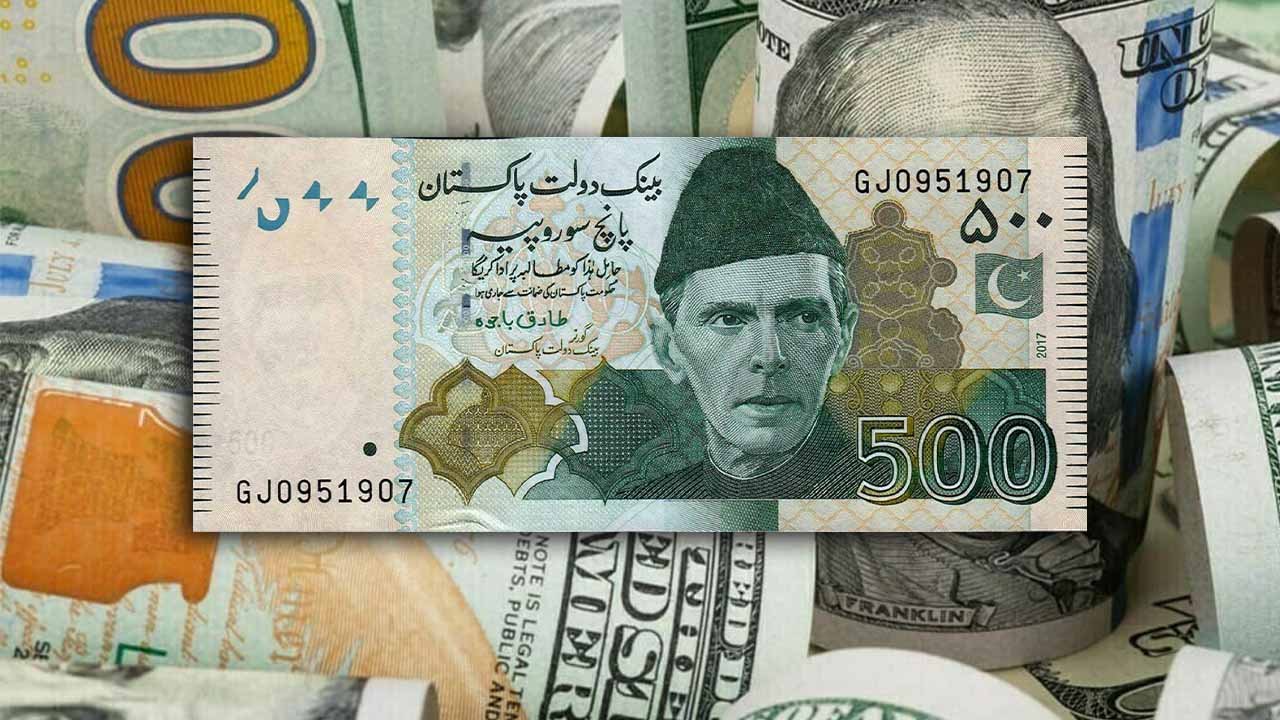
    The Pakistani rupee continued its upward trend against the US dollar, marking the 11th consecutive session of appreciation in the interbank market on Wednesday.

    According to the State Bank of Pakistan (SBP), the rupee closed at 293.88, reflecting a 0.35 per cent increase. This follows a 0.36 per cent appreciation on Tuesday, when it settled at 294.90.

    Recent days have seen a remarkable strengthening of the rupee, with a nearly 4.5 per cent gain since hitting a record low of 307.1 in the inter-bank market on September 5. 

    This turnaround is attributed to structural reforms introduced by the State Bank of Pakistan (SBP) in the Exchange Companies’ (ECs) sector and reported efforts to combat smuggling, both of which have provided support to the currency markets.

    Globally, the US dollar remained steady on Wednesday, with a slight softening against the yen, in anticipation of the Federal Reserve’s highly anticipated rate decision later in the day. 

    The US dollar index, which gauges the greenback against a basket of currencies, held steady at 105.13 as traders awaited the Fed’s announcement. Market expectations are that the Fed will likely maintain interest rates in the range of 5.25 per cent to 5.50 per cent, putting the spotlight on the central bank’s forward guidance.

    Meanwhile, oil prices, a significant indicator of currency stability, declined by nearly $1 on Wednesday, ahead of the US Federal Reserve’s interest rate decision. Investors remain uncertain about when peak interest rates will be reached and the potential impact on energy demand. 

    These price drops occurred despite larger-than-expected reductions in US oil stockpiles and weaker US shale output, both of which point to limited crude supply for the remainder of 2023.

  • 10-day winning streak: Pakistani rupee soars to Rs294.90 against US dollar 

    10-day winning streak: Pakistani rupee soars to Rs294.90 against US dollar 

    In a noteworthy financial trend, the Pakistani rupee continued its upward trajectory against the US dollar, marking its 10th consecutive session of appreciation in the interbank market. On Tuesday, the rupee displayed resilience by appreciating by 0.36 per cent, settling at Rs294.9, following a notable increase of Rs1.05. 

    This positive momentum in the exchange rate follows the previous day’s gain, where the rupee had strengthened by 0.3 per cent to close at Rs295.95. This recent surge in the value of the Pakistani rupee comes in stark contrast to its earlier performance, when it reached an all-time low of Rs307.1 in the interbank market. 

    The shift in fortune can be attributed to government initiatives aimed at reforming the Exchange Companies’ (ECs) sector and cracking down on smuggling activities, both of which have bolstered confidence in the currency markets. 

    This development offers some relief to the prevailing economic outlook, which had been under pressure due to the easing of import restrictions, leading to a widening of the current account deficit in July. 

    Analysts at Topline Securities anticipate that the PKR/USD exchange rate in the inter-bank market will likely remain within the range of Rs320–340 by June 2024, providing a forward-looking perspective on the currency’s performance. 

    Meanwhile, on the global stage, the US dollar experienced a modest decline, albeit remaining close to its six-month peak against major currencies. This movement occurred ahead of the Federal Reserve’s highly anticipated interest rate decision scheduled for Wednesday. 

  • Pakistani rupee surges 0.43% versus US dollar in inter-bank trading

    Pakistani rupee surges 0.43% versus US dollar in inter-bank trading

    The Pakistani rupee displayed resilience against the US dollar, registering a noteworthy 0.43 per cent appreciation in the early hours of trading within the inter-bank market on Friday.

    By 11:15 am, the rupee had reached a level of 296.68, marking a substantial increase of Rs1.28 in the inter-bank market.

    In contrast, on the previous Wednesday, the rupee had demonstrated a 0.29 per cent appreciation, ultimately settling at 297.96.

    Concurrently, the Monetary Policy Committee (MPC) of the State Bank of Pakistan (SBP) opted to maintain the key policy rate at 22 per cent, anticipating a future decline in inflation.

    This decision mirrors the MPC’s stance during the preceding meeting, indicating a consistent status quo in the policy rate despite market expectations of a potential rate hike.

    Internationally, the US dollar maintained relative stability in the Asian market on Friday, slightly retreating from its recent gains against other currencies. This shift coincided with the strengthening of the yuan, driven by positive economic data from China.

    The US dollar’s surge was driven by an unexpected increase of 0.6 per cent in August retail sales, surpassing the estimated 0.2 per cent rise. Additionally, market participants reacted to the European Central Bank’s 25-basis-point hike.

    While the US dollar index currently stands at 105.32, marginally lower than Thursday’s six-month peak of 105.43, it still maintains its overall strength.

    Furthermore, oil prices experienced an uptick on Friday, marking their third consecutive weekly gain. This rise was influenced by better-than-expected Chinese economic data and reports indicating record oil consumption, reinforcing the belief in continued high demand from the world’s second-largest crude consumer.

  • Pakistani rupee’s fall continues, settles at new record low of Rs301 against US dollar

    Pakistani rupee’s fall continues, settles at new record low of Rs301 against US dollar

    The Pakistani rupee continued its unsettling descent, marking a fresh all-time low against the US dollar, with a settlement at Rs301 in the inter-bank market on Friday. As reported by the State Bank of Pakistan (SBP), the local currency reached the 301 mark, experiencing a decline of Re0.78 or 0.26 per cent.

    On the preceding day, the rupee concluded at a historic low against the US dollar, reaching a settlement of Rs300.22.

    On the global front, the US dollar achieved its highest position in over two months on Friday, poised for its sixth consecutive week of gains, as financial markets eagerly awaited a speech by Federal Reserve Chair Jerome Powell to gain insights into the trajectory of monetary policy.

    The dollar index, a measure of the US dollar’s strength against six other major currencies, witnessed a 0.019 per cent increase, reaching 104.11, the highest level since June 7. With a 2 per cent increase in August, the index is poised to end its two-month losing streak.

    Oil prices, a pivotal gauge of currency equilibrium, surged by over 1 per cent on Friday due to the firming of the dollar, as anticipation built ahead of a highly awaited speech by the head of the US Federal Reserve. This speech is expected to provide insights into the future of interest rates.

  • Gold price drops by Rs2,800 per tola amidst Pakistani rupee appreciation

    Gold price drops by Rs2,800 per tola amidst Pakistani rupee appreciation

    Domestic bullion prices in Pakistan experienced a significant drop, with both gold and silver witnessing declines. The 24-karat gold closed at Rs220,200 per tola, falling by Rs2,800, while the price of 10-gramme 24-karat gold went down by Rs2,401, closing the day at Rs188,786 per tola. Additionally, 10-gramme 22-karat gold stood at Rs173,054 per tola, down by Rs2,200.

    The drop in gold and silver prices can be attributed to the recent appreciation of the Pakistani rupee (PKR). The PKR managed to snap a three-day losing streak by appreciating Rs2.18 against the US dollar in the interbank session on Thursday. Since gold is denominated in US dollars, when the PKR strengthens against the dollar, the value of gold in PKR terms diminishes.

    Similarly, the price of silver also witnessed a decline in the domestic market. The price of 24-karat silver fell by Rs50 to close at Rs2,750 per tola, and the price of 10-gramme 24-karat silver closed at Rs2,358 per tola, losing Rs42.86.

    The recent appreciation of the Pakistani rupee, coupled with global interest rate developments, has influenced the decline in gold and silver prices in the domestic market. Investors are now keeping a close eye on economic indicators and global central bank decisions to anticipate potential shifts in precious metal prices.

  • Pakistan commits to boost foreign exchange reserves to $11.7 billion by 2024

    Pakistan commits to boost foreign exchange reserves to $11.7 billion by 2024

    Pakistan has made a commitment to the International Monetary Fund (IMF) to significantly increase its gross foreign exchange reserves by $7.65 billion. The goal is to raise the reserves to $11.7 billion by the end of the financial year 2024, up from the current level of $4.056 billion in the financial year 2023. This move is aimed at building a buffer of foreign exchange reserves to protect the national economy from external shocks.

    The assurance was given through a Letter of Intent (LoI) signed by Finance Minister Ishaq Dar and State Bank of Pakistan (SBP) Governor Jameel Ahmed. Under a $3 billion stand-by arrangement (SBA) for nine months, Pakistan assured the IMF and its executive board of its commitment to bolster its foreign exchange reserves.

    If the gross foreign exchange reserves reach $11.7 billion by the end of June 2024, they will be sufficient to meet the country’s import requirements for goods and services for approximately 1.8 months.

    The balance of payment (BoP) chart, agreed upon by the IMF and Pakistan, indicates that projected disbursements of foreign loans during the current financial year 2023-24 are expected to amount to $15.01 billion from multilateral and bilateral creditors. This financial year started on July 1, 2023, and will end on June 30, 2024.

    The analysis of the BoP data suggests that Pakistan needs to secure external financing from multilateral and bilateral creditors during the current fiscal year. Additionally, Pakistan is seeking an additional deposit of $2 billion from the Kingdom of Saudi Arabia and $1 billion from the United Arab Emirates (UAE). The Islamic Development Bank (IsDB) has agreed to provide a $1 billion loan program.

    Furthermore, Pakistan is actively working on program loans and project financing from the World Bank, Asian Development Bank, and Asian Infrastructure Investment Bank (AIIB) to secure a total disbursement of $15 billion from all multilateral and bilateral sources.

    To further strengthen its reserves, Pakistan intends to engage with bilateral partners, especially China, Saudi Arabia, and the UAE, to extend the maturity of their existing deposits, which amount to $2 billion, $3 billion, and approximately $2 billion, respectively, in the current financial year.

    The IMF executive board is scheduled to convene on July 12, 2023, in Washington DC, to review and consider Pakistan’s request for approval of a $3 billion short-term bailout package, including a $1 billion tranche release. Upon approval by the executive board, the $1 billion tranche will be disbursed within a few days.

    The IMF staff has already circulated copies of the Letter of Intent among the executive board members. In this document, Finance Minister Ishaq Dar and the SBP governor have provided assurances regarding the implementation of crucial fiscal and energy reforms to address fiscal challenges. Islamabad has also committed to tackling issues in the energy sector, including measures to control the circular debt problem.

    To address energy sector concerns, the government plans to raise power and gas tariffs in line with the determinations made by the regulators. The National Electric Power Regulatory Authority (NEPRA) will finalise the power tariff, while the facts regarding gas tariffs are being ascertained by relevant officials.

    The Oil and Gas Regulatory Authority (OGRA) has already recommended increasing gas tariffs by 45 per cent and 50 per cent for two major gas utilities. The government has a 40-day timeframe to make a decision on this matter, after which the recommendations will be notified in the second week of July 2023.

    Under the nine-month SBA program, it is anticipated that there will be two reviews conducted by the IMF mission in September and December 2023. Each review is expected to lead to the disbursement of a $1 billion installment.

    Overall, Pakistan is taking significant measures to strengthen its foreign exchange reserves, seek external financing, and implement necessary reforms in order to address its economic challenges and ensure stability.

  • Pakistan’s history of IMF bailouts: A look at 75 years of economic challenges

    Pakistan’s history of IMF bailouts: A look at 75 years of economic challenges

    Pakistan is currently facing yet another economic crisis, a recurring issue that has caused the country to repeatedly seek help from the International Monetary Fund (IMF) for financial assistance.

    Unfortunately, most of the previous 13 bailouts granted since the late 1980s were left unfinished, as Pakistan failed to implement any meaningful structural changes to rein in government spending or boost revenue.

    The country’s current government, led by Prime Minister Shehbaz Sharif, is currently in talks to revive its latest $6.5 billion loan programme as a result of the ongoing economic downturn, exacerbated by last year’s devastating floods and continued political instability. However, the implementation of the necessary belt-tightening measures may prove to be challenging, given the upcoming national elections planned for later this year.

    Pakistan and the IMF had agreed to a $6 billion bailout program in 2019, but disputes over monetary policies have prevented the release of over $1 billion. Furthermore, donors and lenders have demanded structural reforms before providing any further financial aid to Pakistan.

    Pakistan’s traditional partners have made it clear that their assistance is conditional upon the revival of the IMF program and the successful implementation of reforms, including the expansion of tax collection.

    Based on the prevailing Special Drawing Rights (SDR), also known as XDR, rates, the International Monetary Fund (IMF) has approved loans totaling $31.629 billion for Pakistan.

    It is worth noting, however, that not all of the approved funds have been disbursed, with only one out of 22 loans having been fully transferred to Pakistan. This highlights the complex political and economic dynamics that underlie IMF programs.

    Pakistan’s history of borrowing from the IMF

    Pakistan has a history of borrowing from the International Monetary Fund (IMF), which can be divided into four distinct periods. The early years of borrowing spanned from 1950 to 1988, followed by the Benazir and Nawaz Sharif era from 1988 to 1999. The third period was marked by the Musharraf and Zardari administrations from 2000 to 2013. The current period is led by Nawaz Sharif and Imran Khan.

    During these periods, each government worked with the IMF differently, especially in the past two decades. While the Benazir and Nawaz Sharif administrations alternated in seeking IMF programs in the 1990s, the Musharraf government, despite experiencing substantial foreign currency inflows, also had to turn to Washington for financial assistance.

    The Zardari administration, on the other hand, abandoned the largest-ever IMF program when it deemed it expedient to do so. This trend illustrates how Pakistan’s borrowing from the IMF has been characterised by inconsistency and shifting priorities.

    2013-2022

    Pakistan’s recent history of borrowing from the IMF has been marked by different governments seeking assistance in their own unique ways. While the Imran Khan government initially refused to seek assistance from the IMF, it eventually sought an Extended Fund Facility (EFF) loan worth SDR4.268 billion in July 2019. This was due to the country’s financial deterioration and instability, which had eroded the stability gains made since late 2016.

    Under Imran Khan’s government, the IMF disbursed a total of SDR3,159.5 million to Pakistan in four tranches. However, talks for the fourth tranche proved challenging and the government sought help from the US Assistant Secretary of State Donald Lu. Despite receiving SDR750 million in February 2022, then-Prime Minister Imran Khan announced a subsidy on petrol and diesel, effectively breaking the agreement with the IMF. As a result, the IMF suspended Pakistan’s $6 billion loan programme in March 2022.

    Negotiations for the revival of the fund facility did not commence until May, when Shehbaz Sharif of the PML-N took over the government. Talks on reviving the fund facility were concluded in late June, but only after the government took some harsh decisions, including withdrawing tax relief for salaried individuals. The next tranche will only be released after the IMF Executive Board takes up the combined 7th and 8th reviews.

    2000-2013

    During Pervez Musharraf’s government, Pakistan received significant foreign aid in the form of military and civil assistance, resulting in a low reliance on IMF loans for financial support. However, Pakistan did receive two IMF loans in the first two years of Musharraf’s regime, totaling SDR520 million. The first loan was a stand-by arrangement of SDR465 million, of which SDR150 million were disbursed, and the second was an extended credit facility of SDR1.033 billion, of which only SDR315 million were disbursed. Pakistan did not require IMF assistance from 2001 to 2008, as foreign aid prevented a balance of payment crisis.

    However, the aid failed to boost Pakistan’s forex reserves, which experienced a sharp decline between 2006 and 2008. In 2008, the Pakistan Peoples Party government negotiated with the IMF for the largest-ever loan of SDR7.235 billion, also the largest stand-by arrangement. Only SDR5.2 billion were disbursed between 2008 and 2010 in three tranches. Afterward, the PPP government did not complete the program as it received funds under the Kerry-Lugar program until 2013, when the United States ceased funding. The PPP government was unable to implement tough reforms demanded by the IMF due to impending elections.

    1989-1999

    During the 1990s, Benazir Bhutto and Nawaz Sharif sought eight bailouts from the IMF due to the consequences of the Soviet-Afghan war and political instability in Pakistan. In 1988, Bhutto signed up for two IMF packages, totaling SDR655 million. The IMF made two payments of SDR122.4 million and SDR189.5 million in 1991 and 1992. In 1993, Nawaz Sharif negotiated a loan of SDR265.4 million, with the IMF paying SDR88 million that year.

    Bhutto’s government signed three IMF programs of SDR379 million, SDR606 million, and SDR562 million between 1994 and 1995, with lower disbursements of SDR123 million, SDR133 million, and SDR107 million before being removed in 1996. Sharif then negotiated two loans in 1997 of SDR682.4 million and SDR454.9 million, respectively, with SDR250 million disbursed before his government was toppled in 1999. Bhutto negotiated a total of five programs of SDR2.2 billion, receiving SDR676.26 million, while Sharif signed up for three programs of SDR1.4 billion, with Pakistan receiving only SDR608 million. The instability of the government prevented the implementation of IMF reforms, which often led to increased tariffs and taxes, causing a negative perception of the IMF in the country.

    1958-1988

    The Zia-ul-Haq government received the largest amount of foreign aid from the International Monetary Fund in Pakistan’s history, surpassing the sum of all seven previous programs approved since 1958. In 1980, the IMF granted SDR1.268 billion to the government, followed by another program of SDR919 million in 1981. The Zia-ul-Haq administration received SDR1.079 billion out of the total SDR2.187 billion approved by the IMF.

    Before that, Zulfikar Ali Bhutto signed four loan programs with the IMF between 1972 and 1977 for a total of SDR330 million, of which SDR314 million was withdrawn. In 1958, Ayub Khan initiated Pakistan’s first loan from the IMF, seeking only SDR25 million, and in 1968 and 1969, two more programs of SDR37.5 million and SDR75 million were approved, respectively. The Ayub government received SDR112 million of the total SDR137.5 million approved.

    Pakistan has received a total of SDR23.656 billion in IMF-approved programs, of which SDR14.189 billion was disbursed. Pakistan was offered three long-term Extended Credit Facilities, five medium-term Extended Fund Facilities, at least 12 short-term Standby Arrangement loans, and one Structural Adjustment Facility over 63 years.

    This news story was created by compiling information from various news platforms as well as the IMF website.
  • Sri Lanka considering exporting 100,000 monkeys to China

    Sri Lanka considering exporting 100,000 monkeys to China

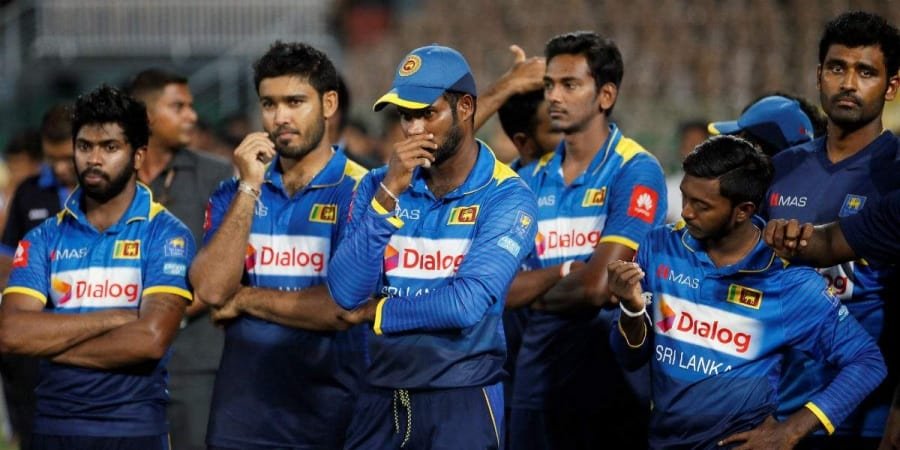
    Sri Lanka’s Agriculture Minister, Mahinda Amaraweera, has instructed officials to examine China’s proposal to import 100,000 toque macaque monkeys, which are native to Sri Lanka and classified as endangered by the International Union for Conservation of Nature (IUCN).

    The monkeys will be displayed in over 1,000 Chinese zoos with the minister suggesting that Sri Lanka might be able to meet the request due to the large macaque population in the country.

    As per a Sri Lankan news portal, a meeting was held on Tuesday to discuss the possibility of sending monkeys to China under the first phase of the programme. Agriculture Minister Mahinda Amaraweera led the meeting, which was attended by officials from the Agriculture Ministry, Department of National Zoological Gardens, and Department of Wildlife Conservation.

    During the meeting, it was revealed that the current monkey population in Sri Lanka has grown to almost 3 million and that the monkeys were causing significant damage to local crops.

    Despite Sri Lanka’s ban on almost all live animal exports, the country is currently considering fulfilling China’s request for macaque monkeys, as the country grapples with its worst economic crisis.
    Sri Lanka is also looking to fulfill China’s request due to the fact that Beijing is one of Sri Lanka’s major bilateral lenders.

  • World Bank and IMF spring meetings to address global economic uncertainties and climate change

    World Bank and IMF spring meetings to address global economic uncertainties and climate change

    On Monday, the 2023 spring meetings of the World Bank Group and the International Monetary Fund (IMF) commence in the US capital to examine the “uncertainties and risks weighing heavily” on the global economy. The meetings, which run from April 10 to 16, will take place at the IMF and World Bank headquarters and will focus on the impact of climate change, which is endangering lives and livelihoods worldwide.

    Finance ministers and central bank governors from around the world will attend the meetings to reconnect with international financial leaders, and some may hold one-on-one meetings with officials from the US Treasury and State Department. Pakistan will be represented at the meetings by the secretaries of finance and economic affairs, as well as the State Bank governor, in place of Finance Minister Ishaq Dar.

    An official statement outlining the issues to be discussed at the meetings indicated that “stubborn inflation, the cost-of-living crisis, and slower growth effects” are causing harm to the poor and most vulnerable. The statement further highlighted that record-high debt is impeding the progress of developing countries, and that the consequences of climate change are threatening lives and livelihoods globally. According to Dawn, experts are urging the World Bank and the IMF to create a comprehensive strategy to address the challenges that developing nations are facing.

    A picture on the UN Foundation’s website illustrates the widespread devastation caused by last year’s floods in Pakistan, prompting international financial institutions to devise a new mechanism to “assist communities affected by (climate change) catastrophes.” The caption beneath the photo emphasised that “many lives were lost, and millions lost their homes, with one-third of the country submerged.”

    According to a World Bank study released shortly after the floods, “Pakistan urgently requires substantial investment in climate resilience to safeguard its economy and reduce poverty.”