Tag: global markets

  • Gold prices surge in Pakistani market, 24-karat hits Rs216,500 per tola

    Gold prices surge in Pakistani market, 24-karat hits Rs216,500 per tola

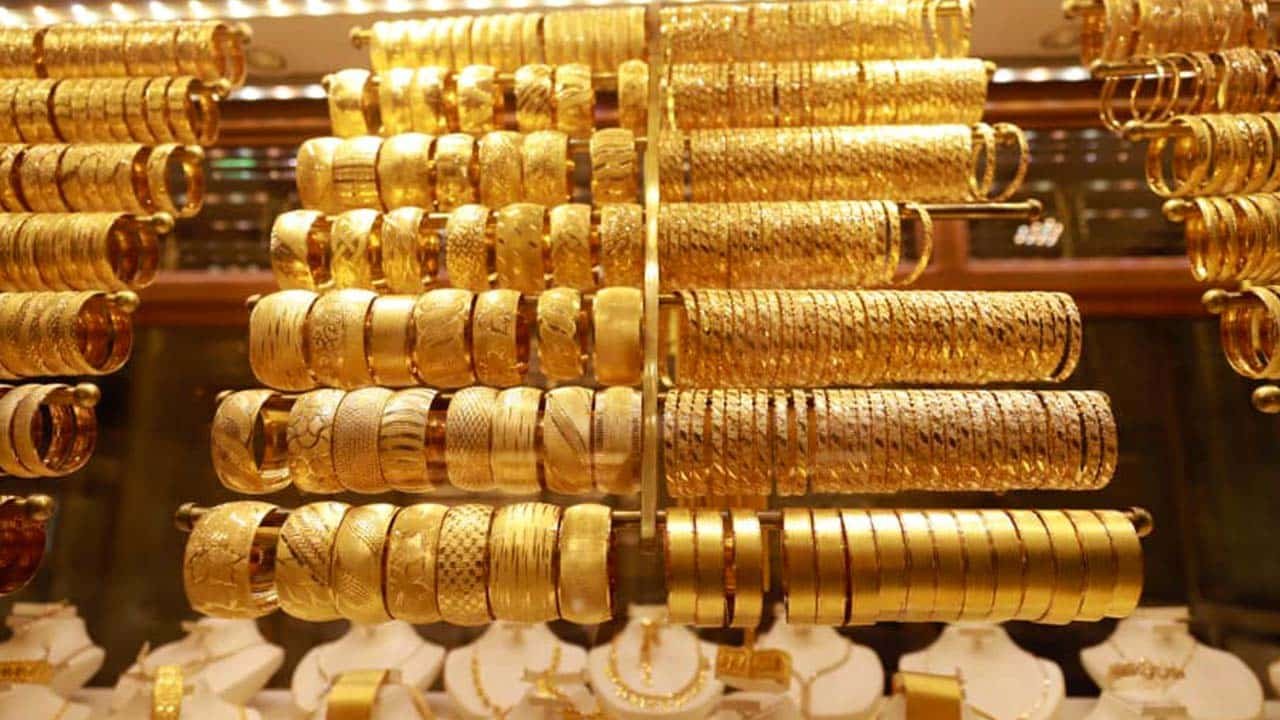
    On Friday, the domestic bullion market saw a modest increase, with the price of 24-karat gold in Pakistan rising by Rs200 per tola to reach Rs216,500.

    The Karachi Sarafa Association noted that the price of 10-gramme 24-karat gold reached Rs185,614, indicating a gain of Rs172, while the 10-gramme 22-karat gold stood at Rs170,146.

    In contrast, silver remained steady in the local market, with 24-karat silver being sold at Rs2,650 per tola and Rs2,271.94 per 10-gramme.

    On the global scale, international spot gold is currently trading at 2,036.75, marking an increase of $8.55 or 0.4% for the day.

    Notably, when the Karachi Sarafa Association reported local rates, the spot rate in the international market had seen a slight uptick of $4.

  • Gold price in Pakistan witnesses marginal increase of Rs200 per tola

    Gold price in Pakistan witnesses marginal increase of Rs200 per tola

    On Thursday, the domestic market witnessed a rise in the per tola rate of 24 karat gold, with an increment of Rs200. 

    According to the All Sindh Sarafa Jewellers Association, the price for 10 grammes of 24 karat gold also surged by Rs200, reaching Rs216,300.

    Additionally, both the per tola and 10-gramme silver prices experienced an increase of Rs171, reaching Rs185,442.

    Internationally, the cost of gold rose by $5, reaching $2052. At 0942 GMT, spot gold exhibited a 0.4 per cent increase, reaching $2,031.83 per ounce.

    Simultaneously, US gold futures demonstrated a 0.4 per cent rise, reaching $2,036.60.

    In other markets, silver saw a 0.6 per cent increase, reaching $23.01 per ounce, palladium gained 0.9 per cent, reaching $1,007.80, and platinum exhibited a 0.2 per cent rise, reaching $920.58.

  • Interbank closing: PKR continues winning streak, settles at Rs281.22

    Interbank closing: PKR continues winning streak, settles at Rs281.22

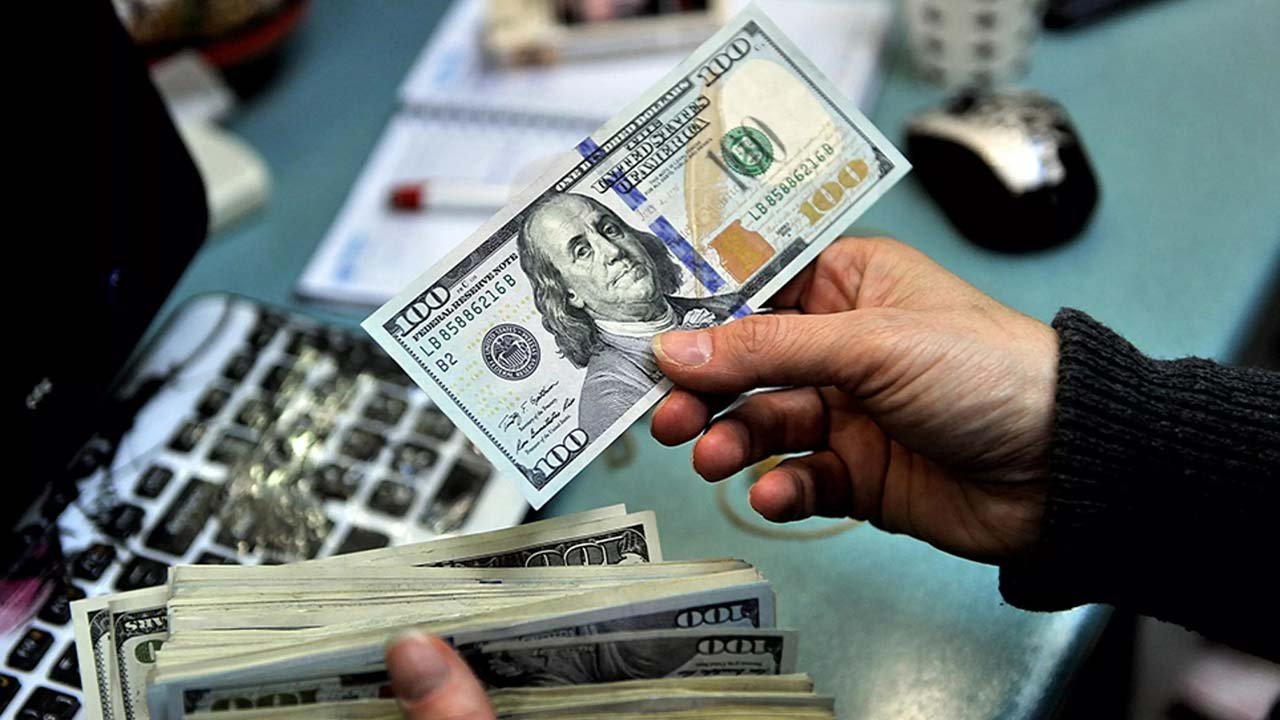
    The Pakistani rupee (PKR) extended its upward trend against the US dollar for the fifth consecutive session, gaining 0.02 per cent in the inter-bank market on Tuesday.

    The State Bank of Pakistan (SBP) reported that the rupee concluded at Rs281.22 after a rise of Re0.06. In the preceding session on Monday, the rupee had experienced a slight increase, settling at Rs281.28 against the US dollar.

    On a global scale, the US dollar took a pause in its rally on Tuesday, with traders expressing confidence in multiple Federal Reserve rate cuts this year.

    This optimism is based on the belief that the slowdown in US inflation is significant.

    Meanwhile, in the cryptocurrency realm, bitcoin maintained its position near the highest level since April 2022, driven by growing expectations of the imminent approval of spot bitcoin exchange-traded funds (ETF).

    These market movements were influenced, in part, by the New York Fed’s recent Survey of Consumer Expectations, revealing that US consumers’ short-term inflation expectations in December reached the lowest level in almost three years.

    A key reading on US inflation is scheduled later in the week, offering additional insights into the Federal Reserve’s potential room for interest rate adjustments this year.

    Futures currently indicate the pricing in of nearly 140 basis points worth of easing by the Fed in the coming year.

    Against a basket of currencies, the US dollar experienced a slight decline of 0.08 per cent, settling at 102.22, following a 1 per cent increase in the previous week.

  • Pakistani rupee gains 20 paisa against US dollar

    Pakistani rupee gains 20 paisa against US dollar

    The Pakistani rupee (PKR) extended its positive trajectory against the US dollar for the sixth consecutive session, appreciating by 0.07 per cent in the inter-bank market on Tuesday.

    According to the State Bank of Pakistan (SBP), the rupee concluded at Rs283.01, marking an increase of Re0.20.

    In the previous session, the rupee saw a marginal gain, settling at Rs283.21 against the US dollar.

    Meanwhile, in a noteworthy development, Pakistan secured $4.285 billion from various financing sources in the first five months (July–November) of the current fiscal year 2023–24.

    This represents a decrease from the $5.114 billion borrowed during the corresponding period in 2022–23, as disclosed by data from the Economic Affairs Division (EAD).

    On the global front, the US dollar experienced a 0.3 per cent decline against the yen, maintaining its position close to a four-month high of 140.95 reached last week.

    Additionally, the greenback lingered near approximately five-month lows against the Australian and New Zealand dollars.

    This was attributed to the strength of risk-sensitive currencies, driven by the anticipation that the US Federal Reserve might initiate interest rate adjustments as early as the beginning of next year.

    In the realm of commodities, oil prices stabilised on Tuesday as investors assessed the potential repercussions on oil supply arising from attacks by Yemen’s Iran-aligned Houthi militants on ships in the Red Sea.

    These attacks have disrupted maritime trade, compelling companies to reroute vessels. Notably, crude prices surged nearly 2 per cent on Monday due to concerns about trade disruptions through the Suez Canal, a vital shipping route that accounts for approximately 15 per cent of global shipping traffic.

    Brent crude declined by 12 cents to $77.83 per barrel.

    The US West Texas Intermediate crude for January, set to expire on Tuesday, experienced a decrease of 62 cents, reaching $71.85. In contrast, the more active February contract only incurred a marginal loss of 3 cents.
  • Pak Suzuki CEO reveals plan to export upgraded cars meeting WP-29 standards 

    Pak Suzuki CEO reveals plan to export upgraded cars meeting WP-29 standards 

    Hiroshi Kawamura, the Chief Executive of Pak Suzuki Motor Company Ltd. (PSMCL), recently shared insights into the company’s endeavours to enhance the export capabilities of their cars, aligning them with numerous WP-29 standards. This significant development was reported by The News on Friday. 

    During the second round of interactive meetings with key decision-makers, conducted under the Suzuki Motors banner, Kawamura underscored the transient nature of economic challenges. He reaffirmed the company’s unwavering commitment to delivering cost-effective vehicles to the ordinary citizens of Pakistan. Furthermore, he disclosed that the company was actively engaged in the development of hybrid vehicle variants. 

    In attendance at the meeting were prominent part manufacturers, and they unanimously advocated for the promotion of localization within the automotive industry while simultaneously pursuing global market expansion. In a call for collaborative efforts, Kawamura emphasised the vital need for collective action in addressing the mounting crises faced by the automotive sector, stating, “It is imperative to take stock of the escalating crisis collectively for the automotive industry. Nothing can be achieved without local partners.” 

    During the meeting, Usman Aslam Malik, Senior Vice Chairman of the Pakistan Association of Automotive Parts and Accessories Manufacturers (PAAPAM), expressed unwavering support for original equipment manufacturers (OEMs) in their endeavours to export auto components. 

    It is important to note that WP-29 standards represent a distinctive global regulatory forum operating under the auspices of the UNECE Inland Transport Committee. Three UN Agreements, adopted in 1958, 1997, and 1998, provide the legal foundation enabling contracting parties (member countries) participating in WP-29 sessions to establish regulatory frameworks governing motor vehicles and their equipment.

    These encompass UN Regulations, appended to the 1958 Agreement; United Nations Global Technical Regulations (UN GTRs), linked to the 1998 Agreement; and UN Rules, annexed to the 1997 Agreement. 

  • Gold price in Pakistan hits new record high of Rs214,500 per tola

    Gold price in Pakistan hits new record high of Rs214,500 per tola

    Tuesday saw a historic moment for Pakistan as the price of gold soared to an all-time high, hitting Rs214,500 per tola (11.66 grammes). The cause of this surge was multifaceted, with the global market’s uptrend playing a part, alongside the rupee’s historic low against the US dollar in the interbank trade.

    The rupee had plummeted to a never-before-seen low of Rs287.29 against the US dollar in the interbank market, and the surge in gold prices was a reflection of this movement. The ripple effect was felt across the country as traders scrambled to adjust to the new reality of the local bullion market.

    In a surge that grabbed headlines across Pakistan, the price of 24-carat gold soared to an all-time high on Tuesday, hitting Rs214,500 per tola and Rs183,900 per 10 grams, according to the All-Pakistan Sarafa Gems and Jewellers Association (APSGJA). It was a clear reflection of the rupee’s movement, which had plummeted to a historic low of Rs287.29 against the US dollar in the interbank market, as well as an uptrend in global markets.

    As inflation rates in Pakistan reached a nearly all-time high of 35.4 per cent in March, people felt the pinch of rising consumer prices on their budgets, prompting them to turn to gold. This precious commodity has always been considered a hedge against inflation, with its value increasing as the purchasing power of the dollar declines. During the two-day period from Monday to Tuesday, gold gained Rs5,200 per tola.

    Economic tensions have been on the rise, with the International Monetary Fund (IMF) scrutinizing external financing commitments from friendly countries before releasing bailout funds. The delay in the revival of the program had a negative impact on the currency market, which, in turn, fueled demand for gold. Investors’ attention turned to this precious commodity as a safe haven in these uncertain times.