Tag: global warming

  • Asia hit hardest by climate, weather disasters in 2023: UN

    Asia hit hardest by climate, weather disasters in 2023: UN

    Geneva, Switzerland – Asia was the world’s most disaster-hit region from climate and weather hazards in 2023, the United Nations said Tuesday, with floods and storms the chief cause of casualties and economic losses.

    Global temperatures hit record highs last year, and the UN’s weather and climate agency said Asia was warming at a particularly rapid pace.

    The World Meteorological Organization said the impact of heatwaves in Asia was becoming more severe, with melting glaciers threatening the region’s future water security.

    The WMO said Asia was warming faster than the global average, with temperatures last year nearly two degrees Celsius above the 1961 to 1990 average.

    “The report’s conclusions are sobering,” WMO chief Celeste Saulo said in a statement.

    “Many countries in the region experienced their hottest year on record in 2023, along with a barrage of extreme conditions, from droughts and heatwaves to floods and storms.

    “Climate change exacerbated the frequency and severity of such events, profoundly impacting societies, economies, and, most importantly, human lives and the environment that we live in.”

    The State of the Climate in Asia 2023 report highlighted the accelerating rate of key climate change indicators such as surface temperature, glacier retreat and sea level rise, saying they would have serious repercussions for societies, economies and ecosystems in the region.

    “Asia remained the world’s most disaster-hit region from weather, climate and water-related hazards in 2023,” the WMO said.

    Heat, melting and floods

    The annual mean near-surface temperature over Asia in 2023 was the second highest on record, at 0.91 degrees Celsius above the 1991-2020 average, and 1.87 C above the 1961-1990 average.

    Particularly high average temperatures were recorded from western Siberia to central Asia, and from eastern China to Japan, the report said, with Japan having its hottest summer on record.

    As for precipitation, it was below normal in the Himalayas and in the Hindu Kush mountain range in Pakistan and Afghanistan.

    Meanwhile southwest China suffered from a drought, with below-normal precipitation levels in nearly every month of the year.

    The High-Mountain Asia region, centred on the Tibetan Plateau, contains the largest volume of ice outside of the polar regions.

    Over the last several decades, most of these glaciers have been retreating, and at an accelerating rate, the WMO said, with 20 out of 22 monitored glaciers in the region showing continued mass loss last year.

    The report said 2023 sea-surface temperatures in the northwest Pacific Ocean were the highest on record.

    ‘Urgency’ for action

    Last year, 79 disasters associated with water-related weather hazards were reported in Asia. Of those, more than 80 percent were floods and storms, with more than 2,000 deaths and nine million people directly affected.

    “Floods were the leading cause of death in reported events in 2023 by a substantial margin,” the WMO said, noting the continuing high level of vulnerability of Asia to natural hazard events.

    Hong Kong recorded 158.1 millimetres of rainfall in one hour on September 7 — the highest since records began in 1884, as a result of a typhoon.

    The WMO said there was an urgent need for national weather services across the region to improve tailored information to officials working on reducing disaster risks.

    “It is imperative that our actions and strategies mirror the urgency of these times,” said Saulo.

    “Reducing greenhouse gas emissions and adapting to the evolving climate is not merely an option, but a fundamental necessity.”

    rjm/nl/rlp

    © Agence France-Presse
  • World’s largest private firms fail to set climate targets: report

    World’s largest private firms fail to set climate targets: report

    Paris, France – Only 40 of the world’s 100 largest private firms have set net-zero carbon emissions targets to fight climate change, according to a report released Monday, lagging far behind public companies.

    But for the world to meet the 2015 Paris Agreement to limit global warming 1.5 degree Celsius, all companies need to reduce their planet-heating emissions, the report by the group Net Zero Tracker noted.

    The lack of market and reputational pressures on private firms compared to those publicly-listed, along with an absence of regulation are to blame for their slow uptake of climate commitments, John Lange of Net Zero Tracker told AFP.

    “I think things are changing on all three of those fronts,” he added.

    The report compared 200 of the world’s largest public and private companies based on their reported emissions reductions strategies and net-zero targets.

    It found that only 40 of the 100 private firms assessed had net zero targets, compared to 70 of 100 publicly-listed companies.

    Of the private companies that have set targets, just eight have published plans on how they will meet them.

    “A pledge without a plan is not a pledge, it is a naked PR stunt,” the report said.

    Regulations coming

    Only two firms — furnishing giant Ikea and US engineering giant Bechtel — ruled out using controversial carbon credits to achieve their net-zero goals, the report said.

    Carbon credits allow businesses to offset their emissions by directing money toward a project that reduces or avoids emissions, such as protecting forests, but critics say they allow companies to keep polluting.

    Meanwhile, none of the eight fossil fuel companies included in the report was found to have a net-zero target, compared with 76 percent of the sector’s largest public firms.

    There was also little improvement in the figures compared with a previous analysis done in 2022, “despite a massive uptick in regulation around the world”, Lang said.

    Several jurisdictions including the United Kingdom have adopted climate disclosure regulations.

    Others have regulations on the horizon, with business hubs of California and Singapore requiring greenhouse gas emissions reporting from 2027.

    The European Union also introduced two climate regulations — the Corporate Sustainability Reporting Directive (CSRD) and the Corporate Sustainability Due Diligence Directive (CSDDD) — which will soon require thousands of large companies to report their climate impacts and emissions, and to take action to curtail them.

    “We’re trying to get private firms to understand what’s coming for them,” Lang said.

    ‘Trickledown effect’

    The EU policies will have far-reaching effects in particular, targeting firms not only based in the bloc but those that may be headquartered elsewhere with branches or subsidiaries within the member states.

    Yet two European private firms, including French hypermarket chain E. Leclerc, were singled out in the report for having set any emissions reduction targets.

    E.Leclerc told AFP that the company has made efforts toward more sustainable practises like eliminating the use of single-use plastic bags, and is “committed to setting near-term company-wide emissions reduction targets”.

    But with the enforcement of EU regulations looming, firms will not be able to “dodge” climate targets much longer, Sybrig Smit of the NewClimate Institute told AFP.

    “It’s actually quite watertight. If companies want to do business in Europe, they are going to have to face the consequences,” she said.

    The firms analysed account for roughly 23 percent of the global economy, with the majority based in either China, the United States or EU states — the biggest emitters of greenhouse gases, Lang said.

    Any changes the firms make to meet new regulations will have substantial benefits for the environment.

    “They have such a trickledown effect. Whenever such a big company is implementing something real, it will have a huge effect on the rest of the sector that they operate in,” Smit said.

    giv/cw

    © Agence France-Presse

  • What is El Nino effect and how is it impacting global sea levels?

    What is El Nino effect and how is it impacting global sea levels?

    Global average sea levels rose by about 0.3 inches (one-third of an inch) from 2022 to 2023 — nearly four times the increase of the previous year — Nasa said on Thursday, attributing the “significant jump” to a strong El Nino and a warming climate.

    The Nasa-led analysis is based on more than 30 years of satellite observations, with the initial satellite launching in 1992 and the latest in 2020.

    Overall, sea levels have risen by around four inches since 1993. The rate of increase has also accelerated, more than doubling from 0.07 inches per year in 1993, to the current rate of 0.17 inches per year.

    “Current rates of acceleration mean that we are on track to add another 20 centimetres (eight inches) of global mean sea level by 2050,” said Nadya Vinogradova Shiffer, director for the Nasa sea level change team and the ocean physics programme in Washington.

    That would be double the amount of change in the next three decades compared to the previous century, she said, creating a future where flooding is far more frequent and catastrophic than today.

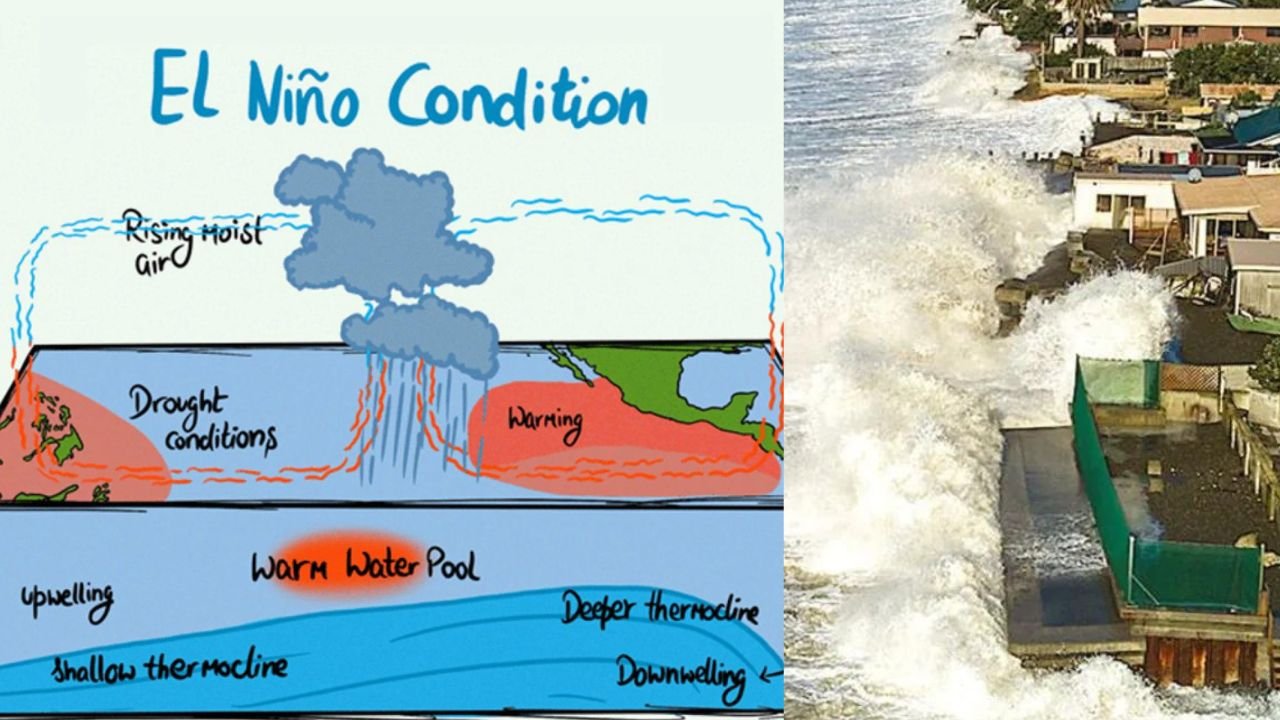
    The immediate cause of the spike is the El Nino weather effect, which replaced the La Nina from 2021 to 2022, when the sea level rose around 0.08 inches.

    El Nino involves warmer-than-average ocean temperatures in the equatorial Pacific.

    The term El Niño (Spanish for ‘the Christ Child’) refers to a warming of the ocean surface, or above-average sea surface temperatures, in the central and eastern tropical Pacific Ocean. The low-level surface winds, which normally blow from east to west along the equator (“easterly winds”), instead weaken or, in some cases, start blowing the other direction (from west to east or “westerly winds”). El Niño recurs irregularly, from two years to a decade, and no two events are exactly alike. El Niño events can disrupt normal weather patterns globally, asserts US Geological Survey.

  • Planet ‘on the brink’ with new heat records likely in 2024: UN

    Planet ‘on the brink’ with new heat records likely in 2024: UN

    Global temperatures “smashed” heat records last year, as heatwaves stalked oceans and glaciers suffered record ice loss, the United Nations said Tuesday — warning 2024 was likely to be even hotter.

    The annual State of the Climate report by the UN weather and climate agency confirmed preliminary data showing 2023 was by far the hottest year ever recorded.

    And last year capped off “the warmest 10-year period on record”, the World Meteorological Organization said, with even hotter temperatures expected.

    “There is a high probability that 2024 will again break the record of 2023”, WMO climate monitoring chief Omar Baddour told reporters.

    Reacting to the report, UN chief Antonio Guterres said it showed “a planet on the brink”.

    “Earth’s issuing a distress call,” he said in a video message, pointing out that “fossil fuel pollution is sending climate chaos off the charts”, and warning that “changes are speeding up”.

    The WMO said that last year the average near-surface temperature was 1.45 degrees Celsius above pre-industrial levels — dangerously close to the critical 1.5-degree threshold that countries agreed to avoid passing in the 2015 Paris climate accords.

    “I am now sounding the red alert about the state of the climate,” Saulo told reporters, lamenting that “2023 set new records for every single climate indicator”.

    The organisation said many of the records were “smashed” and that the numbers “gave ominous new significance to the phrase ‘off the charts’.”

    “What we witnessed in 2023, especially with the unprecedented ocean warmth, glacier retreat and Antarctic sea ice loss, is cause for particular concern,” Saulo said.

    One especially worrying finding was that marine heatwaves gripped nearly a third of the global ocean on an average day last year.

    And by the end of 2023, more than 90 percent of the ocean had experienced heatwave conditions at some point during the year, the WMO said.

  • Ski industry in Indian-occupied Kashmir melts as temperatures rise 

    Ski industry in Indian-occupied Kashmir melts as temperatures rise 

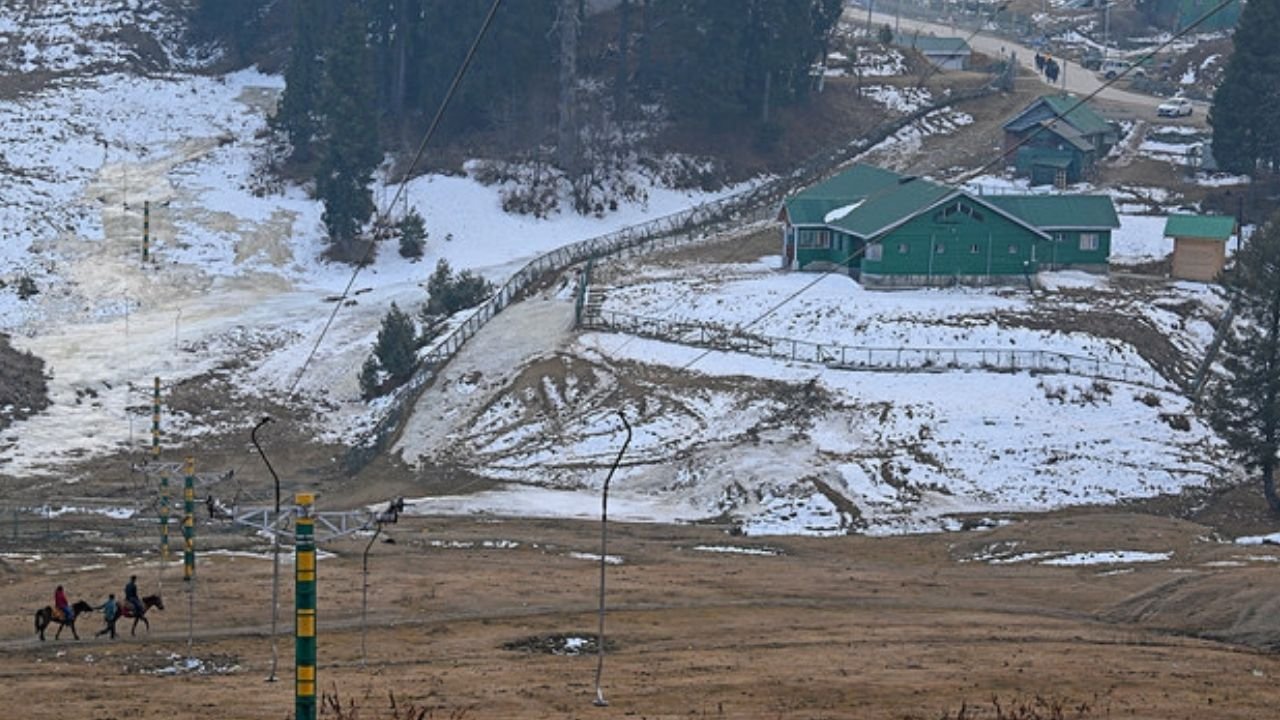
    Winter in the Himalayas should mean blanketing snow, and for Gulmarg in Indian-administered Kashmir, one of the highest ski resorts in the world, that usually means thousands of tourists.

    This year, the deep powder once taken for granted is gone. The slopes are brown and bare, a stark example of the impact of the extreme weather caused by the rapidly heating planet, experts say.

    The lack of snow is not only hammering the ski industry but has a worrying impact on agriculture, the mainstay of Kashmir’s economy.

    “Seeing this snowless Gulmarg, I feel like crying every day,” said adventure tour operator Mubashir Khan, who has put wedding plans on hold with his business teetering near collapse.

    “In the 20 years of my working here, this is the first time I see no snow in Gulmarg in January,” said Majeed Bakshi, whose heliskiing service for high-spending tourists stands idle.

    A lone helicopter waits for the few tourists who have still come, offering flights over higher peaks that have a dusting of snow.

    “Our guests are mainly skiers, and they have all canceled their bookings,” said hotel manager Hamid Masoodi. “Those who come despite no snow are also disappointed.”

    Ski lifts are closed, rental shops are shut and a newly constructed ice rink is a pool of dank water.

    “The current dry spell is an extreme weather event — which are predicted to become more intense and frequent in the future,” said climate scientist Shakil Romshoo, from Kashmir’s Islamic University of Science and Technology.

    For decades, an insurgency seeking independence or a merger with Pakistan — and military operations to crush that movement — has seen tens of thousands of civilians, soldiers and rebels killed in Kashmir.

    The rebellion has lost much of its former strength, and India has been heavily promoting domestic tourism in the region, home to spectacular mountain scenery

    But in Gulmarg, hotel bookings have plunged by as much as three-quarters, tourism professionals say, as hundreds of guides and scooter drivers sit waiting in the sunshine, praying for snow.

    “Most foreigners who mainly come for skiing on the deep powder slopes have canceled,” Bakshi said. “I have lost about 70 percent of bookings so far.”

    Perched at 2,650 meters (8,694 feet), the Himalayan resort is also home to the Indian army’s High Altitude Warfare School, located close to the highly militarised Line of Control, the de facto border that divides contested Kashmir between India and Pakistan.

    Kashmir has recorded little rain, and temperatures are about six degrees Celsius (42.4 degrees Fahrenheit) higher than normal since autumn last year, according to meteorology officials.

    Last month, precipitation across Kashmir was down 80 percent from past years.

    Gulmarg received a few snow showers, but that soon melted.

    India’s Ministry of Earth Sciences said in a 2020 report they expected the Himalayas and Kashmir would be “particularly subject” to warming temperatures.

    Earlier this month, the UN’s World Meteorological Organization said the 2023 annual average global temperature was 1.45 degrees Celsius above pre-industrial levels (1850-1900) — the warmest year on record.

    The nine hottest individual years on record were the last nine.

    In Kashmir, the impact is clear. Gulmarg’s bowl-shaped landscape, beloved by tourists for the snow in winter and meadows of flowers in spring, is brown and bleak.

    Scientists warn rising global temperatures are unleashing a cascade of extreme weather events.

    Beyond the collapse of the skiing industry, many in the ecologically fragile region are worried about impending water shortages that would have a dire potential impact on agriculture.

    Romshoo, the climate scientist, said research indicates Kashmir “will experience more frequent and prolonged dry spells,” worsening in the decades ahead.

    Changing weather patterns have already altered farming practices.

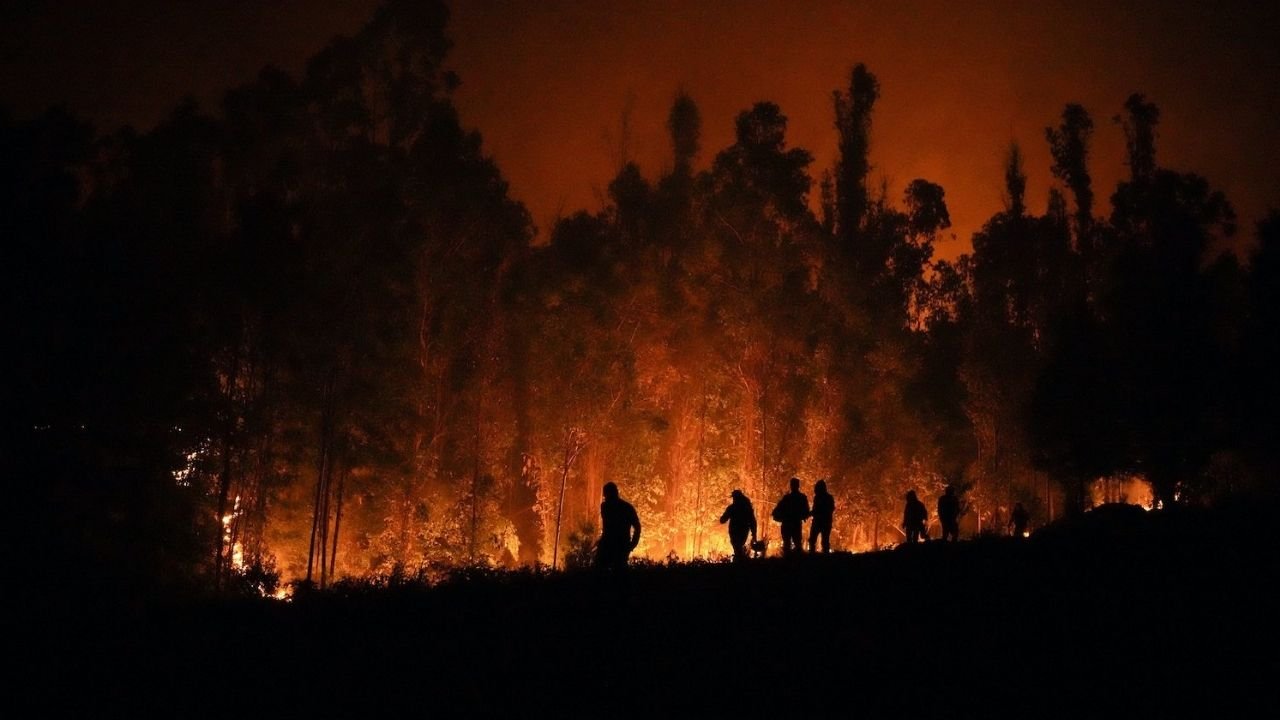
    Snow melt usually helps refresh the usually full rivers, but this week, authorities in Kashmir warned of water shortages and the risk of forest fires, with many wooded areas tinder dry.

    Rice farmers needing plentiful water for their paddy fields have begun switching to fruit.

    But that crop is also at risk, with the dry spell and sunshine meaning some trees are already flowering, blossoming more than two months early.

  • Japan quake toll rises to 62 as weather hampers rescuers

    Japan quake toll rises to 62 as weather hampers rescuers

    Japanese rescuers scrambled to search for survivors on Wednesday (January 3) as authorities warned of landslides and heavy rain after a powerful earthquake that killed at least 62 people.

    The 7.5-magnitude quake on January 1 that rattled Ishikawa prefecture on the main island of Honshu triggered tsunami waves more than a metre high, sparked a major fire and tore apart roads.

    The Noto Peninsula of the prefecture was most severely hit, with several hundred buildings ravaged by fire and houses flattened in several towns, including Wajima and Suzu, as shown by before-and-after satellite images released on Wednesday.

    The regional government announced Wednesday that 62 people had been confirmed dead and more than 300 injured, 20 of them seriously.

    The toll was expected to climb as rescuers battle aftershocks and poor weather to comb through rubble.

    More than 31,800 people were in shelters, the government said.

    “More than 40 hours have passed since the disaster. We have received a lot of information about people in need of rescue and there are people waiting for help,” Prime Minister Fumio Kishida said Wednesday after an emergency task force meeting.

    “Rescue efforts are being made by the local authorities, police, firefighters and other operational units, while the number of personnel and rescue dogs is enhanced.

    “However, we ask you to remain fully mindful that we are in a race against time and to continue to do your utmost to save lives, putting people’s lives first,” Kishida said.

    The Japan Meteorological Agency (JMA) has issued a heavy rain warning in the area.

    “Be on the lookout for landslides until the evening of Wednesday,” the agency said.

    In the coastal city of Suzu, mayor Masuhiro Izumiya said there were “almost no houses standing”.

    “About 90 per cent of the houses (in the town) are completely or almost completely destroyed… the situation is really catastrophic,” he said, according to broadcaster TBS.

    A woman at a shelter in the town of Shika told TV Asahi that she “hasn’t been able to sleep” due to aftershocks.

    “I’ve been scared because we don’t know when the next quake will hit,” she said.

    Nearly 34,000 households were still without power in Ishikawa prefecture, the local utility said.

    Many cities were without running water.

    Shinkansen bullet trains and highways have resumed operations after several thousand people were stranded, some for almost 24 hours.

    The US Geological Survey said the quake had a magnitude of 7.5, while the JMA measured it at 7.6, triggering a major tsunami warning.

    The powerful quake was one of more than 400 to shake the region through Wednesday morning, the JMA said.

    Japan lifted all tsunami warnings after waves at least 1.2m high hit the town of Wajima and a series of smaller tsunamis were reported elsewhere.

    Japan experiences hundreds of earthquakes every year and the vast majority cause no damage.

    The number of earthquakes in the Noto Peninsula region has been steadily increasing since 2018, a Japanese government report said last year.

    The country is haunted by a massive 9.0-magnitude undersea quake off northeastern Japan in 2011, which triggered a tsunami that left around 18,500 people dead or missing.

    It also swamped the Fukushima atomic plant, causing one of the world’s worst nuclear disasters.

  • 2023 set to be hottest year on record: UN

    2023 set to be hottest year on record: UN

    Geneva (AFP) – This year is set to be the hottest ever recorded, the UN said Thursday, demanding urgent action to rein in global warming and stem the havoc following in its wake.

    The UN’s World Meteorological Organization warned that 2023 had shattered a whole host of climate records, with extreme weather leaving “a trail of devastation and despair”.

    “It’s a deafening cacophony of broken records,” said WMO chief Petteri Taalas.

    “Greenhouse gas levels are record high. Global temperatures are record high. Sea level rise is record high. Antarctic sea ice is record low.”

    The WMO published its provisional 2023 State of the Global Climate report as world leaders gathered in Dubai for the UN COP28 climate conference, amid mounting pressure to curb planet-heating greenhouse gas pollution.

    United Nations chief Antonio Guterres said the record heat findings “should send shivers down the spines of world leaders”.

    The stakes have never been higher, with scientists warning that the ability to limit warming to a manageable level is slipping through humanity’s fingers.

    The 2015 Paris climate accords aimed to limit global warming to well below two degrees Celsius above pre-industrial levels — and 1.5C if possible.

    But in its report, the WMO said 2023 data to the end of October showed that this year was already around 1.4C above the pre-industrial baseline.

    ‘Not just statistics’

    The agency is due to publish its final State of the Global Climate 2023 report in the first half of 2024.

    But it said the difference between the first 10 months of this year and 2016 and 2020 — which previously topped the charts as the warmest years on record — “is such that the final two months are very unlikely to affect the ranking”.

    The report also showed that the past nine years were the hottest years since modern records began.

    “These are more than just statistics,” Taalas said, warning that “we risk losing the race to save our glaciers and to rein in sea level rise”.

    “We cannot return to the climate of the 20th century, but we must act now to limit the risks of an increasingly inhospitable climate in this and the coming centuries.”

    The WMO warned that the warming El Nino weather phenomenon, which emerged mid-year, was “likely to further fuel the heat in 2024”.

    That is because the naturally-occurring climate pattern, typically associated with increased heat worldwide, usually increases global temperatures in the year after it develops.

    The preliminary report also found that concentrations of the three main heat-trapping greenhouse gases — carbon dioxide, methane and nitrous oxide — reached record high levels in 2022, with preliminary data indicating that the levels continued to grow this year.

    Carbon dioxide levels were 50 percent higher than the pre-industrial era, the agency said, meaning that “temperatures will continue to rise for many years to come”, even if emissions are drastically cut.

    ‘Climate chaos’

    The rate of sea level rise over the past decade was more than twice the rate of the first decade of satellite records (1993-2002), it said.

    And the maximum level of Antarctic sea ice this year was the lowest on record.

    In fact, it was a million square kilometres less than the previous record low at the end of the southern hemisphere winter, the WMO said — an area larger than France and Germany combined.

    Meanwhile, glaciers in North America and Europe again suffered an extreme melt season, with Swiss glaciers losing 10 percent of their ice volume in the past two years alone, the report showed.

    Dramatic socio-economic impacts accompany such climate records, experts say, including dwindling food security and mass displacement.

    “This year we have seen communities around the world pounded by fires, floods and searing temperatures,” UN chief Guterres said in a video message.

    He called on the leaders gathered in Dubai to commit to dramatic measures to rein in climate change, including phasing out fossil fuels and tripling renewable energy capacity.

    “We have the roadmap to limit the rise in global temperature to 1.5C and avoid the worst of climate chaos,” he said.

    “But we need leaders to fire the starting gun at COP28 on a race to keep the 1.5 degree limit alive.”

  • Extreme Rainfall Increases Exponentially With Global Warming: Study

    State-of-the-art climate models drastically underestimate how much extreme rainfall increases under global warming, according to a study published Monday that signals a future of more frequent catastrophic floods unless humanity curbs greenhouse emissions.

    It comes as countries prepare to meet at the COP28 summit in Dubai beginning later this week, amid fears it could soon be impossible to limit long-term warming to the 1.5 degrees Celsius scientists say is necessary to curb the worst effects of human-caused climate change.

    Researchers from the Potsdam Institute of Climate Impact Research (PIK) looked at the intensity and frequency of daily precipitation extremes over land in 21 “next generation” climate models used by a UN body in its global assessments.

    They then compared the changes projected by the models with those observed historically, finding that nearly all climate models significantly underestimated the rates at which increases in precipitation extremes scaled with global temperature rise.

    “Our study confirms that the intensity and frequency of heavy rainfall extremes are increasing exponentially with every increment of global warming,” said Max Kotz, lead author of the paper published in the Journal of Climate.

    The changes track with the Clausius-Clapeyron relation in physics, which established that warmer air holds more water vapor. This finding underpinned the fact that temperature and not wind dominate the global change in extreme rainfall events, according to the authors.

    Stronger increases in rainfall intensity and frequency were found across the tropics and high-latitudes, like in Southeast Asia or Northern Canada, according to the study.

  • South Asia worst in world for water scarcity: UN

    New Delhi (AFP) – More children in South Asia are struggling due to severe water scarcity made worse by the impacts of climate change than anywhere else worldwide, the United Nations said Monday.

    “A staggering 347 million children under 18 are exposed to high or extremely high water scarcity in South Asia, the highest number among all regions in the world,” the UN children’s agency said in a report.

    The eight-nation region, comprising Afghanistan, Bangladesh, Bhutan, India, Nepal, Maldives, Pakistan and Sri Lanka, is home to more than one-quarter of the world’s children.

    “Climate change is disrupting weather patterns and rainfall, leading to unpredictable water availability,” the UN said in its report.

    The report cites poor water quality, lack of water and mismanagement such as over-pumping of aquifers, while climate change decreases the amount of water replenishing them.

    “When village wells go dry, homes, health centres and schools are all affected,” UNICEF added.

    “With an increasingly unpredictable climate, water scarcity is expected to become worse for children in South Asia.”

    At the UN COP28 climate conference in December in Dubai, UNICEF said it will call for leaders “to secure a livable planet”.

    “Safe water is a basic human right,” said Sanjay Wijesekera, UNICEF chief for South Asia.

    “Yet millions of children in South Asia don’t have enough to drink in a region plagued by floods, droughts and other extreme weather events, triggered increasingly by climate change”.

    Last year, 45 million children lacked access to basic drinking water services in South Asia, more than any other region, but UNICEF said services were expanding rapidly, with that number slated to be halved by 2030.

    Behind South Asia was Eastern and Southern Africa, where 130 million children are at risk from severe water scarcity, the report added.

  • 2023 likely to be the hottest year on record

    2023 likely to be the hottest year on record

    The European Union’s Copernicus Climate Change Service report has claimed that 2023 was the warmest October on record globally, noting an average surface temperature of 15.3 degrees Celsius (59.54 degrees Fahrenheit) over the month. The report is “virtually certain” that 2023 is the warmest year ever recorded.

    The mean temperature was 0.85 degrees Celsius above the 1991-2020 average for October and 1.7 degrees Celsius warmer than the preindustrial period of 1850-1900.

    Earlier, 2016 was declared as the hottest year in world history. Climate change experts find the shocking data to be “like something out of a Hollywood movie”

    COP28 is scheduled to take place by the end of November and this finding makes it more crucial than ever because the current temperature rise is 1.43 degrees Celsius above the pre-industrial average which was aimed to be curbed to just 1.5 degrees Celsius by 2050. The figures are alarming and demand the world’s attention.

    The world has already warmed by around 1.1 degrees Celsius after over a century of burning fossil fuels as well as unequal and unsustainable energy and land use. Indeed, it is this temperature increase that is fueling a series of extreme weather events around the world.