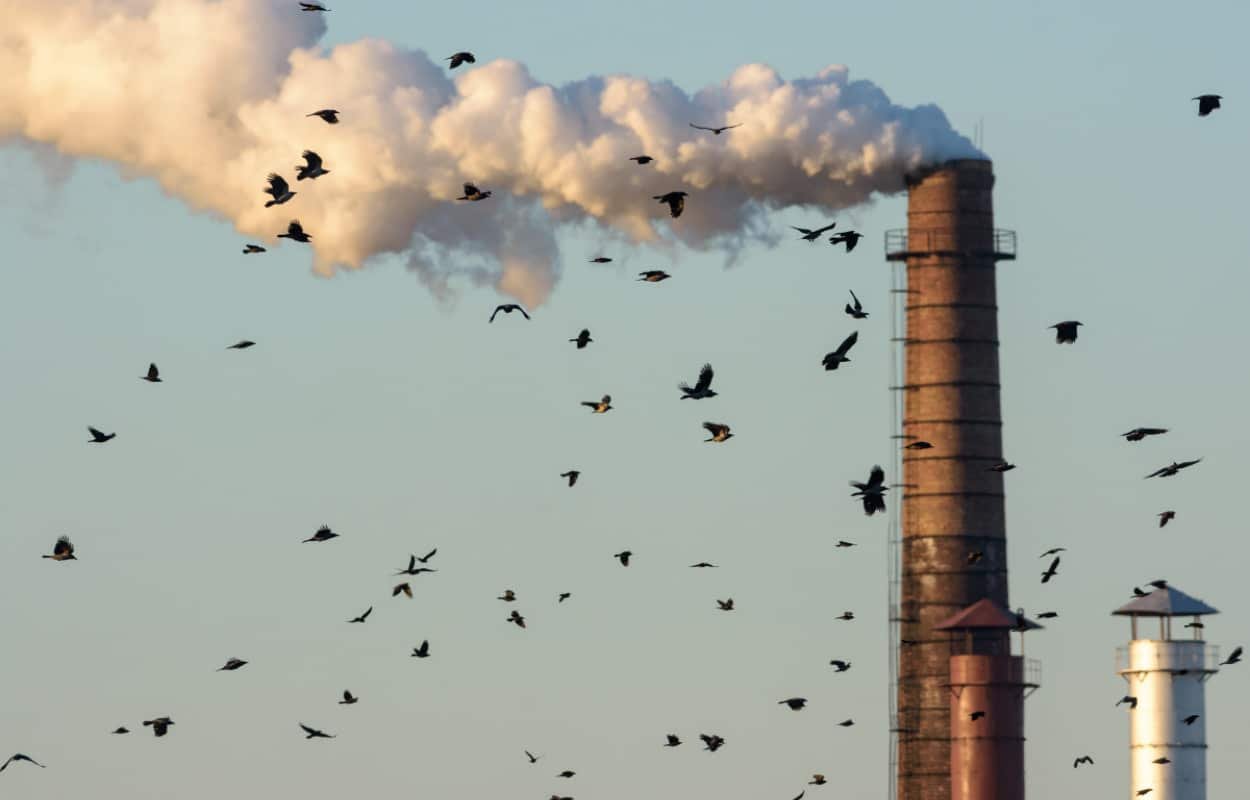
In the tragic saga of climate change in Pakistan, it is not just humans but birds too that are affected.
While the avian population has nothing to contribute to the phenomenon of climate change, they are paying the price for it with their lives. According to a State of the World’s Birds report, nearly half of all bird species are in decline with more than one in eight at risk of extinction.
The situation is not any better in Pakistan. Not just the indigenous species are at risk but the ones migrating to the plains of Pakistan are severely decreasing as well. The research by wildlife expert Dr Azhar has come out at a time when the world is fighting with a challenge as magnanimous as global warming. Scientists have warned that if the temperature increases 3.5 degrees above the current one by 2100, almost 600-900 species would be killed off.
A significant decrease in the number of birds in tropical regions has been noticed, including the endangered northern snowbird. Even the number of common sparrows is plummeting as declared by the International Convention for Conservation of Nature. For instance, a loss of three billion birds in North America alone posing a threat to biodiversity. Simultaneously, sparrows are being put on a ‘Red List’ in Greater London after a loss of 70 per cent of sparrows was recorded between 1994 and 2001.
The reason it has not been done in Pakistan, as expressed by renowned ornithologist Mahmood Akhtar Cheema, is because nobody has actually attempted to count the number of these birds at present, implying that they are surely less than before. He warned that it is going to be even worse in the future because of the scarcity of food, changes in habitat, earlier egg-laying time, higher rate of disease transmission and frequent season changes.
It is explicitly clear that birds’ populace is an indicator of the environmental health around us. The staggering decrease is alarming on many levels. It also demands extensive research and policy making to protect biodiversity. The areas may include the changing weather patterns disturbing the timing of migration to egg-laying and sizes and controlling extreme urbanization to provide for their natural habitats.