Tag: #google

  • SECP strikes down 120 illegal personal loan apps

    SECP strikes down 120 illegal personal loan apps

    Securities and Exchange Commission of Pakistan (SECP) has taken measures to protect the public from falling into debt traps of illegal loan apps. Collaborating with Google, Apple and Pakistan Telecommunication Authority (PTA), SECP has succeeded in removal of 120 illegal loan apps that were previously available online.

    The largely ignored scam of illegal personal loan apps came to light recently when last month, a resident of Rawalpindi, died by suicide after being threatened by a lender who gave him loan through one such app. This incident raised serious concerns about misuse of data privacy violations, and coercive recovery practices by the illegal loan apps. The SECP has not only tightened its regulatory framework for licensed Non-Banking Finance Companies (NBFCs) but has also initiated effective steps with the relevant authorities to shut down unauthorized and illegal loan apps.

    SECP has also referred the 120 blocked apps to the FIA for further action in accordance with the Prevention of Electronic Crimes Act of 2016. SECP regularly checks the Google Play Store and the Apple App Store for the presence of any illegal apps.

    Recently Google has introduced Pakistan’s Personal Loan App Policy, according to which Google only allows SECP-approved Personal Loan Apps for placement on its Google Play Store.

    Personal loan borrowers have been advised by SECP to obtain loans only from licensed NBFCs. The SECP’s regulatory framework for approved Apps requires transparent disclosure of fees, loan duration, instalments, and charges. Moreover, SECP has also initiated inspections of licensed NBFCs providing loans through Apps to verify that these are not engaged in miss-selling, breaches of data privacy, or coercive recovery practices etc.

  • Aamir Khan’s daughter says he was trigger for her depression

    Aamir Khan’s daughter says he was trigger for her depression

    Bollywood actor Aamir Khan’s daughter Ira spoke to ET Times about how she came to recognize her bad mental health, stating that it was her parents’ divorce that triggered the episode. The actor and his first wife, Reena Dutta, divorced amicably in 2002, however, Ira revealed that both Aamir and Reena made her feel that it “was not a big deal”.

    The mental health activist went on to say that because of Aamir and Reena’s divorce, she had mental misunderstandings but never found the courage to discuss them with anyone. Hence, she “blames herself’ for suffering from depression, believing erroneously that one had to be sad to get love from others. On a positive note, she said that now she is working on making herself happy, and has a better relationship with her parents.

    Ira revealed she is in a group chat with her parents and reaches out to them every time she is in need, while her fiance Nupur Shikhare is one of her strongest supporters.

    READ MORE: ‘Mental disorders run in the family’: Aamir Khan’s daughter opens up about dealing with depression, handling parents divorce

    Ira recently made national headlines when she revealed to a publication that mental health disorders run in her family:

    “Every 8-10 months I will have a big crash. It’s partly genetic, partly psychological, and partly social. It took me a while to figure it out. But I have mental health disorders in my family. I also did not make healthy choices and I systematically walked into depression.”

  • Google plans to generate more revenue with online games on YouTube

    Google plans to generate more revenue with online games on YouTube

    Google is exploring the possibility of earning revenue through online games on YouTube, as per a recent Wall Street Journal report.

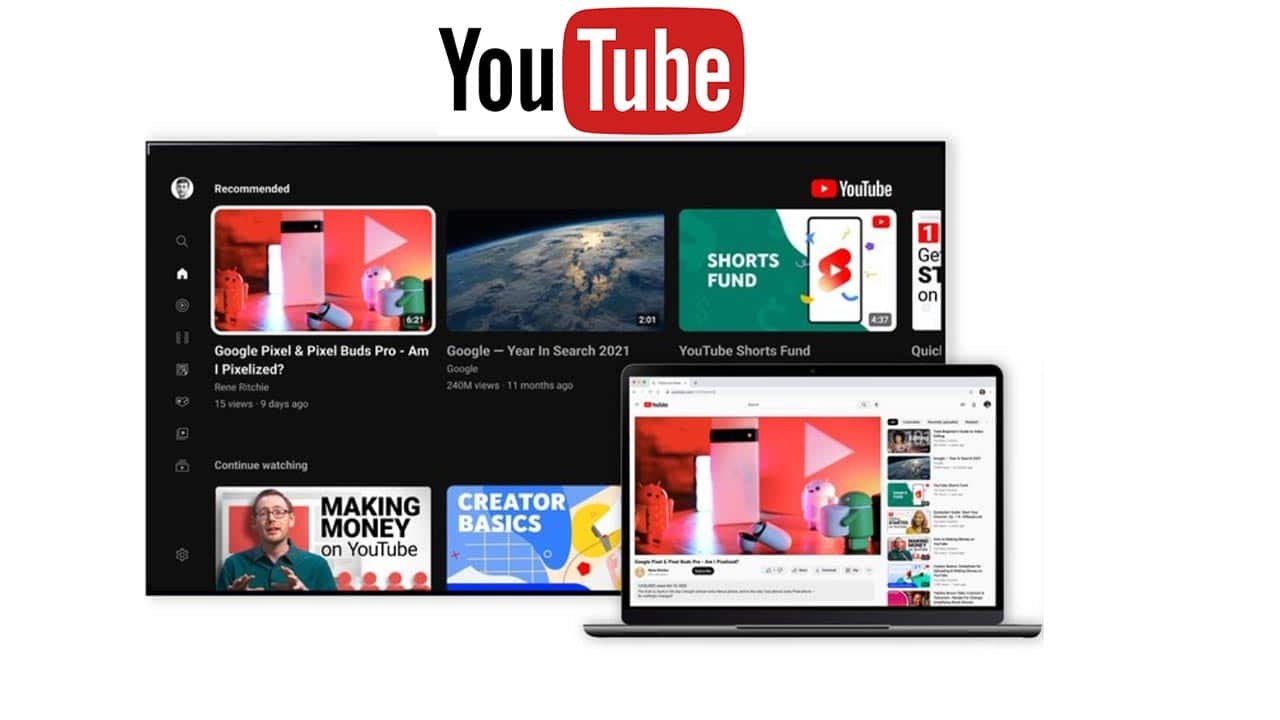
    YouTube, a well-known platform for hosting videos, has apparently invited its employees to test a new feature called Playables. This feature allows users to play games directly on YouTube itself. Notably, this feature can be accessed on different devices such as mobile phones and desktop computers, as mentioned in an internal email obtained by the Journal.

    Users will have the convenience of playing these games either through a web browser on the YouTube website or via the YouTube app on both Android and iOS devices. Although the report suggests that several games are currently available for testing, it specifically highlights one called Stack Bounce. This arcade game, supported by ads, challenges players to demolish layers of bricks with a bouncing ball.

    While YouTube already generates revenue through gaming livestreams, this new product will provide an additional avenue to capitalise on the gaming industry, particularly as advertising spending experiences a downturn.

    It is worth noting that this venture differs from Google’s unsuccessful Stadia games streaming service, which was eventually discontinued. With YouTube’s existing vast and dedicated user base, attracting attention to this new feature should not pose a challenge.

    Playables bears some resemblance to Netflix’s gaming offering, where paying subscribers gain access to casual mobile games. In a similar vein, Netflix is reportedly exploring the expansion of its gaming initiative beyond mobile devices by testing TV games that employ smartphones as controllers, demonstrating ambitious plans for the future.

  • Foreign Office evaluating Pakistan’s participation in World Cup

    Pakistan Cricket Board’s (PCB) likely new chairman, Zaka Ashraf, recently stated that he does not like the Hybrid Model for Asia Cup 2023.

    “I did not like the Hybrid Model. I feel that the present Hybrid Model seems to be an injustice with Pakistan. If all the important matches are going to take place in Sri Lanka and only less impactful matches will take place in Pakistan, then what is the purpose of having the hosting rights? Who will go to watch Nepal vs Pakistan,” he questioned.

    “The first thing I will do as PCB-chairman is reject the Hybrid Model. If Pakistan has the hosting rights, then all of the matches should take place in Pakistan,” Ashraf said recently.

    The statement stunned cricket fans all over Asia, and officials from the Asian Cricket Council (ACC) expressed displeasure over it.

    If Zaka Ashraf rejects the Hybrid Model and if India does not agree to travel to Pakistan, will the Pakistan Cricket team travel to India for the World Cup 2023? The World Cup is a mega event of the International Cricket Council (ICC).

    Former PCB management committee chairman, Najam Sethi, released a statement to the BCC podcast, stating, “If the Asian Cricket Council (ACC) and the Board of Control for Cricket in India (BCCI) consider the Hybrid Model for the Asia Cup, then we will go with the same model in the World Cup. Because if the Hybrid Model is applicable for the Asia Cup, then why would it not be a good option for the World Cup?”

    Today, the foreign office of Pakistan released a statement, stating, “We are evaluating the participation of Pakistan in the World Cup, with the security concerns of the players being of utmost priority.”

    This statement by the Ministry comes at a time when bilateral cricket has been suspended for a long time due to bad political relations between the two rival neighboring countries.

    The two have only played cricket against each other in multi-team events at neutral venues over the past decade, and Pakistan’s participation in the Cricket World Cup in October-November is still in doubt.

    Foreign Minister Bilawal Bhutto Zardari, who attended the Shanghai Cooperation Organization (SCO) meeting in Goa last month, is the first senior Pakistani leader to visit India in the last 9 years.

    The Foreign Minister’s spokesperson said, “Politics should be set aside from sports. India’s racist policy of not playing in Pakistan is ridiculous and disappointing.”

    Mumtaz Zahra Baloch said yesterday, “We are observing and evaluating all aspects related to our participation in the World Cup, including the security situation of Pakistani cricketers. We will let you know our opinion.”

    The uncertainty of Pakistan’s participation means that the dates and venues of the World Cup are yet to be finalized, even though the tournament is only three months away.

    India has already refused to come to Pakistan for the Asia Cup starting on August 31. In response, Pakistan has warned that if Pakistan loses the rights to host the Asia Cup, it will boycott the World Cup.

    To resolve the issue amicably, Najam Sethi proposed the Hybrid model, but Zaka Ashraf straight away dismissed it.

  • Google’s healthcare tech uses AI to predict heart disease with just an eye scan

    Google’s healthcare tech uses AI to predict heart disease with just an eye scan

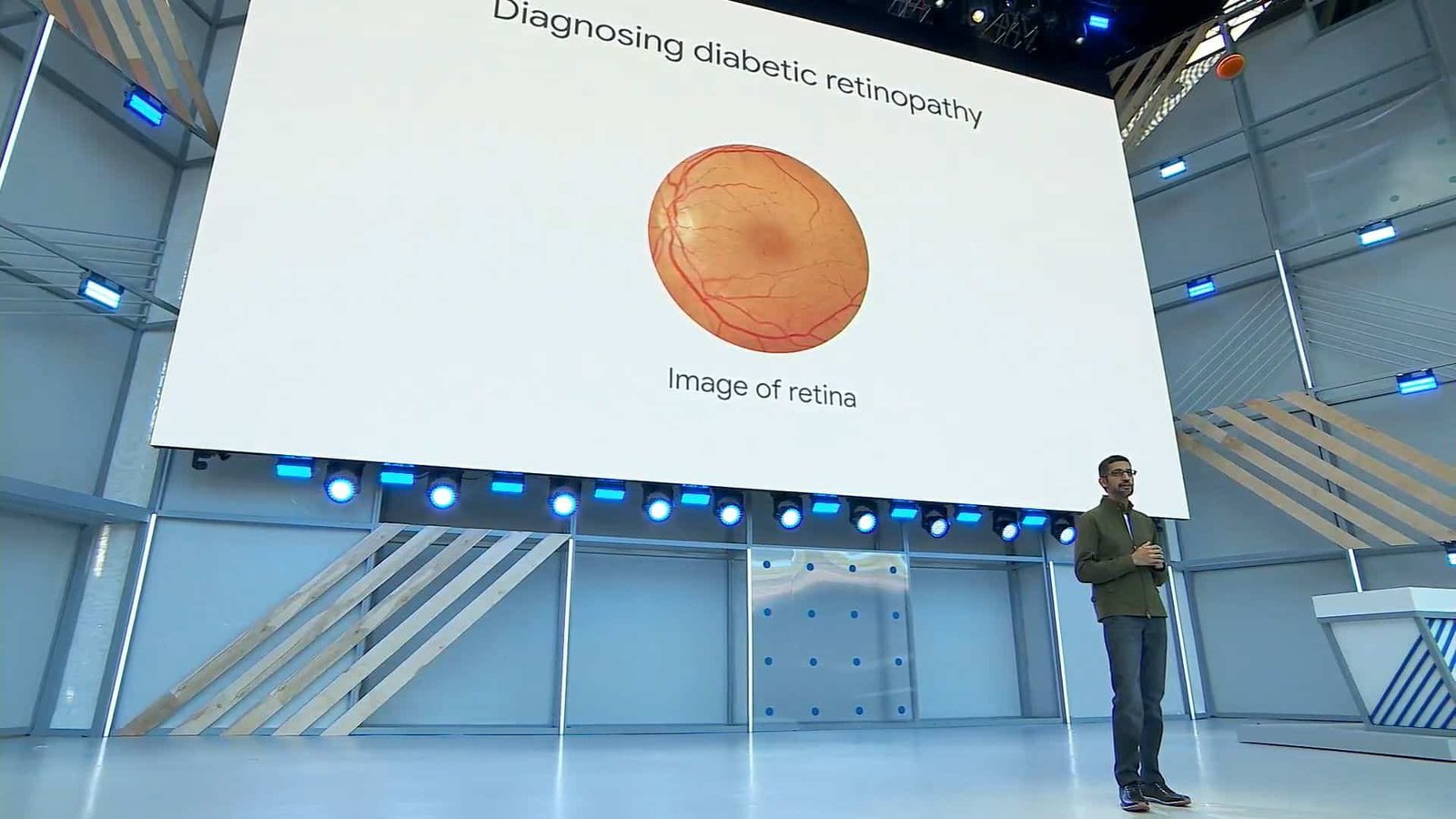
    Google’s Artificial Intelligence (AI) diagnosis of diabetic retinopathy (a leading cause of blindness) has shown things in the retinal scans that “human beings didn’t know to look for”, according to CEO Sundar Pichai. The AI eye scans hold information with which Google can predict the five year risk of someone having a heart attack or a stroke.

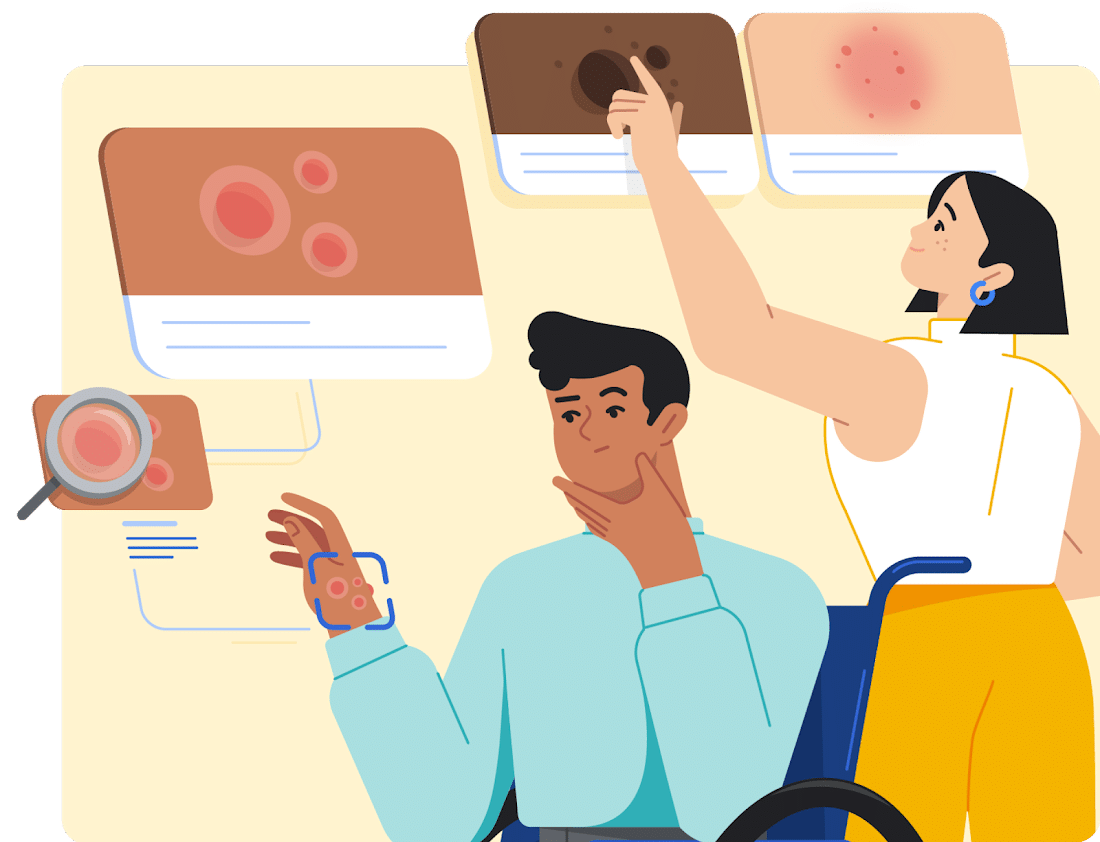
    At last year’s Google IO, CEO Sundar Pichai announced GoogleAI, a culmination of the company’s efforts to bring the benefits of AI to everyone. DermAssist, Google’s AI program that detects and provides diagnosis for skin conditions, will be available on Google browser by the end of this year.

    Google had also been running field trials across hospitals in India, where Google used deep learning to help doctors diagnose diabetic retinopathy. Pichai says the field trials have been going very well, with AI offering expert diagnoses to places where trained doctors are scarce.

    As luck would have it, the very same eye scans that have helped successfully diagnose diabetic retinopathy also hold vital information that GoogleAI could use to predict the five year risk of an individual having an adverse cardiovascular event.

    Although the idea of looking into someone’s eyes to diagnose the condition of their heart sounds unusual, it actually draws from established research. The rear interior wall of the eye (the fundus) is full of blood vessels that reflect the body’s overall health. Information such as someone’s age, their biological sex, whether or not they smoke, their BMI and systolic blood pressure is readily available to doctors through a simple eye scan.

    According to Pichai, this could be the new basis for a non-invasive way of detecting cardiovascular risk. He says Google will be working with their partners to field trials.

    Another exciting AI-health related development is that AI can help in the prediction of medical events. Machine learning can go in and analyse over 100,000 data points per patient (obviously, more than one doctor could ever do), and then quantitatively predict the chance of readmission 24-48 hours to advance. This is hugely beneficial as it gives doctors more time to act.

  • Too lazy to try on? Google’s new AI shopping feature allows you to try clothes before buying

    Too lazy to try on? Google’s new AI shopping feature allows you to try clothes before buying

    Google has recently introduced a new shopping feature with the help of Artificial Intelligence (AI) which is currently only available to customers from the United States. With the help of images from real models that range in sizes from XXS to 3XL, the feature will allow customers to check sizes of clothes from all kinds of brands such as H&M, Anthrpologie and more.

    Through this feature, users can scroll through different body sizes, hair, ethnicities and skin tones, to find the one that resembles their own appearance and save it as their default virtual representation, thus making shopping much more easier.

    Verge reports that Google designed the feature to help shoppers who were disappointed with their online shopping experience, referencing to data that shared that 59 per cent users who used online shopping were disappointed with their clothing purchase because it looked quite different on their bodies as compared to what they expected it to be, while 42 per cent customers revealed that they did not find clothes fit to their taste.

    Google further added that although currently there is a selection of brands that allow this virtual try-on experience, soon it will expand to include men’s clothes and other apparel as well by later this year.

    Verge also adds that new filters will be added to Google Shopping like machine learning or visual matching algorithms which will allow customers to purchase cheaper alternatives similar to the clothes they are looking for across various clothes platforms.

  • Google’s skin search app to be launched in 2023

    Google’s skin search app to be launched in 2023

    In its 2023 Keynote, Google announced its CE marked Class 1 Medical Device DermAssist. It is a guided skin search app that helps users find personalized information about skin concerns through a fast and simple process.

    After receiving billions of skin-related searches each other, Google used its expertise in organizing information, artificial intelligence, and collaboration with partners to build DermAssist.

    How does it work?

    The process is simple: you upload up to three photos of your skin, hair or nail condition from different angles. Then you answer a few short questions about your symptoms, and DermAssist does the rest.

    Trained using millions of skin images, DermAssist can identify 288 skin, hair, and nail conditions and can identify more than 90% of the most commonly searched-for skin conditions. Furthermore, Google assures that DermAssist is being developed to work accurately across all skin tones, skin types, and more.

    Google’s research demonstrates that the underlying technology can help clinicians better identify skin conditions across all populations.

    DermAssist is the culmination of years of machine learning research, dermatologist-reviewed content, user testing, and product development.

    Would you keep going to a dermatologist once DermAssist is available on your Google browser?

  • This resurfaced advertisement about partition from Google India is moving Twitter to tears

    This resurfaced advertisement about partition from Google India is moving Twitter to tears

    An advertisement titled ‘Reunion’ made by Google India in 2013 has resurfaced on Twitter. The ad was about two long lost friends from India and Pakistan who are reunited with the help of their grandchildren.

    The advertisement revolves around two grandchildren who listen to their grandfathers recall being friends and living in Lahore, until partition took place, driving them apart. The grand daughter from India then tries hard to connect with the friend from Pakistan, and books tickets to get the two to unite.

    A twitter thread by an Indian twitter user asked followers about the best advertisements they had ever seen. In reply, a user shared the ad, moving Twitter to tears.

    The partition between India and Pakistan is still like an open wound. It is nice to remember that despite political tensions between the two countries, people remain united by love.

    “This never fails to bring a lump in my throat and moisten the eyes,” wrote a user.

    “Actual tears rolling down my eyes.” wrote another user.

    “Now why is Google making me tear up on a Friday afternoon”.

  • Google’s Bard is a more powerful, accurate AI chatbot than ChatGPT

    Google’s Bard is a more powerful, accurate AI chatbot than ChatGPT

    Google has opened up access to Bard, its AI-powered chatbot, to English speakers in many parts of the world. The waitlist for access to the chatbot has been removed after two months of limited testing.

    Some people believe that Bard is simply a clone of ChatGPT, but this is not the case. Bard is much more advanced than ChatGPT, as it has access to the latest news and events. This allows Bard to provide more comprehensive and informative responses to users’ questions.

    Bard and ChatGPT 4 are both large language models, also known as conversational AI or chatbots. They are trained on massive datasets of text and code, and they can communicate and generate human-like text in response to a wide range of prompts and questions.

    However, there are some key differences between the two models.

    Bard

    1. Bard is trained on a massive dataset of text and code that includes information from the internet. This gives Bard a wider range of knowledge to draw from, and it allows Bard to answer questions in a more comprehensive and informative way.
    2. Bard is also able to access and process information from the real world through Google Search. This gives Bard a real-time view of the world, and it allows Bard to keep its answers up-to-date.
    3. Bard is designed to be informative and comprehensive. It is trained on a massive dataset of text and code, and it is able to access and process information from the real world through Google Search. This gives Bard a wide range of knowledge to draw from, and it allows Bard to answer questions in a comprehensive and informative way.

    ChatGPT 4

    1. ChatGPT 4 is trained on a massive dataset of text, but it is not trained on information from the internet. This means that ChatGPT 4 has a more limited range of knowledge, and it may not be able to answer questions as comprehensively as Bard.
    2. ChatGPT 4 is also not able to access and process information from the real world. This means that ChatGPT 4’s answers may not be up-to-date.
    3. ChatGPT 4 is designed to be creative. It is trained on a massive dataset of text, and it is able to generate human-like text in response to a wide range of prompts and questions. This makes ChatGPT 4 a good tool for generating creative content, such as poems, code, scripts, musical pieces, email, letters, etc.

    Bard and ChatGPT 4 are both powerful large language models. They can both communicate and generate human-like text in response to a wide range of prompts and questions. However, Bard has a wider range of knowledge, it is able to access and process information from the real world, and it is designed to be informative and comprehensive. ChatGPT 4 is designed to be creative. Ultimately, which model is better for you depends on your needs.

    It is currently unknown whether Bard will remain free. Google has not made any announcements about its plans for Bard’s pricing model. However, it is possible that Google may choose to make Bard a paid service in the future. This is because Bard is a very powerful and versatile tool that could be used for a variety of purposes, such as generating content, writing code, and translating languages. As such, Google may believe that it can charge a premium for access to Bard.

    On the other hand, Google may also choose to keep Bard free. This is because Google has a history of providing free access to its products, such as Gmail and Google Drive. Additionally, Google may believe that making Bard free will help to promote its other products and services.

    Ultimately, it is up to Google to decide whether Bard will remain free or not. However, it is likely that Google will make a decision about Bard’s pricing model in the near future.

  • Pixel Fold: Google’s first foldable phone to be unveiled next week

    Pixel Fold: Google’s first foldable phone to be unveiled next week

    Google will be introducing its first foldable phone, called the Pixel Fold, during the Google I/O 2023 event next week. The phone has a full-size outer display, which folds out similar to Samsung’s Galaxy Z Fold devices. While specifications for the Pixel Fold have not been announced, leaked marketing materials and a hands-on video show a triple camera setup, including a periscope lens similar to the Samsung Galaxy S23 Ultra.

    The Pixel Fold is expected to be a 5.8-inch phone that folds out into a 7.6-inch tablet, with a Google Tensor G2 processor paired with 12 GB LPDDR5 RAM. The phone is 10 ounces in weight and has the “most durable hinge on a foldable.” The outer display will measure 7.6 inches with a resolution of 2208×1840 pixels, with both panels capable of achieving a maximum refresh rate of 120 Hz.

    The rear camera setup will feature a 48 MP main shooter with an f/1.7 aperture, a 10.8 MP telephoto with five times optical zoom, and a 10.8MP ultra-wide with an f/2.2 aperture. While the official price has not been announced, it is expected to be over $1,700, similar to Samsung’s latest foldable, the Z Fold 4, which launched at $1,799.

    The Pixel Fold was expected to launch last year but did not make the cut for I/O in 2022. However, rumors about the launch have persisted, and Google has been focusing on teaching Android developers to make their apps operational on larger screens and foldable devices. In addition to the Pixel Fold, Google has also announced plans to launch a new Pixel device in India, likely the Pixel 7a.