Tag: #google

  • Celebrating Manto

    Celebrating Manto

    Pakistan is celebrating the 108th birth anniversary of renowned Urdu short story writer Saadat Hasan Manto. His birthday is trending at number one on Twitter and Google even honoured the writer with a doodle.
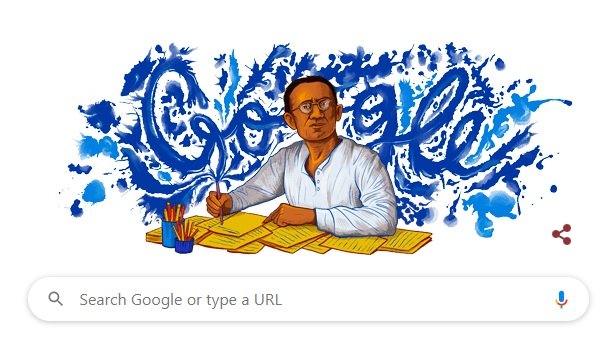
    The doodle was designed by artist Shehzil Malik, who took to social media to share the news. Talking about the late author, Malik said, “I’m a big fan of Manto. He is a hero to me for pushing the envelope in Pakistan through his art (which I try to do and often get in trouble) so this is the perfect assignment! His stories are dark, beautiful, brutal, honest; once you read them, you can’t forget them. He used his words as a mirror to society, to speak truth to power, and would not back down in the face of intimidation.”

    https://www.instagram.com/p/CACNqLjACa3/?utm_source=ig_embed

    Meanwhile, people from Pakistan, as well as India celebrated the acclaimed writer and his words on Twitter.

    About Manto

    Manto was born in Ludhiana, British India on May 11, 1912. The writer spent his life in Bombay before shifting to Lahore after the Partition. Though he was already an acclaimed name before the Partition, it was his vivid and intense stories on the partition that earned him critical acclaim. Manto produced 20 collections of short stories, five collections of radio dramas, three of essays, two of sketches, one novel and a clutch of film scripts. He wrote about sex, desire, alcoholics, prostitutes which led to him being charged with obscenity six times – thrice in British India before 1947, and thrice in Pakistan after. Despite this, he received the Nishan-e-Imtiaz from the Government of Pakistan.

    Some of his most praised works include Thanda Gosht, Khol Do, Toba Tek Singh, Iss Manjdhar Mein and Babu Gopi Nath.

    Manto’s life and works have also been adapted into two feature films: one by Sarmad Khoosat and another by Bollywood filmmaker Nandita Das.

    Manto passed away on January 18, 1955, in Lahore at the age of 42.

  • The Current wins Google’s innovation challenge, becomes only organisation from Pakistan to secure funding

    The Current wins Google’s innovation challenge, becomes only organisation from Pakistan to secure funding

    Pakistan’s fastest-growing digital media start-up, The Current, has won the Google News Initiative (GNI) Innovation Challenge, becoming the only media organisation in the country to have secured the coveted spot and that too within just a year of its launch.

    Under the challenge, Google received applications from over 255 news organisations and technology companies from across the Asia Pacific, including media giants like Japan’s Nippon Television Network, out of which 18 were selected to receive $2.3 million in funding.

    The first round of the challenge focused on diversifying revenue and saw dozens of examples of creative new approaches. The applicants were asked for proposals to increase reader engagement, which ultimately leads to greater loyalty and willingness to pay for content.

    The 255 strong submissions revolved around topics like user-generated content, community management, fact-checking and the use of technologies such as machine learning to tackle business challenges.

    As part of the project, The Current will develop a membership model that will be the first of its kind in Pakistan — with three levels of membership provided for its most avid followers. The plan is to provide content and training that members want, and also test a viable alternate stream of revenue for digital news startups.

    The challenge had been won by Jang Media Group in Pakistan last year. As part of the project, the media organisation developed state-of-the-art Artificial Intelligence (AI) and Augmented Reality (AR) platforms for digitising its historical news archives. The project was similar in scale and ambition to the New York Times collaboration with Google in transforming its archives.

    Here’s what you should know about the selected projects from 2020 and the previous years.

  • Coursera to give 3,800 free courses to unemployed people

    Coursera to give 3,800 free courses to unemployed people

    Coursera — an online learning platform — will be making 3,800 courses free for people who have lost their jobs due to the ongoing COVID-19 pandemic and the consequent global economic crisis, a private media outlet reported.

    “We are proud to announce Coursera Workforce Recovery Initiative to help governments worldwide provide unemployed workers with free access to 3,800 online courses,” a statement read.

    The objective of the initiative is to support affected workers in developing knowledge and skills to get employed again.

    These free courses are covering skills like business development, information technology (IT) and data science skills, and they are taught by the world’s leading universities, including the University of Illinois at Urbana-Champaign, Duke University, University of Michigan and Yale among others.

    Courses on professional certifications like Google IT support, IBM Data Science, or Date Engineering with Google Cloud are also available to train people for high-demand jobs.

    This step towards public and private sector partnerships is imperative, and various government leaders have made the initiative available to their respective states and countries.

    Earlier, Google and YouTube also launched new resource pages to help teachers and families continue to educate students under quarantine.

    Coursera works with universities and other organisations to offer online courses, specialisations and degrees in a variety of subjects, such as engineering, data science, machine learning, mathematics, business, computer science, digital marketing, humanities, medicine, biology, social sciences and others.

    Coursera was founded in 2012 by Stanford University computer science professors Andrew Ng and Daphne Koller.

    Princeton, Stanford, the University of Michigan and the University of Pennsylvania were the first ones to offer content on the platform.

    Offerings have since expanded to include specialisations — collections of courses that build skills in a specific subject — as well as degrees and a workforce development product for businesses and government organisations.

  • Google is helping Pakistan fight coronavirus, here is how.

    Google is helping Pakistan fight coronavirus, here is how.

    According to Pakistan Telecommunication Authority (PTA) press release, Google has introduced various features and tools to facilitate the operations of telecommunication networks to promote learning and access to authentic information in Pakistan.

    The platform has given the Pakistani government an ad-inventory to disseminate accurate information on time.

    Moreover, Google has shared tips and resources for remote workers and students so that they can improve the quality of work and ensure productivity.

    Google has allowed free access to advance ‘Google Hangout’ which means the users will be able to put 250 participants on audio and video calls so the entire class can attend lectures. The participants can record the lectures and save it in google drive so when they cannot join, they can access the lectures when needed.

    Google has also launched a speech-based reading app “Bolo” — based on machine learning — to help children read aloud confidently, using their voice. The app is available in the Urdu language as well.

    Apart from these tools and resources, they have ensured measures to combat misinformation. Google has also attached ‘SOS Alert” banner with news from mainstream outlets and information from recognised health organization such as the World health organization (WHO) and National Institute of Health (NIH).

    These hubs provide a comprehensive overview of the pandemic, information about its symptoms and measures, as well as current statistics and answers to common questions.

    These necassary measures taken by the company because search interest in COVID-19 has continued to climb across the world. At present, this is the most researched topic in the world so it is necassary to curb fake news and misinformation.

    In addition to launching new features on the search engine, the platform has rolled out a website—available at google.com/covid19 — focused on education, prevention and local resources.

    People can find state-based information, safety and prevention tips, search trends related to COVID-19, and further resources for individuals, educators and businesses.

  • Google, Facebook and Twitter threaten to shut services in Pakistan

    Google, Facebook and Twitter threaten to shut services in Pakistan

    When PTI’s government unveiled some of the world’s most sweeping censorship rules for the internet, global internet companies like Facebook, Google and Twitter threatened to shut services in the country, a step which would leave 70 million internet users in digital darkness, New York Times reported

    Through the Asia Internet Coalition, they wrote a letter to Prime Minister Imran Khan, warning him that “the rules as currently written would make it extremely difficult for AIC Members to make their services available to Pakistani users and businesses.”

    READ MORE: Punjab govt’s first-ever digital payment method collects Rs1 billion

    This undemocratic policy of PTI’s government faced severe backlash from rights groups forcing the government to retreat. Pakistani officials, this week, pledged to review regulations by doing a broad-based consultation process with all relevant stakeholders of civil society and technology companies.

    Pakistan’s digital censorship law will give power to the government to take-down a wide range of content. These laws can be easily abused by the powerful if they consider any sort of content harmful, distasteful or simply a threat to their interests.

    The unified resistance by Facebook, Google, Twitter and other tech companies in Pakistan is highly unusual. Companies often protest these types of regulations, but to leave a country is very unusual. Google pulled its search engine out of China in 2010 rather than submit to government censorship of search results.

    READ MORE: OGRA to drastically cut down petrol prices

    Under the new regulations, formally known as the Citizen Protection (Against Online Harm) Rules 2020, social media services must remove or block content within 24 hours of a request from a newly appointed officer, called the national coordinator.

    Companies must also prevent the live-streaming of any type of content the authorities say is objectionable.

    In addition, the companies must open permanent offices in Islamabad and set up servers to store data in the country. Violations of the law are subject to fines of more than $3 million, with the authorities even empowered to block services entirely.

    READ MORE: Christian youngster killed for ‘polluting’ tube-well water by bathing in it

    The new laws are a direct threat to the digital economic future for Pakistan. This will also decrease freedom of expression, increase censorship and diminish digital rights.

    What is interesting to note is that PM Khan rose to power in Pakistan in 2018 largely because of his party’s strong presence on social media. But now that he is in charge, and he is very intolerant towards online criticism.

    Pakistan’s powerful military is also averse to debates on social media platforms, especially on Twitter, which is used by critics to question human rights violations and Pak-military’s involvement in politics.

  • Facebook CEO shares views on social media regulations

    Mark Zuckerberg, the chief executive officer (CEO) of Facebook, has said that the social media giant is working to counter online election interferences, Business Recorder reported.

    According to reports, Mark, while speaking at the Munich Security Conference in Germany, said that so far there were no well-defined rules to regulate social media, however, the subject had been brought to debate for privacy and security reasons.

    Read more: WhatsApp reaches 2 billion users

    In his opinion, social media should be regulated with a system somewhere between the existing rules used for telecommunication and media industries.

    “Right now there are two frameworks that I think people have for existing industries – there’s like newspapers and existing media, and then there are the telecommunication type models, which is ‘the data just flows through you’, but you’re not going to hold a telecom responsible if someone says something harmful on a phone line.”

    Read more: PTI’s new social media laws: Are you in some sort of danger?

    “I actually think where we should be is somewhere in between,” he said.

    Facebook and social media giants including Twitter and Alphabet’s Google have come under increasing pressure to better combat governments and political groups using their platforms to spread false and misleading information.

    Read more: The inconvenient truth about Pakistan’s economy

    Mark maintained he had employed 35,000 people to review online content and implement security measures to counter fake news and privacy protection.

  • Chinese phone makers: A big threat to Google Play

    China’s top smartphone makers Huawei, Oppo, Xiaomi, and Vivo have collaborated to build a shared platform to compete with Google’s Play store, latest reports have revealed. The move is believed to be a direct threat to the $1 trillion parent Alphabet company and the de-facto US dominance of Android.

    Manufacturers in China rely on Android to run their devices but they use domestic app stores inside China, where Google services are blocked. Chinese manufacturers have continued to reply to pre-installed Google Play, offering the users the most popular social apps like Facebook and WhatsApp that are not available for download in China.

    The four Chinese handset makers together shipped around 40pc of the world’s smartphones in the fourth quarter of 2019.

    They will now let foreign app developers like Facebook upload and update the software to all the respective stores, through the new platforms, with a single click.

    If this initiative materializes successfully, this will create a new universe of apps which will be in direct competition with Google Play Store.

  • Coronavirus causes fright for Indian phone, carmakers

    Coronavirus causes fright for Indian phone, carmakers

    Coronavirus outbreak in China could start to disrupt India’s production of smartphones. This spread can delay component shipments that are important for the production of smartphones, reports have said.

    India is the world’s biggest smartphone maker after China but is still largely dependent on China for supplies of parts such as cells, displays panels, camera modules and printed circuit boards.

    “Those disruptions were already planned but if it gets prolonged, for March and April, production will have serious trouble,” said S N Rai, the co-founder of homegrown smartphone maker Lava.

    China’s OnePlus said its Indian operations could manage, in the short term at least.

    “We are well covered because we have the entire production in India, we already have enough stock, and even going forward many of the components will anyway be coming directly from other markets,” said Vikas Agarwal, the India head of OnePlus.

    However, Beijing has expressed confidence in uprooting the “devil” virus that has been declared a global emergency by the World Health Organization (WHO).

    Giants like Alphabet Inc’s Google and Sweden’s IKEA have closed operations in China.

    India’s Tata Motors, which counts China as a major market for its luxury Jaguar Land Rover cars, said on Thursday it was worried about the coronavirus and warned that the outbreak could impact productions and profits.

    For now, the industry just hopes the outbreak can be contained within the next two weeks. “If the problem persists beyond February 10, we have a real problem at hand,” said Pankaj Mohindroo, head of the India Cellular & Electronics Association, an industry lobby group.

  • TikTok beats Facebook to become second most-downloaded app in world

    TikTok beats Facebook to become second most-downloaded app in world

    TikTok, a video-sharing social networking app, has beaten Facebook to become the second most downloaded app in the world in 2019. The platform owned by China-based ByteDance came second to Whatsapp in terms of downloads.

    As per market analyst Sensor Tower’s ranking, both TikTok and its Chinese counterpart Douyin amassed a total of 740 million downloads in 2019. The reports consist of worldwide downloads for Google Play Store, iPhone and iPad. They, however, did not include data from Apple apps, pre-installed Google apps and Android downloads from third-party stores based in China.

    The company is making efforts to monetize the app, it had a successful year in terms of revenue grossing over $176.9 million in 2019.

  • Google Maps leads people to the middle of nowhere

    Google Maps leads people to the middle of nowhere

    No matter how much we rely on Google Maps, it is not always 100% accurate. Approximately 100 people ended up in the middle of nowhere in Denver, Colorado after Google Maps directed users to take a detour.

    According to the CNN, about 100 drivers trying to avoid a traffic jam near Denver International Airport ended up on a muddy road after Google Maps provided users with a detour. Some vehicles couldn’t make it through the sludge, and dozens became trapped behind them.

    Google said the road was not marked as private. They added, “While we always work to provide the best directions, issues can arise due to unforeseen circumstances such as weather. We encourage all drivers to follow local laws, stay attentive, and use their best judgment while driving.”

    Hence proven, Google is not 100% reliable. Think twice before you take that detour or tell your Uber or Careem driver to follow the map. And if you’re short of time, don’t even think about it.