“The curious case of this city is that it is administered by a mix of federal and provincial controlled landholding associations, cooperative housing societies, military-run cantonments, the navy, the railways and the industrial area authorities to name a few.”
A commercial port city with more than 20 million residents, Karachi has continued to suffer decades of civic mismanagement, gaps in urban planning and development given the lack of adequate governance, corrupt civic agencies and political parties vying for power. None of the myriad agencies that control resources and management in this city have honestly bettered the city and the lives of its people.
Take the tussle between the PPP and the MQM that has not only brutally destroyed the socioeconomic fabric of districts such as Lyari, a sprawling slum settlement turned into a hotbed of violence, guns and drugs when rival gangs were patronised by the city’s two political parties, but also resulted in turf wars affecting the running of civic institutions. The political bifurcation of jurisdictions within this city has, therefore, resulted in a complete breakdown of basic service provision over years – lack of clean drinking water, electricity, housing, security are just a few municipal services that should be under the local government system but this is not the case. Even an elected mayor has no jurisdiction over certain areas of this city. When a city’s history is rooted in ethnic and identity-based politics building urban infrastructure, providing municipal services, or even intervening in areas that are essentially administered by a particular political party is near to impossible.
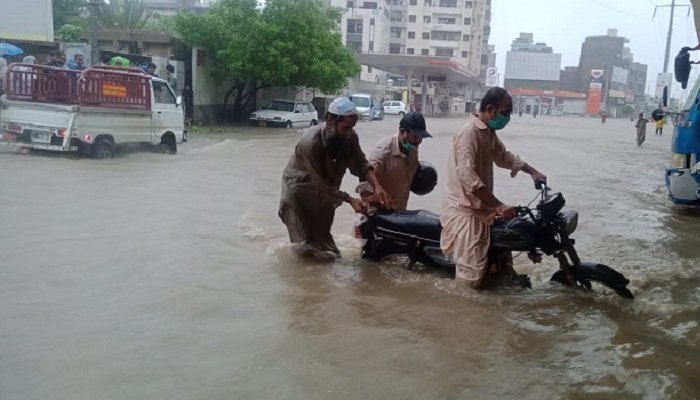
Last week, Karachi was submerged in 230mm of rainfall in less than 12 hours, the most ever recorded, according to the Pakistan Metrological Department, exposing again glaring gaps in urban development, especially in low-income and vulnerable communities. Wealthy residential areas were not spared where drainage channels were choked. One such densely populated urban settlement with poor access to water and sanitation, Lyari is located about 15 minutes from the city’s business hub at I.I. Chundhrigar Road where you’d find most of the banking sector is headquartered. Streets were inundated with rain and sewerage water for days and later cleared up by residents because no government assistance reached these communities. Similarly, homes, businesses and streets in the city’s old quarter of Kharadar – a symbol of pre-colonial history which becomes the centre for Muharram processions (near Mithadar where the Edhi main office is located and adjacent to Jodia Bazaar) – literally drowned in a mix of rain, putrid sewerage water and floating garbage, increasing the risk of diseases, such as dengue and malaria. Some commercial/residential areas remain flooded with no electricity almost a week after the downpour in this city; sewerage water has collected in empty plots according to residents in different areas of Karachi where gutters are broken.
First let’s be clear here: vulnerable neighbourhoods with already inadequate urban and social infrastructure have long been neglected by the ruling political powers and whomsoever authority is in charge of a given district. Then, the urban poor in Karachi are like none other. I recently read on Twitter: ‘The Lebanese people are like kids who’ve had to raise themselves because the parents were never around to take care of them.’ Now apply that to Karachi and it makes sense. Migration from rural to urban, and from the north has meant living in overcrowded, unsafe environments with little access to education, health, or sanitation, and with the COVID-19 crisis having reduced livelihood opportunities even further because of mobility restriction and decreased economic activity, natural disasters have the potential to decimate lives and homes. So why no focused body that can fix Karachi? The curious case of this city is that it is administered by a mix of federal and provincial controlled landholding associations, cooperative housing societies, military-run cantonments, the navy, the railways and the industrial area authorities to name a few. Many question the absence of the relevant authorities responsible for civic provisions, such as drain clearing before the annual monsoons, sewerage repairs and garbage collection. In fact, it was army personnel, volunteer rescuers, and even volunteers from the Islamist group Tehreek-e-Labbaik who rescued and evacuated people from many inundated residential neighbourhoods — some using boats for rescuing residents living in the newly constructed Naya Nazimabad area while some families waded through waist-high water.
Floating cars and destroyed homes: an apocalyptic sight
Moreover, substandard construction in the city and informal settlements, built close to water draining channels or nullas, were perilously flooded or sunk during these rains given their poor physical infrastructure. This kind of urban flooding is to be expected as climate patterns change experts warn. And we have witnessed urban flooding in the past in Karachi. Warnings from the late Perveen Rahman, Orangi Pilot Project’s director, of the possibility of urban flooding if the mangrove plantation was removed on either side of Mai Kolachi because it served as a catchment area that could prevent flooding, were never heeded.
The human toll of the recent rain tragedy has left Karachi’s residents reeling with more anger than ever and rightly so. I use the term tragedy here because rain in Karachi is hardly romantic or calls for a relaxing cup of tea and pakoras – rather it’s become synonymous with loss of lives, homes and livelihoods that could have been avoided had the concerned authorities prioritised rain preparations by declogging stormwater drains beforehand or constructing drainage facilities where none exist. Hundreds of people were forced to take shelter in the homes of relatives while scores of cars and other vehicles caught in the torrential downpours either remained submerged in water, many seen floating away as the water began flowing akin to a river developing rough currents. Scenes captured and shared as photographs and videos on social media were as if this city had been hit by a passing meteor and destroyed with a vengeance. Main thoroughfares and all seven newly constructed underpasses were submerged under several feet of water; children and motorcyclists drowned in waterlogged underpasses; young men slipped into storm drains (nullahs); 21 bodies were pulled out of just one water channel near Korangi; cars were seen stranded or floating everywhere in the city; underpasses resembled swimming pools turned nasty, and electricity was cut in areas for over five days to save people from getting electrocuted because this city has a surplus supply of unnecessary wires dangling on electric poles or lying unattended on roads and pavements. All this while empty shipping containers placed to block streets during the ninth and tenth of Muharram were seen dangerously floating down Zaibunissa street in Saddar jostling calmly for space with cars and buses. In the case of a police van caught in moving water currents on the main Sharah-e-Faisal thoroughfare that leads to Jinnah International airport – images of which went viral on social media – around five policemen were rescued by passersby who threw a rope ladder at them. Where were the authorities, the rescue services other than volunteers such as Edhi and Chippa to help in this disastrous monsoon deluge is a question we need to ask the provincial/federal government.
And it was not just Karachi that witnessed the monsoon rains this year but images from the interior of Sindh are heartbreaking – entire villages have drowned, mud homes entirely washed away with families having lost their meagre belongings, hungry children huddled together under the open skies – and these are communities that persistently suffer from drought, malnutrition, lack of healthcare, unemployment. Again, why has this government neglected its most vulnerable people needing protection, shelter and food? According to the NDMA, troops using boats evacuated 300 people from the rain-hit district of Dadu in Sindh, while 1,245 people were evacuated from Karachi’s rain-hit areas last week, where residents lost their life’s savings when businesses were destroyed and homes flooded with sewerage water, especially where the city’s outdated drainage and waste systems were overwhelmed by an unprecedented spell of heavy rain. That is not to say urban flooding was unexpected. Although flood warnings were issued, it appears authorities in charge of overseeing the city’s basic services and infrastructure were at their usual lethargic best without formulating any kind of preemptive response.
When DHA drowned in sewerage water
This year’s monsoon rains did not distinguish between slum settlements and the wealthy Clifton and Defence Housing Authority (DHA) neighbourhood. Given DHA is a housing authority for the rich and famous, in the aftermath of these rains that didn’t appear so – the sprawling area that comprises DHA was inundated with water as aerial views shared on social media revealed not a dry patch. Originally founded in 1953 as Pakistan Defence Officers Housing Authority, Zia-ul-Haq passed a Presidential Order in 1980 to create DHA, a civic authority run by the powerful military controlling five per cent of urban land in this city. It is a private enterprise given a governing body run by chiefs of defence institutions, essentially administered by serving brigadiers under the direct command of corps commanders. It was decided then that DHA would have its own rules and essentially not adhere to the local government system that oversees the municipal provisions of the city. This Presidential Order divided the Karachi Cantonment – the southern side named Clifton Cantonment that was given DHA Phase 1. In other words, DHA and Cantonment Board Clifton (CBC) do not come under the mayor of the city who cannot control the drainage, water supplies and planning for this area.
Residents from DHA, one of the largest landholding bodies in this city, were hard hit this year when scores of houses were flooded in the city’s posh district home to politicians, ministers, entrepreneurs and industrialists. No one from this authority emerged to apologise for the putrid mess that was open gutters and collected rainwater measuring over five feet in certain areas and no one attempted to provide assistance for those vulnerable residents trapped in their homes without electricity, food, water and medicine; some even at the risk of drowning. Many took to twitter cussing the electricity supplier, the Sindh government and the DHA authorities, as they witnessed green streets drowning mercilessly with such rainwater intensity that gated homes were left in utter disarray; heavy metal gates flung wide open with currents of the free-flowing water, expensive cars floating aimlessly or submerged and basements of homes flooded with expensive paintings and books destroyed in some homes. The urban middle-class deprived of basic amenities, clean water and electricity for years intermittently, say they watched this side of the Clifton bridge as they term the elite, drowning and waited for a reaction. The point being if you pay your taxes, water taxes included, and get nothing in return, because you’re compelled to buy your water, electricity and security, something has to give – and these rains meant no one was going to sit back and take the callousness suffered over years.
Residents mobilised over Facebook and protested outside the office of the CBC, DHA’s sister organisation, to register their anger at having paid taxes for years but not having received any services, such as solid waster management disposal – the city actually has no plan for waste disposal – or running water without having to purchase water tankers and pay a whopping Rs 7,000 for one tanker. Furthermore, the stormwater drains clogged with garbage in DHA and elsewhere in the city, have not been removed as a preemptive move before the summer rainfalls. Hundreds of residents protested outside the offices of the CBC demanding the authorities clear the water hours, and present their audit for the past five years. Despite a legitimate right to protest, the organisers are now faced with police charges for rioting — and for shaking the CBC head out of his lethargic stupor. Fed-up with the city administration, other protests happened, in the days to follow, including all Karachi residents irked by years of neglect. A friend who said she’d stopped the water from seeping into her dining room and flooding her house, calling the city a disaster zone, a death trap. I can’t worry unless something hits me in the face, she said. Or else I’d die of anxiety. And I forgot to mention if you have a generator, which most Karachiites at home and for their businesses would do, finding a petrol station at 4 am was a nightmare when you ran out of petrol or diesel.
In certain residential and commercial areas of this city, even as I write this, electricity is yet to return; roads are filled with water, and sewerage, despite the Sindh government’s representatives, including the chief minister rolling up their sleeves and supervising water drainage. Draining the water from main roads has largely been left to volunteers and the Sindh government (read Sen Murtaza Wahab’s twitter updates) when the concerned authorities were unable to move in swiftly and do their job. Businesses have been gutted; supplies worth hundreds of thousands lost all over this destitute city, but who is listening to these troubles? Who will work or represent the interests of this city and its people? All of Karachi deserves greater attention because it has suffered years of neglect and economic hardship despite generating maximum revenue. No city can function with multiple agencies and multiple service provision jurisdictions. According to a paper on landownership in Karachi authored by Arif Hasan, Noman Ahmed and others, this city is governed by 13 different land management authorities which resultantly means no consensus is achieved and there is no coordinating mechanism, because of clashing interests. Over the years this has translated into a lack of low-income housing, amenities and utilities.
Making Karachi liveable
So while it is critical for megacities like Karachi where urban sprawl has not been able to keep up with the growing population needs to focus resources on immediate management and response to natural disasters or an urban crisis, attention must be paid to how long-term measures can be implemented to build a more sustainable and liveable city. This approach is imperative after an intensely destructive monsoon season countrywide that has revealed how unprepared and clueless we are when it comes to managing disasters of this unprecedented scale – natural disasters intensifying over the years as unusual weather patterns emerge clearly warning of the impact of climate change (Karachi’s extreme heatwave in 2015 is yet another example) If climate change is not addressed adequately by this government, without a disaster management infrastructure and expertise to match, severe weather will cause loss of lives and livelihood. Mitigating the effects of climate change (on agriculture, for example) is imperative, especially in vulnerable areas, rural districts in Sindh, even KP and Balochistan, where the capacity to sustain climate change shocks is non-existent, and where disaster prevention is unaddressed.
Karachi’s woes require a serious reorganisation of administrative duties so whomsoever civic agency is responsible gets the job done without political and commercial interference (especially in the use of land to their own advantage) while keeping at the fore the impact of climate change (droughts, floods, rain intensity will adversely affect water and food security in the near future) Governance must no longer be compromised because of conflict between stakeholders at the expense of the people. Strengthening local bodies is critical. As a party, the PPP has never allowed for that because it becomes a political issue whereas the PML-N gets voted on its governance track record in Punjab, so it must keep to a standard when it comes to civic services.