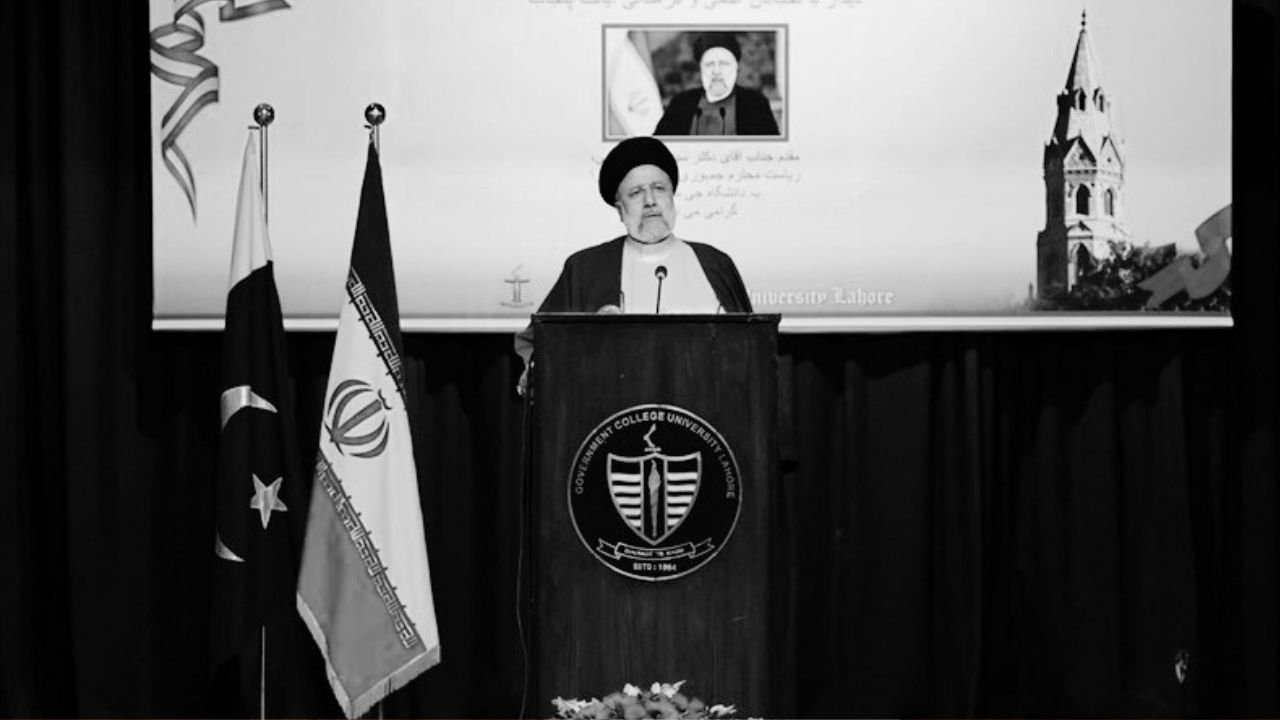
Ebrahim Raisi is no more. Newspapers and various other outlets have published countless obituaries both coming from the tainted western lens and that of religiously coloured frame. I, on the other hand, want to present an account of listening to Raisi’s speech once and was inspired by the depth of his words and the resolution in his tone.
“If Israel violates the sovereignty of the Iranian state again, the reaction will be different and who knows the Zionist regime will not exist,” the one who said these words is now buried in a freshly dug grave in Mashhad but certainly not forgotten.
Ebrahim Raisi (1960-2024) said these words in front of the students and teachers at Government College University Lahore, my alma mater. It was surreal, to witness a head-of-state speak in the prestigious Bukhari Auditorium. While the security and arrangements made it all very unapproachable, when he arrived it was warm and almost palpable.
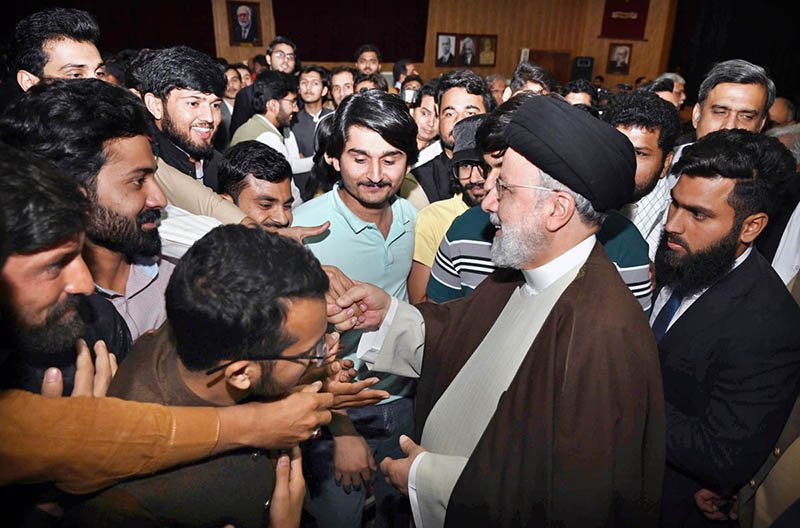
LAHORE: April 23 – President of the Islamic Republic of Iran Dr. Seyyed Ebrahim Raisi shaking hand with students during his visit the Government College University (GC) Lahore. APP/MTF/MAF/TZD
April 23 was the day I went to the university after a long time, not just to attend an esteemed ceremony but also covering it for The Current. The day was bright and because it was a public holiday in the city, I reached GCU Lahore almost gliding through the air early in the day at 8:30 am.
A crowd of selected people, all ready to bear witness to history in the making could be seen under the gothic lady.
Although no gadget was allowed inside, I managed to grab a pen and paper and took notes of the speech which is a piece of literature in true sense of the word. References of Iqbal’s poetry with the messages of the reawakening of youth made it worth lending an ear to.
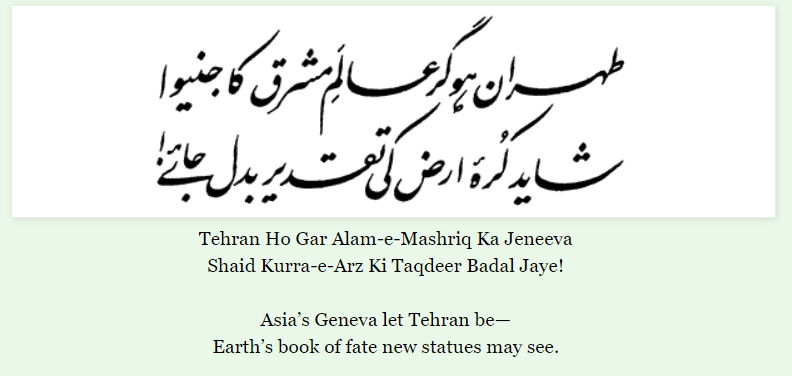
The Vice Chancellor started her address paying tribute to the resilient power and the great potential held by the land of Persians. In Allama Iqbal’s words. “Tehran ho gar Alam e Mahriq ka Geneva, Shayed Kurra-e-Arz ki Taqdeer badal jaye.” The verse implies that if Tehran becomes the Geneva of the East, the fate of the world will surely change.
It turned out that Iranian President Raisi was not just fully familiar with the work of our national poet but remembered him as Iqbal Lahori for his work in Persian. He was pleased to be present in the institution where Iqbal studied and taught; and to be in Lahore, the city from where the revolution against oppressive colonial rule started.
While he stressed about the hybridization of knowledge and faith as the key to success in life, he stressed on Iqbal being the best example as someone who combined both excellently. As he moved on, like an expert orator, he felt the pulse of the audience and drew a comparison between the East and West. We believe the people of the East are higher than that of the West because of how they understand the “creation of knowledge”, Raisi quoted the Supreme Leader of Iran, Ayatollah Ali Khamenei.
He laid out his vision by saying, “The West is somehow trying to have a monopoly in the field of knowledge and Science, but we the people of East can change that.” He emphasised the role of universities in imparting a deeper understanding of the current situation and the pivotal role of faith along with seeking knowledge.
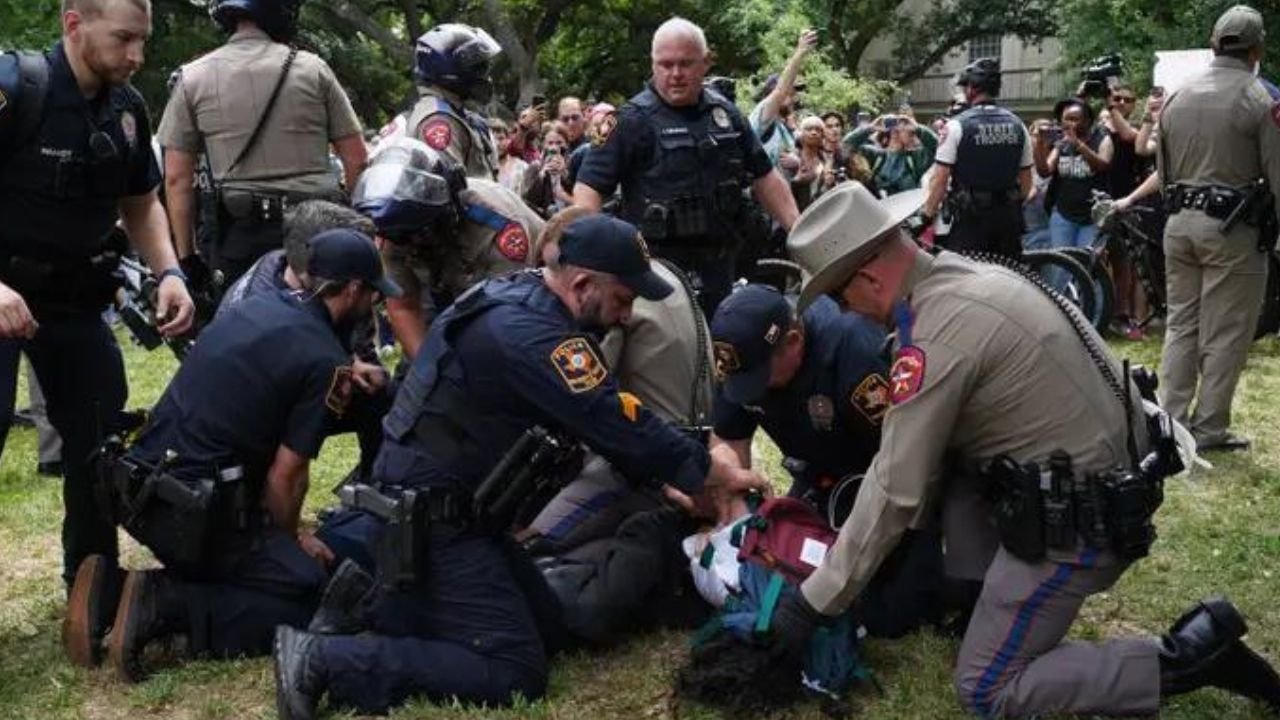
He substantiated his argument by pointing out how the West claims to have championed freedom of speech and human rights but the brutal ways with which University students setting up protests and encampments in Europe and America against Israeli occupation of Gaza are dealt with is a testimony to the innate contradiction between the claim and the practice.
“Today the liberation of Palestine is not just an issue of the Islamic world but of the world as well,” he said in a passionate tone and with this the audience was totally invested and they were applauding him even before the interpreter translated his words. Raisi predicted that hate is brewing in the hearts of people against United States and this Zionist regime in Palestinian territory and this will take revenge from them.
We are usually so used to of seeing leaders just chanting out popular things and hardly something literary Raisi gave the audience a minor jolt as he quoted 12th-century Muslim philosopher Ibn Arabi precisely from the text Fusus ul Hikam where he brought up the killing of children by Pharaoh only to prevent the birth of Prophet Moses. However, Allah was with Moses. Meanwhile, the nation of Moses was being created. He said that the same will be translated with Israel killing Palestinian children relentlessly.
He spoke like a warrior, someone who has stayed resilient in the worst of pressure. “If you stand against our nation, we will stand against yours”, Raisi said affirmatively. As he moved towards the end he put an emphasis on the support of Palestine as the common point of relation between Pakistan and Iran.
Coming full circle, Raisi left his mark with his final words which I quoted in the beginning. There are problems and issues of governance in every state of the world but what stands out is the resilience and the will to face opposition with head held high. With his words, Raisi inspired students to stand tall in the worst of situations and stand on the right side of history. The memory will forever be etched in my mind.