Tag: government decision

  • Petrol and diesel prices predicted to rise in February

    Petrol and diesel prices predicted to rise in February

    In response to the recent surge in global oil prices, the government is anticipated to raise petrol and diesel prices by Rs11 and Rs6 per litre, respectively, for the first half of February. 

    The significant 11 per cent and 25 per cent increases in the premium on petrol and diesel contribute to the upward adjustment. 

    Recent pricing estimates until January 26 reveal a 5 per cent rise in finished petroleum prices to $87.7 per barrel and a 1 per cent gain in finished diesel prices to $97.4 per barrel.

    Despite a slight appreciation of the local currency, which stands at a weighted average rate of around PKR 279.87 per USD since the last pricing decision, it remains insufficient to counterbalance the substantial international price hikes. 

    It’s crucial to note that there are three more sessions before the next pricing update, and final prices will be contingent on global market movements and exchange rate fluctuations.

    The government is set to unveil the revised prices at midnight on January 31, 2024, and these adjustments will be effective for the first half of February. 

    Notably, in the previous fortnight, the government reduced petrol prices by Rs8 per litre to Rs259.34 while keeping diesel prices steady at Rs276.21 per litre.
  • Govt expected to slash petrol prices for second half of January

    Govt expected to slash petrol prices for second half of January

    In a move aimed at providing relief to consumers, the government is expected to reduce petrol prices by more than Rs5 per litre for the second half of January.

    This decision comes as a response to the recent dip in global oil prices, ensuring that the benefits are passed on to the end-users.

    According to the latest pricing estimates until January 12, international petroleum prices have experienced a decline of 1 per cent over the last fortnight. This decrease in global prices may serve as a key factor in the government’s decision to revise the domestic petrol rates.

    On a different note, the price of High-Speed Diesel (HSD) is anticipated to see a slight uptick, with an expected increase of Rs2 per litre. This adjustment is attributed to a modest rise in international diesel prices during the relevant period.

    It’s crucial to highlight that one more session remains before the next pricing update, and the future trajectory of these prices will be contingent on global market movements and exchange rate fluctuations.

    Recalling the decisions from the previous fortnight, the government maintained petrol and diesel prices at Rs267.34 and Rs276.21 per litre, respectively.

    Additionally, there has been a marginal appreciation of the local currency against the USD since the previous fortnight’s pricing decision. The weighted average exchange rate now stands at approximately PKR 281.31 per USD. This development is expected to contribute to the adjustment of petrol prices in the domestic market.

    The official announcement of the revised prices is scheduled for midnight on January 15. The new prices will come into effect immediately and will be applicable for the rest of the month.

  • Petrol, diesel  price in Pakistan to remain unchanged for first two weeks of January 2024

    Petrol, diesel price in Pakistan to remain unchanged for first two weeks of January 2024

    The interim government has chosen to uphold the current petrol price in Pakistan for the initial two weeks of January 2024.

    This decision is attributed to the absence of any significant decrease in global crude prices and amidst a stable exchange rate between the Pakistani rupee and the US dollar.

    The diesel price will also stay unaltered for the upcoming fortnight.

    As a result of this development, the prices for petrol and diesel will persist at Rs267.34 and Rs276.21 per liter, respectively.

    These revised prices will be effective from January 1, 2024.

    Earlier in the month, the government had reduced the prices of petrol and diesel by Rs14 and Rs13.5, respectively, following the bi-weekly revision.

  • Slight relief for consumers: Petrol price dropped by Rs2.04 per litre

    Slight relief for consumers: Petrol price dropped by Rs2.04 per litre

    The government announced a reduction in the prices of petrol and high-speed diesel (HSD) by Rs2.04 and Rs6.47 per litre, respectively, for the upcoming fortnight.

    According to a notification from the Ministry of Finance, the revised prices for petrol and HSD now stand at Rs281.34 and Rs296.71.

    Simultaneously, there was a decrease in the prices of kerosene oil and light-diesel oil by Rs6.05 and Rs9.01 per litre, bringing their new prices to Rs204.98 and Rs180.45, respectively.

    Prior to this decision, officials had anticipated a more substantial decline in the prices of petrol and HSD, ranging from Rs8 to Rs10 per litre.
    This projection was primarily based on the recent drop in international prices.

    However, despite the decrease in global prices for both HSD and petrol over the past two weeks, the rupee experienced depreciation against the dollar in the same period, mitigating the benefit of lower international prices for consumers.

    According to officials, the international prices indicated a reduction of about $9 per barrel on average for HSD, decreasing from approximately $113 to $104 during the week.

    Similarly, the price of petrol saw a decline of one dollar, moving from $91 to $90. Conversely, the rupee depreciated by Rs6 against the dollar, falling from Rs280 to Rs286.

  • Govt decides not to reduce petrol, diesel prices

    Govt decides not to reduce petrol, diesel prices

    The caretaker government announced on Tuesday that petrol and diesel prices would remain unchanged until November 15. 

    Furthermore, the government reduced the prices of kerosene and light-speed diesel by Rs 3.82 and Rs3.40 per litre. Kerosene and light-speed diesel will now be priced at Rs211.03 and Rs189.46 per litre, respectively.

    In the previous review on October 15, the caretaker government had announced a reduction of Rs 40 and Rs15 in petrol and diesel prices, bringing them to Rs283.38 and Rs303.18 per litre, respectively. 

    This adjustment was made in response to the continuous appreciation of the local currency against the greenback and fluctuations in international petroleum product prices.

  • Govt considers substantial gas tariff hike as energy concerns loom 

    Govt considers substantial gas tariff hike as energy concerns loom 

    Caretaker Minister for Energy, Muhammad Ali, addressed concerns about gas prices during a visit to the Lahore Chamber of Commerce and Industry (LCCI), accompanied by Caretaker Federal Minister for Commerce, Industries, and Production, Gohar Ejaz.

    He revealed that impending announcements would detail changes in gas prices, acknowledging that gas prices have consistently been a matter of concern. According to Dawn, the Oil and Gas Regulatory Authority (OGRA) had proposed a 45–50 per cent gas tariff increase earlier in the year to meet revenue requirements for gas utilities. However, the government has not yet made a formal decision. 

    Ali emphasised regional disparities in gas prices, with the North having higher prices than the South. He also discussed the challenges of inadequate long-term LNG contracts and efforts to combat electricity theft. He noted that while steps were being taken to reduce energy price disparities, an overnight reduction was impossible due to the country’s commitment to the IMF programme. 

    Commerce Minister Ejaz highlighted efforts to address issues related to Afghan Transit Trade (ATT) and its impact on the dollar rate. He pointed out that industry inputs, raw materials, and energy prices were vulnerable to international market fluctuations, affecting exports due to currency devaluation. However, recent measures have stabilised the exchange rate. 

    Read more: IMF urges Pakistan to increase taxation on the rich and ‘protect the poor’

    Ejaz also stressed that currency devaluation had hindered export growth and highlighted how disparities in gas supply and prices hampered development efforts nationwide. He called for unity and collaboration, emphasising that traders were vital assets for the country’s strength and prosperity. 

    Notably, the caretaker government had recently raised petrol and high-speed diesel prices, leading to widespread criticism and sporadic protests due to the significant price surge amid high inflation. 

  • CAA employees announce nationwide protests, demand DG’s removal

    CAA employees announce nationwide protests, demand DG’s removal

    The Civil Aviation Authority (CAA) officers and employees unions have formally announced their intent to hold nationwide airport protests today. Furthermore, the unions have collectively resolved to initiate a campaign aimed at the removal of the current Director-General (DG) of the CAA.

    According to a report by ARY News, these demonstrations are a direct response to the federal government’s recent decision to contract out the management of three prominent airports, which has elicited strong opposition from CAA personnel.

    In the month of July, CAA employees had previously expressed their objections to the outsourcing of Pakistan’s three major airports.

    In this regard, a protest was organized at Lahore’s Allama Iqbal International Airport, led by the CAA’s union and officer association.

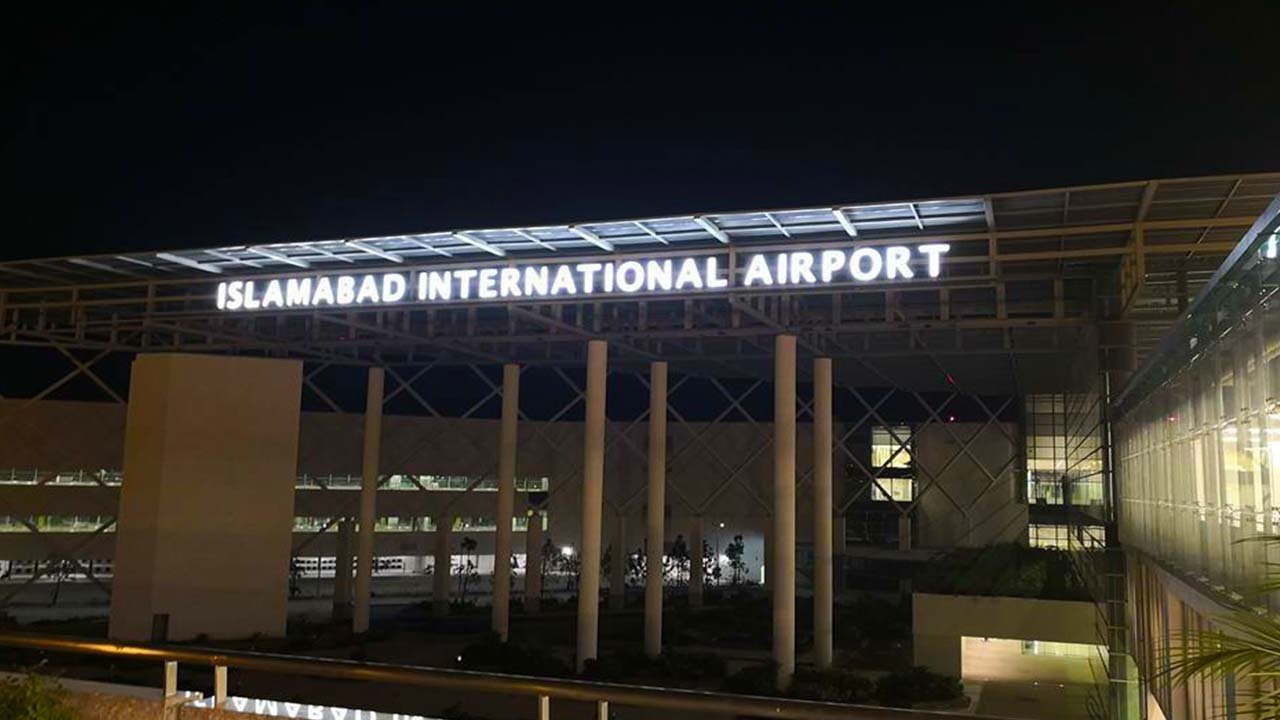
  • Islamabad International Airport outsourcing plan finalised: 15-year agreement for third-party management

    Islamabad International Airport outsourcing plan finalised: 15-year agreement for third-party management

    The decision to outsource Islamabad International Airport was finalised on Tuesday. According to the details, the airport will be under third-party management for 15 years, with a non-refundable advance payment of $100 million in case of any third-party violations.

    Administrative, financial, design, and construction responsibilities will be handled by the third party. They will also have the authorisation to construct shopping malls and brand shops within the airport. The third party will retain control over service charges, exchange rates, and shop rents as per the agreement.

    According to ARY News, Customs, site security, and immigration services, on the other hand, will continue to be managed by the Civil Aviation Authority (CAA), according to sources.

    Previously, the Aircraft Owners and Operators Association of Pakistan (PAOOA) expressed opposition to the government’s unilateral decision to outsource the country’s major airports without adhering to PPRA rules.

    The association criticised the government for awarding contracts to IFC and the World Bank (WB) for the outsourcing of three airports. The association’s statement questioned the secrecy surrounding the outsourcing process, raising doubts about its transparency.

  • Utility Stores hike sugar, ghee, and flour prices following subsidy withdrawal

    In a surprising move, the Utility Stores Corporation (USC) has raised the prices of crucial commodities such as sugar, ghee, and flour, affecting consumers across the board, including those enrolled in the Benazir Income Support Programme (BISP). This price increase comes in the wake of the outgoing government’s decision to eliminate subsidies on these essential items.

    Among the notable price hikes, a 10-kg bag of flour has witnessed a substantial increase of Rs200; sugar prices have surged by Rs30; and ghee prices have risen by Rs53 per kilogramme. This unforeseen surge in prices has left many consumers bewildered, especially considering that the government recently augmented the subsidy allocation for the USC from Rs30 billion to Rs35 billion in the ongoing fiscal year’s budget.

    In a bid to alleviate the burden on consumers, the Prime Minister’s Azadi package for BISP beneficiaries is set to launch on August 11. This relief package aims to cushion the impact of the price hikes by offering a 10-kg bag of flour at a reduced price of Rs648. Additionally, a discount of Rs25 per kilogramme will be applied to rice and pulses for eligible beneficiaries.

    However, the plight of consumers has been compounded by widespread shortages of essential goods at utility stores. Frustration among citizens has mounted as they endure long lines for houRsin the hope of purchasing subsidised items, only to be met with empty shelves and disappointment. The lack of availability has further exacerbated the challenges posed by the recent price increases.

    Curiously, authorities at the utility stores have refrained from commenting on the escalating situation. This silence has left consumers and observers alike wondering about the root causes of these unexpected developments and the potential implications for the broader economic landscape.

  • Petrol price expected to decrease by Rs10 per litre for the next fortnight

    Petrol price expected to decrease by Rs10 per litre for the next fortnight

    The prices of petroleum products are expected to decrease starting from May 16, as the coalition government intends to provide some relief to the distressed public amidst the severe economic crisis and record inflation.

    According to reports in local media, petrol price will see a reduction of Rs10 per litre for the rest of May.

    It has been reported that the Oil and Gas Regulatory Authority (OGRA) has recommended a decrease in the prices of petroleum products. Based on these reports, the price of petrol may be reduced by Rs10 per litre, while the price of diesel is anticipated to decrease by Rs8 per litre.

    OGRA has submitted a summary to the government, and Finance Minister Ishaq Dar and other officials will seek the input of Prime Minister Shehbaz Sharif on the recommendations. The final decision will be announced today.

    The revised prices of petroleum products for the upcoming two weeks will be implemented after midnight on May 15.

    Earlier this month, the federal government announced a reduction of Rs5 per litre in the price of diesel, while the price of petrol remained unchanged. Presently, petrol is being sold at Rs282, HSD at Rs288, kerosene oil at Rs176.07, and light diesel oil at Rs164.68 per litre.