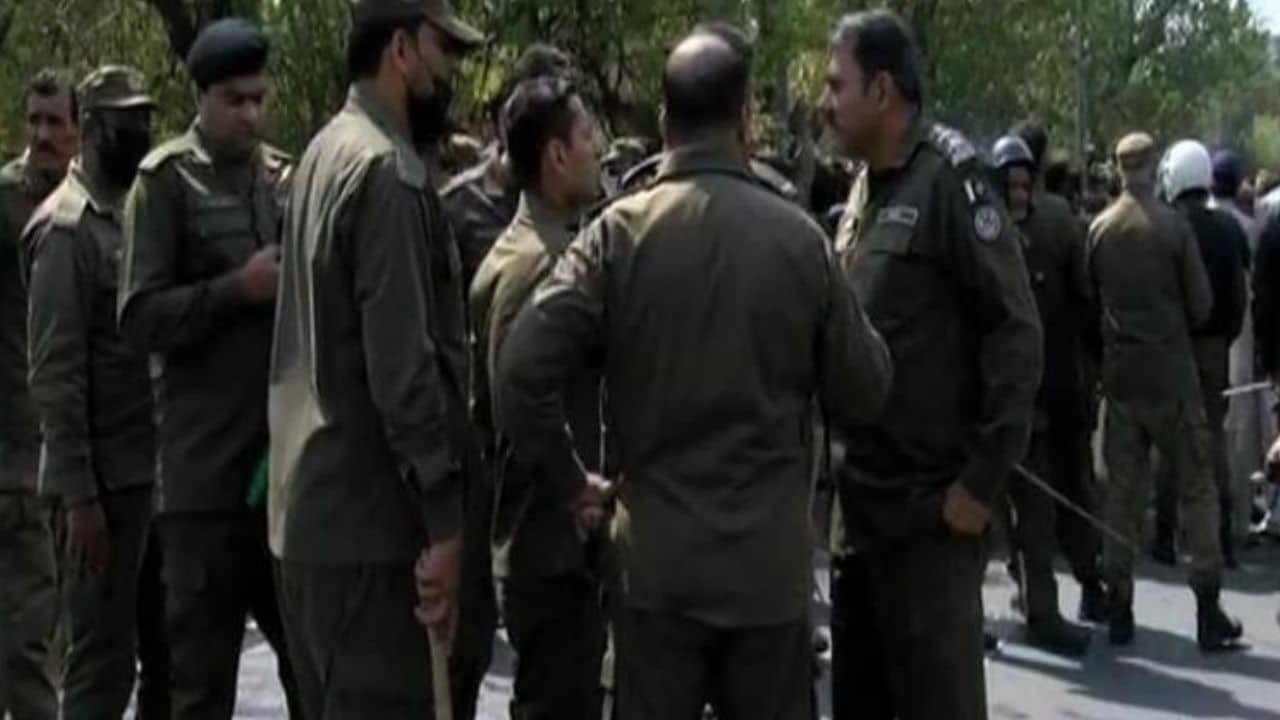
In an attempt to deter protesting government employees, Lahore police subjected them to baton charging. The incident occurred on Thursday while protesters were holding a rally from the PMG chowk to Aiwan-i-Iqbal. There were more than a hundred government employees, both male and female teachers and health workers. As part of the crackdown they were shifted to different police stations of the city.
The protest was held by All Government Employees Grand Alliance (AGEGA), a coalition of 34 organisations representing many departments including health, education and higher education. Their protest is especially targeteding the Punjab Government and the district administration over the arrest of more than 200 teachers.
They have a range of demands which include the restoration of leave encashment, reversal of amendments to pension regulations and cancellation of privatisation plans for public schools. To get their protests registered, many teachers are boycotting classes in the schools and colleges throughout the province for the last one week.
The office bearers of AGEGA have held Caretaker Chief Minister Mohsin Naqvi responsible for all their complaints but they also pledged not to give up on their demands or surrender in front of violence.
In Bahawalpur, Police booked around 200 employees under 16-MPO for making provocative speeches against the Government and blocking the road. An FIR lodged by the police says that the demonstrators were asked to unblock the road, however, they kept it blocked until action by police became imperative.
The current government has announced a 50% increase in the daily travel and mileage allowances for all on-duty government employees. A notification to the same was issued by the Ministry of Finance on Tuesday.
According to the notification, different calculations will be used for different grades of employees. There is an increase of Rs 7,200 per day for employees in Grade 22 and Rs 6,000 for Grade 21 employees. On the other hand, the employees in Grades 12 to 16 can get an increase of Rs 1320 and Rs 1200 per day for the employees in Grades 5 to 11.
Additionally, the cost of transportation has increased by 50% to Rs7.5 per kilometer for vehicles and Rs3.75 per kilometre for motorcycles. For personal vehicles or taxis, the per-kilometre mileage allowance has increased by 50% to Rs15, Rs6 for motorcycles, Rs3 for bicycles, and Rs3.75 for public transport.
The aforementioned daily allowance prices are applicable to certain stations for special rates as announced, including Hyderabad, Karachi, Sukkur, Bahawalpur, Dera Ghazi Khan, Multan, Quetta, Sargodha, Sialkot, Lahore, Gujranwala, Rawalpindi, Islamabad, Faisalabad, Peshawar, Gwadar, Gilgit-Baltistan, and Muzaffarabad and Mirpur in Azad Jammu and Kashmir.
Government employees in grades 1–19 can stay in hotels (not five-star ones), motels, public sector corporations, rest houses, and guest houses.
In a significant development, the interim Punjab cabinet, headed by caretaker Chief Minister Mohsin Naqvi, has approved the provincial budget for the initial four months of the fiscal year 2023-24. The cabinet meeting, held on Monday, saw the endorsement of several key measures aimed at providing relief to the people and promoting various sectors of the economy.
One of the major highlights of the budget is a 30 per cent increase in salaries for government employees, which will be implemented as an ad hoc relief. This decision is expected to bring significant relief to public servants who have been facing the brunt of rising costs of living. Additionally, pensioners above the age of 80 will receive a 20 per cent increase in their pensions, acknowledging their valuable contributions to society.
The Punjab cabinet has also taken a bold step to stimulate business growth in the information technology and education sectors. By withdrawing all duties and taxes, the provincial government aims to create a favorable environment for these industries, fostering innovation and progress. An allocation of Rs70 billion has been set aside to provide relief to the people over the course of the first four months of the fiscal year.
Addressing concerns related to the construction sector, the cabinet rejected a recommendation to increase stamp duty by up to 3 per cent. Instead, it approved fixing the stamp duty ratio at 1 per cent, thereby promoting the growth of the construction industry and encouraging investment in the sector.
Recognizing the importance of agriculture, the cabinet allocated over Rs47 billion to support and enhance the sector. This move demonstrates the government’s commitment to bolstering the agricultural industry, which plays a crucial role in the province’s economy and livelihoods of the rural population.
Furthermore, the interim setup has pledged to complete 50 per cent of ongoing development projects within the first four months of the new fiscal year. This ambitious target showcases the government’s determination to prioritise infrastructure development and provide better facilities for the citizens.
The cabinet’s focus on critical sectors also extends to education and healthcare. An increase of up to 31 per cent in the budget allocation for education and health has been approved for the initial four months of the fiscal year. This decision reflects the government’s commitment to improving access to quality education and healthcare services across Punjab.
The cabinet’s proactive approach toward promoting technological advancements is evident through the approval to establish an information technology park within the Lahore Knowledge Park. This venture aims to create a hub for technology-driven innovation and attract investment to the region.
In a noteworthy move, the cabinet also approved the establishment of an endowment fund worth Rs1 billion for journalists. This step recognises the vital role played by journalists in society and aims to support and encourage their professional growth.
Chief Minister Mohsin Naqvi emphasised that the Punjab budget does not impose any new taxes on the people, providing further relief to the general public. He commended the chief secretary, Planning and Development Board chairman, Punjab finance secretary, and their teams for their diligent efforts in presenting a people-friendly budget.
The cabinet meeting was attended by provincial ministers, advisors, and secretaries of relevant departments, signaling a collaborative approach to decision-making and ensuring the inclusivity of various stakeholders.
With the interim Punjab cabinet’s approval of this budget, the province is poised to embark on a path of economic growth, development, and improved quality of life for its citizens.
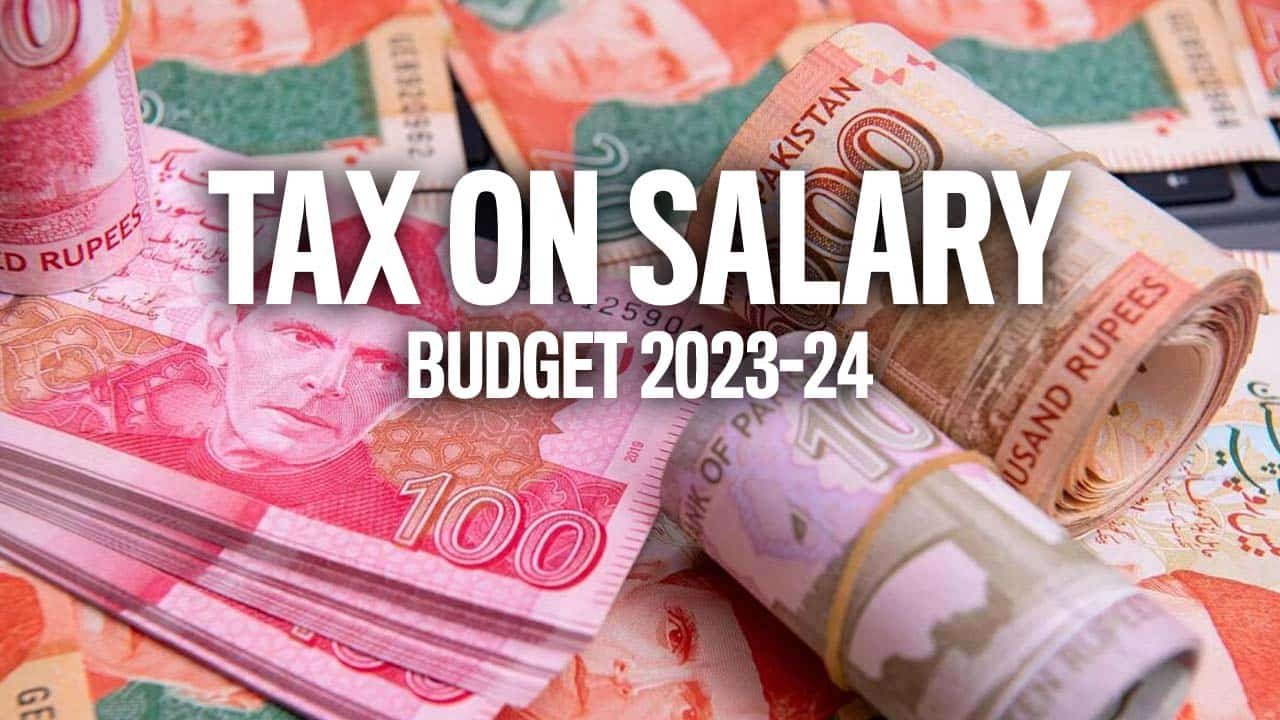
Finance Minister Ishaq Dar presented a comprehensive budget proposal of Rs14.46 trillion for the fiscal year 2023-24, emphasising an expansionary approach. One of the key highlights of the proposal was a substantial increase in the salaries of government employees, aimed at providing much-needed relief.
In order to ensure that the burden on the salaried class remained unchanged, the coalition government decided not to make any alterations to the existing tax slabs, which were approved in the previous year’s Finance Bill of 2022.
Outlined below are the tax slabs for different income brackets:
1. Income below Rs600,000 per year (Rs50,000 per month):
– No tax will be deducted.
2. Income between Rs600,000 to Rs1.2 million per year (Rs50,000 to Rs100,000 per month):
– Tax will be levied at a rate of 2.5 per cent on the amount exceeding Rs600,000.
3. Income between Rs1.2 million to Rs2.4 million per year (Rs100,000 to Rs200,000 per month):
– Tax will be levied at a rate of Rs15,000 plus 12.5 per cent on the amount exceeding Rs1.2 million.
4. Income between Rs2.4 million to Rs3.6 million per year (Rs200,000 to Rs300,000 per month):
– Tax will be levied at a rate of Rs165,000 plus 20 per cent on the amount exceeding Rs2.4 million.
5. Income between Rs3.6 million to Rs6 million per year (Rs300,000 to Rs500,000 per month):
– Tax will be levied at a rate of Rs405,000 plus 25 per cent on the amount exceeding Rs3.6 million.
6. Income between Rs6 million to Rs12 million per year (Rs500,000 to 1,000,000 per month):
– Tax will be levied at a rate of Rs1.005 million plus 32.5 per cent on the amount exceeding Rs6 million.
7. Income exceeding Rs12 million per year (exceeding Rs1,000,000 per month):
– Tax will be levied at a rate of Rs2.955 million plus 35 per cent on the amount exceeding Rs12 million.
These tax slabs have been carefully designed to ensure a fair and balanced approach to income taxation, considering various income brackets. By maintaining consistency with the previous year’s tax slabs, the government aims to alleviate the burden on the salaried class while still generating the necessary revenue for public welfare and development initiatives.
Overall, the budget proposal presented by Finance Minister Ishaq Dar reflects the government’s commitment to supporting government employees and maintaining a progressive tax system that promotes economic growth and fairness.
Tax slabs
Annual income
Monthly income
Tax rate
Slab 1
Below Rs600,000
Below Rs50,000
No tax deducted
Slab 2
Rs600,000 – Rs1.2 million
Rs50,000 – Rs100,000
2.5 per cent of the amount exceeding Rs600,000
Slab 3
Rs1.2 million – Rs2.4 million
Rs100,000 – Rs200,000
Rs15,000 + 12.5 per cent of the amount exceeding Rs1.2 million
Slab 4
Rs2.4 million – Rs3.6 million
Rs200,000 – Rs300,000
Rs165,000 + 20 per cent of the amount exceeding Rs2.4 million
Slab 5
Rs3.6 million – Rs6 million
Rs300,000 – Rs500,000
Rs405,000 + 25 per cent of the amount exceeding Rs3.6 million
Slab 6
Rs6 million – Rs12 million
Rs500,000 – Rs1,000,000
Rs1.005 million + 32.5 per cent of the amount exceeding Rs6 million
Slab 7
Above Rs12 million
Above Rs1,000,000
Rs2.955 million + 35 per cent of the amount exceeding Rs12 million
In response to the ongoing challenges posed by significant inflation, the federal cabinet has granted its approval to the budget proposals for the upcoming fiscal year 2023-2024.
As part of these measures, the salaries of government employees will be enhanced by up to 35 per cent, based on the recommendations put forth by various stakeholders. This decision aims to alleviate the hardships faced by the less privileged segments of society.
Furthermore, the government has sanctioned a 17.5 per cent increment in pensions for the fiscal year 2023-2024. Employees falling within grades 1-16 will benefit from a salary raise of 35 per cent, whereas those in higher grades, above grade 17, will experience a 30 per cent increase in their salaries. Moreover, the government has established a minimum wage of Rs32,000.
In addition to salary adjustments, the Pay and Pension Commission has proposed a 100 per cent rise in medical and conveyance allowances for government employees, along with a 10 per cent increase in ad hoc allowances. These recommendations are being taken into careful consideration by the government.
The approval of the budget proposals reflects the government’s commitment to address the economic challenges faced by the country and provide relief to its citizens.
The Punjab government has announced an increase in the minimum wage for unskilled workers from Rs25,000 to Rs32,000 per month, providing some relief to workers during a period of skyrocketing inflation.
This increase of Rs7,000 was made official through a notification issued by the interim government on Thursday. It is worth noting that in April of last year, Prime Minister (PM) Shehbaz Sharif announced a minimum wage increase for government employees to Rs25,000 and a 10 per cent increase in civil and military pensions for retired employees.
Following this announcement, the Punjab government set the minimum wage at Rs25,000. On January 31, 2023, Asif Ali Zardari, the former president and Pakistan Peoples Party (PPP) Co-chairperson, proposed to the coalition government that the minimum wage should be raised to Rs35,000.
Zardari emphasised that the government should take responsibility for providing relief to workers and take far-reaching measures to address the problems faced by the masses.