Tag: Government Initiatives

  • Reduced electricity prices to spur industrial activity and improve exports: Power minister

    Reduced electricity prices to spur industrial activity and improve exports: Power minister

    Following a reduction in electricity prices for industries, Power Minister Sardar Awais Leghari stated that the government’s decision aims to boost industrial activity and exports.

    Speaking to the media in Dera Ghazi Khan, Leghari highlighted the government’s revolutionary measures to improve the power distribution system. He underscored the government’s commitment to addressing power sector issues, including combating electricity theft.

    Leghari reiterated the goal of eradicating electricity theft nationwide to provide cheaper electricity to the public.

    He also noted the government’s achievement in reducing electricity rates for industries by Rs10.69, which is expected to stimulate industrial activity and generate more job opportunities.

    The minister assured that the government is aware of the challenges faced by farmers and is actively working to provide maximum relief to the public.

    In a related development, Prime Minister Shehbaz Sharif announced on Saturday that government institutions incurring massive losses would be shut down.

    During his address to the nation, the premier stated, “I have decided to close institutions that have become a burden instead of offering assistance,” and added that a ministerial committee has been formed to oversee this process.

    “I will come to you with a new message in a couple of months,” PM Shehbaz said. “I believe this will be a significant step in reducing expenses and saving funds.”

    The premier also mentioned his recent trips to China and the Middle East, noting that commitments for investment were secured during these visits.

  • Pakistan welcomes PayPal through strategic alliance

    Pakistan welcomes PayPal through strategic alliance

    In a groundbreaking move for Pakistan’s burgeoning freelance community, PayPal is set to establish its presence in the country through a strategic partnership with an existing international payment gateway.

    The joint venture announcement is anticipated for next week, marking a significant milestone for the approximately 1.5 million freelancers and IT professionals in Pakistan, making it the fourth-largest community globally.

    Caretaker Minister for IT and Telecom, Dr Umar Saif, confirmed that PayPal would operate indirectly in Pakistan through this collaboration. This development follows persistent efforts by previous governments to convince PayPal to operate within the country, which initially faced resistance citing security concerns.

    Dr Saif emphasised the positive impact of this move on IT exports and freelancer remittances, underscoring recent measures supporting a more liberal financial regime. He revealed that IT exports have already experienced a notable surge, with a 13 per cent increase in November alone, and expressed confidence that this growth trajectory will continue.

    The IT Ministry, under Dr Saif’s leadership, has implemented various initiatives to bolster the IT sector. These include providing smartphones through installment plans, standardising quality tests for IT graduates, and approving the National Space Policy. Dr Saif expressed optimism about launching 5G services in Pakistan by July 2024, with a spectrum auction offering 300 MHz.

    The government aims to boost IT exports from the current $2.6 billion to approximately $5 billion by facilitating a more liberal financial regime. As part of this effort, IT companies can now retain 50 per cent of their export revenue in dollars in a local account, simplifying international payments.

    In addition to these measures, the government plans to launch 10,000 e-Rozgar centres across the country, providing facilities for freelancers and start-ups. The recently approved National Space Policy allows companies to utilise low-orbit satellites for communication services, further enhancing the technological landscape in Pakistan.

    The upcoming joint venture between PayPal and an international payment gateway is expected to usher in a new era of financial opportunities for Pakistan’s freelancers and IT professionals, contributing significantly to the country’s economic growth and global standing in the IT sector.

  • Federal cabinet to approve FBR restructuring in upcoming meeting

    Federal cabinet to approve FBR restructuring in upcoming meeting

    In a significant development, the caretaker government has concluded the comprehensive restructuring plan for the Federal Board of Revenue (FBR).

    The approval for this pivotal reform comes from the Apex Committee of the Special Investment Facilitation Council (SIFC), highlighting a crucial step towards enhancing efficiency and transparency in Pakistan’s tax administration.

    According to reliable sources, the Apex Committee granted its approval for the FBR’s reforms and restructuring plan during its recent meeting. The caretaker government is now poised to move a summary for the approval of the FBR’s restructuring plan in the upcoming federal cabinet meeting.

    The decision to move the summary will follow the meticulous review of the minutes of the last SIFC committee meeting, ensuring a thorough examination of the proposed reforms. The anticipated summary aims at facilitating the implementation of a robust action plan geared towards restructuring Pakistan’s tax administration, thereby fortifying the internal governance mechanisms of the FBR.

    As part of the ongoing reform initiative, the caretaker government is contemplating the establishment of a dedicated Customs Board to oversee the operations of Pakistan Customs. This strategic move aims to streamline and enhance the efficiency of customs affairs while ensuring a clear demarcation from the revenue collection mechanism.

    It is expected that the revenue collection mandate will continue to be under the purview of the FBR. In line with this reform trajectory, the creation of a separate Inland Revenue Board is also under consideration, which will operate under the vigilant supervision of the Revenue Division.

    This bifurcation is designed to address concerns related to smuggling and other illicit activities, providing a specialised focus on each aspect of tax administration.

    Furthermore, as part of the tax reform programme, five federal secretaries, namely Finance, Industries and Production, National Food Security, Commerce, and Interior, are slated to become ex-officio members of the proposed Customs Board. This inclusion is envisioned to bring multidimensional expertise to the board, fostering collaboration among various sectors crucial for effective customs management.

    The restructuring plan marks a pivotal moment in Pakistan’s efforts to modernise and fortify its tax administration system. The caretaker government’s commitment to transparency and efficiency is evident in these strategic reforms, setting the stage for a more resilient and responsive revenue collection framework.

    The anticipated approval of the summary at the federal cabinet meeting will further propel the implementation of these transformative changes.

  • ‘Virtual Prison Meetings’ coming to Khyber-Pakhtunkhwa

    ‘Virtual Prison Meetings’ coming to Khyber-Pakhtunkhwa

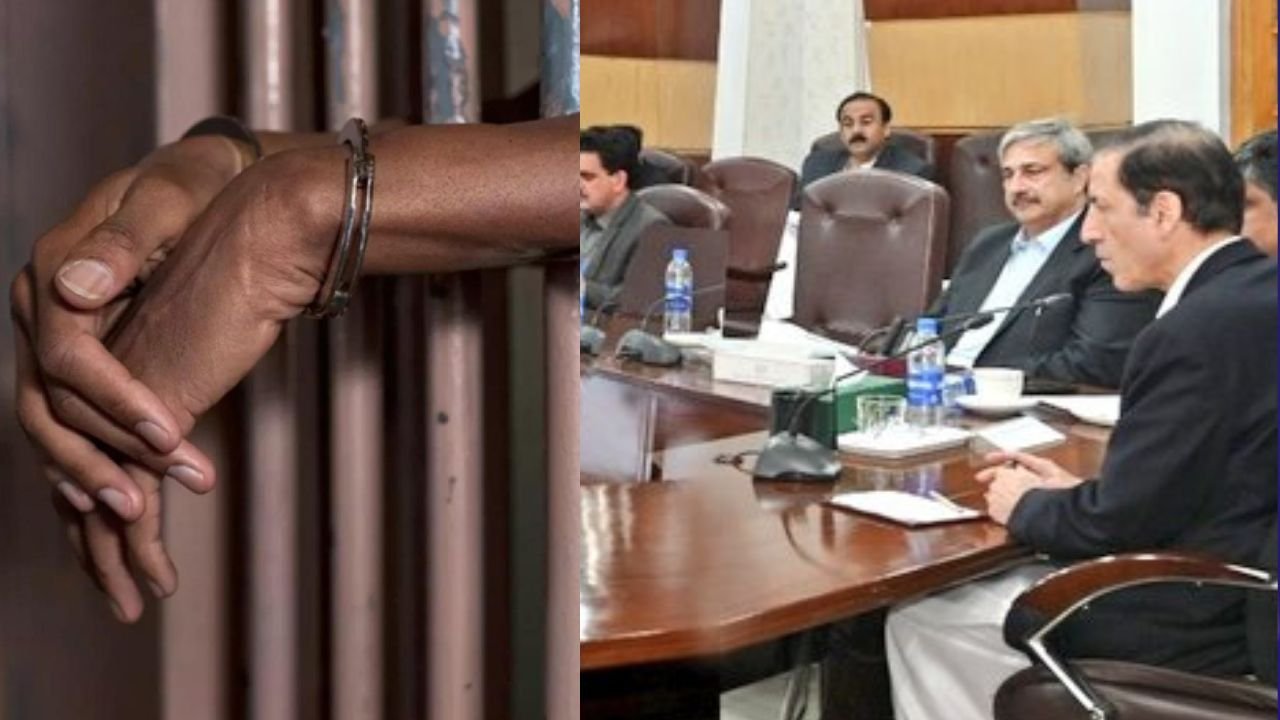
    In a historic move, the Khyber-Pakhtunkhwa (K-P) government has introduced a virtual system in prisons to facilitate inmates’ meetings with their family members.

    It has also unveiled a transformative digital governance initiative, shifting the entire arms licensing system to an online platform.

    The groundbreaking initiative was announced during a comprehensive progress review meeting for the “Khushhal Khyber-Pakhtunkhwa” program, where Caretaker Chief Minister Justice (retired) Syed Arshad Hussain Shah presided over the session.

    The meeting brought together key figures, including concerned provincial ministers, the chief secretary, administrative secretaries of relevant departments, divisional commissioners, and deputy commissioners attending via video link. The primary focus of the meeting was to assess the progress of various initiatives under the “Khushhal Khyber-Pakhtunkhwa” program.

    Significant headway has been made in the digitization process of manual mutations, resulting in a notable decrease from 813 to 386 cases in recent weeks.

    The statement released on X (former Twitter) also added, “The CM emphasized the program’s vital role in public welfare, urging a collective effort for its full implementation. He stressed the need for a comprehensive approach against issues like encroachments, drugs, adulteration, corruption, and illegal activities. Addressing concerns about revenue matters, he directed swift resolution of cases, emphasizing personal responsibility for officers.”

    One of the major highlights of this digital transformation is the transition of the entire arm licensing system to an online platform. This move is expected to streamline and modernize the licensing process, bringing it into the digital era.

    Simultaneously, the innovative approach of virtual systems in prisons to facilitate inmates’ meetings with their family members aims to enhance communication and connection between inmates and their loved ones, contributing to their overall well-being.

  • ECNEC approves multi-billion rupee initiatives for education, healthcare, and infrastructure 

    ECNEC approves multi-billion rupee initiatives for education, healthcare, and infrastructure 

    The Executive Committee of the National Economic Council (ECNEC) recently convened to review and approve nine projects valued at Rs371.85 billion across various sectors, as detailed in a press release from the Finance Division.   

    Among the sanctioned projects is the Khyber Pakhtunkhwa Food Security Support Project, with a budget of Rs25.098 billion, aimed at addressing climate vulnerabilities, enhancing food security, and improving livelihoods in flood-affected districts of KP province over a five-year period.  

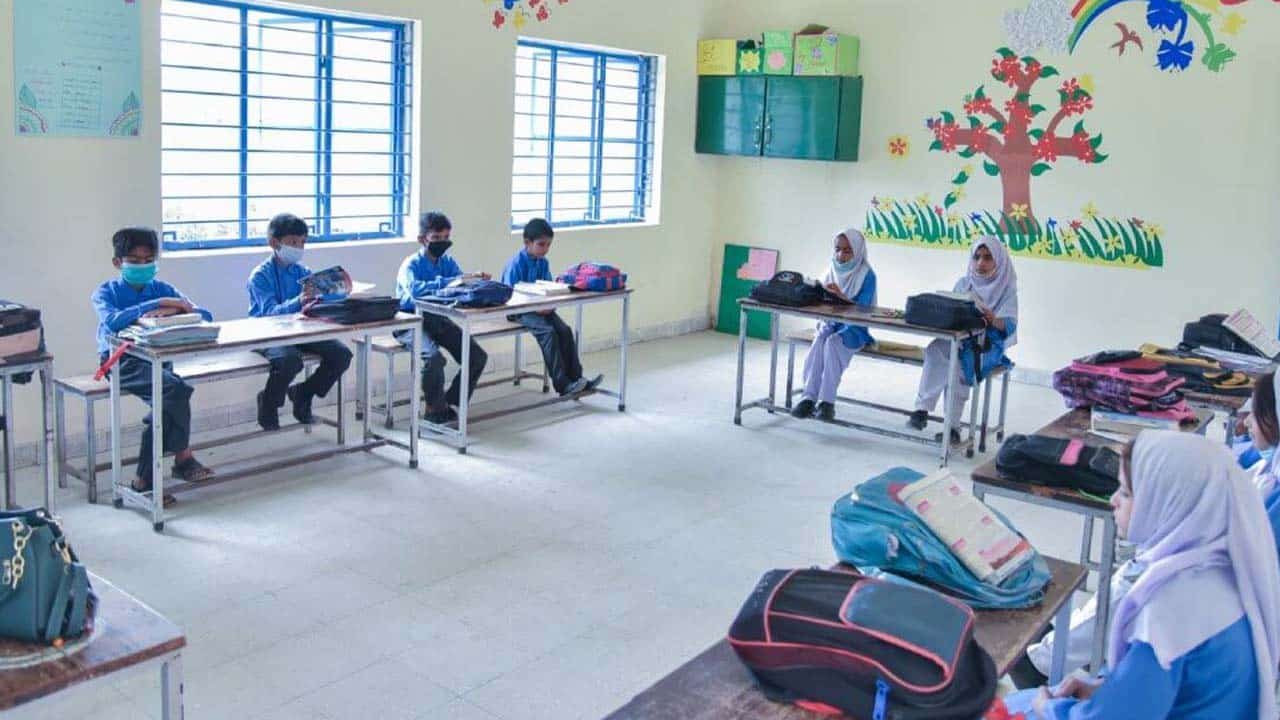
    In Sindh, the ECNEC approved the “Sindh School Rehabilitation Project under Flood Restoration Programme,” valued at Rs86.081 billion, with the goal of rehabilitating 1607 schools in districts severely affected by rain/floods.   

    Another KP-focused initiative, the “Education Component: Refugees & Host Communities Regional Sub-Windows SH Khyber Pakhtunkhwa Human Capital Investment Project (KP-HCIP),” received approval at a cost of Rs32.835 billion, targeting the rehabilitation and reconstruction of 1165 damaged schools in 13 districts.  

    Additional projects approved include the “Prime Minister’s Laptop Scheme” (Rs16.801 billion), Khyber Pakhtunkhwa Human Capital Investment Project (Health Component) (Rs24.225 billion), Women Inclusive Finance (Rs31.413 billion), Thar Coal Railway Connectivity (Rs53.727 billion), Peshawar Northern Bypass Project (PNBP) (Rs27.052 billion), and the Greater Thal Canal Project (Phase-II), which was deferred for further consultation.  

    The ECNEC also granted permission for the Sindh Barrage Improvement Project (Phase-II), allocating Rs74.618 billion for the rehabilitation and modernization of Sukkur Barrage and remaining works for Guddu Barrage.   

    Chaired by Dr. Shamshad Akhtar, the caretaker Federal Minister for Finance, Revenue & Economic Affairs, the meeting involved discussions among government officials.   

    The approved projects cover diverse areas such as education, healthcare, infrastructure, and disaster recovery, reflecting a comprehensive approach to addressing various socio-economic challenges across provinces. 

  • Federal secretaries to play key role in Customs Board as part of tax reform drive 

    The interim government is poised to establish a dedicated Customs Board as part of the ongoing reform initiative to oversee the operations of Pakistan Customs. 

    Within the framework of the tax reform programme, five federal secretaries, namely those from Finance, Industries and Production, National Food Security, Commerce, and Interior, are slated to serve as ex-officio members of the Customs Board. 

    Insiders reveal that FBR Chairman Amjad Zubair Tiwana recently apprised Caretaker Prime Minister Anwaar ul Haq Kakar of the FBR’s reform agenda. 

    Additionally, reports suggest that the government has decided to institute a novel position, “Member Appraisal,” within the Customs Department with the aim of segregating appraisal from operational and enforcement functions. 

    Sources further indicate that the government intends to expand the scope of the Track and Trace System to encompass additional sectors as part of the new reform framework. 

    Furthermore, as part of the reform measures, tax authorities are set to implement an electronic invoicing system in designated sectors with the objective of overseeing the entire supply chain and mitigating the risk of smuggling. 

  • FBR restructuring: 145 offices set up to add 2 million new taxpayers

    FBR restructuring: 145 offices set up to add 2 million new taxpayers

    In a bid to streamline operations, the Federal Board of Revenue (FBR) has set up 145 district tax offices, aiming to bring in 1.5 to 2 million new taxpayers by June 2024. 

    Highlighting the significance of revenue and the need to increase the number of tax filers, the Prime Minister also stressed these goals in recent meetings.  

    The initiative is geared towards expanding the tax base, ultimately achieving the desired tax-to-GDP ratio. 

    Heading these offices are district tax officers responsible for compelling income tax returns from non-filers and preventing lapses from existing filers.  

    This marks a pivotal step in bridging the critical tax gap and incorporating all potential taxpayers into the system. 

    The newly established offices, led by dedicated Inland Revenue Officers in BS-17/18, will leverage third-party data obtained from various departments to track information on asset investments and significant expenditures by potential taxpayers.   

    This approach aims to curtail avenues for individuals evading taxation, particularly in terms of registration and filing returns. 

    The department will invoke the recently introduced Section 114B in the Income Tax Ordinance, 2001, to enforce compliance, enabling it to disconnect utility connections (such as electricity and gas) and block mobile SIMs if returns are not filed in response to issued notices. 

    A new documentation law is also in the works to mandate agencies and departments to provide data to the FBR through an automated common transmission system. 

    The Federal Board of Revenue has sought collaboration with the National Database and Registration Authority (NADRA), and the Chairman of NADRA is ensuring assistance for the expansion of the tax base through data integration. 

    This comprehensive initiative not only strengthens the FBR’s capacity to enforce tax laws but also facilitates taxpayers by establishing dedicated offices, ultimately fostering a more efficient and effective taxation system. 

  • PM Kakar calls for reduction in prices of essential items and services after petrol price cut 

    PM Kakar calls for reduction in prices of essential items and services after petrol price cut 

    On Monday, Caretaker Prime Minister (PM) Anwaar ul Haq Kakar called upon the chief ministers to take decisive action in lowering the prices of essential goods and services in response to a significant reduction in fuel costs. 

    In a momentous development, the government has implemented a substantial reduction of Rs40 in the price of petrol. 

    Prime Minister Anwaar ul Haq Kakar issued clear directives at both the federal and provincial levels, urging the implementation of a stringent price control mechanism. 

    PM Kakar stressed that all endeavours must be focused on ensuring that the benefits of reduced petroleum prices are passed on to the citizens of Pakistan. 

    The prime minister emphasised the unwavering enforcement of his directives. 

    Prior to this decision, the cost of petrol had seen a remarkable reduction of Rs40 per litre in Pakistan. 

    As per a notification issued by the Oil and Gas Regulatory Authority, the price of petrol now stands at Rs283.38 per litre, reflecting a reduction of Rs40 per litre

    Meanwhile, the price of high-speed diesel (HSD) has been lowered by Rs15 per litre to reach Rs303.18, while kerosene oil prices have witnessed a reduction of Rs22.43 per litre, now standing at Rs214.85. 

  • PM Kakar pushes for speedy privatisation of financially troubled state-owned enterprises

    Caretaker Prime Minister (PM) Anwaar-ul-Haq Kakar, in a meeting held on Monday, directed the relevant authorities to expedite the privatisation process of state-owned enterprises (SOEs) that are experiencing financial losses.

    Stressing the importance of this privatisation effort, the Prime Minister emphasised its role in safeguarding the national treasury from further deficits.

    During this meeting, Minister for Privatisation Fawad Hasan Fawad provided a detailed update on the progress made in the privatisation of these enterprises.

    PM Kakar also commended the Special Investment Facilitation Council (SIFC) for its commendable contributions to this endeavor. 

    It’s worth noting that the caretaker Premier had previously issued similar directives to accelerate the privatisation process of Pakistan International Airlines (PIA), a loss-making entity.

    This development comes in response to reports suggesting that unless emergency funding is secured, PIA’s flight operations could face suspension.

    A senior PIA director revealed that the operational fleet had been reduced from 23 to 16 aircraft, resulting in the cancellation of numerous flights.

  • Pakistani rupee claims top spot as best-performing currency worldwide 

    Pakistani rupee claims top spot as best-performing currency worldwide 

    Amidst a determined crackdown on smuggling and illegal financial activities, the Pakistani rupee has emerged as the world’s top-performing currency for September. During this remarkable month, the rupee’s value surged from Rs305.54 against the US dollar on August 31st to Rs287.74 on September 28th, a notable increase of Rs17.8 or 6.2 per cent.

    Impressively, this positive trend persisted for 17 consecutive trading sessions, resulting in an overall gain of nearly 7 per cent since hitting its lowest point at 307.1 on September 5th. 

    It’s essential to note that the currency market was closed on Friday, September 29th. In terms of global currency performance, the Mauritian rupee secured the second position with a modest appreciation of 0.7 per cent, while the Hong Kong dollar claimed third place, showing a slight improvement of 0.2 per cent throughout September. These figures are based on data from the brokerage house Arif Habib Limited (AHL), reported on a recent Friday. 

    Financial experts attribute this remarkable rupee surge to a series of government measures aimed at curbing dollar smuggling and currency hoarding. Additionally, during the same month, the State Bank of Pakistan (SBP) introduced structural reforms targeting the Exchange Companies (ECs) sector. These reforms included a directive for commercial banks to establish their own ECs as wholly-owned subsidiaries and an increase in the minimum capital requirement for ECs from Rs200 million to Rs500 million. 

    Notably, the Pakistani rupee recorded substantial gains in the inter-bank market, appreciating by 6-9 per cent against three major currencies – the US dollar, UK Pound, and Euro – over the past few weeks. Even in the open market, the rupee showed a significant upswing of 11-13 per cent, effectively eliminating the premium associated with the open-market rate. This is particularly impressive given that the US Dollar index reached a 10-month high. 

    This strengthening of the rupee aligns with the commitment made by Pakistani authorities in July when they entered into a vital $3 billion Stand-By Arrangement (SBA) with the International Monetary Fund (IMF). This agreement was pivotal in averting a potential sovereign default and required the adoption of a market-based exchange rate, which has now proven to be a pivotal factor in the rupee’s impressive resurgence.