Tag: Government of Pakistan

  • Man caught torturing lion cub on camera

    Man caught torturing lion cub on camera

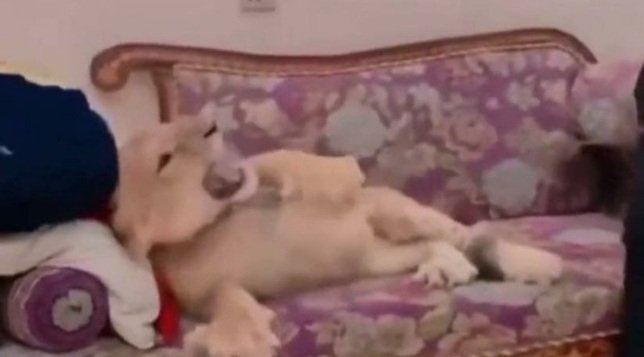
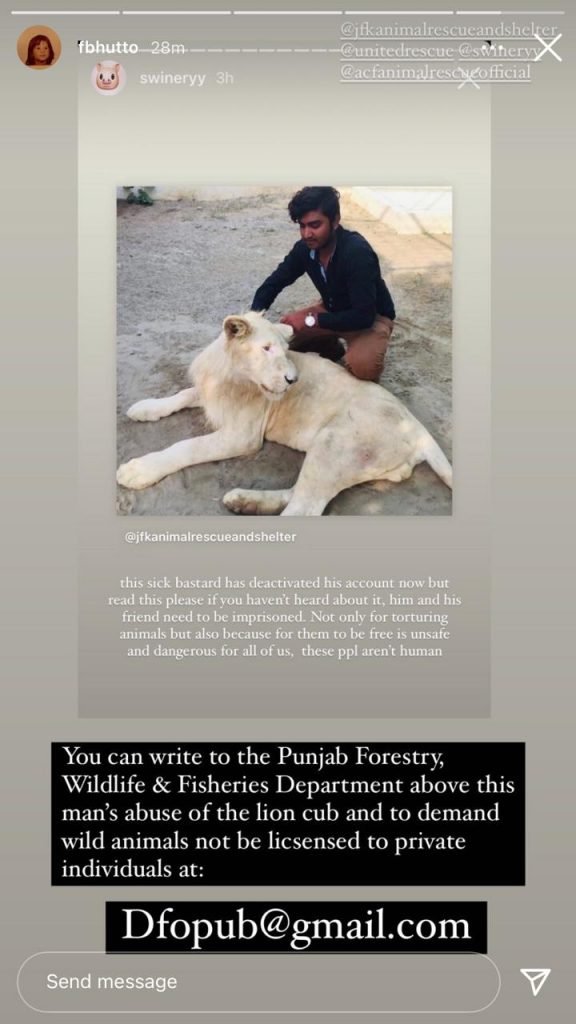
    A man has been caught beating a lion cub on camera. In a video that is being widely circulated on social media, the man named Saad can be seen beating the young cub while dragging him with a chain. The cub’s heartwrenching cries can also be heard in the video.

    The video sparked outrage on social media with several prominent personalities including Fatima Bhutto demanding the cub be rescued by authorities. Lahore-based JFK Animal Rescue And Shelter has also urged the government to stop licensing wild animals to individuals privately, saying that every third person in Pakistan now owns a lion as a pet.

    The animal rescue service also initiated an online petition for this purpose and urged people to raise their voices for these animals. According to JFK, by owning a licence in Pakistan you can buy, sell or import lions and tigers and do whatever you want to do to them. In the recent past, multiple cases of animal abuse and violation have been reported.

    Read more – Wildlife dept recovers two lions from bathroom in a residential area in Multan

    The animal rights organisation also explained that lion and tiger owners, declaw them, beat them, cage them, take their teeth out and later use them for breeding where they open entire breeding farms and then sell the cubs for money.

    “Once anybody gets the license there is no check and balance, and every other person is allowed to do all sorts of evil things to these wild animals behind closed walls. Many also torture them for TikTok and social media videos,” reads the petition.

    “Many times lions are used as props and kept as slaves. People deprive them of their natural habitats and give them a miserable life. We have seen multiple cases of this abuse in a single year and now we want to deal with the root cause which is these licences, these licenses should be cancelled and there should be a complete ban on owning wild animals as pets,” it adds.

    Read more – Lion manhandled during Maryam Nawaz’s rally rescued by Punjab Wildlife Dept

    JFK also alleged that this is not the first time Saad tortured a lion. They claimed that there are other videos of his abusing his lions also.

    Fatima Bhutto also requested her followers to sign the petition and urged the government to rescue such wild animals from captivity.

    Meanwhile, lawyers Ahmad Pansota and Hassaan Khan Niazi have taken up the case and have promised to file a petition before the court on the matter.

  • ‘Govt working to introduce royalty payments for artists’

    The federal government is working to introduce a comprehensive bill to ensure that artists are given financial credit for their work, PTI Senator Faisal Javed Khan has announced.

    “Most countries around the world give royalties to artists every time a show, their work is re-run, a second time or more,” wrote Faisal on Twitter. “Sadly in Pakistan where many artists are already underpaid, there is no policy or law ensuring that artists be given financial credit for their work.”

    The Senator further said that it is “very critical to fill the gaps and bring proper framework via amendments in legislation to ensure that our producers [and] artists get their rights to royalties.”

    Khan added that he is in touch with all stakeholders and is looking to introduce a comprehensive bill to address the matter.

    Speaking exclusively to The Current on the matter, Senator Faisal said: “Royalty is very important and I am working on this bill to ensure our artists get their due right. I am hoping to get it passed soon without any further delays.”

    Asserting that the government is committed to addressing this issue, Senator Faisal said: “Actors, musicians, singers – all artists must be supported,” adding that they will soon be entitled to royalties.

    Responding to Senator Faisal’s announcement, several artists including Mikaal Zulfiqar, Ali Zafar, Ali Safina and Sakina Samo lauded the initiative and hoped that it would resolve artists’ concerns.

    https://twitter.com/SakinaSamo/status/1381551181483413504?s=20

    Ever since Naila Jaffery appealed to producers and the government to pay royalties to actors for the work and content that is re-run, the conversation around royalty payments for artists has gained momentum with several actors demanding it.

    “Why is it even a matter of discussion?” Siddiqui had questioned. “Artists rightfully deserve to be paid royalty.”

    “So many producers and channels rake in copious amount of money through reruns. It is only ethical to pay actors their due,” he added.

    “We as a community of artists, singers, actors, writers, producers, directors, composer, editors and so on, need to be recognised by our government as an industry,” asserted Ahmed Ali Butt had.

    Zulfiqar was the first one to demand payment for reruns and after Jaffery’s appeal, several artists including Yasir Hussain, Sabeeka Imam, Ayesha Omar and Mansha Pasha had demanded TV channels for royalties.

    Earlier in July 2020, the government had announced that it will be creating a film task force to promote the entertainment industry and resolve its issues. Members of the government including Senator Shibli Faraz had held a virtual meeting with artists and stakeholders involved and shared the government’s intentions. They also discussed issues being faced by the film industry and their proposed solutions. Among those present during the meeting included Humayun Saeed, Vasay Chaudhry, Ali Zafar, Fizza Ali Meerza and Nadeem Mandviwala.

    Chaudhry, while speaking to The Current, had said that Senator Shibli had shown a “keen interest in the issues of royalties when it was brought up by me.”

    “He told us that the issue of royalties of artistes is very close to his heart and he will make sure to do something about it,” shared Vasay.

  • Wasim Akram wants govt to ‘slap’ COVID-19 SOP violators

    Wasim Akram wants govt to ‘slap’ COVID-19 SOP violators

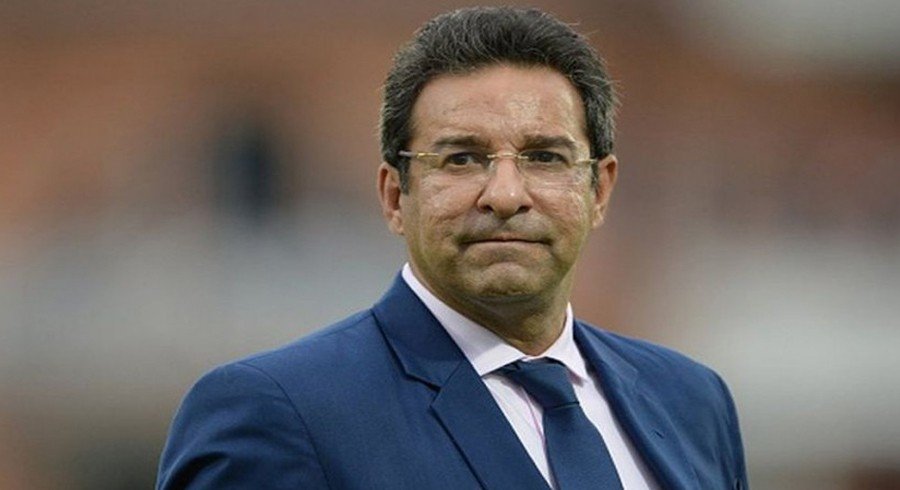
    Former captain of the Pakistan Cricket team Wasim Akram on Saturday called on authorities to give “two slaps” to people violating the coronavirus standard operating procedures (SOPs) as only then they would understand the problem.

    Sharing a video message on coronavirus, Akram, in his quintessential Urdu-Punjabi style, hoped that people from Pakistan and across the world will be in good health in these “testing times”.

    The cricketer turned commentator said that he had “read and seen” that coronavirus cases were rising in Punjab, especially in his city Lahore, Islamabad and Rawalpindi.

    “Please follow the SOPs. Why are you so stubborn?” Akram asked his followers.

    The former fast bowler said that there was also a “Plan B” in place for those not following the SOPs.

    Akram, then in Punjabi, explained that “Plan B” is to give all violators two slaps each as they would never understand in the normal manner. He sniped that the Pakistanis were just “legends”.

    The former fast bowler’s comments come as the country for a second day reported more than 4,000 cases. Most of these cases were from Punjab.

    According to data from the National Command and Operation Center (NCOC), 4,468 people tested positive for COVID-19 on March 26 while 67 people succumbed to the virus.

    Pakistan is currently battling its third wave of the coronavirus due to a lethal UK strain that has entered the country.

  • Anti-democracy rules

    Anti-democracy rules

    “Our democratic dispensation now rests on the courts to strike these draconian rules down, on the Parliament and especially the opposition parties to walk the talk of protecting democracy, and on the government to prove its sincerity to its digital dreams. Or should we stop pretending?”

    If the internet offers an open space for citizens to freely express themselves, the newly notified internet rules seek to clampdown on those very freedoms in an autocratic manner. Whether one considers the process by which they were drafted, or the substantive matter of the tules, they flout democracy.

    In a democracy, rules relating to the internet would at the very least be well-informed in terms of the functioning of technology; take input of the technology sector, human rights experts, the companies that these rules would impact, students, as well citizen groups; and follow a consultative process where multiple drafts were shared with stakeholders and discussed and revised before being notified.

    What we saw instead was surprise news early on in the year that rules had been notified by the federal cabinet. No consultation was held or stakeholder input sought.

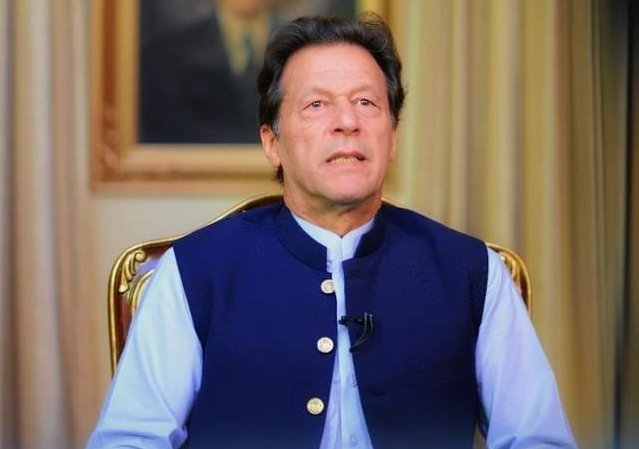
    After national and international outcry by human rights groups, consortium of technology companies such as the Asia Internet Coalition (AIC), and multistakeholder forums such as the Global Network Initiative (GNI), the PM said he will “suspend” the rules and hold more consultations. Except legally, a cabinet notification can only be “taken back” — denotified — by the cabinet itself, and not the PM, as held in the Mustafa Impex case in the Supreme Court, as well as the rules of business.

    However, the cabinet never denotified the previous set of rules, and has recently notified yet another set.

    For the new set of rules, consultations were an eyewash as expected, as not only are the new ones any less draconian than the last, but also make several additions that raise several questions.

    For one, in an attempt to include safeguards and protections, they give the powers of judge, jury, and executioner to the PTA where the authority, which is clearly not above pressure of the federal government, has the power to order social media companies to block or restrict content on the internet, decide what content is unlawful, and also review appeals against such a decision. The stipulation for appeal at high court comes after all of these steps. This goes against the separation of powers that the Constitution outlines and forms the basis of democratic governance.

    “The important question is who is making these decisions? Is the PM sincere in his wishes for a Digital Pakistan?”

    That is all the more problematic when one sees the exceptions to freedom of speech that the rules stipulate. They empower the PTA to not only interpret Articles of the Constitution but also sections of the Pakistan Penal Code (PPC) relating to the blasphemy laws for defining “glory of Islam”, “obscenity and decency”, and “public order” where powers under section 144 are cited as the yardstick for determining what online content can be deemed illegal.

    Most problematic is the rule regarding “integrity, security and defence of Pakistan” whereby it goes on to not only give PTA the powers to interpret Article 260 of the Constitution with regards to defining these terms – which is a function of the higher judiciary – but also expands it to “also mean and include the dissemination of an information which intimidates or harms the reputation of federal or provincial government or any person holding public office” and “brings or attempts to bring into hatred or contempt, or excites or attempts to excite disaffection towards the federal or provincial government”, effectively covering any criticism of the government on the internet to be restricted or blocked on the orders of the PTA as it wishes.     

    Additionally, the rules also go against the parent legislation – PECA – by making intermediaries, i.e. internet companies and internet service providers liable for content regulation and data sharing, hence privatising censorship. Section 38 of PECA explicitly limits intermediary liability. No company is going to agree to implementing a government’s rules over its own detailed community standards, as obvious form the AIC statement that signaled that internet companies may exit Pakistan if these rules are to remain. Rules also expect the companies in face of these orders to open an office in Pakistan, establish local databases, and offer the FIA unrestricted access to user data.     

    The important question is who is making these decisions? Is the PM sincere in his wishes for a Digital Pakistan? Or is the vision to make it like China where the country is cut off from the rest of the world, capacity for which is lacking here exactly because of years of similar shortsighted policymaking mistakes, lack of state investment in encouraging a robust IT ecosystem, and ad-hoc policy of censorship and privacy violations that discourage potential investment and growth?

    Our democratic dispensation now rests on the courts to strike these draconian rules down, on the parliament and especially the opposition parties to walk the talk of protecting democracy, and on the government to prove its sincerity to its digital dreams. Or should we stop pretending?