Tag: government policy

  • IMF deal to improve Pakistan’s financial outlook, but continuous reforms are essential: Moody’s

    IMF deal to improve Pakistan’s financial outlook, but continuous reforms are essential: Moody’s

    Moody’s Investors Service has stated that Pakistan’s recent staff-level agreement with the International Monetary Fund (IMF) enhances the nation’s funding prospects.

    However, the global rating agency stressed the necessity of sustained reforms to mitigate liquidity risks.

    On 12 July, Pakistani authorities and the IMF reached a staff-level agreement on a 37-month Extended Fund Facility (EFF) worth approximately $7 billion. This agreement still awaits approval from the IMF Executive Board, with no specific date set for the vote.

    Moody’s commented that once the loan deal is approved, which is highly anticipated, it will significantly boost Pakistan’s funding prospects. The new IMF program is expected to provide reliable financing from the IMF and attract additional funding from other bilateral and multilateral partners, addressing Pakistan’s external financing needs.

    Nonetheless, Moody’s cautioned that the government’s ability to consistently implement reforms will be crucial to maintaining continuous financial support throughout the IMF program, ultimately reducing liquidity risks.

    The new IMF EFF requires Pakistan to undertake extensive reforms, including broadening the tax base, eliminating exemptions, timely managing and privatising energy enterprises, phasing out agricultural support prices and related subsidies, advancing anti-corruption measures, enhancing governance and transparency, and gradually liberalising trade policy.

    Moody’s also warned that rising social tensions, driven by the high cost of living—which could be exacerbated by increased taxes and future energy tariff adjustments—might hinder reform implementation. Furthermore, the coalition government may struggle to maintain sufficient electoral support to implement these challenging reforms consistently.

    An IMF report published in May highlighted Pakistan’s external financing needs, estimated at $21 billion for fiscal year 2025 (ending June 2025) and approximately $23 billion for fiscal years 2026-2027.

    Moody’s noted that Pakistan’s external position remains precarious, with substantial external financing requirements over the next three to five years.

    The country remains vulnerable to policy slippages, weak governance, and high social tensions, which could impair the government’s ability to advance reforms, complete IMF program reviews, and secure external financing.
  • Revised tax slabs: Here’s how much tax you will pay on your salary

    Revised tax slabs: Here’s how much tax you will pay on your salary

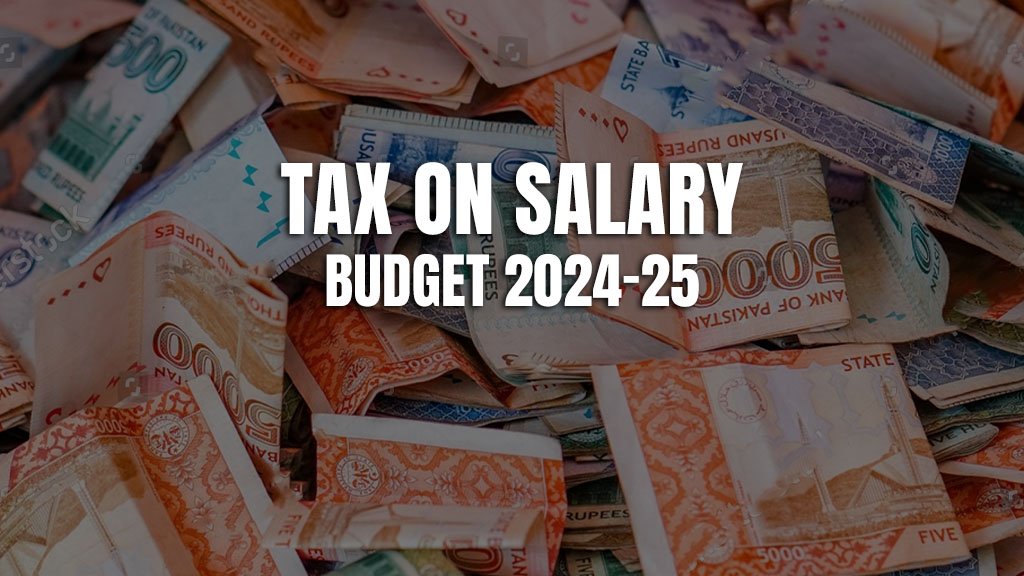
    The Finance Bill 2024 has ushered in a significant overhaul of income tax slabs affecting salaried individuals, resulting in a marked increase in taxation across various income brackets.

    The revised slabs, delineated in the amended bill, indicate substantial alterations compared to the previous structure.

    Outlined below are the revised income tax slabs juxtaposed with their previous counterparts:

    Taxable Income Tax  per cent Taxable Income (yearly)
    ≤600,000 0 less than 600,000
    600,001-1,200,000 5 per cent of amount exceeding Rs600,000 600,001-1,200,000
    1,200,001-2,200,000 Rs30,000 + 15 per cent of amount exceeding Rs1,200,000 1,200,001-2,400,000
    2,200,001-3,200,000 Rs180,000 + 25 per cent of amount exceeding Rs2,200,000 2,400,001-3,600,000
    3,200,001-4,100,000 Rs430,000 + 30 per cent of amount exceeding Rs3,200,000 3,600,001-6,000,000
    >4,100,000 Rs700,000 + 35 per cent of amount exceeding Rs4,100,000 >6,000,000

    While the income tax exemption for the initial slab, encompassing annual salaries up to Rs600,000, remains unaltered, adjustments have been made to other income brackets. Notably, the maximum income tax slab has been notably reduced from Rs6 million to Rs4.1 million.

    Under the revised regime, individuals earning below Rs600,000 annually (equivalent to Rs50,000 per month) will continue to be exempt from income tax. However, for those falling within the range of Rs600,001 to Rs1,200,000 per year (Rs50,000 to Rs100,000 per month), the tax rate has been increased to 5 per cent from the previous 2.5 per cent on the amount exceeding Rs600,000.

    Moreover, individuals earning between Rs1,200,001 to Rs2,200,000 annually (equivalent to Rs100,000 to Rs183,333 per month) will now be subject to a tax of Rs30,000 plus 15 per cent of the amount exceeding Rs1.2 million.

    For those earning within the bracket of Rs2,200,001 to Rs3,200,000 per year (Rs183,333 to Rs266,667 per month), the revised tax stands at Rs180,000 plus 25 per cent of the amount exceeding Rs2.2 million.

    Likewise, individuals earning between Rs3,200,001 to Rs4,100,000 annually (Rs266,667 to Rs341,667 per month) will face a tax liability of Rs430,000 plus 30 per cent of the amount exceeding Rs3.2 million.

    Finally, for individuals with annual earnings surpassing Rs4,100,000 (more than Rs341,667 per month), the revised tax obligation stands at Rs700,000 plus 35 per cent of the amount exceeding Rs4.1 million.

    These revisions underscore a significant shift in the taxation landscape, potentially impacting the financial planning and obligations of salaried individuals across the board.

  • Petrol prices expected to see notable increase next week

    Petrol prices expected to see notable increase next week

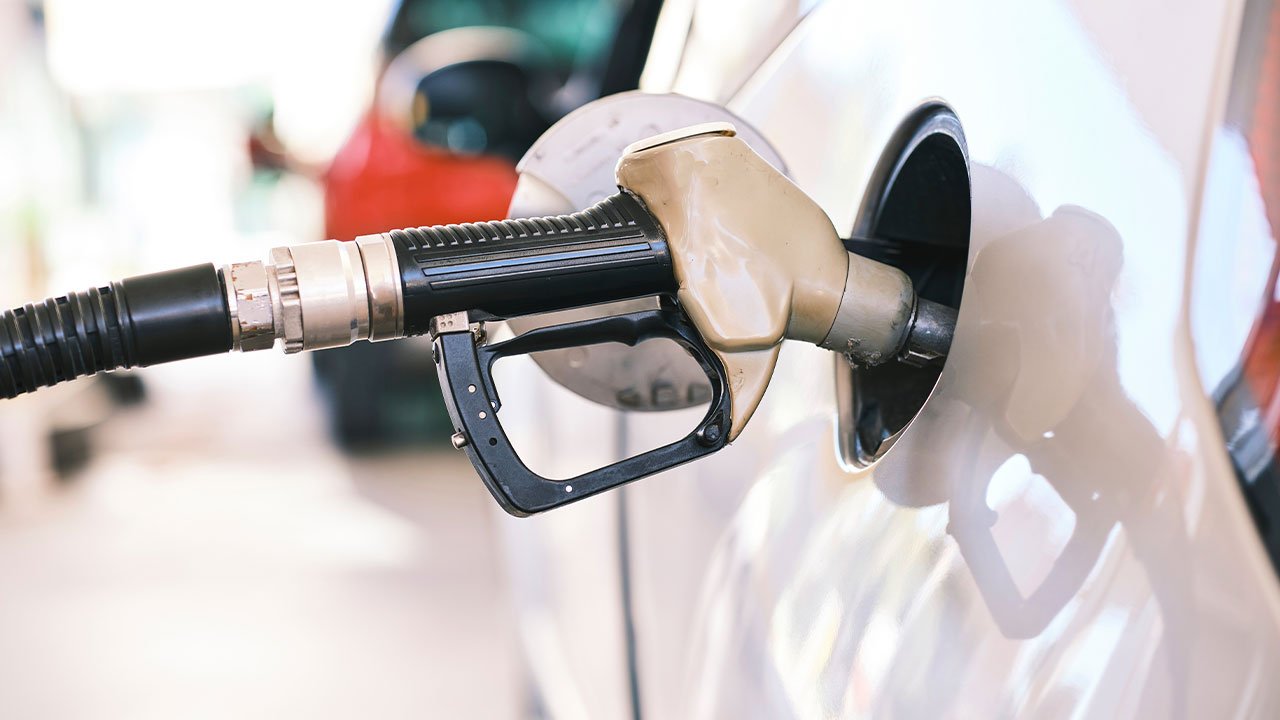
    Consumers already grappling with the burdens of inflation may soon face another blow as reports indicate an imminent hike in petroleum prices within the country.

    Recent assessments suggest a potential increase in petrol prices by over Rs9 per liter commencing April 1. This surge could propel the new price range for petrol from Rs279.75 to Rs289.25.

    Furthermore, there are indications that the government is contemplating raising the petroleum levy from Rs60 to Rs100.

    The petroleum development levy has undergone various adjustments in recent fiscal years, witnessing a notable escalation during FY-2023.

    Sources reveal that the federal government is deliberating a proposal to either subject petroleum to General Sales Tax (GST) or elevate the existing levy rate to fulfill IMF requisites for reinstating an 18 per cent GST on petrol.

    The proposed budget for the upcoming financial year outlines plans to increase the petroleum levy from Rs60 to Rs100 per liter.

    Presently, a levy of Rs60 per liter is imposed on both petrol and diesel, yielding an estimated annual revenue of Rs950 billion. Since March 2022, GST on petroleum products has been maintained at zero levels.

    In the initial budget drafts, GST was slated to be set at 18 per cent, in alignment with International Monetary Fund stipulations calling for the restoration of the standard GST rate.

    On March 15, the government opted to maintain the price of petrol while reducing the cost of high-speed diesel by Rs1.77 per litre.

    Petrol prices, fuel prices, government policy, petroleum levy, inflation, consumer concerns,

  • PM Shehbaz transfers ECC chairmanship to Finance Minister Aurangzeb

    PM Shehbaz transfers ECC chairmanship to Finance Minister Aurangzeb

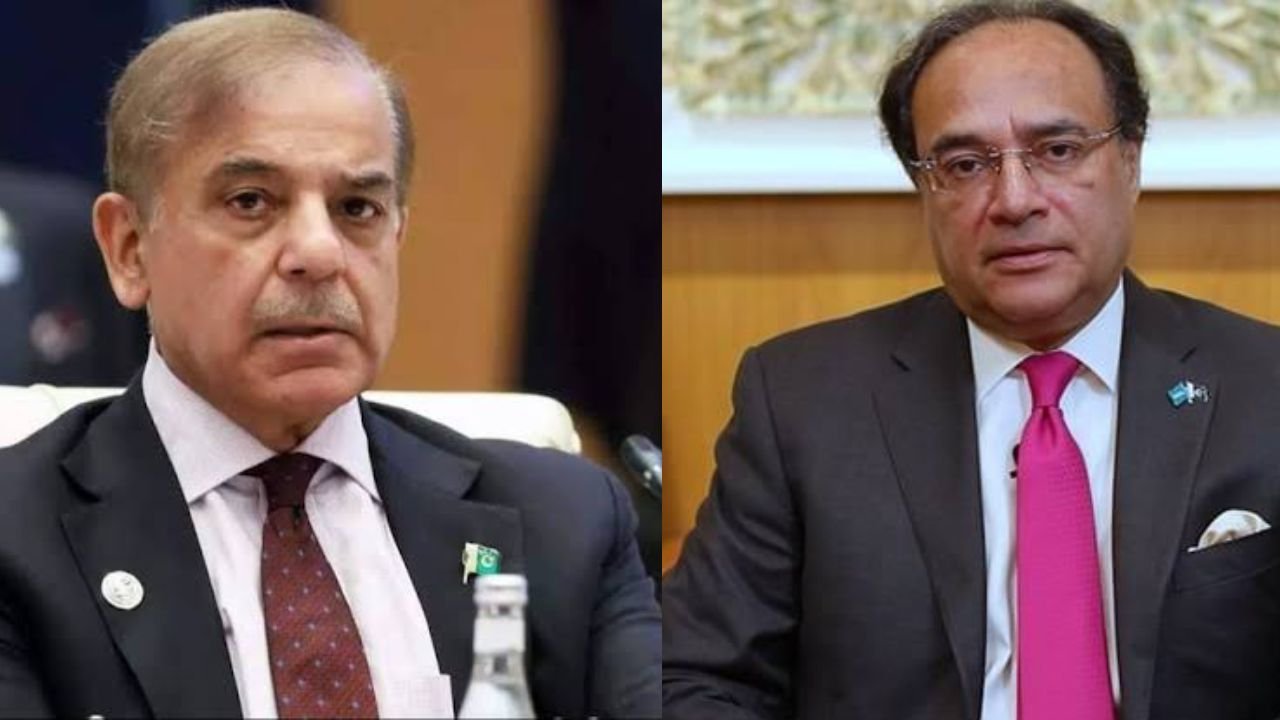
    Prime Minister (PM) Shehbaz Sharif, in a reversal of his earlier decision, has transferred the chairmanship of the Economic Coordination Committee (ECC) to Finance Minister Muhammad Aurangzeb.

    According to a notification, the ECC will now be led by the finance minister, with ministers of economic affairs, planning, commerce, power, and petroleum being integral members of the committee.

    Previously, PM Shehbaz had announced himself as the chair of the ECC when unveiling the composition of seven major committees. This move had drawn criticism for potentially limiting the authority of the new finance minister. 

    Furthermore, the premier had initially chosen to preside over the Cabinet Committee on Energy (CCoE).

    Similarly, the Cabinet Committee on State-Owned Enterprises (CCoSOEs) was formed earlier under the chairmanship of the finance minister. Accordinng to Aaj News, the Minister for Finance will head the CCoSOEs, with ministers of Maritime Affairs, Economic Affairs Division, Science and Technology, and Housing and Works serving as its members.

    In a report by APP, PM Shehbaz emphasised the government’s commitment to implementing tough economic measures to navigate the country out of crisis while ensuring the protection of the underprivileged segments of society. 

    He stressed that the brunt of these measures would primarily be borne by the affluent, with mechanisms in place to safeguard the interests of the poor and vulnerable.

    Speaking at the meeting of the Apex Committee of the Special Investment Facilitation Council (SIFC), the prime minister disclosed that the International Monetary Fund (IMF) had completed the review for the disbursement of the last tranche of US$1.1 billion, expected to be received next month.

  • Toyota Yaris prices reduced by up to Rs133,000

    Toyota Yaris prices reduced by up to Rs133,000

    Indus Motor Company, the manufacturer of Toyota vehicles in Pakistan, has announced a significant price adjustment for its Yaris sedan range.

    This adjustment, effective from Thursday, reflects a reduction in prices ranging from Rs73,000 to Rs133,000.

    The revised pricing structure for the Yaris lineup is as follows: the 1.3 MT LO, 1.3 CVT LO, and 1.3 MT Hi variants will now be priced at Rs4.326 million, Rs4.616 million, and Rs4.586 million, respectively, representing a reduction of Rs73,000 for each model.

    Additionally, the price of the Yaris CVT Hi has been lowered by Rs133,000 and is now priced at Rs4.766 million.

    According to Business Recorder, this decision comes in response to the recent imposition of a 25 per cent sales tax on vehicles priced above Rs4 million.

    By implementing these price cuts, Indus Motor Company aims to ensure that the Yaris remains within the 18 per cent sales tax bracket.

    Initially, the government’s decision to raise the sales tax was targeted at vehicles with engine sizes of 1,400 cc and above, as well as those priced above Rs4 million.

    However, it later extended to include SUVs below the 1,400cc threshold, prompting manufacturers to advocate for a Rs4 million price cap.

    As a consequence of this tax adjustment, certain models from Toyota, Honda, and Suzuki are now subject to the increased sales tax regime.

  • Why aren’t you getting your passport?

    Why aren’t you getting your passport?

    Numerous complaints have been filed against the Directorate General of Immigration and Passports, citing prolonged waiting periods for passport issuance, leading frustrated applicants to seek intervention from the federal ombudsman.

    Responding to the increasing complaints, Federal Ombudsman Ejaz Ahmad Qureshi acted on Monday by dispatching an inspection team comprising senior officials to assess the situation at the passport office and identify the reasons for the delays.

    During the inspection, the administration of the Directorate General of Immigration and Passports explained to the visiting team that the delay in printing passports was due to the unavailability of lamination paper.

    They assured the team that the backlog would be swiftly cleared as they now had an adequate supply of lamination paper.

    The inspection team recommended that the administration ensure timely procurement of lamination paper in the future to prevent a recurrence of the issue.

    They also advised the administration to adhere to the prescribed timeframe for passport issuance and, in cases of late delivery, refund the fees charged for urgent passport processing.

    Simultaneously, the Federal Ombudsman directed the secretary interior to comprehensively assess the functioning of the Directorate General of Immigration and Passports to ensure more efficient service delivery in the future.

    The inspection team discussed in detail the entire process of issuing passports to ascertain the causes of inordinate delay and breakdown of efficient delivery of services in the Passport Office.

    The team also interviewed many people who had come to get their passports in the Passport Offices located in the G-8 and G-10 sectors in Islamabad.

    The team was informed by the applicants that they had been visiting the Passport Office to collect their documents for many months and their visas had expired in the meantime.

    The inspection team on arrival at G-10 Passport Office observed hundreds of applicants waiting to collect their travel documents. The lack of proper seating arrangements was causing further agony to the visitors.

    The inspection team will submit its report based on its recommendations for the consideration of the Federal Ombudsman within one week.

  • You can’t get 100-page passports now

    You can’t get 100-page passports now

    The government has announced a temporary suspension on the issuance of passports with 100 pages. A statement issued by the Passport office expresses regret for the inconvenience and clarifies that this decision is part of the Directorate General (DG) of Immigration and Passports’ plan to introduce electronic passports (e-passports) nationwide.

    The transition initially began in Islamabad and has since been extended to all passport offices across the country following the federal government’s introduction of e-passports in June.

    As of August 16, 2023, new fee schedules have been implemented for e-passports, while fees for standard passports will remain unchanged.

    Here are the updated fee details for e-passports:

    1. For a standard 36-page passport valid for 5 years, the cost is set at Rs. 9,000.
    2. An urgent e-passport option is available for Rs. 15,000.
    3. A 72-page e-passport for regular processing will cost Rs. 16,500.
    4. Urgent service for the 72-page e-passport is priced at Rs. 27,000.
    5. If you opt for a 36-page passport with a 10-year validity, the normal fee is Rs. 13,500.
    6. The urgent service for this passport type costs Rs. 22,500.
    7. Additionally, a 72-page passport with a 10-year validity will incur a standard fee of Rs. 24,750, with an urgent processing fee of Rs. 40,500.

    The government’s decision to temporarily suspend the issuance of 100-page passports is in line with their efforts to streamline passport services and introduce more secure electronic passports to enhance the travel experience for Pakistani citizens.

  • Caretaker govt decides to transfer ownership of electricity distribution companies to provinces

    Caretaker govt decides to transfer ownership of electricity distribution companies to provinces

    The caretaker government has issued an order for the transfer of ownership of electricity distribution companies to the provinces.

    To accomplish this, the caretaker prime minister has granted approval to submit the summary to the federal cabinet. A decision has been reached to overhaul the existing system concerning the sale, distribution, and pricing of electricity under the caretaker federal government’s jurisdiction.

    As a result of this federal government directive, the practise of implementing a uniform electricity tariff across the nation will be discontinued. Instead, the responsibility for determining electricity rates and providing subsidies will be entrusted to the respective provinces.

    In line with these developments, the Hyderabad and Sukkur Electric Supply Company will come under the ownership of Sindh, while the ownership of the Quetta Electric Company will be transferred to Balochistan, according to HUM News.

    Likewise, the Lahore Gujranwala, Faisalabad, and Multan Electric Supply companies will be transferred to the ownership of Punjab. The Islamabad Electric Supply Company will be jointly owned by Punjab and the Federation, while the Peshawar and Tribal Area Electric Supply Company will be under the ownership of KP.

    As per official documents, a comprehensive policy framework has been formulated for the transfer of distribution company ownership to the provinces. This move is motivated by challenges such as electricity theft and revenue losses, which have placed a strain on the national treasury.

  • Goods transporters implement 20% fare hike in response to soaring diesel prices

    Goods transporters implement 20% fare hike in response to soaring diesel prices

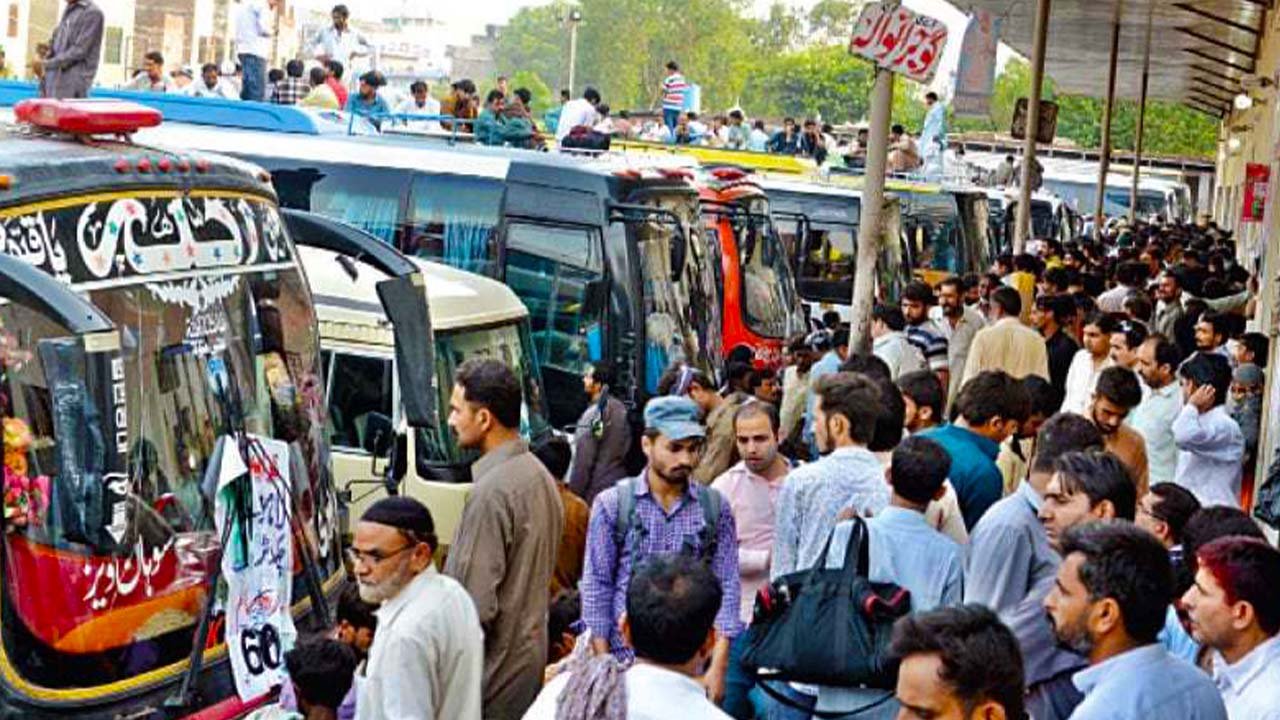
    Goods transporters raised their fares by 20 per cent in response to a recent surge in diesel prices on Thursday. The announcement came as the goods transporters association revealed their decision to implement a fare increase of 20 per cent, citing a substantial rise in diesel prices of up to Rs40 per litre over the span of 15 days.

    Rana Shoaib, the General Secretary of the Goods Transporters Association, conveyed in an official statement that their operational expenses had been significantly impacted by the substantial surge in diesel prices.

    He further elaborated that the provision of goods transportation services between major cities such as Karachi, Multan, Lahore, Faisalabad, Islamabad, and Peshawar has been sustained. However, the transporters are finding it increasingly challenging to bear the escalating financial burdens associated with fuel costs and spare parts.

    According to ARY News, Shoaib said that the decision to raise fares was a necessary step due to the considerable escalation in government-imposed fuel prices. Notably, earlier in the same month, local transporters independently elevated fares by as much as 20 per cent in response to a previous hike in fuel prices without any intervention or oversight from relevant authorities.

    Details indicate that local transporters unilaterally implemented fare increases ranging from Rs15 to Rs20 for stop-to-stop journeys, despite the absence of formal notifications regarding fare adjustments by the district administration.

    Furthermore, the fare hikes extended to transportation services between Karachi and other destinations like Hyderabad, Larkana, and Sukkur. This trend of fare increases also extended to buses and coaches operating within the city limits.

  • Petrol price likely to increase by Rs15 per litre after August 16

    Petrol price likely to increase by Rs15 per litre after August 16

    Starting August 16, petroleum products are expected to undergo a notable price hike. In particular, the price of petrol is projected to rise by Rs15 per litre, while diesel will likely see a steeper increase of Rs20 per litre.

    This surge in prices is attributed to a rise in global commodity rates. Recent reports indicate that the cost of crude oil has climbed by $5 per barrel, going from $86 to $91 per barrel. This increase is largely due to the elevated prices of petroleum products on the global market. Additionally, a separate premium charge of $2 per barrel has been applied to crude oil.

    Simultaneously, the international prices for both diesel and gasoline have also experienced a $5 surge, climbing from $97 per barrel to $102 per barrel.

    Should these prices remain unchanged, the anticipated effect on Pakistan’s fuel market would translate to a Rs15 per litre hike for petrol and a more substantial Rs20 per litre increase for diesel.

    In the context of the previous fortnightly review conducted by the outgoing government, a significant Rs19 per litre escalation in petrol and diesel prices had been announced. This decision was justified as being in alignment with the demands of the International Monetary Fund.