Tag: government policy

  • Registration fee for 1501-2000cc vehicles reduced to 2% by excise department

    Registration fee for 1501-2000cc vehicles reduced to 2% by excise department

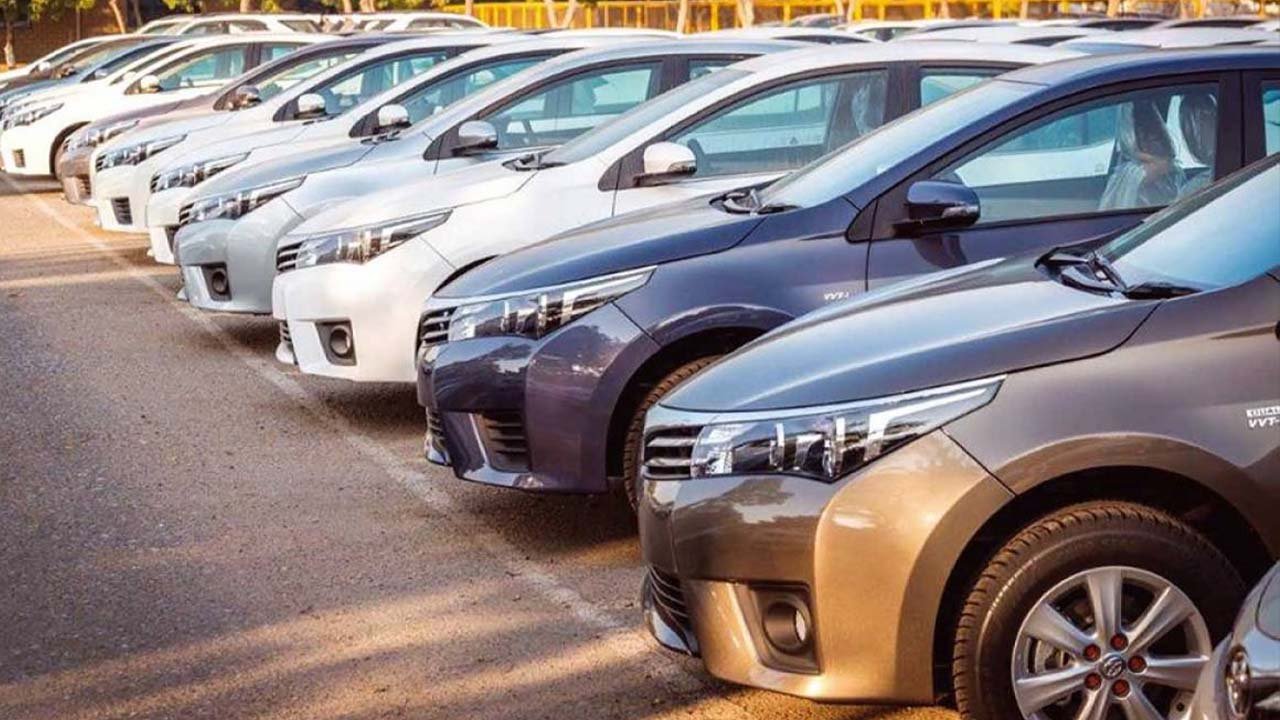
    The Excise and Taxation Department of Punjab has recently introduced adjustments to the fees associated with vehicle registration and transfers, in accordance with the budget proposed by the caretaker government. One notable change is the reduction of the registration fee for vehicles with engine capacities ranging from 1501cc to 2000cc, from 3 per cent to 2 per cent.

    Furthermore, the government has extended a significant 95 per cent discount on motor vehicle tax for electric vehicles until June 2025. In addition, a new withholding tax has been introduced specifically targeting the registration of vehicles exceeding 2001cc.

    Another modification in the system pertains to private vehicles, which were previously subjected to a flat token tax of Rs2,500 per seat. Under the new regulations, these vehicles will now be taxed based on their respective engine capacities, providing a more accurate and equitable taxation structure.

    In addition to the changes in registration fees, the Excise department has also revised the transfer fees for motorcycles, cars, rickshaws, and commercial vehicles. The fee for motorcycles has been raised from Rs150 to Rs500, while vehicles with engine capacities up to 1000cc will now incur a transfer fee of Rs2,500, increased from the previous Rs1,200.

    For vehicles falling within the range of 1000cc to 1800cc, the transfer fee has been elevated by Rs3,000, now amounting to Rs5,000. Similarly, for vehicles surpassing 1800cc, the excise department will collect a transfer fee of Rs10,000, compared to the earlier fee of Rs3,000.

    Commercial vehicles also witness a revision in their transfer fee, experiencing an increase of Rs1,000, now totaling Rs5,000.

    These revisions to the vehicle registration and transfer fees aim to establish a more efficient and equitable system, aligned with the government’s budgetary objectives, while considering factors such as vehicle engine capacity and promoting the adoption of electric vehicles.

  • Govt targets non-filers with 0.6% tax on cash withdrawals more than Rs50,000

    Govt targets non-filers with 0.6% tax on cash withdrawals more than Rs50,000

    The federal government has announced the implementation of a flat 0.6 per cent tax for individuals who are not listed on the Federal Board of Revenue’s (FBR) Active Taxpayer List (ATL). This taxation policy, as outlined in the budget documents, aims to facilitate the documentation of the economy.

    As per the official document, the government has chosen to impose a tax rate of 0.6 per cent on cash withdrawals exceeding Rs50,000.

    The primary objective behind this initiative is to record the cash withdrawal data of individuals who are not on the ATL and encourage them to increase their transactional expenditure. The intention is to attract more individuals to become part of the tax system.

    It is important to note that this legislation was previously in effect but was repealed by the previous administration through the Finance Bill 2021. However, certain significant measures introduced under the Finance Act 2022 to address non-compliance were not effectively enforced.

    Consequently, the government has now made the decision to strictly enforce these measures in order to enhance the country’s tax revenue.

  • Pakistan’s merchandise exports dive for ninth consecutive month, drop by 16.69% in May

    Pakistan’s merchandise exports continue to decline for the ninth consecutive month, plunging by 16.69 per cent year-on-year to $2.18 billion in May, according to data released by the Pakistan Bureau of Statistics.

    The downward trend has persisted throughout the first 11 months (July to May) of the 2022-23 fiscal year, with exports experiencing a dip of 12.14 per cent to $25.36 billion compared to $28.87 billion during the same period the previous year.

    The decline in export proceeds can be attributed to a combination of internal and external factors, raising concerns about the potential closure of industrial units, particularly within the textile and clothing sector.

    In line with this, imports also experienced a significant decrease of 36.76 per cent to $4.27 billion in May compared to $6.76 billion in the corresponding month last year. From July to May, imports fell by 29.22 per cent to $51.15 billion, down from $72.28 billion during the same period last year.

    The government has implemented restrictions on luxury and non-essential goods while promoting imports of raw materials, semi-finished products, pharmaceuticals, food, and energy products. This policy shift has resulted in a substantial decline in the import bill over the past 11 months.

    As a result of these developments, the trade deficit has narrowed by over 40 per cent, reaching $25.79 billion between July and May of the fiscal year 2022-23, compared to $43.40 billion during the corresponding months of the previous year. In May, the trade deficit saw a year-on-year decline of 49.49 per cent to $2.08 billion.

    According to Dawn, the textile and clothing sector, which constitutes over 60 per cent of total exports, has been severely affected, making it challenging for the government to achieve its export target for the current fiscal year. Exporters have pointed out that the federal government lacks a clear strategy and effective prioritization, leading to a decline in textile exports.

    Exporters have also highlighted several root causes contributing to the export decline. These include shortages in working capital and liquidity, delayed refunds of taxes and levies, technology upgradation fund, and duty drawbacks.

    The promised faster refund system has not functioned as intended, resulting in refund processing times of 3-5 months instead of the expected 72 hours. The sector is also grappling with increased financial and energy costs.

    In addition, exporters are facing challenges in procuring raw materials and other inputs, both domestically and through imports. The State Bank of Pakistan’s hurdles in opening letters of credit have further contributed to the decline in exports.

    The negative growth in exports, except for a slight increase in August due to backlog clearance, poses a significant concern as it threatens the balance of the country’s external account.

    The government needs to address these issues promptly and formulate effective policies to revive the export sector and stimulate economic growth.

  • Supply of free flour for underprivileged cannot be questioned, says Lahore High Court

    Supply of free flour for underprivileged cannot be questioned, says Lahore High Court

    Lahore High Court has ruled that the government is responsible for providing free flour to those living below the poverty line and unable to purchase it themselves, and therefore the supply of free flour cannot be challenged in court. The court also stated that the supply of free flour under the government’s “Ramzan package” is a policy decision that cannot be interfered with by the court. This ruling came in response to a petition filed by a bar member challenging the government’s fixation of the wheat price at Rs3,900 per 40 kg.

    LHC dismissed the petition, stating that the government has the authority to fix prices and take necessary measures to cater to the needs of the people. The court also observed that the fixation of prices of commodities such as wheat by the government falls within the policy-making domain of the government and that this function must be performed keeping in mind various factors such as the availability of stocks and demand and supply.

    The court further noted that the government’s power to fix prices cannot be ordinarily interfered with by the court in its constitutional jurisdiction and that in the absence of any law or policy, the court cannot issue directions to respondents to provide flour or wheat to consumers at subsidised rates. The court also stated that the government’s purchase and sale of wheat, provision of wheat to flour mills, subsidised value, and framing of policy to provide flour at a particular rate or free of cost to deserving people of the society are all within the policy-making domain of the government.

    The court held that the government’s fixation of the wheat price was within its jurisdiction and powers, and that the government’s decision to fix the price was made after considering various factors, including regulating market forces. According to Brecorder, the court observed that the government’s power to fix prices cannot be challenged by petitioners who do not have access to the relevant data or the capability to determine various aspects of the price-fixing criteria.

    In conclusion, the court ruled that the government has the authority to fix the price of wheat and that the supply of free flour to those in need is a policy decision that cannot be challenged in court. The court also noted that the fixation of prices of commodities falls within the policy-making domain of the government and must be performed in consideration of various factors and that the court cannot interfere with the government’s power to fix prices in its constitutional jurisdiction.

  • International petrol, diesel prices drop, but no relief for Pakistanis

    The government has decided not to reduce the prices of diesel and petrol for local consumers, despite a significant decrease in their international prices. This decision is intended to offset previous exchange losses and raise taxation.

    On February 28, 2023, the average fortnightly prices of petrol and diesel in the global market will be used for the next price revision. According to industry sources, the average price of diesel for the next fortnightly review has dropped by $7 per barrel, which equates to a reduction of Rs30 per litre for domestic diesel prices.

    The global average price of diesel has fallen to approximately $100 per barrel compared to $107 per barrel in the previous fortnight. Similarly, the average price of petrol has dropped to $90 per barrel for the next review of prices compared to $93 per barrel in the last fortnightly review, which translates into a reduction of Rs10 per litre for consumers in the local market.

    According to Geo, the appreciation of the Pakistani rupee against the dollar in the last two weeks has also contributed to the reduction in import prices of diesel and petrol. However, industry sources do not expect any significant reduction in the prices of diesel and petrol for domestic consumers.

    The government is expected to adjust the exchange losses, which were not passed on fully to the oil sector in the last several reviews. For example, an exchange loss adjustment of Rs88 per litre was due on diesel, but the government only transferred Rs12 per litre on this head, leaving the remaining amount to be adjusted. The same is true for petrol, with an exchange loss adjustment of Rs34 per litre due, but only Rs12 per litre being given to the oil industry.

    Under the conditions set by the International Monetary Fund (IMF), the government may increase the petroleum levy (PL) on diesel to Rs50 per litre, as it now has room to do so. Currently, the PL on diesel is Rs40 per litre.

    If the government does not impose GST, sources expect a cut of Rs10 per litre in diesel prices, which would otherwise deprive local consumers of the drop in diesel prices in the global market.

    However, official industry sources do not anticipate any reduction in the price of petrol for local consumers, which would otherwise have been down by Rs10, as per the trends of its price in the global market.