Tag: government revenue

  • Moody’s upgrades Pakistan’s credit rating to Caa2, citing improved economic stability

    Moody’s upgrades Pakistan’s credit rating to Caa2, citing improved economic stability

    Moody’s Investors Service has upgraded Pakistan’s long-term issuer rating from “Caa3” to “Caa2” with a stable outlook, reflecting a moderate improvement in the country’s macroeconomic conditions and external financial position.

    This decision follows a similar move by Fitch Ratings in July, which upgraded Pakistan’s credit rating from “CCC” to “CCC+.”

    Moody’s stated that the upgrade is a result of reduced default risks, which are now more consistent with a Caa2 rating.

    This improvement is partly due to greater certainty in Pakistan’s external financing, bolstered by the sovereign’s staff-level agreement with the International Monetary Fund (IMF) on 12 July 2024, for a 37-month Extended Fund Facility (EFF) worth $7 billion. The IMF Board is expected to approve the EFF in the coming weeks.

    Pakistan’s foreign exchange reserves have nearly doubled since June 2023, although they remain below the levels required to meet its external financing needs. The country continues to rely on timely support from official partners to fully meet its external debt obligations.

    Despite the upgrade, Pakistan’s Caa2 rating still reflects very weak debt affordability, which poses a significant risk to debt sustainability. Moody’s expects interest payments to consume about half of the government’s revenue over the next two to three years. The rating also takes into account the country’s weak governance and high political uncertainty.

    The stable outlook indicates a balance of risks, with potential for further improvement if the government can reduce its liquidity and external vulnerability risks and achieve better fiscal outcomes, supported by the IMF programme.

    Sustained implementation of reforms, particularly those aimed at increasing government revenue, could enhance debt affordability. Timely completion of IMF reviews would enable Pakistan to secure continued financing from official partners, essential for meeting external debt obligations and rebuilding foreign exchange reserves.

    The upgrade to Caa2 from Caa3 also applies to the backed foreign currency senior unsecured ratings for The Pakistan Global Sukuk Programme Co Ltd, which Moody’s views as direct obligations of the Government of Pakistan. The outlook for The Pakistan Global Sukuk Programme Co Ltd is positive.

    Additionally, Moody’s has raised Pakistan’s local and foreign currency country ceilings to B3 and Caa2 from B3 and Caa1, respectively.

    The two-notch gap between the local currency ceiling and the sovereign rating is due to the government’s significant role in the economy, weak institutions, and high political and external vulnerability risks.

    The two-notch gap between the foreign currency ceiling and the local currency ceiling reflects limited capital account convertibility and relatively weak policy effectiveness.

  • Authorities confiscate smuggled cigarettes worth Rs14 crore

    Authorities confiscate smuggled cigarettes worth Rs14 crore

    In a substantial crackdown on the illicit trade of non-duty-paid cigarettes, the Inland Revenue Enforcement Network (IREN) successfully seized over 679,000 packerites (15,580,000 sticks) of smuggled cigarettes during a two-day operation.

    The confiscated cigarettes, representing various local and foreign brands, including Business Royal, H&P, Platinum, Milano, and Olympic, have an estimated value exceeding PKR 140 Million.

    The enforcement teams targeted local shops in Peshawar, Multan, and Sialkot, where the availability of non-duty paid cigarettes had seen a concerning surge.

    This operation was initiated under the directive of Mir Badshah Khan Wazir, Member (IR-Operations), who emphasized the need to curb the illegal trade of tobacco products.

    Criminal proceedings have been set in motion against both manufacturers and transporters involved in this illicit trade.

    One of the key factors contributing to the rise in the popularity of smuggled cigarettes is the substantial price difference compared to duty-paid alternatives.

    While the cost of a pack of 20 duty-paid cigarettes starts at Rs600, the non-duty paid counterparts can be obtained for as low as Rs200. Some reports even suggest that certain brands are being sold at an even more economical rate.

    The increasing prevalence of non-duty paid cigarettes poses a serious concern, not only in terms of lost revenue for the government but also due to health implications.

    Smokers in Pakistan, attracted by the affordability of these illicit products, have contributed to the surge in sales of non-duty paid cigarettes.

    The IREN’s recent operation sends a clear message that the authorities are actively addressing this issue to safeguard public health and financial interests.

    As investigations unfold, it remains to be seen how this crackdown will impact the illicit trade of cigarettes and discourage individuals from opting for non-duty paid alternatives.

  • FBR hikes motor vehicle tax by 200% for non-filers

    FBR hikes motor vehicle tax by 200% for non-filers

    The Federal Board of Revenue (FBR) has implemented significant changes to the tax structure for motor vehicles in an effort to boost government revenue and encourage tax compliance. The new regulations apply to both Active Taxpayers List (ATL) filers and non-filers.

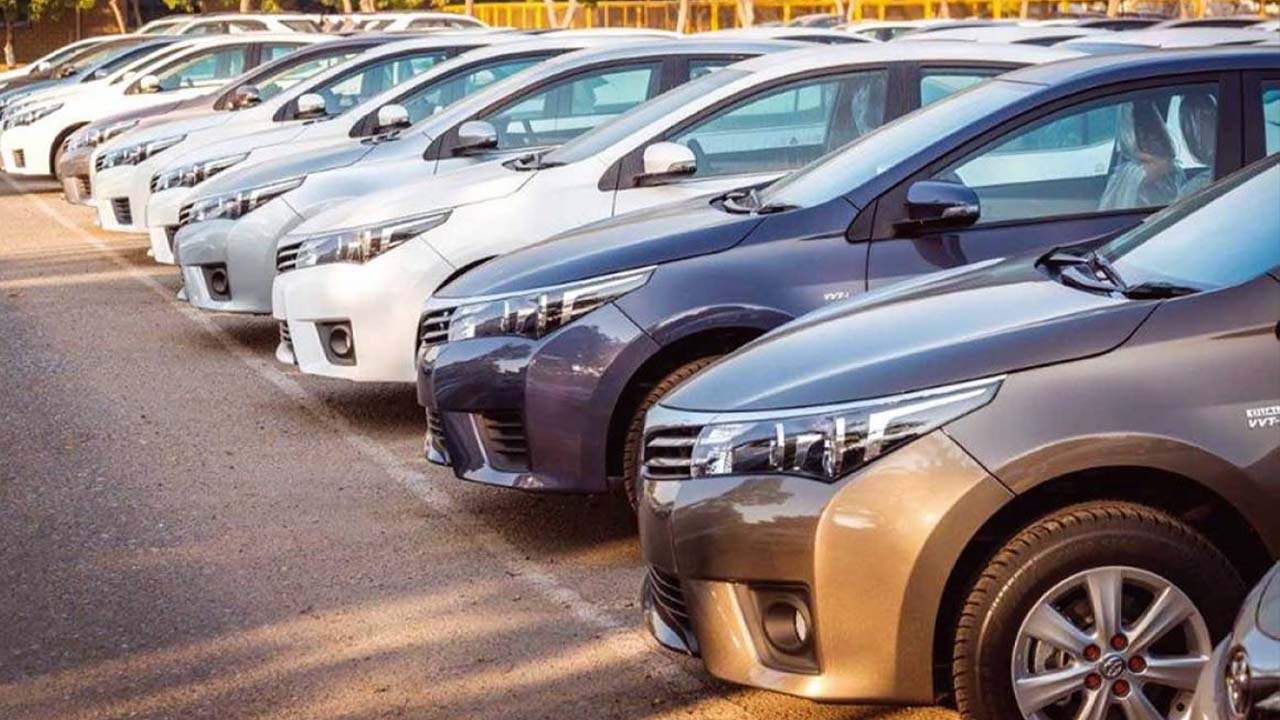
    For individuals not on the ATL, the tax rates on motor vehicles have been increased by a substantial 200 per cent. This means that non-filers will now be subject to fixed tax rates of 18 per cent, 24 per cent, and 30 per cent, based on the engine capacity of their vehicles, specifically 2001cc to 2500cc, 2501cc to 3000cc, and above 3000cc, respectively.

    On the other hand, ATL filers will experience a different taxation structure. Instead of fixed tax amounts, they will be required to pay tax at a rate of 6 per cent, 8 per cent, and 10 per cent, depending on the engine capacity of their motor vehicles, namely 2001cc to 2500cc, 2501cc to 3000cc, and above 3000cc, respectively.

    In cases where the engine capacity is not applicable, and the value of the vehicle exceeds Rs5,000,000, the tax rate will be 3 per cent of the import value (including customs duty, sales tax, and federal excise duty for imported vehicles, and invoice value for locally manufactured or assembled vehicles).

    It is worth noting that certain exemptions have been made. Pakistan’s government agencies and foreign diplomats will not be subject to these revised tax rates.

    Furthermore, the circular introduced tax implications for bank withdrawals based on the withdrawn amount. Non-ATL filers will be taxed Rs303 for withdrawals of Rs50,500 and taxed Rs450 for withdrawals ranging from Rs55,000 to Rs75,000.

    Additionally, to curb unnecessary foreign exchange outflows via credit/debit card transactions, the withholding tax rates for ATL persons have been increased from 1 per cent to 5 per cent, while non-ATL persons will face a higher rate of 10 per cent, up from the previous 2 per cent.

    These adjustments in the tax policy aim to strengthen the country’s revenue generation while encouraging citizens to become active taxpayers.

  • Govt to implement Rs7 per unit power tariff hike, expecting over Rs3.2 trillion in revenue

    Govt to implement Rs7 per unit power tariff hike, expecting over Rs3.2 trillion in revenue

    The government is planning to raise the power base tariff by approximately Rs7 per unit. This move is expected to generate over Rs3.2 trillion in additional revenue from power consumers. The International Monetary Fund (IMF) Executive Board is set to discuss a stand-by arrangement, which is the final step in solidifying the IMF Staff Level Agreement. The government will then need to fulfill the program’s requirements.

    The increase in power tariff is a crucial condition set by the IMF for providing financial assistance to Pakistan. The Fund has been urging the government to raise the tariff and eliminate power subsidies to reduce the country’s fiscal deficit. The proposed increase, along with an 18 per cent GST on bills, could lead to a significant financial burden on power consumers.

    Nepra, the regulatory authority, has conducted hearings with distribution companies (Discos) on this matter. While the privatised company, K-Electric, will be insulated from the increase in base tariff, the price of electricity it draws from the national grid will become costlier.

    The increase in base tariff, estimated at nearly Rs7 per unit, is awaiting submission to the federal government for notification. If finalised, it would raise the base tariff to Rs31.80 per unit from the current Rs24.80. The increase is aimed at reducing the power sector’s circular debt accumulation, which currently stands at approximately Rs2.64 trillion due to inefficiencies in power generation, transmission, and distribution.

    The rise in power tariffs will impact consumers across residential, commercial, and industrial sectors, leading to inflation. Businesses will pass on the increased costs to consumers, while households will need to allocate more funds for power, straining their budgets. However, the government asserts that this step is necessary to revive the power sector and the economy. It has also promised targeted subsidies to alleviate the burden on the poor and vulnerable.

    In a positive development, the government has made a payment of Rs142 billion to Independent Power Producers (IPPs), reducing their outstanding dues and improving their cash flows. However, the power sector still faces a circular debt of Rs2.64 trillion. Additionally, the IMF has called for a 45-50 per cent increase in gas tariffs, affecting consumers of Sui Northern Gas Pipelines Limited (SNGPL) and Sui Southern Gas Company Limited (SSGCL).

    The government is likely to continue its policy of having high-end consumers subsidise low-end consumers. The circular debt in the energy sector amounts to over Rs4.30 trillion, including debts from the oil and gas sector.

    Finance ministry and Nepra officials have experienced confusion regarding the finalisation of the increase in base tariff, as the IMF board meeting approaches. The regulator is awaiting projections from the finance ministry to determine the final base tariff. The government aims to achieve a value of Rs240 for the US dollar, despite setting it at Rs290 billion in the federal budget.

    Overall, the government’s objective is to address the financial challenges in the power sector while providing support to those affected by the tariff increase. The proposed measures are crucial to stabilise the power sector and stimulate the economy.

  • FBR officers request leave until June to protest against low salary amid soaring inflation

    The Federal Board of Revenue (FBR) is in the midst of a predicament as its officers have apparently requested leave until June in order to protest against the rising inflation that is affecting their ability to make ends meet.

    In a letter addressed to the FBR Chairman Asim Ahmed, 117 Income Tax officers ranging from grades 17 to 19 have expressed their discontent with a meagre pay scale.

    “Due to low pay, we are unable to meet the expenses of coming to the office in this era of skyrocketing inflation,” the letter stated.

    This issue is extremely worrisome as the absence of these officers during the crucial budgeting process could have grave consequences for the country’s economy since the FBR is accountable for collecting taxes and revenue for the government.

    According to ARY News, the FBR Chairman has promised to raise the matter of the officers’ salary scale with Prime Minister Shehbaz Sharif. Additionally, he mentioned that the tax officers’ performance allowance has been withheld since 2015.

    It’s worth noting that an FBR officer made a peculiar request in a separate incident. In a letter addressed to Prime Minister Shehbaz Sharif, the officer requested permission to engage in corrupt activities in order to cover domestic expenses in the face of soaring inflation.